Ask anyone about Pohang and they’ll say mulhoe, the cold spicy raw fish soup.
I thought the same.
But driving the coastal road toward Homigot, I stumbled onto a place that’s actually better known for its sashimi noodles than its mulhoe.
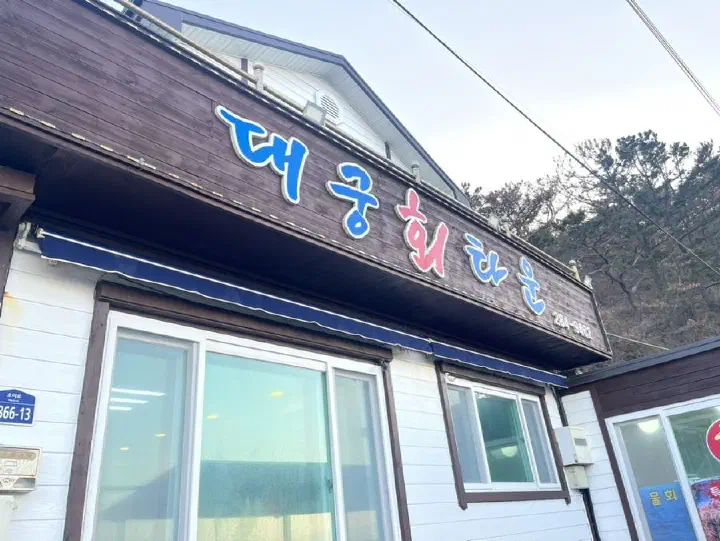
This is Daegung Hoetown (대궁회타운), a local spot for wild-caught sashimi noodles in Daedongbae-ri, Homigot-myeon, Pohang.
The basics
- Name: Daegung Hoetown (대궁회타운)
- Address: 1866-13 Homi-ro, Homigot-myeon, Nam-gu, Pohang
- Phone: 054-284-9462
- Hours: 10:00 – 18:00 daily, no break time
- Closed: every Thursday
- Parking: plenty of space right in front
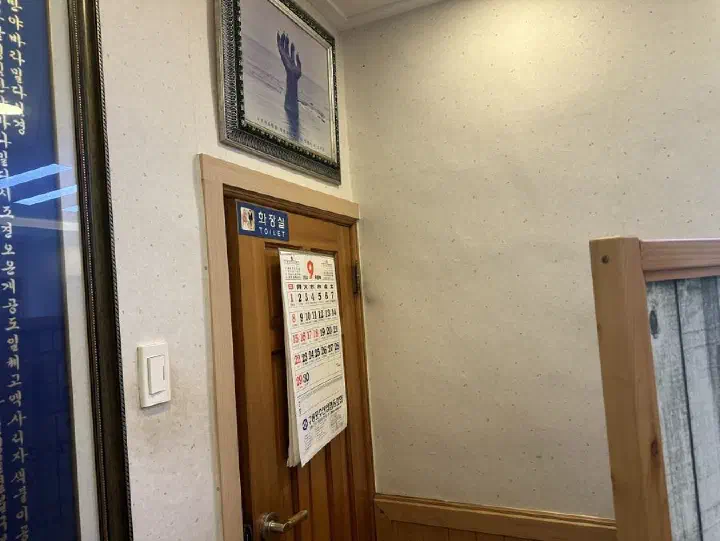
- Restroom inside the restaurant
📍 View Daegung Hoetown (대궁회타운) on Google Maps →
There’s no reservation system. You order in the order you arrive.
If you want an extra plate of sashimi set aside, you can call ahead and ask.
Getting there: a tiny harbor by the sea
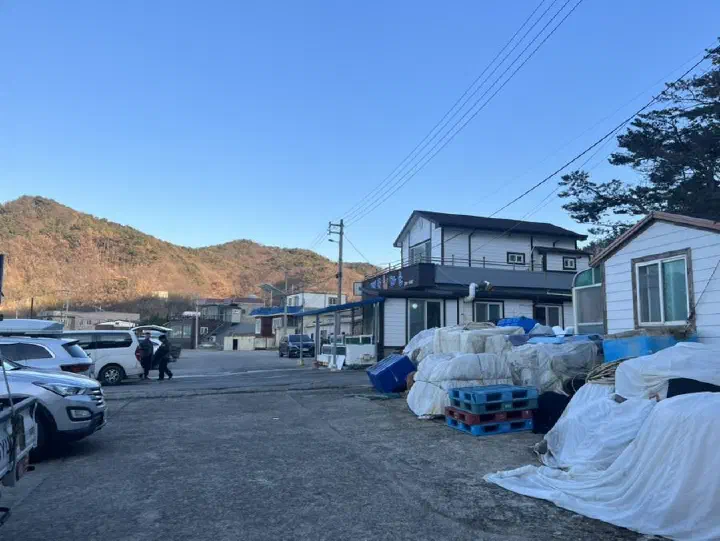
Daegung Hoetown sits in a quiet fishing village along the coastal road from downtown Pohang toward Homigot.
It’s only about 8 to 10 minutes by car from Homigot Sunrise Square, so it’s an easy stop before or after seeing the cape.

Just punch the name into your map app and go. You can spot the big sign from a distance, so you won’t get lost.
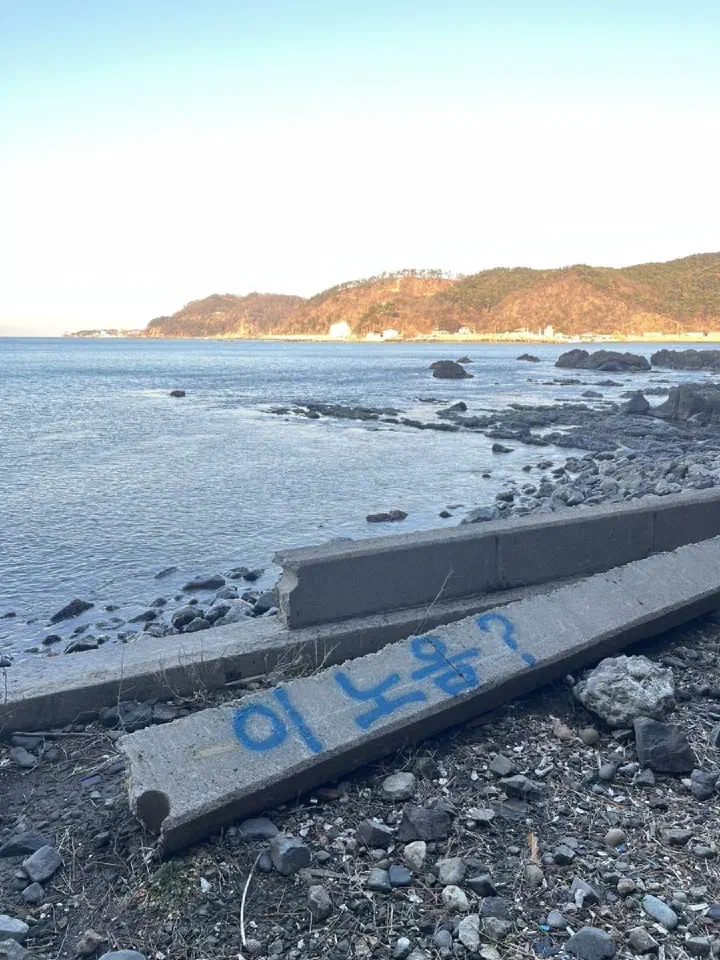
The moment you pull up, the East Sea opens up right in front of you.

I expected it to be sleepy, being out in a fishing village, but at lunch it was busy with people coming just for the sashimi noodles. Anglers, locals, travelers, all mixed in.
A quick travel note: Google Maps walking and transit directions are unreliable in Korea, so I’d use Naver Map or KakaoMap to find your way. If you don’t have a car, the most realistic option here is a taxi (try the Kakao T app) or a rental, since this stretch of coast isn’t well served by buses.
A converted home with a cozy feel
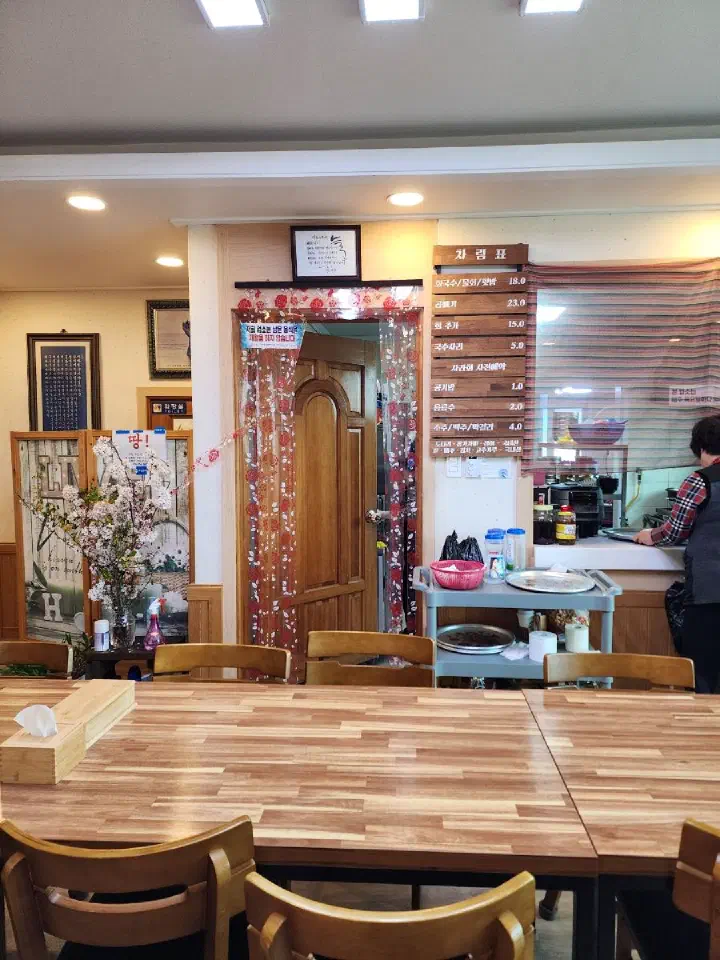
The building is old, but inside it’s a former house turned into a restaurant.
There are table-and-chair setups in the living room and each of the side rooms, so you sit comfortably with your shoes on.

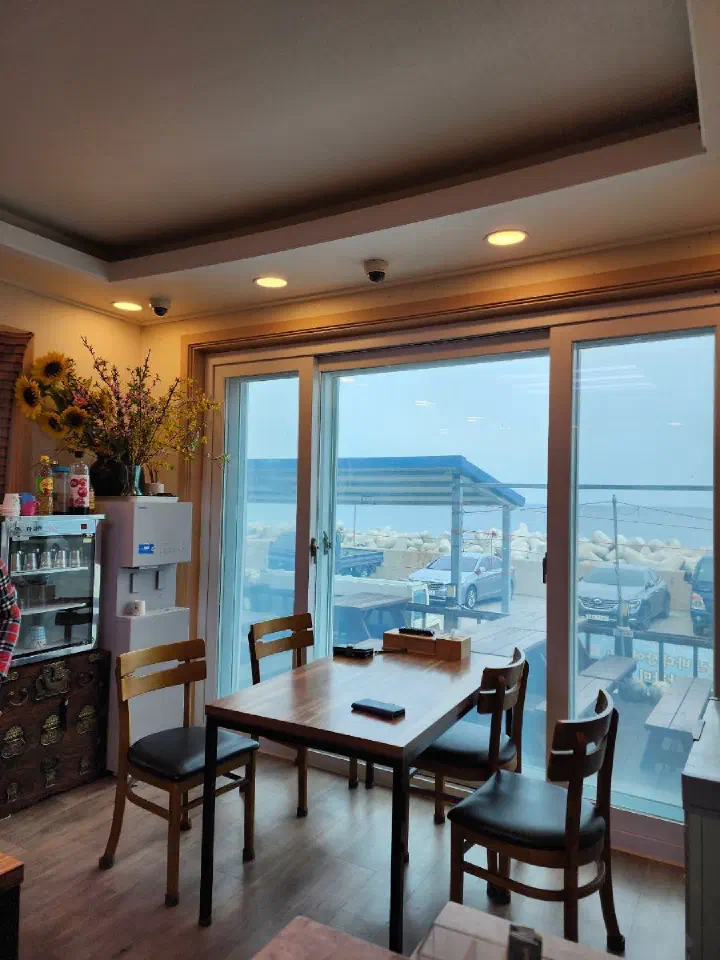
Grab a window seat and you look straight out at the sea.
Honestly, with a view like that, almost anything would taste good.

One wall is lined with plaques and awards. The owner clearly has a story.

A very short menu
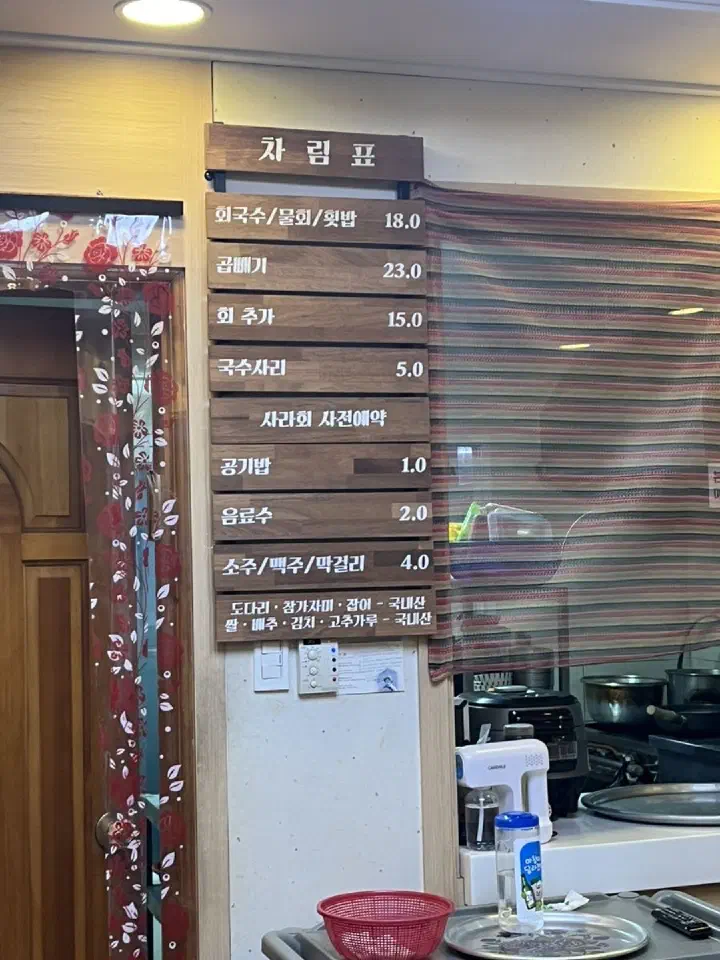
The menu is refreshingly simple. Three dishes, all 18,000 won.

- Hoeguksu (회국수, sashimi noodles) – 18,000 won
- Mulhoe (물회, Pohang-style spicy raw fish) – 18,000 won
- Hoetbap (횟밥, raw fish over rice) – 18,000 won
- Large portion – 23,000 won
- Extra sashimi – 15,000 won
- Bowl of rice – 1,000 won
- Soft drinks – 2,000 won
- Soju / beer / makgeolli – 4,000 won
For a bowl loaded with this much wild-caught fish, 18,000 won feels fair, neither cheap nor pricey. Given the portion of fish and noodles, it actually leans generous.
The owner catches the fish himself, so what shows up depends on the day, usually flounder, marbled sole, and whatever else came in.
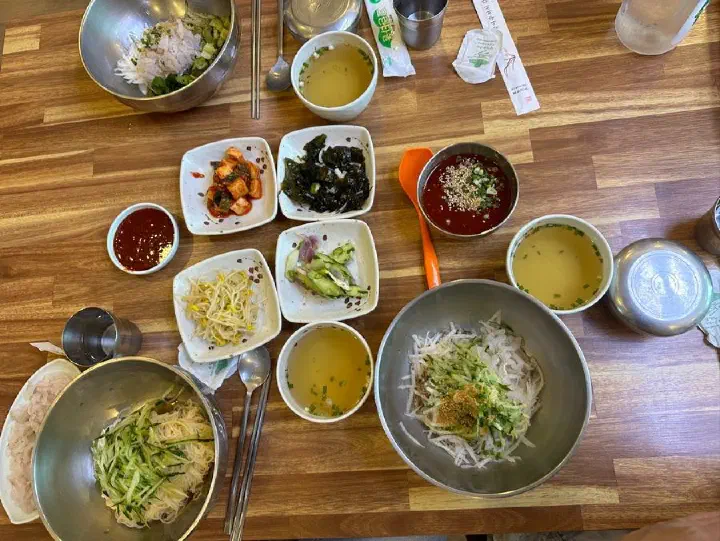
It starts with steamed sweet potato and side dishes
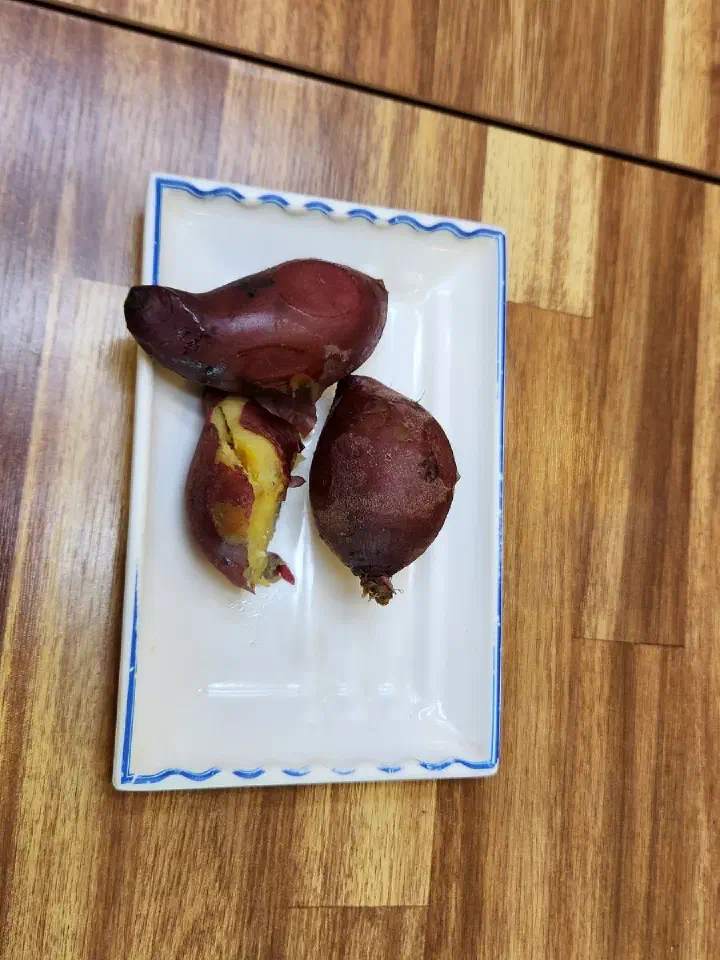
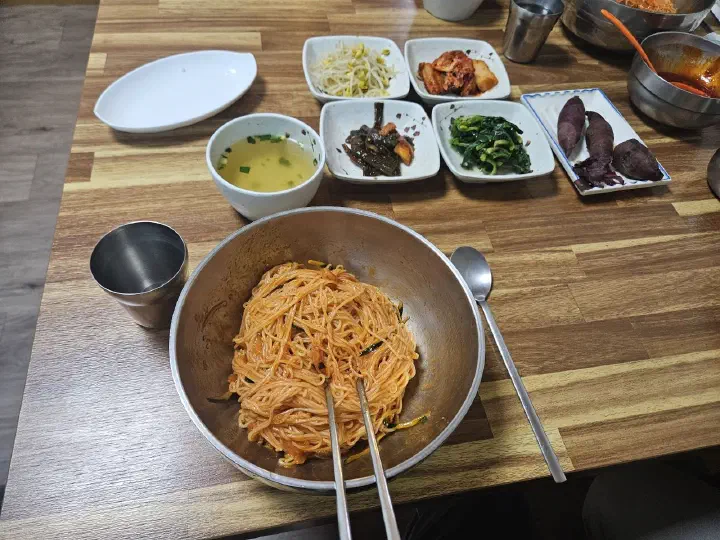
When you sit down, they bring out steamed sweet potato (or potato) first.
Soft and sweet, it’s the perfect thing to nibble on before the spicy noodles arrive.

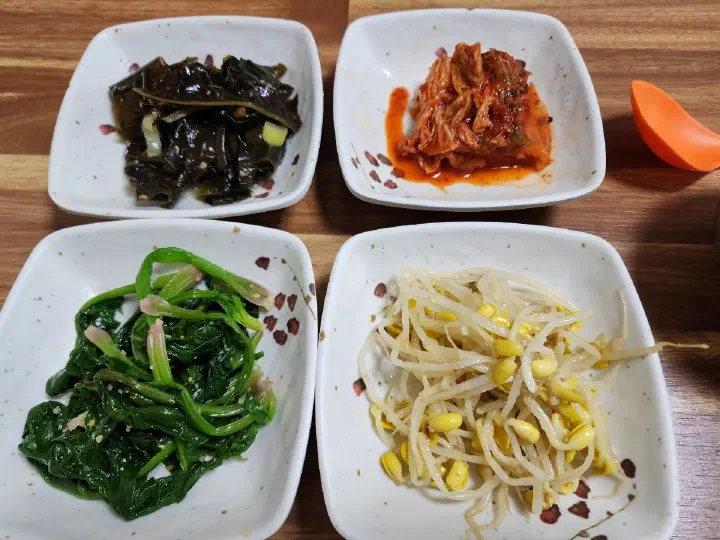
The side dishes are seasoned seaweed, bean sprouts, kimchi, and greens.
They taste home-cooked, and the cabbage kimchi in particular is deep and clearly made in-house. I could have eaten it with plain rice.

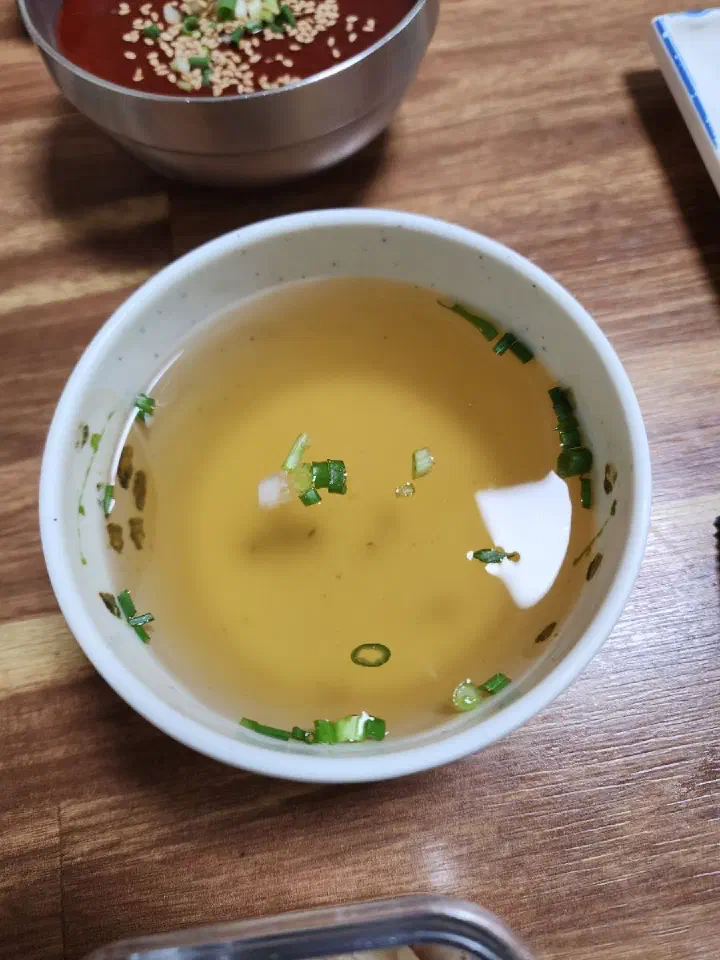
Don’t skip the anchovy broth they serve.
Anchovy stock often turns bitter if it’s boiled too long, but this one is clean and rich without a trace of bitterness.
Before mixing your noodles, scoop a little into the broth and slurp it that way, it’s a small treat.

Two sauces, don’t mix them up
Here’s the one thing that trips people up.
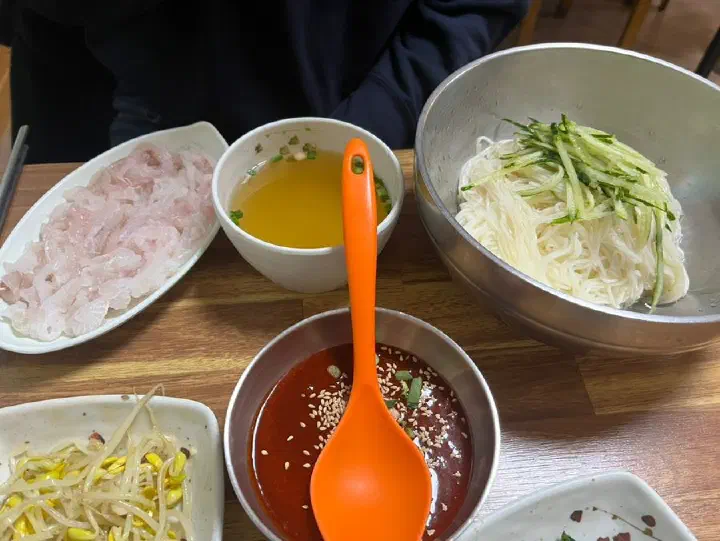
They bring two different sauces. The mulhoe sauce is gochujang-based and bold, while the sauce for hoeguksu and hoetbap is chojang-based, tangy-sweet and nutty.

Use the mulhoe sauce for mulhoe and the noodle sauce for the noodles.
Groups apparently mix them up all the time, so it helps to know in advance.
The main event: hoeguksu
This is the dish that pulls people all the way out to Homigot.
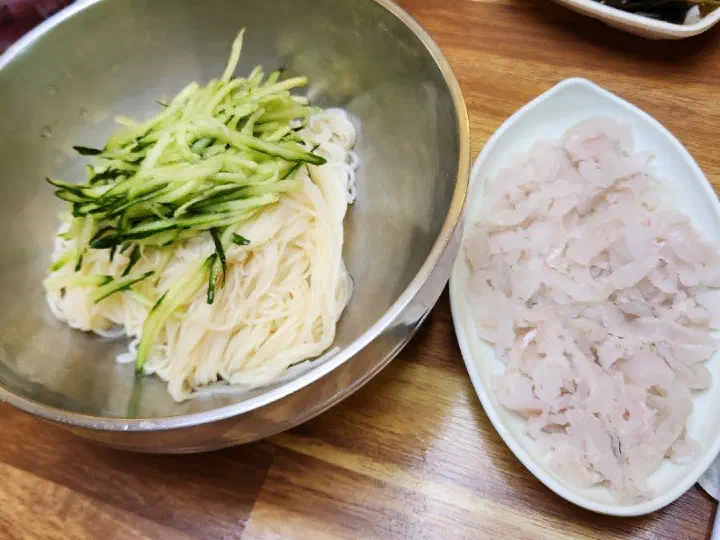
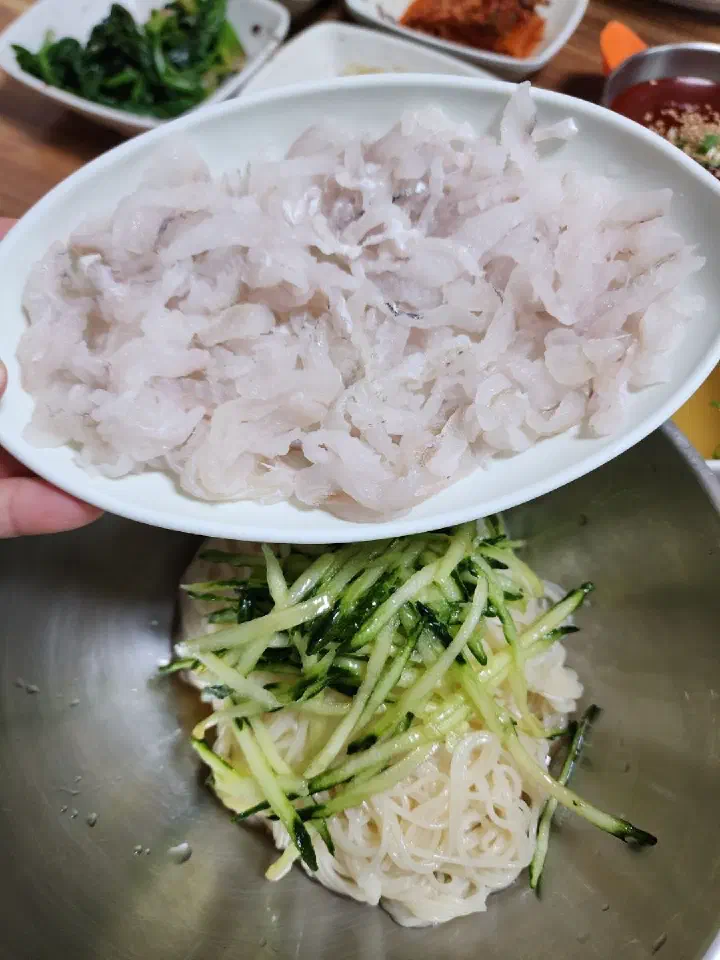
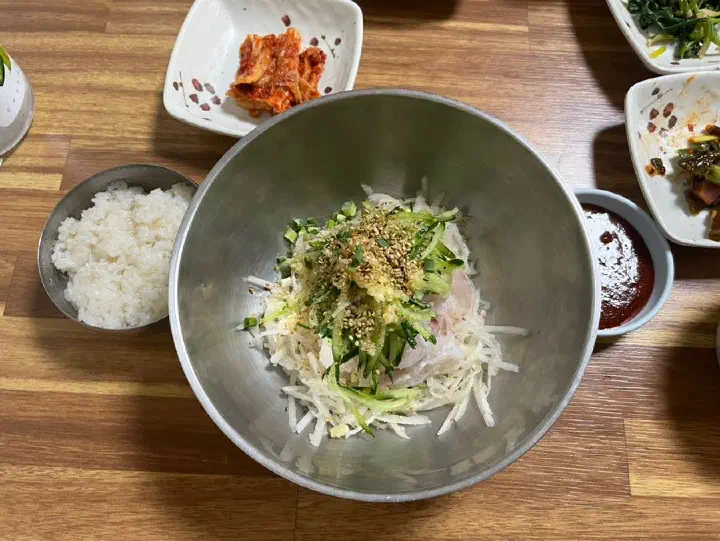
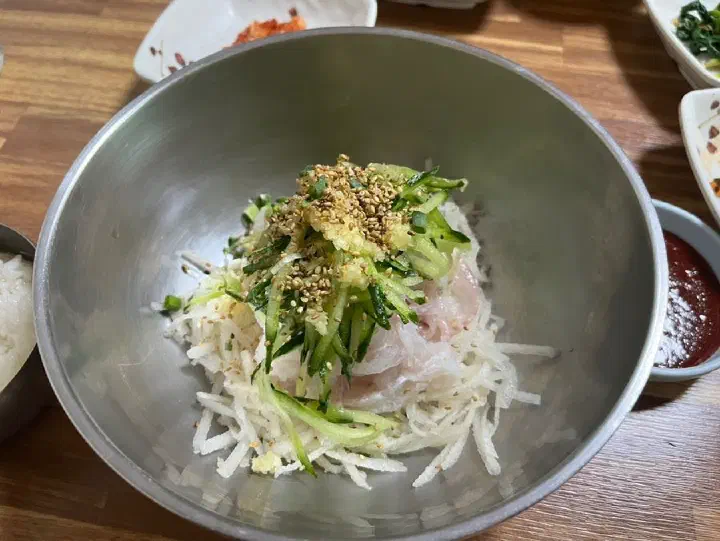
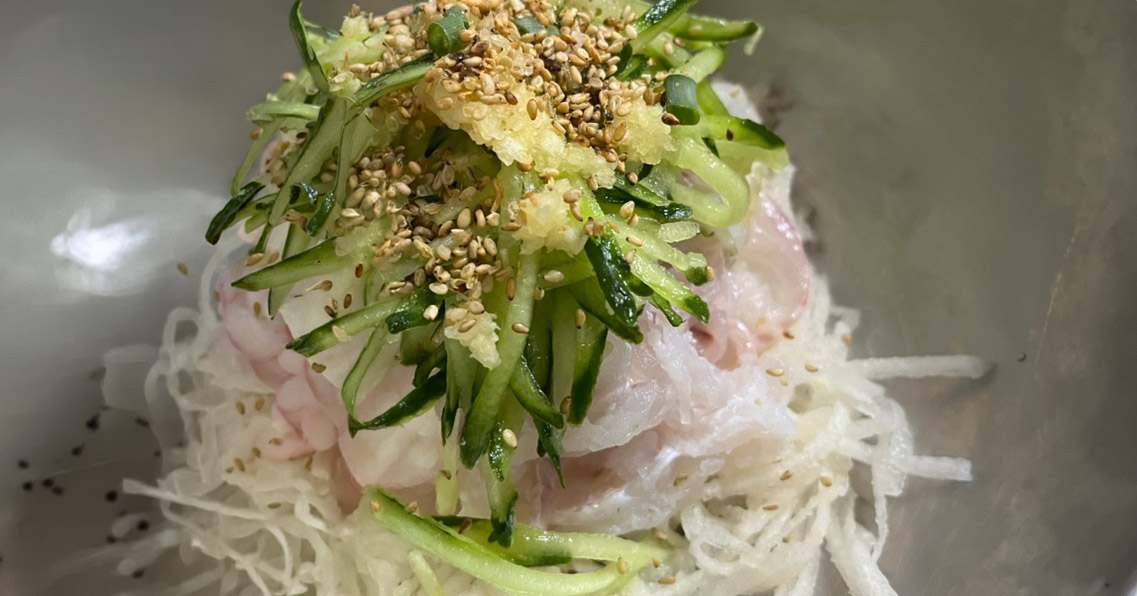
Order the hoeguksu and the noodles and the fish come out separately. The noodles arrive in a big bowl, with a generous plate of sashimi on the side.

Because the fish comes on its own plate, you can dip a piece in chojang and taste it before mixing anything.
It’s wild-caught and gets nuttier the more you chew, the kind of thing you could finish on its own.

The noodles come topped with shredded cucumber, and there’s sesame oil in there, so the moment you lift them the aroma hits you.

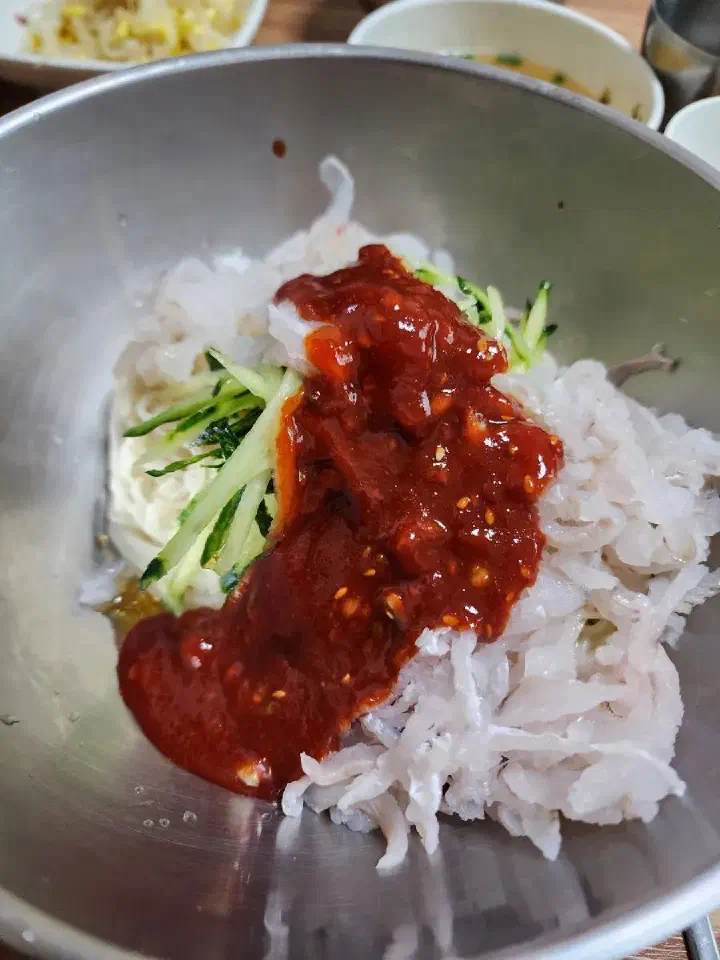
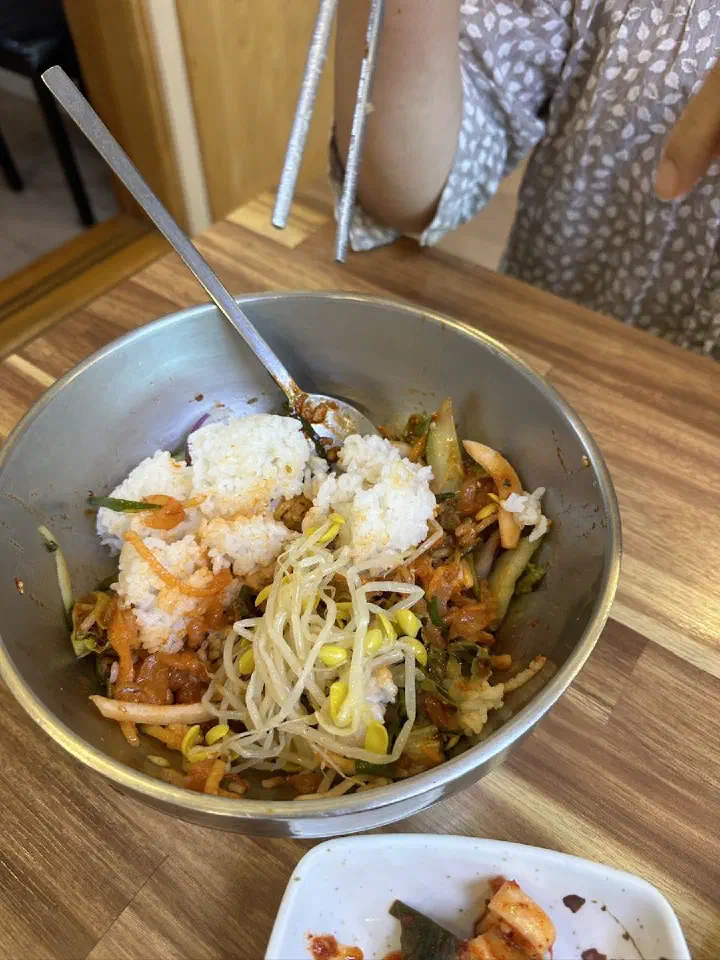
Now tip all the fish into the noodle bowl, add about a spoon and a half of the noodle sauce, and toss it together.
The owner walks you through how to do it.

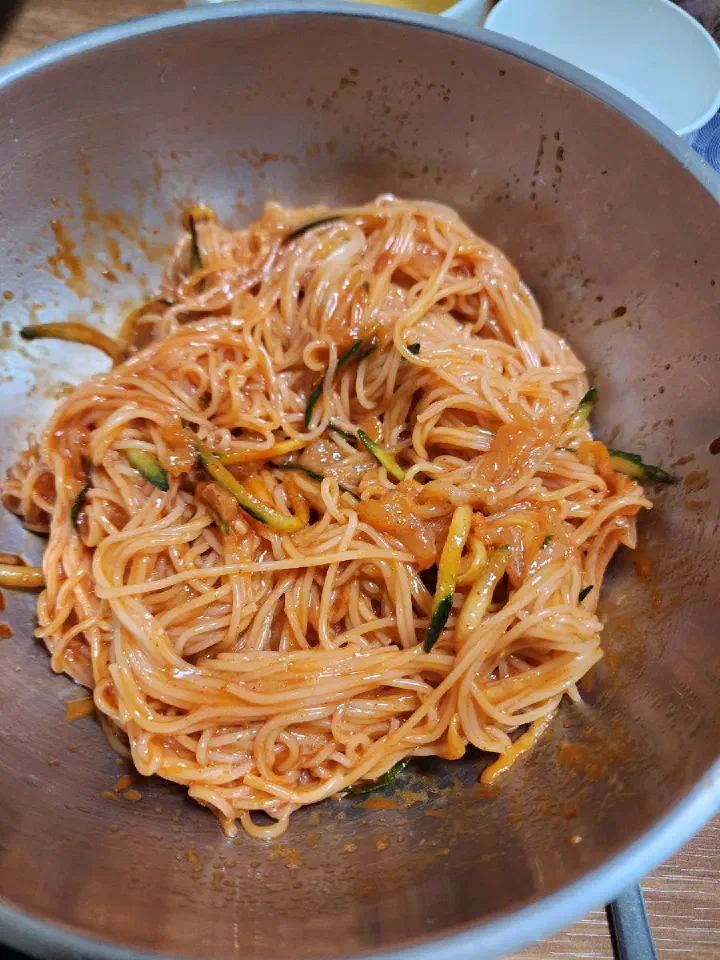
Mixed up, it comes together glossy and bright.
Sesame oil meets that house-made sauce and you get nutty, spicy, sweet, and tangy all at once.
The noodles are chewy, the cucumber crisp, the fish springy. The textures alone make it.

A heads-up for visitors: this is spicy by Korean standards, which usually means quite spicy if you’re not used to Korean heat. Take a sip of the warm anchovy broth between bites to reset, then go back to slurping.
About halfway through, try dropping in some of the seaweed from the side dishes. It adds a nice fragrance.
Pohang-style mulhoe and hoetbap
The mulhoe here isn’t the brothy, icy version most people picture.
It’s just fish with cucumber, a bit of garlic and sesame oil, tossed in gochujang sauce, Pohang style.
It’s closer to a spicy raw fish salad, so it might feel unfamiliar at first.

Toss it with the gochujang sauce, then add a few ice cubes and a splash of water and it turns into the soupier mulhoe you might expect.
A bowl of rice comes with it, so you can eat half and then stir in the rice like a rice bowl.

Hoetbap is basically the mulhoe with rice instead of broth.
Rice and fish tossed in the chojang sauce, so if you like raw fish rice bowls, this one’s for you.

Good with kids, too
Without being asked, they brought out a separate portion of plain noodles in anchovy broth for the little one, with a fork.
A lot of parents say they packed snacks expecting nothing kid-friendly and then felt silly. That kind of quiet thoughtfulness makes it easy to bring children.
Parking, payment, and small tips
Parking is easy in the big lot out front, no stress at all.
The restroom is inside and clean.
Since the fish is wild-caught and changes daily, the catch can vary a little, worth knowing going in. What’s consistent is the freshness and the generous portions.
If you don’t like cucumber, mention it when you order.
A couple of practical notes for foreign travelers: nearly every restaurant in Korea takes cards, and any internationally accepted card works fine here, so no need to worry about payment. There’s also no tipping culture in Korea, so you don’t tip, and offering one might just confuse the staff. English isn’t really spoken, but the menu is short and you can simply point and hold up fingers for how many you want. It’s genuinely easy.
The verdict
I came for mulhoe and left completely won over by the sashimi noodles.
That tangy-sweet house sauce, the sesame aroma, the chewy noodles against fresh wild fish, it’s the kind of flavor that keeps coming back to you.

Add the sea view, the kind owner, and the homey side dishes, and it’s a local spot worth the detour.
Afterward, take a walk at nearby Homigot Sunrise Square or Yeonorang Seonyeo Park to let it settle and soak up a bit more of the coast.

If Pohang’s on your itinerary, do yourself a favor and try the sashimi noodles, not just the mulhoe.
Location / Getting there
- Address: 1866-13 Homi-ro, Homigot-myeon, Nam-gu, Pohang, Gyeongsangbuk-do
- About 8–10 minutes by car from Homigot Sunrise Square
- Take the coastal road from downtown Pohang toward Homigot