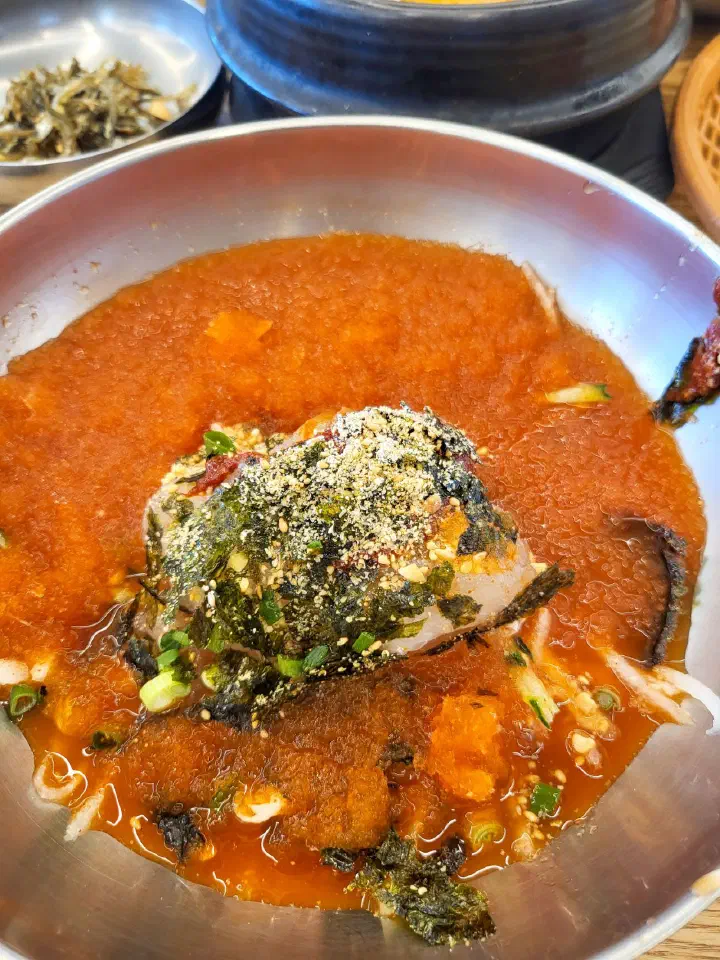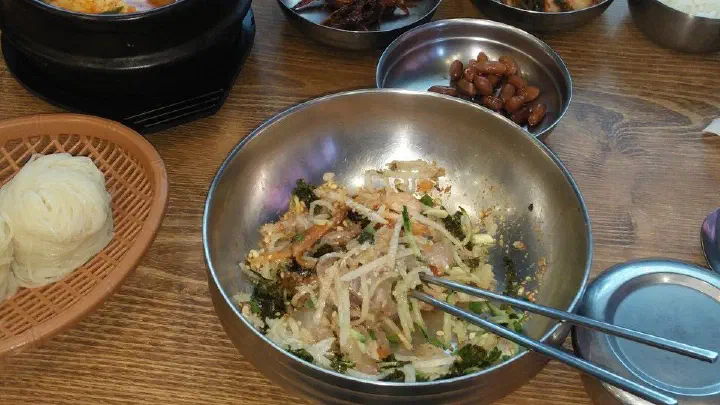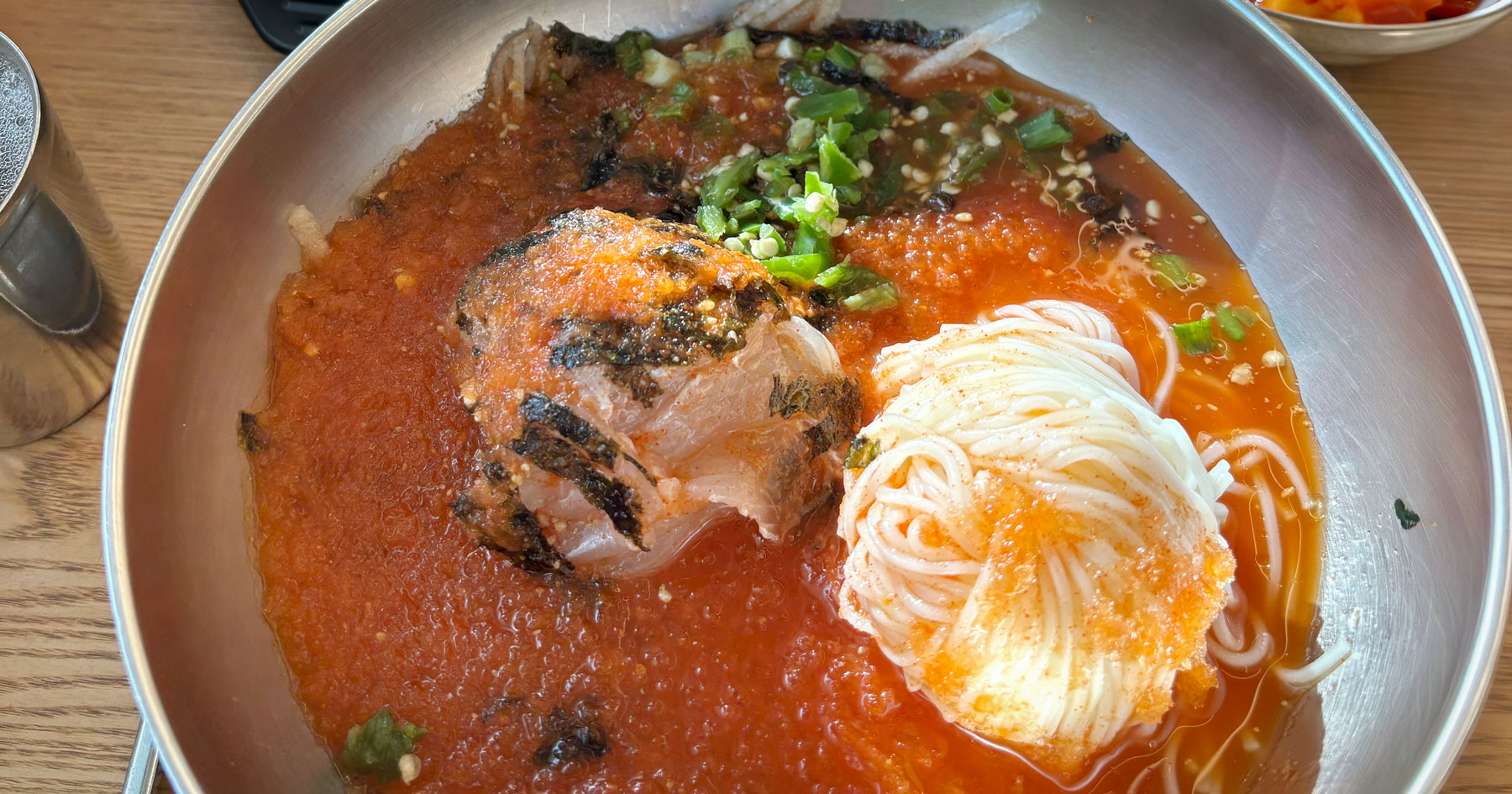
If you ask anyone in Pohang where to eat mulhoe (물회), this place comes up almost every time.
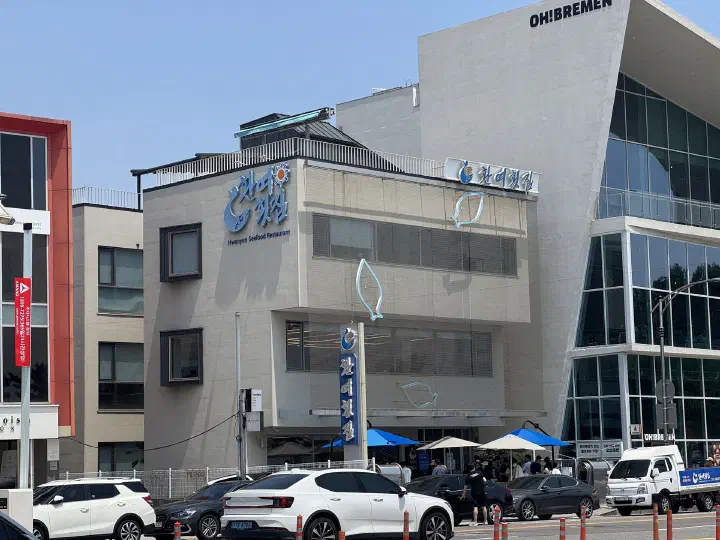
It sits right in front of Yeongildae Beach, a tall glass-fronted three-story building you can’t really miss while walking the shore.

It’s popular with tourists, but locals have been talking about it for years too. For a lot of people, this is their very first bowl of Pohang mulhoe. Families come here easily, and it works fine for a solo meal or a casual date.
The basics, and how to get a table
Hwanyeo Hoetjip (환여횟집)
- Address: 189-1 Haean-ro, Buk-gu, Pohang
- Phone: 054-251-8847
- Hours: 09:30 - 20:20 daily (last order 19:10)
- Breaks: 10:20 - 11:00 and 15:00 - 16:00 (weekend afternoon break runs 15:30 - 16:30)
- Parking: nearby public lots (free and paid)
📍 View Hwanyeo Hoetjip (환여횟집) on Google Maps →
Note the two daily break times. It’s easy to show up in the gap between lunch and dinner and find the doors closed, so double-check before you head over.
You take a number from the kiosk at the entrance. If you’re dining alone or in a group of five or more, grab a ticket and then tell the counter your party size separately.
Waiting depends heavily on timing. Early lunch or late afternoon, you’ll often be seated right away. Between 12:30 and 1 on weekends, the line grows fast.
The good news is that tables turn over quickly here. Even a long-looking queue tends to move faster than you’d expect, since there’s seating across three floors and food comes out fast. If you want to skip the wait entirely, go right at the 09:30 opening, or put your name in just before a break ends.
The inside has been redone and feels almost café-like. There’s an elevator, which helps if you’re with a stroller or an older family member, plus high chairs and a microwave for baby food.
Seating is assigned, so you can’t always claim the exact ocean-view spot you want. But if you land a window seat on the second or third floor, you get Yeongildae’s water right there, and it really lifts the whole meal.
The menu - mulhoe is the star, the stew is the twist
Mulhoe is the signature. Mulhoe, mulhoe-guksu (with noodles), and hoedeopbap (raw fish rice bowl) are all 18,000 won. There’s also flounder mulhoe at 24,000, a premium “danji” mulhoe at 26,000, and abalone porridge in a small kids’ size and a larger adult size.

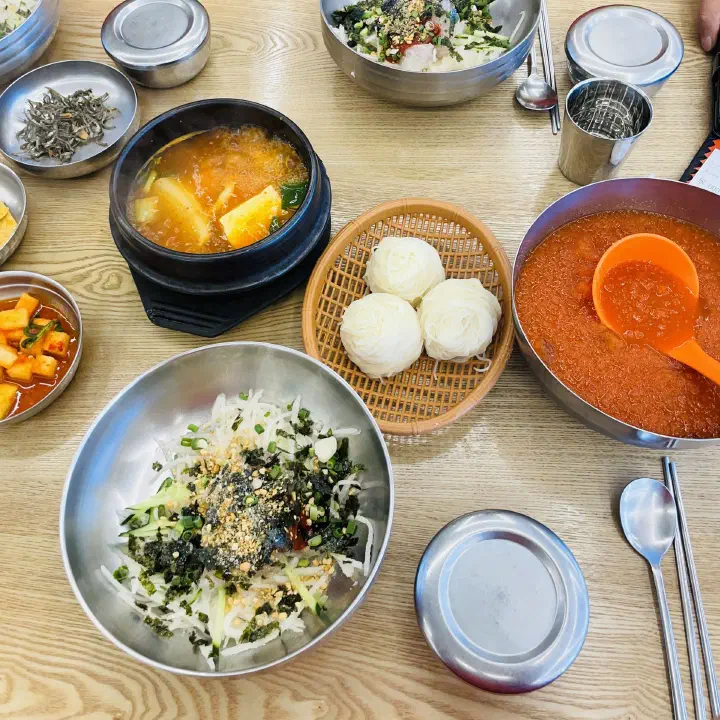
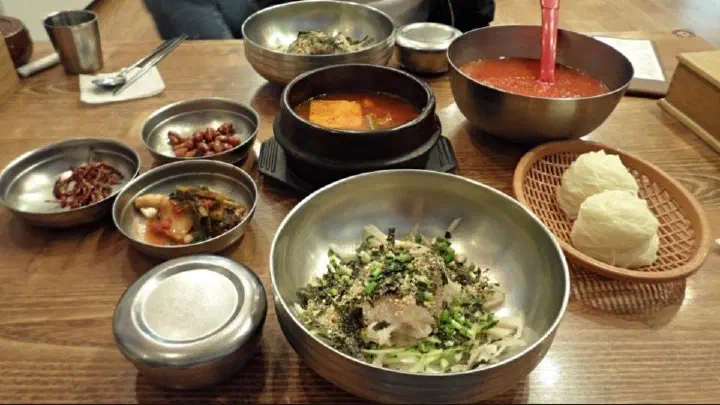
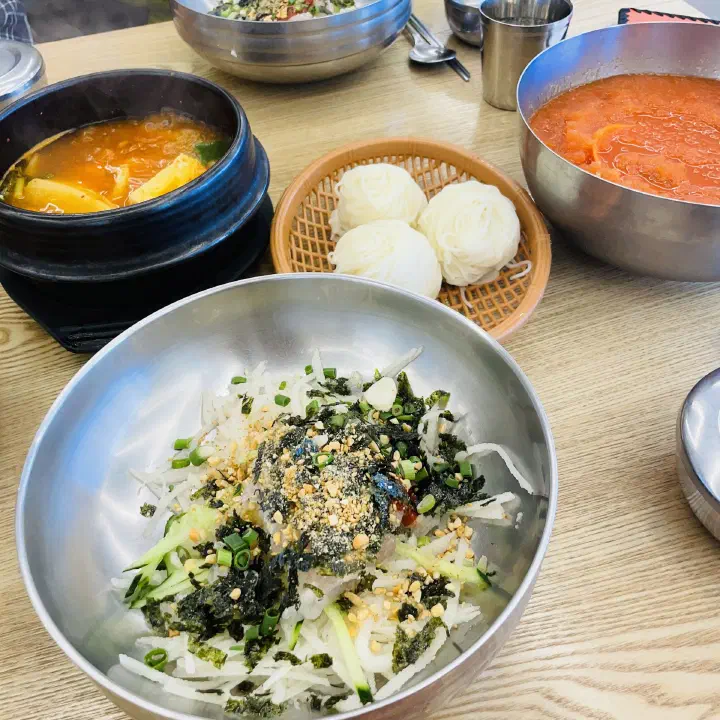
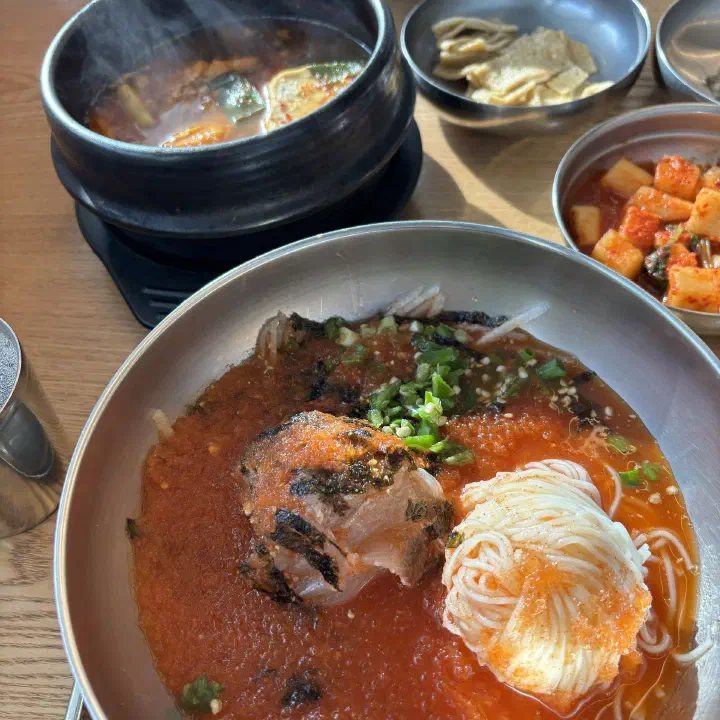
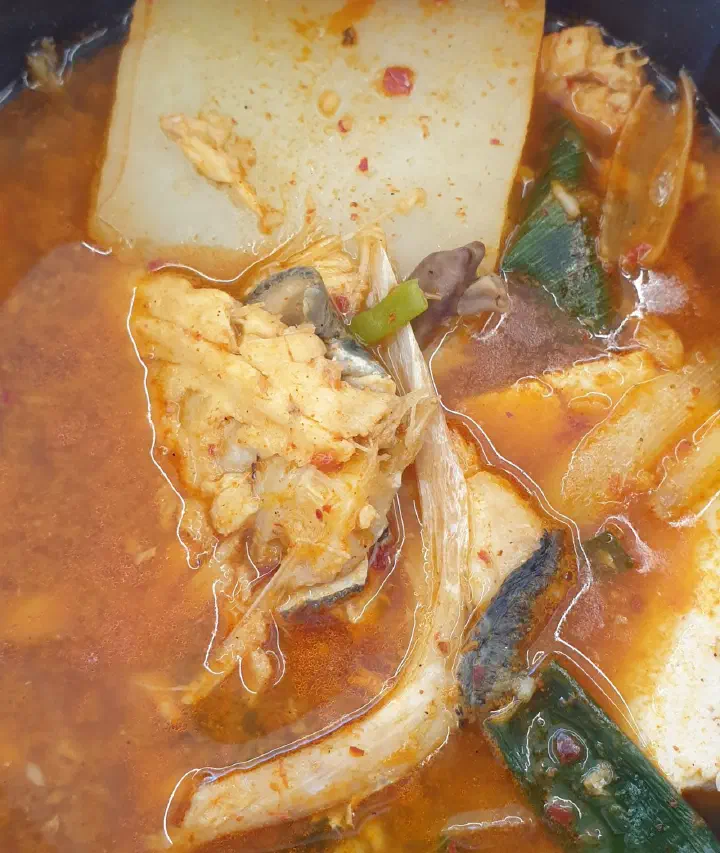
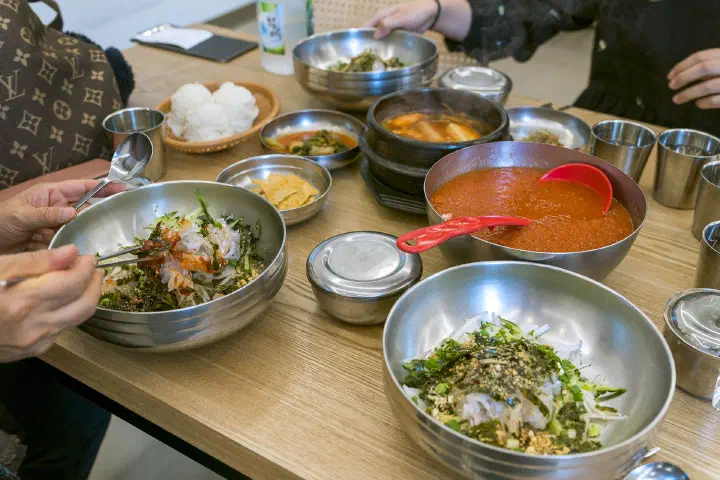
Order mulhoe and you also get rice, a bundle of somyeon noodles, and a free spicy stew. One order alone fills the table.


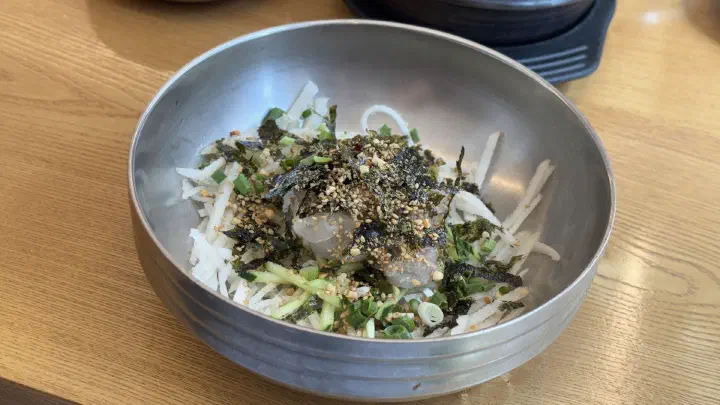
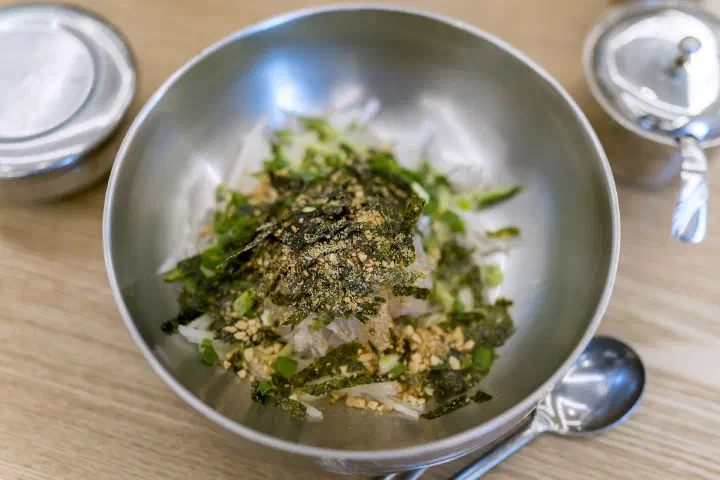
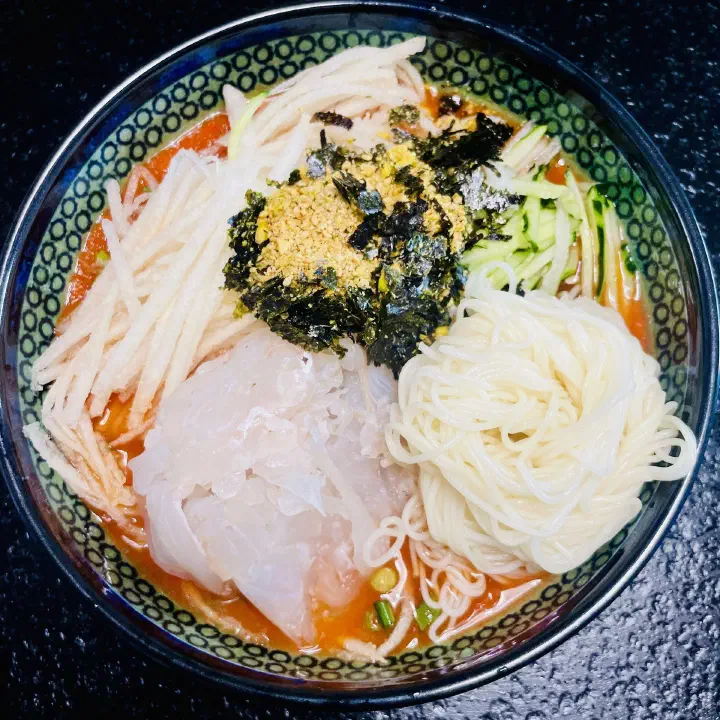
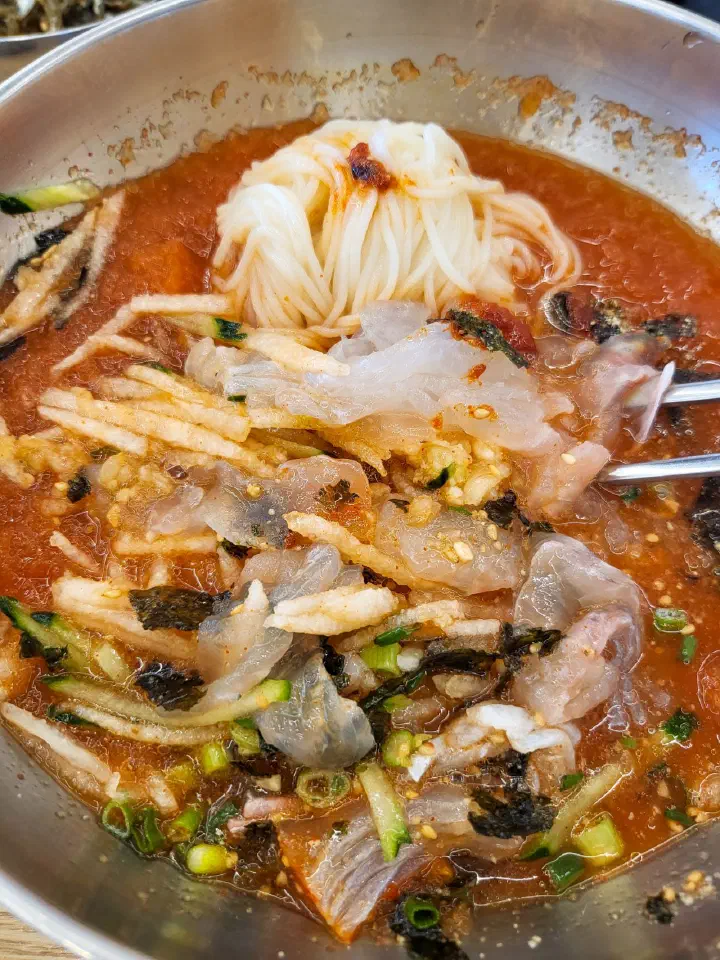
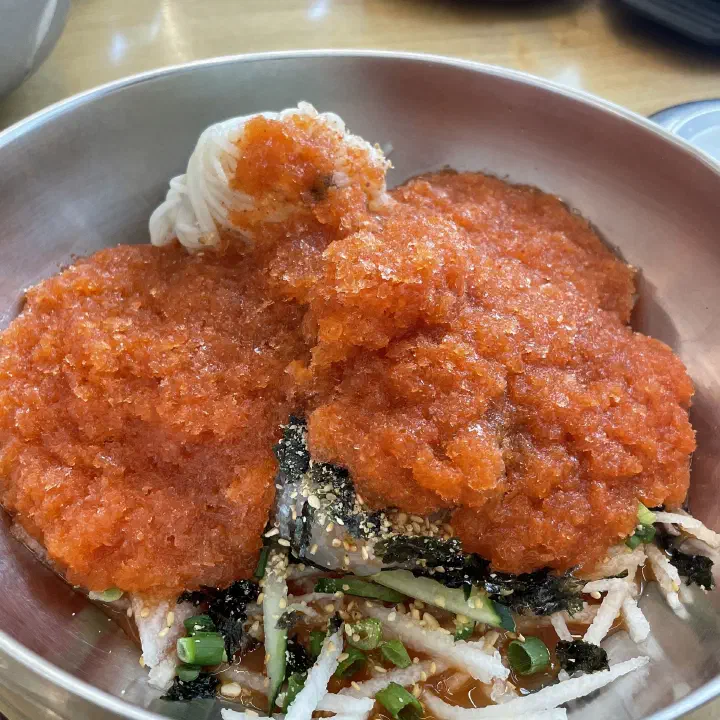
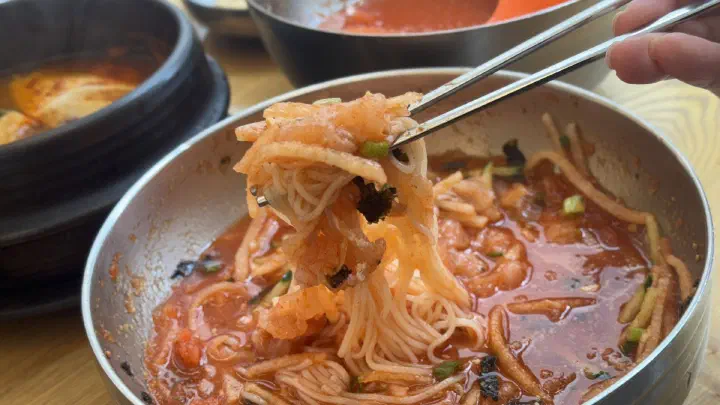
One thing worth knowing: this isn’t the chili-paste style mulhoe many associate with Pohang. It’s closer to the Sokcho style, where you pour a sweet-and-sour broth over the fish. The broth arrives separately as an icy slush, so you add as much as you like and adjust the seasoning yourself.

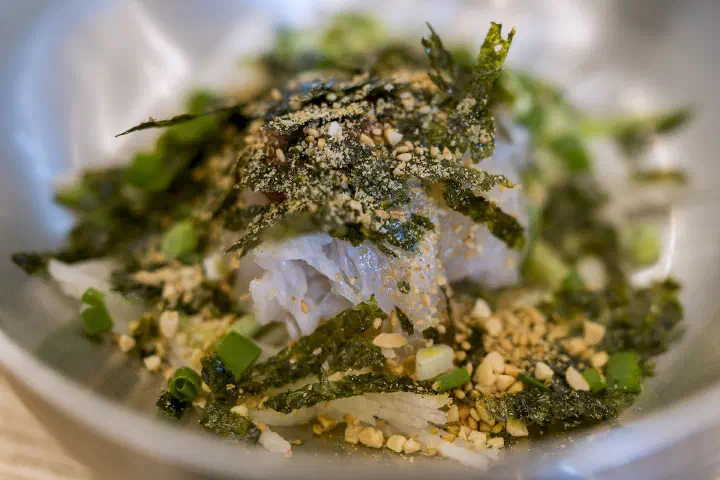
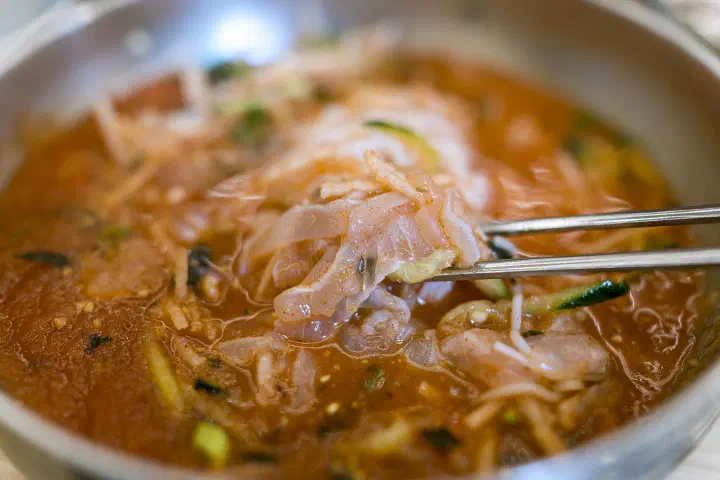
The fish is a mix of flounder and similar white fish, sliced clean without tiny bones, so it’s easy to eat. There’s a generous bed of thin-sliced pear underneath, and that mild sweetness pairs nicely with the tangy broth. Ground peanut and sesame add a toasty note that keeps the sweet-sour flavor in check.

It’s a crowd-pleasing, not-too-spicy flavor, so even people who don’t handle heat well are usually fine. That said, the sweet-sour side is fairly strong, so it can read a touch sweet depending on your taste.
A quick note for international visitors: Korean food labeled mild can still feel hot to many travelers, but this dish is on the gentle side, so spice shouldn’t be a problem here.


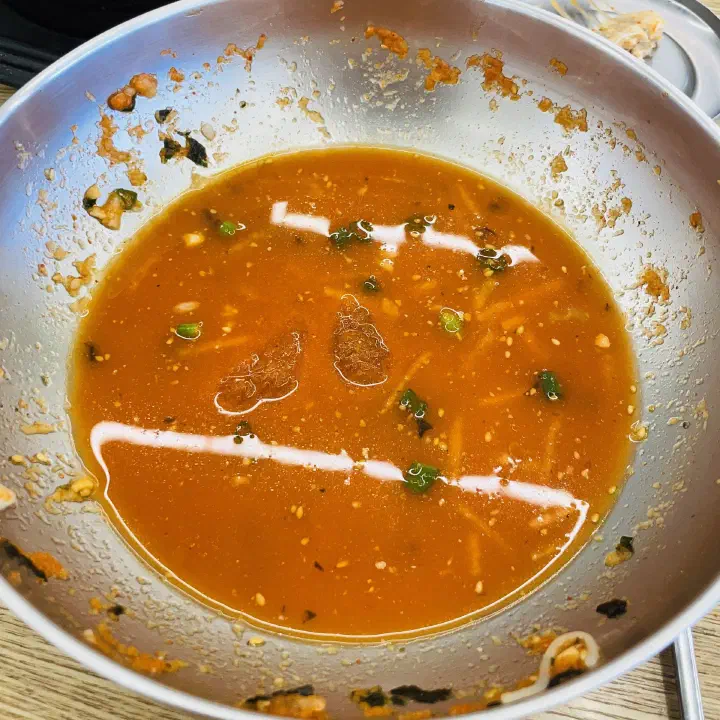
The usual way to eat it: enjoy the fish first, then drop in the somyeon noodles for a first round, and finish by stirring rice into whatever broth is left.

The noodles are boiled well and stay soft. If your group is split between rice people and noodle people, ordering one mulhoe and one mulhoe-guksu to share covers both.


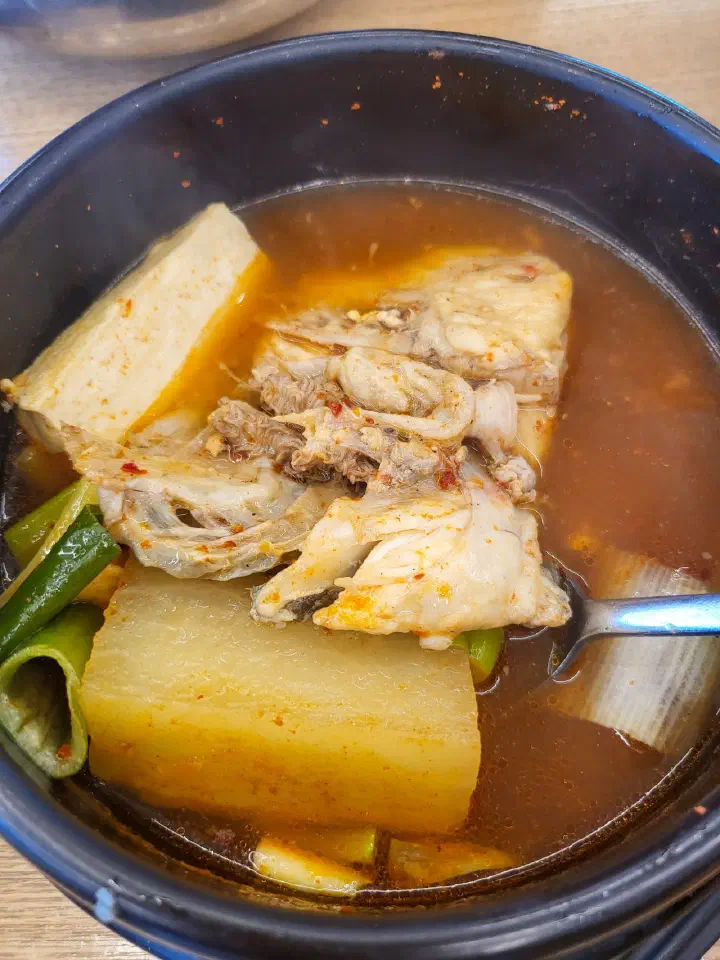
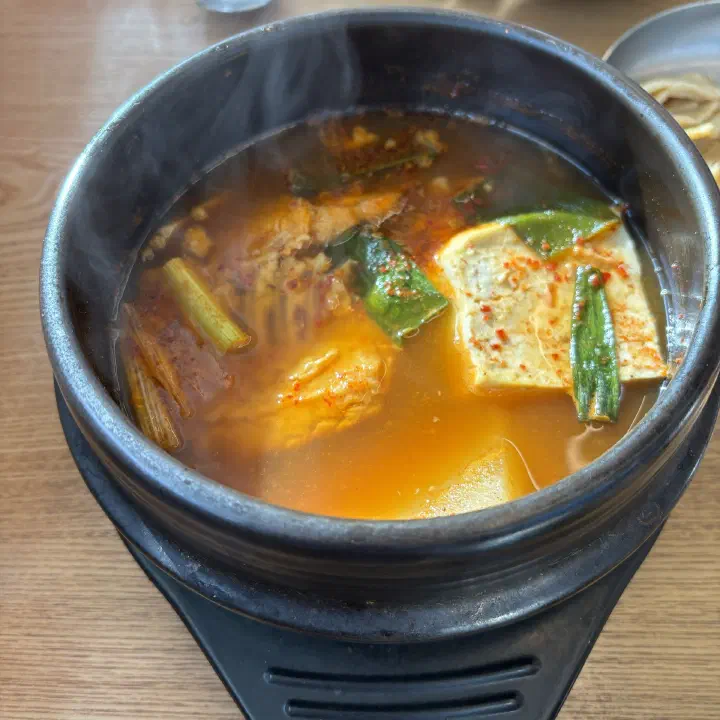
But the real surprise is the spicy stew that comes alongside.

It’s served bubbling in an earthenware pot, and “free side” undersells it. The broth is deep and properly spicy, clearly simmered from real fish bones. There’s a reason so many regulars say they come back for the stew as much as the mulhoe.

Alternating between the cold, tangy mulhoe and a hot spoonful of stew is the whole appeal of this place.

Stir some rice into the stew and it becomes a meal on its own. Don’t stop at the mulhoe; the stew is half the experience.

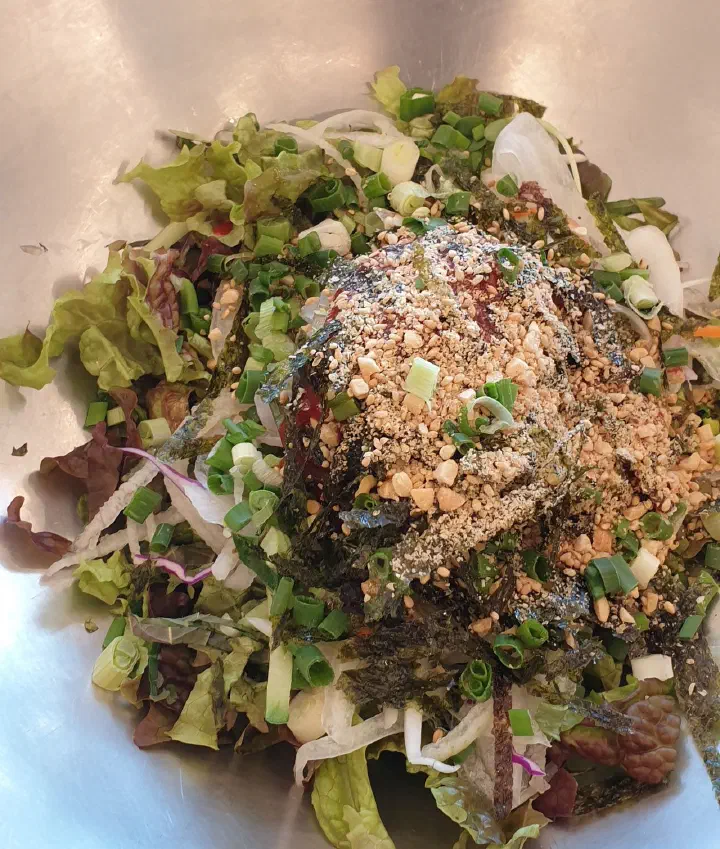
Hoedeopbap (회덮밥) is a steady seller too. It looks similar to mulhoe but you mix raw fish and vegetables into rice, so it’s the choice when you want something filling rather than icy and refreshing.

Mixing in a mulhoe-guksu and a hoedeopbap lets one table sample a few styles at once.

If you’d rather have plain sliced fish, there’s also makhoe (assorted sashimi) and abalone sashimi, easy to pair with a quiet drink.

The honest downsides
A few things to set expectations.

First, the banchan (side dishes). It’s a simple lineup: stir-fried anchovies, kkakdugi (radish kimchi), and stir-fried fish cake. Some diners aren’t won over by them. The mains carry this place, so don’t expect much from the sides.

Second, the amount of fish. The set is generous overall, but the raw fish portion itself isn’t huge for the price, since pear and vegetables take up a fair share.

Service also gets mixed reviews. During peak hours it can feel a bit hectic, so it helps to go in expecting a busy, fast-moving room.

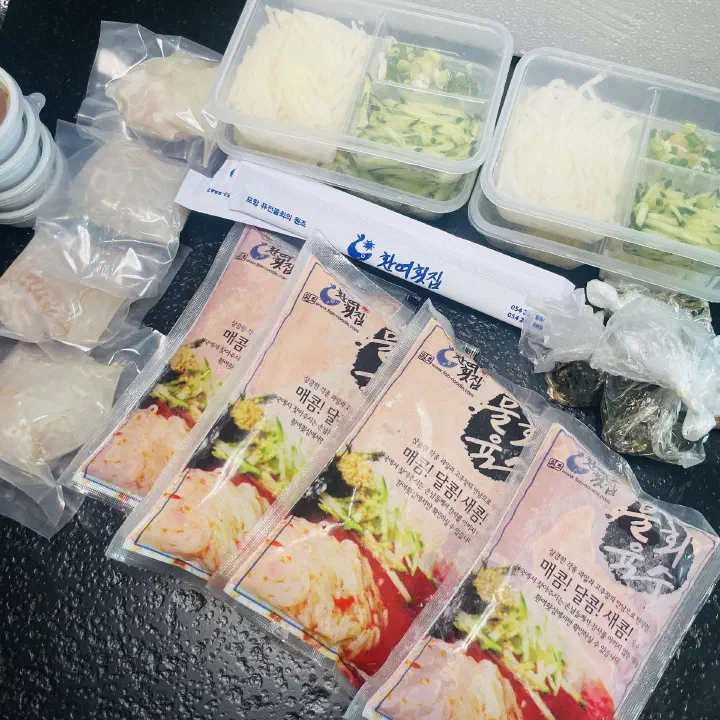
Takeout is available, and they actually give you more fish for to-go orders, but the rice, noodles, and stew aren’t included. Since that stew is half the charm, eating in is the better call.
Parking and getting there
The on-site lot fits only two or three cars, so treat it as nonexistent.
- Free: lots in front of HEYAN café and the Dumuchi public lot (about a 3-minute walk, 200m)
- Paid: Yeongildae No. 2 public lot (a 2-3 minute walk, fairly cheap)
On weekends and holidays even those lots fill up. Since the beach is right out front, parking a bit farther and walking along the shore is often the easier move. The meal flows straight into a seaside stroll, which makes this a natural stop on a Pohang itinerary.
The price of mulhoe has crept up over the years and sits around 18,000 won now. Older regulars still recall the days of the small two-story house here, before the building grew and prices rose.
A few practical notes for travelers: almost every restaurant in Korea takes credit cards, so any internationally accepted card should work fine, and there’s no tipping culture here, so you don’t need to leave one (staff may even be confused if you try). English isn’t widely spoken, but ordering is simple. The menu is posted on the wall, and you can point to what you want and say how many, which is more than enough to get a great bowl in front of you.
Bottom line
Sweet-and-sour icy mulhoe, a spicy stew that punches above its “free” label, fast turnover, and an ocean view of Yeongildae. If you judge purely by value-for-money, opinions split, but as a first taste of Pohang mulhoe it’s an easy, satisfying choice.
Two things to remember: finish the spicy stew too, and aim for a time just off the lunch rush. Do that, and you’ve got a hearty meal right by the water.