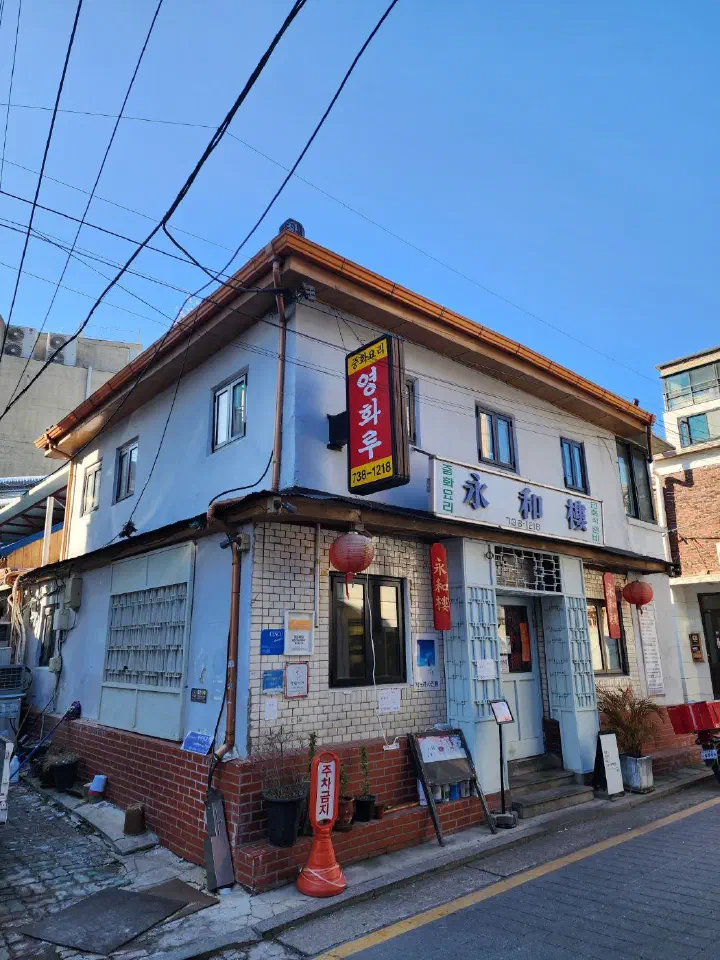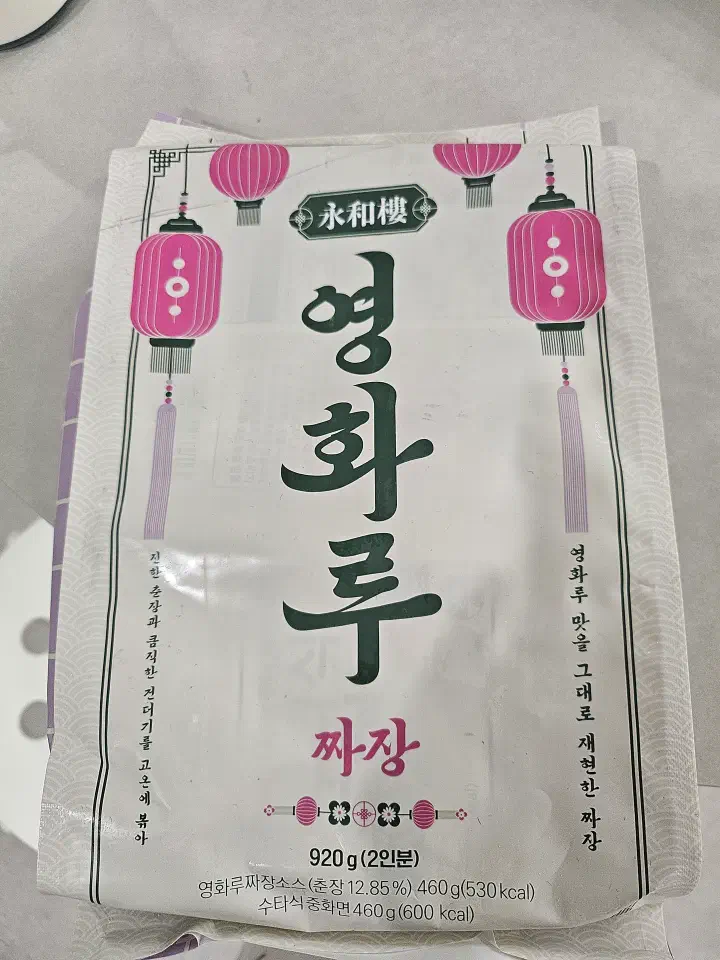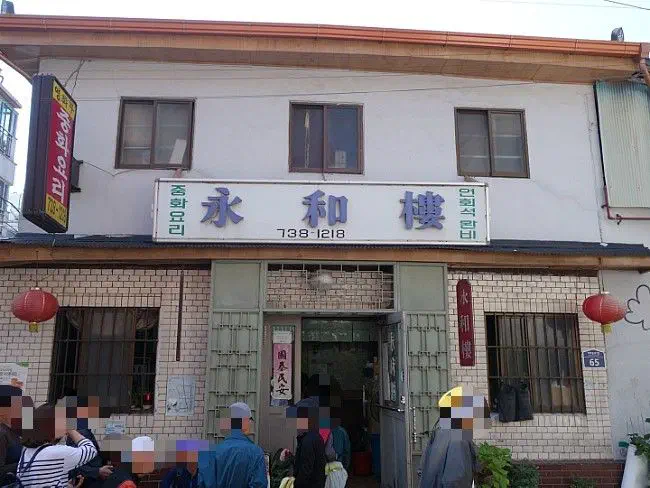
There’s an old Chinese restaurant tucked into a Seochon alley, right by the west entrance of Tongin Market, that usually has a line out front. That’s Yeonghwaru (영화루).
It opened back in 1966. Sixty years, three generations, and a reputation as the place that once delivered jjajangmyeon to the Blue House. The faded sign alone tells you how long it’s been here.

This is a spot for when you’re craving spicy Chinese food and don’t mind a worn-in, old-school room. There are single seats and a second floor with group tables, so it works for a solo lunch or a family meal.
The tables sit close together, though, and it gets loud when it’s busy. If you want a quiet, slow meal, skip the peak hours.
The basics
The address is 65 Jahamun-ro 7-gil, Jongno-gu, Seoul. From Gyeongbokgung Station, exit 1, it’s about a 10-minute walk (around 626m).
Hours are 11:00 to 21:00, with a break from 14:45 to 17:00 and last order around 20:15-20:30. It’s closed every Tuesday, so plan around that. Phone: 02-738-1218.

A quick note for travelers: most restaurants in Korea, this one included, take internationally issued cards without any trouble, and there’s no tipping here. Adding a tip would just confuse the staff. English isn’t really spoken, but ordering is easy enough if you point at the menu and hold up fingers for how many. For directions, use Naver Map or KakaoMap rather than Google Maps, which is unreliable for walking routes in Korea.
📍 View Yeonghwaru (영화루) on Google Maps →
The signature: gochu-ganjjajang
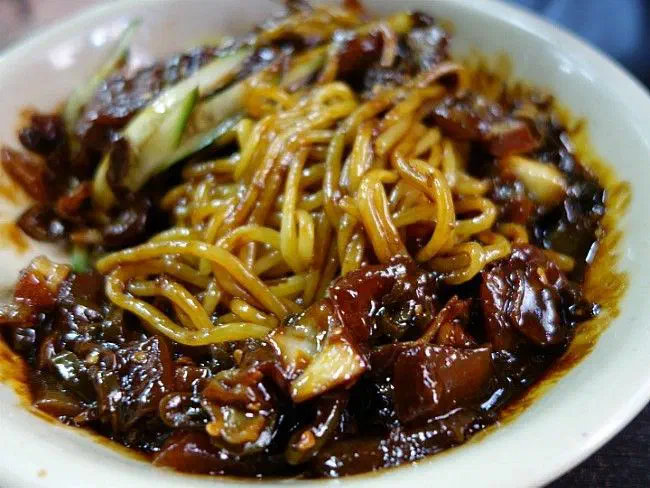
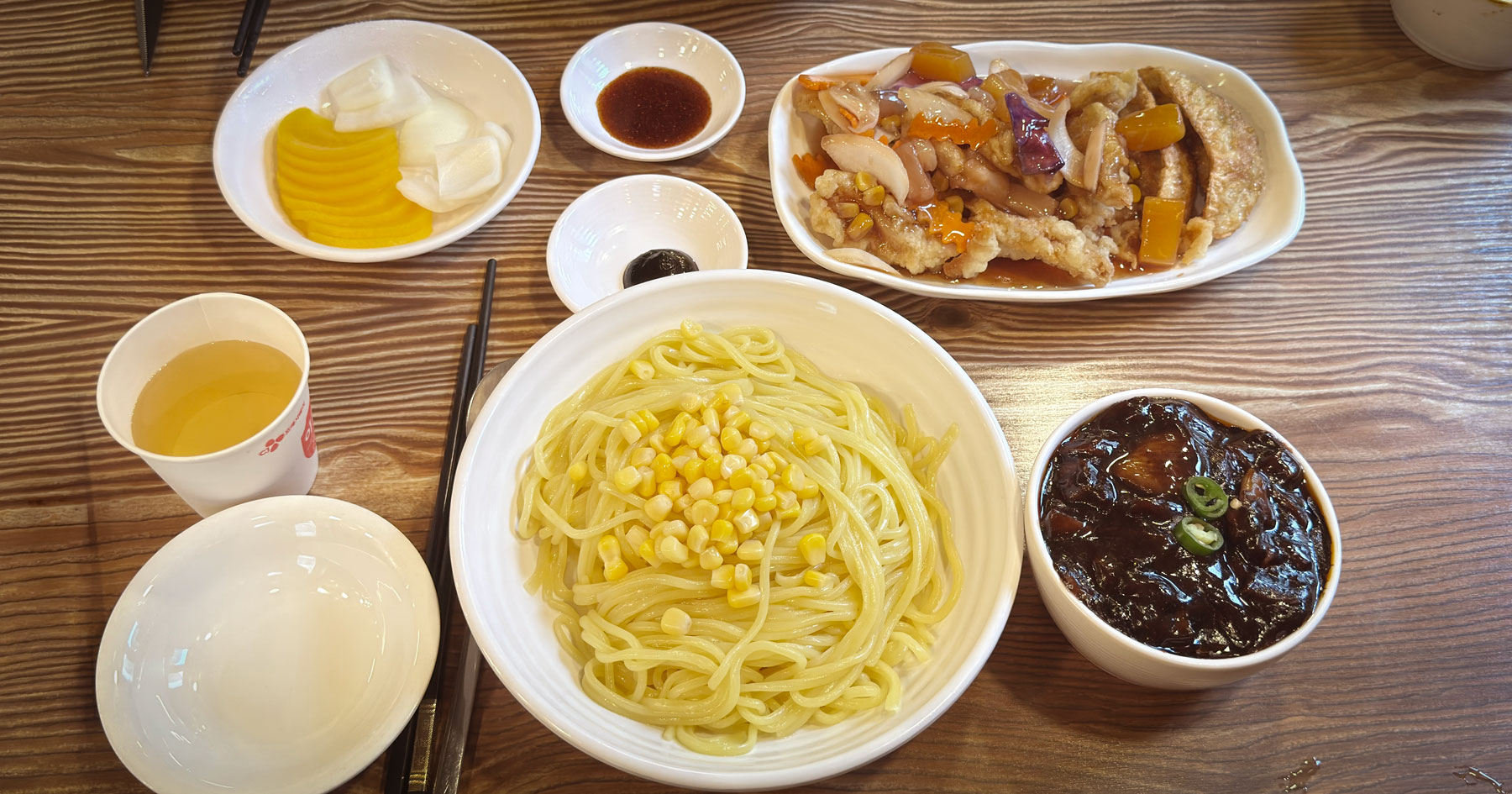
The dish that built this place is gochu-ganjjajang (고추간짜장), spicy black-bean noodles. The sauce comes separate from the noodles, and there’s a little scatter of sweet corn on top.

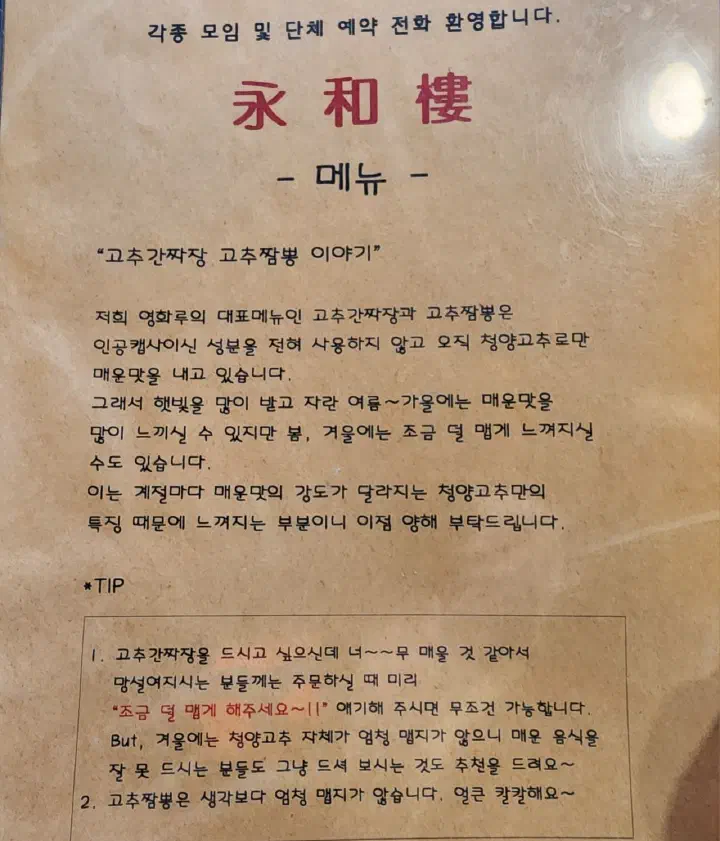
Pour the sauce over and mix, and you’ll see flecks of green from the finely chopped cheongyang chilies. They use real chilies for the heat, no artificial capsaicin.
For reference, it’s hotter than Shin Ramyun but milder than Buldak. The heat cuts right through the usual richness of jjajang, and it’s the kind of thing you keep eating without meaning to.

One heads-up for visitors: Korean spicy is its own level, and cheongyang chilies are no joke. If you’re not used to it, this can read as genuinely hot. You can ask for it milder when you order, and the chilies themselves are spicier in summer and fall, milder in winter. The sauce also runs a little salty, so mix it in a bit at a time rather than all at once.
Gochu-jjamppong, the spicy soup
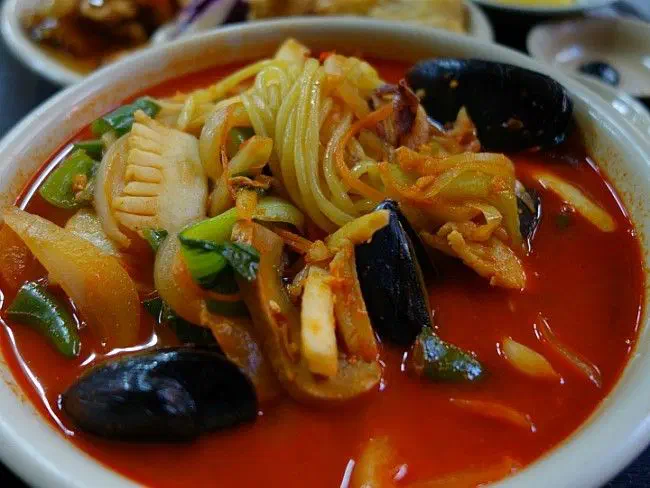
Gochu-jjamppong (고추짬뽕) looks alarming, all bright red broth, but it lands more as a clean, sharp kind of heat than a punishing one.

It’s packed with seafood, mussels and squid, so the broth stays bright instead of heavy. After the dense heat of the jjajang, a spoonful of this soup resets your mouth nicely.
Opinions split on this one, to be fair. Some people find it surprisingly mild, others find it brutal. And while the jjajang can be toned down on request, the jjamppong’s heat is harder to adjust, so order accordingly.
Tangsuyuk and the under-the-radar dishes
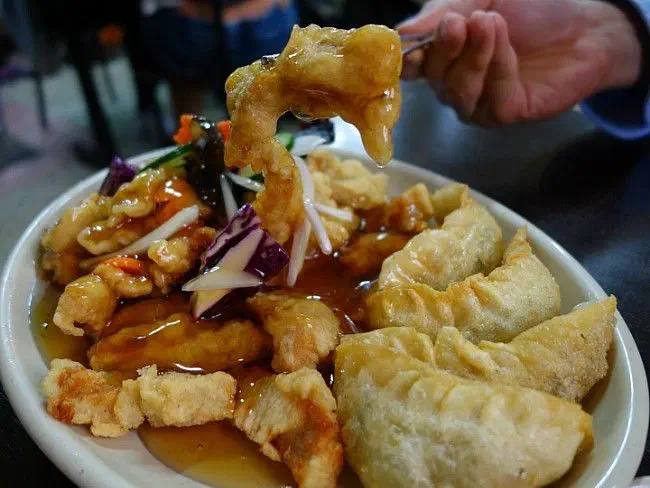
Order a set and you’ll get tangsuyuk (탕수육), sweet and sour pork, with the sauce already poured over it. If you prefer the sauce on the side for dipping, you have to ask.

The pork is thick-cut, and the sauce is the retro kind with canned fruit cocktail in it, sweet and tart, a nice break between the spicy dishes. Two crispy fried dumplings come along on the side.
Honestly, the tangsuyuk is the part people argue about. Some say it’s pre-fried and the coating turns hard, and it isn’t the best value. The real star here is the jjajang, full stop.
There are a couple of quieter dishes worth knowing. In summer, the cold Chinese-style noodles (중식냉면, jungsik-naengmyeon), heavy on the seafood, are a local favorite. When the heat gets to be too much, the mild, thick samseon-ulmyeon noodle soup is a good reset. Regulars also single out side dishes like the eggplant in garlic sauce (어향가지).
The room and the service

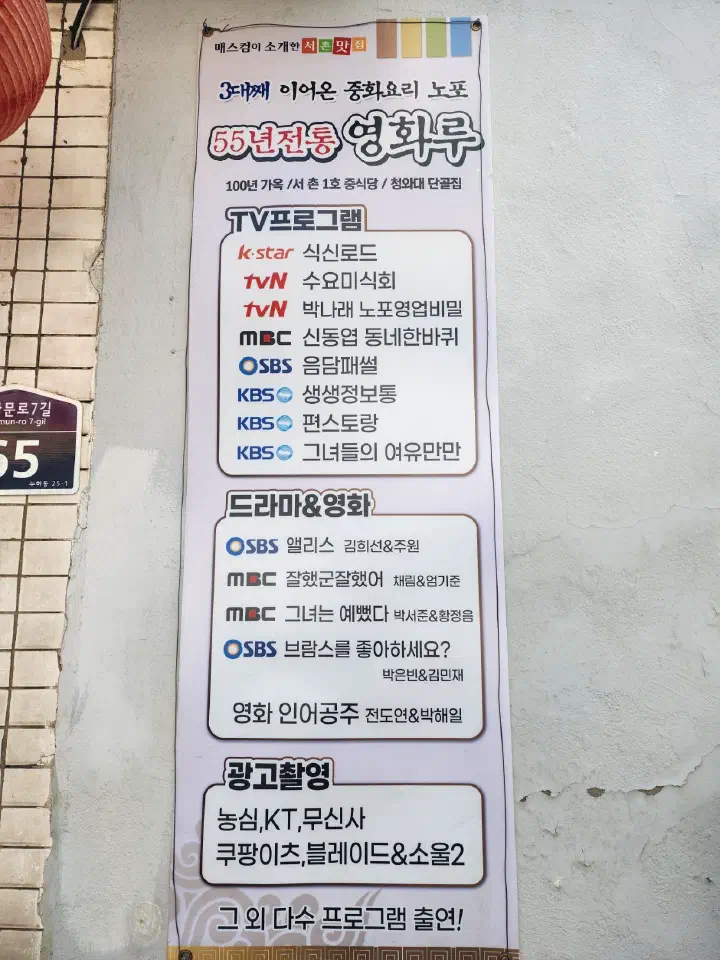
Walk in and the first thing you notice is the wall, packed end to end with autographs from actors and film directors. It’s a fun thing to scan while you wait. The place has shown up on Korean TV food shows and on a popular YouTube channel, which tracks with all those signatures.
Service is hit or miss, and I’ll be straight about that. Some people find the staff friendly even when slammed; others mention brusque service and being asked to share a table. What’s consistent is the speed: food usually lands within five minutes of ordering.
Waits and parking, the part everyone asks about

There’s no app for the line here, no remote check-in. You line up in person in the order you arrive, and your whole party has to be there to be seated.
On weekend and holiday lunch peaks, the wait can run past 30 minutes. But the turnover is fast, so if you come a bit off-peak, around 1:30 in the afternoon, it’s more like 10 to 15 minutes. Weekday lunch, the 11:00 opening, and right after the 17:00 break reopen are all nearly wait-free. Things pick up again from about 6:00 in the evening.
For parking, set your expectations low. There’s no lot and the alley is narrow, so even Naver Map lists it as no-parking. If you’re driving, use a nearby public lot, Singyo or Hyoja public parking, or the Cheong Wa Dae Sarangchae lot, and walk over (it’s a pleasant stroll). Public parking runs about 3,600 won an hour. Realistically, public transit is the easy choice.
📍 View Yeonghwaru (영화루) on Google Maps →
Final thoughts
Yeonghwaru isn’t a polished, trendy restaurant. It’s a 60-year-old room living off one thing it does really well: spicy black-bean noodles built on real chili heat.
People do gripe about the tangsuyuk value and the uneven service. And yet, when you want a spicy plate of jjajang, this is the place that pulls you back into the line. It slots neatly into a Seochon walk or a Gyeongbokgung-and-Tongin-Market afternoon. If you can take the heat, it’s worth a stop.