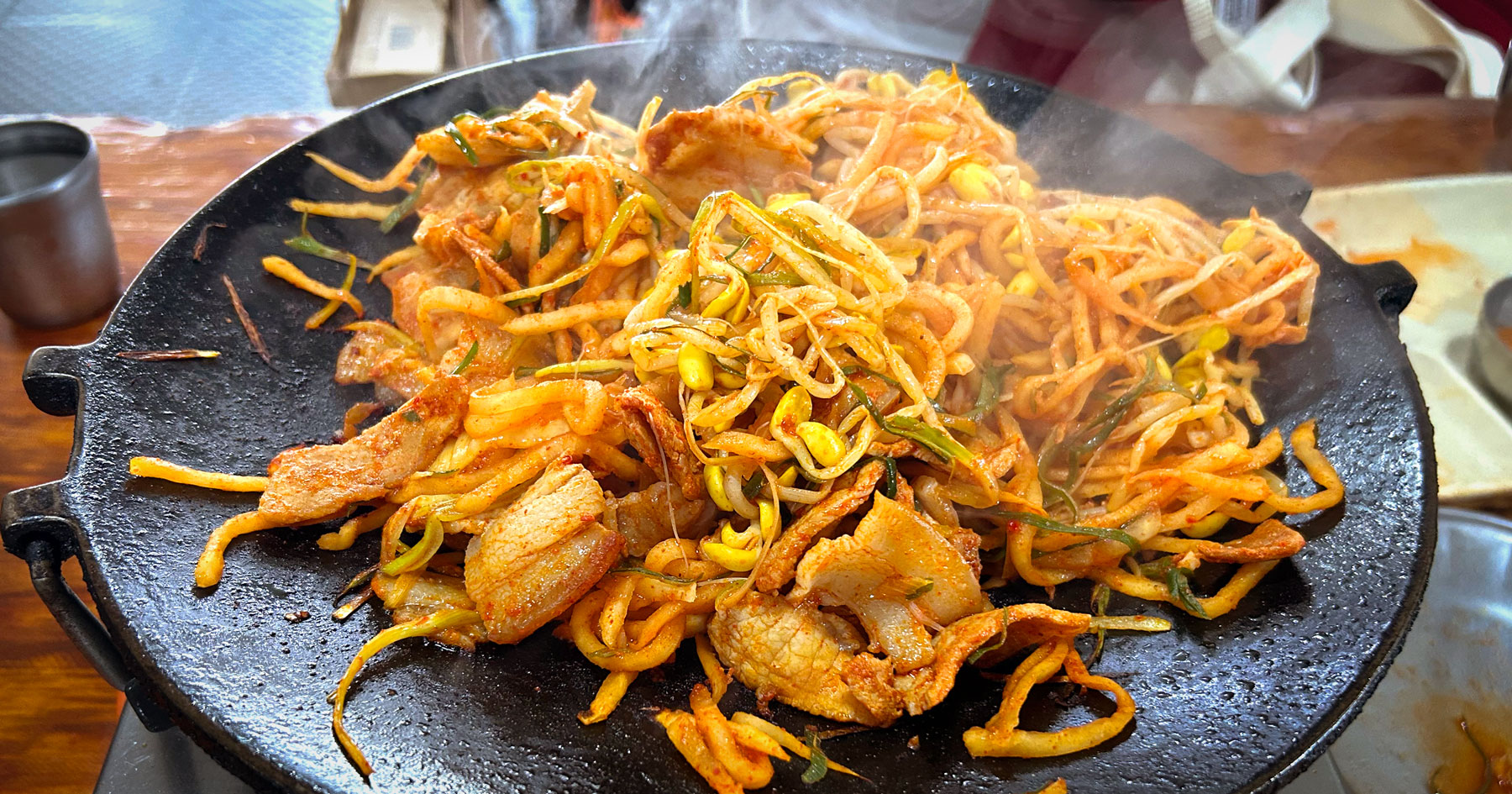
서귀포에서 “가성비로 배부른 한 끼"를 이야기할 때 빠지지 않는 이름이 용이식당이에요.
메뉴는 두루치기 딱 하나, 그런데 그 하나로 수십 년째 손님이 끊이지 않는 집이에요.
어떤 곳인가
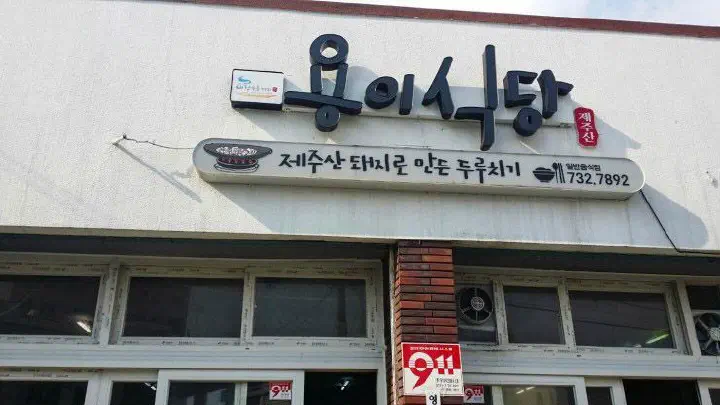
서귀포 올레시장과 아랑조을거리에서 걸어갈 수 있는 골목,
옛 시외버스터미널 자리 근처에 있어요.
관광객보다 도민 손님 비중이 높은 편이라,
점심시간이면 근처 직장인들로 넓은 홀이 금세 차요.
혼자 온 손님도 흔한 곳이에요.
요즘 보기 드물게 1인분 주문이 되고,
아침 9시부터 문을 열어서 아침밥 겸 이른 점심으로 찾는 사람도 많아요.
블루리본 서베이에 여러 해 연속 이름을 올리기도 했고요.
가게 정보
- 주소: 제주 서귀포시 중앙로79번길 9 1층
- 전화: 064-732-7892
- 영업시간: 매일 09:00 - 22:00
- 휴무: 매월 첫째·셋째 수요일
- 메뉴: 두루치기 1인분 10,000원 / 포장 9,000원
- 주류·음료는 팔지 않아요. 밖에서 사 오는 건 괜찮아요.
주문과 먹는 법
자리에 앉으면 주문이 따로 없어요.
인원수만 말하면 양념된 고기와 야채가 바로 세팅되는데,
바쁘지 않을 땐 1분도 안 걸릴 만큼 빨라요.
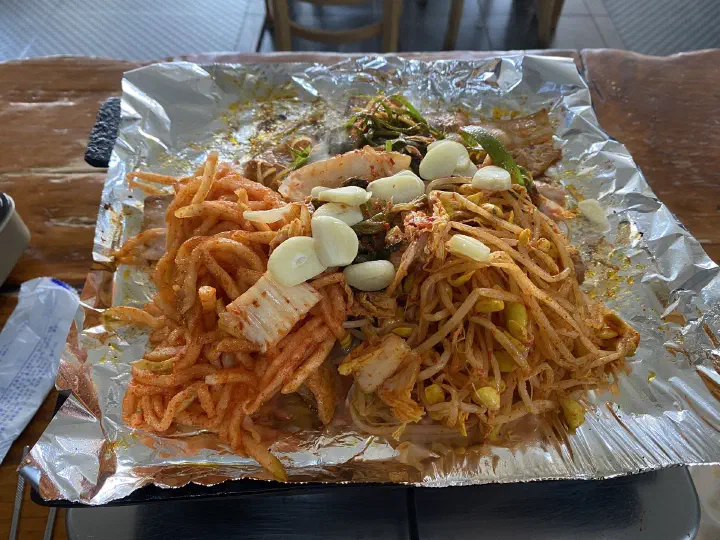
여기서부터는 셀프예요.
벽에 붙은 “두루치기 굽는 방법"대로 하면 되는데,
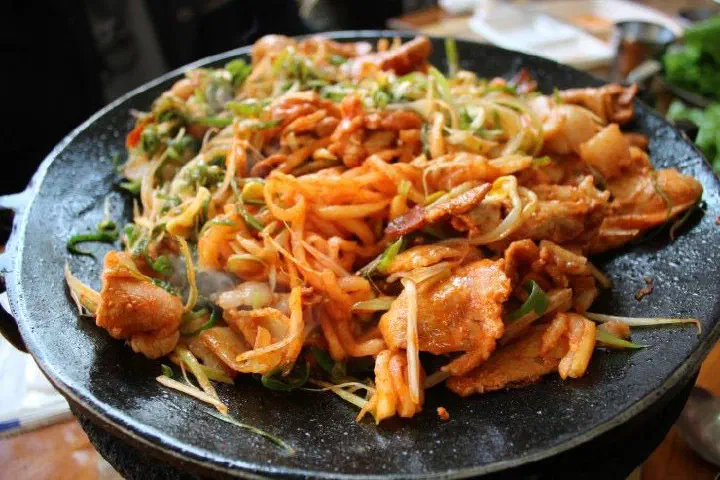
하나, 고기를 먼저 펼쳐서 적당히 익히고,
둘, 무생채·콩나물·파채·김치·마늘을 몽땅 넣어 같이 볶고,
셋, 고기와 야채를 조금 남겨 밥을 볶으면 끝이에요.
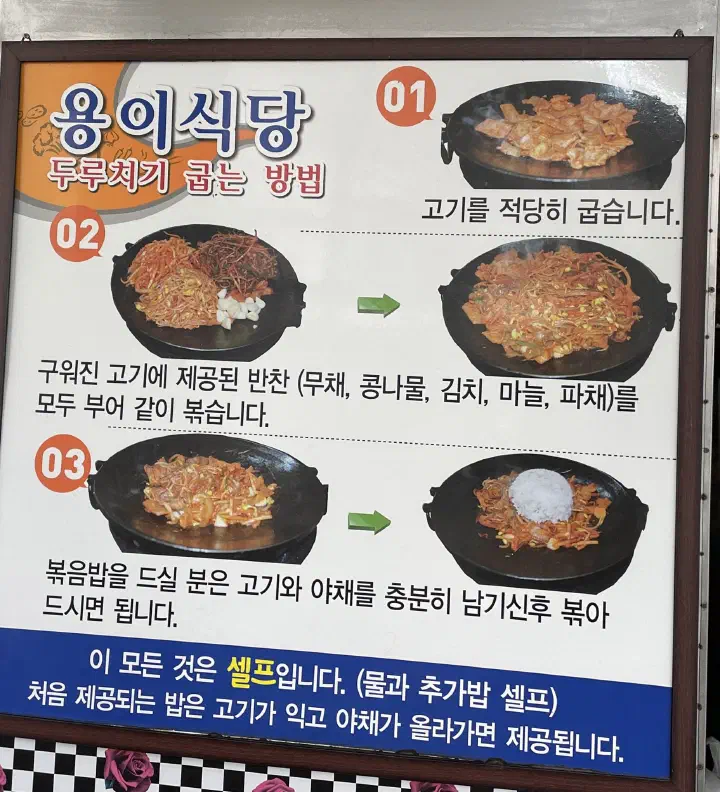
고기가 판에 눌어붙기 시작하면 김치국물을 달라고 해보세요.
국물을 한 바퀴 두르면 타지 않고 촉촉하게 볶여요.
양념이 사방으로 튀는 편이라 앞치마는 꼭 두르는 게 좋아요.
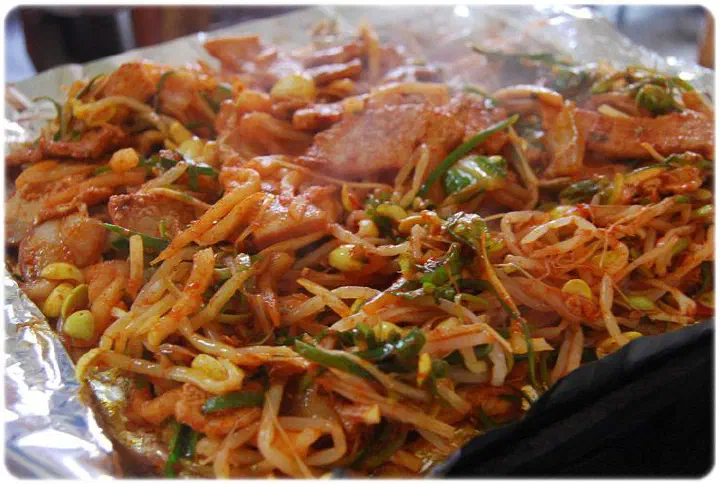
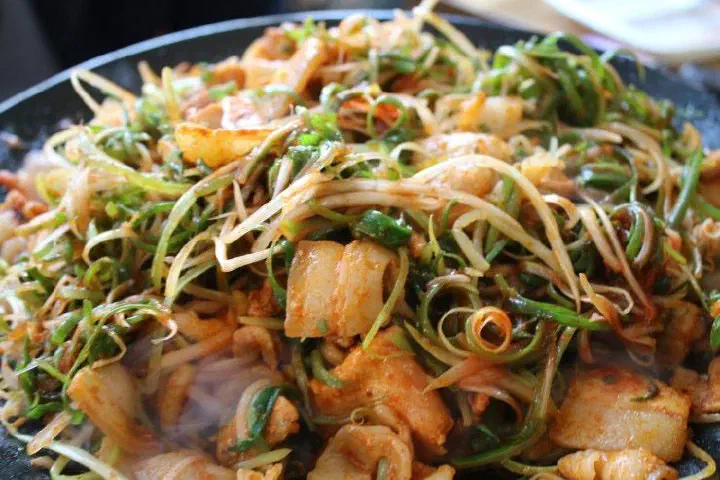
맛은 어떤가
처음 상을 받으면 고기 양이 적어 보여서 당황하기 쉬워요.
그런데 야채를 다 넣고 볶으면 양이 두세 배로 불어나요.
반찬처럼 보이는 무생채와 콩나물이 사실은 전부 들어갈 재료예요.
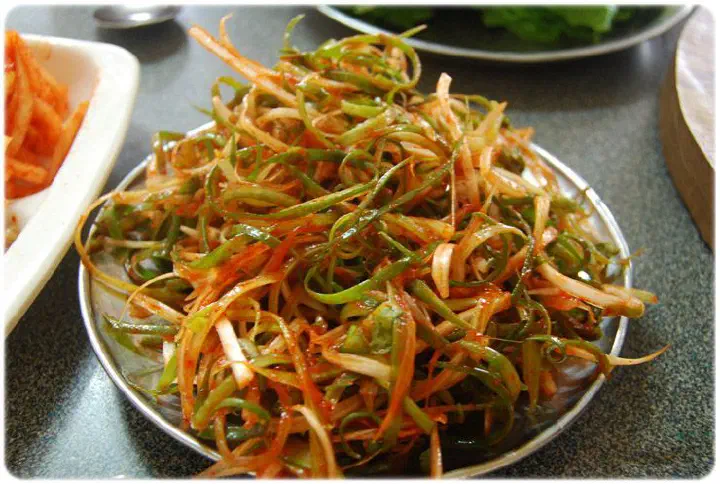
맛의 핵심은 무생채예요.
새콤한 무가 익으면서 육지의 제육볶음과는 다른,
살짝 시큼하고 개운한 맛을 만들어요.
양념 자체는 세지 않고 삼삼한 편이라
자극적인 맛을 기대하면 심심할 수 있지만,
그래서 먹다 보면 계속 손이 가는 중독성이 있어요.
고기는 얇게 썬 제주산 냉동 돼지고기예요.
고기 자체의 품질로 승부하는 집이 아니라,
야채와 양념이 어우러진 조합으로 먹는 집이라고 보면 정확해요.
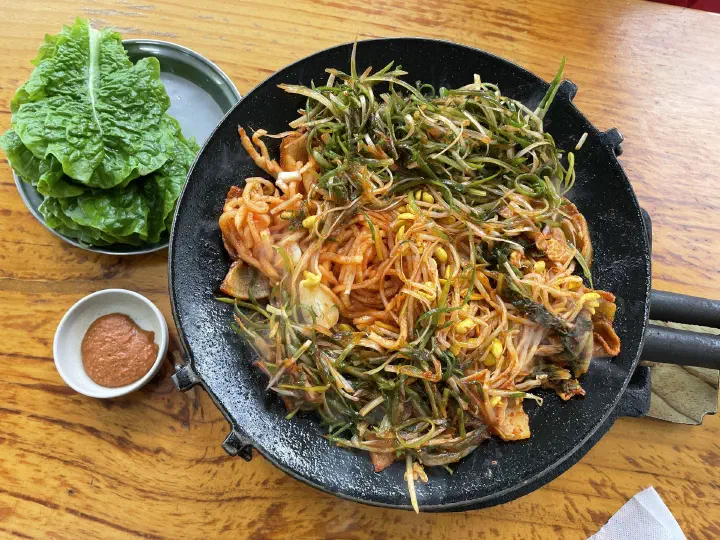
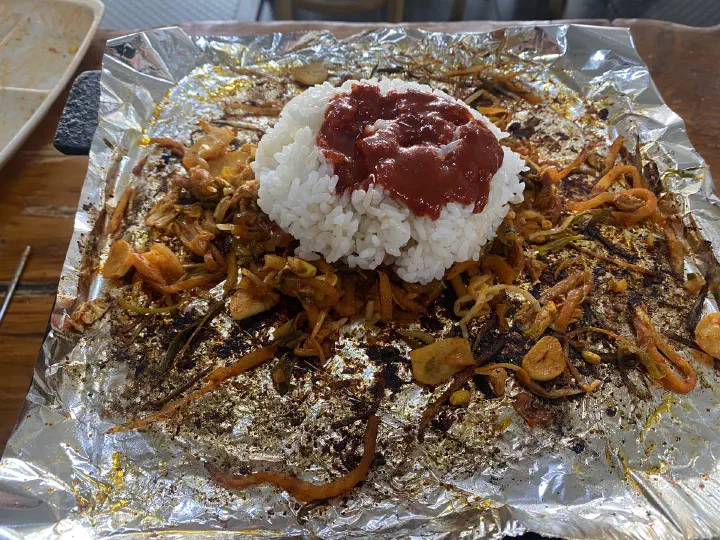
마무리 볶음밥은 건너뛰면 서운한 수준이에요.
참기름과 양념장을 가져다 쓰면 되고,
숟가락으로 꾹꾹 눌러 누룽지를 만들어 긁어 먹는 게 정석이에요.
고기를 다 먹어버리지 말고 4분의 1쯤 남겨두는 게 요령이에요.
예전과 지금
이 집은 가격의 역사가 곧 세월이에요.
2010년대 초반엔 1인분이 5,000-6,000원이었고,
2016년쯤 7,000원, 2022년쯤 8,000원, 2023년엔 9,000원,
2026년 들어 10,000원이 됐어요.
만원이 되면서 예전만큼 파격적이진 않다는 반응도 있지만,
밥과 야채가 무한 리필인 걸 감안하면 여전히 서귀포에서 손꼽히는 가격이에요.
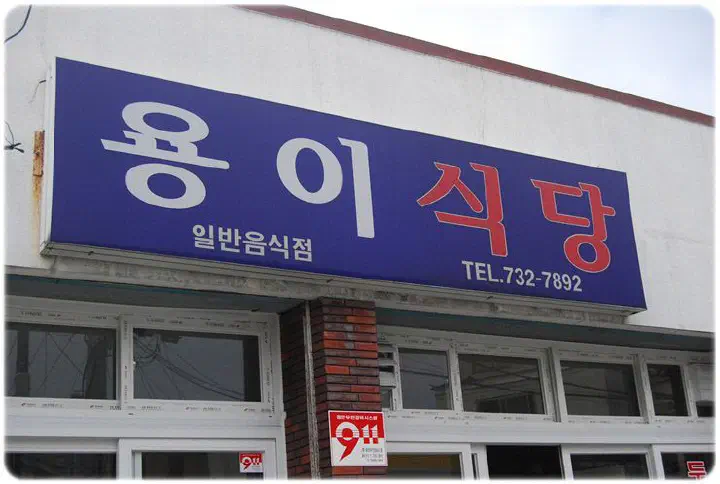
건물도 달라졌어요.
한동안 허름한 노포의 모습이었는데,
지금은 새로 단장한 넓고 깔끔한 건물에서 영업해요.
휴무일도 예전엔 첫째·셋째 일요일이었다가 지금은 첫째·셋째 수요일로 바뀌었어요.
제주시 쪽에 분점들이 생겼을 만큼 자리를 잡았는데,
본점의 맛을 더 쳐주는 사람이 많아요.
분위기와 아쉬운 점
홀이 넓고 테이블 간격이 있어서 단체 손님도 소화하는 집이에요.
직원분들의 응대는 살갑기보다 투박하고 시원시원한 쪽이에요.
필요한 건 알아서 챙기는 셀프 문화에 가깝다고 보면 돼요.
아쉬운 점도 분명 있어요.
하나, 위생에 예민한 사람에겐 추천하기 어려워요.
기름기로 바닥이 미끄럽고 테이블이 끈적하다는 평이 꾸준히 있어요.
둘, 기본으로 나오는 국은 맹맹하다는 반응이 많아요.
셋, 고기 굽기부터 볶음밥까지 전부 셀프라
구워주는 식당에 익숙한 사람에겐 번거로울 수 있어요.
주차와 방문 팁
가게 옆에 3-5대 정도 세울 수 있는 자리가 있지만 금세 차요.
바로 앞 공영주차장을 이용하는 게 마음 편한데,
최초 30분은 무료이고 1시간에 1,000-1,500원 수준이에요.
점심 피크인 12시부터 1시 사이엔 만석이 되곤 해요.
홀이 넓어 회전이 빠른 편이지만,
붐비는 게 싫다면 이 시간대만 피하면 돼요.
포장하면 1,000원 저렴해서 숙소나 집에서 먹으려고 포장해 가는 손님도 많아요.
술 생각이 난다면 근처 슈퍼나 편의점에서 사 오면 되고,
막걸리를 사 가면 잔도 챙겨주세요.
가게 옆 음료 자판기는 현금만 받으니 참고하세요.
서귀포엔 두루치기로 이름난 집이 몇 곳 더 있어요.
가시리 쪽 나목도식당도 비슷한 스타일로 유명하고,
제주시라면 천도두루치기를 찾는 사람이 많아요.
총평
세련된 맛집을 기대하고 가면 실망하기 쉬운 집이에요.
대신 만원 한 장으로 고기와 야채, 볶음밥까지 배불리 먹고 나올 수 있고,
제주에서만 먹는 방식의 두루치기라는 경험이 남아요.
한 번 다녀가면 여행 끝나고도 문득 생각난다는 사람이 많은,
그런 종류의 집이에요.
위치와 찾아가는 길
서귀포 중앙로터리에서 올레시장 방향 골목 안쪽에 있어요.
올레시장 정문 기준으로 걸어서 5분 안팎이라
시장 구경 전후로 들르기 좋은 동선이에요.
천지연폭포, 이중섭거리와도 가까워서
서귀포 원도심 일정에 자연스럽게 끼워 넣을 수 있어요.