Seongsu is where everyone in Seoul goes for coffee, sneakers, and pop-up stores.
It is not where you expect to find a restaurant built entirely around tofu.

Food Gallery Bean (푸드갤러리빈) sits in a side alley between two subway stations, in a converted house with a small yard.
Everything on the menu runs through tofu the kitchen makes itself.
Three Korean TV shows have filmed here in the last year, which is why the place keeps coming up in searches now.

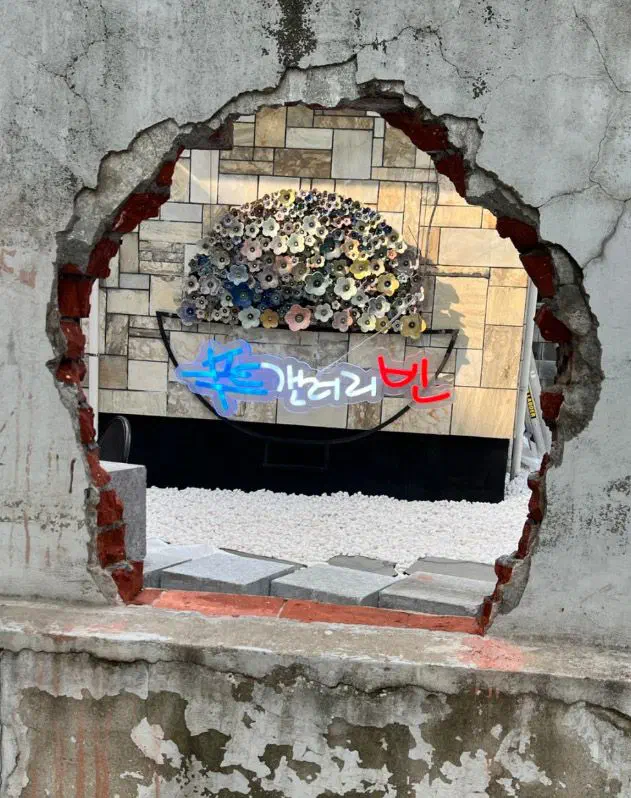
Neon sign of Food Gallery Bean tofu restaurant at the alley entrance in Seongsu, Seoul

What the TV thing is about

The short version: tvN’s Sixth Sense City Tour 2 came in October 2025 for the AI course, TV Chosun’s Baekban Giheng with Huh Young-man filmed the tofu omakase in November 2025, and KBS1’s Neighborhood Walk aired a Seongdong-gu episode featuring the restaurant on August 1, 2026.

That last one aired yesterday, so expect the place to be busier than usual for the next few weeks.
Worth knowing before you plan a weekend lunch here.

None of this is new-restaurant hype, though.
Korean blog posts about this address go back to 2022, mostly from office workers in the neighborhood eating the 12,000 won lunch sets.

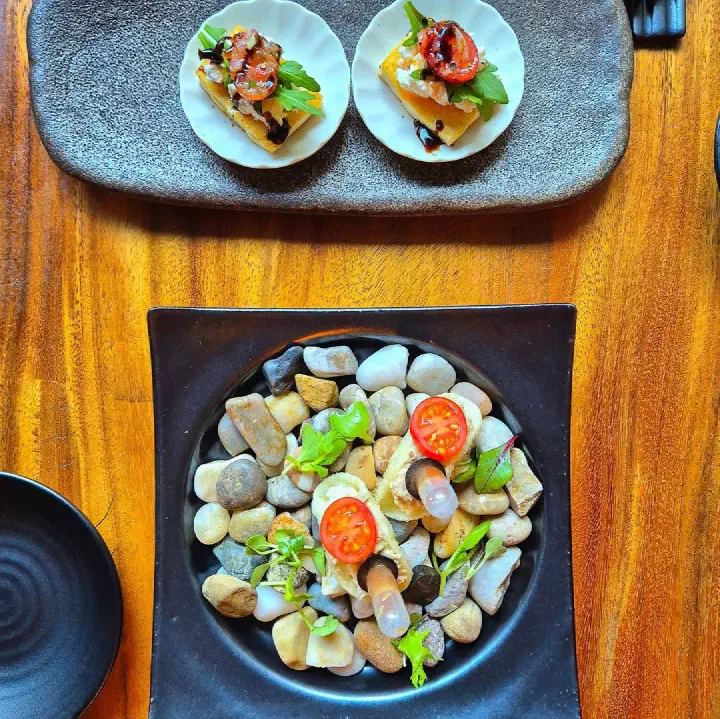
Tofu omakase course plating with ricotta arugula tofu sticks and a river stone dish

The tofu itself

The kitchen makes its own tofu using a traditional method called onbiji, which is rare in Korea now.
The owner has been doing it for 31 years.

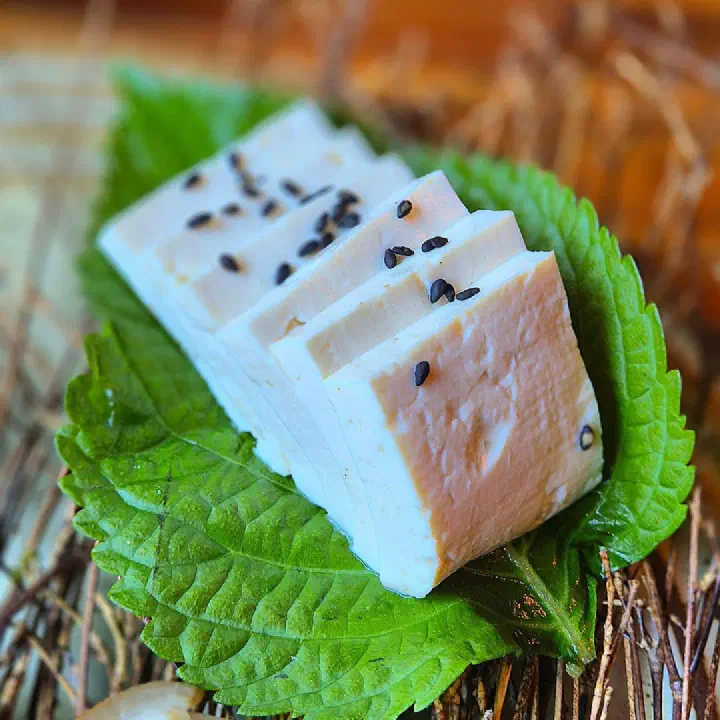
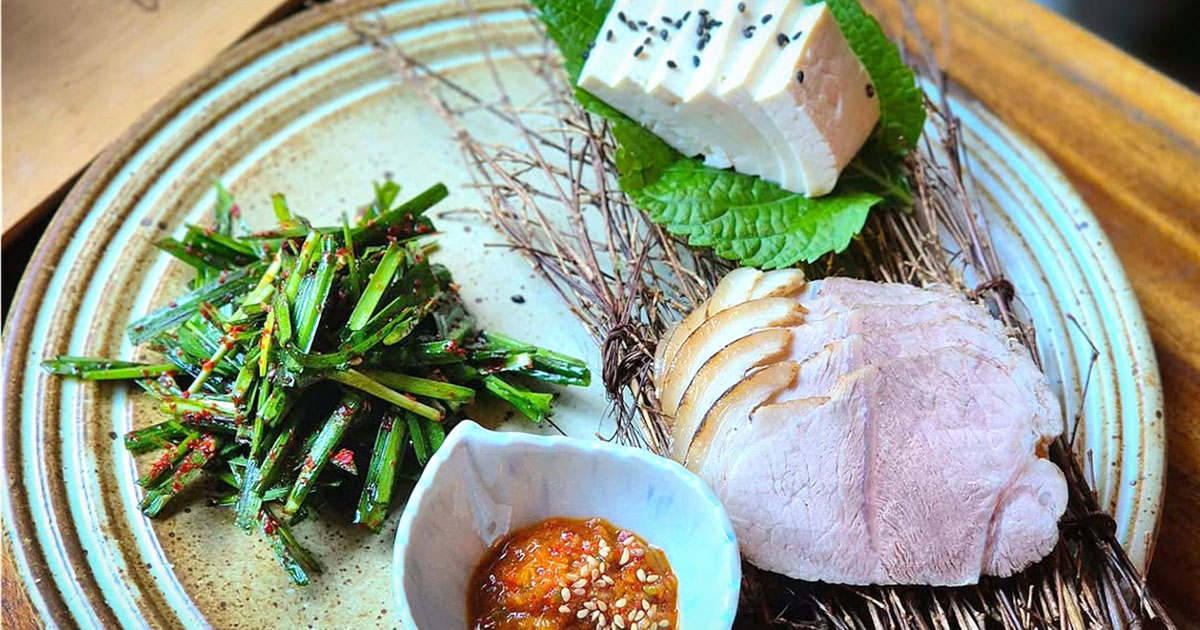
Sliced house-made onbiji tofu served on perilla leaves with black sesame seeds

You can tell in the texture.
It holds together when deep-fried, keeps its shape after a long braise, and the soft “silk tofu” version collapses the moment a spoon touches it.
Nothing here tastes like the block you buy at a supermarket.

The cooking follows the same logic.
Seasoning stays light so the soybean flavor comes through, which is the whole point of the place and also the reason some people leave underwhelmed.
More on that later.

Tofu omakase, 45,000 won

This is the course the TV crews came for.
Seven dishes plus fruit at the end, 45,000 won per person.

It opens with a warm tofu soup, then moves through a ricotta and arugula stick, crispy tofu bites, gani miso (crab miso), a cold pork and tofu combination, steamed tofu with vegetables, and finishes with braised tofu.

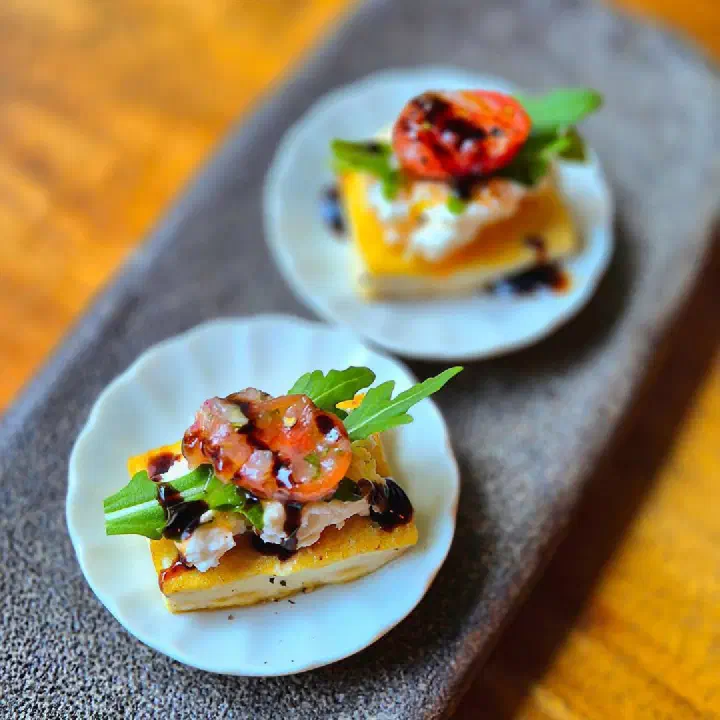
Ricotta and arugula tofu stick with balsamic glaze from the tofu omakase course

The fun is watching the same ingredient change completely.
Fried, it goes crisp and hollow.
Steamed, it turns silky.
One course arrives on a smooth river stone with the sauce in a clear tube you squeeze over it yourself.

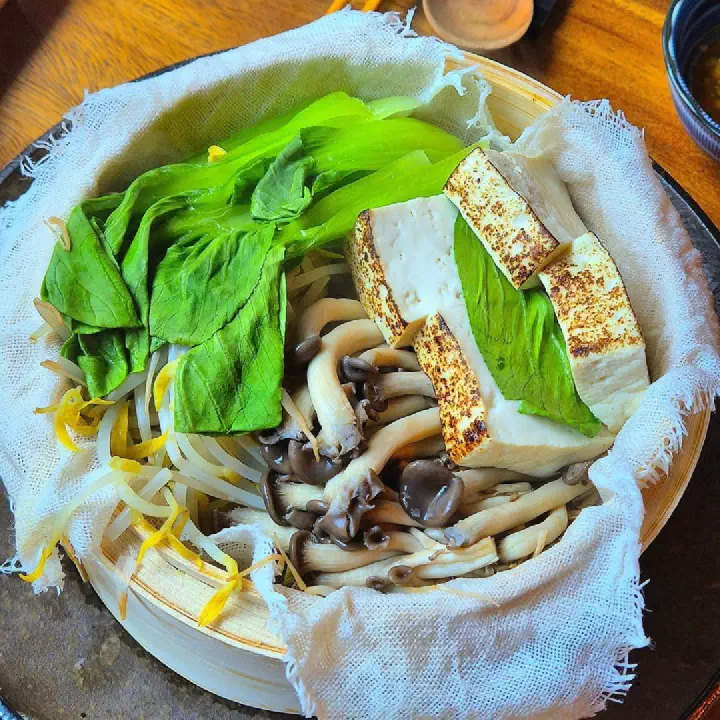
Steamed tofu with vegetables served in a bamboo steamer basket with mushrooms and bok choy

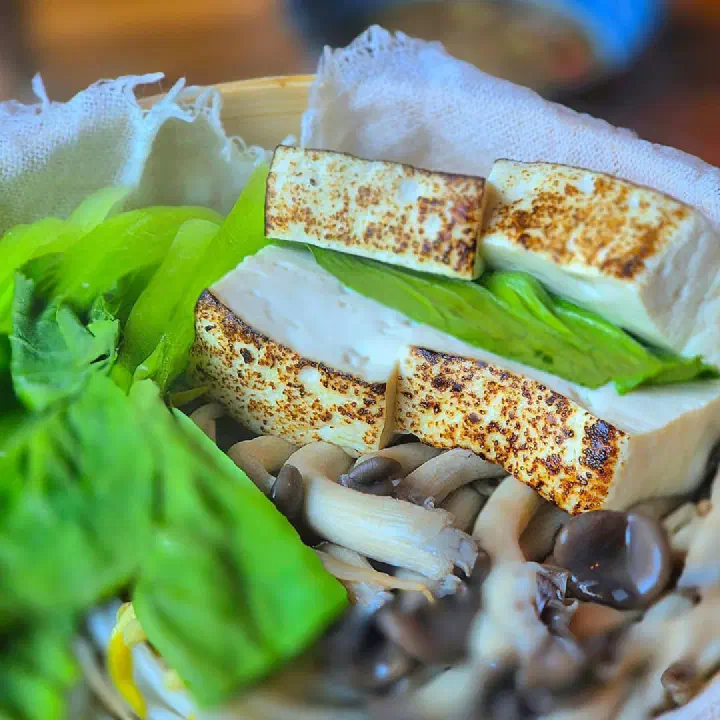
Close-up of grilled house-made tofu slices and shimeji mushrooms in the steamer

The braised tofu at the end is the most seasoned dish of the night, and it comes with rice.
Even after seven courses, most people finish the bowl.

Forty-five thousand won sounds steep until the food arrives.
By the end it reads as fair for the volume.

AI course, 55,000 won

This is the one that got the restaurant on television, and it is genuinely odd in a good way.
It costs 55,000 won and is a separate menu from the tofu omakase.

You get seated in a private room with a body composition analyzer on the wall.
You step on it, take the printout, and enter the numbers on a touchscreen.
A camera reads your face for fatigue levels.
A voice-guided machine called Romi walks you through questions, and the owner explains the process before you start.

The system prints two copies of a personalized menu.
You keep one, the kitchen gets the other.
Two people at the same table end up eating completely different courses.
One might get perilla oil noodles, boiled pork, and abalone rice; the other gets tofu avocado caprese, salmon steak, and a rice pot with tofu skin and anchovies.

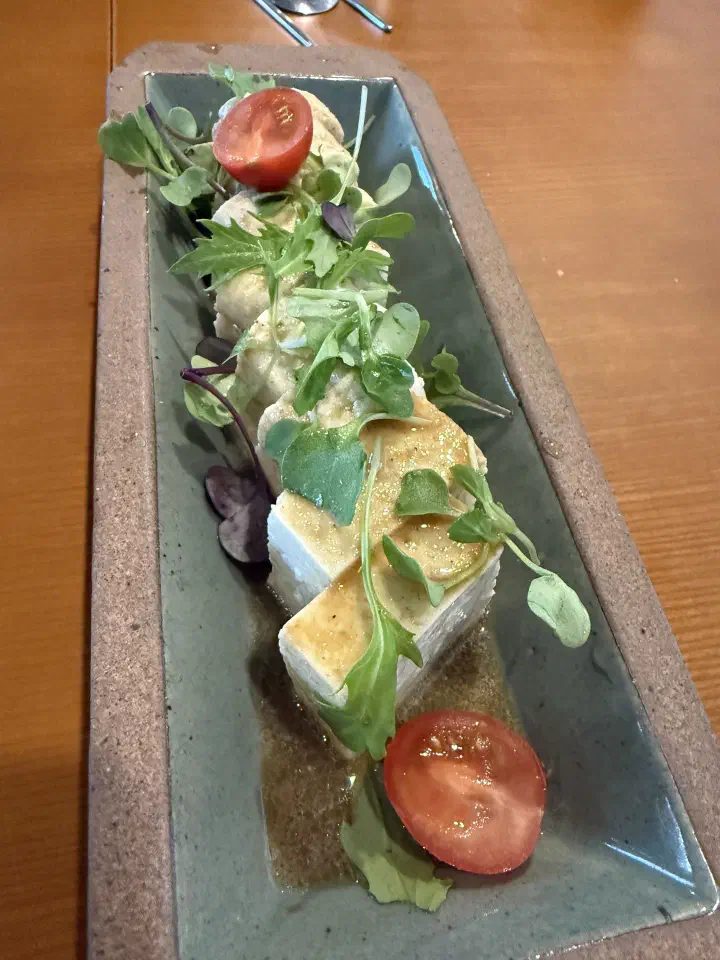
Tofu dish topped with micro greens and cherry tomatoes from the healthy AI course

“Healthy course menu” usually means underseasoned and not enough food.
That is not the case here.
The broths and sauces are seasoned properly, just without the salt-and-sugar punch of most Korean restaurant food.

One warning: the tablet input does not always register on the first try.
Give yourself extra time and do not book this on a tight schedule.

The lunch menu is the real regular order

The courses get the attention, but the neighborhood eats here at lunch.

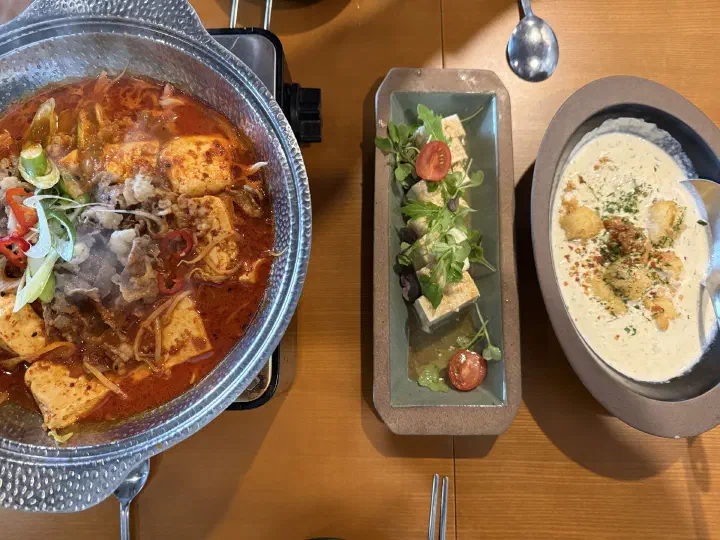
Tofu jeyuk jeongsik (두부제육정식, spicy stir-fried pork with tofu), ssamjang tofu bibimbap (쌈장두부비빔밥), jjaglei jjigae (짜글이찌개, a thick pork stew), and chicken tofu curry (치킨두부카레) all cost 12,000 won.

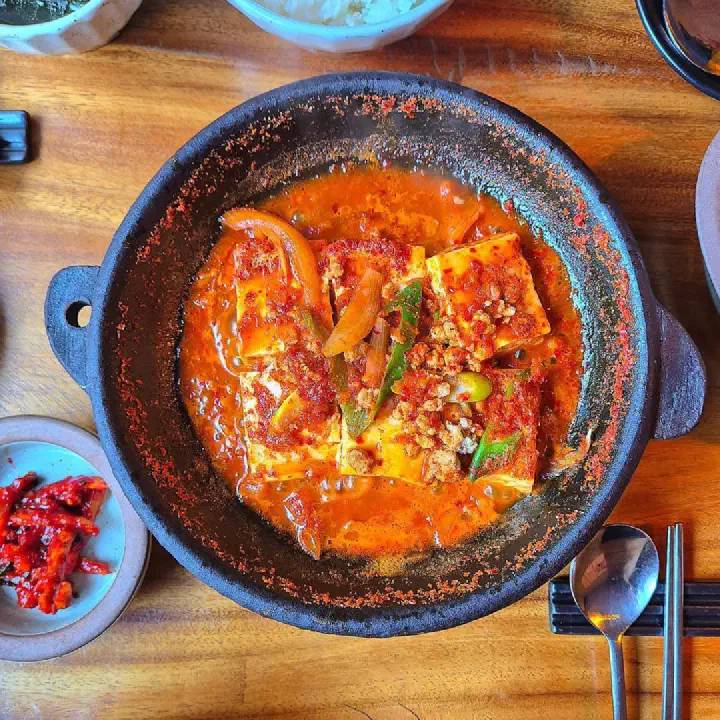
Jjaglei jjigae, a spicy thick tofu and pork stew served in an earthenware pot

There is a two-person lunch set at 30,000 won: two mains, your choice of croquette or sweet-and-spicy chicken, and a drink.

The pork set is mild by Korean standards, which is unusual for jeyuk.
It arrives as a full tray with seaweed soup, pickled radish, and a cabbage salad.
The rice portion looks small, roughly an ice cream scoop, but the tofu fills you up more than you expect.

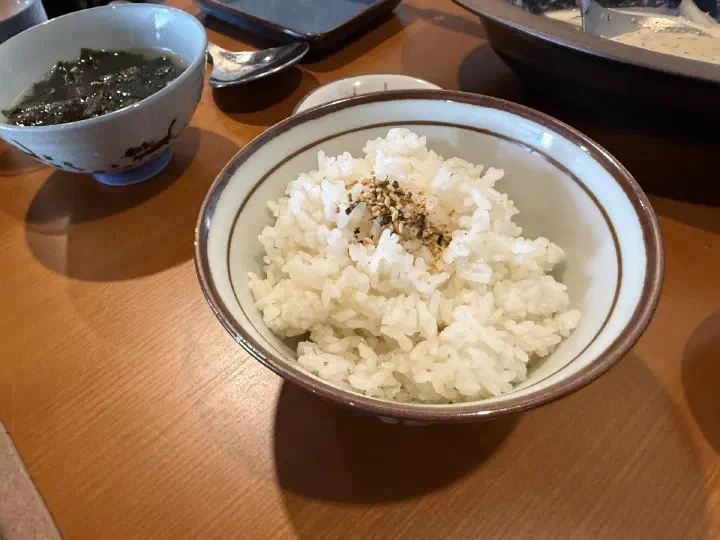
Bowl of steamed rice with sesame seasoning and a side of Korean seaweed soup

Rice, side dishes, and sauces are all refillable at no charge, so just ask.

Evenings shift.
The a la carte and drinking menu comes out and the room turns into somewhere you linger over beer or makgeolli.
Corkage is available for a fee if you bring your own bottle.

Two dishes to start with

If you are ordering a la carte, these two come up more than anything else.

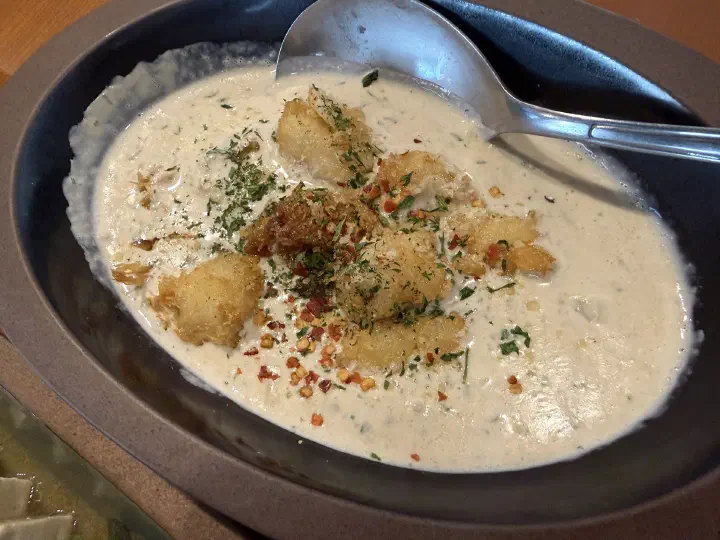
Gani miso cream tofu (가니미소크림두부), 22,000 won, is fried tofu under a sauce of fermented crab and cream.

Gani miso cream tofu, the signature a la carte dish at Food Gallery Bean

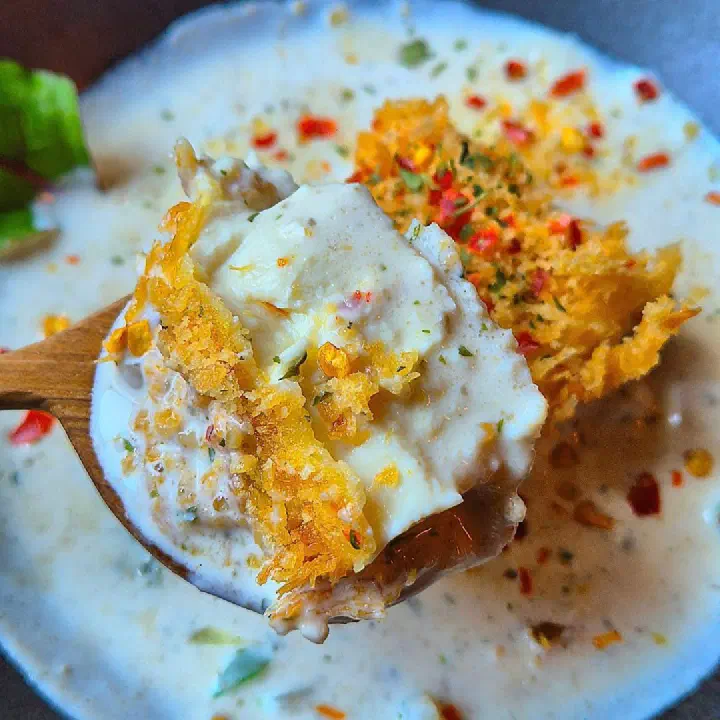
Crisp shell, soft center, thick nutty sauce, crushed red pepper on top for a low background heat.
The fermented fish sauce note is forward and the crab is subtler than the name suggests, so this one divides people.

Close-up of crispy fried tofu coated in creamy fermented crab sauce

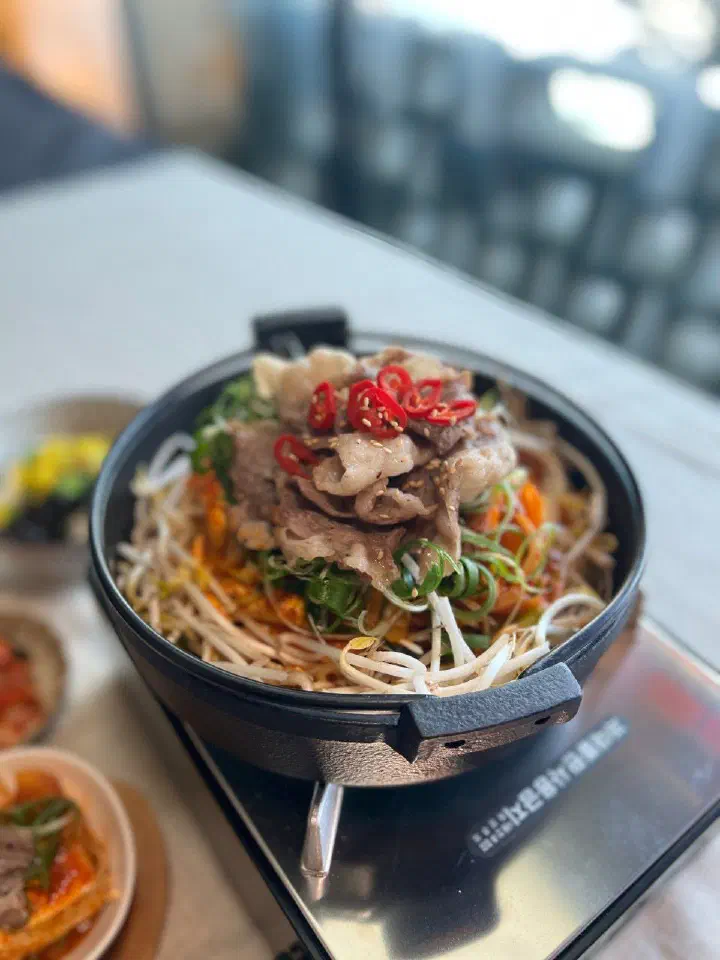
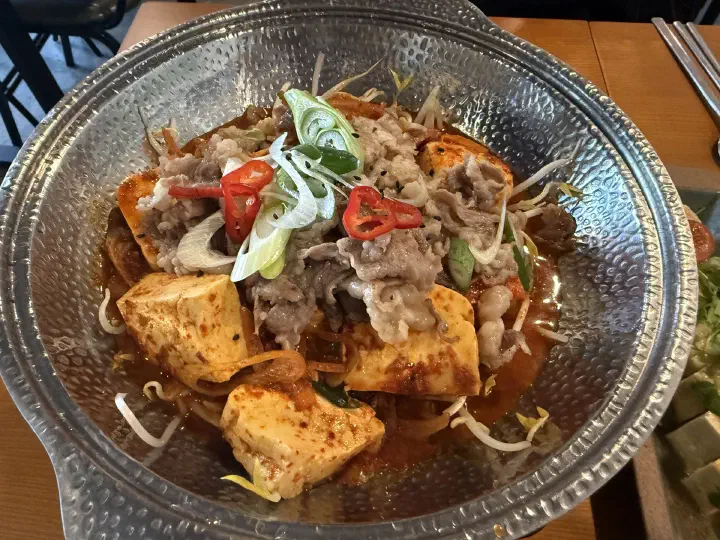
Chadol dubu jorim (차돌두부조림), 24,000 won, braises silk tofu and beef brisket with onion, bean sprouts, scallion, and chili.

Chadol dubu jorim before cooking, beef brisket and bean sprouts piled in a pot on the induction burner

The brisket fat makes the sauce cling.
When the tofu is gone, order fried rice made in the leftover sauce.
That is the actual finish to this dish and skipping it is a mistake.

Finished chadol dubu jorim with silk tofu, beef brisket, red chili, and scallion

Beyond those: chicken nanban (18,000 won), seafood tofu nabe hot pot (34,000 won), dusu katsu (두스카츠, 10,000 won, tofu layered with Spam and deep-fried), and a tofu salad at just 4,000 won.
Plenty of regulars order the dusu katsu with a bowl of rice and call it a meal.

Seasonal things

In summer the kitchen makes kongguksu (콩국수), chilled noodles in cold soybean broth pressed in house.
The broth is thick enough to coat the noodles properly.
The noodles are yellower and chewier than the usual thin white ones, so it eats a little differently than kongguksu elsewhere.
Sugar and salt come on the side, which is a Korean thing: some regions sweeten it, some salt it, and you decide.

For something spicy, jjamppong sundubu (짬뽕순두부) is a red seafood-style broth with soft curd tofu and garlic chives.
It has real heat.
If you are not used to Korean chili, this one will get you, while almost everything else on the menu is gentle.

The room

The building is a converted house.
Small yard with outdoor tables out front, and inside it splits into several separate rooms rather than one big hall.

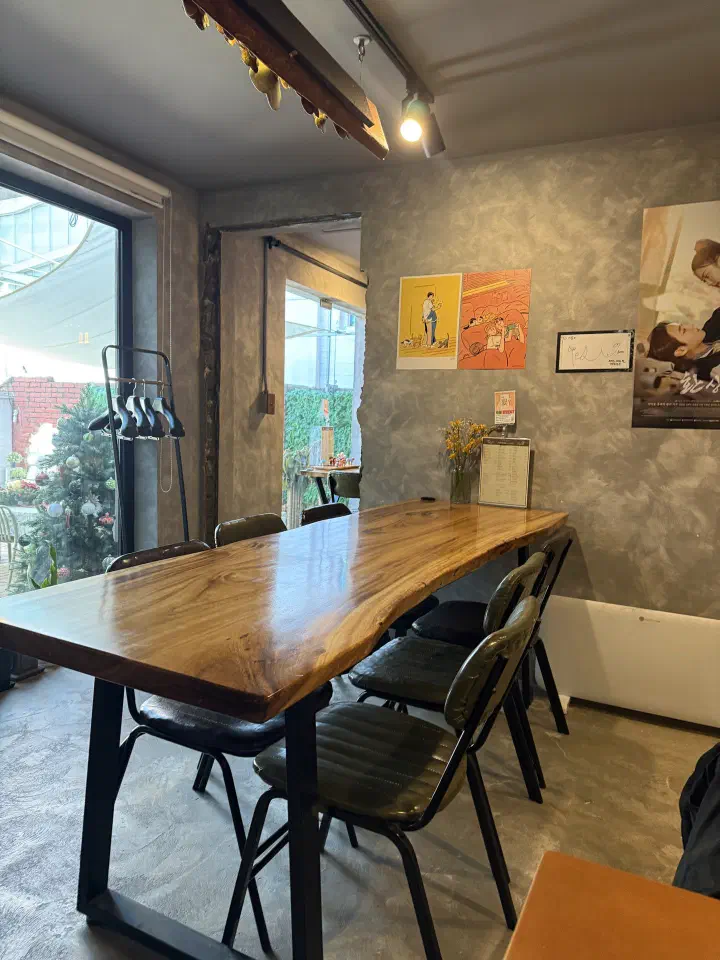
Interior of Food Gallery Bean with a large solid wood table and framed art on the wall

Tables run from two-tops to large eight-seaters, and there is a private room near the entrance that works well for families or small work dinners.
Picture frames, small objects, and figurines sit on the tables and shelves.
There is a rooftop upstairs that is genuinely nice in good weather.

If “restaurant that was on a Korean food show” makes you picture a decades-old canteen with plastic stools, this is not that.
It reads as a cafe from the outside and then serves you a full Korean spread.
The building next door is under construction, so the view out is nothing, but the interior makes up for it.

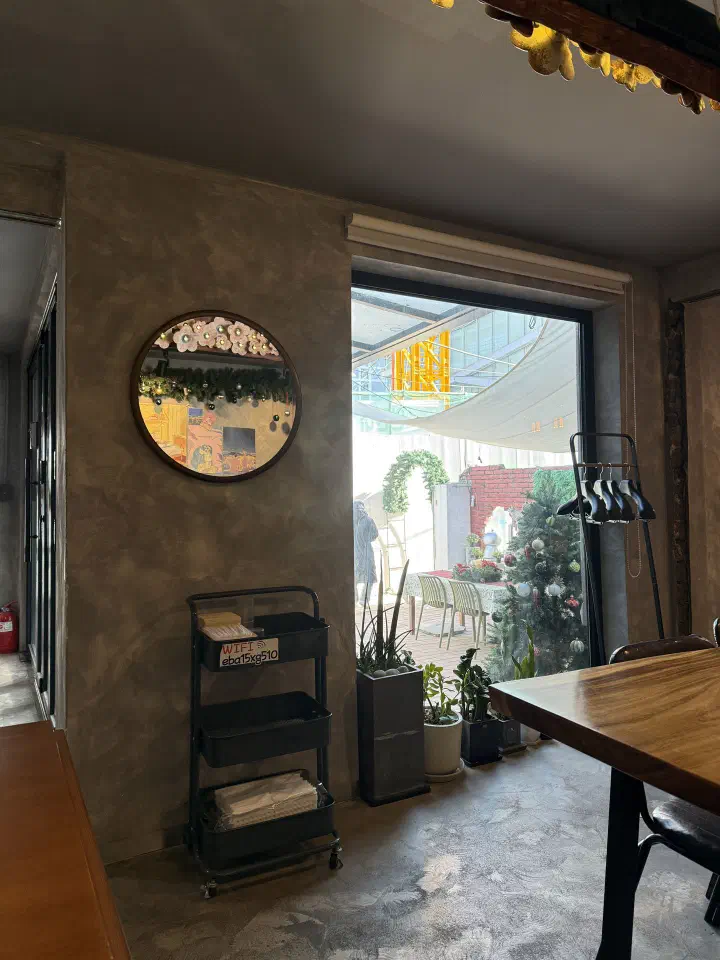
Window seat inside the converted house looking out to the small yard with outdoor tables

Staff are used to visitors and the atmosphere is calm rather than loud.
Foreign guests have written about it feeling like a quiet pocket in the middle of busy Seongsu, and that matches.

Booking, waiting, and paying

Reservations go through CatchTable and Naver.
Here is the part that trips people up: the tofu omakase and the AI course cannot be booked same-day.
People show up wanting the course, find it unavailable, and end up ordering a la carte instead.
If the course is the reason you are going, book several days out.

A la carte and lunch sets are usually walk-in friendly.
On weekday afternoons and early evenings you can generally sit right down.
With the KBS broadcast having just aired, weekend lunch and dinner may be a different story for a while.

Food takes a while to come out because it is cooked to order, so this is not the place for a rushed 40-minute lunch.

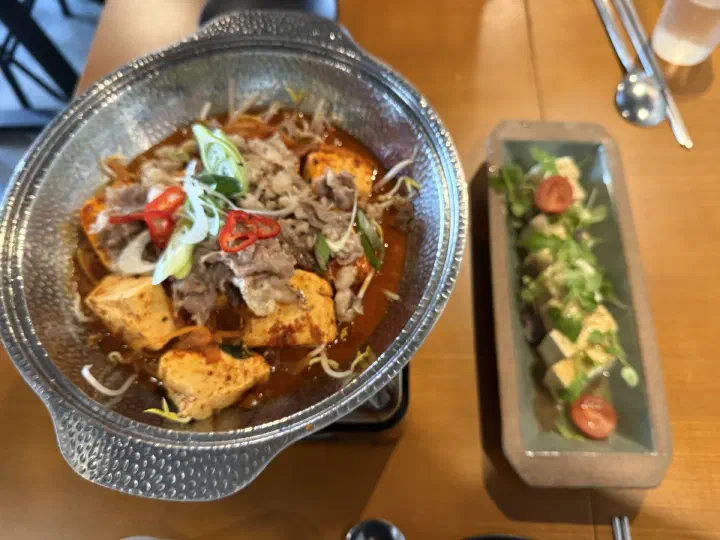
Chadol dubu jorim and a tofu salad plate arriving at the table

Cards are fine here, as they are almost everywhere in Korea, and internationally issued cards work without trouble.
You pay at the counter on your way out, not at the table.
There is no tipping in Korea, and leaving money on the table will confuse the staff more than please them.
The menu is in Korean, but pointing at what you want works perfectly well, and staff are patient about it.
Ordering is one of the easier things to do here even without the language.

Getting there

Ttukseom Station (Line 2), exit 6, about 250 meters.
Seoulsup Station (Suin-Bundang Line), exit 1, also walkable.
The restaurant sits in an alley between the two, and first-timers regularly walk past it.

Use Naver Map or KakaoMap rather than Google Maps for walking directions in Korea, since Google’s pedestrian and transit routing is unreliable here.
The landmark to look for is a large moon-shaped light on a rooftop in the alley; turn in there.

Parking is the weak point.
There is no lot attached to the restaurant, so drivers use the Seongsu Art Hall parking lot or a nearby paid lot.
These alleys are narrow.
Take the subway, or use the Kakao T app if you want a taxi.

📍 View Food Gallery Bean (푸드갤러리빈) on Google Maps →

Restaurant details

Address: 19-7 Wangsimni-ro 6-gil, Seongdong-gu, Seoul
Phone: 02-499-9644
Hours: Mon-Fri 10:30-22:00 / Sat 12:00-21:00 / Sun 12:00-21:00
No afternoon break
Summer note: Sundays in July and August are group reservations only
Booking: CatchTable, Naver (courses cannot be booked same-day)
Parking: none on site, use Seongsu Art Hall parking lot nearby
Payment: credit and debit cards, mobile payments
Also: takeout available, groups welcome, Wi-Fi, private room, vegan options, corkage for a fee

Where it falls short

Three things are worth knowing before you go.

Seasoning is the first.
The restaurant deliberately keeps things mild, so if you want bold, punchy Korean flavors you may find this quiet.
Confusingly, a few dishes go the other way: the chicken tofu curry and the gani miso are noticeably salty.
The menu is not consistent on this point.

Expectations are the second.
Three television appearances build up an image that tofu, as an ingredient, is never going to deliver.
This is a well-made, reliable meal rather than a revelation.
Pleasant, yes. Extraordinary, no.

The third is small but real.
Dubu jijim (두부지짐) sounds like pan-fried tofu in perilla oil, and it is not.
It comes coated in egg and cooked soft.
If you order it expecting something crisp you will be puzzled.

Who it suits

This works well for a meal with parents or older relatives.
The food is gentle, the presentation is neat, and the room is quiet enough for conversation.

It also works if someone in your group does not eat meat.
There is a genuine vegan section on the menu, not just a salad tacked on at the end.
Grilled tofu in perilla oil, ssamjang tofu bibimbap, steamed tofu with vegetables, mushroom braised tofu, tofu hot pot.
That range is harder to find in Seongsu than it should be.

For a celebration or a business dinner, take the course and book the private room.
The novelty of a full menu built from one ingredient carries the conversation on its own.

Full table spread of chadol dubu jorim, tofu salad, and gani miso cream tofu at Food Gallery Bean

Eating alone is fine too.
The lunch sets exist precisely because office workers nearby come in solo on weekdays.

Last thoughts

If you want to eat tofu properly in Seoul, this is currently the address.
The house-made tofu is the real thing, and the range from a 12,000 won lunch to a 55,000 won course means you can scale the visit to whatever you feel like spending.

Just go in knowing that the flavors are restrained, that the courses need a reservation days ahead, and that driving here is more trouble than it is worth.

Get those three right and it is an easy, comfortable meal in a neighborhood that does not have many of them.