Seongsu is the neighborhood people come to for concept cafes and pop-up stores.
Walk about seven minutes from Seongsu Station toward the Han River, though, and the mood changes completely.
Ttukdo Market is still there, still working, and the alleys inside it hold small family restaurants.
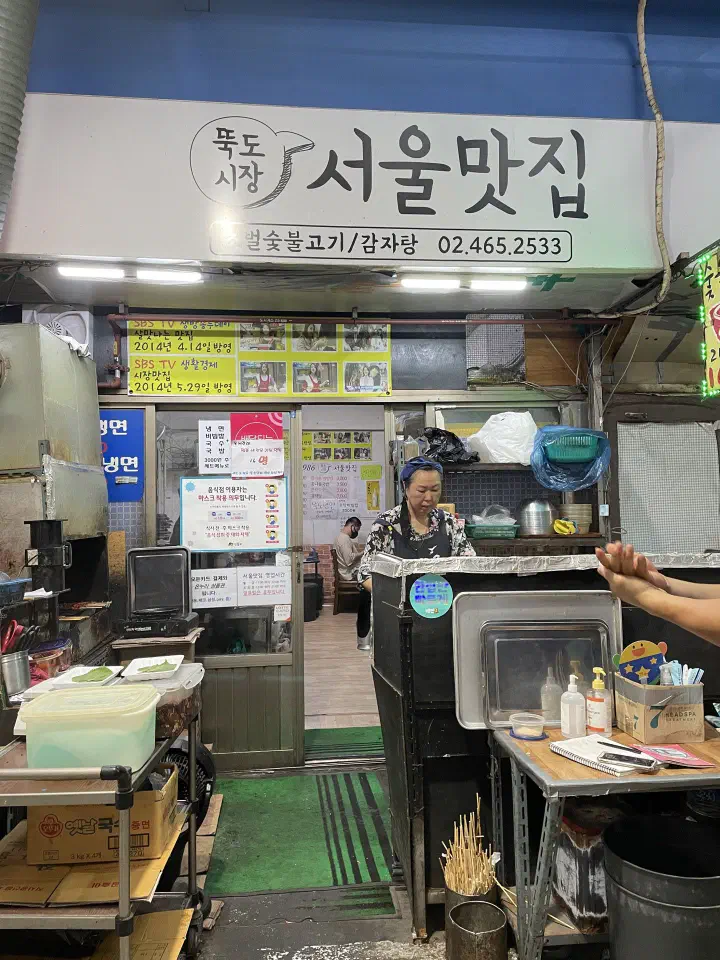
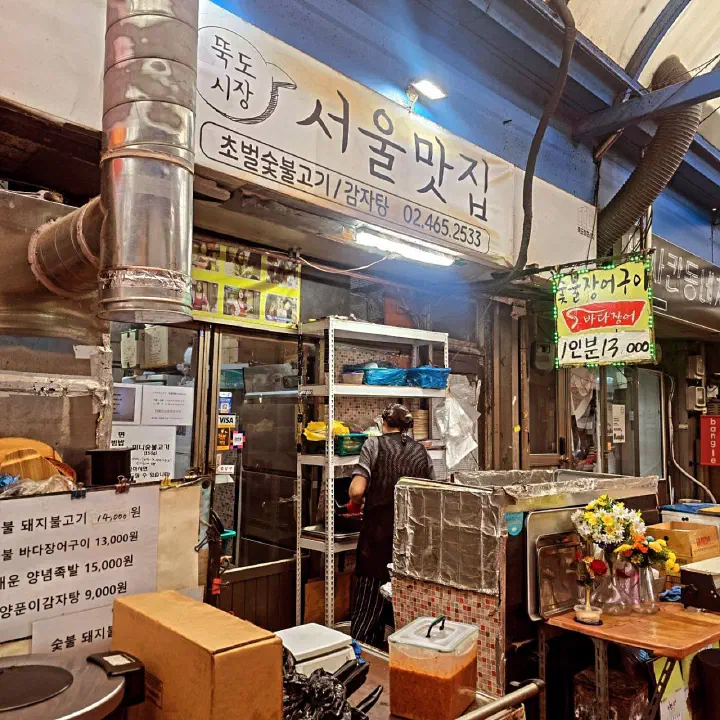
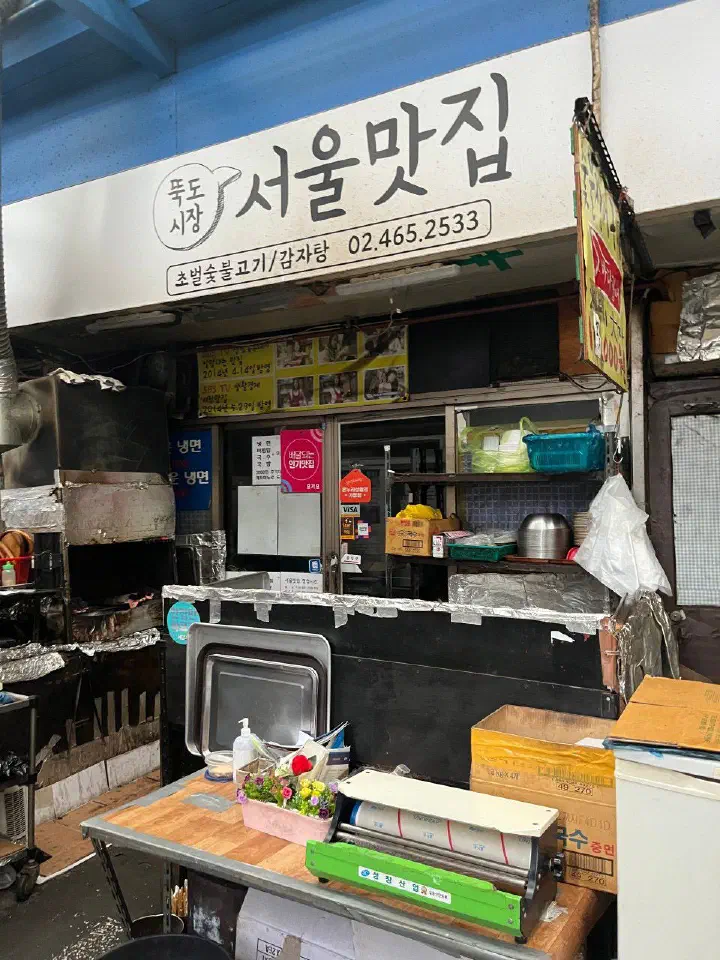
The one whose name comes up most often is Seoul Matzip (서울맛집).
The name literally translates to “Seoul tasty place,” which sounds like something invented for search engines.
They have been using it since 1986.
What keeps people coming is simpler than the story: an actual charcoal brazier out in the alley, and pork prices that no longer exist in the rest of Seongsu.

The basics
Address: 1F, 6-9 Seongdeokjeong 15-gil, Seongdong-gu, Seoul (inside Ttukdo Market)
Hours: Monday to Saturday, 11:30-22:00
Break time: 15:00-17:00
Last order: 21:00
Closed: Sundays
Phone: 02-465-2533
Parking: no private lot, use the Ttukdo Market public street parking nearby
Also: takeout, delivery, reservations; groups welcome
📍 View Seoul Matzip (서울맛집) on Google Maps →
That two-hour afternoon break is the thing most people get wrong.
It isn’t listed on the map apps, but the kitchen really does close from 3 to 5 p.m.
If you were planning a late lunch, plan it before three.
One practical note on navigation: Google Maps walking and transit directions are unreliable in Korea.
Naver Map or KakaoMap will get you into the right alley. Google Maps often won’t.

A pojangmacha that never closed
There’s a chalkboard inside with the restaurant’s history drawn on it.
It started in 1986 as a pojangmacha (포장마차), one of those tented street stalls, and it has been in this market ever since.
The mother began the business carrying her small daughter on her back.
She didn’t want her daughter in the same trade. The daughter ended up in the same market anyway.
Today the mother works the charcoal and the daughter runs the kitchen.
KBS1’s long-running travel show Dongne Han Bakwi featured the two of them in its 381st episode, which aired August 1, 2026, and described their 35 years side by side.
It wasn’t the first time.
MBC, KBS2 and SBS food segments have all covered the place, and a video on the actress Choi Hwa-jung’s YouTube channel brought in a much younger crowd.
The restaurant’s own introduction says the family has been running it together for 12 years.
Forty years if you count from the street stall, twelve in its current family form.

Two rooms, one restaurant
The restaurant occupies both sides of the alley.
The kitchen and a dining room are on one side, a second dining room directly across.
First-timers often assume the place opposite is a different restaurant. It isn’t.
If the main room is full, they’ll walk you across.
Together it seats around forty, mostly at four-tops — about ten tables in all.
Tables are close but not uncomfortably so.
On good days they set up outdoor tables in the alley, and those go first.
Inside it looks exactly like what it is: an old market restaurant.
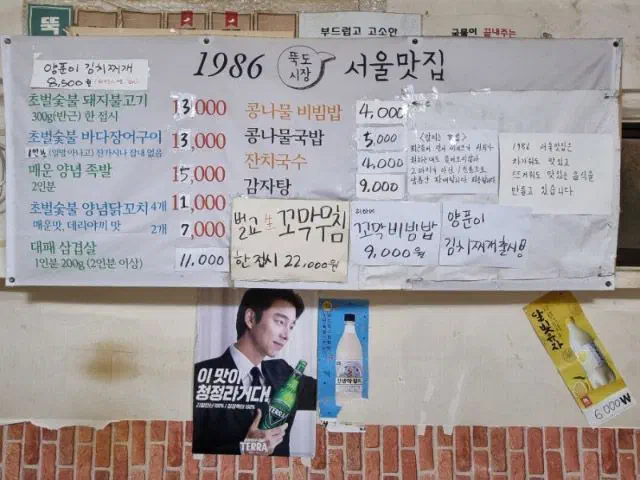
Menus taped to the wall, decades of wear on everything.
It’s kept clean enough, but nothing about it is polished.
If you’re particular about that, go in knowing it.

The charcoal pork
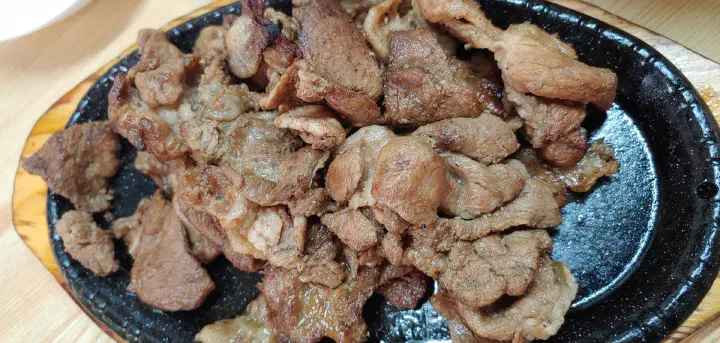
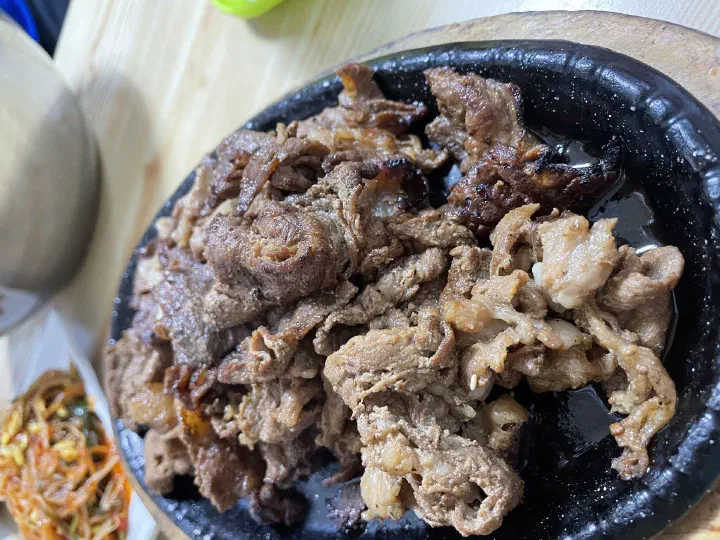
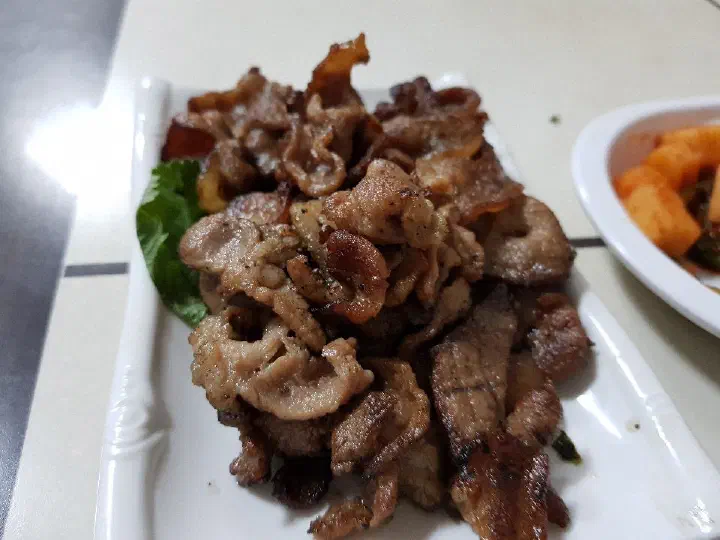
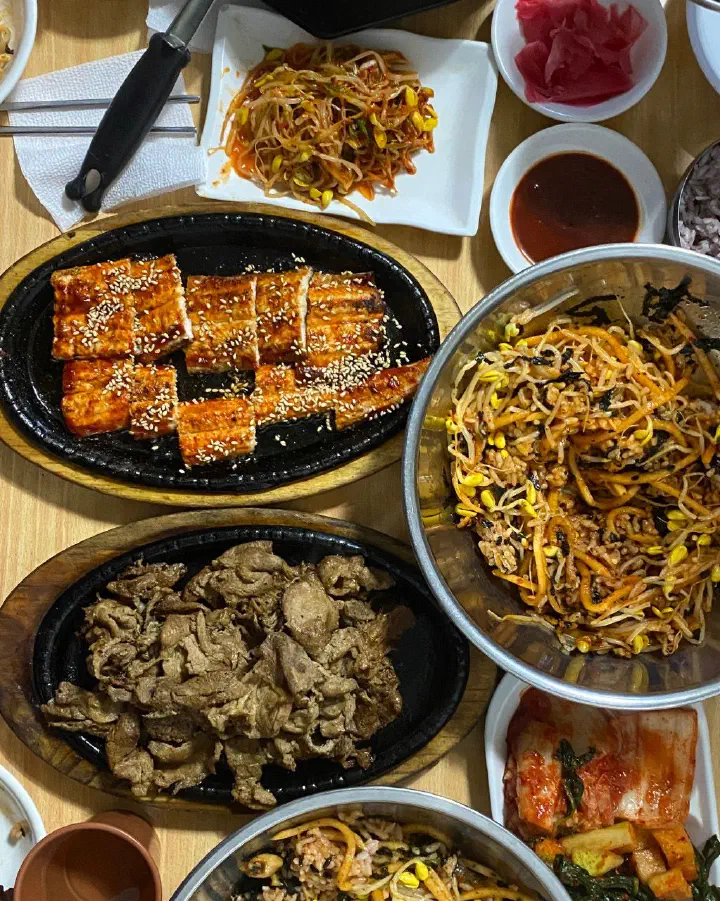
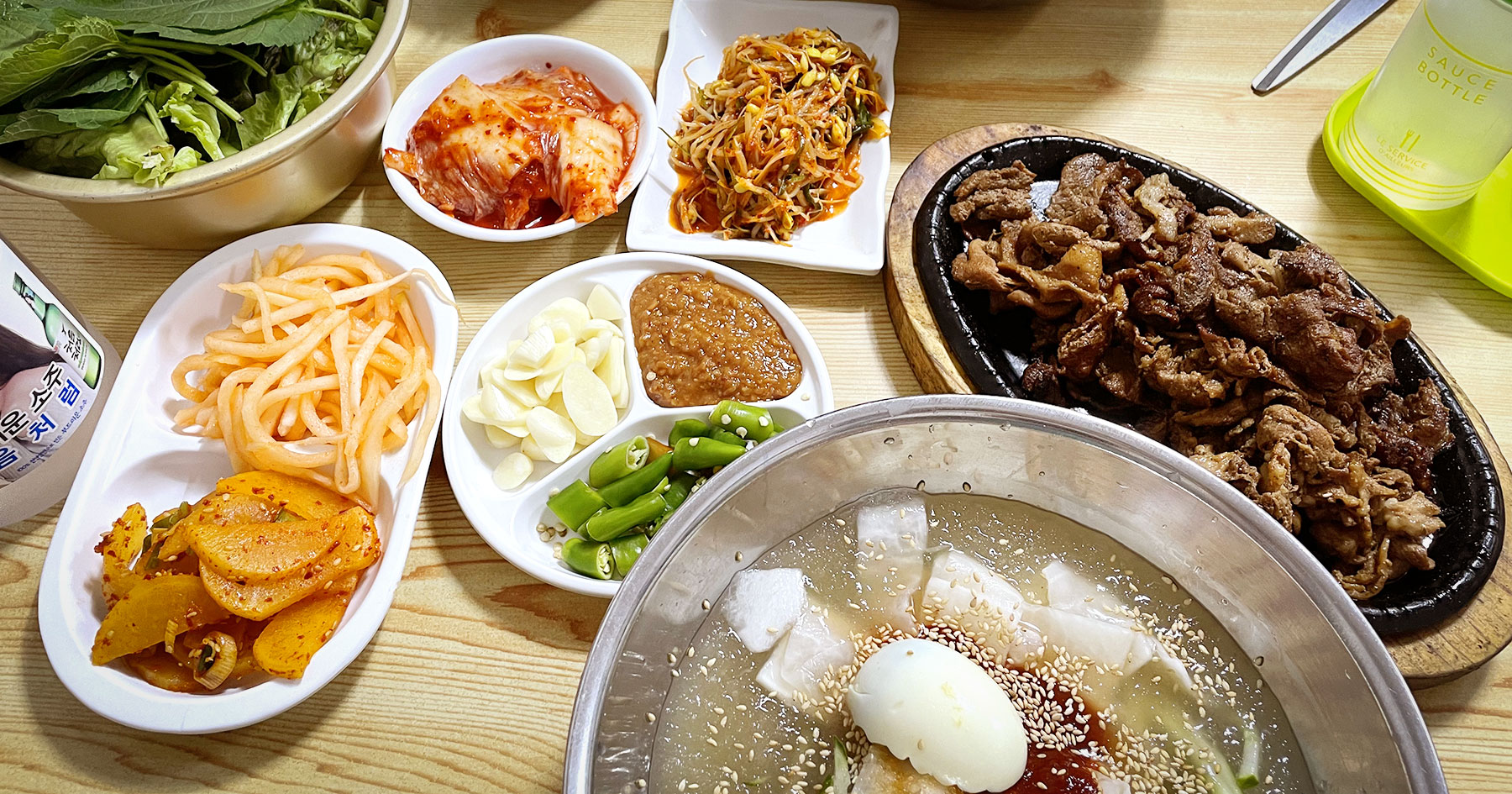
The dish to order is sutbul yangnyeom dwaeji bulgogi (숯불양념돼지불고기), charcoal-grilled marinated pork.
One portion is 300g for 14,000 won; the full 600g plate is 28,000 won.
Pork shoulder is marinated in a soy sauce base, seared once over charcoal, then finished in the kitchen and brought out ready to eat.
You don’t grill anything yourself, which is unusual for Korean pork and honestly more relaxing.

The smoke is the whole point.
They grill in the alley, so you smell it before you see the sign.
The meat is sliced thin and stays tender, and the marinade leans sweet-salty without being heavy.
Now and then a piece comes out with a charred edge, since it’s all done by eye over live coals.
Wrap vegetables arrive in a metal basin, and there are a lot of them.
Perilla leaves, lettuce, shredded radish salad, a bean sprout and scallion mix, garlic, chili peppers, and ssamjang.
Most Korean barbecue places give you less.
Rice is not included.
The 600g plate comes with no rice at all, so you order a bowl of something alongside it.

Cockle bibimbap, and where opinions split
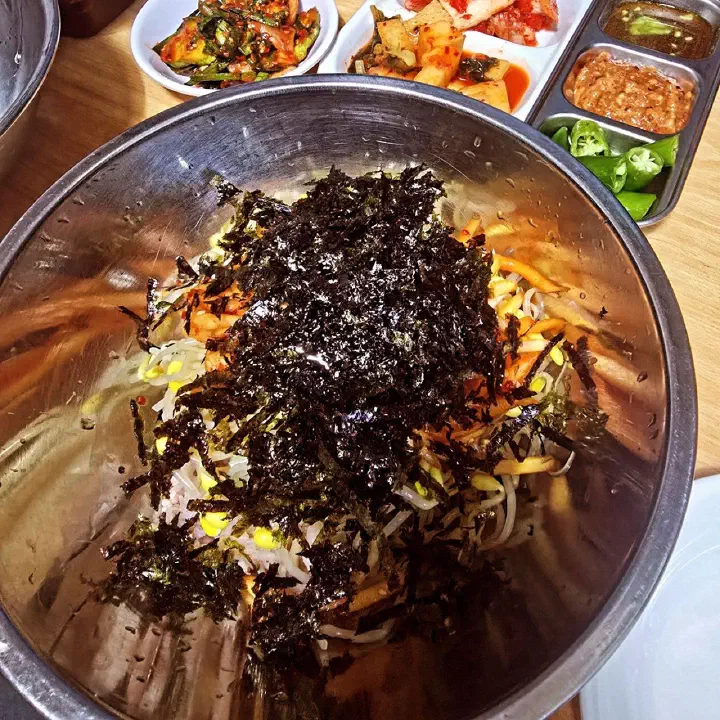
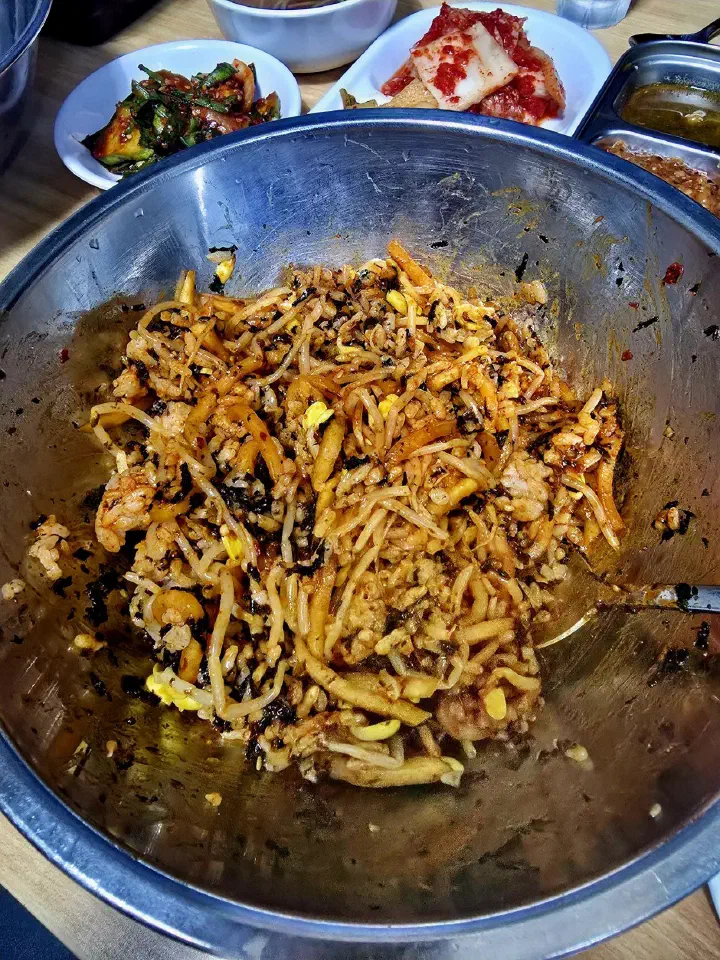
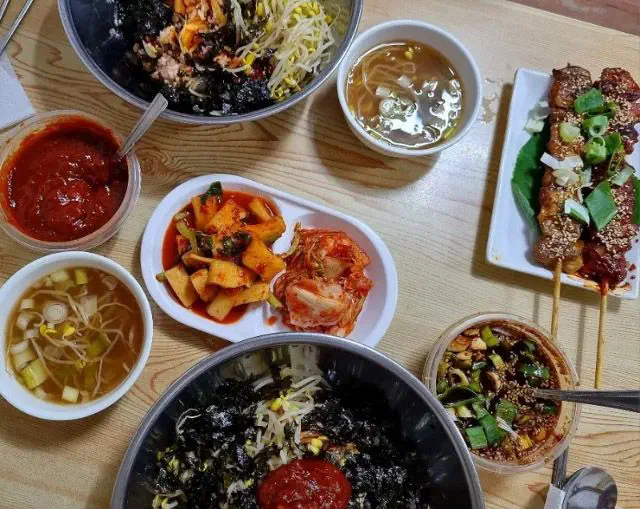
The second signature is beolgyo kkomak bibimbap (벌교꼬막비빔밥), 10,000 won, listed on the menu as Riane kkomak bibimbap (리아네 — roughly “Ria’s place”).
Beolgyo is a town on the south coast known for its cockles, and they pile them into a wide metal basin with chives, scallions, chili and sesame.
For 10,000 won the volume looks like a mistake.
The sauce comes separately so you control it.
What you get by default is a gochujang-based sauce.
There is also a soy-based one, meant for the bean sprout bowl, and you can ask for it. Plenty of regulars prefer it on the cockles.

This is the dish people disagree about.
The sauce is mild, so even a generous spoonful can taste underseasoned.
The chives come in heavy and can be tough.
It suits people who prefer nutty and restrained to sharp and salty.
Mixed with a little of the pork or the side dishes, it balances out.

The stew nobody expects
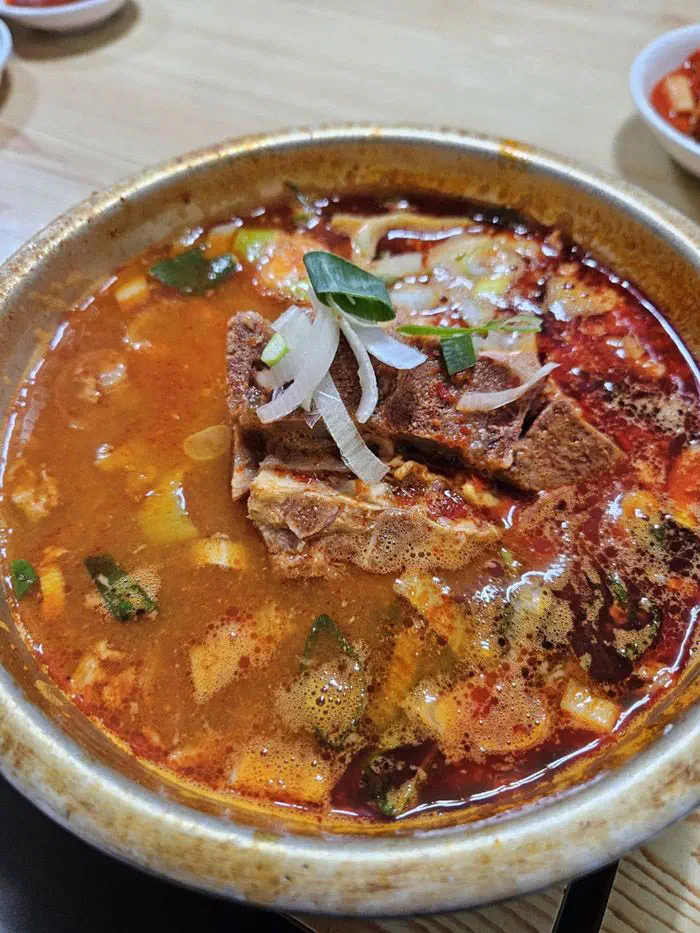
Yangpuni gamjatang (양푼이감자탕), pork bone stew, is 10,000 won and probably the best thing here.
It arrives bubbling in a wide metal basin rather than the usual single-serving pot, with three or four bones and rice on the side.
One person will probably leave some behind.
The broth is dark and savory but not aggressive.
The color promises far more heat than the spoon delivers. Mild, by Korean standards.
Perilla leaves go in, which gives the broth a faint herbal edge.
The meat slides off the bone with a chopstick and never turns dry or stringy.

Seongsu has a more famous gamjatang restaurant a few streets away.
A fair number of people here will tell you they prefer this one.
A note for visitors who don’t eat much chili: Korean “mild” is not international mild.
This stew is genuinely gentle, but the marinated pork and the spicy braised pig’s trotters carry real heat.
Where the value actually is
The cheap end of the menu is what made this place a local institution.
Kongnamul bibimbap (콩나물비빔밥) and kongnamul gukbap (콩나물국밥), both bean sprout dishes, are 6,000 won each.
They sat at 5,000 won for years and only recently moved up, a price that’s still hard to believe in this neighborhood.
The bibimbap is layered — seasoned laver, radish salad, bean sprouts, rice — and you mix in a spoonful of the meat-and-chili paste.
Then there’s the combination that isn’t printed anywhere.
Add 5,000 won to any rice dish, noodle dish, or kimchi stew, and you get a mini portion of the charcoal pork, 150g.
“Mini” undersells it.
For one person with a drink, nothing else on the menu competes.
A 6,000 won rice bowl plus 5,000 won of charcoal pork covers both dinner and something to drink over.
You can also just mix the pork into the bibimbap and call it a pork rice bowl.
Solo diners are normal here, so nobody looks twice.

The rest of the menu
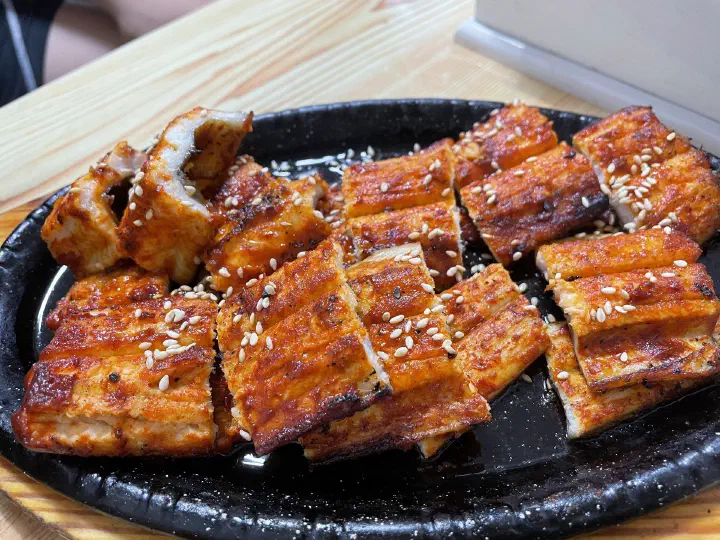
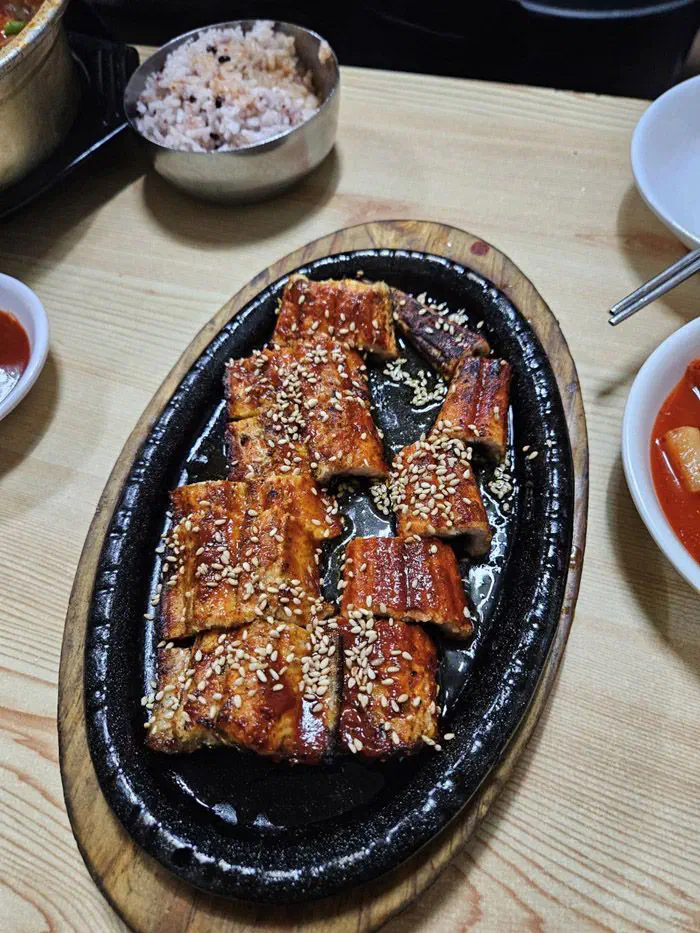
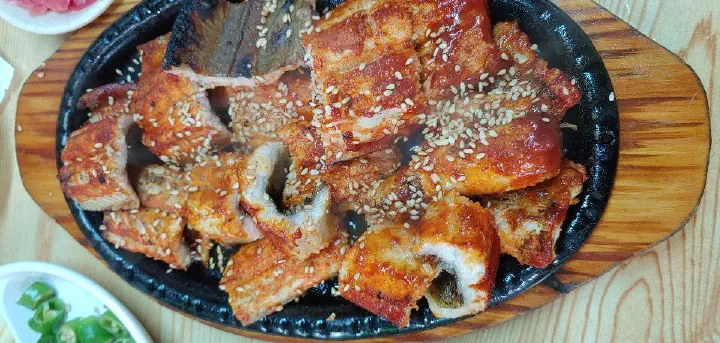
Charcoal-grilled conger eel, sutbul bada jangeo gui (숯불바다장어구이), is 13,000 won per portion.
A whole eel gets a chili marinade and a turn over the charcoal, then comes out on a hot plate with dipping sauce and pickled ginger.
The small bones don’t get in the way.

Put a garlic clove on the hot plate, sear one side, and wrap it with the eel — that works well.
The eel keeps a little of its fishiness, though, so it depends on how sensitive you are to that.

Cold noodles are 8,000 won for mul naengmyeon (물냉면, in broth) and 9,000 won for bibim naengmyeon (비빔냉면, mixed with sauce).
The TV segment showed the pork eaten with cold noodles, and it’s a common order for a reason.
Laying grilled pork over the noodles is a classic Korean pairing.
On its own, though, the naengmyeon is ordinary — closer to what you’d get at a snack shop than at a specialist.
It earns its place next to the meat, not by itself.

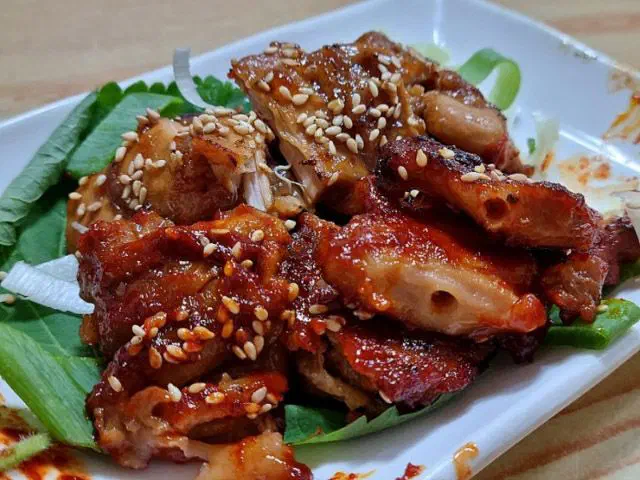
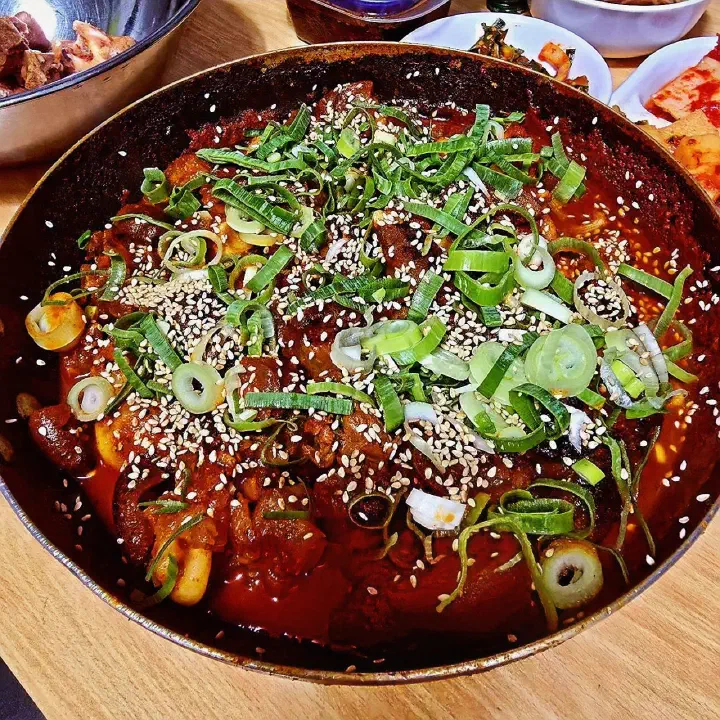
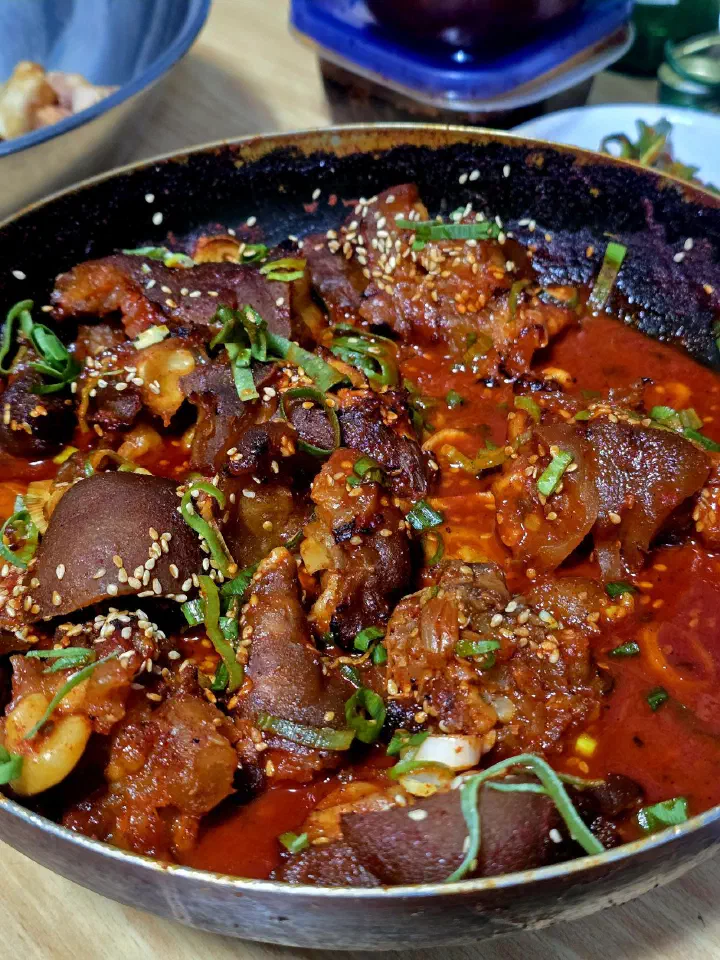
Also on the menu: stir-fried spicy pork 14,000 won, thin-sliced pork belly 11,000 won, spicy braised pig’s trotters 15,000 won, kimchi stew 9,000 won.

The charcoal chicken skewers come in teriyaki and spicy, but they’re small and don’t get the same enthusiasm.

Side dishes and the self-serve corner
The banchan spread is closer to a full home-style meal than to what you get at a barbecue joint.
Kimchi, radish kimchi, seasoned cucumber, stir-fried fish cake, scallion salad, plus a bean sprout soup with any bibimbap.
The cabbage kimchi sits at that in-between stage, neither raw nor fully fermented, and goes down cool and clean.
The ssamjang is more nutty than salty and works on the wraps.
You could finish a bowl of rice on the side dishes alone.

Water, alcohol and soft drinks are self-serve.
Glasses live on the bottom shelf of the fridge, and there are disposable aprons if you want one.
Nobody will bring these to your table, so know that going in.
They also sell the meat-and-chili paste, called gobokgo (고볶고), in 150g and 300g containers to take home.
Gat kimchi (mustard leaf kimchi) and radish kimchi are sold by the container too.
Card payment is fine for all of it, as it is at nearly every restaurant in Korea.
Still, carry some cash when you’re wandering an old market. A few stalls in Ttukdo take cash only, and foreign cards occasionally get declined.
Tipping isn’t a thing here. Leaving money on the table will confuse the staff more than please them.
Lines, and getting there
There’s no app-based waitlist and no ticket system.
You show up, and if it’s full you wait a few minutes near the entrance.
Weekday lunch fills with office workers from the surrounding blocks.
Evenings fill with people drinking.
Early lunch or right after the 5 p.m. reopening is the calmest window.
For a group, call ahead.
When it’s packed, they may cap how long you keep the table.
And with the TV broadcast this month, expect it to be busier than usual for a while.
From Seongsu Station exit 3, walk toward the Han River along the main road until you reach Ttukdo Market.
It’s 789 meters, seven minutes on foot.
The market alleys are genuinely confusing, so keep a map open.
Or follow the smell of grilling meat — the brazier sits out front.
Driving is the hard option.
The restaurant has no lot of its own, so you’d be parking at the Ttukdo Market public street parking or another public lot nearby.
A KakaoT taxi from anywhere in central Seongsu runs only a few thousand won, which is usually easier.
Takeout and delivery both work, through Baemin or by phone.
The 600g pork still comes without rice on delivery orders.
English is limited here. That’s fine.
Menus are in Korean on the wall, and pointing at what the next table has works as well as it always does.
📍 View Seoul Matzip (서울맛집) on Google Maps →
Prices moved, portions didn’t
Inflation caught up with this place too.
The cockle bibimbap went from 9,000 to 10,000 won, the stew from 9,000 to 10,000.
The 300g charcoal pork moved from 13,000 to 14,000, and the 5,000 won bean sprout dishes are now 6,000.
Longtime regulars grumble that outside the bean sprout bowls, the value isn’t what it was.
Measured against the rest of Seongsu, it still isn’t close.
Three or four dishes plus drinks comes to under 50,000 won for two.
The pot of wrap vegetables hasn’t shrunk, and the pork still goes over real coals.
Prices climbed; portions stayed.

Worth knowing before you go
If you want polished Seongsu, this isn’t it.
It’s an old market restaurant, the cockle bibimbap is mild enough to divide people, and the cold noodles are unremarkable alone.
What you get instead is genuinely charcoal-grilled pork for the price of a fast-casual lunch,
and a 5,000 won add-on that turns any rice bowl into a full meal.
It works for one person with a drink and for a group ordering half the menu.

The two things to check before you go are the 3-to-5 break and the Sunday closing.
Get those right and the rest takes care of itself.