Whenever Pyongyang naengmyeon comes up in Seoul, Woo Lae Oak (우래옥) is usually the first name mentioned.
It opened in 1946, so it is closing in on 80 years in the same spot.
The food is the draw, but honestly, half of a good visit here comes down to knowing how the place runs before you show up.

Here are the basics first.

Address: 62-29 Changgyeonggung-ro, Jung-gu, Seoul (1-3 min walk from Euljiro 4-ga Station, Exit 4)
Hours: Tue-Sun 11:30-21:00 (last order 20:20)
Break time: weekdays 14:00-17:00, when only the first floor stays open
Closed: Mondays
Phone: 02-2265-0151
Parking: private lot plus valet (paid, card only)

📍 View Woo Lae Oak (우래옥) on Google Maps →

A few quick notes if you are visiting from abroad.
Almost every restaurant in Korea takes internationally issued credit cards, and this place is no exception, so you don’t need to carry much cash.
There is no tipping here; staff may actually be confused if you try to leave one.
English isn’t really spoken, but ordering is easy enough - you can point at the menu and hold up fingers for the count.
One more practical tip: Google Maps is unreliable for walking and transit directions in Korea, so Naver Map or KakaoMap will get you there more accurately.

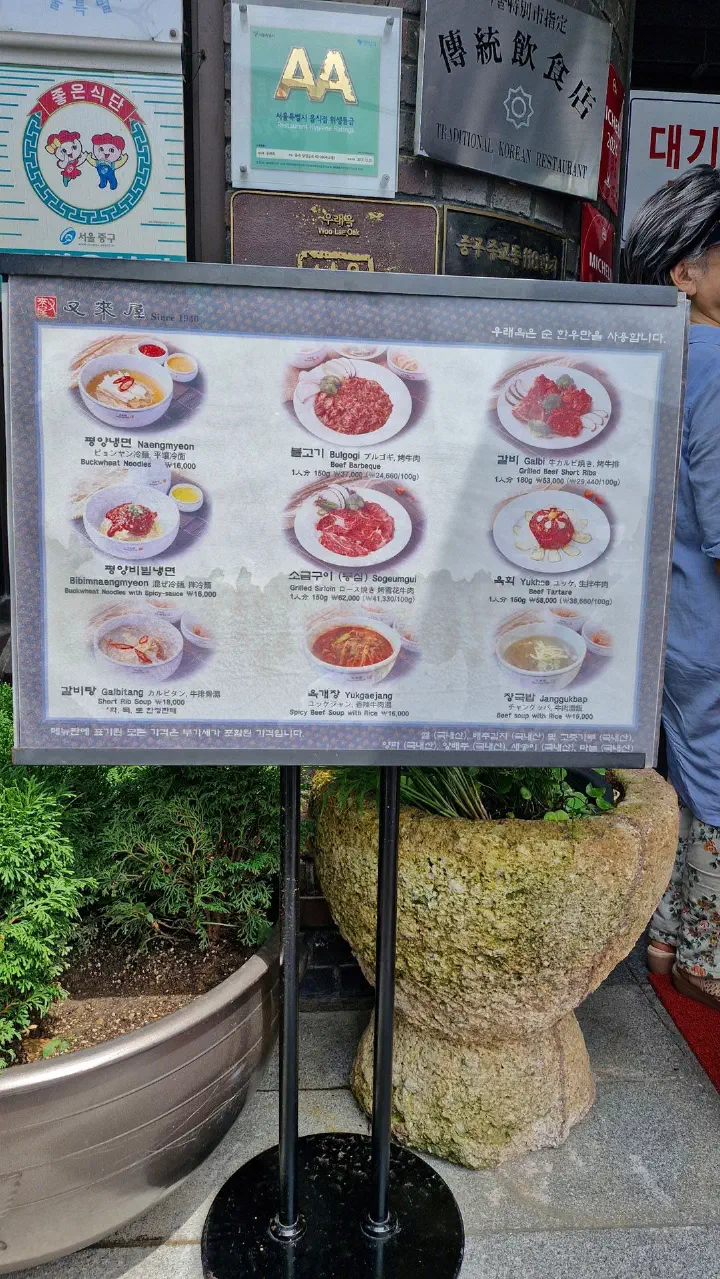
Menu board outside Woo Lae Oak in Euljiro showing Pyongyang naengmyeon, bulgogi and galbi with heritage restaurant plaques

Getting there, and the wait

The location is easy. From Euljiro 4-ga Station (lines 2 and 5), take Exit 4, then turn into the alley next to the CU convenience store. It’s a one-to-three minute walk.

The real hurdle is the line.
On weekends there are often around 200 groups already queued by the time the doors open.
Weekday lunches regularly pass 100 groups too, and ever since Nvidia’s CEO Jensen Huang dropped by, even weekday afternoons have gotten busier.

The upside is that noodles turn over fast.
Roughly 60 groups clear in about 30 minutes, so the wait rarely feels as long as the number suggests.
The space is big, spread over two floors, which makes it fine for family gatherings or hosting guests.
Solo diners should know that single visitors are seated at shared tables, so expect company at your table if you come alone.

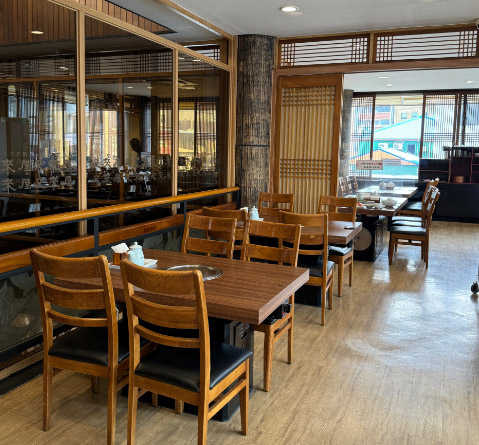
Interior dining hall of Woo Lae Oak in Euljiro with wood-toned tables and chairs

How the waiting system works

The queue setup is a little unusual.
There is no remote app booking - no CatchTable-style reservation from your phone.
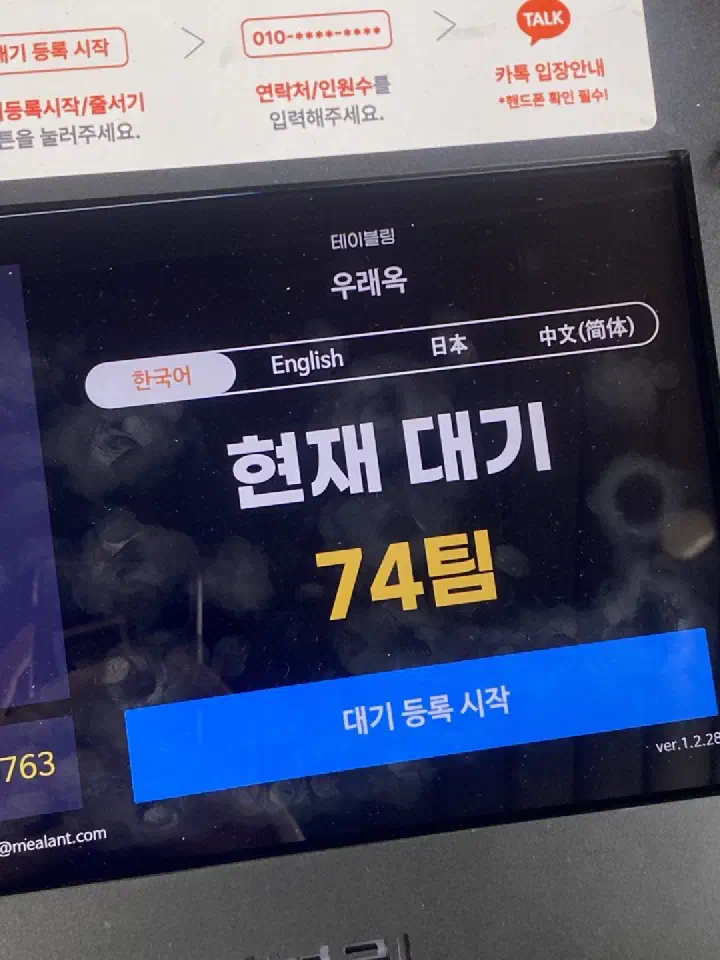
You register in person at the Tabling kiosk in front of the shop.
Check-in opens at 9:30 a.m., and seating starts at 11:30 a.m.

Tabling walk-in kiosk in front of Woo Lae Oak showing 74 groups currently waiting

Once you register, updates on how many groups are ahead come by KakaoTalk, so you don’t have to stand around at the door.
If you want a first-round seat, the easy move is to put your name down between 9:30 and 10:00, then wander over to nearby Cheonggyecheon stream or Gwangjang Market and come back when you’re called.

To dodge the weekday lunch peak, aim for 5 p.m.
On weekdays the second floor closes from 2 to 5, running only the first floor, and when the upstairs reopens at 5, the backed-up line clears in one big push.

The naengmyeon: broth first

Now to the food.
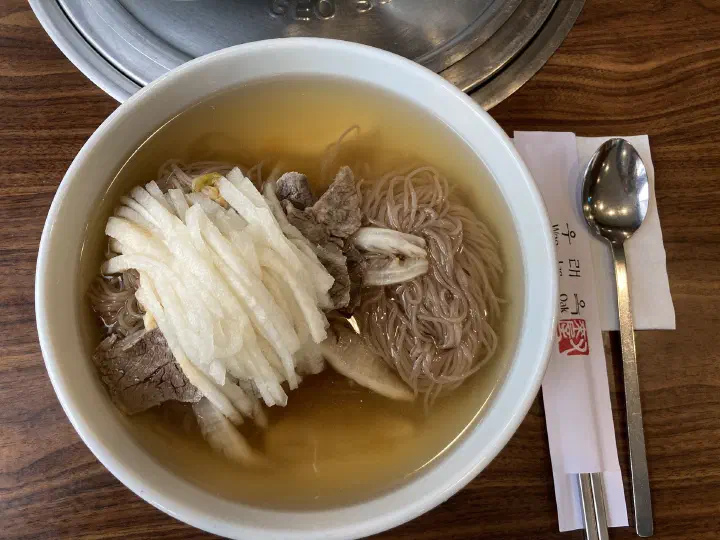
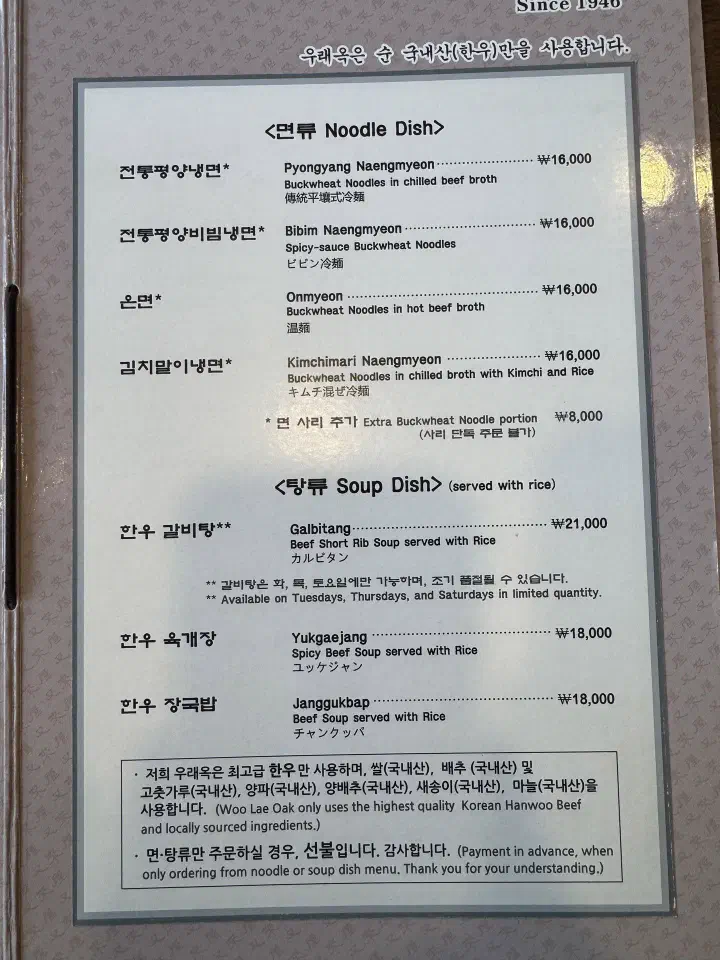
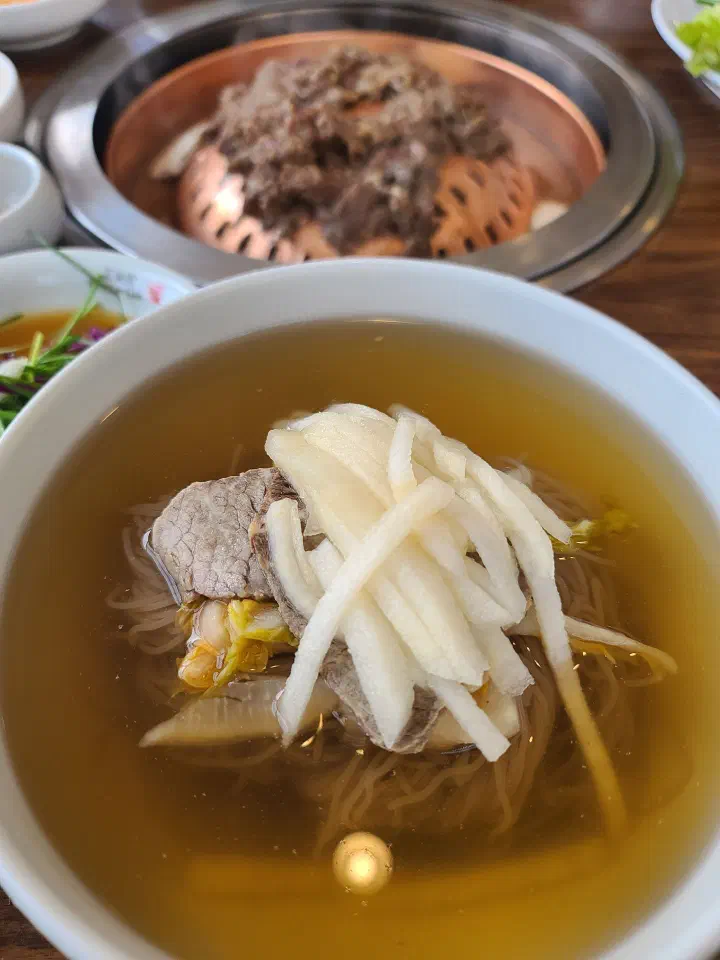
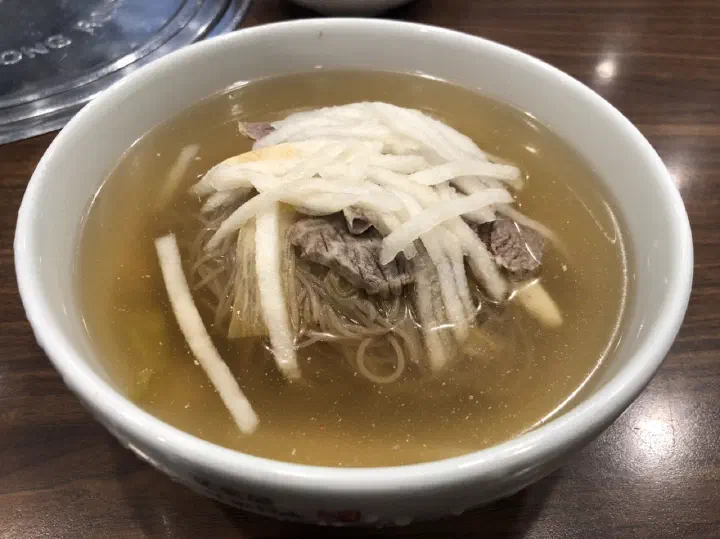
The signature is the jeontong Pyeongyang naengmyeon (전통평양냉면) at 18,000 won.
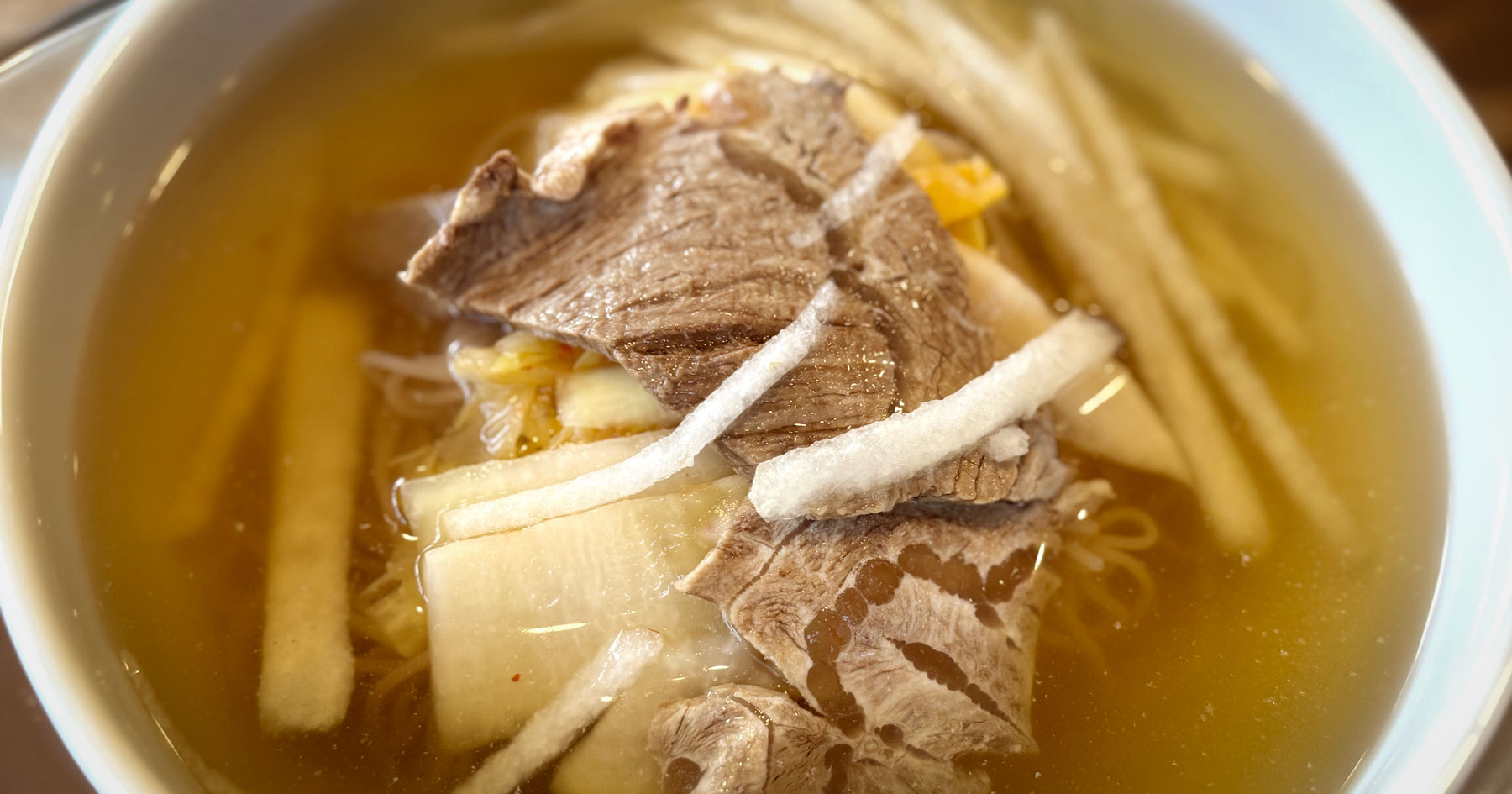
The broth is Hanwoo beef shank simmered a long time, seasoned only with salt and soy sauce.
It looks clear, yet it carries a deep beefy aroma, almost like a chilled beef soup.

Top-down view of traditional Pyongyang naengmyeon at Woo Lae Oak with buckwheat noodles, sliced beef and shredded pear

This isn’t the ultra-plain, whisper-quiet style some people picture with Pyongyang naengmyeon.
The seasoning leans firm, so the flavor lands from the first sip, and that also means it’s a bit divisive.
If you came expecting a delicate, subtle bowl, it may read as strong.
But for a first-timer, that assertive broth actually makes it a good entry point into the style.

The noodles carry a gentle buckwheat scent and break cleanly without being coarse.
Toppings are a few slices of pyeonyuk (편육, boiled beef), plus pear, baek-kimchi, and radish, with none of the boiled egg you’d see at ordinary naengmyeon spots.
The pear quietly adds a touch of sweetness.
Skip the vinegar and mustard on the table; the broth tastes best on its own.

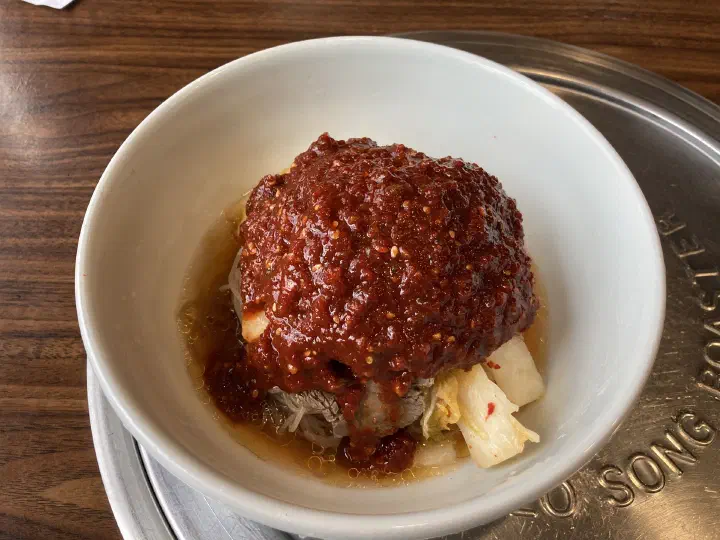
Woo Lae Oak bibim naengmyeon, buckwheat noodles topped with a spicy red chili sauce

Side dishes that matter

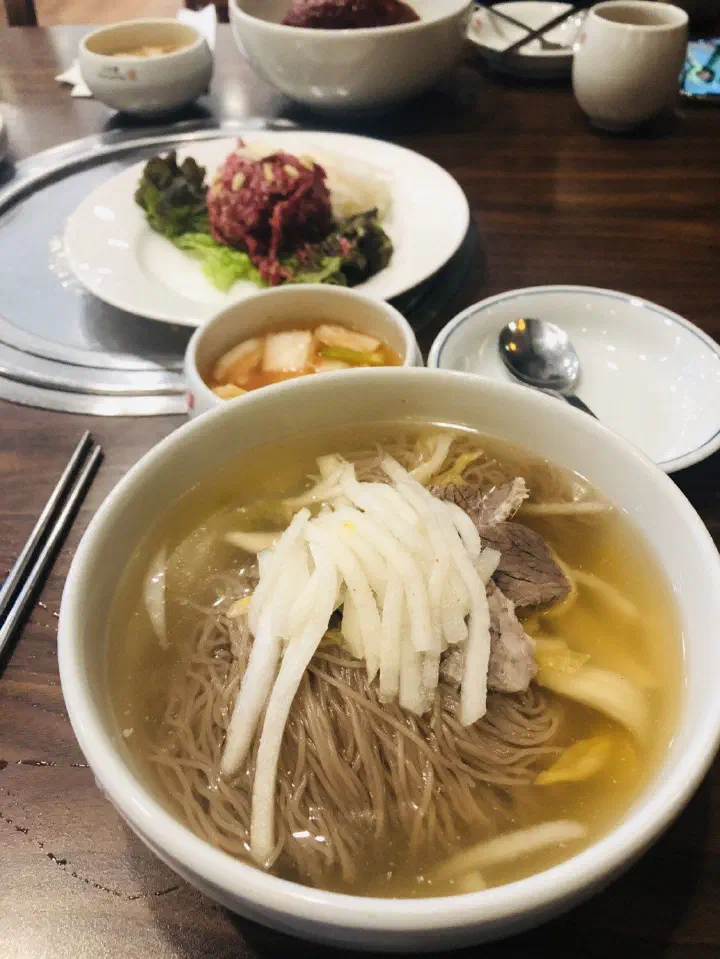
The one banchan that comes with the noodles is a fresh geotjeori (겉절이) kimchi, and it does more heavy lifting than you’d expect.
It’s tangy with a savory kick, and it fills in the seasoning between bites of the clean-tasting broth.
They’ll refill it if you run low, so it’s meant to be eaten back and forth with the noodles.

Table setting at Woo Lae Oak with a bowl of Pyongyang naengmyeon, geotjeori kimchi and a plate of Hanwoo beef tartare

Partway through the meal you also get myeonsu (면수), the water the buckwheat noodles were boiled in.
It’s plain rather than rich, but it settles the stomach nicely after a cold bowl.

Bulgogi and the hot dishes

Woo Lae Oak isn’t only a noodle house.
Bulgogi is its other signature, and at 46,000 won for a 150g portion it isn’t cheap.
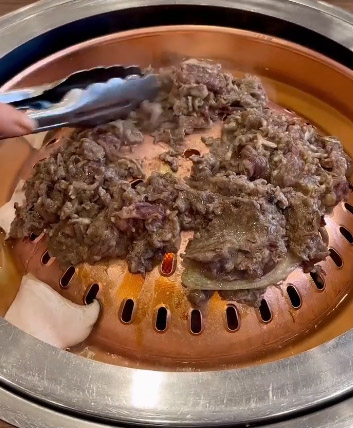
The kitchen uses only domestic Hanwoo beef, and the bulgogi leans on the quality of the meat rather than a heavy marinade.
On a first visit, pairing the naengmyeon with an order of bulgogi is a common choice.

Hanwoo bulgogi cooking on the domed copper grill at Woo Lae Oak

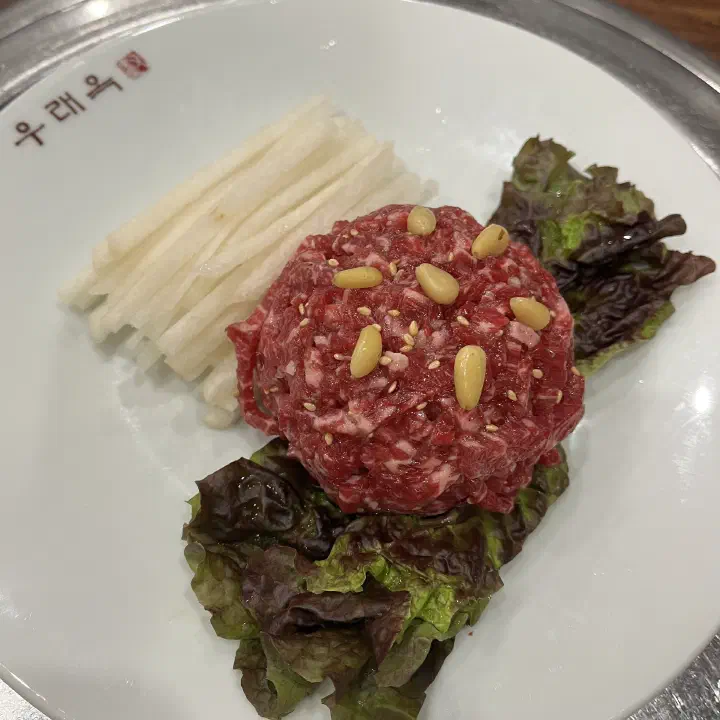
Hanwoo yukhoe beef tartare at Woo Lae Oak, topped with pine nuts and served with shredded pear and lettuce

If you want something hot, the Hanwoo yukgaejang (한우육개장) is 20,000 won, spicy with a deep beef flavor.
Fair warning: Korean spicy is genuinely spicy, and it can hit harder if you’re not used to it.
The Hanwoo galbitang (한우갈비탕) is 25,000 won, but it’s only served on Tuesdays, Thursdays, and Saturdays, so check the day if that’s your goal.

A couple of ordering notes.
You can ask to swap the beef topping on the noodles for naengjeyuk (냉제육, cold sliced pork) at no extra charge.
A larger portion (gopbaegi) adds 10,000 won.
Note that, unlike before, broth refills and extra noodle portions are no longer offered.

Atmosphere, service, and payment

It’s an old restaurant, but the interior doesn’t feel worn.
The wood-toned room is calm and dignified without being fussy.
There are plenty of staff and the flow is well organized, so even on packed days you get seated quickly.

As for credentials, it has held a Michelin Guide Bib Gourmand listing from 2022 through 2026, and it has turned up on several Korean TV food programs.
The entrance is lined with certificates and awards, including a Seoul Future Heritage plaque.

Payment is worth knowing in advance.
If you order only noodles or soups, you pay upfront at your table when you order.
If you order grilled meat, you settle up after the meal instead.

Woo Lae Oak indoor menu listing noodle and Hanwoo soup dishes with prices and a pay-in-advance notice

Parking and rough cost

Driving here is manageable.
There’s a sizable private lot out front plus valet service.
On weekends and at lunch it can fill up, though, and you may end up on the street nearby.
Parking starts at 3,000 won, card only (no cash), and time spent waiting in the car queue is billed as well, at 1,000 won per 10 minutes.

To sketch the cost: noodles alone run about 18,000 won per person, so two bowls come to 36,000 won.
Add a single portion of bulgogi and you’re well past 60,000 won.

Woo Lae Oak Pyongyang naengmyeon in front with Hanwoo bulgogi grilling on the table behind it
The meal itself is quick - once you’re seated, you’re usually done in around 30 minutes.

So, is it worth it?

Woo Lae Oak asks a lot of you.
The price is high for a bowl of noodles, and you have to be ready for the wait.
Some also feel the beefy depth has softened lately, and losing the free broth refill is a real letdown.

Still, if you like a rich, beef-forward take on Pyongyang naengmyeon, or you’re just starting to explore the style, this is a bowl that sets a reference point.

Close-up of Woo Lae Oak Pyongyang naengmyeon, clear Hanwoo beef shank broth with buckwheat noodles, pyeonyuk and pear
If your taste runs to the plainer, classic version, it’s worth weighing against other shops.
Avoid peak summer weekends and it’s easier to manage than its reputation suggests, and since Cheonggyecheon stream is right there for a walk afterward, it’s worth trying once just to have the benchmark.

Where it is

From Euljiro 4-ga Station, Exit 4, it’s a 1-3 minute walk into the alley beside the CU convenience store.
There’s a private lot if you drive.

📍 View Woo Lae Oak (우래옥) on Google Maps →