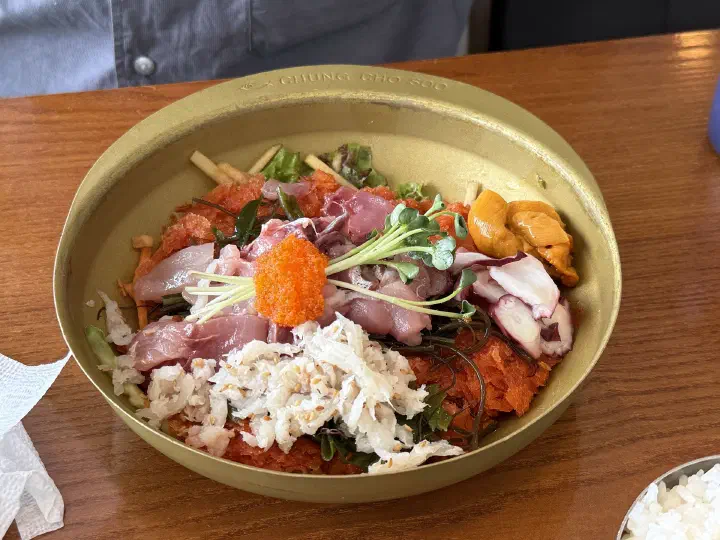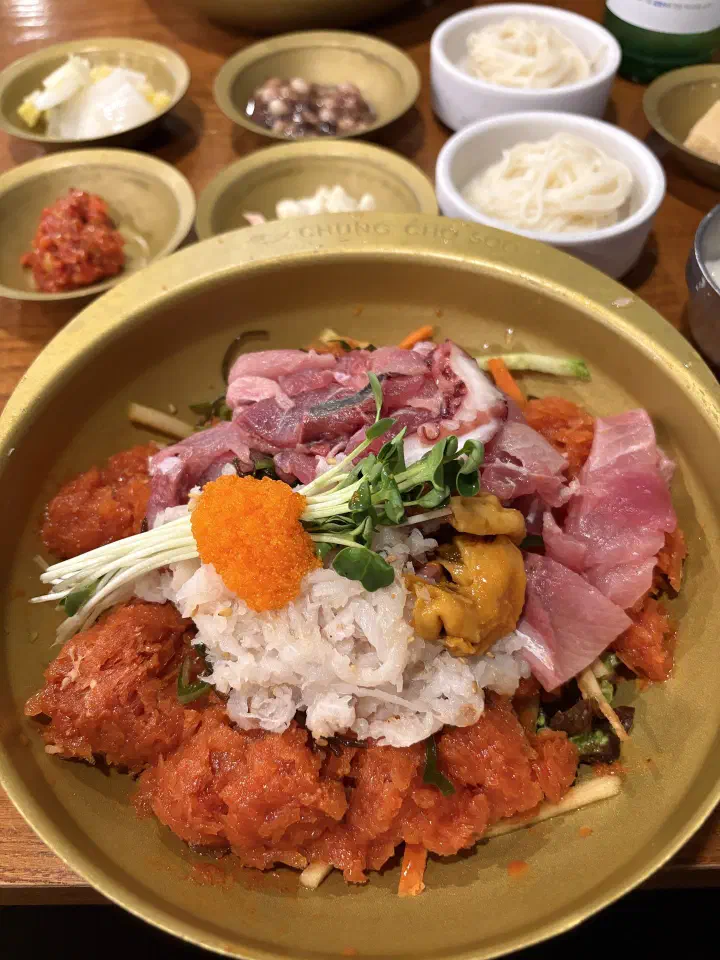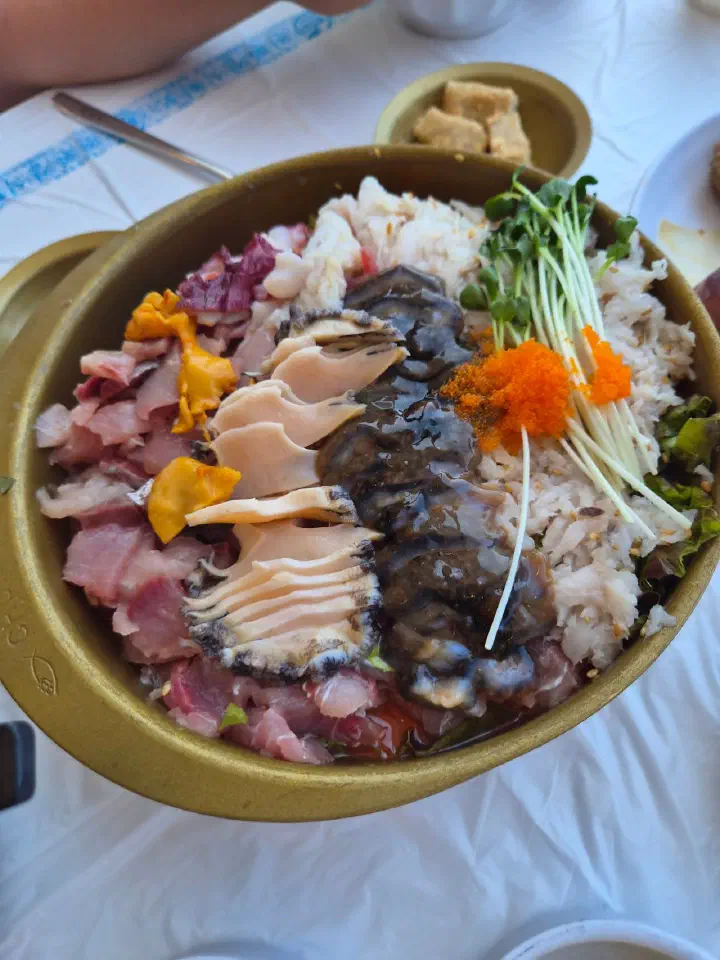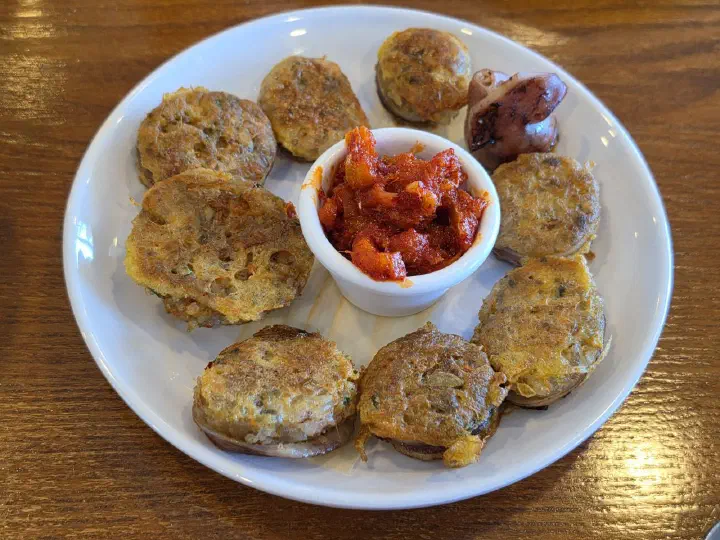
If you ask anyone in Sokcho where to try mulhoe (물회), Korea’s cold raw fish soup, this name comes up first.
Chungchosoo Mulhoe (청초수물회) is often called the country’s first restaurant dedicated entirely to mulhoe, and it holds a patent on its unusual broth: a beef bone stock, served ice cold.
It has been on Korean TV more than ten times since 2012.
Big claims, so here is what actually matters before you go.
The basics
- Name: Chungchosoo Mulhoe Sokcho Main Branch (청초수물회 속초본점)
- Address: 12-36 Expo-ro, Sokcho-si, Gangwon-do
- Hours: daily, 10:00 to 20:50
- Last order: 20:00 (takeout orders until 20:20)
- Waiting tickets: issued from 9:30 in the morning
- Parking: free lot on site; an overflow lot next door allows 2 hours
📍 View Chungchosoo Mulhoe (청초수물회) on Google Maps →
What mulhoe is, and why this one is different
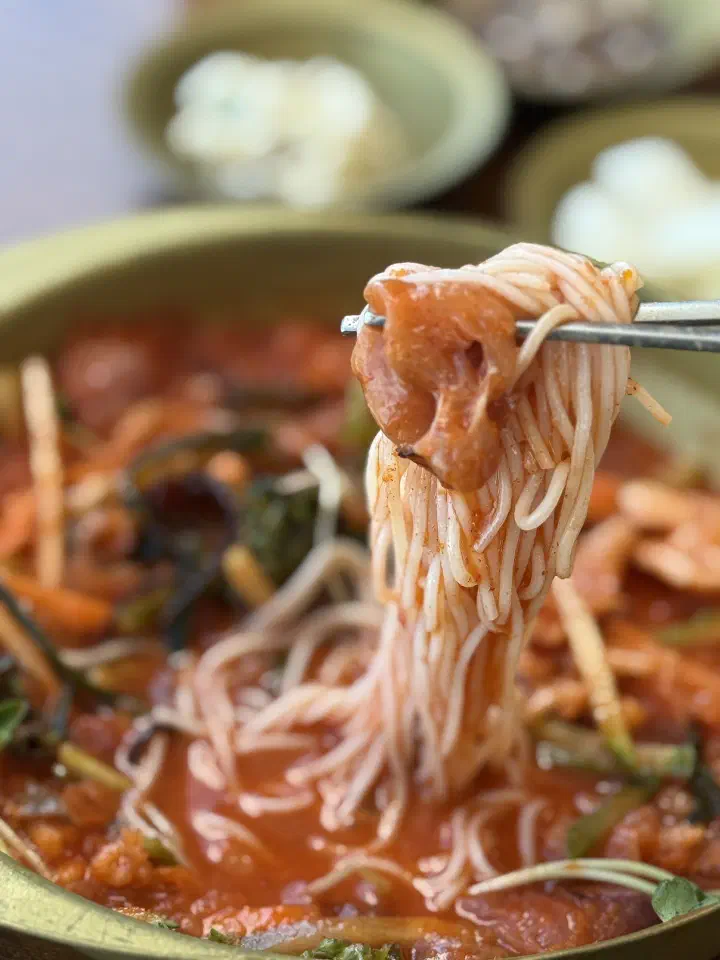
Mulhoe is sashimi and vegetables swimming in a chilled, tangy broth, usually sharpened with vinegar and chili.
It is what locals on Korea’s east coast eat when summer gets heavy.
Most places build the broth on water or fruit stock.
Here it sits on a slow-simmered beef bone base, which sounds wrong for raw fish and somehow is not.
The first spoonful is sweet and tangy, then a savory depth creeps in underneath.
The heat level is mild by Korean standards - gently spicy rather than punishing - though if you are sensitive to chili at all, treat “mild in Korea” with respect and keep some rice handy.
The restaurant started out as a tiny local diner.
Old photos of that first shop hang inside the current building, which has grown into something closer to a seafood hall with branches across the country.

Waiting, and how bad it actually gets
In summer, especially on weekends, there can be 30 or more groups in the queue right at opening time.
On weekdays a 20-minute wait around lunch is normal.
The saving grace is turnover: the dining hall seats groups of up to 600 people, so even a long line often clears in 15 to 30 minutes.
Grab a numbered ticket from the machine (they start issuing at 9:30) and wait indoors - there is a proper air-conditioned waiting area, and numbers are announced over a speaker.
In winter you can often walk straight in before noon.
Evenings are quieter too, but the kitchen sometimes closes early when ingredients run out, so do not cut it too close to last order.

Menu and prices
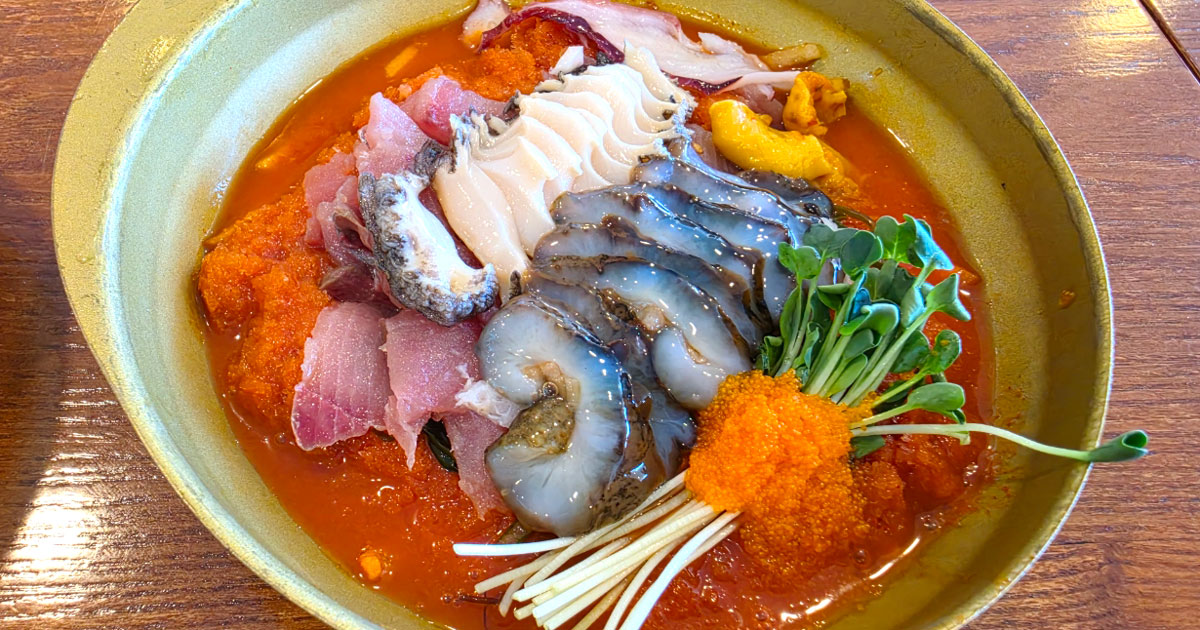
The signature Chungchosoo mulhoe is 19,000 won per person, loaded with assorted sashimi, sea squirt, octopus and flying fish roe.
The upgraded hae-jeon mulhoe (해전물회) adds live abalone and sea cucumber: 27,000 won for one, 48,000 won for two.
A squid mulhoe appears only when the day’s catch allows, at market price.

If someone in your group does not do cold raw fish, the menu covers them well.
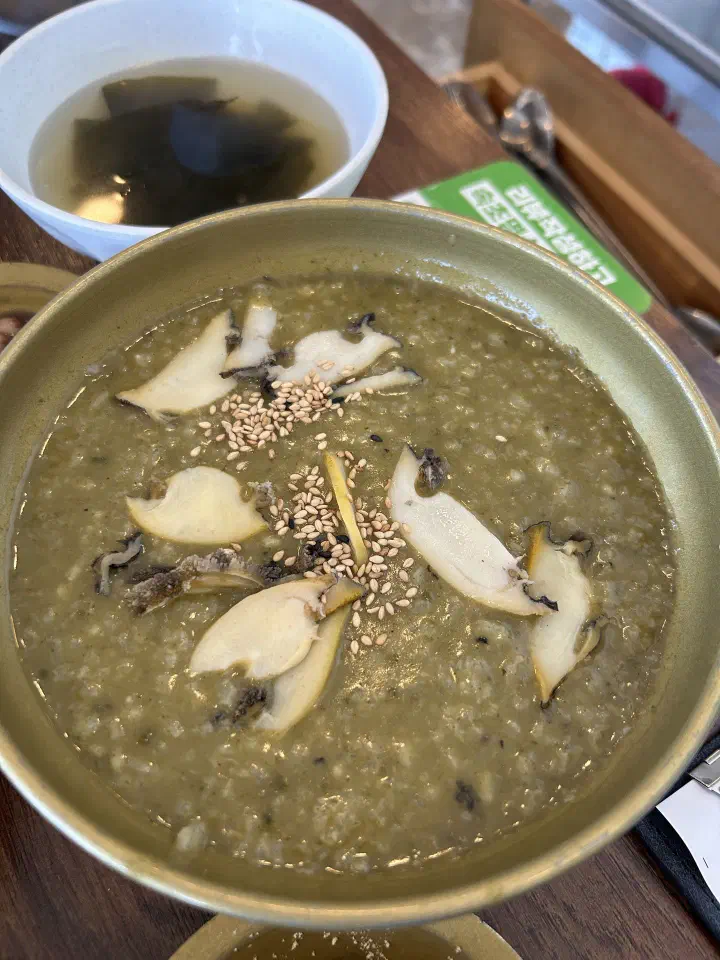
Abalone porridge (전복죽, 16,000 won) is warm and gentle, a favorite for kids.
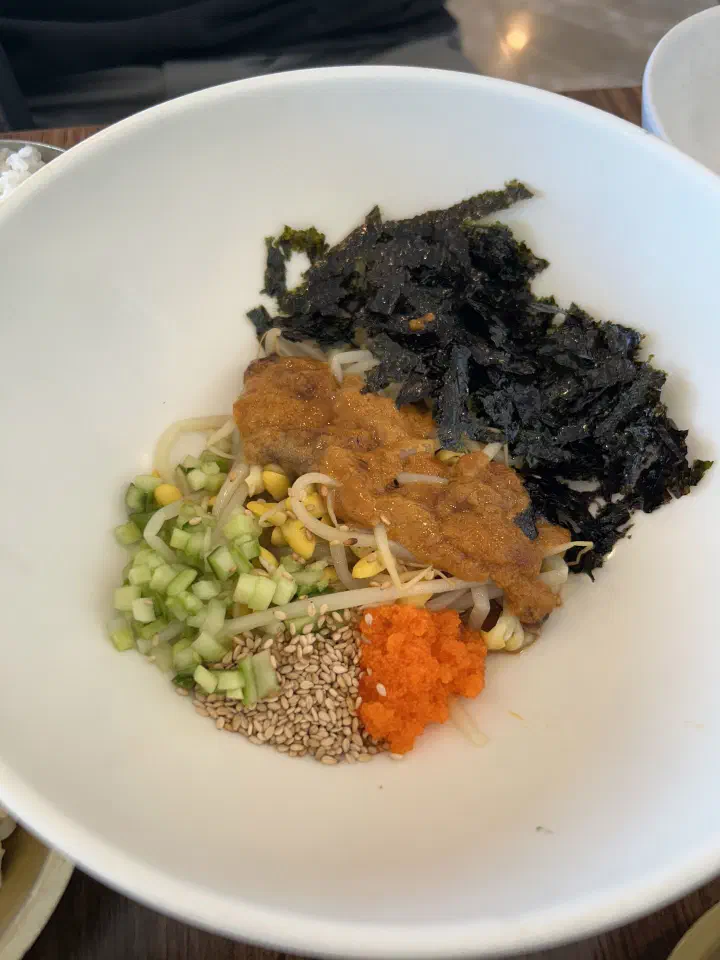
Sea urchin bibimbap (성게알 비빔밥) is 22,000 won, abalone raw fish rice bowl 22,000 won, and a mild red snow crab bibimbap 19,000 won.
For hot soups there is seopguk (섭국, 15,000 won), a spicy mussel soup with chives and egg, plus versions with abalone (20,000 won) or a rich sea urchin seaweed soup (20,000 won).
The Sokcho specialty ojingeo sundae (오징어순대, 15,000 won) - a squid stuffed with beef, shiitake and deodeok root - is the side dish worth ordering.
For two people, expect around 53,000 won for two basic mulhoe and one stuffed squid, or about 50,000 won for the two-person hae-jeon mulhoe with extra noodles.

One practical tip: the bowl comes with a small portion of rice and thin noodles, and the noodle portion is genuinely tiny.
If you like noodles in your broth, add a noodle refill from the start.

The room and the service
Window seats look straight out over Cheongchoho Lake through floor-to-ceiling glass, and yes, everyone wants them - you cannot really reserve a view seat, it is luck.
Tables are well spaced, high chairs are available, and you will see a lot of families with small children.
Robots deliver the food and extra orders go through a tablet on the table, so very little Korean is needed.
The menu has photos, and pointing works fine; staff English is limited but ordering is genuinely easy.
Cards are accepted without fuss - any international credit card works - and remember Korea has no tipping culture, so just pay and go.
Downstairs there is a cafe that gives a 10 percent discount if you show you have eaten at the restaurant.
There is even a fenced spot on the ground floor where dogs can wait.
The banchan (side dishes) lean hard into Gangwon-do identity: corn and red bean porridge, fermented flatfish, white kimchi, and a soft rice cake for dessert.

What to temper your expectations about
Portion size is the most common complaint, and it is fair.
For the price, the bowls are not huge, so if you are chasing volume this place may frustrate you.
The seasoning is bold and sweet-tangy; if you prefer a subtle, understated mulhoe, this is not that.
And in peak season, the queue and tourist-area pricing are simply part of the deal.
Verdict
This is the reference point for Sokcho mulhoe.
The patented broth really does taste different from the vinegar-forward standard, the seafood is reliably fresh, and eating it in front of the lake is a proper east coast moment.
It is the kind of place people end up returning to on every Sokcho trip, grumbling about the portions and ordering the noodle refill like they knew all along.

Getting there
The restaurant sits on Expo-ro, the main road along Cheongchoho Lake, an easy walk from the lake promenade and a short ride from Sokcho’s intercity bus terminal.
If you are traveling without a car, a taxi via the Kakao T app is the simplest way; for walking directions use Naver Map or Kakao Map rather than Google Maps, which handles Korean walking routes poorly.
The on-site lot is large, and an overflow lot next door allows two hours of parking when it fills up.