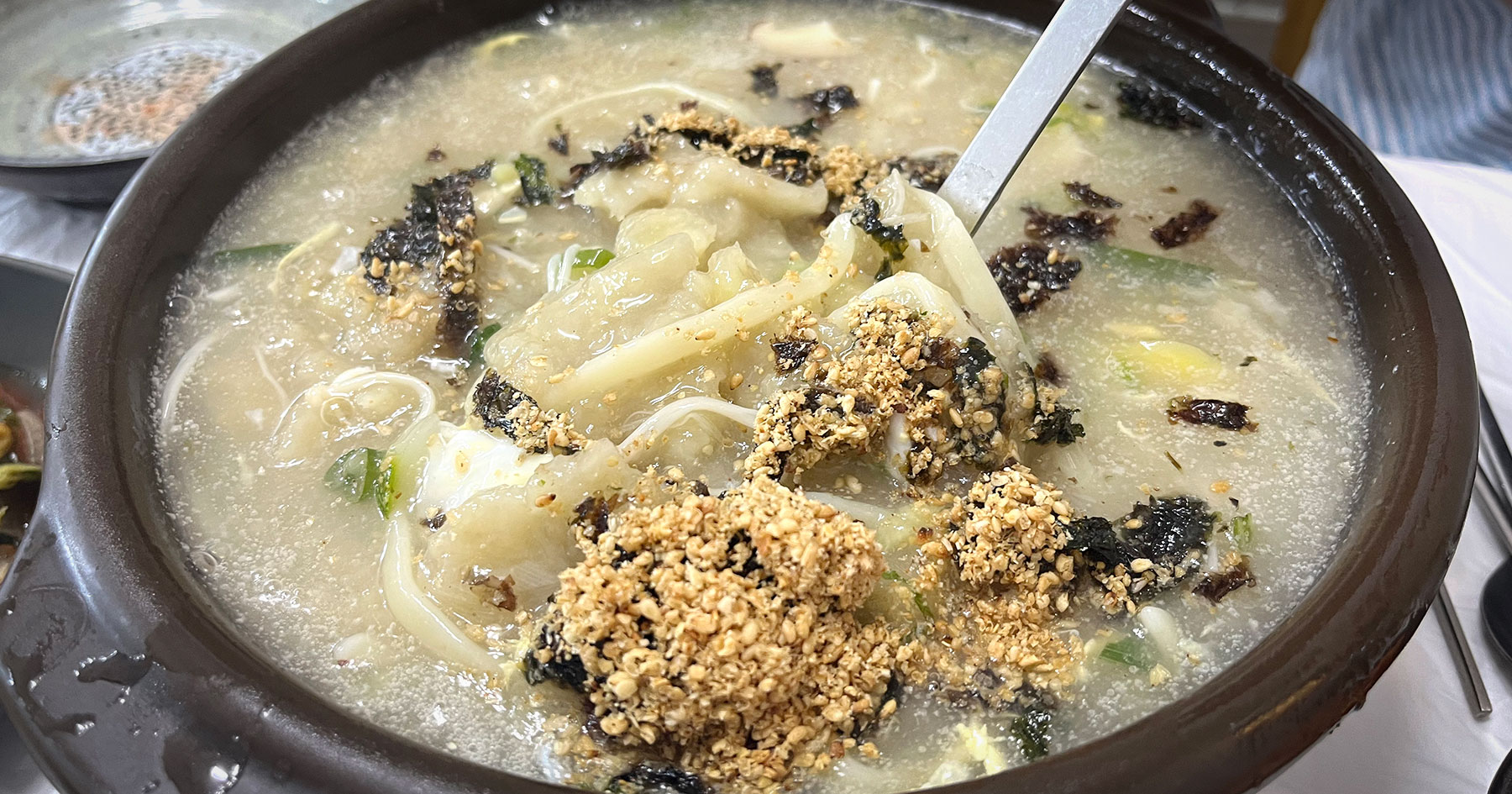
Gangwon is potato country, and gamja ongsimi (감자옹심이) is what it does with the crop.
Grated potato, squeezed, pressed into small dumplings, dropped into broth.
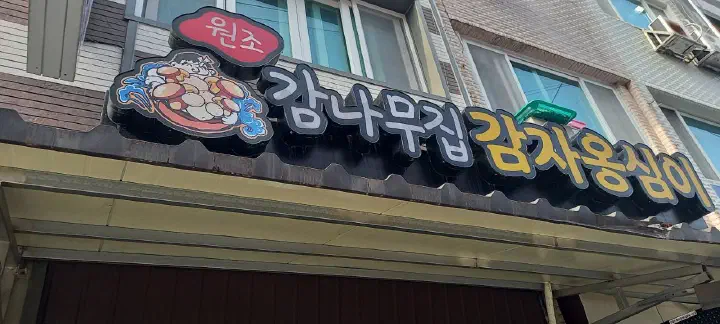
Sokcho has a few places that make it, and the one people line up for is Gamnamujip (감나무집), in an alley just off Jungang Market.
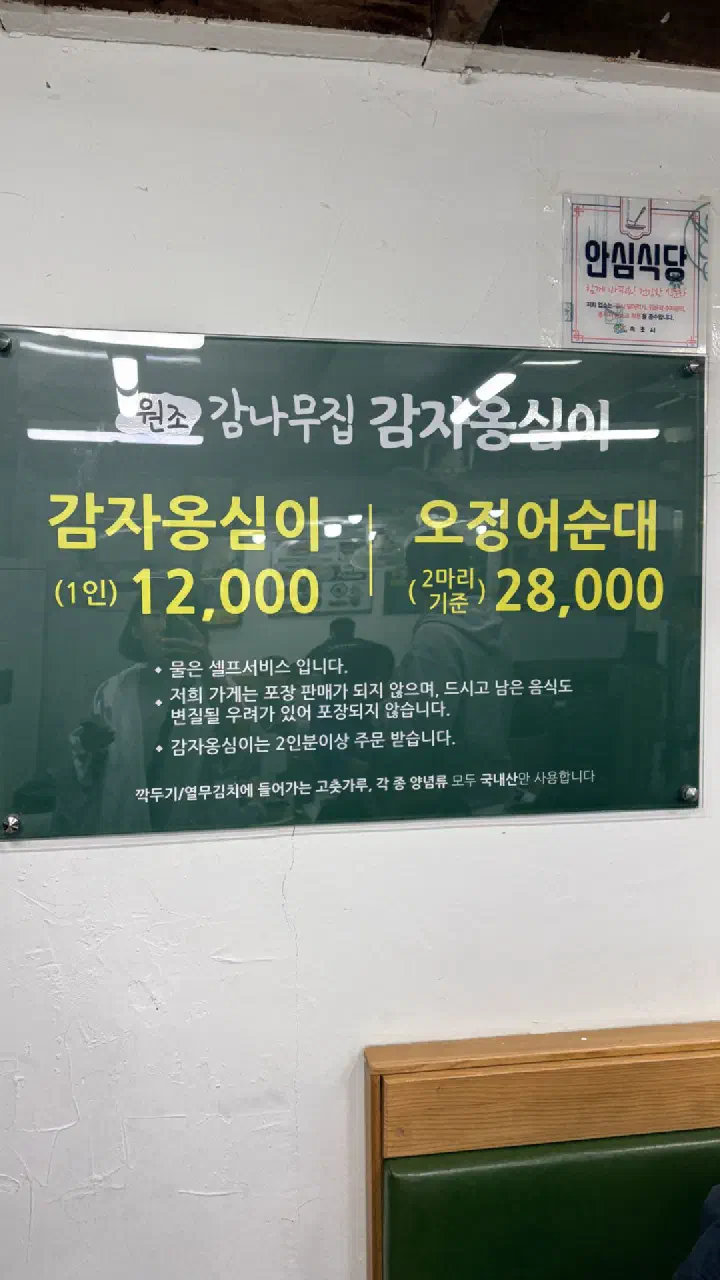
One bowl runs 12,000 won.
There is essentially one dish on the menu, and the shop is open four hours a day.
Both of those facts shape the whole visit, so here’s how it actually works.

Four hours a day
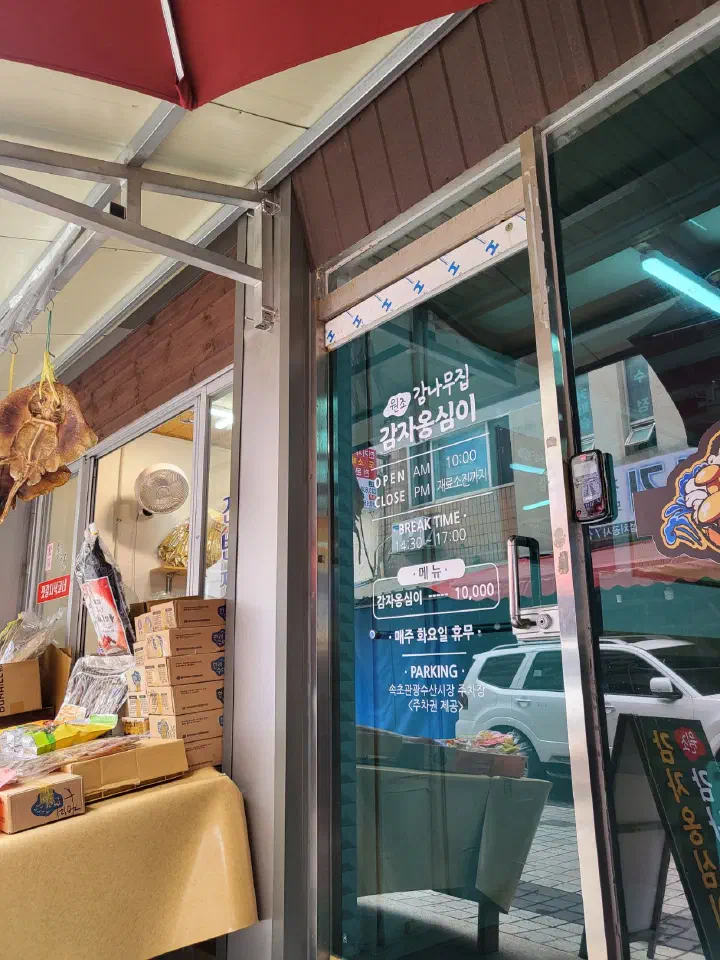
Doors open at 10 a.m. and close at 2 p.m.
Last order is 1:30.
Closed every Thursday.
And when the dough runs out, they stop, whatever the clock says.
The dumplings are made from potatoes grated in-house, so there’s a fixed amount each day.
That’s the reason this place only does lunch.
Even though the sign says 2 p.m., on busy days they stop taking anyone new well before that.
The hours posted on the door and the hours on map apps don’t always agree, so if you’re arriving late, a phone call first saves you the walk.
Phone: 033-633-2306.
📍 View Gamnamujip Gamja Ongsimi (감나무집감자옹심이) on Google Maps →
One more thing about the schedule: it changed.
The shop used to stay open into the evening with an afternoon break, and the weekly day off used to be Tuesday.
Older blog posts still say that.
If you plan around them you’ll show up to a locked door.

When to line up
The reliable move is to show up about 20 minutes before opening.
Show up at 9:40 and you’ll be first or second in line, seated the moment they open.
By 10:10 every table is taken.
After that a line forms.
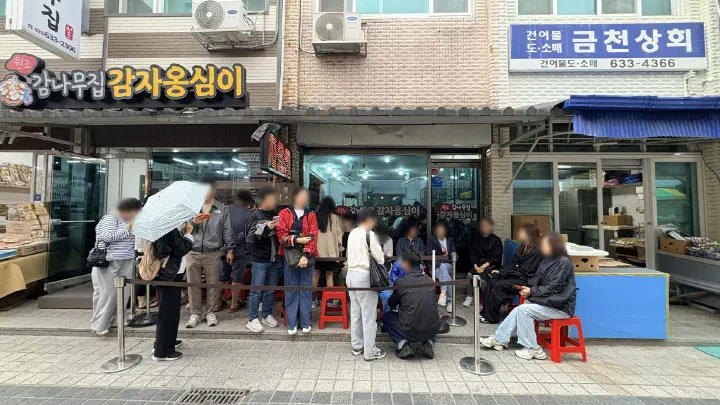
On weekdays the wait is 10 to 30 minutes.
Weekends are more like 30 minutes to an hour.
In May, which is family-holiday season in Korea, people showing up at 11:30 have waited a full hour.
There’s no ticket system and no app.
Red plastic chairs sit outside the shop and across the alley, and you go in the order you sat down.
Since the order only exists in people’s heads, take note of who’s ahead of you.
In summer those chairs get no shade at all, which is the worst part of the whole thing.
If early mornings aren’t happening, the other option is to come around 1 p.m., when the line thins out.
The risk is that the dough is already gone by then.

Why the line moves
A long line here isn’t what it looks like.
One dish, no drinks, no alcohol, so tables turn over fast.
Food lands within a few minutes of ordering, and nobody lingers.
Ten groups ahead of you can still mean under 30 minutes.
The staff have table turnover down to a science, too.
Each table is layered with several sheets of plastic, and clearing one means stacking the dishes and peeling off the top sheet.
Very market-restaurant.

What arrives at the table
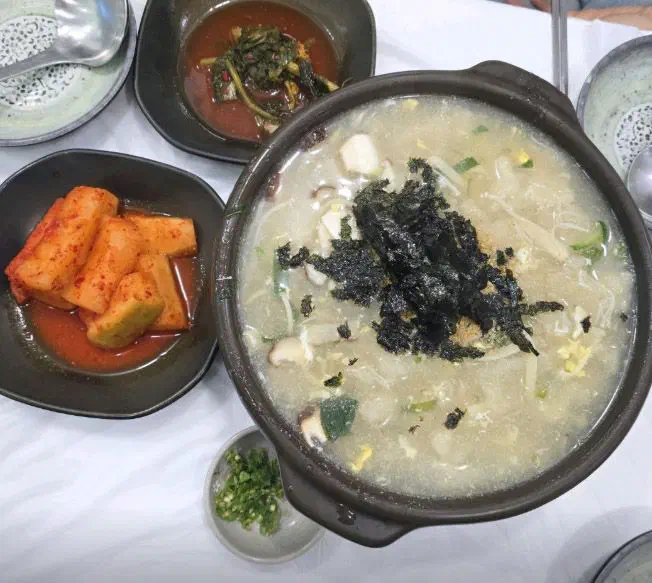
Ongsimi doesn’t come in individual bowls.
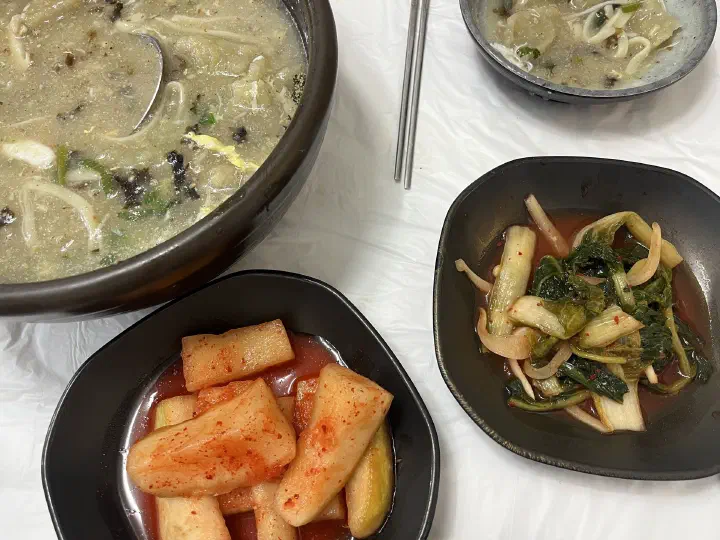
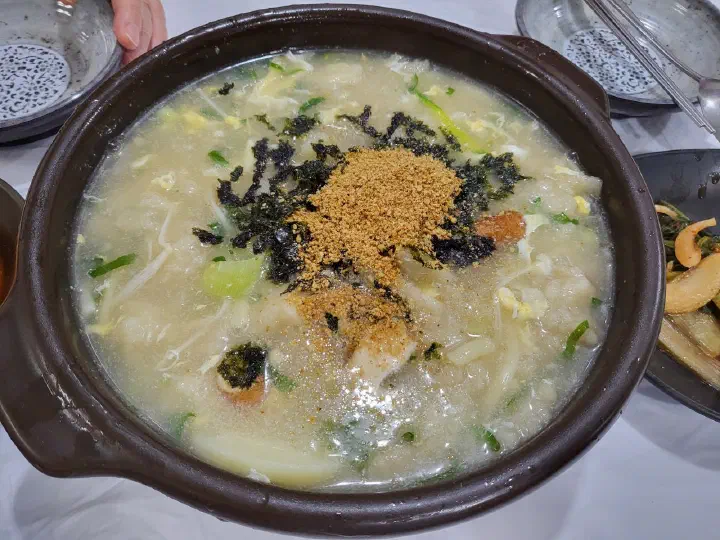
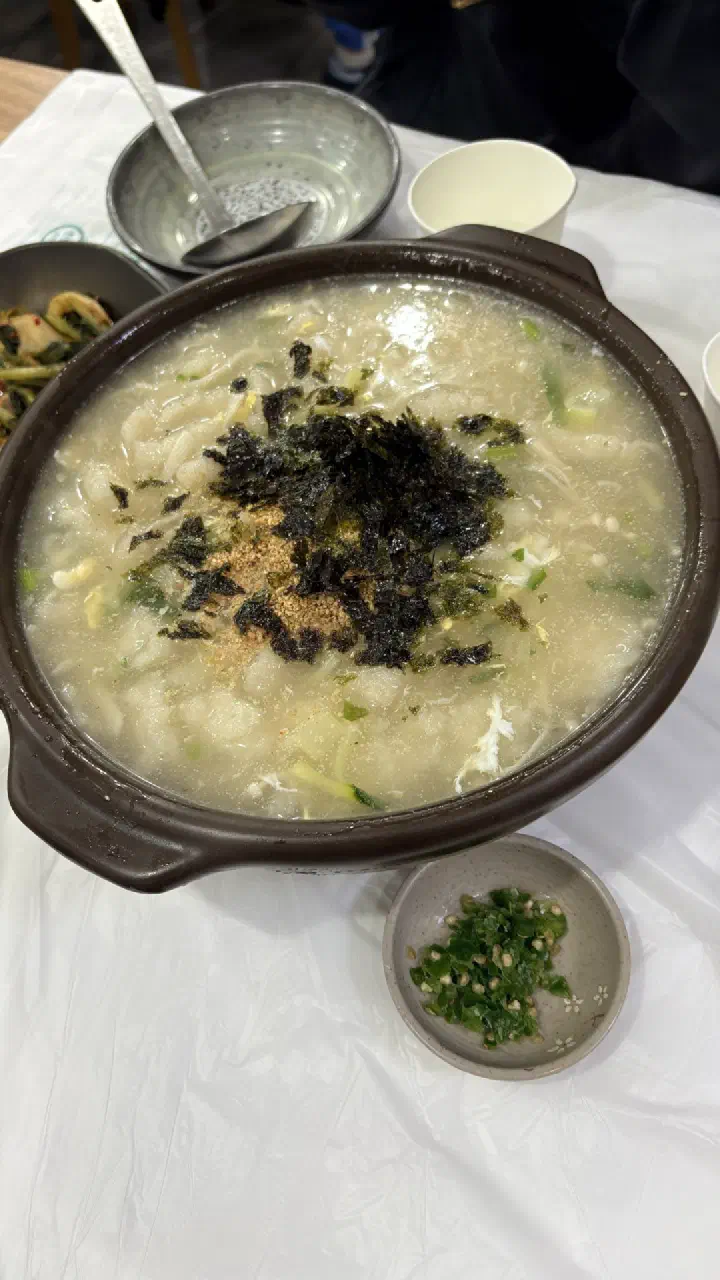
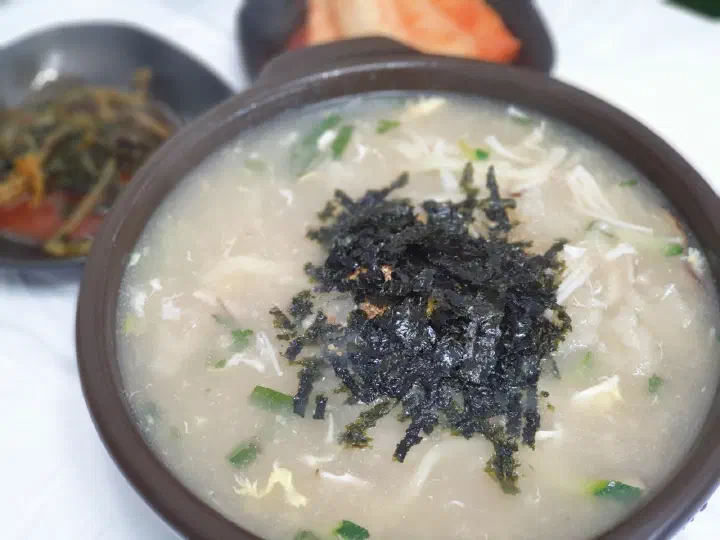
Whatever you order comes out in one big earthenware pot, and everyone ladles into their own small dish.
Photos make it look modest; two portions can feed three people who aren’t starving.

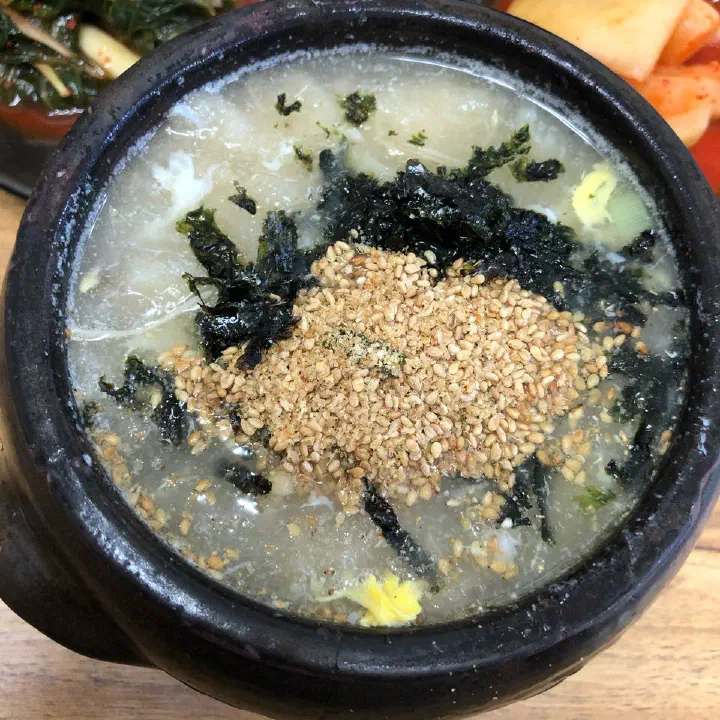
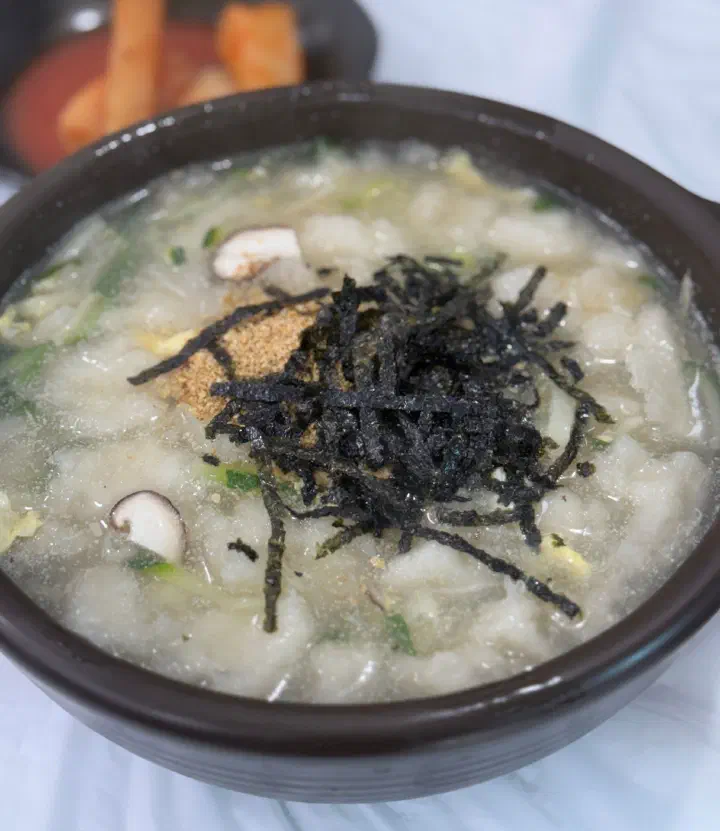
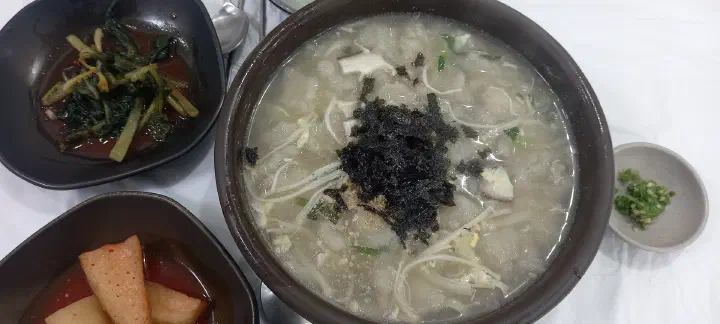
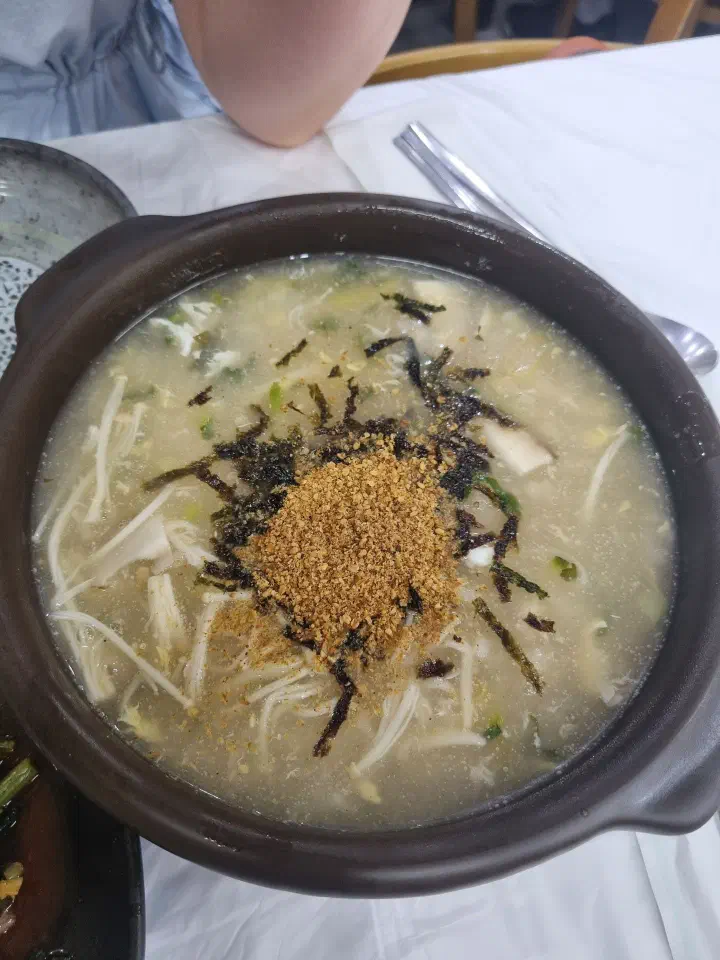
The broth is thick from the potato starch, with egg stirred through it and a layer of seaweed flakes and sesame on top.
The seasoning is gentle.
Genuinely gentle - the kind of bowl that people who already like their food under-salted will call bland.
If you want something bold and salty, this is not that bowl.
It’s morning food, and it’s the kind of thing Koreans eat the day after drinking.
Along with the dumplings there are a few short pieces of kalguksu noodle, plus enoki and shiitake mushrooms, zucchini, and thin slices of potato.
In spring you might find naengi - shepherd’s purse, a wild green - though it comes and goes with the season.
That mushroom note is a big part of what the broth tastes like.

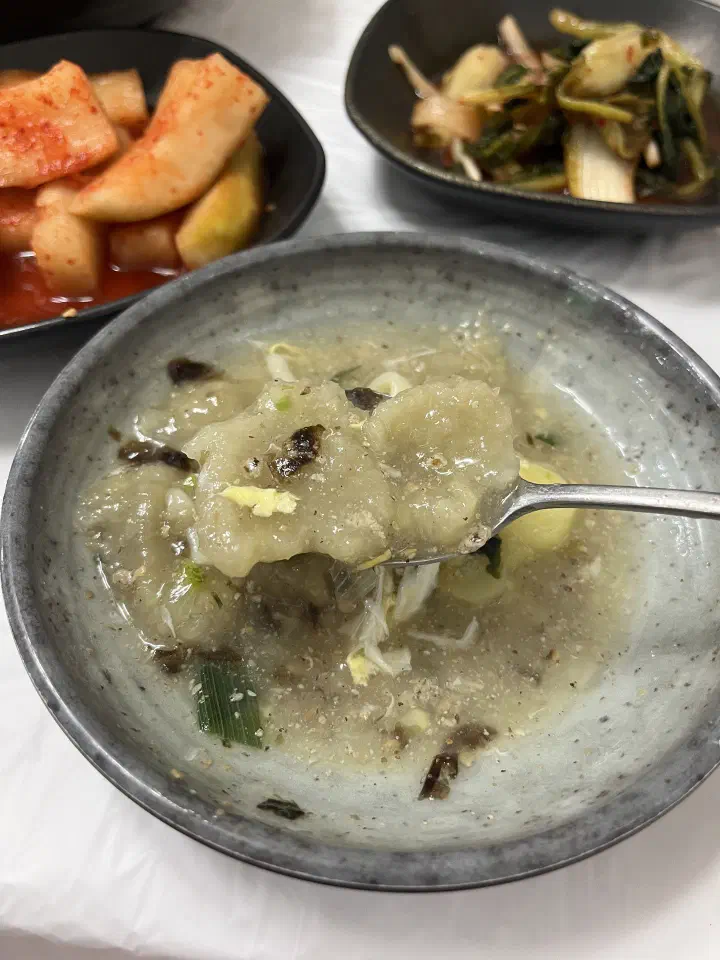
The dumplings themselves are why the place has a reputation.
They aren’t chewy the way rice cake is chewy.
They break cleanly when you bite, soft outside with a slightly grainy center, closer to a rough gnocchi than anything else.
Older diners handle them easily, which counts for more than you’d think.

Perilla powder and hot pepper
There’s a shaker of deulkkae garu (들깨가루), toasted perilla seed powder, on every table.
It’s there to be used.
A spoonful turns the broth noticeably nuttier and richer, and most regulars go straight for it.

The side dish of minced green chili is a different story.
It’s Cheongyang pepper, and it’s hot by Korean standards, which usually means very hot if you didn’t grow up eating it.
Stirred in, it cuts through the thickness of the broth nicely.
Approach it a little at a time rather than dumping the whole dish in.
Since you’re serving yourself from the pot anyway, you can change the bowl as you go.
Perilla in one round, chili in the next, kimchi on top after that.

The kimchi situation
Two side dishes come out: yeolmu kimchi (열무김치), young summer radish greens, and kkakdugi (깍두기), cubed radish.
Both are made in-house with Korean-grown chili powder, and plenty of people rate them above the soup itself.
The yeolmu tastes under-seasoned, and that’s exactly why it works; the kkakdugi leans sour.
Portions start small, so asking for a refill is normal and nobody minds.
Point at the empty dish and they’ll bring more.
On packed days refills take a while, and now and then the radish comes out more fermented than it should be.

Eating alone
The menu says two portions minimum.
In practice, solo diners get served one portion without any fuss, and you’ll see plenty of people eating alone at a four-top.
It does depend on how slammed they are, so if you’re on your own, ask at the door before joining the line.
For two people, two portions is the order.
There’s no takeout, and they won’t box up leftovers either.
Water and utensils are self-serve from a station in the middle of the room.
Grab them after you sit down; nobody will bring them over.

Ojingeo sundae is a gamble
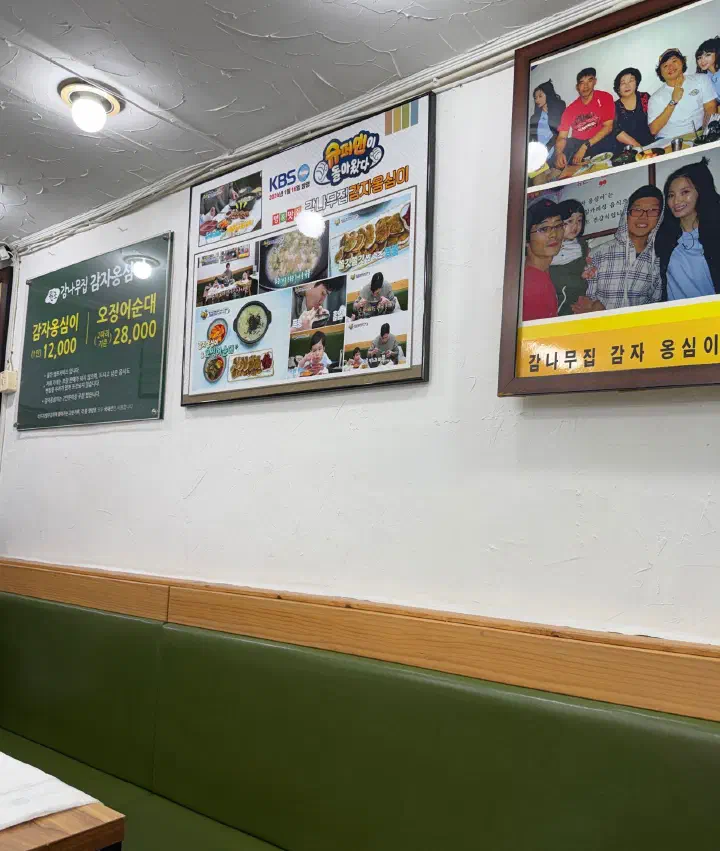
The menu technically has a second item: ojingeo sundae (오징어순대), squid stuffed with noodles and vegetables, then sliced and pan-fried, at 28,000 won for a two-person serving.
Getting it is another matter.
During the closed season for squid it’s just off the menu, and on days they do have it, it’s usually gone by early afternoon.
If you want to try it, come at opening.
Otherwise the fried-food alley inside Jungang Market makes its own version, and that’s a fine consolation.
Parking and paying
The shop has no lot of its own.
It’s inside a market alley, so driving to the address is a mistake a lot of people make.
Set your navigation to the Sokcho Tourist and Fishery Market public parking lot instead and walk in.
That lot starts at 300 won for the first 30 minutes and comes to around 6,000 won if you leave the car all day.
Eat here and you get a 30-minute free parking voucher.
Ask for it when you pay, because it isn’t handed over automatically.
From the lot it’s a 7 to 10 minute walk, past the dried fish stalls and into the next alley.
There’s no big sign out front.
The line of people is the sign.
Cards work fine, including foreign-issued ones, and that’s true of almost every restaurant in Korea.
Tipping isn’t a thing here and would only confuse the staff.
Do keep some cash for the market stalls outside, though, where card machines are hit or miss.
Thirty years in the same alley
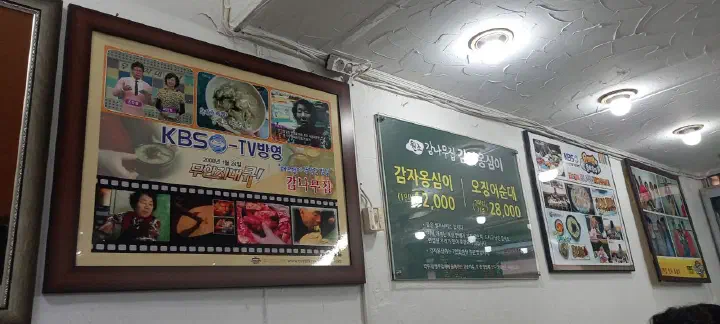
The walls are covered in old magazine clippings and stills from TV appearances.
Some of the print pieces go back to the 1990s, which tells you how long this shop has been in the same spot.
It’s been on MBC, SBS, and KBS, and there are Blue Ribbon Survey 2024 and Siksin stickers by the entrance, along with a photo of actress Choi Ji-woo.


Prices have moved over the years, too.
A portion sat at 10,000 won for a long stretch before going up to 12,000 in 2024.
Long-time regulars will tell you the broth isn’t quite as dense as it once was.
What hasn’t changed is the crowd, still roughly half locals.
The downsides
Tables are close together.
When it’s full you’re shoulder to shoulder with the next party, and it gets loud.
The restroom is basic and not easy for anyone with limited mobility.
No takeout, self-serve water, plastic sheeting on the tables: none of it is fancy, and it isn’t trying to be.
Opinions on the food split, too.
People who like assertive seasoning find it flat, and some think the seaweed flakes cover up the potato.
Is it worth waiting for? Under 30 minutes, yes. At an hour, one of Sokcho’s other ongsimi shops will do.

Who it suits
More breakfast than lunch, really.
Opening at 10 makes it a natural first stop on a Sokcho itinerary, and the broth is mild enough for a rough morning.
It also works well for older travelers, since nothing is spicy or hard to chew unless you add the chili yourself.
If you’ve got small children, the pot comes out very hot and needs a few minutes.
Even without Korean, ordering is easy: there’s basically one dish, so holding up two fingers gets you two portions.
Staff speak little English, but nothing about the transaction requires it.
When you’re done, Jungang Market is right there.
Manseok dakgangjeong (fried chicken in sweet chili glaze), makgeolli sulppang (steamed rice-wine bread), and sweet pumpkin sikhye are all within a few minutes’ walk.
The sulppang stall has a line of its own.

Wrapping up
Short hours and a line, in exchange for a bowl you can’t easily get elsewhere.
The texture of the dumplings is the real difference, and the portions are generous for the price.
Two things to remember: arrive at 9:40, and ask for the parking voucher.
Getting there
The address is 110-8 Jungangsijang-ro, Sokcho-si, Gangwon State.
Coming from Sokcho Express Bus Terminal or the intercity terminal, most city buses heading toward the lake pass Gwangwang Susan Sijang (Tourist and Fishery Market), and it’s a short walk from that stop.
A taxi across town runs a few thousand won; the Kakao T app is the easiest way to call one.
One practical note: Google Maps walking and transit directions are unreliable in Korea.
Naver Map or KakaoMap will get you here properly.

📍 View Gamnamujip Gamja Ongsimi (감나무집감자옹심이) on Google Maps →