Suwon is not a coastal city, so a serious sashimi place here has to earn its reputation the hard way.
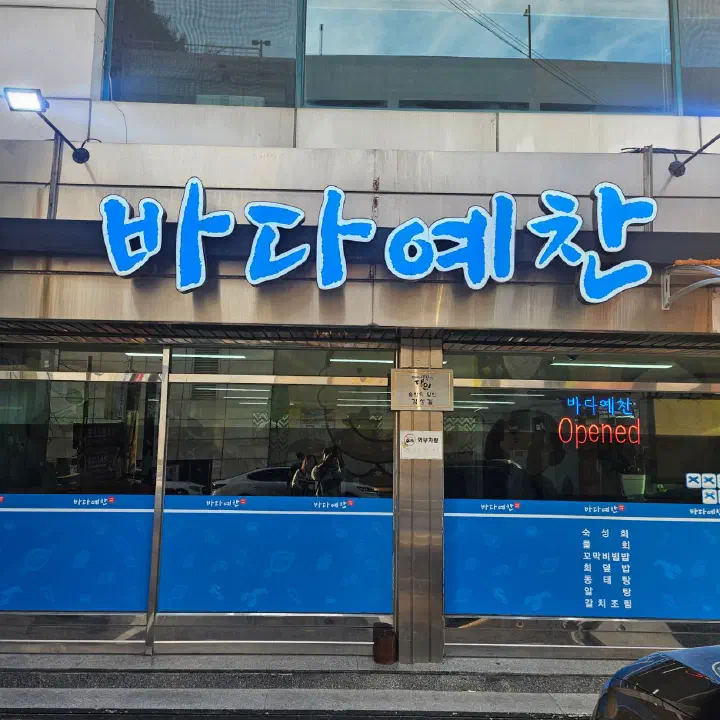
Badayechan (바다예찬), sitting in the alley behind the Homeplus building in Ingye-dong, has been doing that for a long time.

Blue storefront sign of Badayechan sashimi restaurant in Ingye-dong, Suwon

The wall by the door tells the story.
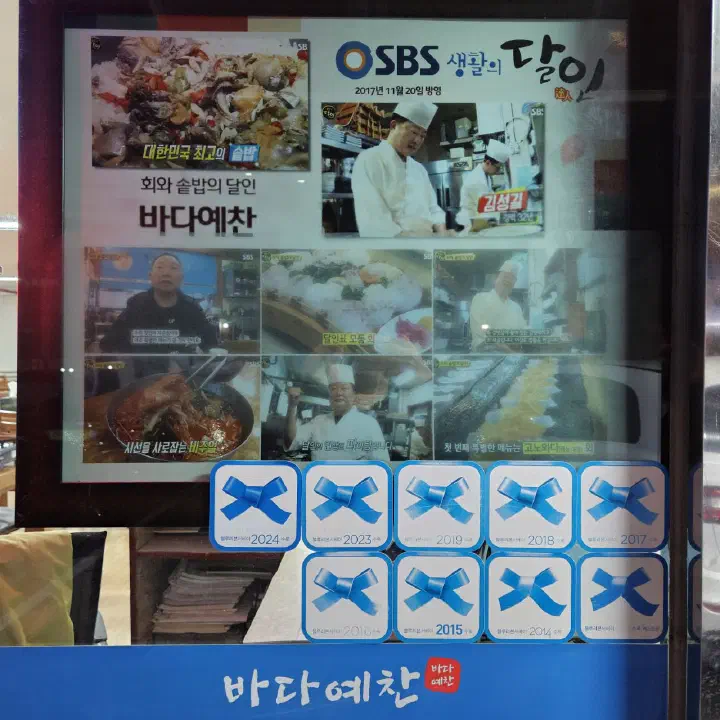
Blue Ribbon Survey stickers have been going up since 2013, one layer over another.
The owner appeared on the 600th episode of SBS’s Life Masters (생활의 달인) as a master of both sashimi and hot pot rice.
Then on July 29, 2026, tvN STORY’s Neighborhood Masters featured him again, this time as a mulhoe master with 43 years behind the knife.

That last one changed things.
The place is now the busiest sashimi restaurant in Ingye-dong, and the line outside is the first thing you should plan around.

The basics

Address: 18-5 Hyowon-ro 249beon-gil, Paldal-gu, Suwon-si, Gyeonggi-do (Unit 101)
Phone: 031-236-4446
Hours: Monday to Saturday, 11:00-22:00
Break time: 15:00-16:30
Last order: 21:30
Closed: Sundays
Parking: private lot in front, plus valet
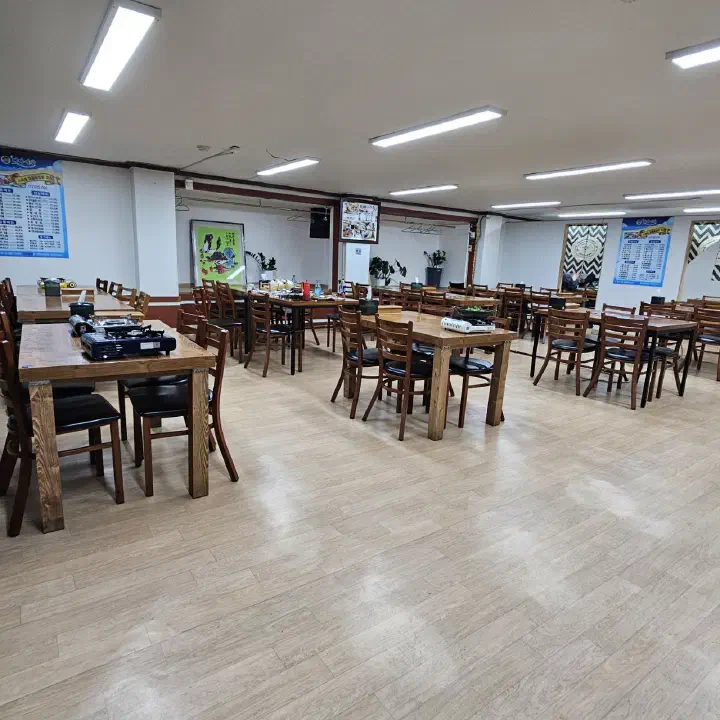
Seating: main hall and private rooms (one fits about 20), all chair seating, high chairs available

📍 View Badayechan (바다예찬) on Google Maps →

Main dining hall at Badayechan with wooden tables and chair seating

The kitchen used to run until 23:00 with a 22:30 last order.
That has been pulled back to a 22:00 close and 21:30 last order, so a late dinner needs some planning.
The mid-afternoon break from 15:00 to 16:30 catches people off guard too.
Show up at 15:30 and you will be standing outside.

About that line

Before the broadcast, this was a walk-in place.
Weekday evenings you could usually sit right down, and the only busy stretch was around 6 p.m.

Now people gather in front before the 11 a.m. opening.

SBS Life Masters TV feature and layered Blue Ribbon Survey stickers on the Badayechan window

The system is a paper waiting list.
Plenty of busy Korean restaurants let you join the line from your phone. This one does not.
The trouble is that the staff are still getting used to the volume.
Some people have written their name down at opening and still waited more than two hours.
Parties of two have been seated together at four-tops with no partition between them, which is awkward if you were expecting a private table.
On the heaviest days the kitchen has cut the orderable menu down to two or three items.

If you can, call ahead and reserve.
The private rooms have always taken bookings, and a reservation walks you straight past the line.
If not, aim for the 11 a.m. opening or the moment the break ends at 4:30 p.m.
Those two windows are still manageable.

Getting there

From Suwon City Hall Station (Suin-Bundang Line), take exit 6 and walk about five minutes.
Homeplus is on your right as you come up.
Follow that building around and keep going to the end, and the blue sign is across from you.
It is a back alley and gets dark at night, so use the sign as your landmark.

Google Maps walking directions are unreliable in Korea.
Naver Map or KakaoMap will get you there properly, and KakaoT is the taxi app most people use.

Parking in Ingye-dong is genuinely difficult, which makes this place unusual.
The lot in front holds roughly twenty cars, there is an attendant directing traffic, and valet is available.
If you are driving, that alone is worth something here.

The menu splits into set courses and single dishes.

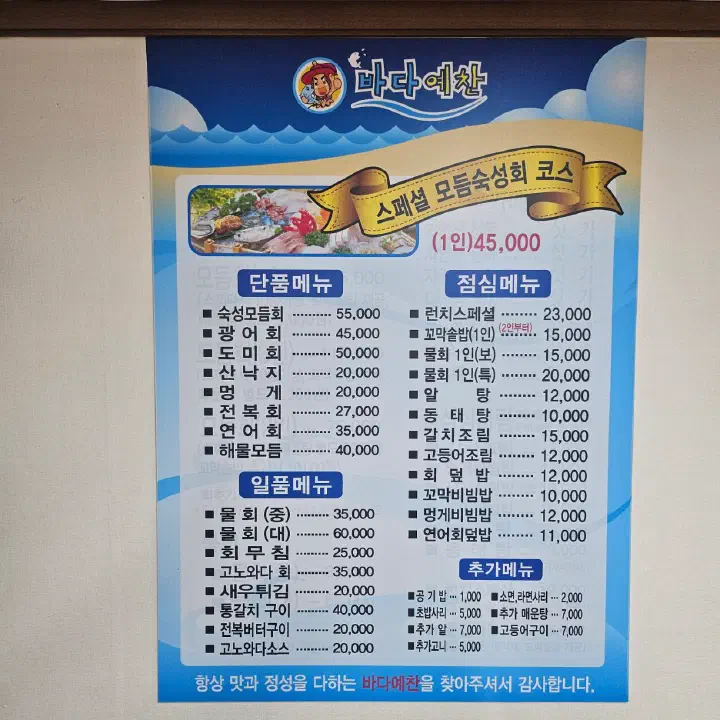
Badayechan menu board listing the aged sashimi course, single plates, and lunch prices

The Special Modeumhoe (스페셜 모듬회) runs 45,000 won per person.
It is an omakase-style progression: more than ten side dishes, grilled whole hairtail, spicy fish stew, and the cockle hot pot rice at the end.
The aged sashimi platter on its own (숙성모듬회) is 55,000 won, for people who just want fish and nothing else.
Mulhoe is 35,000 won for the medium, which serves two, and 60,000 won for the large.
Kkomak sotbap, the cockle hot pot rice, is 15,000 won per person with a two-person minimum.
A winter yellowtail course runs 60,000 won per person, and a celebration “sashimi cake” spread starts at 200,000 won.

Single plates include konowata hoe at 35,000 won, abalone sashimi at 27,000 won, and fried shrimp at 20,000 won.
At lunch there is a separate rice menu: braised hairtail, cockle bibimbap, sea squirt bibimbap, sashimi rice bowl, fish roe stew, and pollack stew.

Prices have crept up over the years.
The medium mulhoe was 30,000 won and the large 55,000 won not long ago, and abalone and konowata have each gone up a few thousand.
The lunch prices are harder to pin down because the printed menu board has not been updated. [본문 확인 필요]

Two things are worth knowing before you order.
The cockle hot pot rice has a two-person minimum, so it is really a 30,000 won dish.
And if you order only single plates, the parade of side dishes does not come with them.
That surprises people. If you want the full spread, the 45,000 won course is the one.

Cards are fine here, including foreign-issued ones, and there is no tipping in Korea.
Leaving extra money on the table will just confuse the staff.
English is limited, but the menu has photos and pointing works perfectly well.

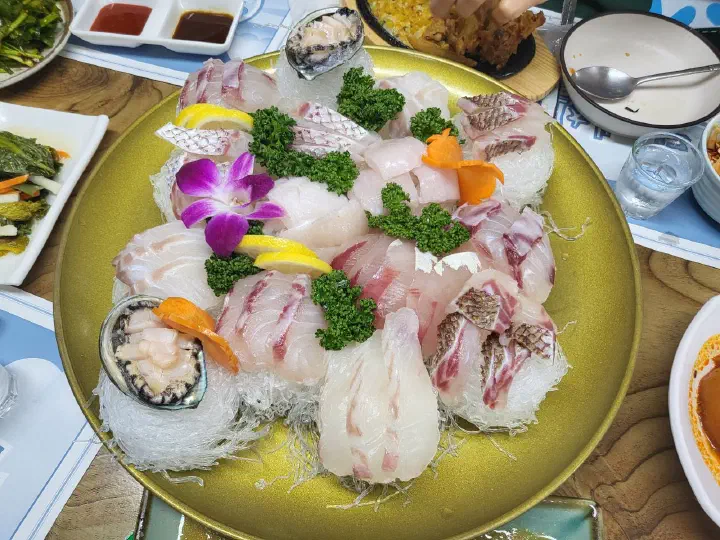
Badayechan aged sashimi platter of white fish and abalone on a gold plate

The mulhoe

This is the dish the broadcast was built around.

No sugar goes into the broth.
Instead there are nine seasonal fruits plus plum syrup and fermented apple liquid, with a few of the fruits steamed with salt first to concentrate their sweetness, then three days of aging.
The result is sweet and sour without the heavy, sticky finish a lot of mulhoe has.

The broth arrives with a skim of ice on top and enough sashimi in it to count as a platter on its own.
Abalone and sea squirt go in, and the vegetables are piled generously.
Most people leave the broth behind at other places. Here it tends to get finished.

Somyeon noodles come on the side.
Mix the fish and vegetables first, then drop the noodles into what is left of the broth.
Summer is the busy season for this dish, but people order it in winter too.

A word of warning on the flavor.
The sweet-sour profile is assertive, much more so than the mild east coast style.
If that is what you were expecting, this will read as heavily seasoned.
It is a distinctive dish, and distinctive means some people will not want it twice.

The aged sashimi

The fish here is aged, not live-cut.

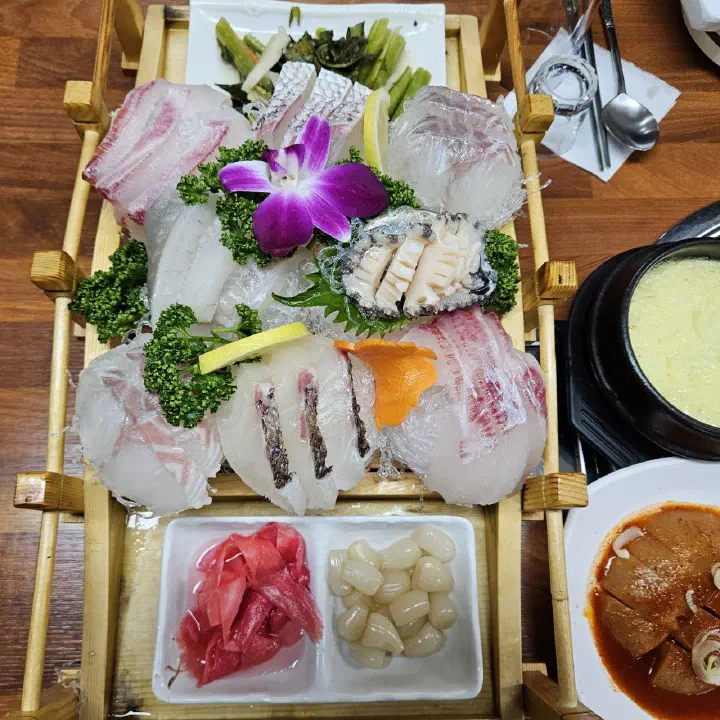
Kelp-aged sashimi served on a wooden boat tray with pickled ginger and rakkyo at Badayechan

After trimming, the moisture is drawn off and the fillets are layered with dried kelp and held in refrigeration.
The kelp works its savory character into the flesh.
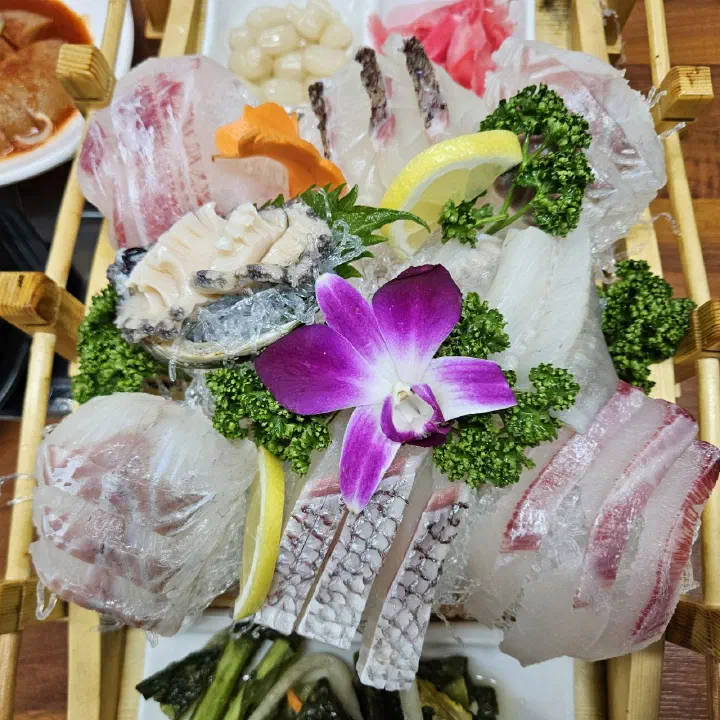
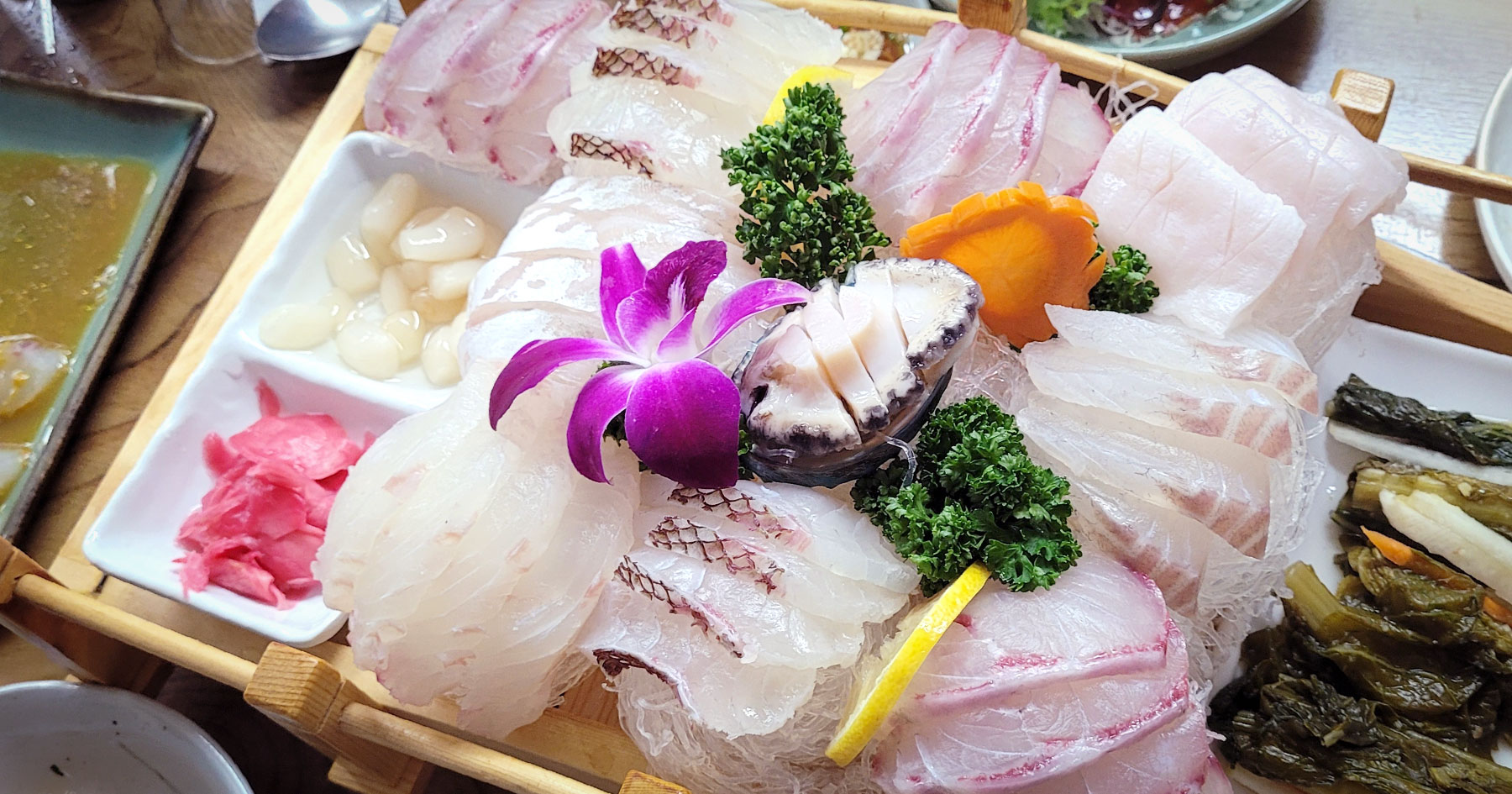
Sea bream gets the matsukawa treatment, where boiling water is poured over the skin and the fish goes straight into ice water, so you eat it with the skin on.

Close-up of matsukawa-style sea bream sashimi and abalone at Badayechan

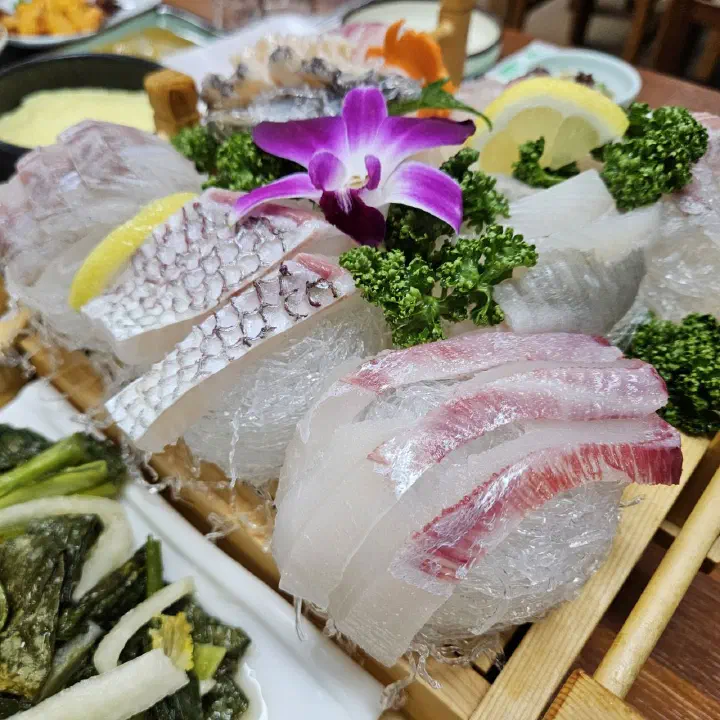
The cuts are thick.
Thick enough that people halve a piece before eating it, and the chew is the point.
Aging keeps it from turning tough, so it stays soft and easy on older diners, and the flavor gets nuttier the longer you work at it.
That is the real difference from live-cut sashimi.

What comes out varies by day.
Flounder, sea bream, rockfish, and sea bass are the base, with red drum or yellowtail mixed in.
Wild-caught sea bream, flounder, and sea bass are priced by the day’s catch, so ask before you order.
In season, the yellowtail course opens up.

Thick-cut aged flounder and sea bream slices at Badayechan

The side dish parade

The banchan run here is half the reason people come back.

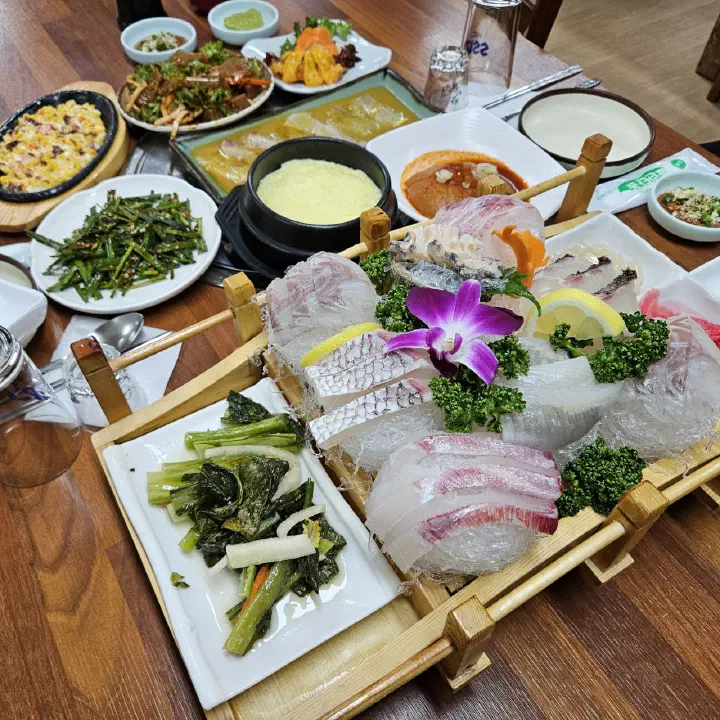
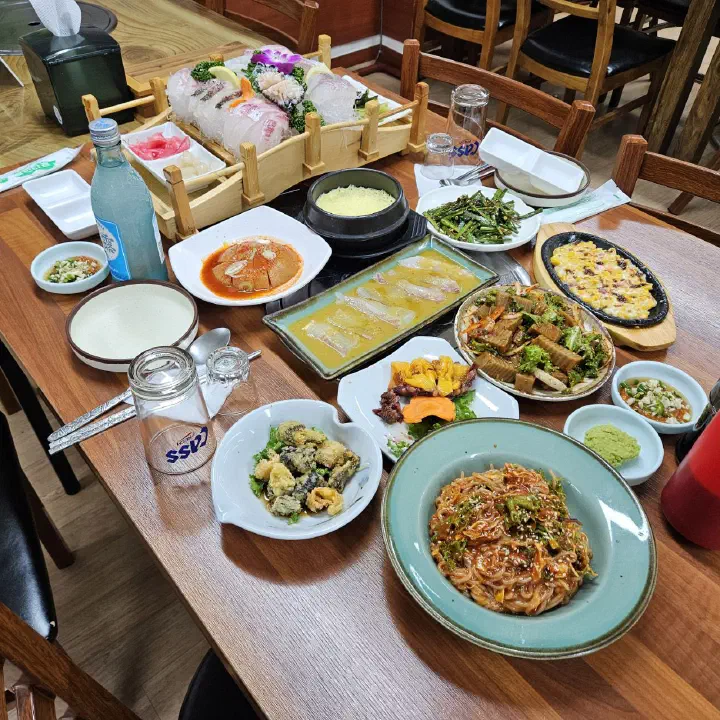
Badayechan special course table with sashimi, steamed egg, and corn cheese side dishes

A bowl of hot abalone porridge comes out first, which settles the stomach and makes the wait for fish less annoying.
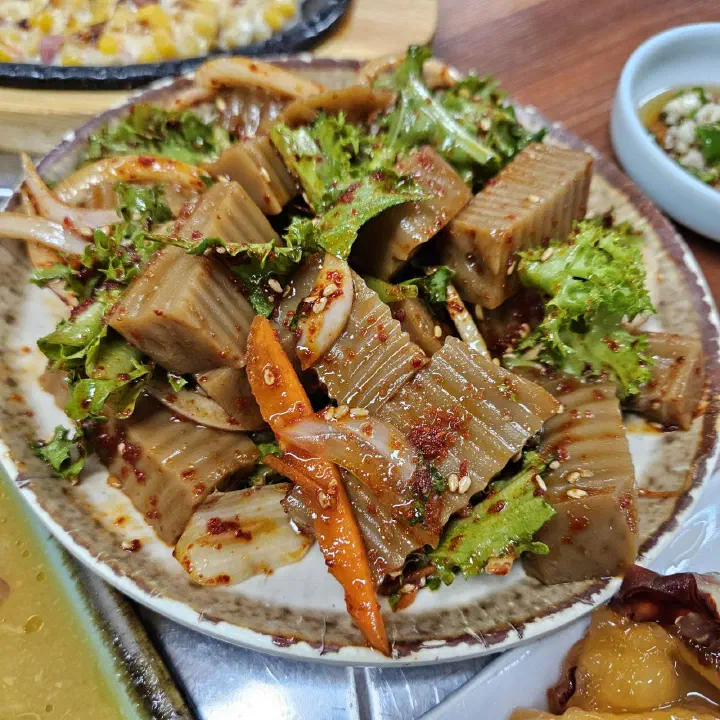
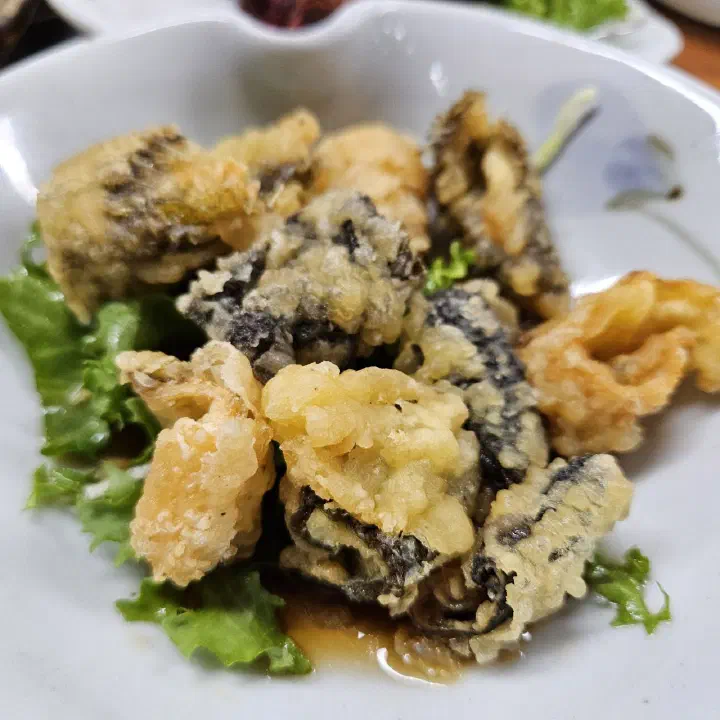
Then the table fills: corn cheese, steamed egg, acorn jelly salad, chive salad, braised radish, seaweed salad, chewy noodles with squid, fried fish skin, sea squirt, sea cucumber.
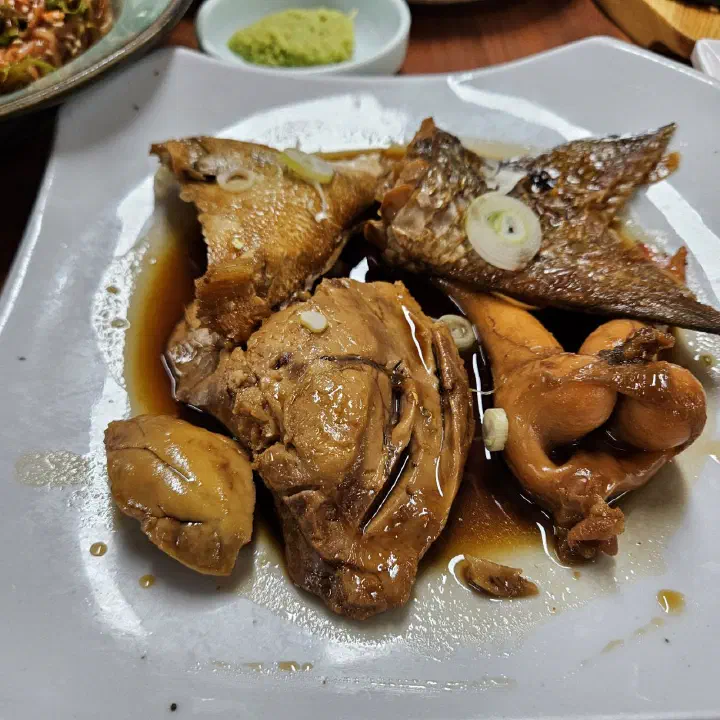
Braised sea bream head or grilled mackerel usually shows up somewhere in the middle.

Acorn jelly salad served as a side dish at Badayechan

Crispy fried fish skin side dish at Badayechan

Soy-braised sea bream head side dish at Badayechan

The standout is konowata, a salted paste made from sea cucumber innards.
Here it comes as a sauce with flounder tossed through it.
That ingredient turns fishy fast if it is even slightly off, and it does not here. What you get is clean sea air instead.
Dipping other sashimi into it works well too.

The steamed egg arrives in a clay pot so it stays hot to the last spoonful, and the texture is closer to Japanese chawanmushi than the fluffy Korean version.
Do not skip the white gat kimchi that comes with the fish either.
It is sharp and slightly fizzy, and it resets your mouth between rich bites.
Pickled ginger, rakkyo, and myeongi leaves round out the plate.

Cockle rice and fish stew

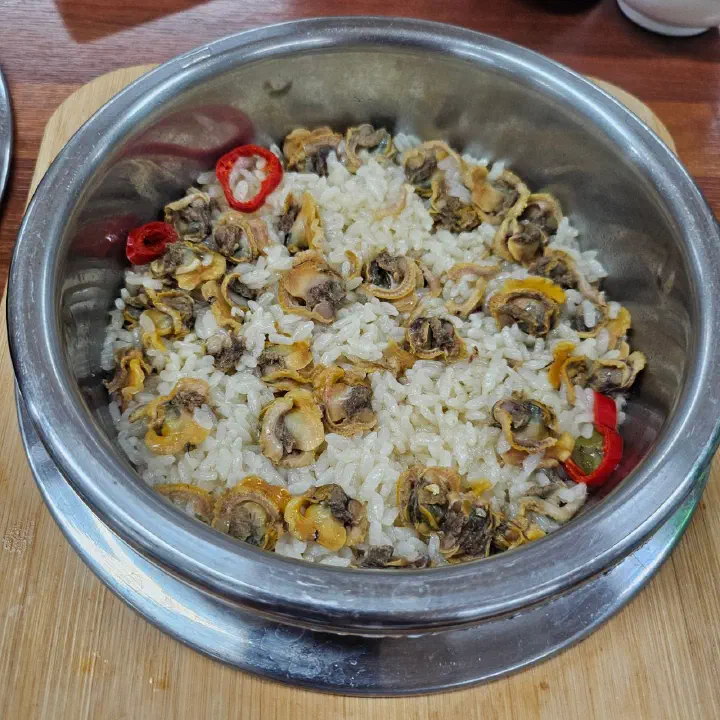
The course ends with kkomak sotbap, and this is the dish that got him on Life Masters.

Kkomak sotbap, cockle hot pot rice cooked in beef bone broth at Badayechan

The rice water is the trick.
The grains are rinsed more than ten times, then cooked in beef bone broth with rehydrated shiitake.
The cockles are simmered with soy sauce so they do not lose their juices, and they go through two rounds of aging.
A house soy sauce made by smoking pork for an hour goes over the top, and you mix everything together.

The rice comes out glossy with the seasoning worked all the way through, and it keeps disappearing even when you are already full.
The cockles stay springy rather than going rubbery.
Lay a piece of sashimi on top of a spoonful and the nutty aged fish works with the rice better than it has any right to.

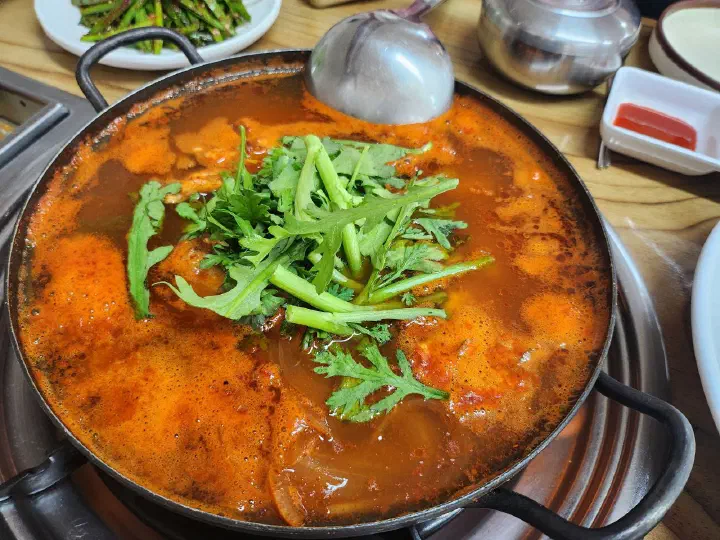
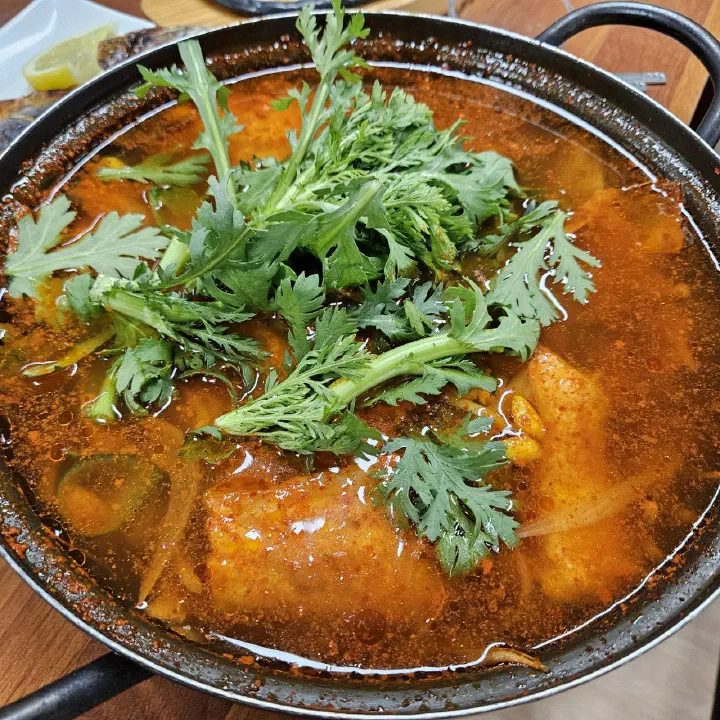
Maeuntang, spicy Korean fish stew topped with crown daisy, at Badayechan

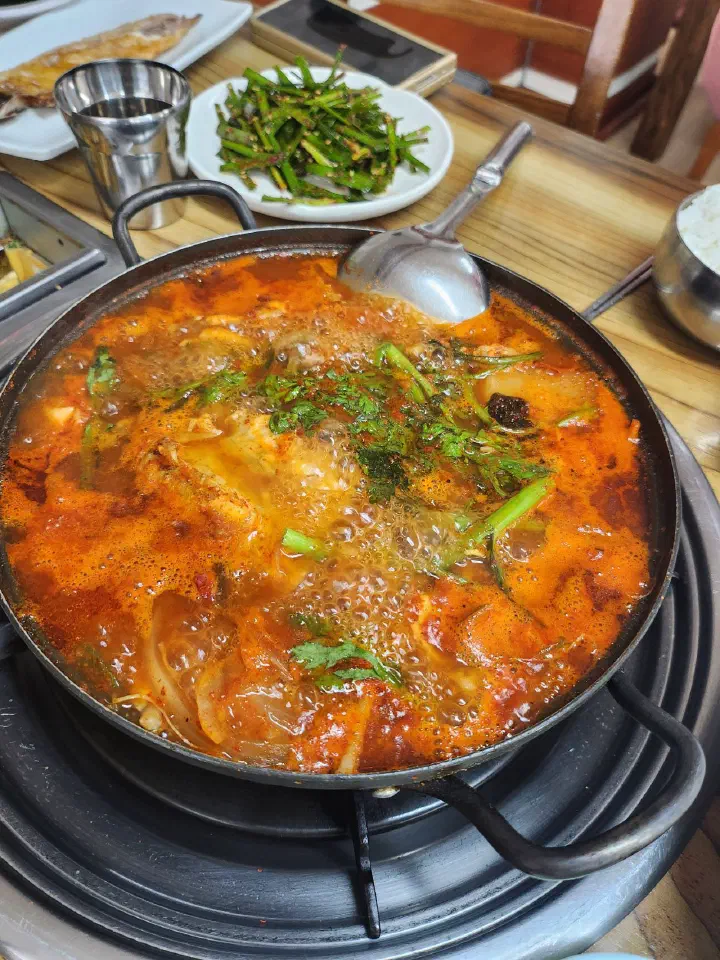
The spicy fish stew is the sharp, clean kind, loaded with bean sprouts and a decent amount of fish on the bone.
It comes with the 45,000 won course but has to be ordered separately with the sashimi platter.

Spicy fish stew bubbling on the tabletop burner at Badayechan

Lunch is a different operation.
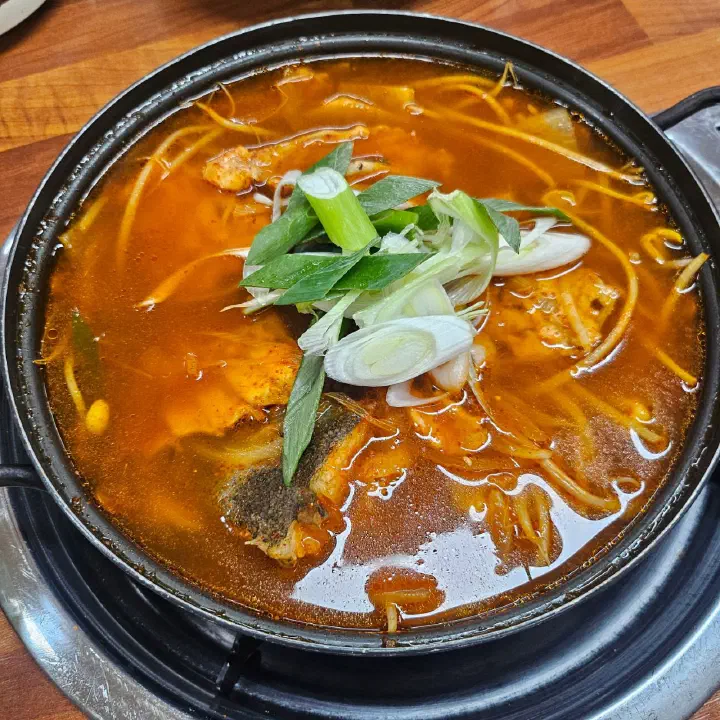
The braised hairtail is the one people go for, and the cockle bibimbap is lightly seasoned and nutty rather than punchy.
Eating alone at lunch is completely normal here.

Pollack stew loaded with bean sprouts in an earthen pot at Badayechan

The room

The dining room is large for an Ingye-dong sashimi house.
The main hall is on the left, and further in there is a room that seats close to twenty.
Another room on the other side takes about twelve.
Everything is chair seating, so long meals do not wreck your knees, and the tables are spaced reasonably far apart.

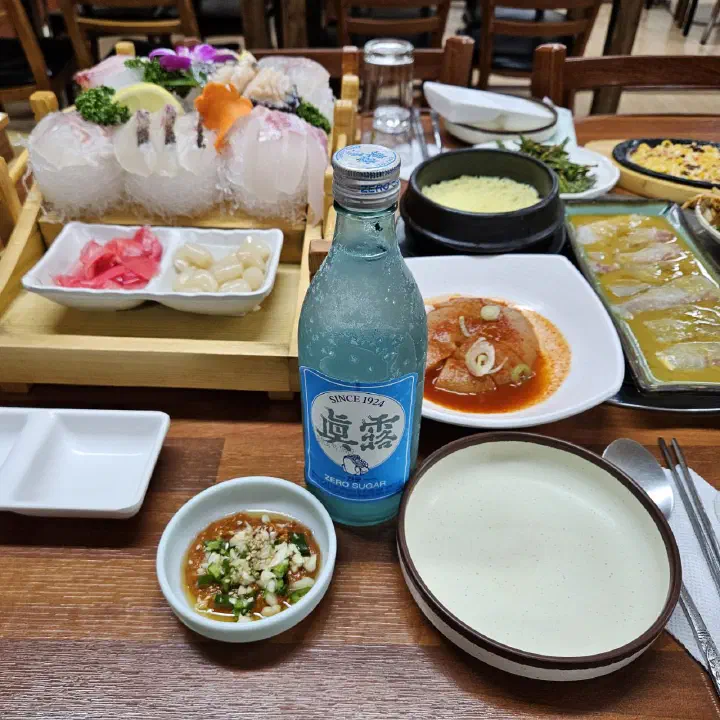
Aged sashimi and a bottle of soju on a wooden table at Badayechan

That is why this place gets booked for company dinners, engagement meals, and wedding-invitation gatherings.
There are high chairs, so families work.
The flip side is that it is slightly formal for a casual drink-and-snack evening, which is worth knowing before you walk in expecting a neighborhood bar.

Where it falls short

The menu board is out of date.
It has not been revised since 2024, so there are dishes you can order that are not printed anywhere, and those often come without a listed price.
Seasonal fish like yellowtail and gizzard shad fall into that gap.
Ask what it costs before you commit.

The grilled whole hairtail is inconsistent.
On days when it has been cooked ahead and reheated, the outside goes hard and it is a letdown.
Several of the braised and dressed side dishes lean sweet, and opinions on the fish stew split cleanly: some find it too salty, others find it flat.

Close-up of the spicy fish stew broth piled with crown daisy at Badayechan

Value for money is the sharper complaint.
Order the 70,000 won yellowtail in season and it comes out as a portion two people share.
Groups ordering the 45,000 won course have also come away feeling the fish itself was thin, even though the side dishes were endless.
When there is that much banchan on the table, the amount of actual sashimi reads smaller than the price suggests.

The ratings reflect the divide.
Naver visitors average it around 3.86, while KakaoMap sits at 2.6.
The low scores cluster around service and portion size, and the broadcast rush has added more of them in the past week.

My takeaway

Is it as good as the reputation? On the food, mostly yes.
Kelp aging, a fruit-only broth, and bone-broth cockle rice are not things you can fake, and the side dish spread is among the best in this part of Suwon.
Anyone who likes raw fish should eat here once.

The timing, though, is bad right now.
Four days after a national broadcast, the wait is beyond what the room can handle, and two hours in line changes how anything tastes.
If you are not in a hurry, let the attention fade, then book a table.

It is easy enough to say who this place is for.
Group dinners, family meals, and anyone who specifically wants aged rather than live-cut fish.
For two people wanting a light dinner and a drink, the lunch rice menu is a better fit.
The order that shows this place at its best is the 45,000 won course with the cockle hot pot rice added on.

Full Badayechan course spread with aged sashimi, chewy squid noodles, and assorted side dishes

Finding it

The restaurant is at 18-5 Hyowon-ro 249beon-gil, Paldal-gu, Suwon-si, Gyeonggi-do, Unit 101.
It is a five-minute walk from exit 6 of Suwon City Hall Station on the Suin-Bundang Line, directly behind the Ingye-dong Homeplus building.
There is a private lot out front and valet service if you drive.

📍 View Badayechan (바다예찬) on Google Maps →