Tongyeong is a port city on Korea’s south coast, and abalone is its local specialty.
Dongpirang Abalone Village (동피랑전복마을) is the name that comes up first.
A full set runs 17,000 won.
For a tourist district, that is a genuinely good number.
The catch isn’t the food. It’s the line.

The basics
The address is 29 Haesongjeong 2-gil, Tongyeong-si, Gyeongsangnam-do, on the second floor of the Daepunggwan building.
Phone is 0507-1345-4406.
Open daily 09:00 - 21:00, year-round.
There is a break from 15:30 to 16:30, and last order is 19:40.
Map apps often leave the break time out of the listing, so plan around it if you’re aiming for a mid-afternoon meal.
📍 View Dongpirang Abalone Village (동피랑전복마을) on Google Maps →
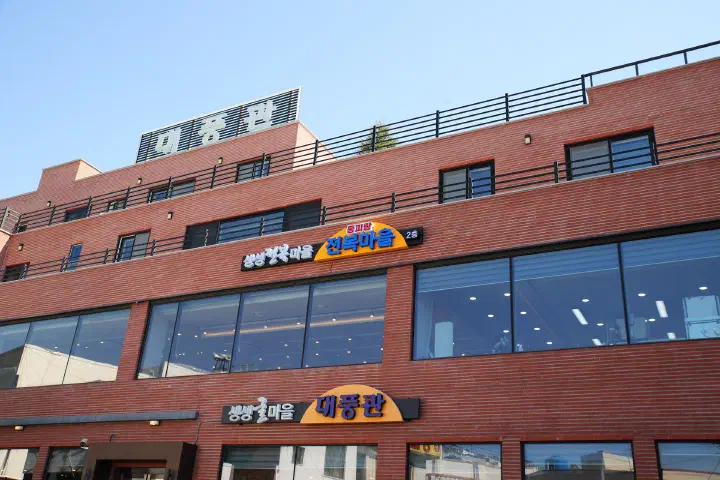
Punch the address in and you’ll arrive at a building signed Daepunggwan (대풍관). That’s the right place.
The first floor is an oyster restaurant; the second floor is the abalone one. Same family, different specialty.
The stairs and elevator to the second floor are around the left side of the building.
The restaurant also moved here from a previous location a while back, so older listings can send you to the wrong address.

Why it’s busy
Two TV appearances did most of the work.
The restaurant was on tvN’s Amazing Saturday back in December 2019, and then on MBC’s Hangout with Yoo (놀면 뭐하니) in April 2026, in an episode filmed around Tongyeong.
Comedian Heo Kyung-hwan is from Tongyeong, which is how the show ended up here, and a scene where one of the cast ordered the butter-grilled abalone three times in a row got a lot of attention.
Korean variety shows fill restaurants overnight, and this one has been packed since.
Prices have crept up slowly rather than jumped. The abalone stone pot set was 15,000 won back in 2020 and is 17,000 now. The butter-grilled abalone went from 30,000 to 33,000.
Six years, and that’s the whole increase.

Timing is everything here
The wait depends entirely on when you show up.
From the 09:00 opening until roughly 10:20, you walk in and sit down, weekday or weekend.
Past 10:30 a line starts forming. By 11:30 it’s common to see 40+ groups ahead of you.
Weekday lunch means about 30 minutes. Weekend lunch easily runs over an hour.
Korean holiday weekends are their own category. There have been days with 156 groups in line, which works out to roughly five hours.
The line moves at about 10 groups per 20 minutes, which is the number you want when you’re looking at the count and deciding whether to stay.
The overlooked window is around 14:00, when the lunch crowd clears and you often walk straight in.
Right after the 16:30 reopening, or around 18:00, tends to be manageable too.
Late evening is the risk. Show up after 19:00 and you may not get a ticket at all, which makes sense given the 19:40 last order.

How the waiting system works
Everything runs through an app called Tabling (테이블링). There’s a kiosk at the door, but by the time you’re standing at it, you’re already behind.
If you can, register remotely before you arrive. You’ll see your position update in real time, which frees you to walk through Tongyeong Jungang Market or up to the Dongpirang mural village while you wait.
When you’re about two groups out, you get a KakaoTalk message telling you to come back, then a phone call when your table is ready.
One more thing to know. Registration shuts off entirely as the break approaches, then reopens when dinner service starts. If the app won’t let you sign up in mid-afternoon, the restaurant isn’t closed.
The app is Korean-only, which is a real hurdle if you don’t read the language. Phone reservations exist but you can’t track your position that way. If you’re not up for the app, going early is the simpler answer.
Check in at the counter if you’re one or two groups out and haven’t heard anything, since turns occasionally get skipped.

The abalone stone pot rice is the real headliner
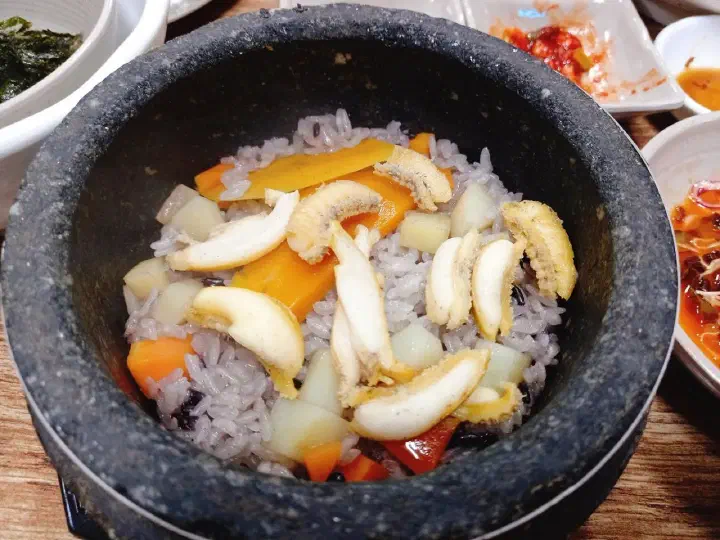
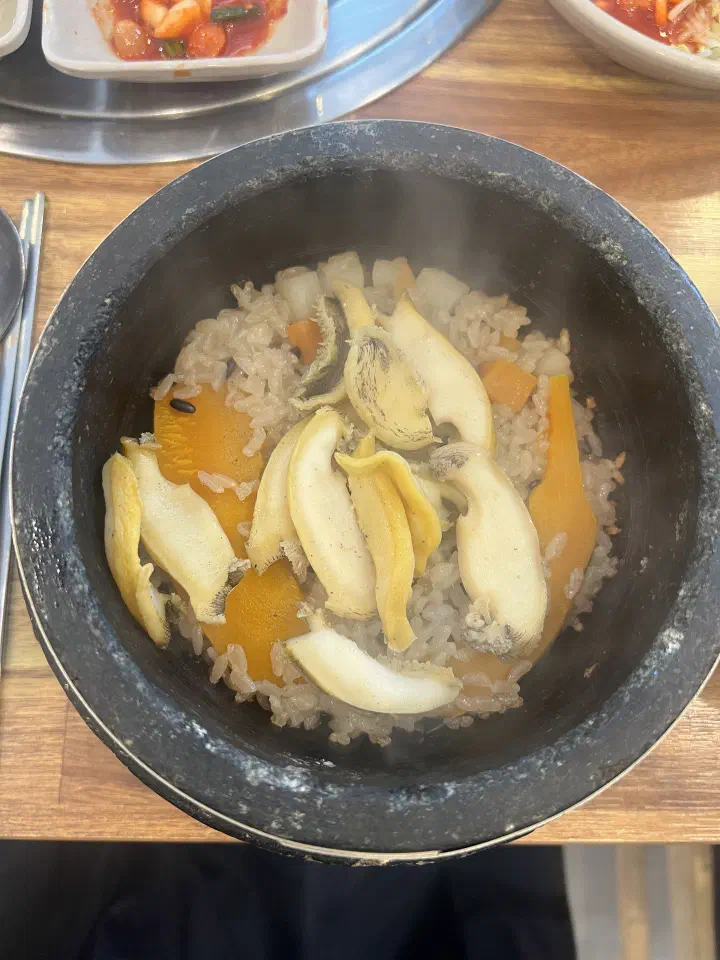
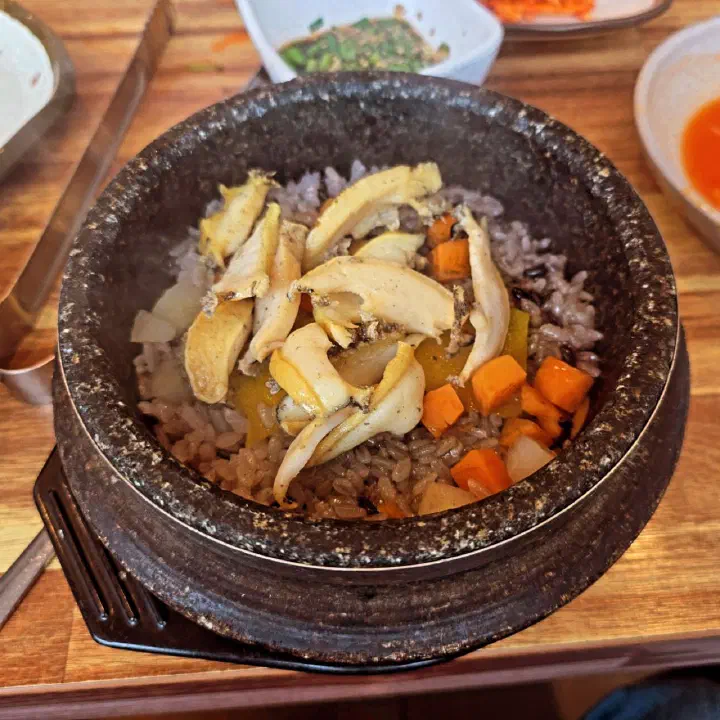
The TV clip made the butter-grilled abalone famous, but the dish this kitchen is actually built around is jeonbok dolsotbap (전복돌솥밥), abalone rice cooked and served in a hot stone pot.
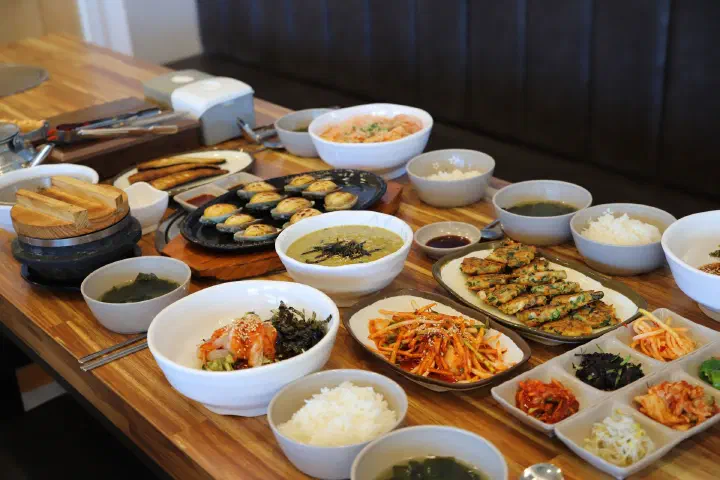
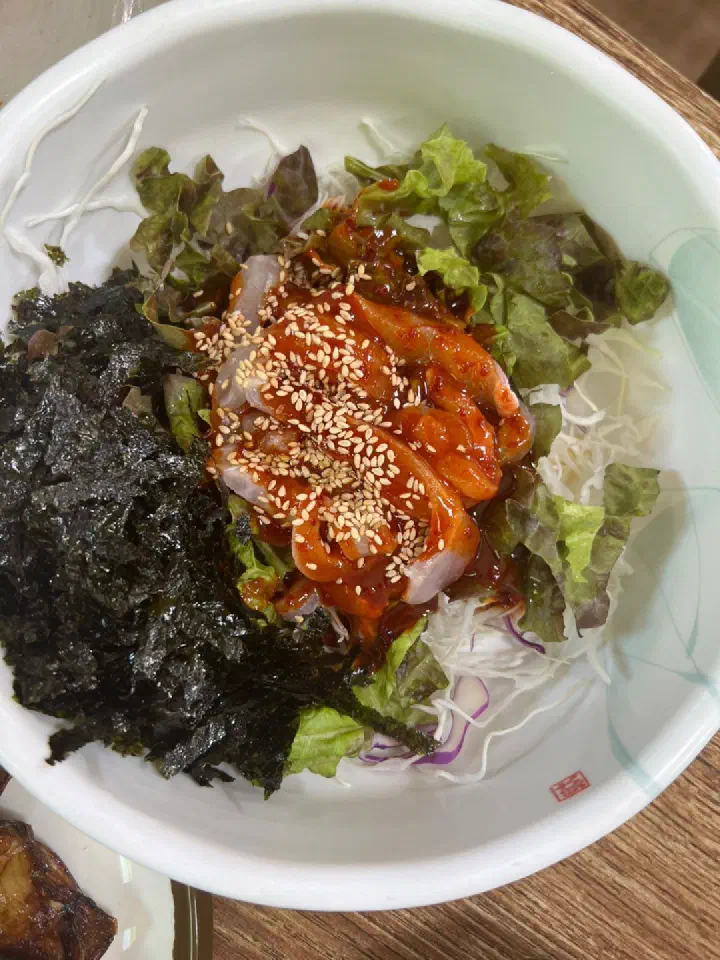
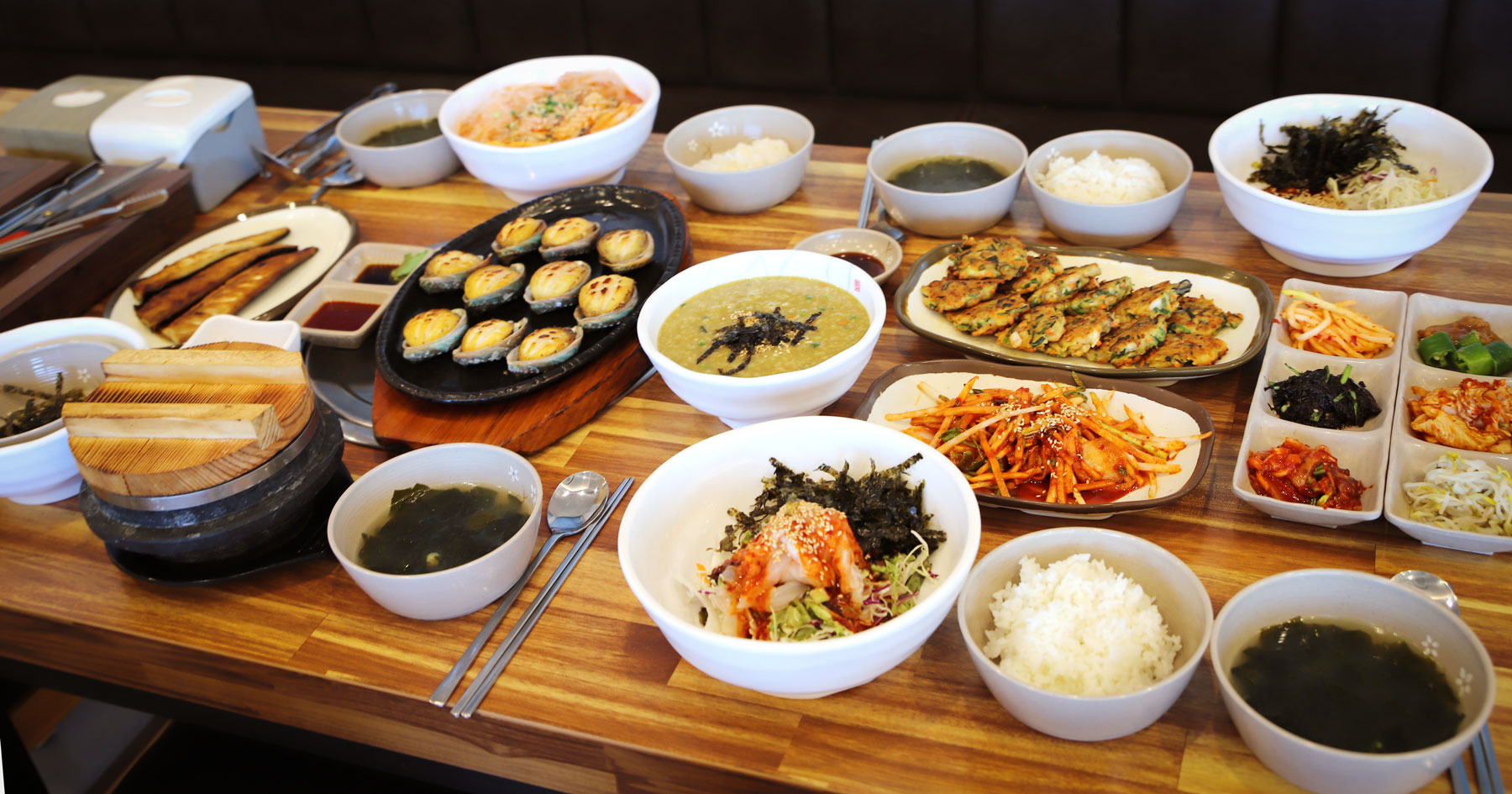
The 17,000 won set brings the stone pot plus a seafood pancake, grilled fish, seaweed soup, and a spread of side dishes. Abalone porridge, sea squirt bibimbap, and a raw fish rice bowl are also available as sets, at the same price.
There’s a whole, good-sized abalone in the rice, along with pumpkin, potato, and carrot. Lift the lid and you get a warm, buttery smell — there’s a knob of butter in the pot.
There’s a method to eating it, and it pays off.
Scoop the rice into the empty bowl they give you, add the seaweed flakes and the soy seasoning, and mix.
That seasoning isn’t just salt in liquid form. It has real savory depth, so you can be generous without wrecking the balance.
The rice grains stay separate, the abalone is chewy in a good way, and the sea flavor stays subtle.

Most people skip the last step. Pour hot water into the now-empty stone pot, close the lid, and let it sit. The crust at the bottom loosens into the water and you get nurungji sungnyung, a toasted-rice tea that finishes the meal.
The set is filling enough that a lot of people are too full by then and leave it. That’s a shame.
Budget your time. Food takes 20 - 30 minutes to arrive because the stone pots are started when you order.
Add that to the wait, and a meal here can run an hour even after you’re seated.

Butter-grilled abalone, if you can get it
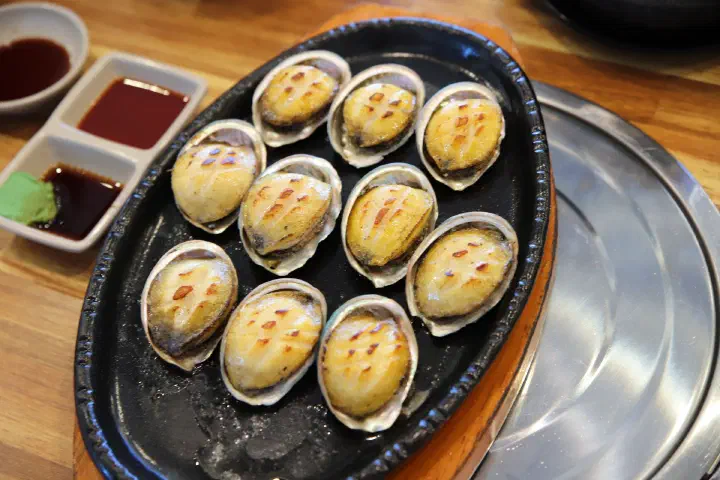
33,000 won, the priciest thing on the menu.
The abalone is scored, grilled in butter, and comes out whole. You cut it into three or four pieces with the scissors provided, which is standard practice in Korean restaurants and not a sign that something has gone wrong.
These are thick, full-bodied abalone, not the thin, papery kind. Tender, with some bounce to them.
Not everyone loves it. The butter is heavy-handed, and enough people find it flat and margarine-ish that it’s worth mentioning. If you came for clean abalone flavor, the butter bulldozes it.
The bigger problem is supply. Once it’s gone for the day, that’s it — being told it’s sold out at lunch is routine, and it’s been gone as early as 11:30.
If this dish is the reason you’re going, you need to be seated in the morning.
There are also days when they limit it to one order per table, so ask when you order if you’re planning to share.

Cold soups and the supporting cast
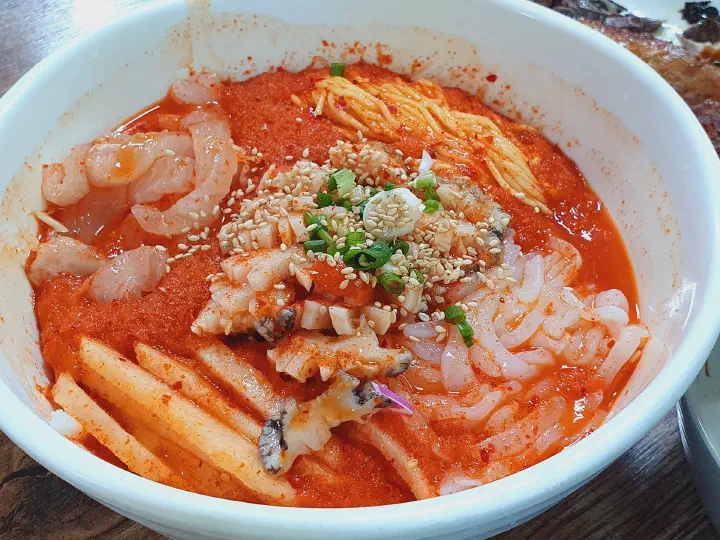
There are three versions of mulhoe (물회), a chilled raw-seafood soup Koreans eat in hot weather.
Abalone and squid versions are 17,000 won, and a mixed one with sliced raw fish is 22,000.
The abalone version includes squid too, and they’re not stingy with either. The abalone has a firm snap to it and the broth is tangy and clean rather than punchy.
The squid version is squid, edge to edge.
There are thin somyeon noodles in the bowl, with a side of rice. The soup runs a bit salty on its own, which is why most people tip the rice in.
The mulhoe is not the reason to come here. It’s a competent version of a common dish, served in generous portions.
The mixed one adds raw fish for 5,000 more, and the fish is thin and forgettable.
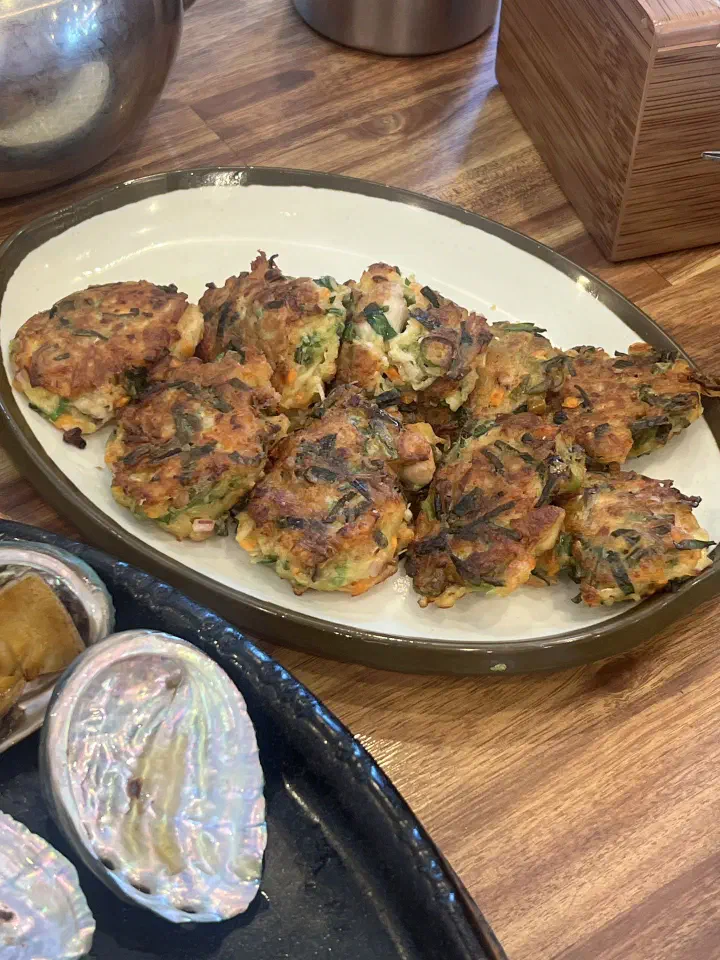
What people actually rave about is a side dish. The haemuljeon (해물전) is a seafood pancake that comes out fresh from the pan, crisp outside and soft inside, with squid running through it and the deep-fried savor you want from a jeon.
It lands before the main course, and on its own it makes the wait go down easier.

The minari (water dropwort) salad that comes with it is sharp and crunchy, and piling it on the pancake cuts the oil nicely. Try that combination.
The seaweed soup has small shrimp in it and no fishiness at all, though it can run salty enough that people water it down.
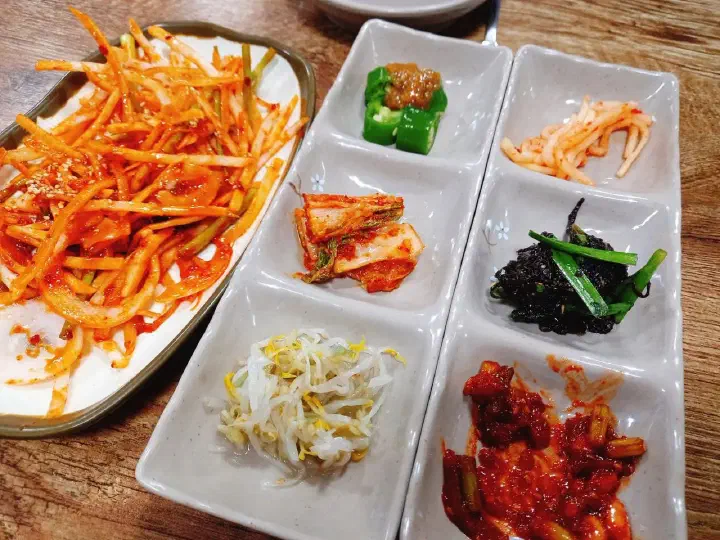
The banchan rotate, but usually include stir-fried anchovies, seasoned laver, salted squid, bean sprouts, kimchi, and cucumber and peppers with soybean paste.
The salted squid is the standout — clearly made in-house. Spoon it over the dolsotbap and the bowl empties fast. Refills are free and they’re generous about it.

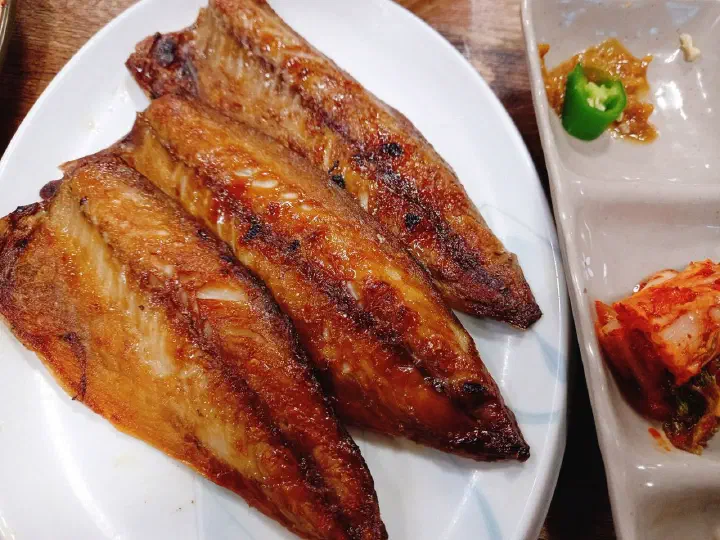
The grilled fish is a decent piece of fish but underseasoned, so use the soy dipping sauce.
The oyster stone pot rice only runs in oyster season. If you’re in Tongyeong in winter, it’s another option.

Almost nothing here is spicy by Korean standards, which means it should be comfortable for most visitors. The cold mulhoe broth has some chili heat, but it’s mild.
Room and service
It’s a big room — fifteen or so four-tops, with large windows that keep it from feeling closed in.
Group reservations are common, and the tables are wide enough for a large family to sit together.
There are plenty of high chairs, and there’s room to get a wheelchair or a stroller through. There are separate men’s and women’s restrooms right outside the entrance, kept clean.
A lot of older Korean customers eat here, which is usually a good sign for a place in a tourist district. Restaurants that survive only on tourists don’t look like this.
Tongyeong residents bring visiting family, and people drive over from Geoje.
The tradeoff is noise. It’s loud the entire time you’re eating, and there’s no version of this room that’s quiet.
The staff is generally friendly and fast, but during peak hours things get frantic and service quality varies.
If a Tongyeong local is in your group, they sometimes send out a free squid mulhoe. It’s a nice gesture for residents, though it can read oddly from the next table over.
Parking, payment, and practical notes
There are private lots in front of the building and behind it, but at lunch both are effectively full. Circling for a space costs more time than just going straight to public parking.
The public lot directly behind the building has a narrow, awkward approach. Dipirang Public Parking Lot No. 1 (디피랑제1공영주차장) — a different name from Dongpirang, same neighborhood — is the better call: it’s close, and several times bigger than No. 2. Lots 2 and 3 are also nearby.
Rates are 500 won for the first 30 minutes, then 200 won per 10 minutes, capped at 6,000 won a day.
This is the part to remember. Tell the cashier you used a public lot when you pay, and they’ll hand you a 50% discount voucher. They won’t offer it unless you mention it.
They take cards. Foreign-issued Visa and Mastercard go through without trouble, though a little cash never hurts as backup. Zero Pay and local currency vouchers are also accepted, but those are Korean-resident systems.
Nobody tips in Korea, so don’t leave anything — it creates an awkward moment rather than goodwill.
No one here speaks much English, but ordering is easy. The menu has photos, and pointing at what you want and holding up fingers for quantity works fine.
Solo diners are fine. A lot of Tongyeong seafood restaurants have a two-person minimum, and this one doesn’t.
Getting here without a car is straightforward. It’s a five-minute walk from Tongyeong Jungang Market and about three minutes by car from the ferry terminal. From Tongyeong Bus Terminal, a taxi runs roughly 15 minutes.
Use KakaoT for taxis. Google Maps will find the restaurant, but it can’t handle walking or transit directions in Korea — Naver Map or KakaoMap are far better for those.
So, is it worth it?
Set yourself a wait limit before you go, and the decision makes itself.
Under 30 minutes of waiting, go. 17,000 won for this spread is hard to find in a tourist area, they don’t skimp on the abalone, and the ingredients are fresh.

Over an hour, think harder. You’ve eaten a spread like this before; this one is just done well.
Anyone who shows up expecting the TV version to be a revelation walks out mildly deflated.
Which brings it back to timing. Between 09:00 and 10:00, or around 14:00. Hit either window, and you get the same food at the same price with none of the line.
It works well for older relatives and for families with kids, and it fits neatly into a day that includes the market and the Dongpirang murals.
People do come back, mostly because 17,000 won still buys this much food.
📍 View Dongpirang Abalone Village (동피랑전복마을) on Google Maps →