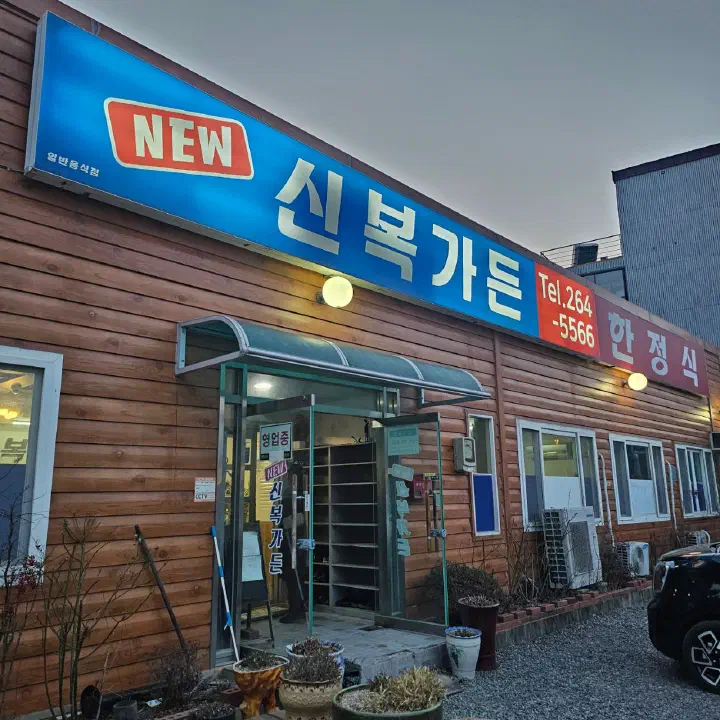
Whenever I’m headed out toward the Yeongnam Alps or the Deungeok hot springs, there’s one place I almost always stop at for a meal. It’s a small Korean set-meal restaurant called New Sinbok Garden (뉴신복가든).
The first time was kind of an accident — we were driving back from Jajeongdonggul Cave and just wandered in. After that it somehow became our spot. Family hot-spring baths in Deungeok, a hike down from Ganwoljae… we’d always end with “let’s just eat there.”
It is not a fancy place. The sign is the old-school red-and-blue kind, and inside it feels like a meal at a country grandmother’s house. But once you realize what a 12,000-won (about 9 USD) spread looks like here, it’s hard not to keep coming back.

The basics first
- Address: 233 Deungeokalpeu-ro, Sangbuk-myeon, Ulju-gun, Ulsan
- Phone: 052-264-5566
- Hours: 11:10 – 19:30 (break time 15:00 – 17:00)
- Last order: 14:30 for lunch / 18:30 for dinner
- Closed: every Tuesday
- May close early if they sell out
- Parking: private lot in front and to the side (fairly large)
📍 View New Sinbok Garden (뉴신복가든) on Google Maps →
One thing up front: they don’t take reservations. I’ve called to ask, and the answer is always no. So timing your visit is really the whole game — more on that at the end.
A couple of notes for travelers from abroad. Like almost every restaurant in Korea, they take cards, so any internationally accepted card is fine here. There’s no tipping culture in Korea — you don’t need to leave one, and honestly it might just confuse the staff. The menu is in Korean only and English doesn’t really go far here, but it genuinely doesn’t matter: there’s only one dish, so you just hold up the number of people and you’re set.
A single-menu place, so ordering is almost too easy
There’s exactly one thing on offer: hanjeongsik (한정식), a Korean set meal. When you sit down, the only question is “how many?” Tell them the number and that many full sets appear. Zero decisions required.
The price is 12,000 won per person. When I first started coming it was 10,000, then it crept up to 11,000, and now it’s 12,000. Even so, for what lands on the table, it still feels like a steal.
Here’s something to know if you’re traveling with kids: children are counted as a full person from age 8. From elementary-school age they pay the adult set price, so a family with young kids can feel the math a bit. When mine were little, we just added an extra bowl of rice (1,000 won) and shared.
The duruchigi (두루치기, stir-fried pork) comes as part of the set. It used to be sold separately in large/medium/small portions; these days it’s included in the set and you order more only if you want extra. The mackerel add-on used to be 5,000 won and is now 10,000. Noticing little shifts like that is when you know you’ve become a regular.

The turnover is genuinely fast
The speed here always surprises me. You say how many you are, grab water from the self-serve counter, sit down — and the table is basically already set. Five minutes after ordering and a packed spread is in front of you.
Water and cups are self-serve. There’s also sungnyung (숭늉, the toasted-rice tea you scoop from under the rice cooker) on the side, which I always grab a warm cup of to finish the meal.

So what actually comes out
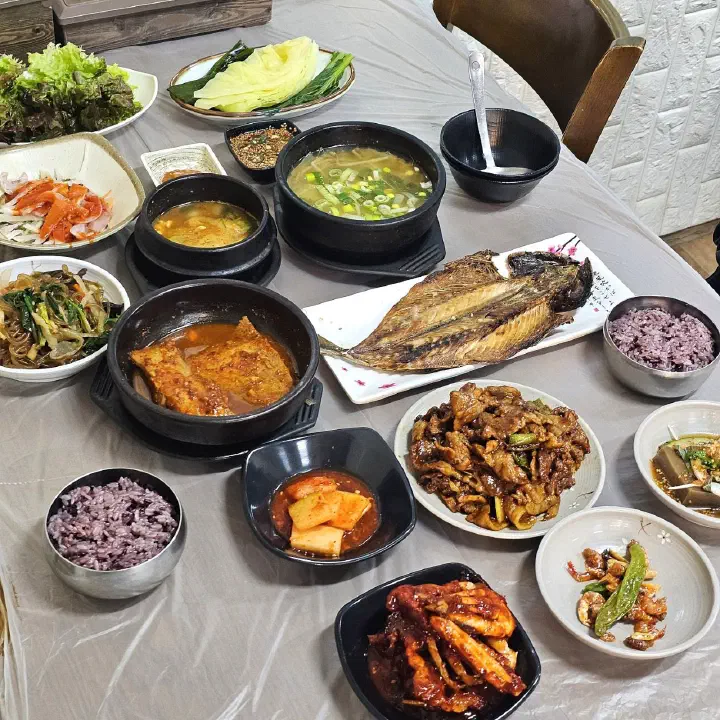
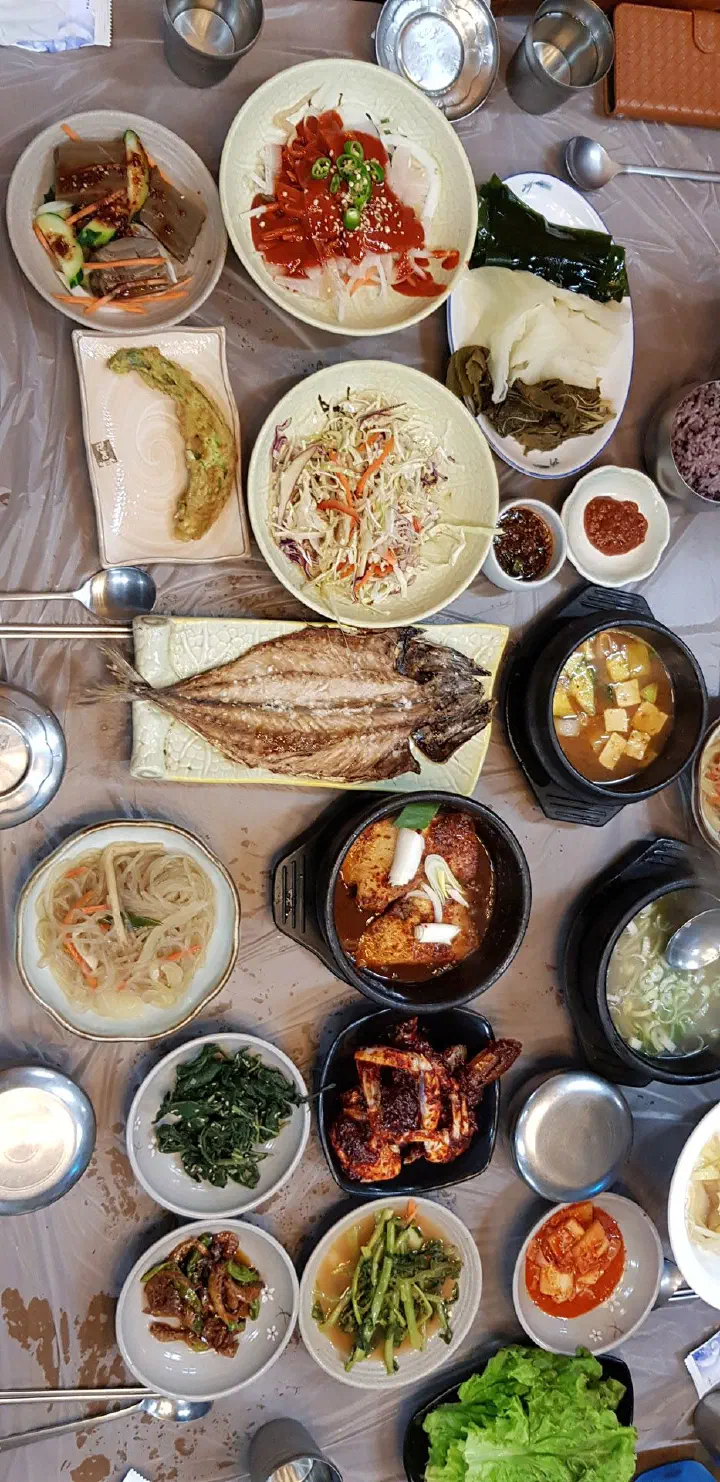
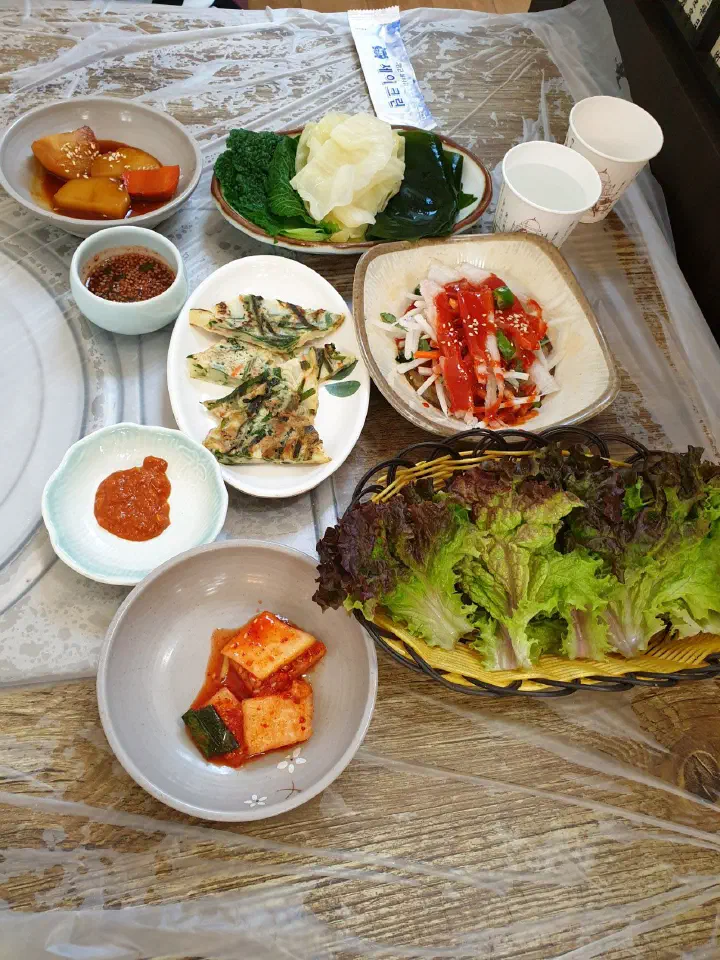
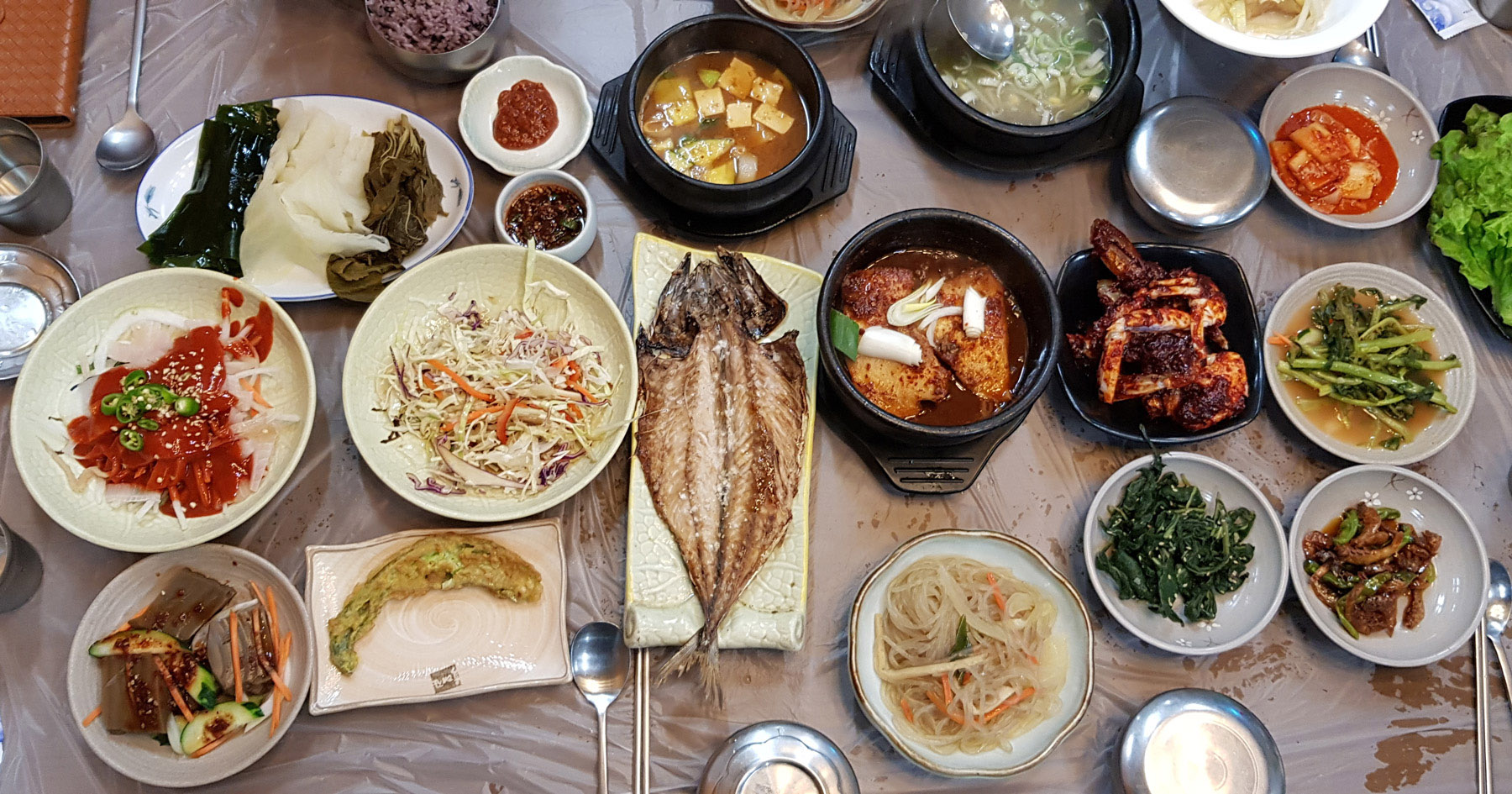
The side dishes alone run to around fifteen. They change a little each visit, but it’s roughly like this.
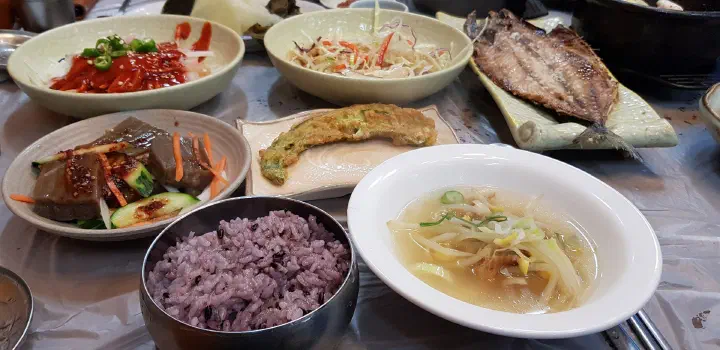
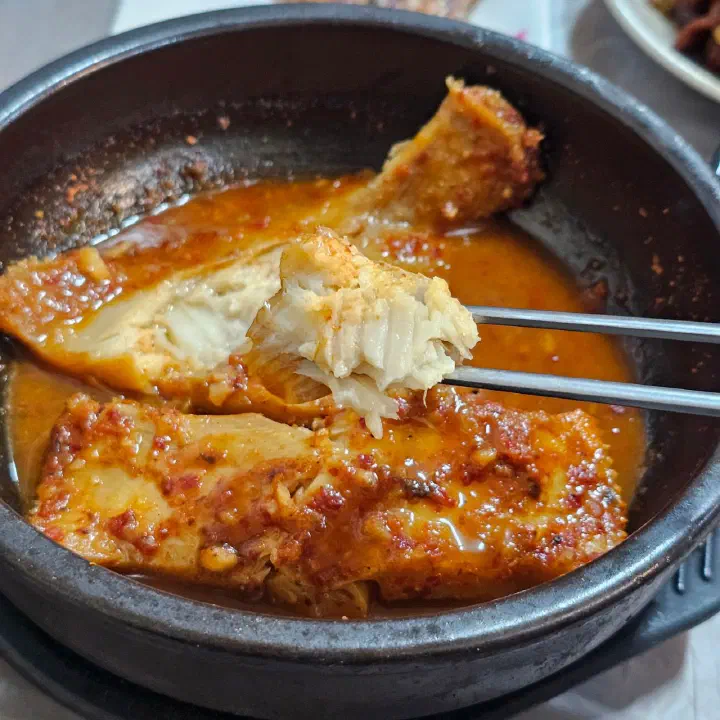
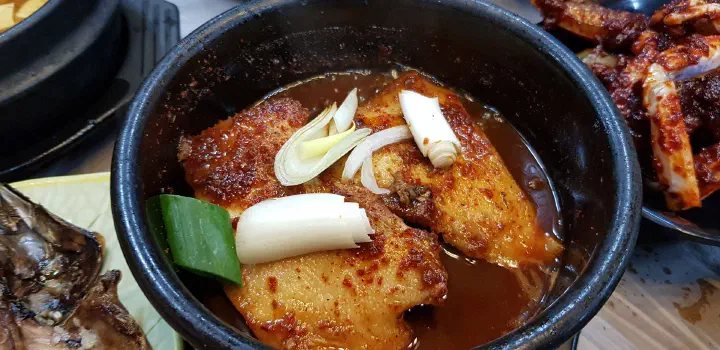
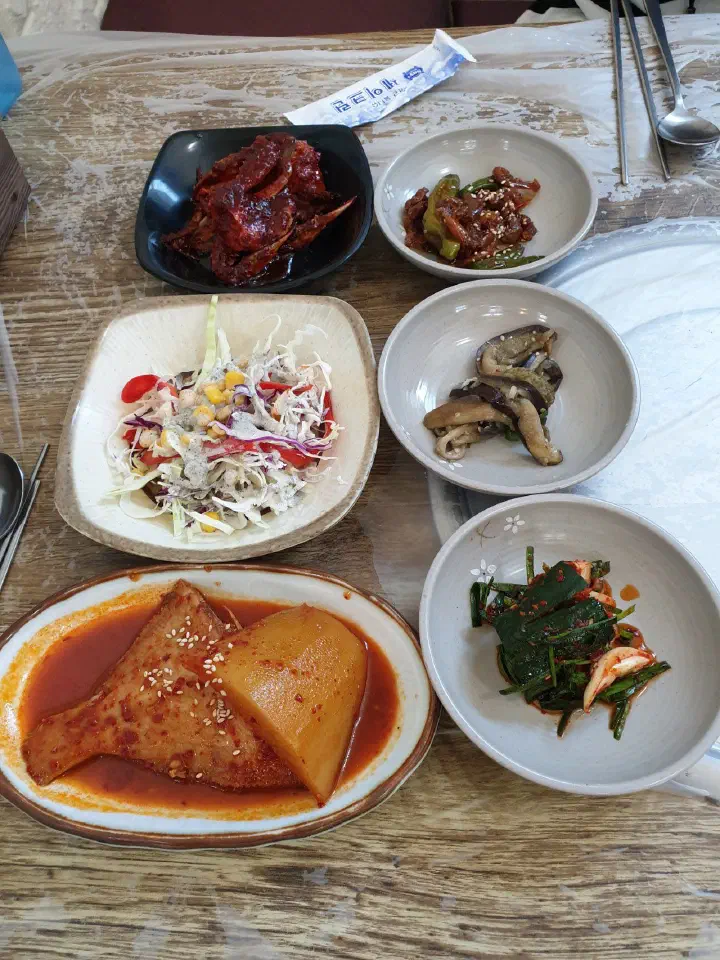
Wrapping greens come first — lettuce, cabbage, kelp — with ssamjang, followed by braised flatfish (가자미조림), a chilled raw-fish salad (회무침), spicy marinated crab (양념게장), japchae, fried stuffed peppers (고추튀김), stir-fried anchovies, seasoned radish, vinegared squid, kkakdugi, braised lotus root, braised potato… and on it goes. Add the two mains — charcoal duruchigi and grilled mackerel — plus a doenjang stew and a soup (seaweed or bean sprout, it changes), and the table is completely full.

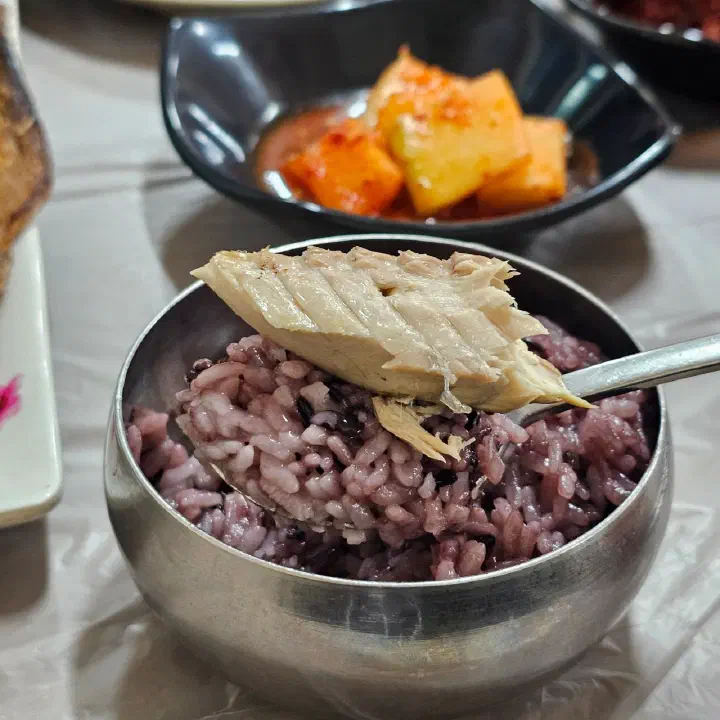
The rice isn’t plain white — it’s a black-rice multigrain mix, and the portion is generous. I’ll be honest, two bowls is my baseline here. Most side dishes can be refilled (a few exceptions), so just ask if you want more. They also told me they don’t reuse leftover food, which I appreciated.


The dishes, honestly
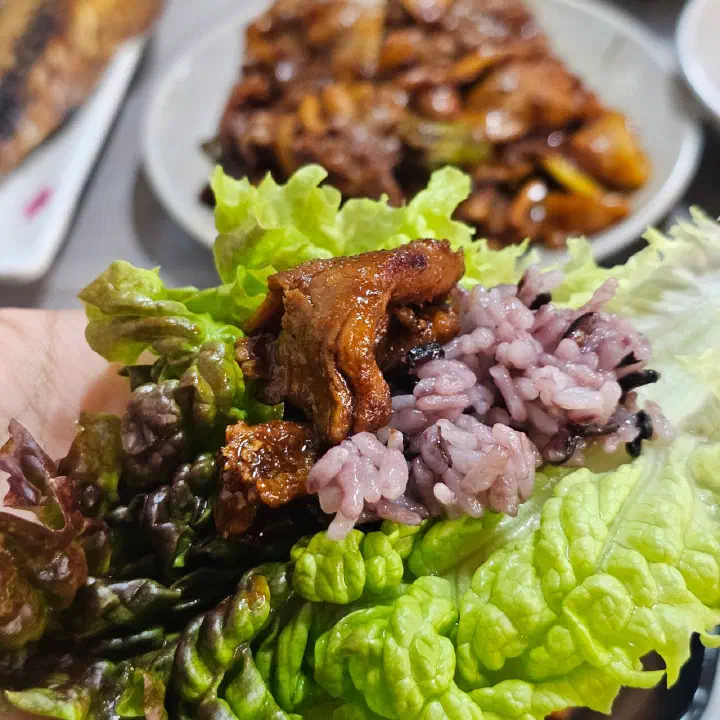
Sutbul-duruchigi (숯불두루치기, charcoal stir-fried pork)
This is the main event and my personal favorite. It carries a real smoky char, good on its own and even better wrapped in the greens. It’s a proper rice-stealer — this is the dish that makes me order that extra bowl. The seasoning leans a touch salty, so it’s at its best eaten with rice.


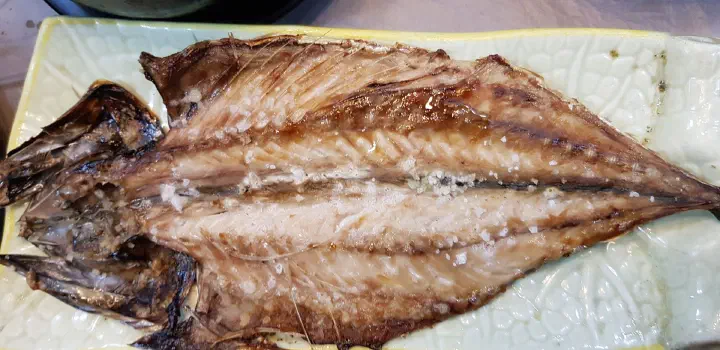
Godeungeo-gui (고등어구이, grilled mackerel)
A good-sized, meaty fillet, usually grilled crisp, and the kids eat it happily. The size seems to shift a bit with the headcount, and I’ve seen reviews mention it occasionally coming out too salty or with coarse salt standing out. Mine has generally been fine, but it does seem to vary day to day.


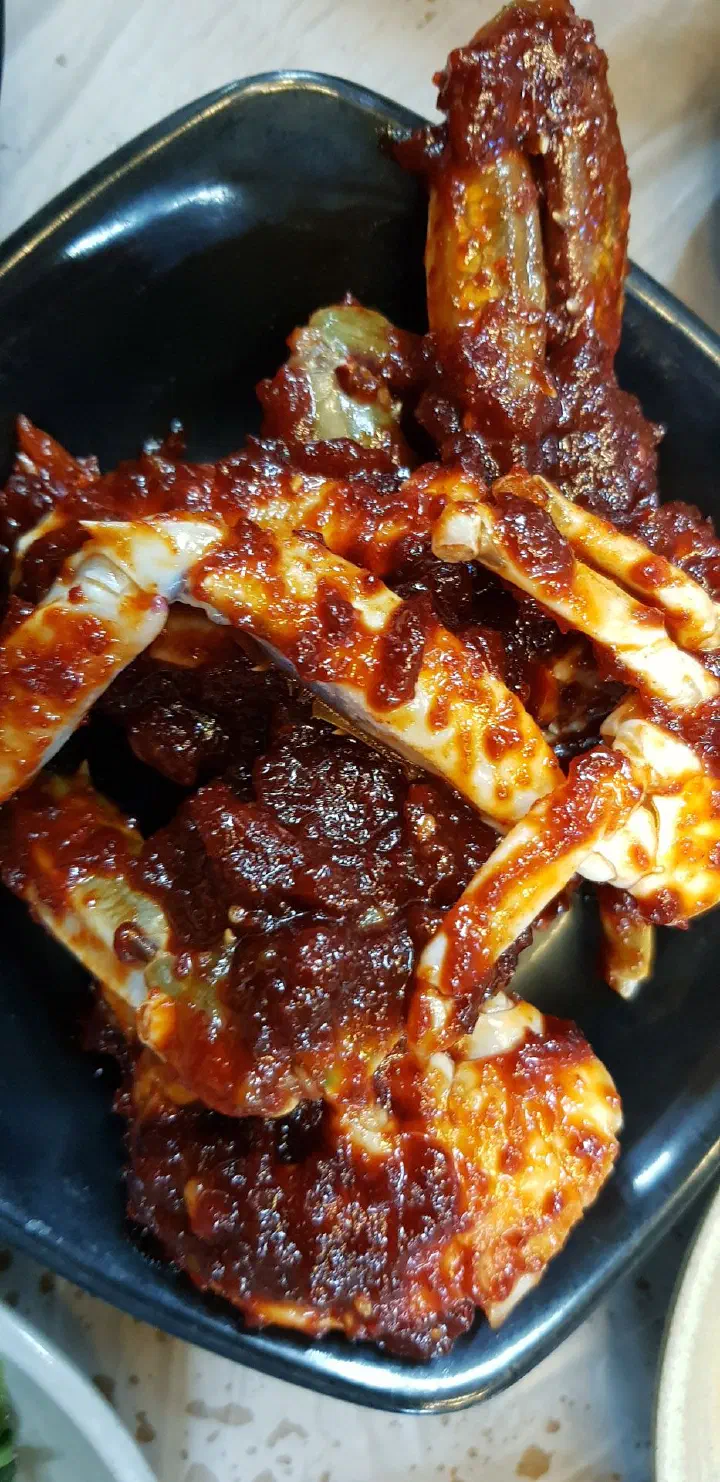
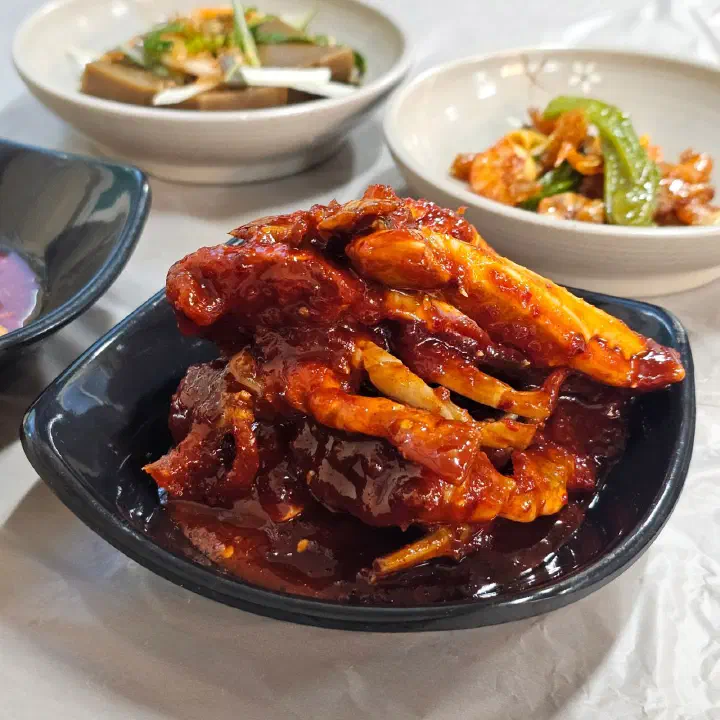
Yangnyeom-gejang (양념게장, spicy marinated crab)
More people quietly love this than you’d think. It looks fiery red but isn’t as salty as it appears — not the sweet-and-spicy version you get elsewhere, more of a mellow seasoning that’s great smeared over rice. You also get one per person, so no awkward sharing.

Hoemuchim and doenjang-jjigae
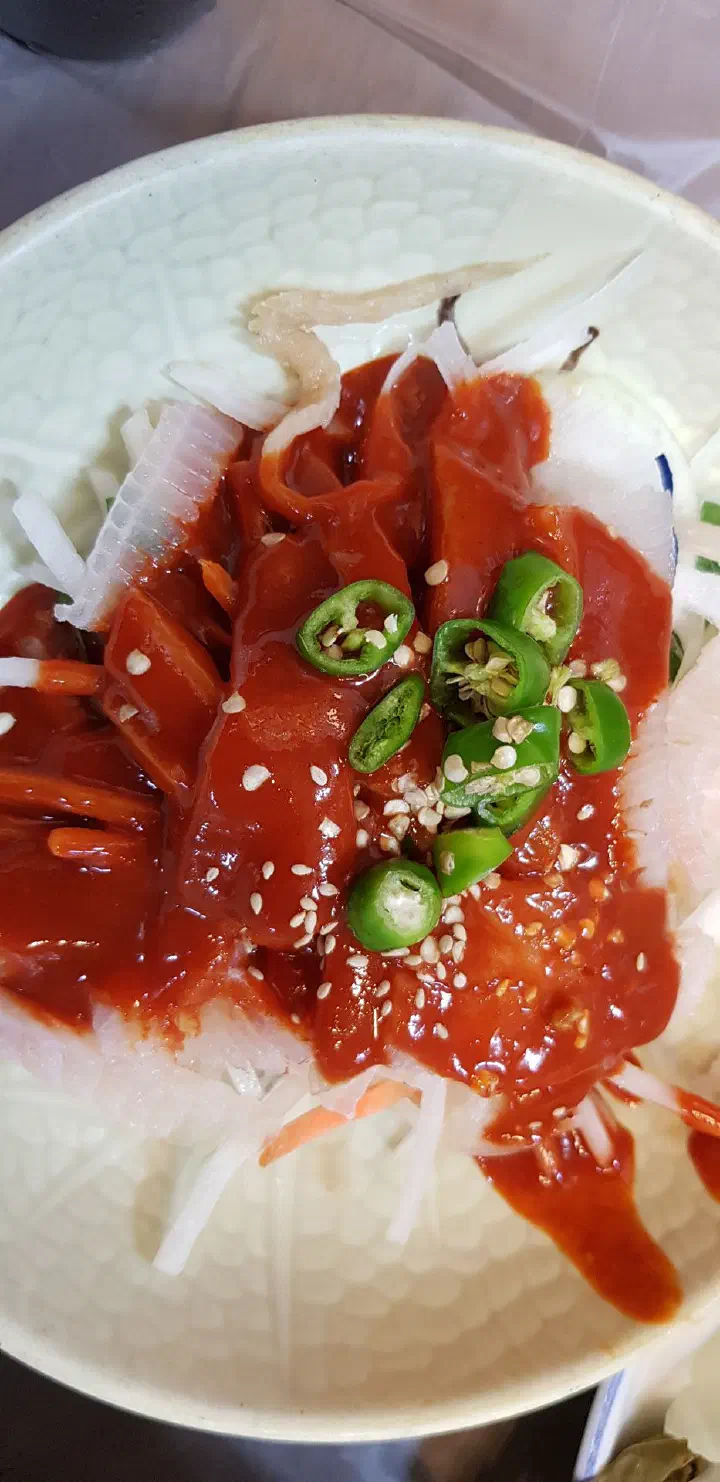
The hoemuchim (회무침, here a chilled skate salad) has a slightly frozen edge and is served cold. It’s mild and easy to eat, but if you prefer warm side dishes it might not be your thing. The doenjang-jjigae (된장찌개) is the old-fashioned, deeply savory kind. Some days it runs a little flat, some days it’s seasoned a bit more — for me it’s just right for spooning over rice.


The not-so-great parts
I shouldn’t only gush, so here’s the honest side.
Because the side dishes are pre-set on the table, the braised and fried items don’t arrive piping hot. “The food wasn’t really warm” is a common note, and I’d agree.
The seasoning overall leans a little sweet-and-salty. Some find the japchae sweet or the duruchigi salty. It worked for me as something to eat with rice, but if you like things on the plain side, keep that in mind.
And since it’s such a busy place, at peak lunch and dinner the service is more brisk than warm. I think they’re just slammed.
Ratings are a bit split, too. Most people are happy with the value, but there are definitely folks who felt it didn’t live up to the hype. Still, for a Korean set meal at this price, I’d happily go back.
Tips from going more than once
- Don’t worry about parking. The lots in front and to the side are roomy. On busy weekends they fill up and some people end up parking along the road.
- Waits are worst at weekend lunch and dinner — I’ve waited about 20 minutes. Even weekdays can have a small line at mealtimes.
- The easiest windows are right at opening around 11:10, or after 12:30 once the first wave clears.
- Mind the break time (15:00–17:00) if you’re planning a late lunch.
- They’re closed Tuesdays and may shut early if they run out, so for a late dinner I’d call ahead.
For getting here without a car, it’s genuinely tricky — this is rural Ulju, so public transport is sparse. The realistic options from Eonyang or central Ulsan are a taxi (the KakaoT app works well for hailing one) or driving. A small heads-up: Google Maps walking and transit directions are unreliable in Korea, so use Naver Map or KakaoMap for navigation here.
It’s a perfect stop for a solid meal on the way back from the Deungeok hot springs, Jajeongdonggul Cave, Jakcheonjeong, or the Yeongnam Alps. There are also big bakery cafés nearby (Haewoldang is one) if you want coffee afterward.
Not flashy, but generous and honest. I’ll be back the next time I’m out this way.