If you ask around Ulsan for a Korean set-meal place to bring your parents,
Yullijeong (율리정) comes up again and again.
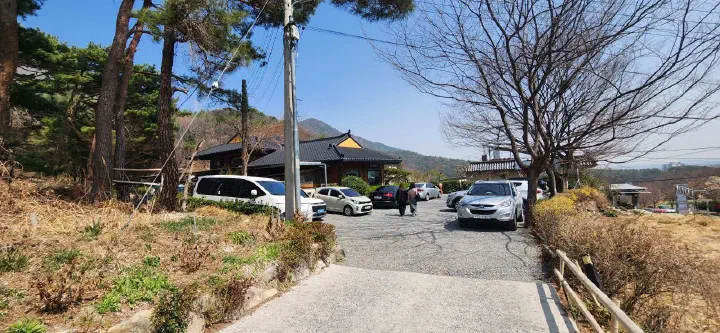
It sits in the hills below Munsusan, in the village of Yulli in Cheongnyang-eup.
The building is a hanok, a traditional Korean house, and there’s exactly one thing on the menu: a 23,000-won set meal.
No choosing, no debating. For a table of older relatives, that simplicity is half the appeal.
Who it suits
This is a place for calm, tidy meals rather than a lively night out.
Birthdays, family gatherings, hosting older guests - that kind of table.
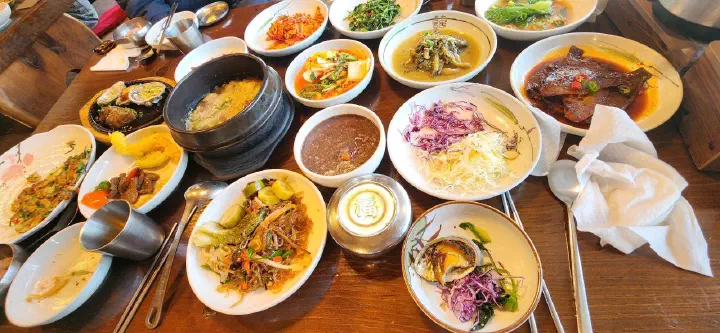
The spread is generous enough that “the table legs are about to buckle” is a phrase people actually use here.
It leans toward flavors that older Korean diners love.
The flip side: it’s not the spot for a quiet, private dinner.
The hall has no partitions, so it gets loud when it’s full.
And a few younger diners find the food a touch too mild.
Getting there and parking

From the Munsusa entrance junction, head up toward Munsusan and keep going.
Following the road toward the Munsusan Observatory parking lot, it’s almost the last restaurant you’ll reach.
It’s up on the mountainside, so public transport really isn’t practical - you’ll want a car.
The drive up is lush and green, which makes it a nice trip in itself.

One thing worth knowing about parking.
There’s room for five or six cars right in front, but it fills up fast.
Many people park along the road lower down and walk up.
On rainy days or at the lunch peak, the front lot is usually already packed.
Rather than driving all the way up only to make a U-turn, it’s easier to park below from the start.
For getting around Korea, by the way, Naver Map or KakaoMap give far better walking and transit directions than Google Maps. KakaoT is the local taxi app if you need a ride.
What lands on the table

You sit down, say how many people, and the dishes start coming.
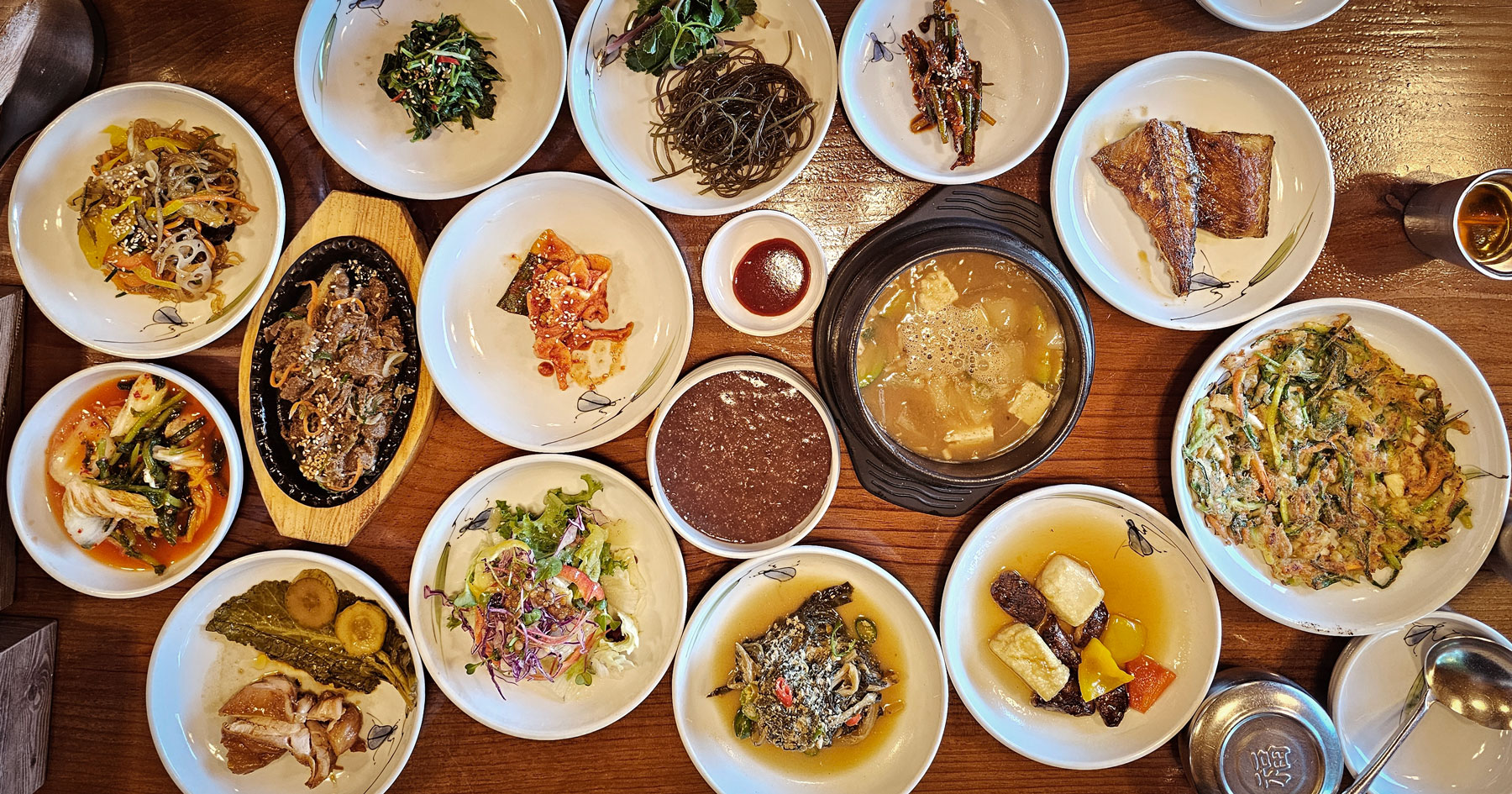
They arrive on a cart in two waves, and once everything is set out you’re looking at sixteen-plus dishes - close to twenty.
At first you genuinely don’t know where to start.
There are so many plates that even two people get seated at a four-top.

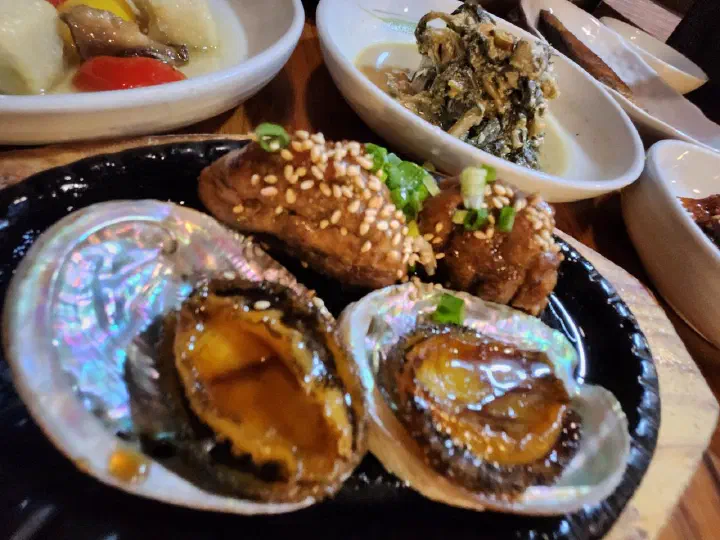
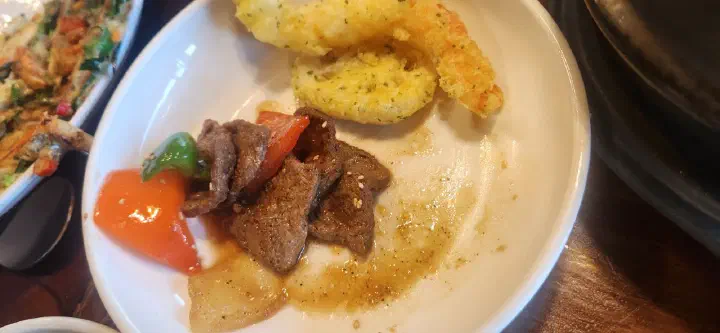
The closest things to “mains” are the grilled abalone and the tteokgalbi (떡갈비), a grilled short-rib patty.
The abalone isn’t large, but it’s tender rather than rubbery, with a faint hint of butter that makes it easy to like.
The tteokgalbi is sweet and juicy, the kind of thing kids reach for.
It used to come only with the lotus-leaf rice set; when the menu was simplified into one, it moved onto the standard table.

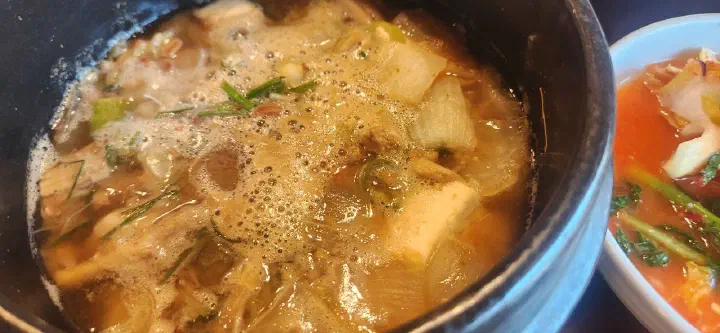
The cheonggukjang (청국장), a rich fermented-soybean stew, is a quiet favorite.
It isn’t pungent the way it can be, and people who normally avoid it often finish a bowl here.
It comes with big chunks of tofu in a brothy base.

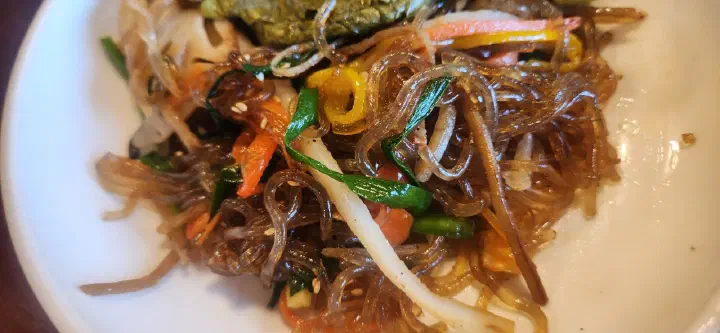
The japchae (잡채), stir-fried glass noodles, is glossy and savory.
“I wanted more japchae” shows up in reviews more than almost anything else.

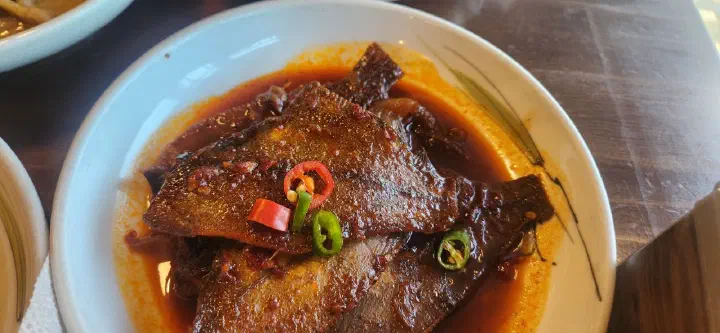
There’s always a braised fish dish too.
Depending on the season it might be braised flatfish (가자미), other times mackerel (고등어).
Even the same fish swings between a spicy sauce one day and a soy braise the next.


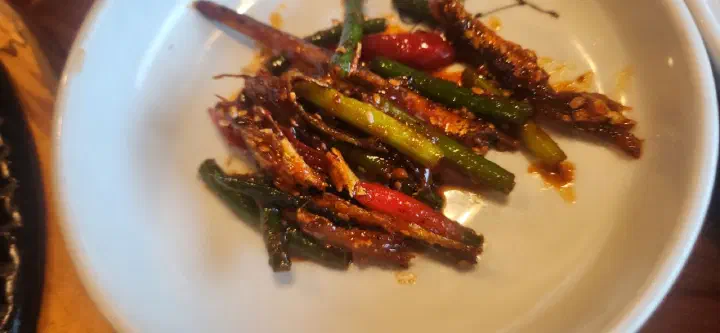
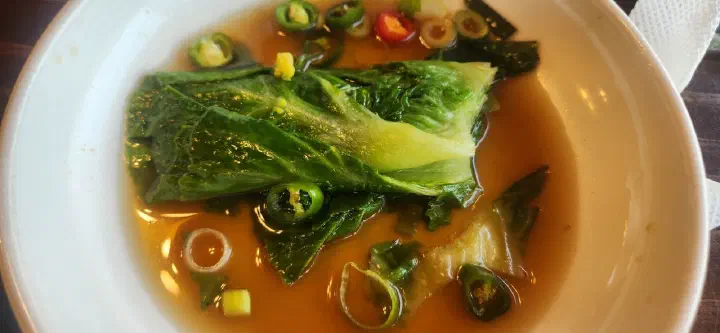
The namul - seasoned vegetable sides - get the warmest praise.
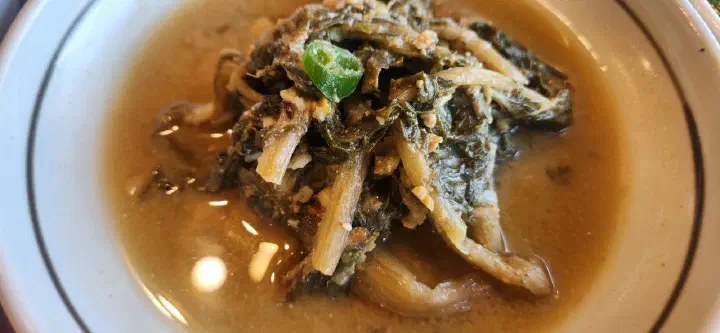
The siraegi (시래기), dried radish greens with soybean paste, isn’t tough or salty, so you keep going back to it.
Many diners love that you get a wide range of vegetable dishes you rarely cook at home.


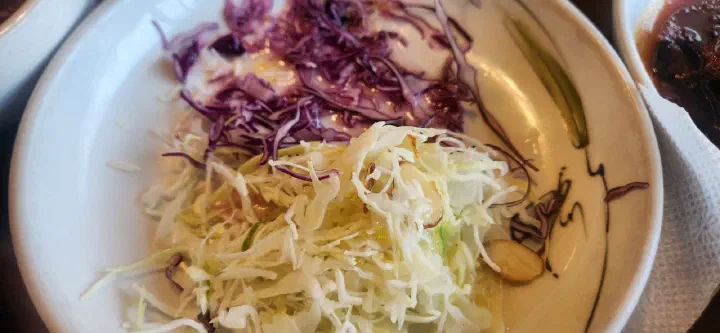
A cabbage salad with yuja (citron) dressing works as a palate opener.
There’s also a sweet red-bean porridge to start that’s neither too sweet nor bland.
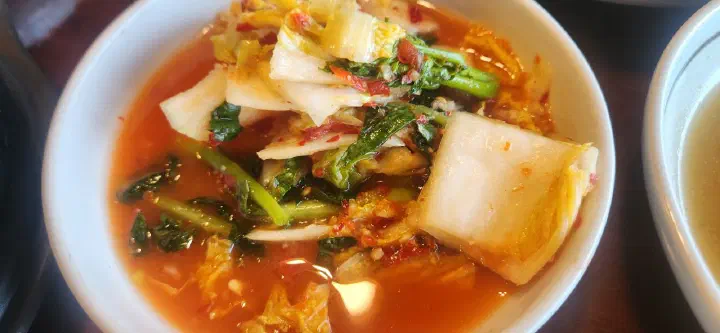
Instead of the usual cabbage kimchi, you get a brothy water kimchi (물김치).
Rice, refills, and good-to-knows
Rice comes as a plain bowl.
They serve a modest portion, but if it’s not enough, just ask - refills are free.
For sides, the namul and basic dishes get topped up for free, but the bigger “main” dishes cost extra to refill.
The braised fish and the savory pancake fall into that group.
Some wish the rice were a hot stone-pot version,
but this is a high-turnover place, so plain bowls keep things moving.
The room and the seats

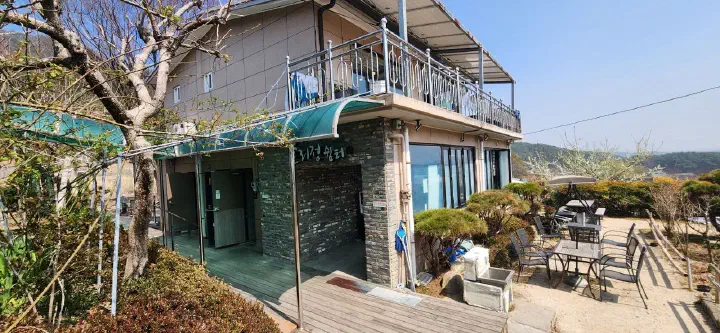
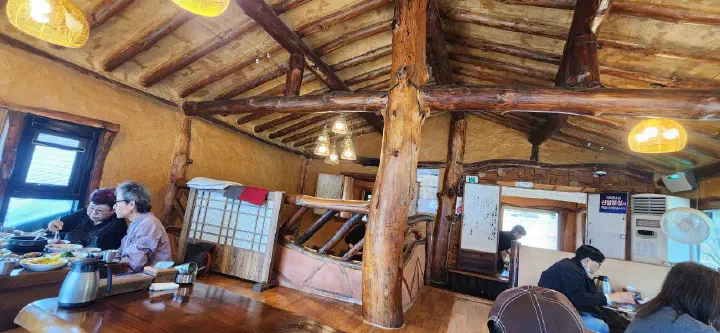
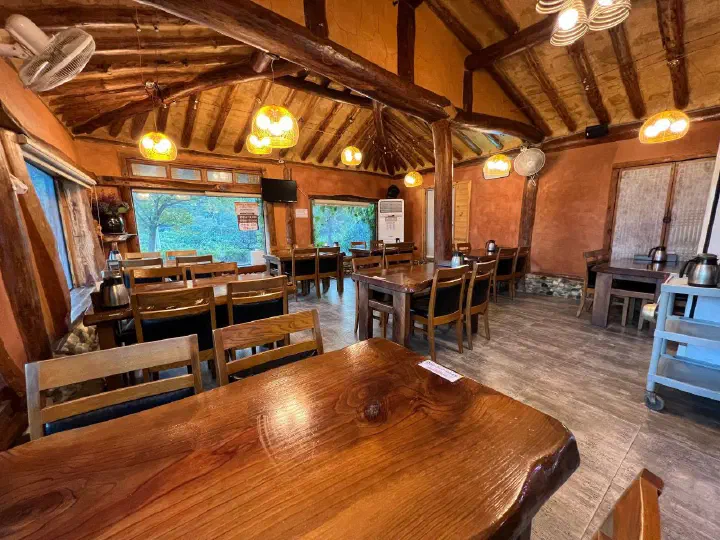
The building is hanok through and through - earthen walls, tiled roof, exposed beams and rafters.
It reads as a genuinely traditional house.
The first floor has tables and chairs; the second floor is floor seating.
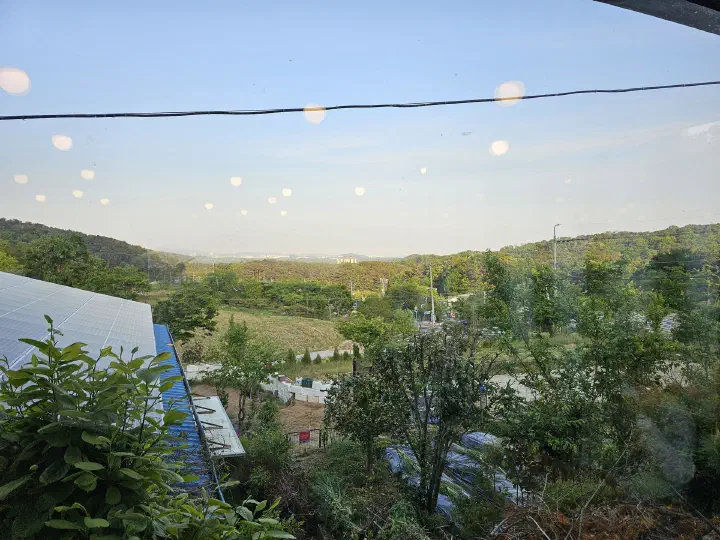
Upstairs has big windows looking onto Anyeongchuk Reservoir, so it doesn’t feel closed in.

The inner first-floor seats can feel a little tight,
so if you want an open spot, it’s worth being seated upstairs.
One thing to plan for: meals are capped at one hour.
It’s part of how they serve everything fresh and fast while keeping tables turning.
In practice most people finish in 30-40 minutes, so the hour rarely feels rushed.
Booking and waiting
A reservation here is all but essential.
Even weekday lunches can be hard to walk into.
At weekend and holiday lunch peaks, waits can stretch to around an hour.
For anything important, call a few days ahead.
Booking is painless - they just ask how many of you there are.
Arriving before the 11 a.m. opening won’t get you straight in;
you wait in the rest area and go in at your time.
A practical note for visitors: nearly every restaurant in Korea takes credit cards, so any internationally accepted card is fine here. There’s no tipping culture - you don’t need to tip, and trying to may just confuse the staff. English isn’t really spoken, but ordering couldn’t be simpler: there’s only one set meal, so you just hold up the number of people. If you’re not used to Korean spice levels, don’t worry too much here - the food is on the mild, gentle side.
📍 View Yullijeong (율리정) on Google Maps →
Hours are 11 a.m. to 8 p.m. daily, with a break from 3 to 5 p.m.
It’s open year-round. The phone number is 052-247-0052.
Coffee afterward at Yulli Shelter

Just below the restaurant is a cafe they run called Yulli Shelter (율리쉼터).
It doubles as the waiting area and as a place to linger over a drink after lunch.
Show your meal receipt and your drink is discounted -
an americano runs around a thousand won, a latte about two thousand.
Each coffee even comes with a little waffle cookie.
It’s a nice way to finish, looking out over the reservoir and the greenery.
The coffee is on the weak side, for what it’s worth.
Pairing it with a walk

Munsusan rises right behind the restaurant, with the old temple Munsusa above.
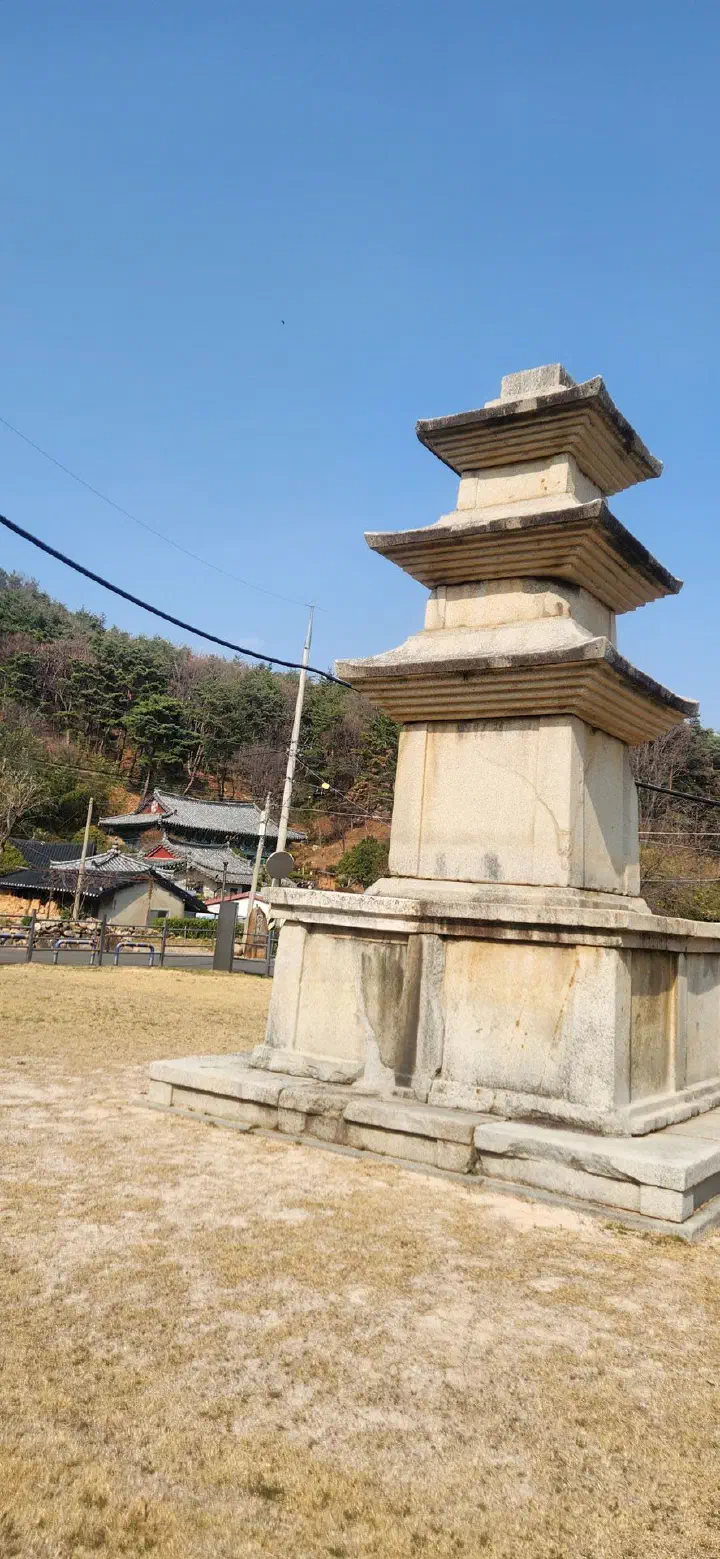
Lower down sits the three-story stone pagoda at the Cheongsongsa temple site, a designated national treasure.
It’s easy to pair a walk around Munsusan or Munsusa with lunch on the way down.
In spring the entrance path fills with roses and flowering trees; in autumn, chrysanthemums -
the garden looks different each season, which is part of the charm.

The honest downsides
There’s a lot to like, but a few things are worth flagging.
One, reviews consistently mention brusque service at the register.
Plenty of people enjoyed the food yet left a little put off by how they were treated.
Two, prices have climbed for a while now.
From the 10,000-won range years back, to 20,000, to today’s 23,000.
Some longtime regulars feel the number of dishes has shrunk compared with before.
Three, the restrooms are outside, over by the cafe rather than indoors.
They’re kept clean, but the walk can be slightly inconvenient.

In short
When you want mild, tidy Korean cooking in generous quantity, this is the kind of place you come back to.
There’s a reason “great for bringing your parents” follows it around.
Service and price split opinion, sure.
But book ahead, sit down to the full spread, and you start to see why it has stayed put for so long.