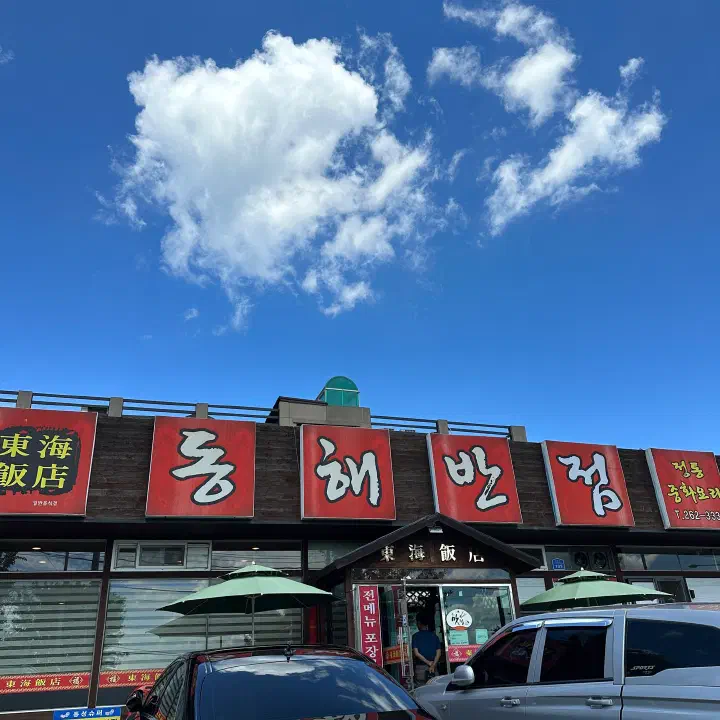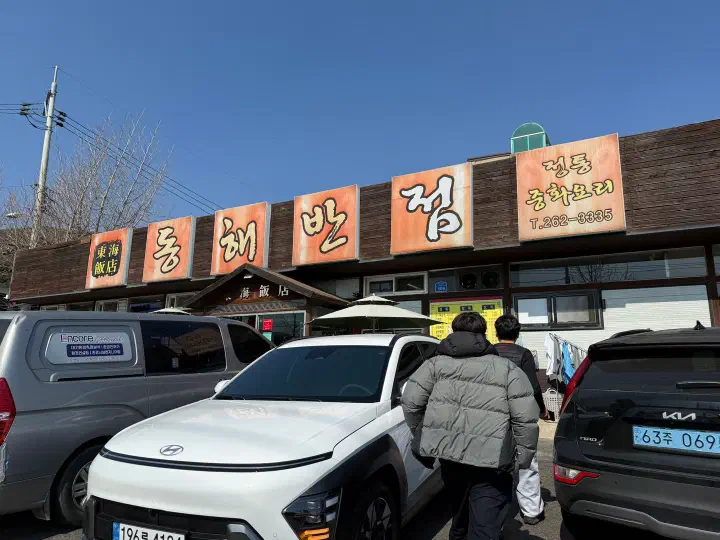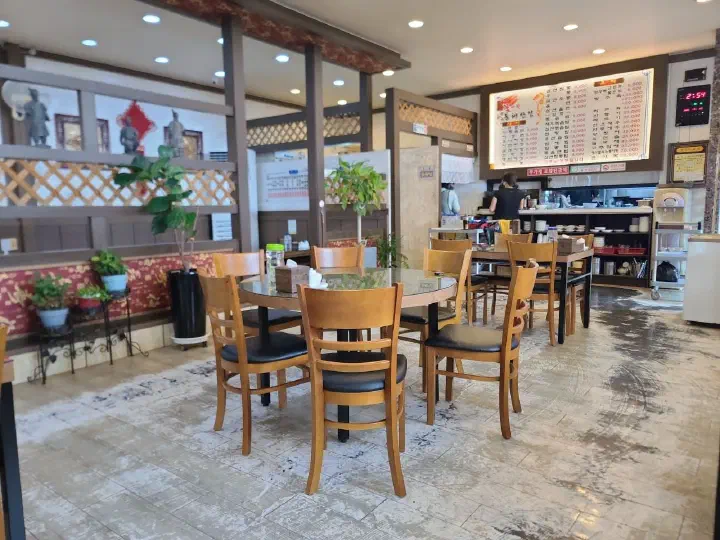
I’d driven past this place in Eonyang (언양) more times than I can count.
The red sign, the crowd that never seemed to thin out.
This time I finally pulled over and went in.

Where it is and what to know first
Donghaebanjeom (동해반점) sits right across from Eonyang Eupseong (언양읍성, the old town fortress), so it’s easy to spot from the road.
The parking lot is bigger than I expected, which is a relief if you’re driving.
I found a spot without much trouble even around mealtime.

- Address: 109 Eupseong-ro, Eonyang-eup, Ulju-gun, Ulsan
- Phone: +82-52-262-3335
- Hours: 11:00 – 20:00 (closed Mondays)
- Break time: 16:00 – 17:00 (no break on weekends)
📍 View Donghaebanjeom (동해반점) on Google Maps →
Double-check the hours and break time before you go.
The kitchen pauses in the late afternoon, and Mondays are off entirely.
Lunch means a wait
When I walked in, the place was already packed.
At lunch you grab a number (it’s actually a little wooden paddle) and wait to be seated.
I got lucky and only waited a few turns.

People kept streaming in the whole time. You can see why it has the reputation it does.
Plenty of solo diners too, which I appreciated.
A quick note for visitors: almost every restaurant in Korea takes credit cards, so any major international card works fine here. No need to carry much cash.
And there’s no tipping culture in Korea, so please don’t tip. It can actually make staff uncomfortable.
The menu, and that one signature dish

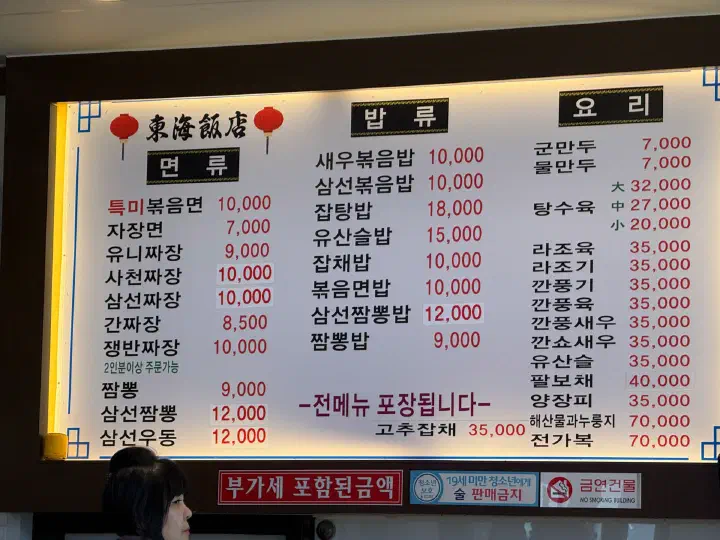
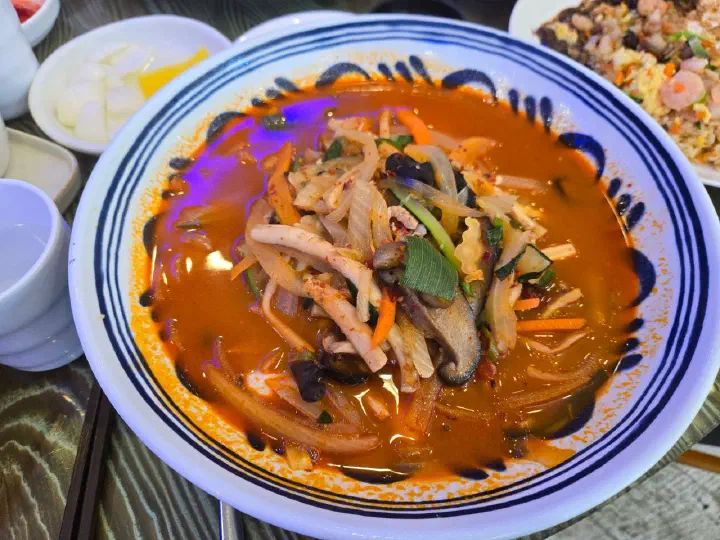
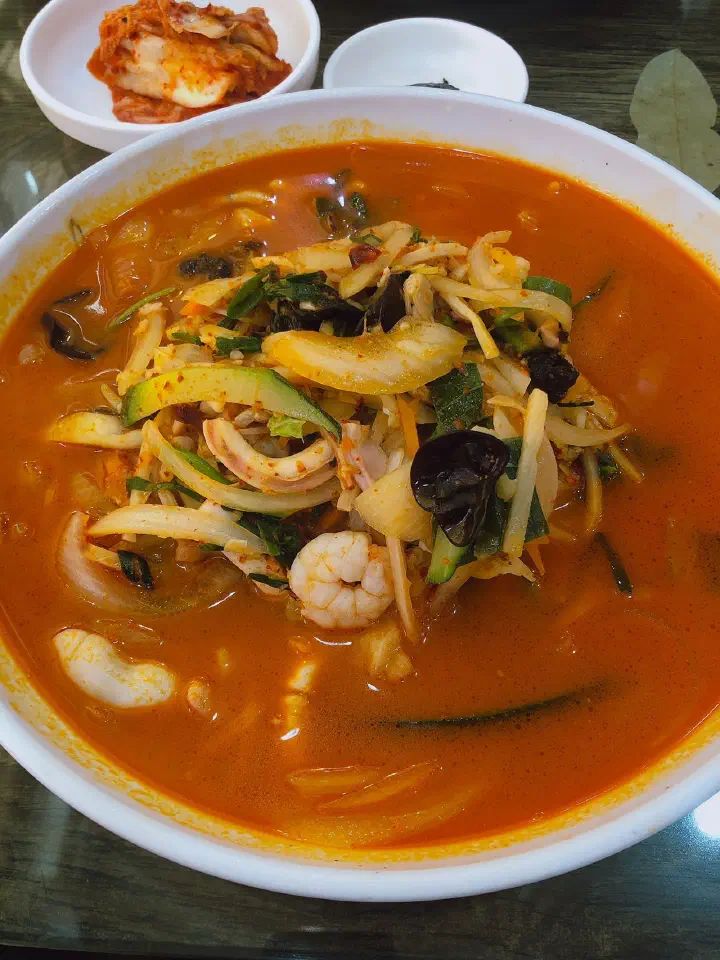
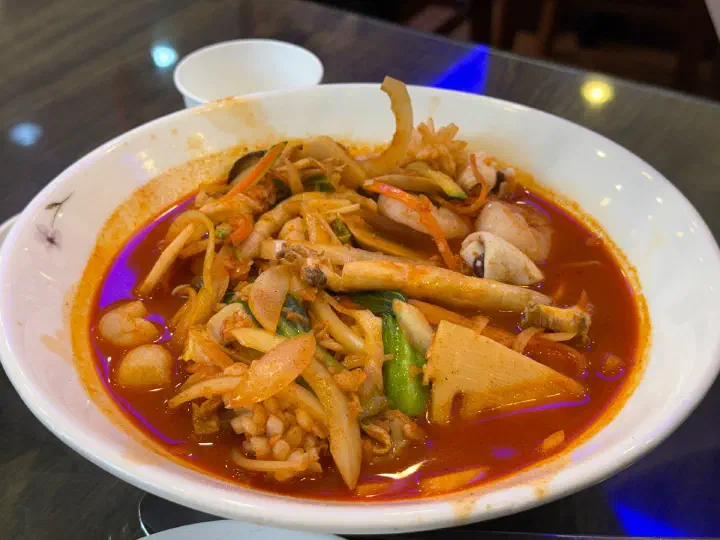
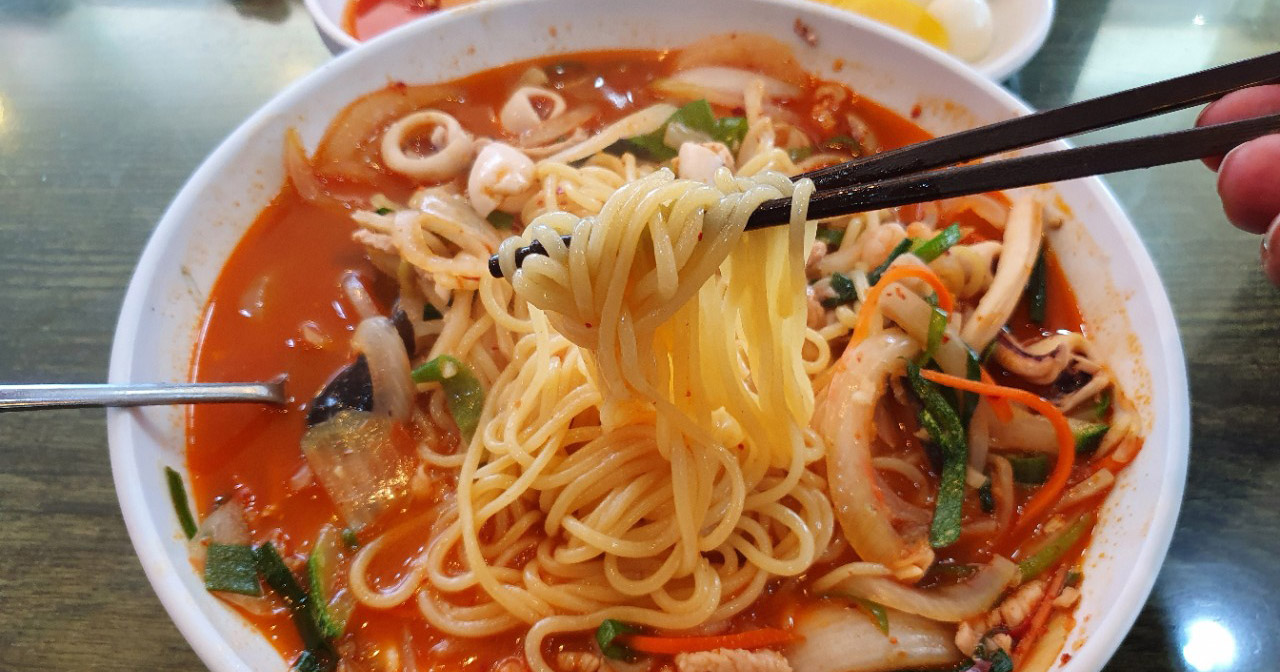
The dish everyone comes for is special bokkeummyeon (특미볶음면).
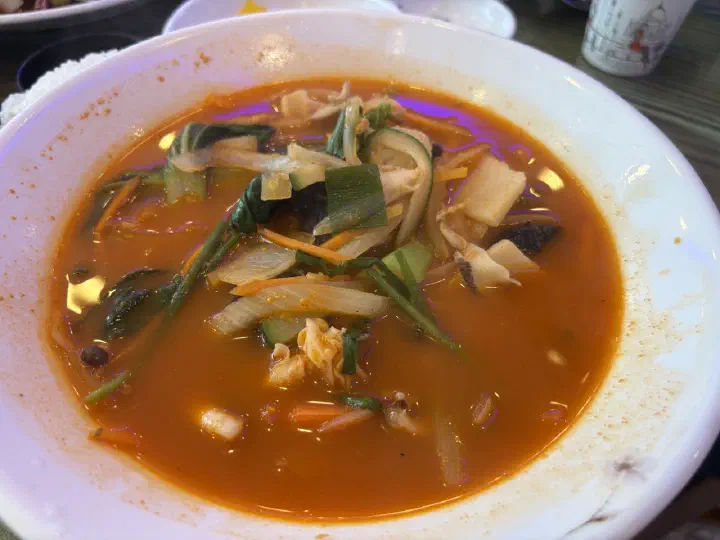
The name suggests stir-fried noodles, but it looks and tastes much closer to jjamppong (짬뽕), Korea’s spicy seafood noodle soup.
It was 9,000 won last year and has gone up to 10,000 won now.
Most tables order it. Think of it as a regular jjamppong cooked down a little, with less broth than usual.
A heads-up on spice: this is spicy by Korean standards, which means it can hit hard if you’re not used to Korean heat. Go in ready for it.
For ordering, don’t worry too much about English. The staff don’t really speak it, but the menu is right there and you can point to what you want and hold up fingers for how many. It’s genuinely that simple.
Free dumplings the moment you sit
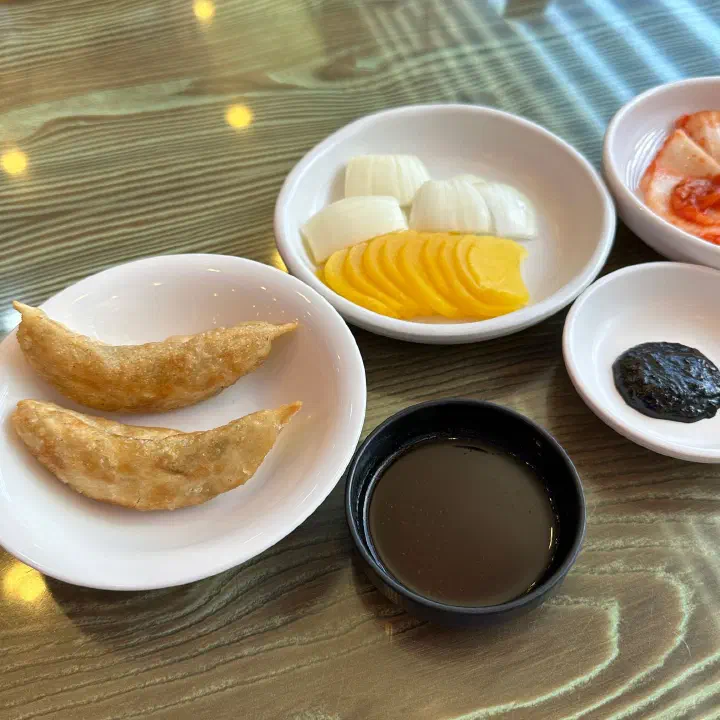
The second I sat down, a plate of hot gunmandu (군만두, fried dumplings) arrived.
On weekdays before 2 p.m. they come free, and they’re surprisingly good.

They were so tasty I asked for more, and the staff happily brought another round.
Small gestures like that put me in a good mood right away.
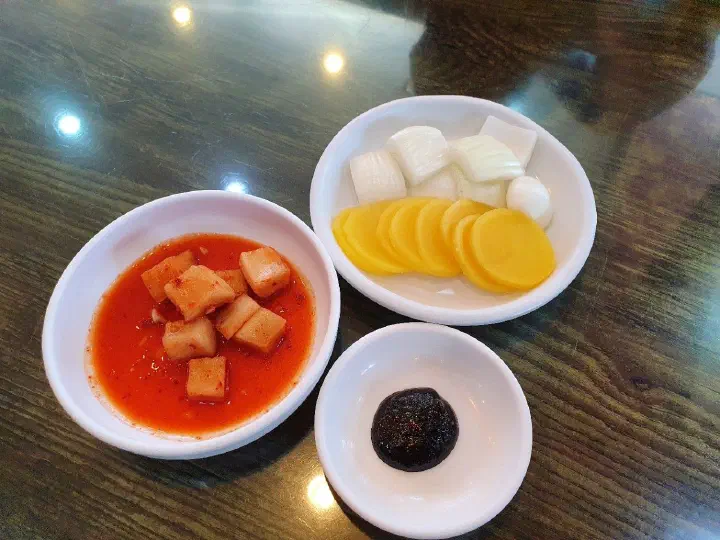
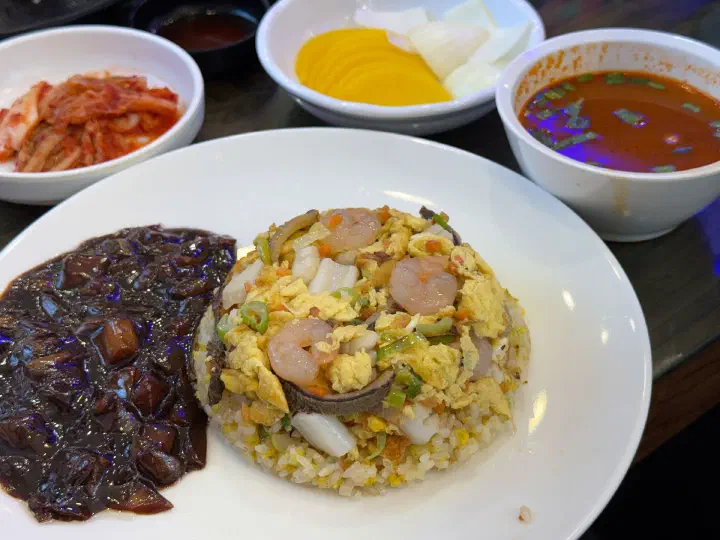
The basic side dishes are pickled radish, raw onion, kkakdugi (깍두기, cubed radish kimchi), and black bean sauce for dipping.
Standard for a Korean-Chinese place, but neatly done.

And finally, the special bokkeummyeon

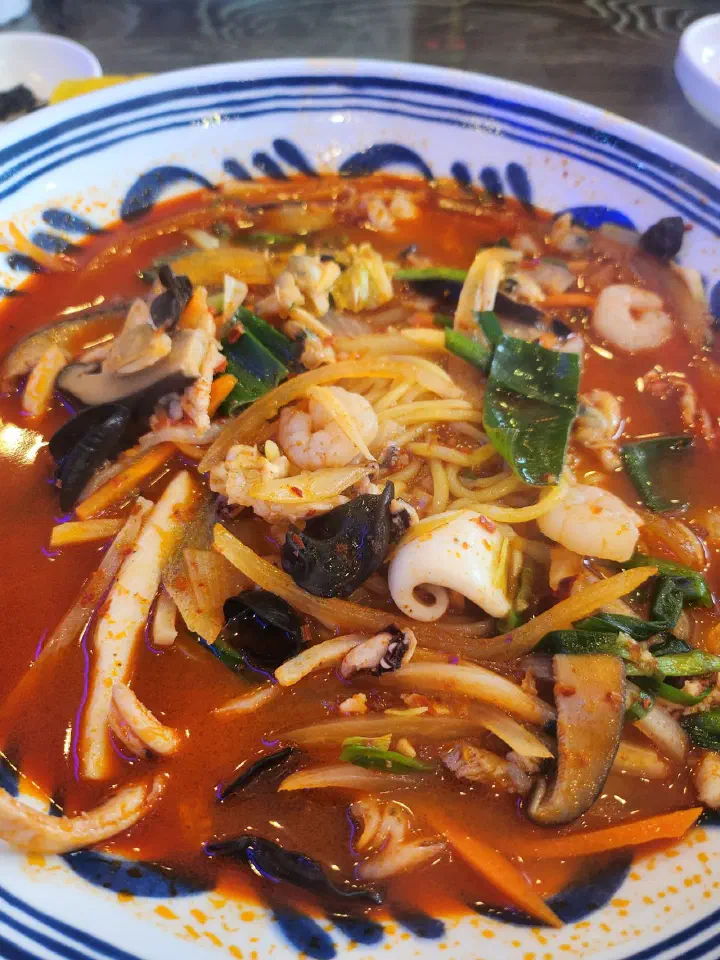
The bowl is enormous.
It’s loaded with noodles and seafood, and honestly it looked filling before I even took a bite.
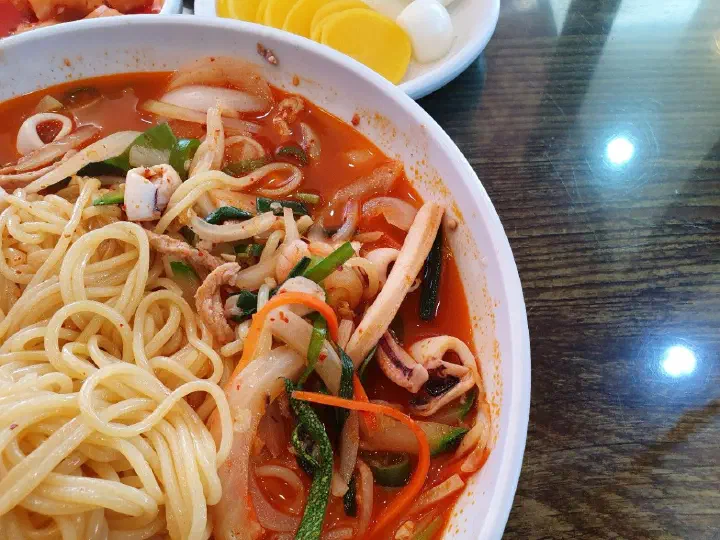
Squid, shellfish, thin-sliced pork, vegetables, all packed in.

The noodles are on the thin side, so the sauce really clings to them.
The broth doesn’t come piping hot like most jjamppong, it’s served a bit lukewarm, which threw me at first.
But once you start eating, it’s that spicy, keep-going kind of flavor.

It’s not over-the-top, but it’s quietly addictive.
The broth is clean and the seafood tasted fresh, with no fishy edge.
That said, when it’s slammed, the noodles can come out a touch underdone.

The portion is huge, so I’d order one bowl plus one shared dish between two people rather than a bowl each.
The jjajang dishes are great too
The jjajang (black bean noodle) options get just as much love as the bokkeummyeon.
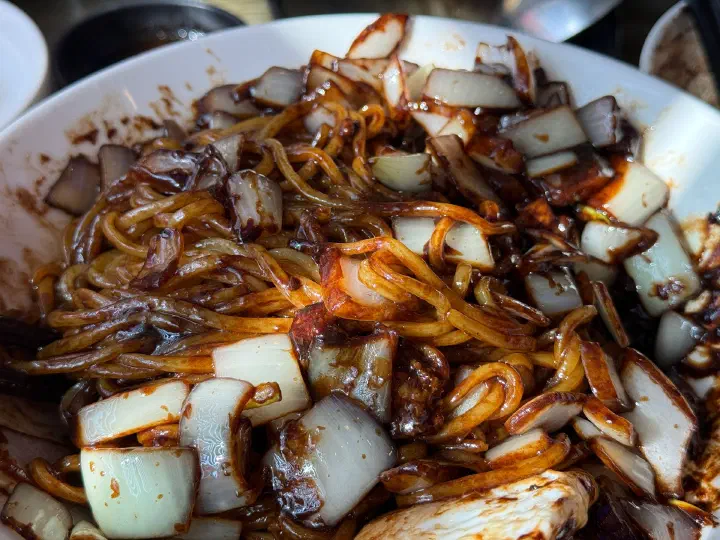
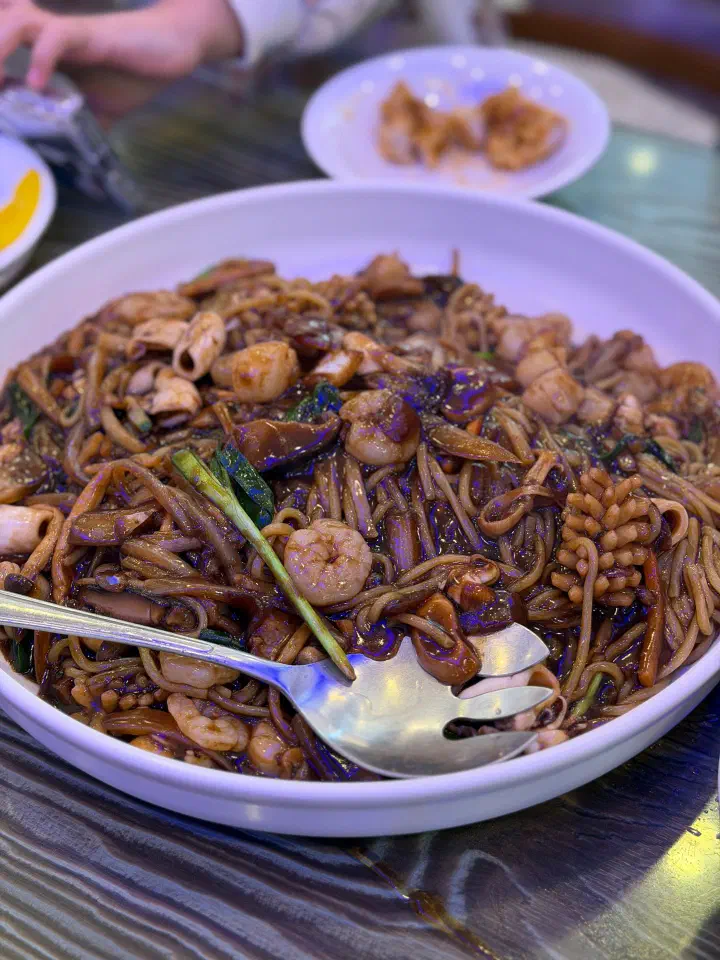
I tried the ganjjajang (간짜장, stir-fried black bean noodles with the sauce on the side), packed with onions that stayed crisp.
It tasted like it was fried fast over high heat, savory enough to eat on its own.

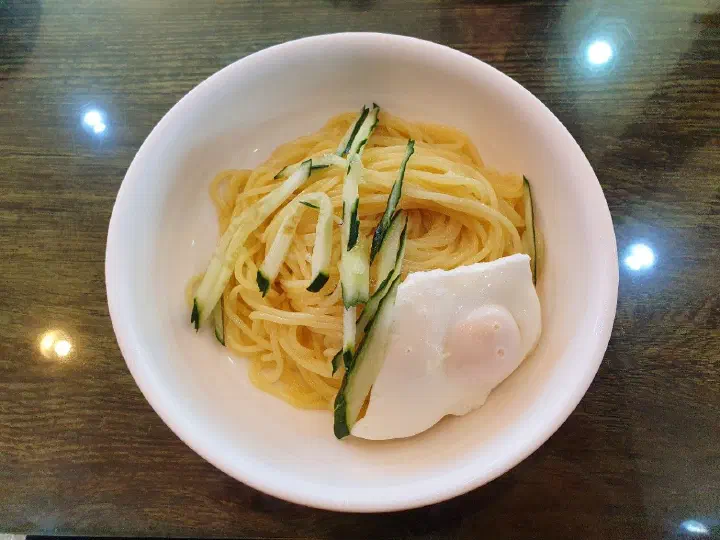
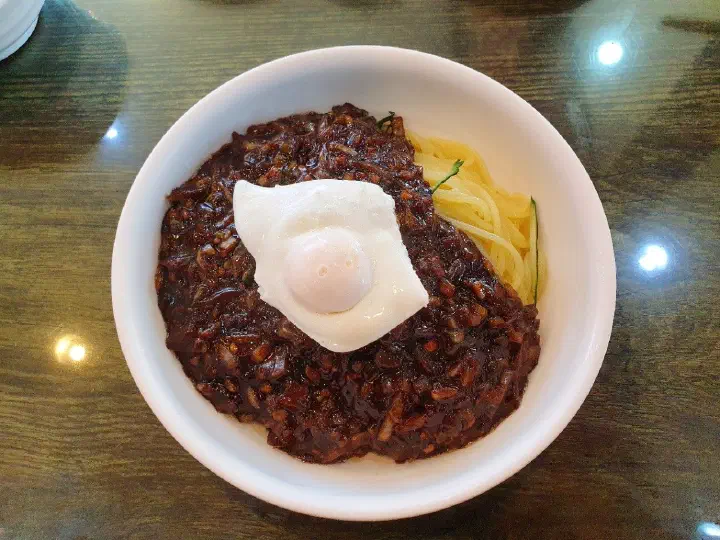
The uni-jjajang (유니짜장, with finely minced pork) was lovely as well.
Thin noodles, topped with shredded cucumber and a fried egg.

The server told me to add the sauce a little at a time to get the seasoning right.
Break the yolk, mix it all together, and it turns into something else entirely.

If you’re with a group or with kids, the jjaengban-jjajang (쟁반짜장, served on a big platter) is a good call.
You can order it for two or more, and it’s generous without being too sweet.
Lots of seafood but no fishiness, so even children dig in.

Tangsuyuk and the rest
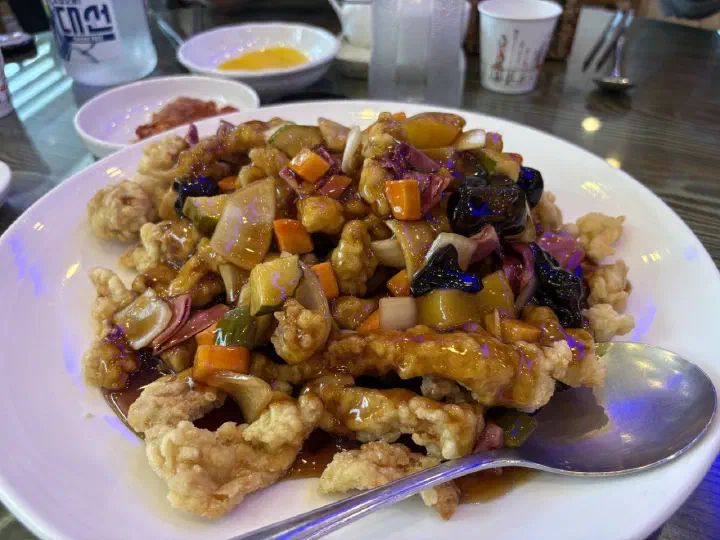
The tangsuyuk (탕수육, sweet and sour pork) is clean, with no off taste.
It comes with the sauce already poured over, and it’s good that way.

The samseon-jjamppong (삼선짬뽕, seafood spicy noodle soup) is sharp and refreshing.
Spicy broth with a generous pile of seafood.

The samseon fried rice (삼선볶음밥) had carefully cut ingredients and made for a solid, filling plate.

If you want rice with your soup, there’s samseon-jjamppong-bap (삼선짬뽕밥), the soup with rice.
They pile the rice bowl high, so you won’t go hungry.

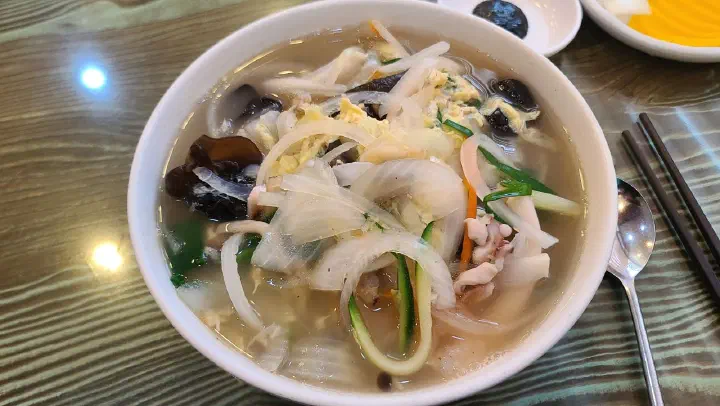
If the bokkeummyeon feels like too much, the udon (우동) is a milder option.
Big bowls and big portions seem to be the rule for everything here.

Busy, but still so kind
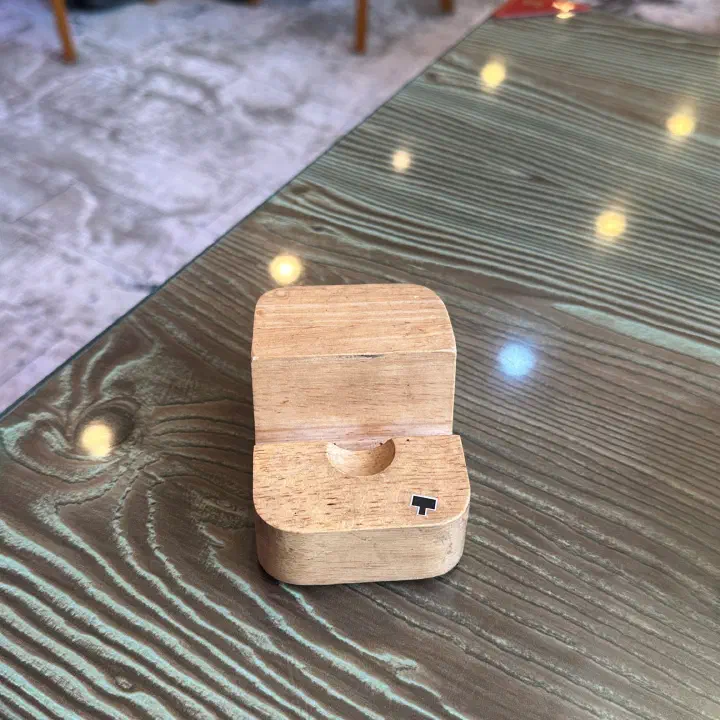
I went alone and was watching Netflix while I ate, and the staff brought over a phone stand without me asking.
For how slammed they were, that little touch genuinely surprised me.

Good food matters, but kindness is what makes me want to come back.
That’s the thing that stuck with me about Donghaebanjeom.
My takeaway
The special bokkeummyeon might not be for everyone.
It leans clean and bright rather than deep and heavy, so if you’re after a rich, weighty jjamppong, this is a different animal.
But the portions are generous and the seafood is fresh, which makes it a great, filling meal.
Personally, the uni-jjajang won me over the most.
If you’re passing through Eonyang, it’s worth a stop.
Just expect a wait at lunch, and give yourself some time.