Tucked into a quiet residential lane in Daun-dong, Ulsan, there’s a little pork place that locals have been going to for ten, twenty years. It’s called Downmok Salgui (다운목살구이식당).

A friend who lives in Ulsan kept telling me I had to try it, so one weekend I finally made the trip. The menu is almost comically short — grilled pork neck, spicy pork neck stir-fry, and a soybean stew. That’s it. Honestly, that kind of focus usually means a place knows exactly what it’s good at.

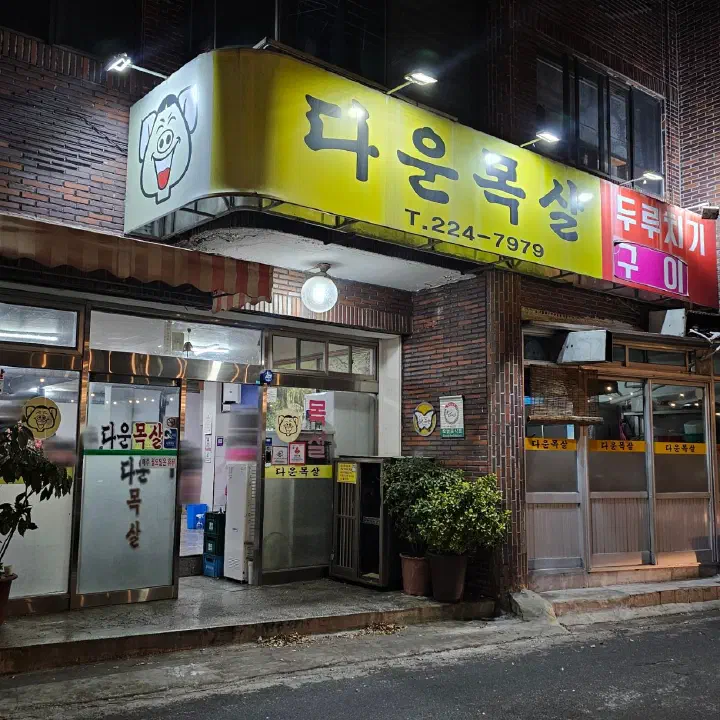
Yellow signboard of Downmok Salgui Restaurant in Daun-dong, Ulsan

The basics

  • Address: 9 Ungok-angil, Jung-gu, Ulsan (다운동 520-7)
  • Phone: 052-224-7979
  • Hours: 11:30 – 21:30
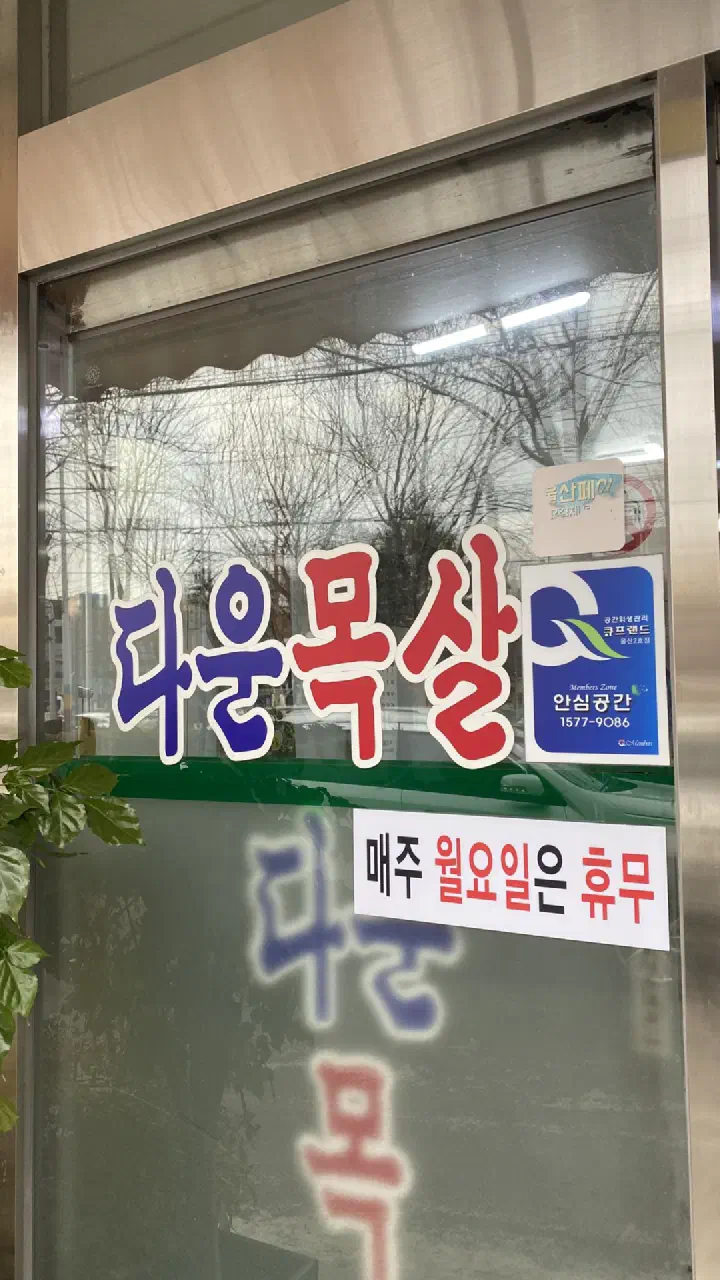
  • Closed: Mondays
  • Parking: No private lot. A church lot a short walk uphill is usually an option.
  • Good to know: Groups and takeout welcome. Restrooms inside, separate for men and women.

📍 View Downmok Salgui Restaurant (다운목살구이식당) on Google Maps →

A quick travel note: Google Maps walking and transit directions can be unreliable in Korea, so I’d download Naver Map or KakaoMap before you go — they’ll get you to the door much more accurately.

Even though the restaurant sits down a side street, the yellow sign is easy to spot from the main road. It’s a weathered old sign, but to me that just added to the charm.

Alley entrance of Downmok Salgui pork restaurant

Getting there and parking

I’ll be upfront about this: parking around here takes a bit of patience.

There’s no dedicated lot, so you park along the alley, and during meal times those spots fill up fast. I went on a Sunday afternoon, when the nearby church traffic made it even worse, and I circled for a while before giving up. There’s a church lot a short walk uphill, and if that’s full too, the Sinsamhogyo public parking lot is about a five-minute walk away. If you’re coming on a weekend, you might just head straight for the public lot and save yourself the loops.

If you don’t have a rental car, this is an easy spot to reach by taxi — the Kakao T app works just like a ride-hailing app and is the simplest way to get a cab in Ulsan.

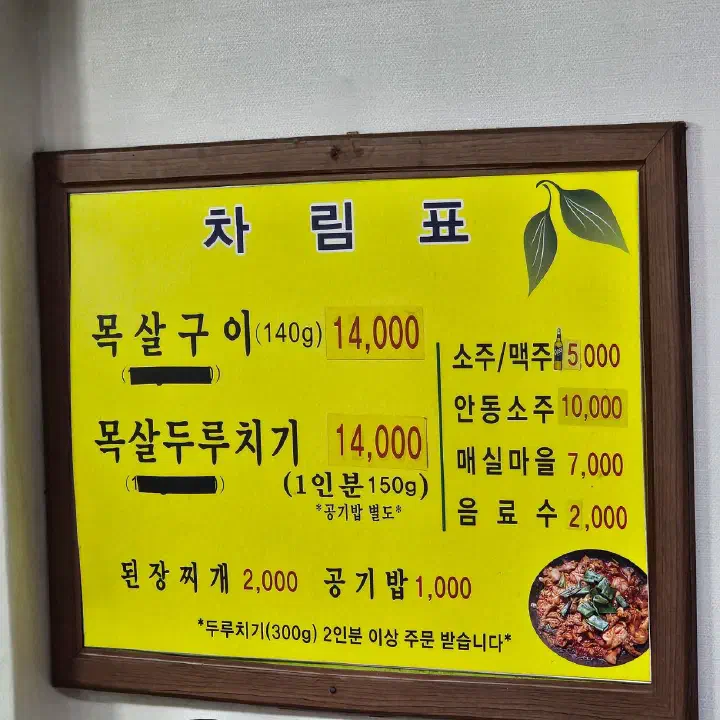
Yellow menu board at Downmok Salgui Restaurant

Inside, it’s bigger than the exterior suggests. I’d pictured a cramped old room, but there are rows of four-top tables and more seating tucked toward the back. There were office groups having work dinners, families with kids, the whole mix.

Because they grill pork at the table, every seat has its own overhead vent, and they’re kept clean. They’ll hand you an apron if you ask, which I appreciated since I had no faith in my ability to eat spicy red food without consequences.

The side dishes set the tone

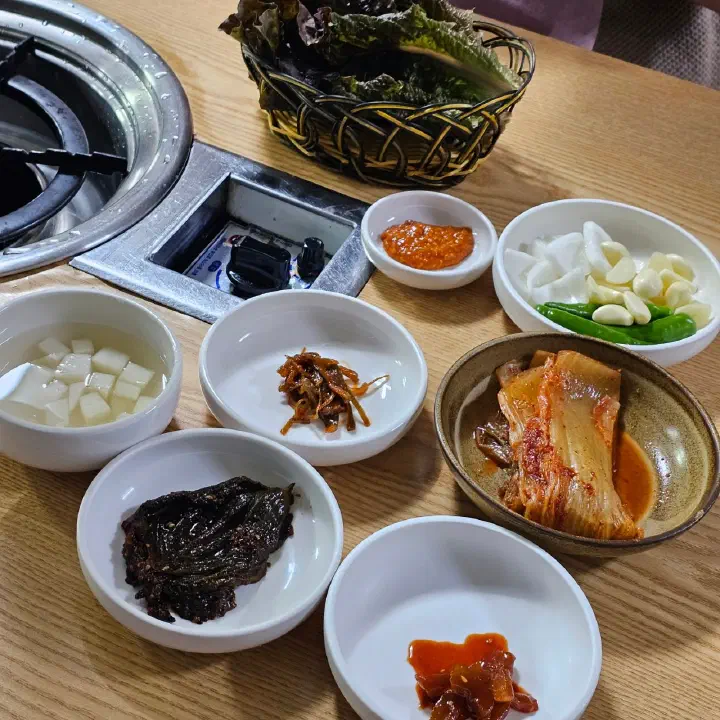
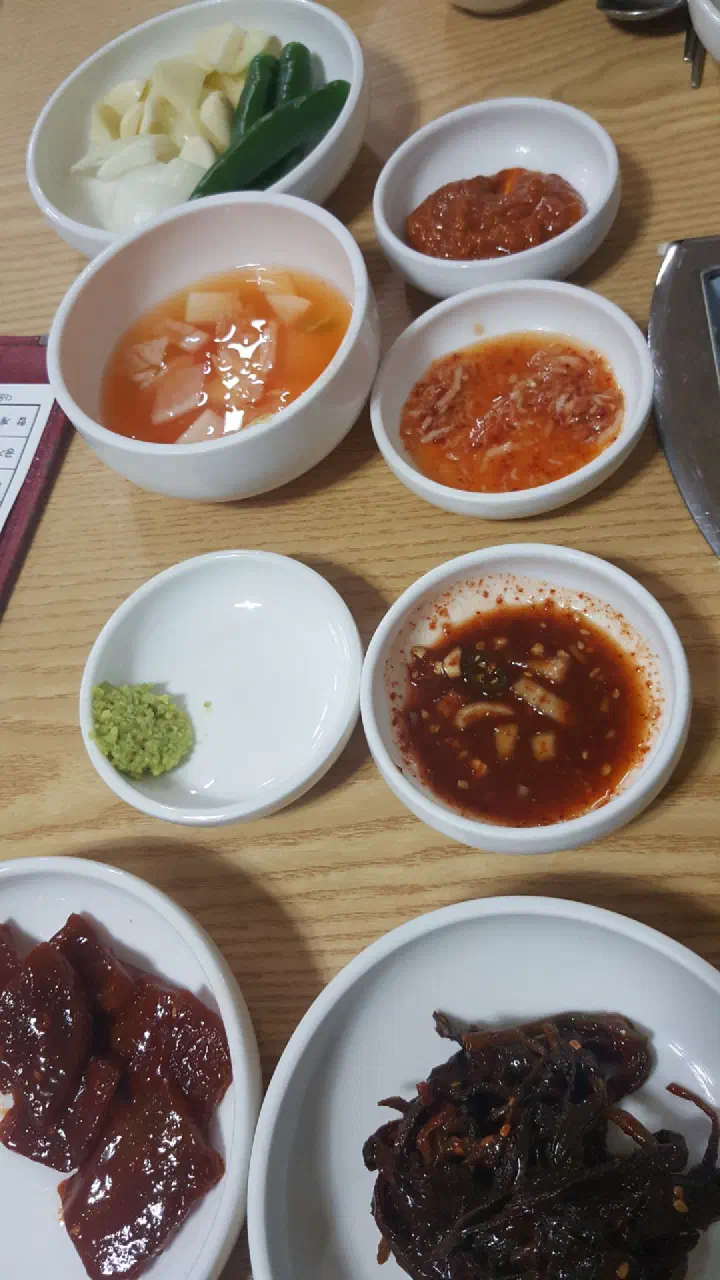
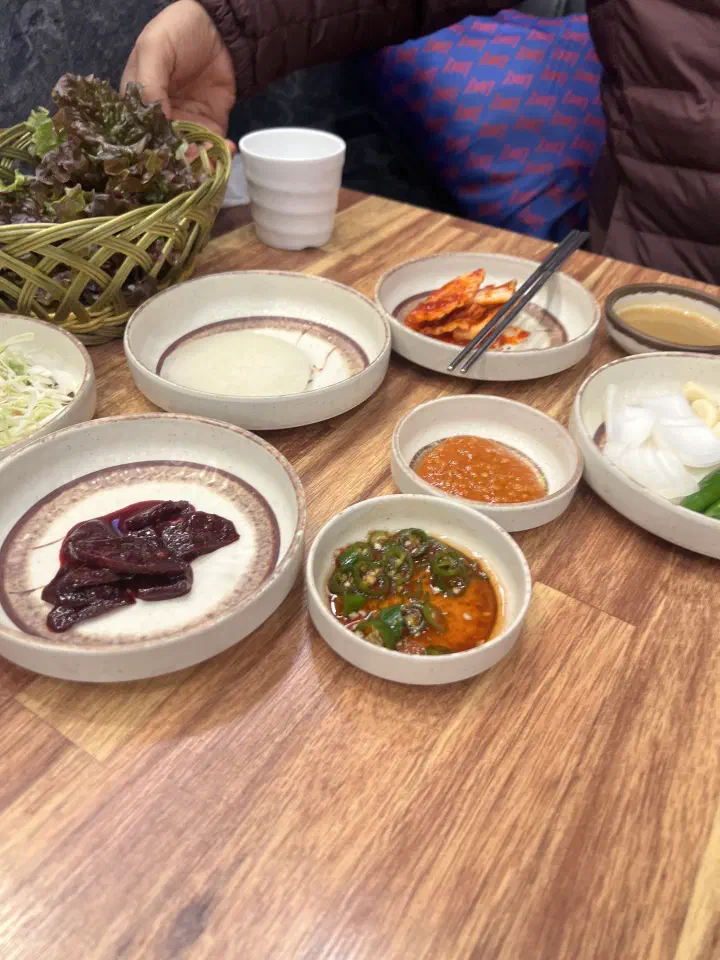
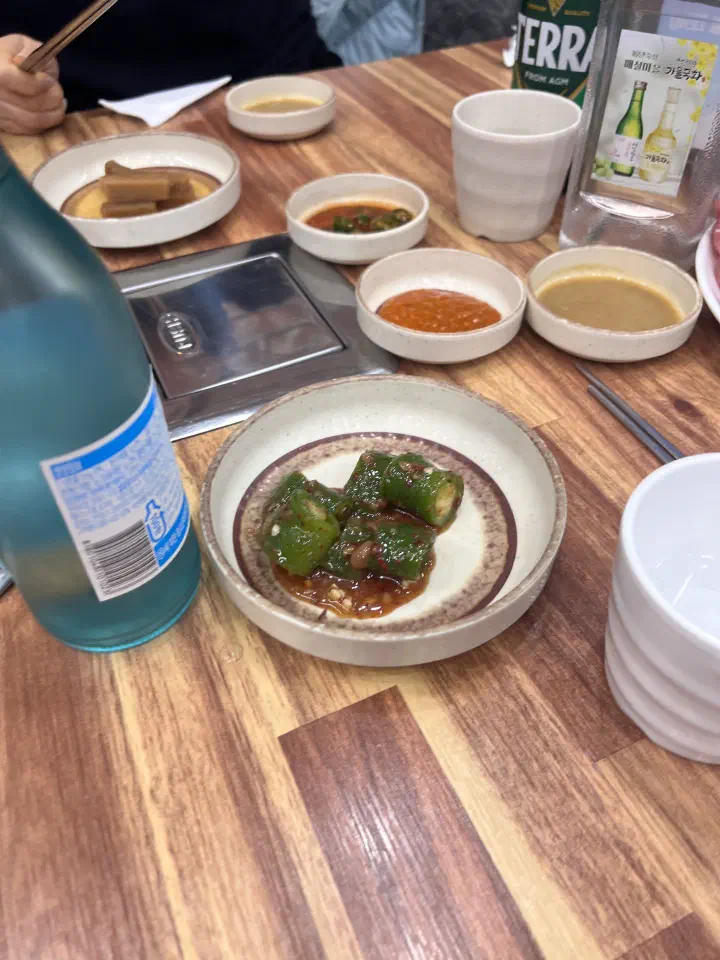
The moment you sit down, a spread of banchan lands on the table — and this is no token gesture. Lettuce for wrapping, garlic, chili, onion, a mild radish water kimchi, well-aged kimchi, and three kinds of jangajji (장아찌, pickled vegetables).

Banchan side dishes at Downmok Salgui Restaurant

The pickles are apparently made with local produce processed near Seoknamsa temple. That day it was perilla leaf, pumpkin, and plum. The plum pickle had a gentle sweetness that played really well against the spicy stir-fry. Honestly, you could eat these pickles over rice and call it a meal.

Jangajji pickles and aged kimchi banchan

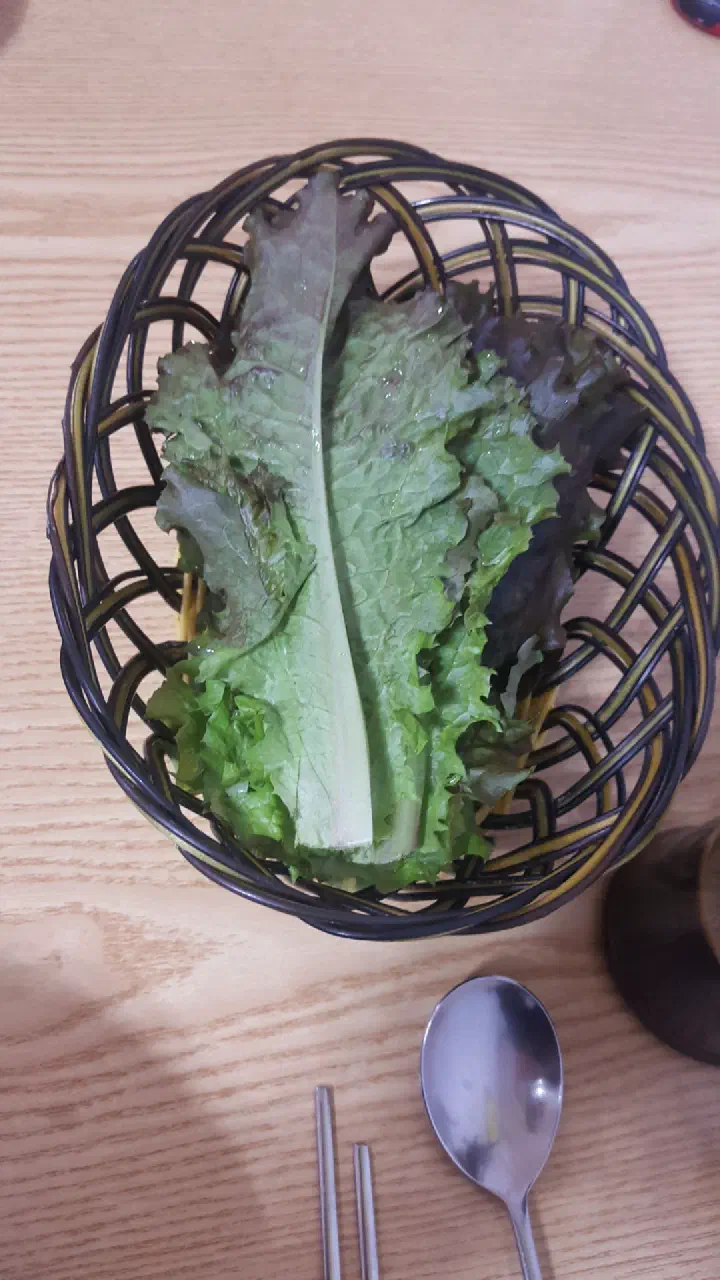
The aged kimchi had none of that funky smell — just clean, properly fermented flavor, the kind that tastes like it came out of a countryside crock. The lettuce was crisp and fresh, perfect for wrapping.

Fresh lettuce and ssam vegetables

Even before the main dishes show up, the spread of banchan alone makes the table feel generous, and it got my hopes up fast.

Generous banchan spread at Downmok Salgui Restaurant

Moksal gui — the texture is the whole point

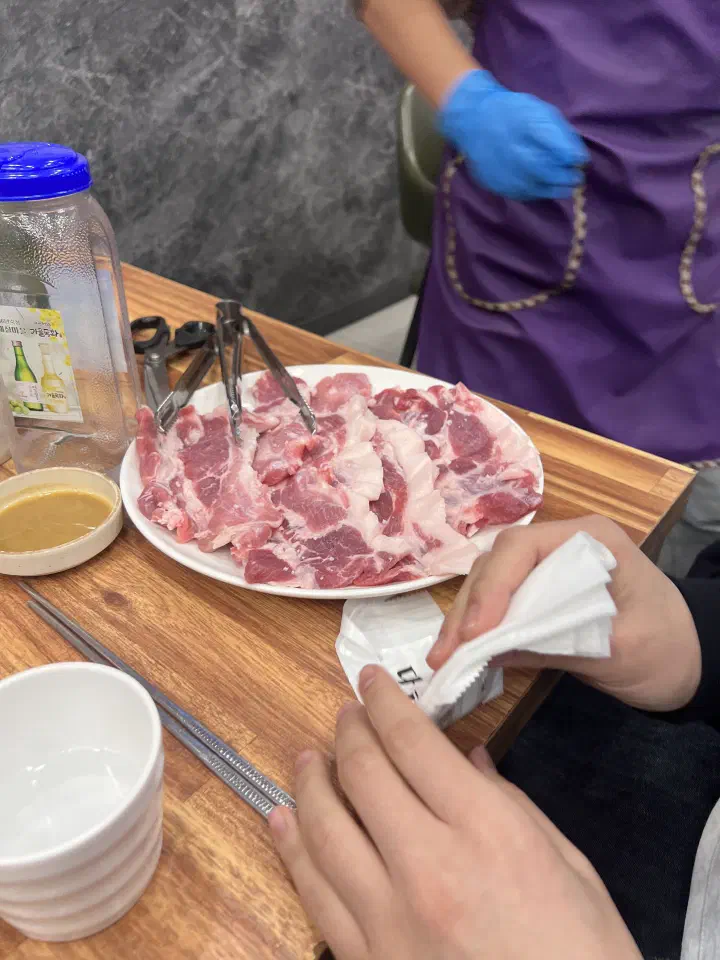
I got greedy and ordered both the grilled pork neck (목살구이) and the stir-fry. The owner kindly portioned things out so we grilled the pork first and moved on to the duruchigi after.

A spread set for grilling pork neck at Downmok Salgui

The pork neck here is nothing like the dry, chewy version you might be picturing. They call it kkodeul moksal (꼬들목살) — pork neck with just enough fat marbled in that it turns springy and chewy as you bite, with this nutty richness. Grilled over a cast-iron plate with holes, it picks up a real smoky edge.

Grilled chewy pork neck on a cast-iron plate

Unlike pork belly, it doesn’t render out a flood of grease, so it never got heavy even after a lot of pieces. A little coarse salt while grilling, then a dip in the house sauce — a mustard-colored dip that isn’t sharp at all, just faintly sweet — and the flavor of the meat really came forward.

They also grill a piece of aged kimchi alongside the pork, and eating that straight off the plate was its own little treat.

Moksal duruchigi — the rice-thief

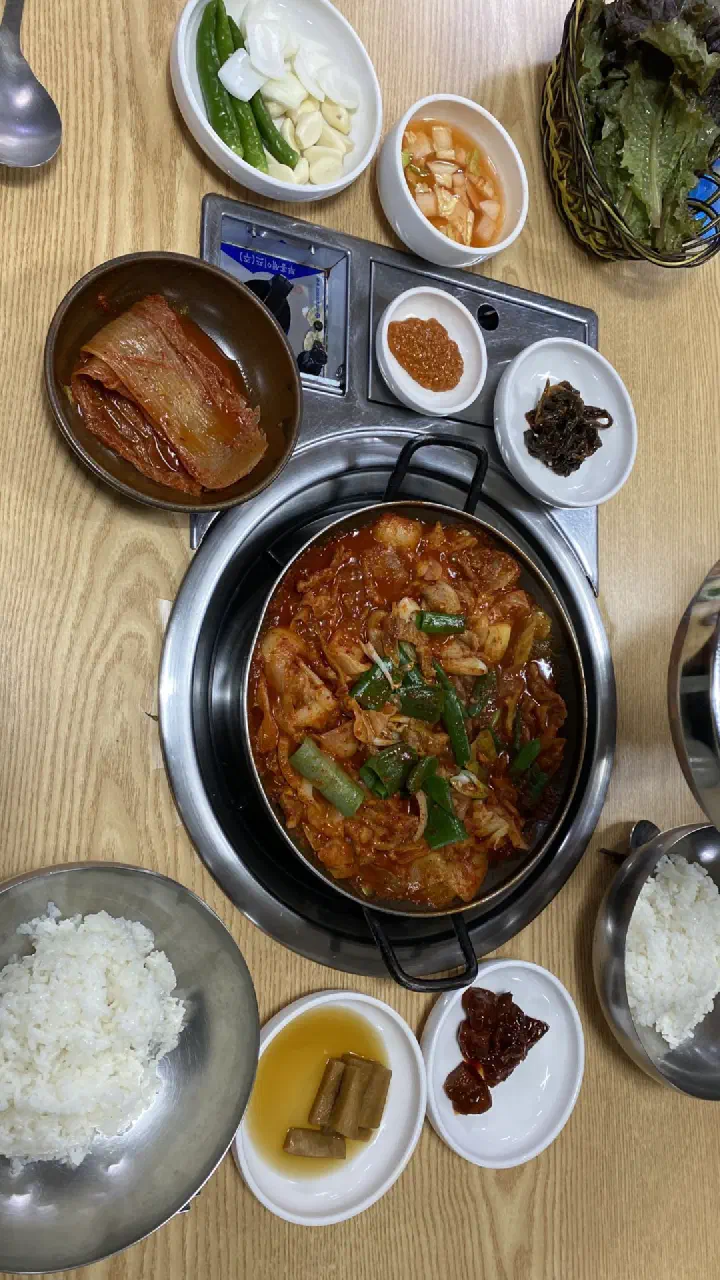
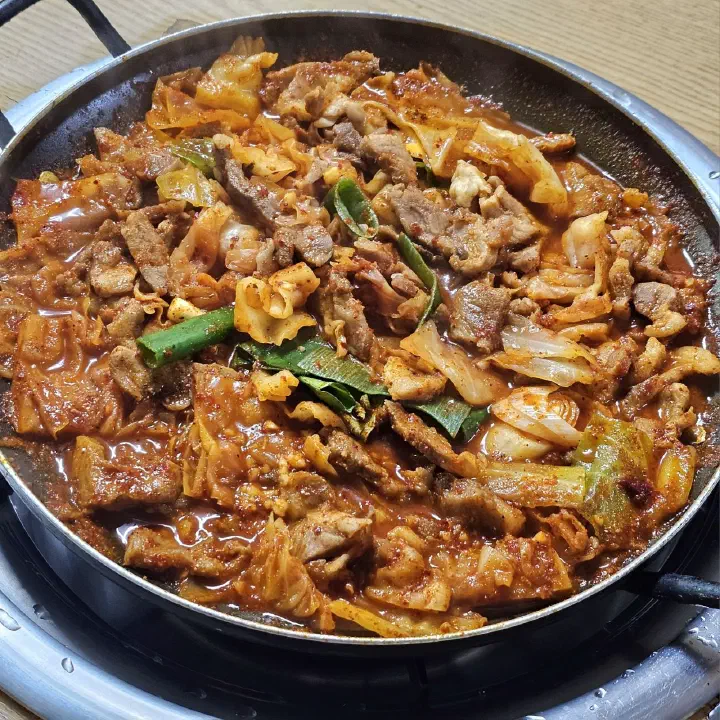
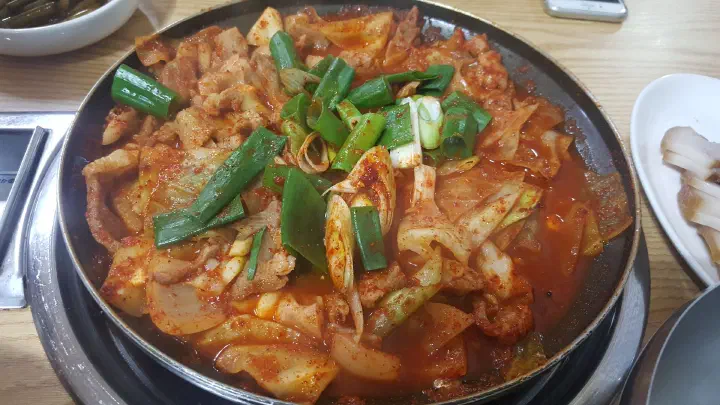
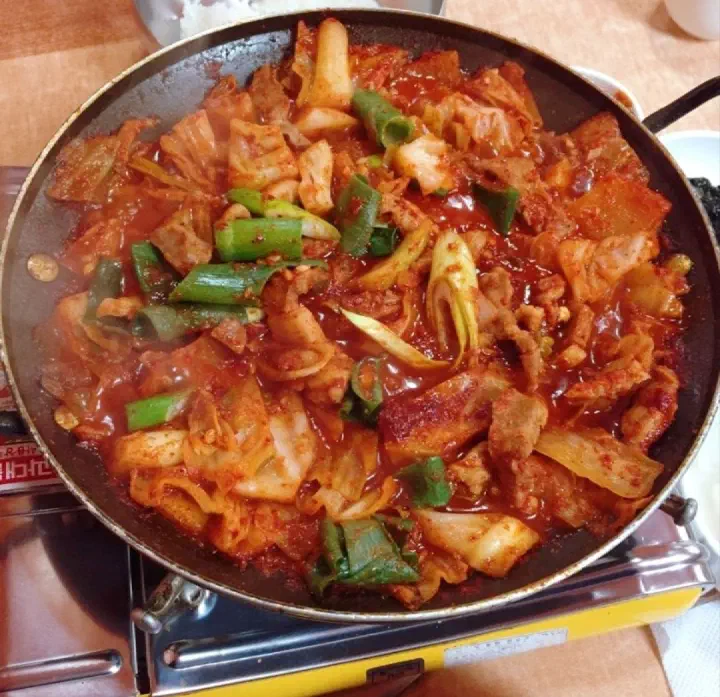
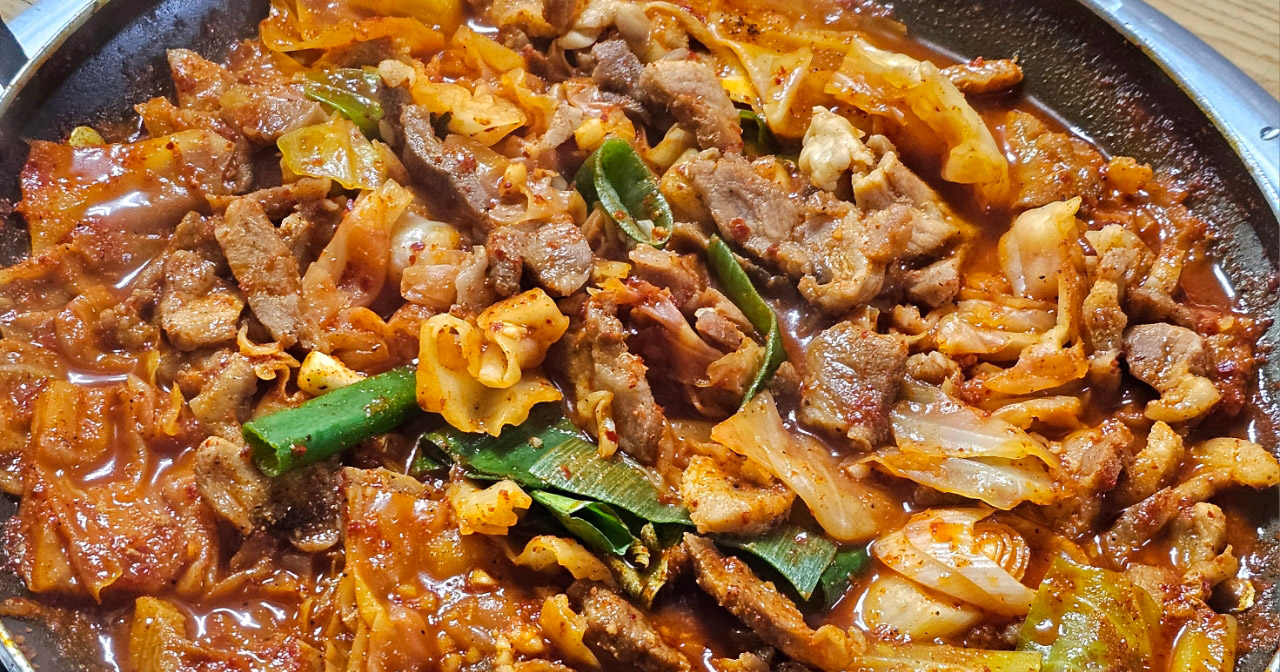
If the grilled pork is the pride of the house, the spicy pork neck stir-fry (목살두루치기) is what made this place famous. It arrives mostly cooked, so you just warm it through over the flame and dig in.

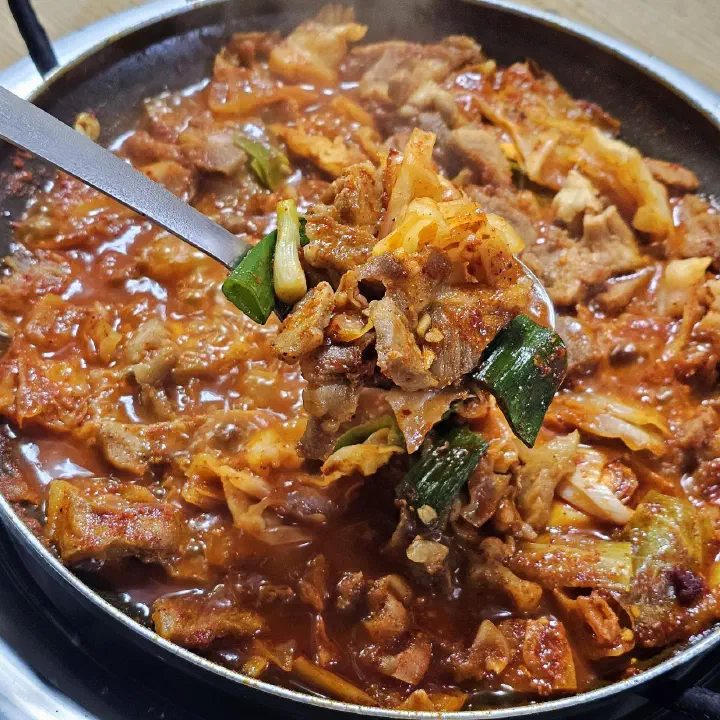
Close-up of spicy moksal duruchigi

It’s loaded with pork, cabbage, onion, and scallion, with just enough sauce pooling at the bottom that it deepens as it simmers down.

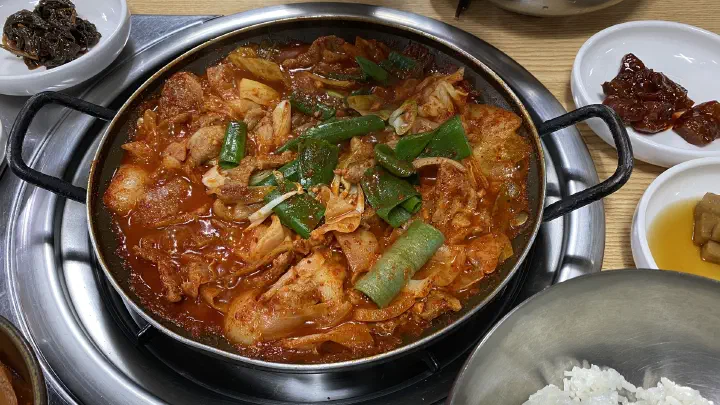
Bubbling pot of moksal duruchigi

The sauce is the star. That bright red looks like it might set your mouth on fire, but it’s more peppery and savory than scorching. One thing worth knowing if you’re not used to Korean spice: even dishes Koreans call “mild” can read as quite hot to a lot of visitors. This one didn’t leave my tongue burning, but it has a real backbone — go in with that in mind. It’s that sweet-salty pull that keeps your chopsticks moving.

Moksal duruchigi loaded with pork and vegetables

Here’s a local trick: take the aged kimchi from the banchan, snip it up with the scissors they give you, and simmer it right into the stir-fry. The kimchi soaks up the sauce and the whole thing rounds out beautifully.

Punchy red-sauced moksal duruchigi

If you find the sauce a touch sweet, you can ask the owner to make it spicier when you order. I had it as-is and it was plenty punchy for me. And don’t worry if you don’t speak Korean — you can just point at what you want on the menu and hold up fingers for how many portions. It’s genuinely that easy.

Vivid red spicy pork neck stir-fry

You have to mix it into rice

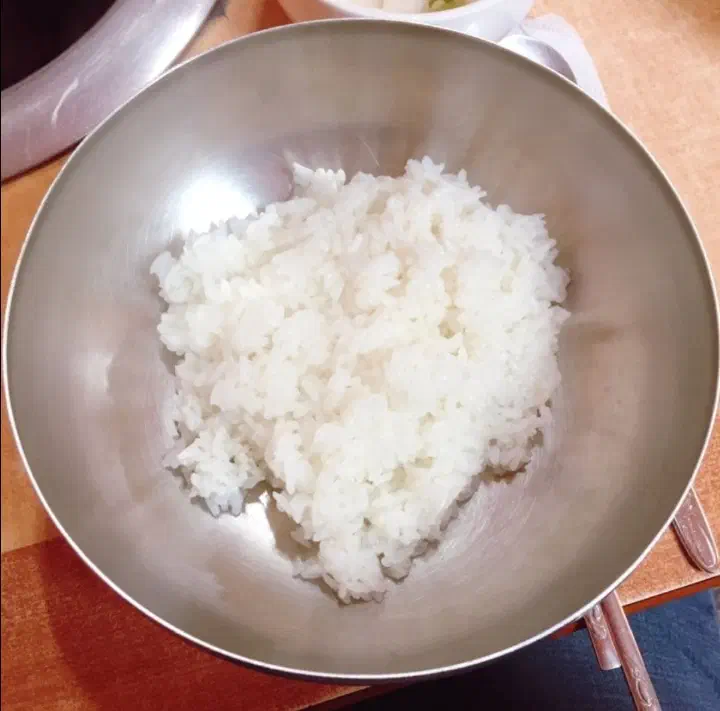
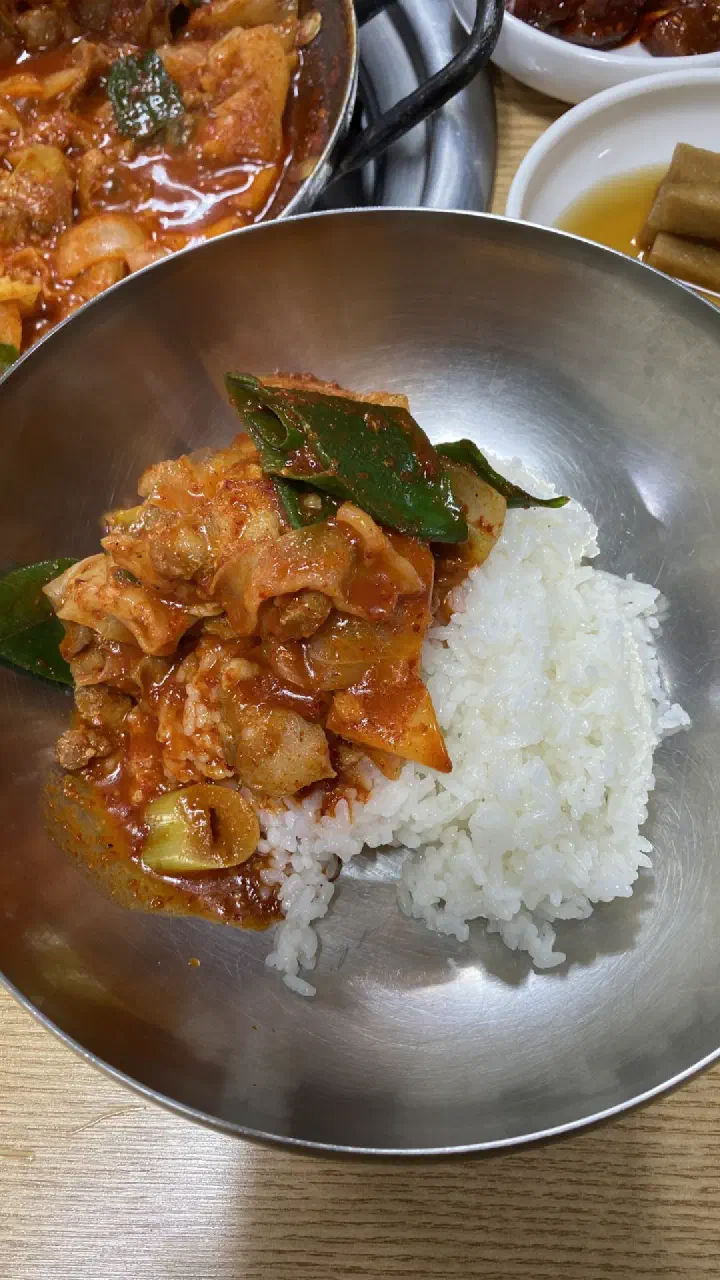
When you order the first bowl of rice, it comes in a wide bowl rather than the usual small one — the owner’s quiet way of telling you to mix everything together.

Wide rice bowl for mixing with duruchigi

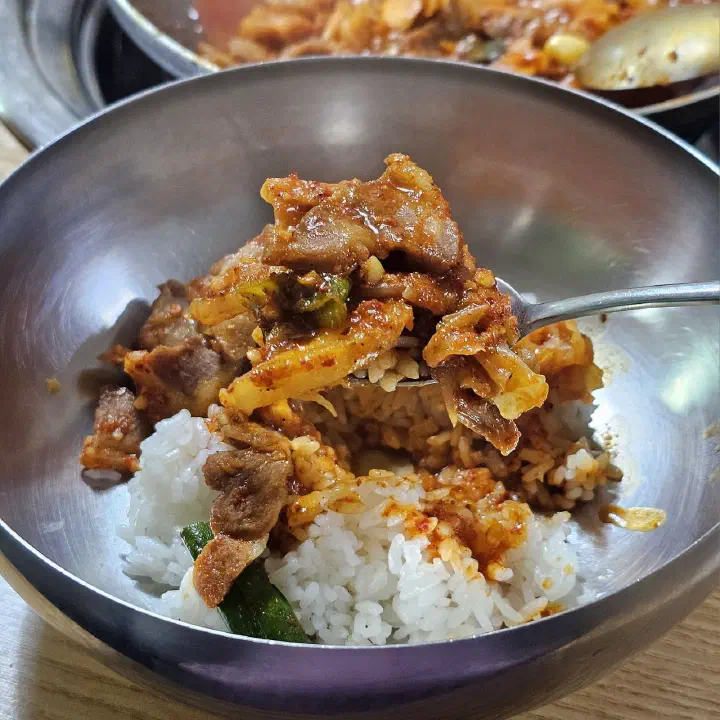
Pile on the pork and vegetables, spoon in some of that sauce, give it a good stir, and one bowl honestly isn’t enough.

Moksal duruchigi mixed into rice

The sauce is on the bolder side, so it’s all about getting the ratio right when you mix. My favorite move was mixing it into rice and then wrapping that in a lettuce leaf — perfectly seasoned, full of umami, and I scraped the bowl clean. Refill bowls come in the normal small rice bowl, by the way.

A bowl of moksal duruchigi mixed rice

The quiet hero: doenjang jjigae

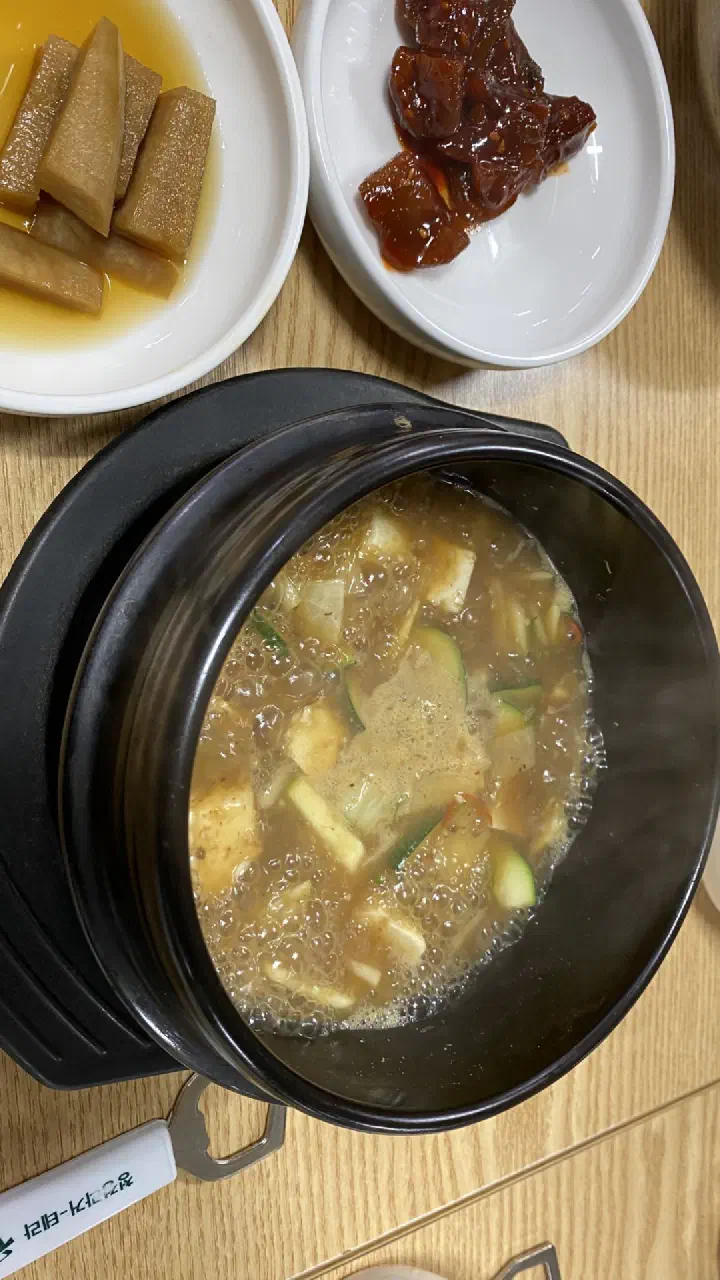
Skip the soybean stew here and you’ll regret it. It’s only 2,000 won, and it is absolutely not the generic stew you get at most grill houses.

Savory homemade doenjang jjigae at Downmok Salgui

This is the deeply savory, old-fashioned kind — the sort a grandmother would ladle out from soybean paste she’d fermented herself. A bite of pork followed by a spoonful of this stew was such a good rhythm that, if I’m honest, I thought about the stew more than the grilled pork afterward. The earthy aroma is strong, so it might split opinions, but I was completely sold.

A full table spread with pork at Downmok Salgui

Final thoughts

Prices have crept up over the years, that’s true. Both the grilled pork and the stir-fry are 14,000 won, with rice charged separately, so it’s not exactly a budget meal.

But there’s a clear reason the neighborhood has stuck with this place for over a decade. Chewy pork neck, a stir-fry that disappears your rice, a stew that tastes like home, and side dishes made with real care. If you find yourself around Jung-gu in Ulsan, it’s well worth a detour.

A couple of practical notes for travelers: like nearly every restaurant in Korea, this place takes cards, so any internationally accepted card should be fine. And there’s no tipping culture here — you don’t need to leave anything, and trying to tip might just leave the staff a little puzzled.

Location / Getting there

It’s down a lane off the Daun intersection — look for the yellow sign from the main road. If street parking won’t work out, the Sinsamhogyo public lot is about a five-minute walk away.

📍 View Downmok Salgui Restaurant (다운목살구이식당) on Google Maps →