Whenever I have something to do around Eonyang in Ulsan, there’s one place I almost always end up at.
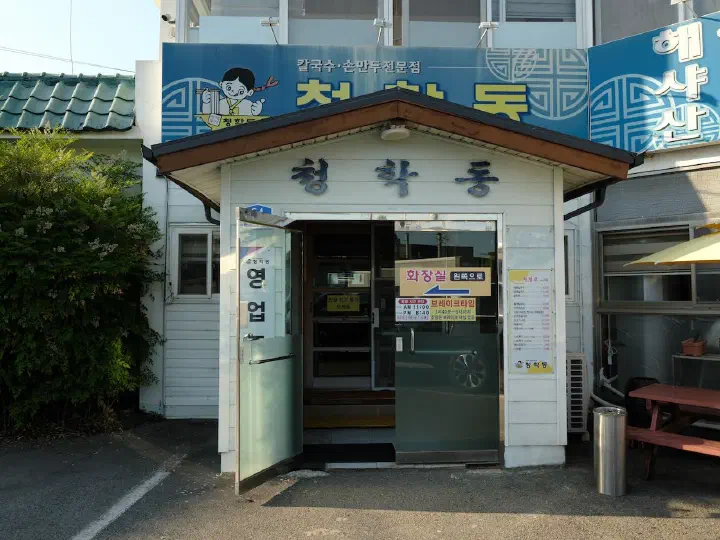
It’s Cheonghakdong Eonyang Bonjeom (청학동 언양본점).
On paper it’s a kalguksu and handmade dumpling shop, but the real reason my family keeps coming back is the shabu-shabu.

The basics
Here’s the practical stuff first.
The address is 64 Seomun-gil, Eonyang-eup, Ulju-gun, Ulsan.
They open at 11 a.m. and close at 8:40 p.m., with last order at 7:50 p.m.
There’s a daily break time from 3:40 to 5 p.m., though it’s dropped on weekends.
They’re closed on Mondays, so don’t make my old mistake of showing up on a Monday to a locked door.
There’s also a break time from 3:40 to 5 p.m., so it’s best to avoid that window.
One small but useful tip: in Korea, Google Maps walking and transit directions can be unreliable. Use Naver Map or KakaoMap instead, and if you need a taxi, the Kakao T app works well.
📍 View Cheonghakdong Eonyang Bonjeom (청학동 언양본점) on Google Maps →
Make sure it’s the Eonyang main branch
There’s another Cheonghakdong kalguksu in Guyeong-ri, and confusingly that one tends to come up first when you search.
The original is this one in Eonyang, so search specifically for “Cheonghakdong Eonyang Bonjeom” so you end up at the right place.
Getting here is easiest by car. The yard in front is large, so parking is never a problem.
I came around lunchtime on a weekday and still found a spot.
If you’re coming without a car, the closest hub is Ulsan KTX station (in Eonyang itself), and a short taxi ride from there will get you here.

Something has changed since my earlier visits.
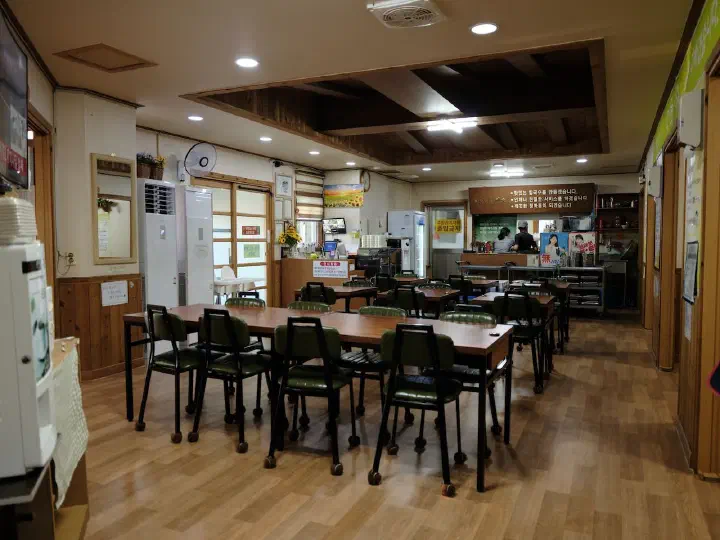
It used to be floor seating where you took your shoes off at the door.
Now it’s all chairs and tables, and you keep your shoes on.
Honestly, I was glad. Floor service is hard on the staff, who have to crouch and stand all day, and my own knees are happier in a chair too.
The kimchi here is the real deal
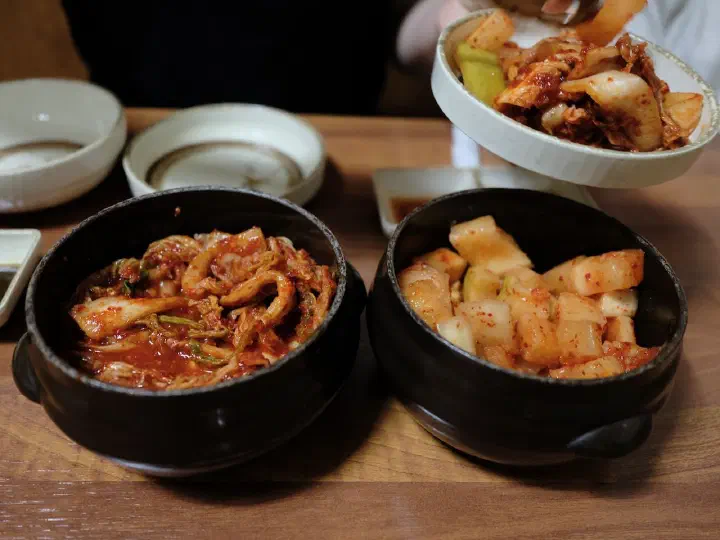
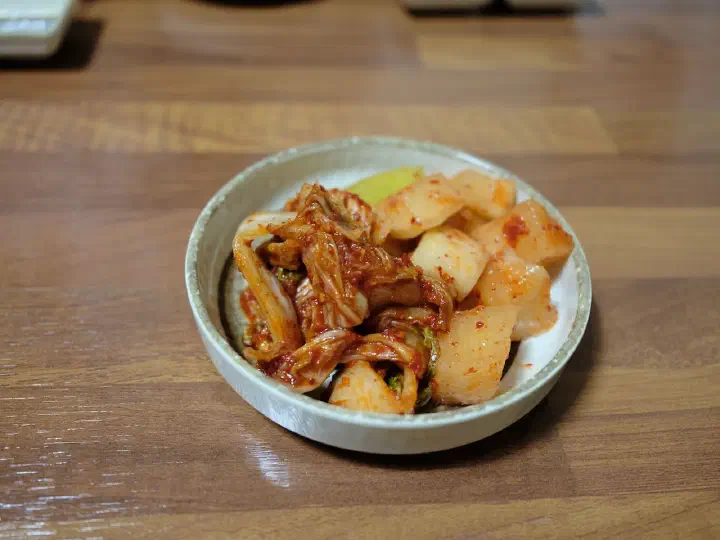
When you sit down, they bring cold water along with kimchi and kkakdugi (cubed radish kimchi).
There’s a note on the wall asking you to take “only as much as you’ll actually eat.”

They make the kimchi in house, and it tastes like a fresh-tossed geotjeori (겉절이), crisp and not over-seasoned.
It goes with everything here, whether you’re eating noodles or the rice porridge at the end.
I tend to think a place with good kimchi makes good food in general, and this spot proves it.
The kkakdugi is cool and crunchy too, and I keep reaching for it.
Beef shabu-shabu, seafood broth
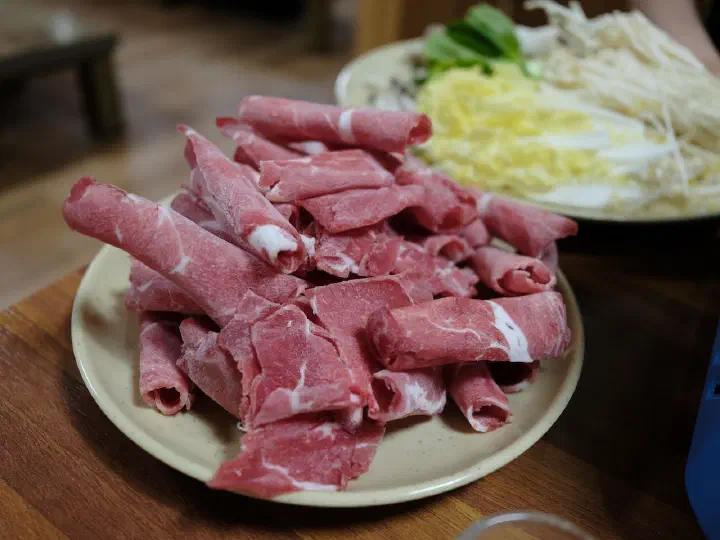
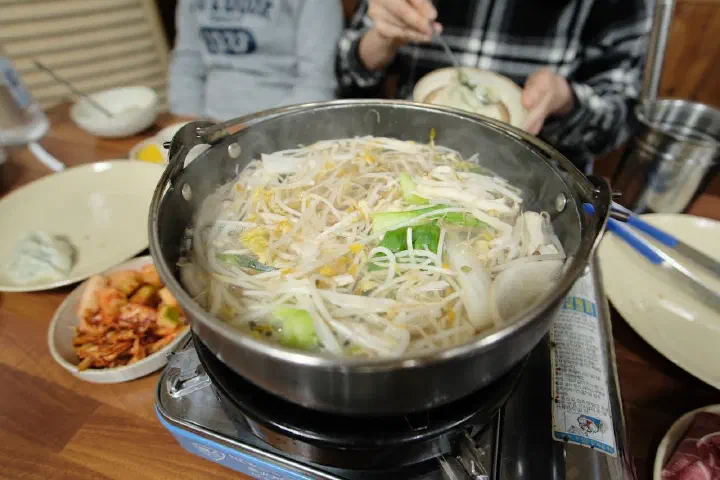
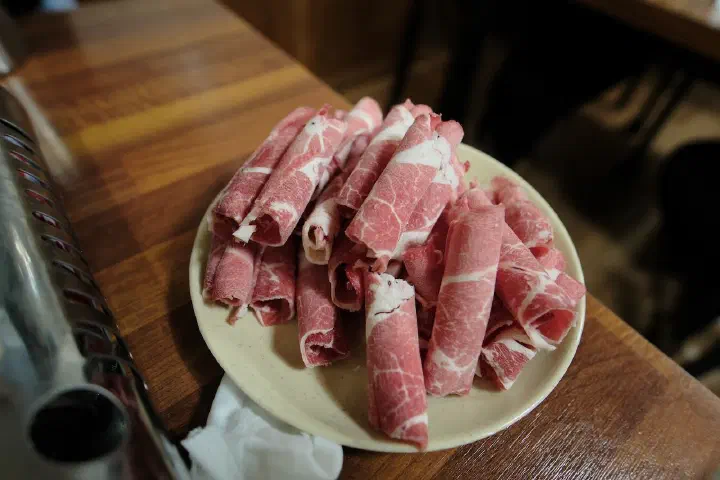
We always get the sogogi shabu-shabu (소고기 샤브샤브, beef shabu-shabu).
One order already includes the shabu rice, noodles, and vegetables, which makes it a genuinely good deal.
It’s my husband and me with our two elementary-school kids, and three orders is plenty for us.
On really hungry days, just add a portion of noodles for 2,000 won and you’re set.

You choose between a seafood broth (haemul, 해물) and a spicy broth.
We almost always go with the seafood broth because we usually eat with the kids.
The spicy one isn’t extreme, but Korean “not that spicy” can still surprise visitors, so if you’re not used to Korean heat, the seafood broth is the safer, and honestly tastier, call.
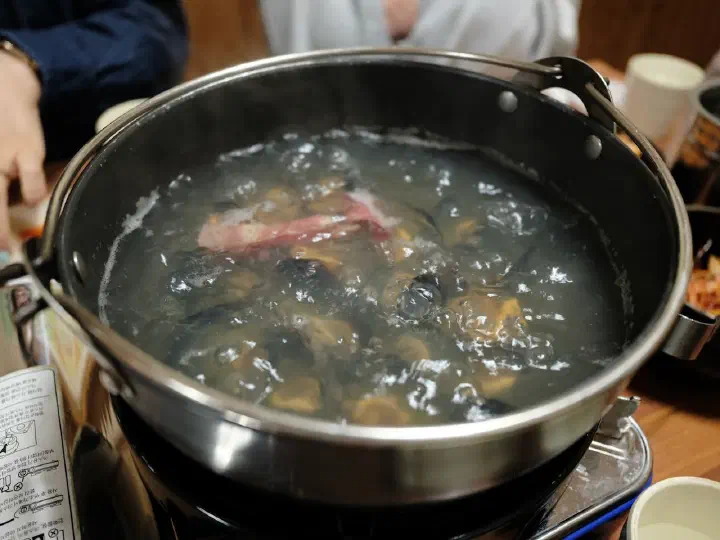
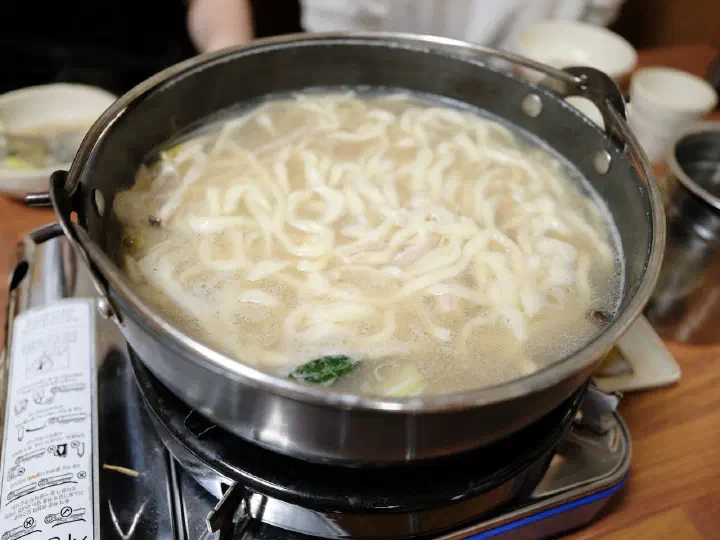
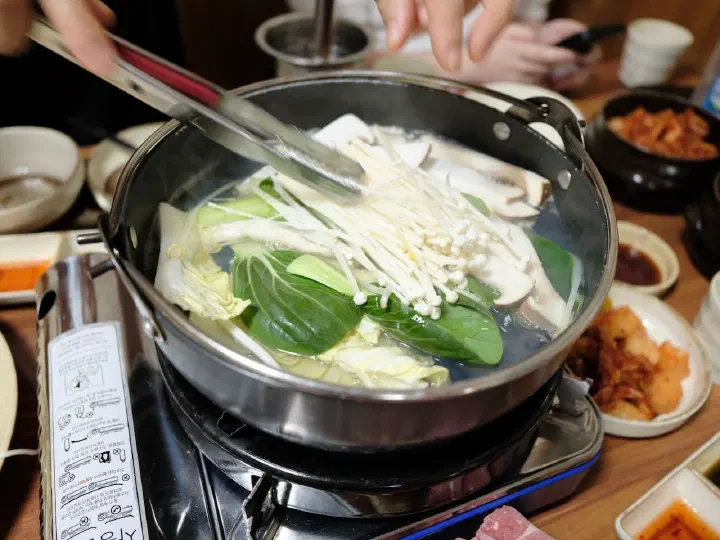
The seafood broth has mussels in it, and the longer it simmers, the deeper it gets.

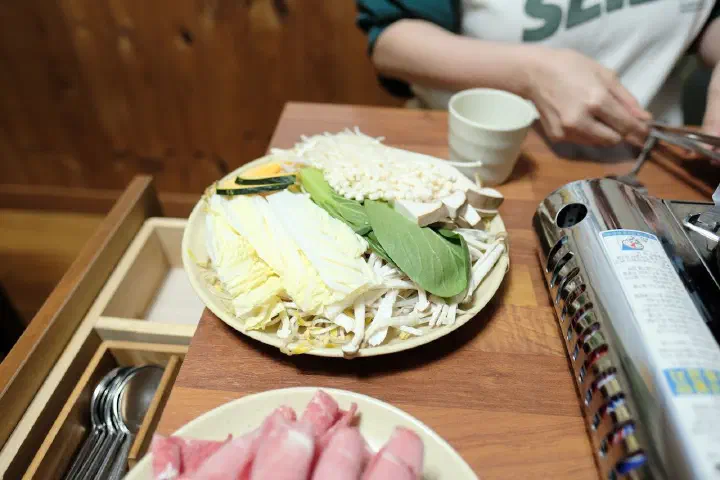
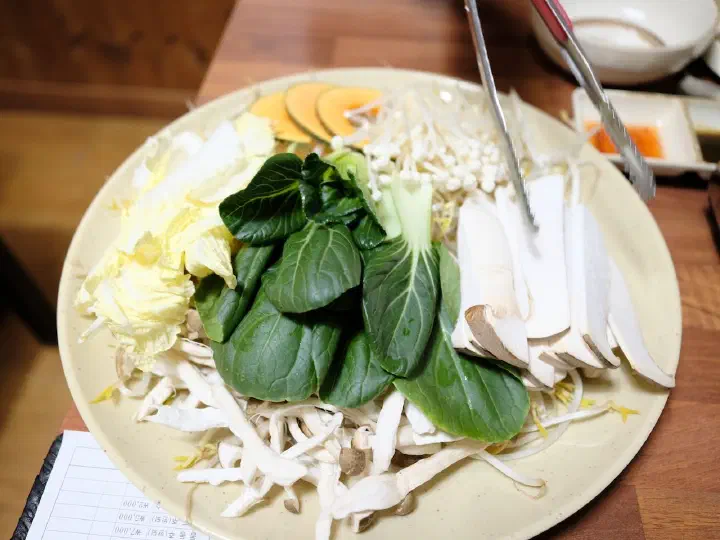
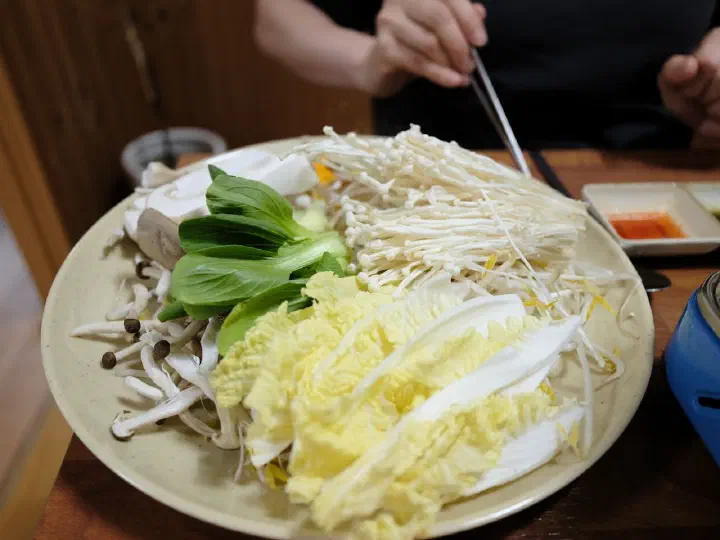
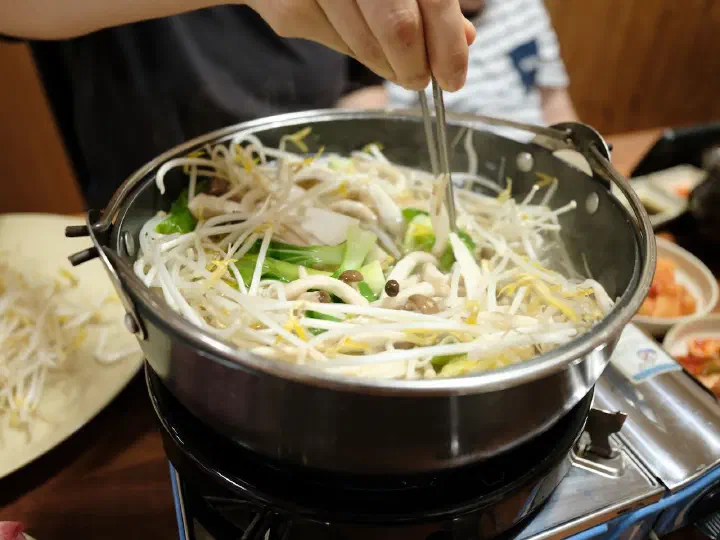
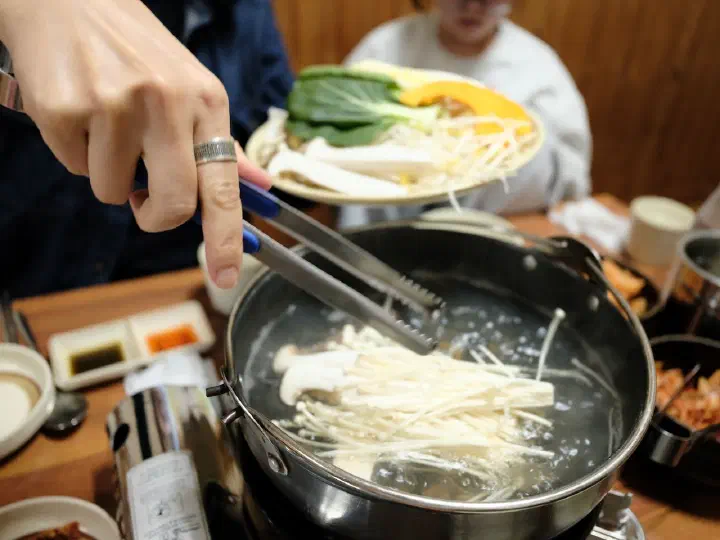
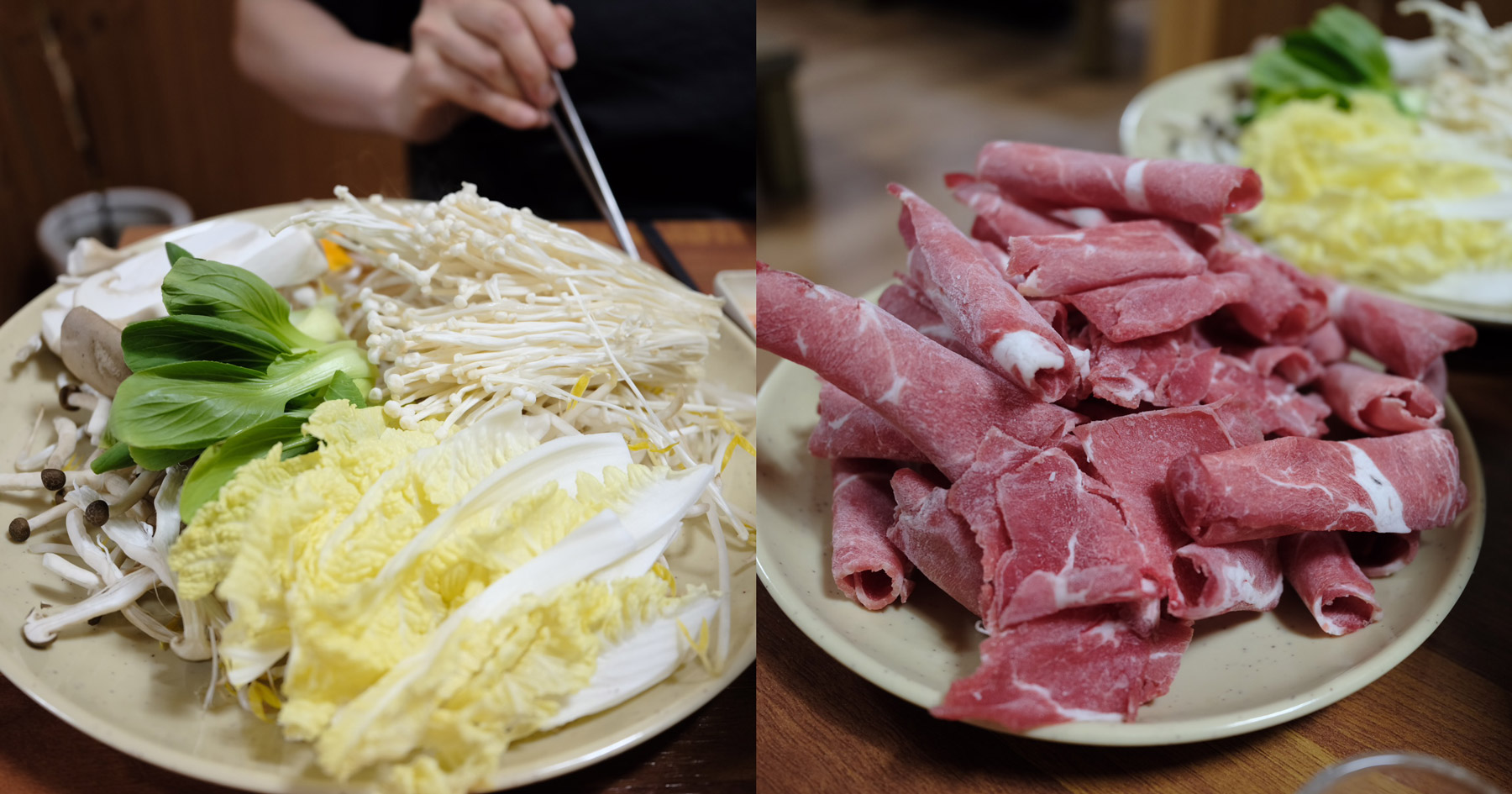
The vegetables come as enoki, king oyster and oyster mushrooms, bok choy, baby napa cabbage, bean sprouts, and a little kabocha pumpkin.
I used to love piling things up at a salad bar, but these days I prefer a plate that’s just the right amount, like this one.

The broth arrives hot, so it comes back to a boil quickly.
Drop the vegetables in first, then add the beef as they cook.

Add the beef a little at a time rather than all at once.
Layer some bok choy, a leaf of napa cabbage, mushrooms, sprouts, and beef, wrap it together, and dip it in the wasabi-soy sauce. That bite is the whole point.

The broth stays clean but picks up a lovely savoriness from the mussels, and I just keep ladling it.
We’ve ordered an extra round of beef before because the first wasn’t enough.
The sauces are a chili sauce and a soy-wasabi; I’m firmly on team soy-wasabi.

Don’t skip the noodles and the dumplings
Since this started as a kalguksu (칼국수, knife-cut noodle) shop, there’s a good range of noodles.
You’ll find haemul kalguksu (해물칼국수, seafood), deulkkae kalguksu (들깨칼국수, perilla), and naengkong kalguksu (냉콩칼국수, chilled soy-milk).
With the shabu-shabu you get a portion of noodles too, already partly cooked, so you’re not waiting long.

Slide the noodles into the broth, cook them just a touch, and slurp. Even plain noodles taste great because the broth carries them.
Plenty of people come just for a bowl of kalguksu, and the deulkkae (perilla) one in particular has a reputation for being wonderfully nutty.
And then there are the dumplings, which I genuinely love.
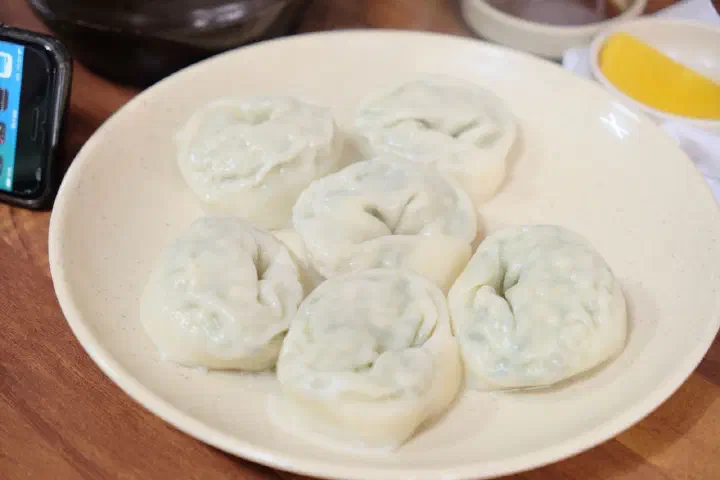
Cheonghakdong folds its mandu (만두) by hand, and they’re so good.

The wrappers are thin and soft, packed with garlic chives and pork inside.
There’s a little hit of black pepper as you bite in, and it’s just savory and comforting.
Ordering a plate of wang mandu (왕만두, king dumplings) while you wait for the shabu-shabu is never a mistake.
If you want rice, the sanchae bibimbap (산채비빔밥, mountain-vegetable rice bowl) is a nice option too.
Plenty of namul, ready to mix.

Finish with porridge or kimchi fried rice
The real ending to shabu-shabu is the rice.
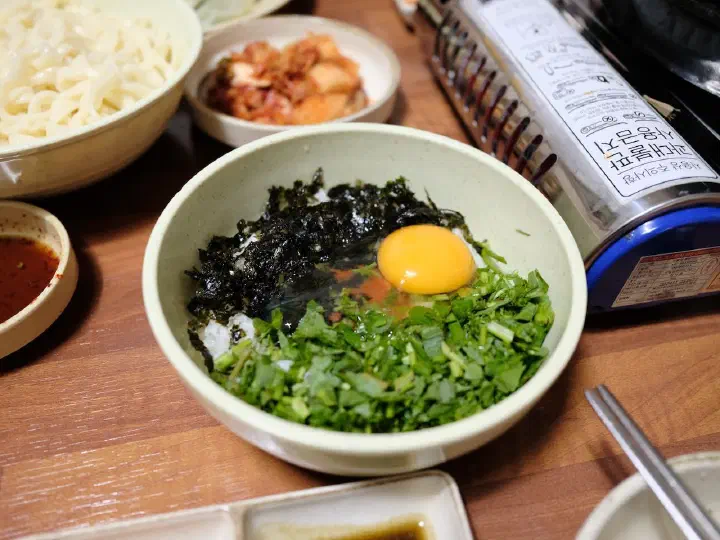
Once you’ve fished out the vegetables and eaten the noodles, you add the shabu rice.

The rice comes with minari (water dropwort), seaweed flakes, a raw egg yolk, and a drizzle of sesame oil.
Leave a little broth, add the rice, stir the yolk through, and simmer it into a porridge (juk).

Here’s my own little trick.
When I want it more like fried rice than porridge, I reduce the broth and chop in some of the leftover napa kimchi.
It turns into a kind of kimchi fried rice.
Porridge or fried rice, that final course alone is reason enough to come.

Menu and prices
Prices here have always been gentle.
They’ve crept up with inflation, of course, but it’s still cheaper than most comparable places.
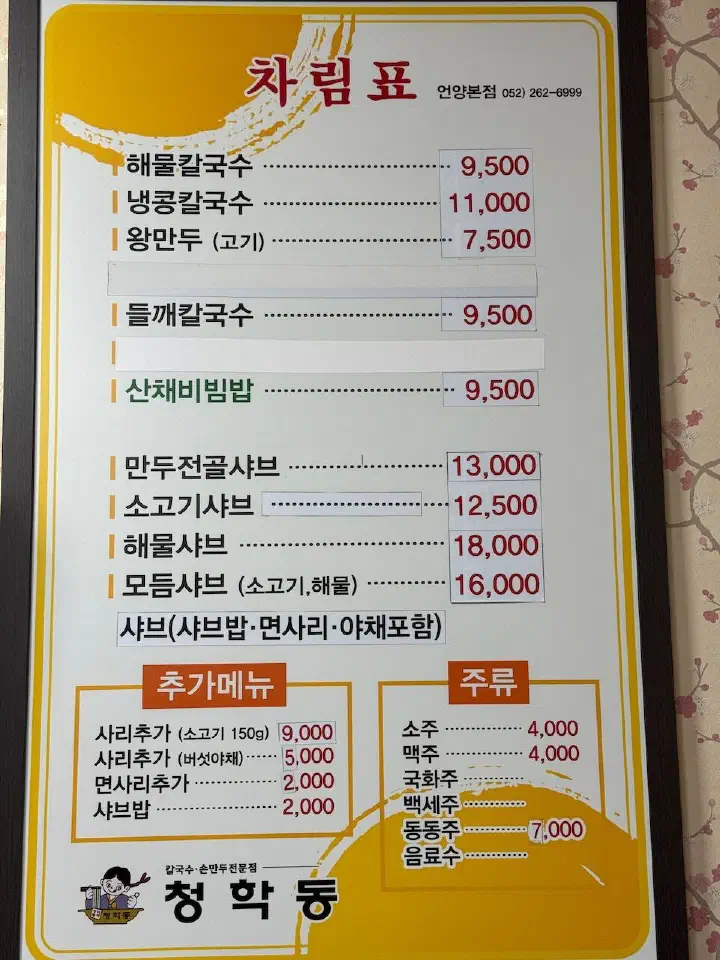
Ordering is easy even if you don’t speak Korean. The menu is on the wall, and you can point at what you want and hold up a couple of fingers.

- Haemul kalguksu (seafood noodle soup) — 9,500 won
- Deulkkae kalguksu (perilla noodle soup) — 9,500 won
- Naengkong kalguksu (chilled soy-milk noodles) — 11,000 won
- Wang mandu (king dumplings, pork) — 7,500 won
- Sanchae bibimbap (mountain-vegetable rice bowl) — 9,500 won
- Mandu jeongol shabu (dumpling hotpot shabu, per person) — 13,000 won
- Sogogi shabu (beef shabu-shabu) — 12,500 won
- Modum shabu (beef and seafood) — 16,000 won
- Haemul shabu (seafood shabu) — 18,000 won
The shabu sets include the shabu rice, noodles, and vegetables.
You can add extras too: 150g of beef for 9,000 won, mushrooms and vegetables for 5,000, extra noodles for 2,000, and extra shabu rice for 2,000.

A couple of practical notes for visitors: cards are fine here, and any internationally accepted card should work without trouble. And there’s no tipping culture in Korea, so you don’t need to leave one. If you try, the staff may just be confused.
Final thoughts
I’ll be honest, when it’s busy the food can take a while to come out.
But I keep coming back for three things: the kimchi, the handmade dumplings, and that seafood broth.
It’s good value, and it’s an easy place to bring kids or parents.
If you’re passing through Eonyang and want a warm, hearty meal, Cheonghakdong Eonyang Bonjeom is an easy one to recommend.

Getting there
It’s at 64 Seomun-gil, Eonyang-eup, Ulju-gun, Ulsan.
It’s near central Eonyang, not hard to find, and with that big lot, driving is the easy option.
📍 View Cheonghakdong Eonyang Bonjeom (청학동 언양본점) on Google Maps →