If you ever find yourself in Ulsan looking for a special dinner, there is one Japanese restaurant locals keep coming back to: Haebaragi (해바라기), tucked into a quiet street in Samsan-dong.
The name means “sunflower” in Korean, and the place has a calm, grown-up energy that feels right for anniversaries, parents’ birthdays, or simply a slow evening out.
This time I went for the 90,000 KRW omakase course, and I wanted to write down exactly what to expect.

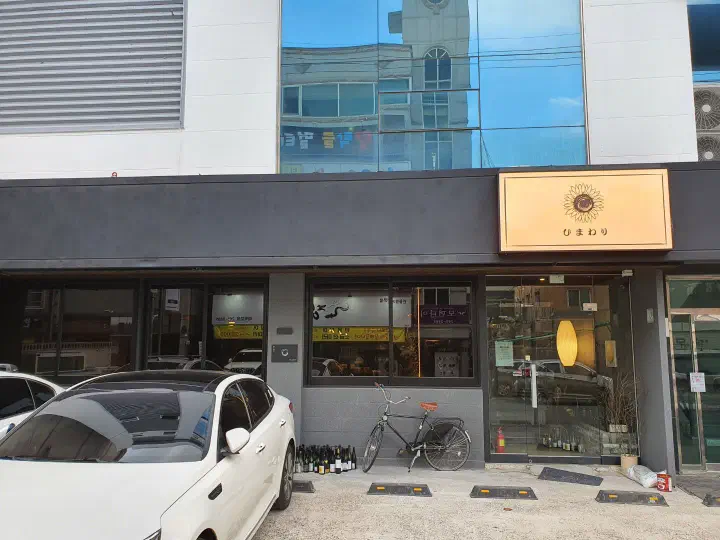
Haebaragi signboard glowing at night in Ulsan

Where it is and how to get there

Haebaragi sits in a quiet alley behind the Ulsan Intercity Bus Terminal, in the Samsan-dong neighborhood of Nam-gu.
It is not on a main street, so I would recommend punching the Korean address into Naver Map or KakaoMap and following the directions.
The sunflower-shaped sign lights up at dusk and is easy to spot once you turn into the alley.

  • Address: 1F, 10 Dalsam-ro 72beon-gil, Nam-gu, Ulsan (울산광역시 남구 달삼로72번길 10 1층 해바라기)
  • Hours: Mon–Sat 5:30 PM – 12:00 AM (last order 11:00 PM)
  • Closed: Every Sunday
  • Phone: 0507-1323-4813

📍 View Haebaragi (해바라기) on Google Maps →

Haebaragi exterior in the early evening

I made my reservation through CatchTable (캐치테이블), Korea’s most popular restaurant booking app.
It is in Korean, but the flow is simple and Google Translate handles it well.
Booking through CatchTable also took 5,000 KRW per person off the price, so the 90,000 KRW course came down to 85,000 KRW.
For weekends or any private room, I would book at least a week in advance.

There are only two or three parking spaces in front of the building, and they fill up fast.
If you are driving, the public parking lot nearby or the Lotte/Hyundai department store lots are easier.
A taxi from anywhere in central Ulsan is cheap (usually under 10,000 KRW) and removes the stress entirely.

A quick note for international guests: almost every restaurant in Korea, including this one, accepts Visa and Mastercard without any issue.
Tipping is also not part of Korean dining culture at all, so please don’t leave one — staff are paid a full wage and may feel awkward if you try to hand over extra cash.

Inside the restaurant

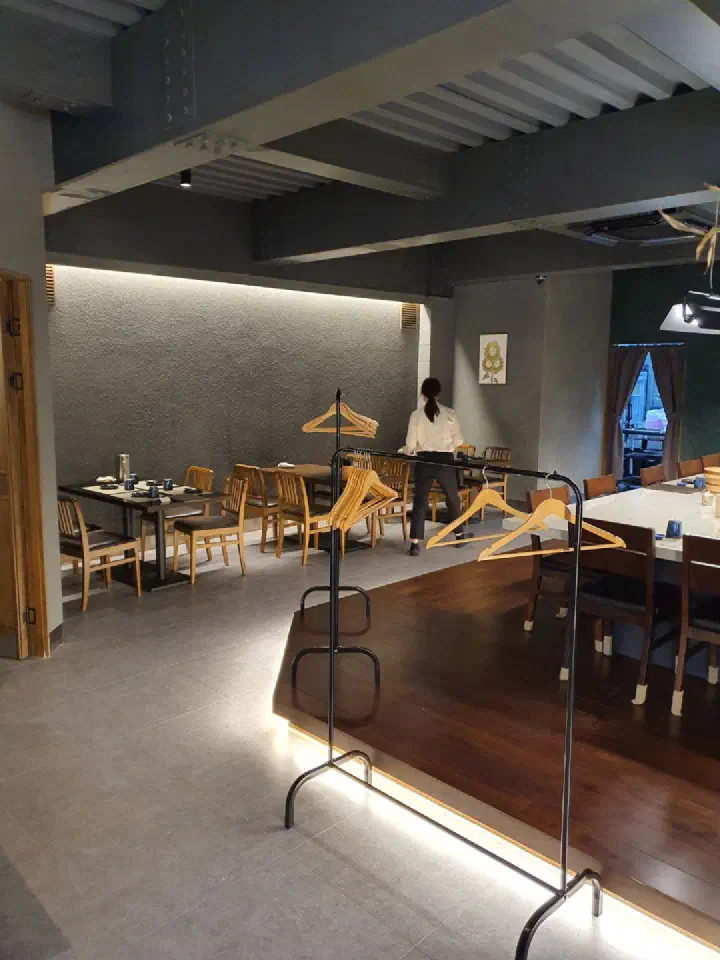
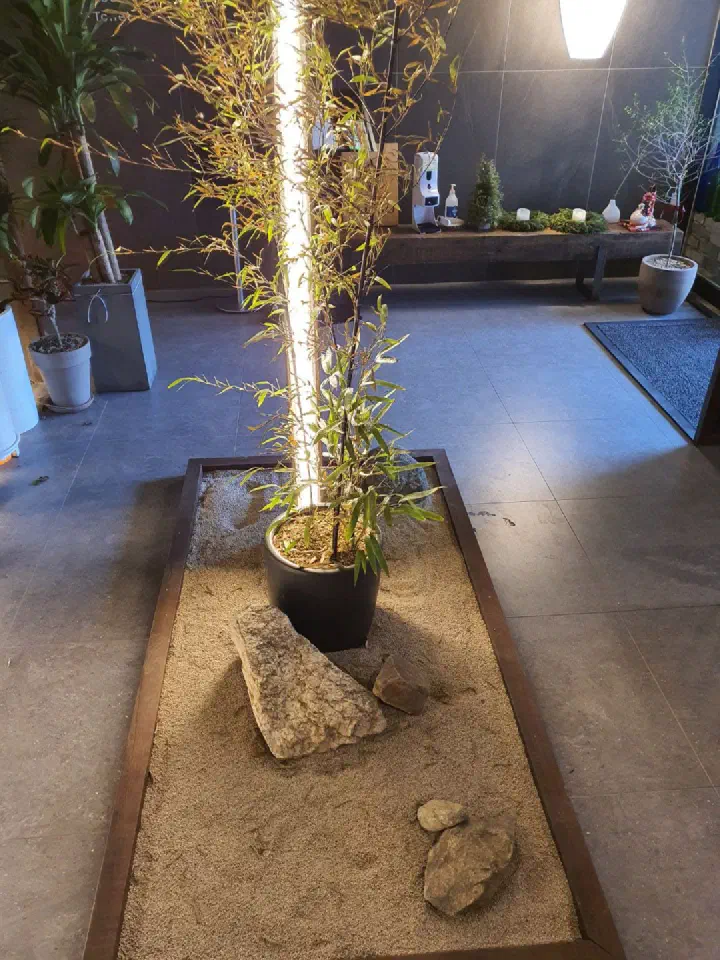
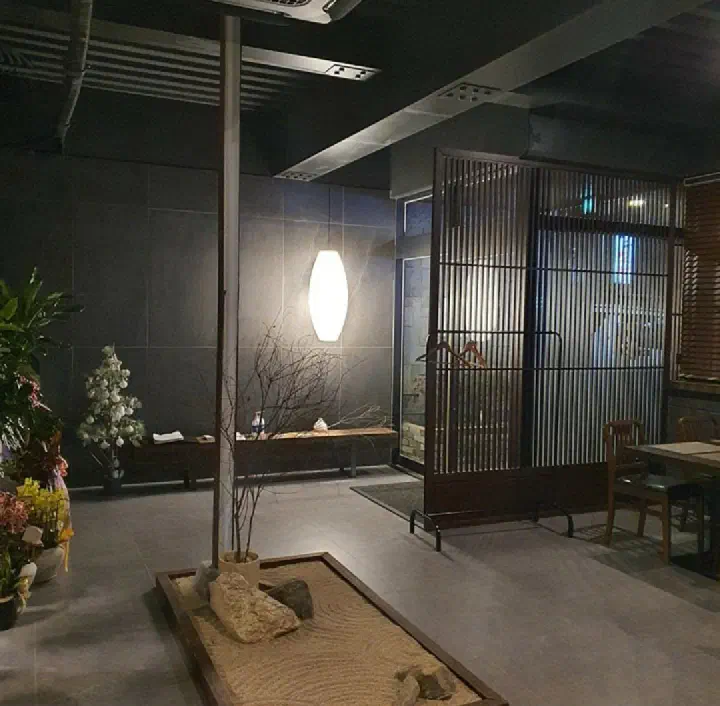
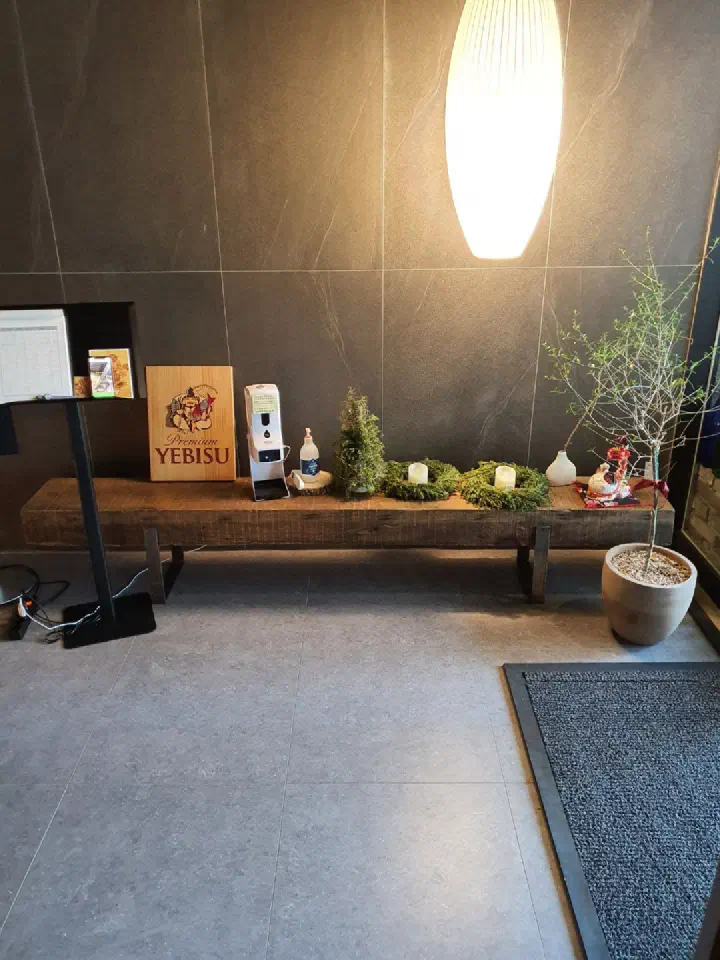
Step in and you are met with warm wood, soft lighting, and the kind of quiet hum that tells you this is a place for sitting down properly.

Hallway leading to the private rooms at Haebaragi

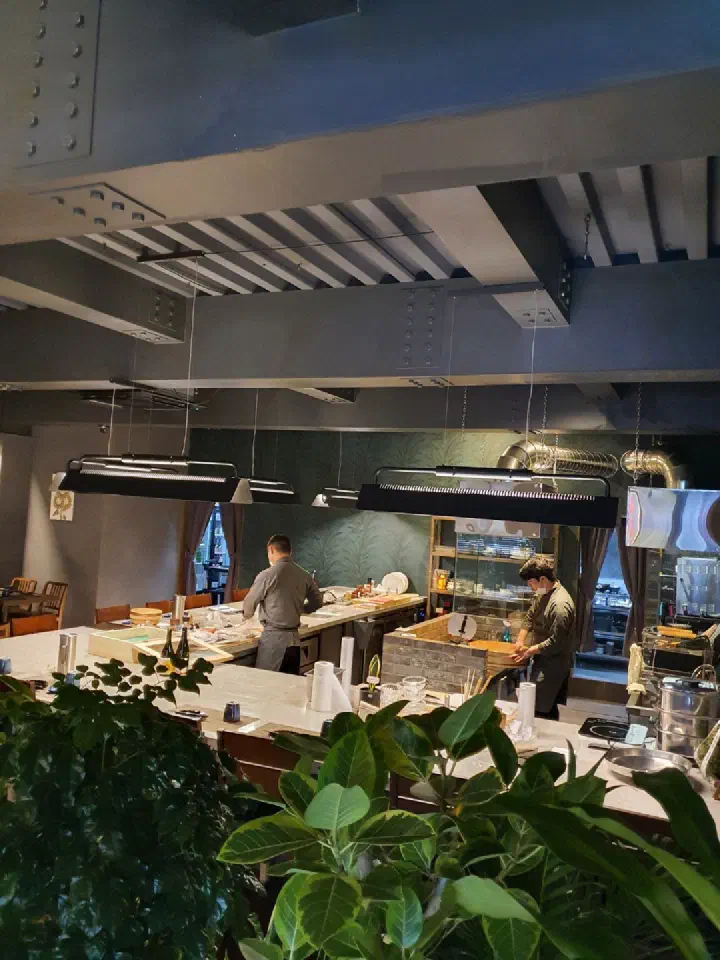
There are three kinds of seats.
A long counter (다찌석, dachi-seok) facing the open kitchen for couples or solo diners who want to watch the chef work; regular tables in the open hall; and a handful of fully enclosed private rooms tucked behind sliding partitions.

Open hall seating area at Haebaragi

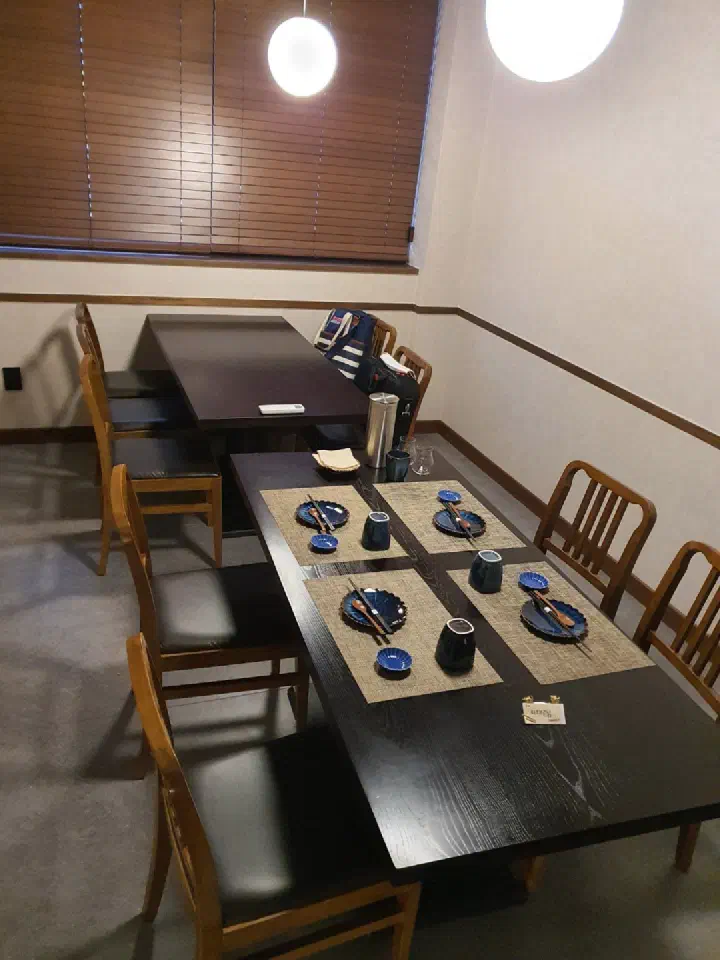
I booked a private room this visit, and the setting was already laid out when we sat down — wooden chopsticks, a small soy sauce dish, a ceramic plate, everything muted and tidy.
A small sunflower print on the wall is the only nod to the restaurant’s name.

Private room table setting at Haebaragi

Language at the table: the staff do not speak much English, but the menu is the omakase, so you do not actually need to order anything dish by dish.
Each course arrives explained in Korean, and pointing at the plate plus a smile got us through anything we wanted to ask.
If you want to request something (slower pacing, no shellfish, etc.), Google Translate on your phone works perfectly.

The omakase course, dish by dish

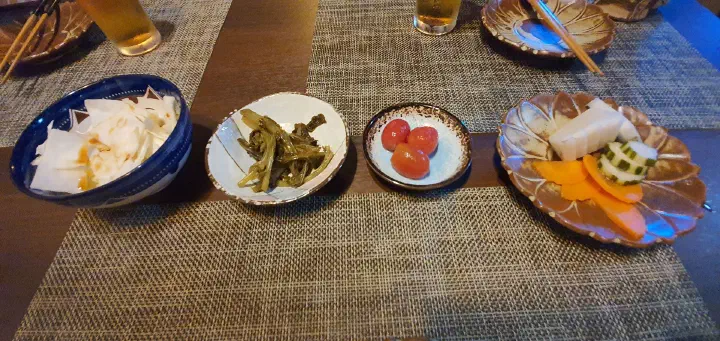
Once you sit down, banchan (small side dishes) arrive: lightly dressed cabbage salad, pickled radish, cucumber, and the slightly sweet pickled garlic shoots Koreans call rakkyo (락교).
They are meant to cleanse and prepare your palate, not to fill you up.

Cabbage salad and Korean pickles served as banchan

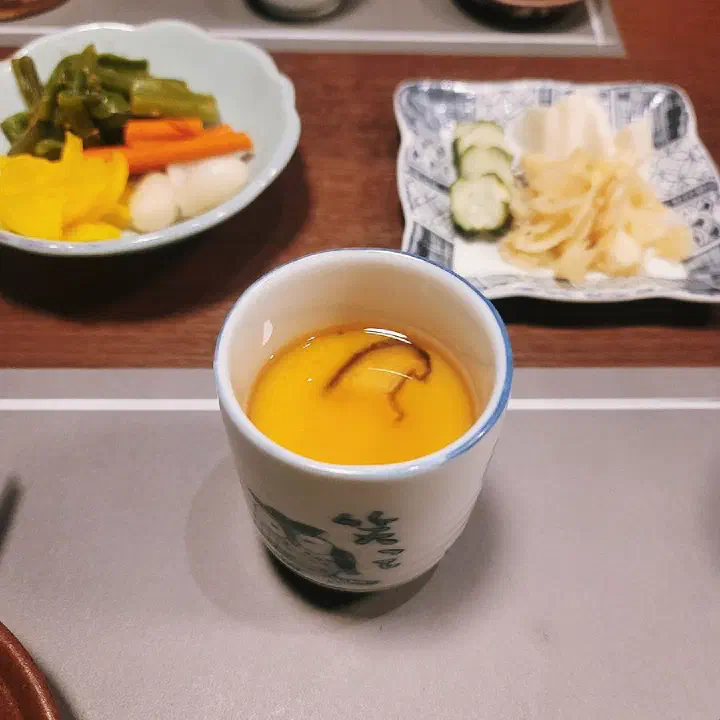
1. Chawanmushi and potato salad

The course opens with chawanmushi (Japanese steamed egg custard) and a small scoop of potato salad.
The custard hides shrimp, shiitake mushroom, and ginkgo nut under a silky surface, and the broth at the bottom is built on bonito stock — mild, savory, and barely seasoned.
The potato salad is whipped soft with bits of cucumber and carrot, a gentle Japanese take rather than the heavier Korean version.

Chawanmushi and potato salad course

2. Smoked white fish with truffle ceviche

This is the dish Haebaragi is known for.
A piece of seasonal white fish (밀치/mulchi, a kind of mullet on this visit) is smoked under an oak-bark cover and served with truffle sauce and shredded vegetables.
When the staff lifts the cover at your table, a cloud of smoke rolls out — it is theatrical, but it also genuinely flavors the fish.

Smoked mulchi (mullet) with truffle ceviche

The truffle sauce is strong, so a small dip is all you need.
I piled a little shredded cabbage on top of each piece and barely brushed it through the sauce — the smoky fish and the earthy truffle were already doing all the work.

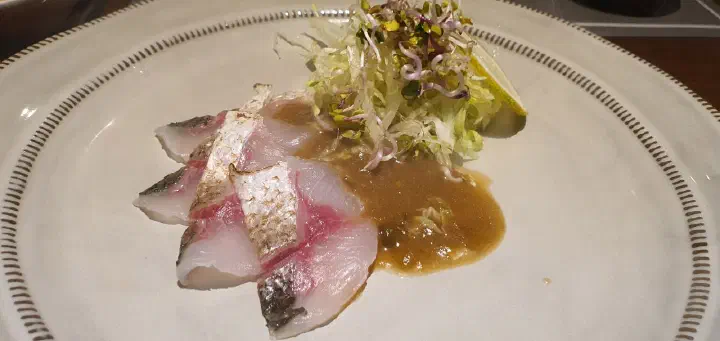
3. Sashimi with sea innard sauce

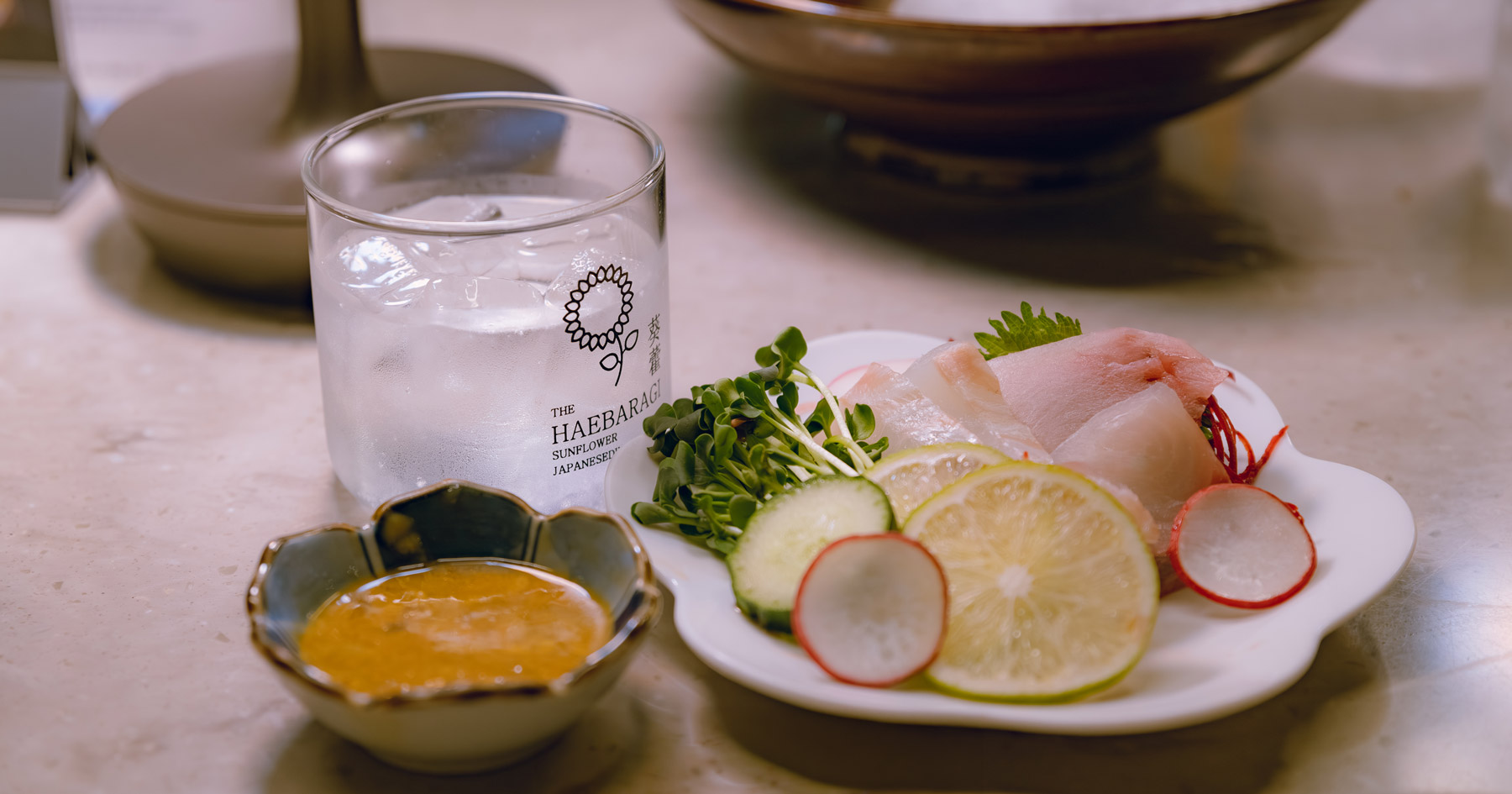
A second small plate of white fish follows, this time paired with geu (게우) sauce, made from the deep-flavored innards of abalone.
It is salty and oceanic and surprisingly addictive even if you think you don’t like organ-based sauces.

White fish sashimi with abalone innard sauce

4. Grilled eel and monkfish liver

Next comes grilled eel (장어/jangeo) on small sheets of seaweed, paired with monkfish liver (안키모/ankimo in Japanese, 아귀간/agwi-gan in Korean) layered on top of crispy seaweed chips.
If you have never tried monkfish liver, this is the friendliest version — creamy, mild, almost like a savory mousse.

Grilled eel with monkfish liver and seaweed crisps

The eel glaze is balanced — sweet but not sticky — and the trick is to fold the eel into the seaweed and eat the whole bite at once.

Hand holding a piece of grilled eel wrapped in seaweed

5. Seasonal sashimi platter

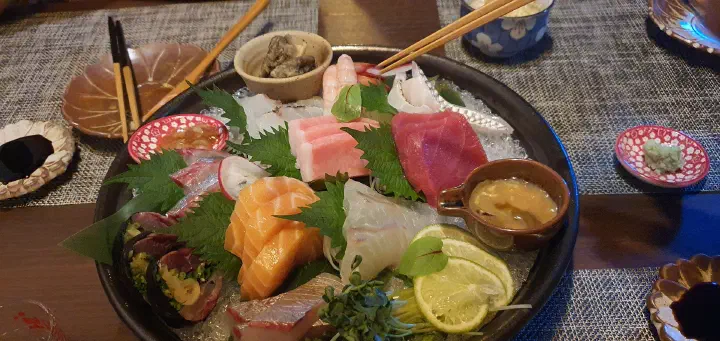
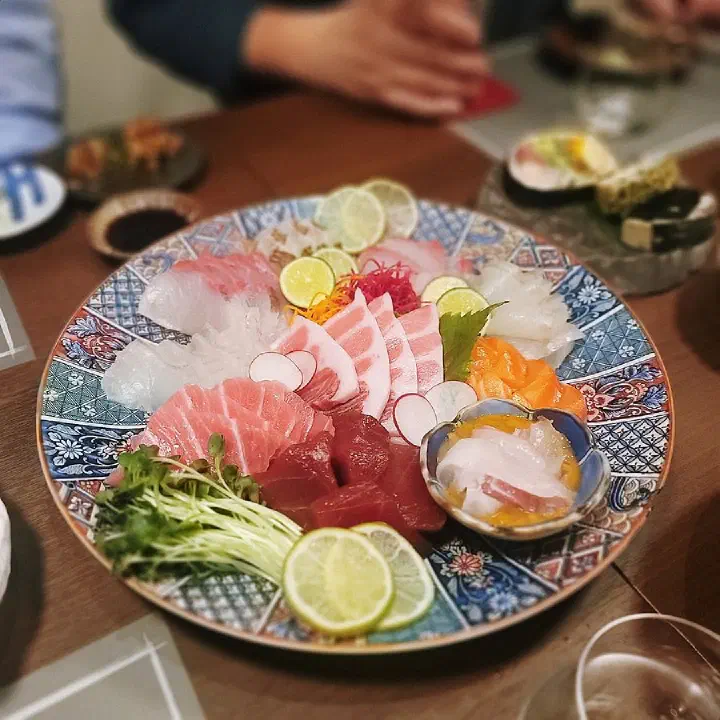
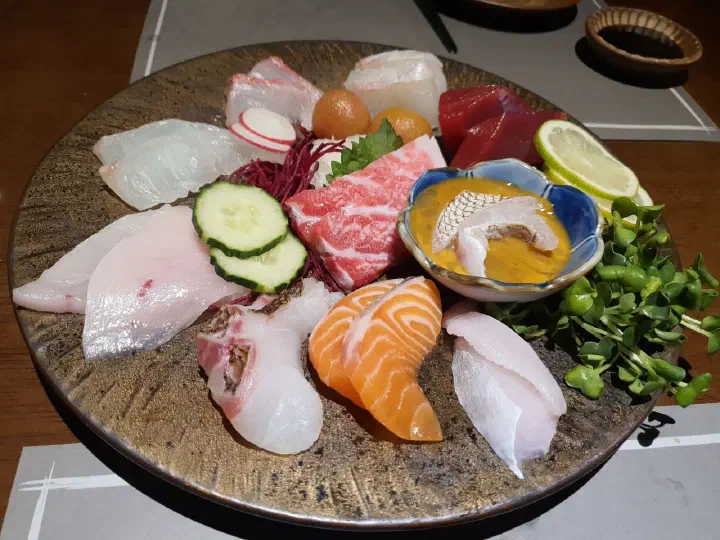
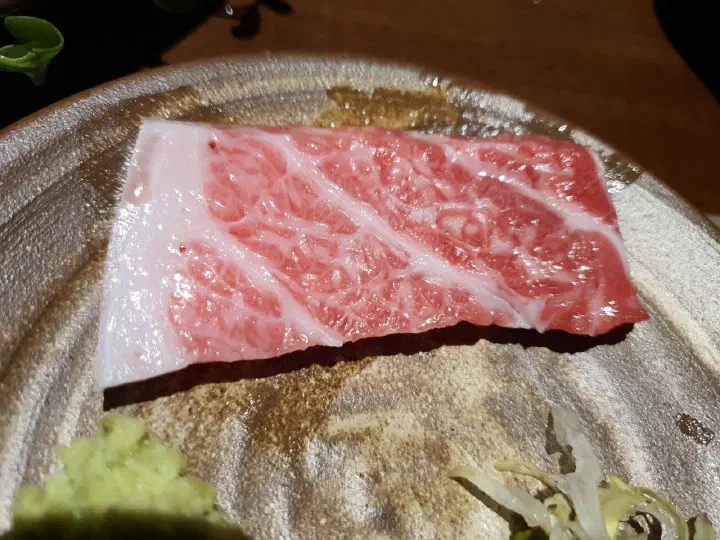
The centerpiece of the course is the assorted sashimi platter.
Thick slices of tuna belly and back, salmon, flounder, sea bream, and yellowtail (jaetbang-eo/잿방어, a seasonal favorite) come arranged across a decorated dish with shredded daikon and shiso.
The cuts are generous — these are not the wafer-thin slices you sometimes get at fancy restaurants.

Assorted seasonal sashimi platter

The staff walks you through each fish and suggests a tasting order, lightest to richest.
A small tip they shared: squeeze a wedge of lime over the soy sauce, then dip the fish — it brightens the flavor without overpowering it.

6. Uni, scallop, sweet shrimp, and gamtae

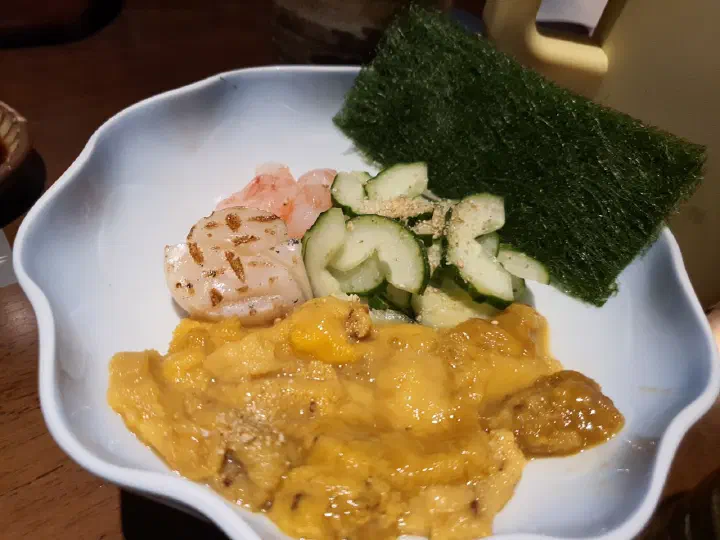
A small ice platter arrives with sea urchin (uni / 우니, sourced from Tongyeong on the Korean south coast), a piece of lightly seared scallop, raw sweet shrimp (단새우/dansaeu), and crisp seaweed (감태/gamtae) for wrapping.
Layer a strip of gamtae, a small spoon of uni, and a piece of shrimp — one bite, and you understand why this course is the one regulars talk about.

Uni, scallop, sweet shrimp, and gamtae course

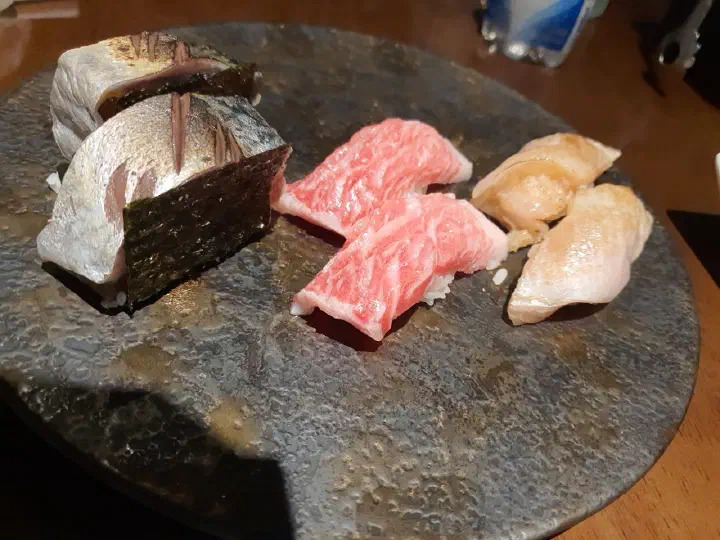
7. Assorted nigiri and rolls

A second sushi plate follows: a flounder nigiri, a seared scallop nigiri, a sweet shrimp nigiri, a small tuna roll, and a side of cucumber dressed with barley miso (보리된장/bori-doenjang).
By this point you are noticeably full, but the bites are small and you keep going.

Assorted nigiri and tuna roll plate

8. Steamed abalone with sea innard sauce and rice

A small plate appears with steamed abalone (전복/jeonbok) and a generous pour of geu sauce, alongside a tight scoop of rice.
You stir the sauce into the rice and eat the two together — it is the sort of bite you keep scraping the plate for.

Steamed abalone with sea innard sauce over rice

9. Braised octopus with sweet red bean

The most surprising course of the night.
Soft pieces of slow-braised octopus are served under a spoonful of sweet red bean (팥/pat), and yes, that combination sounds strange.
The octopus is tender enough to break with chopsticks, and the red bean somehow grounds it — sweet, earthy, totally unfamiliar in the best way.

Braised octopus with sweet red bean paste

10. Menchi katsu and king prawn

After all the raw seafood, a couple of fried courses arrive to reset the palate.
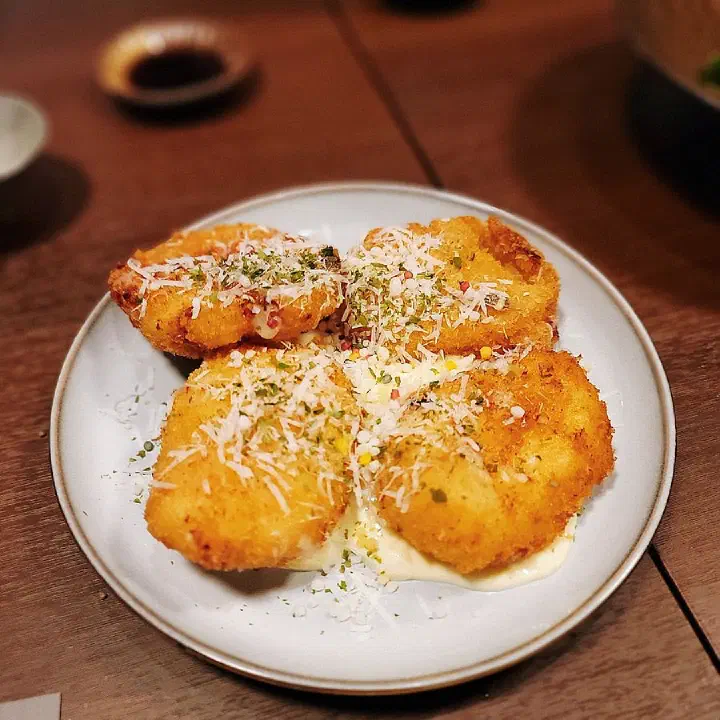
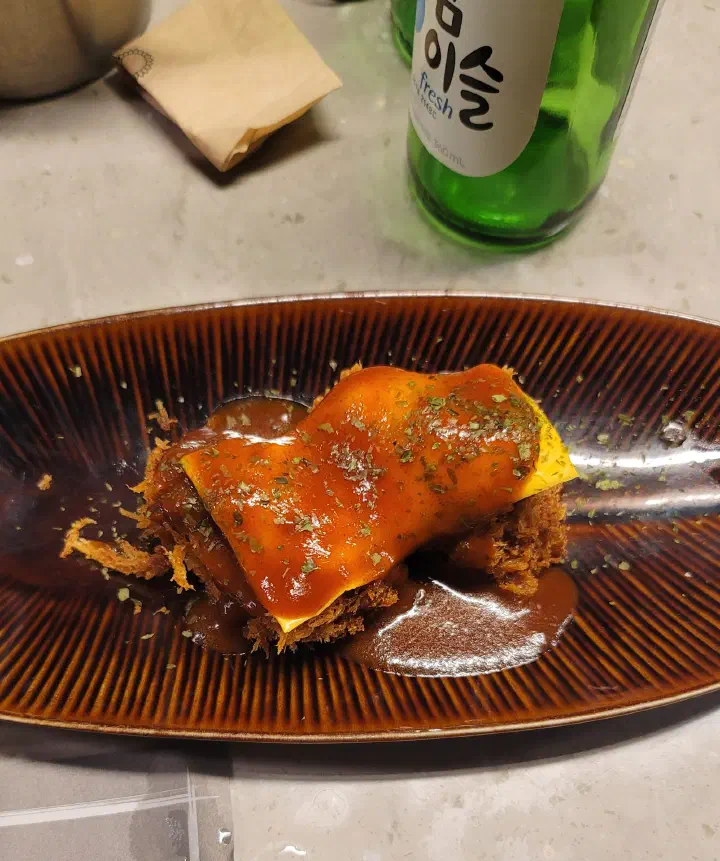
The menchi katsu (멘치카츠) is a Japanese-style minced-meat cutlet — crisp shell outside, savory and juicy inside, with a melt of cheese running through the middle.

Menchi katsu cross-section showing the filling

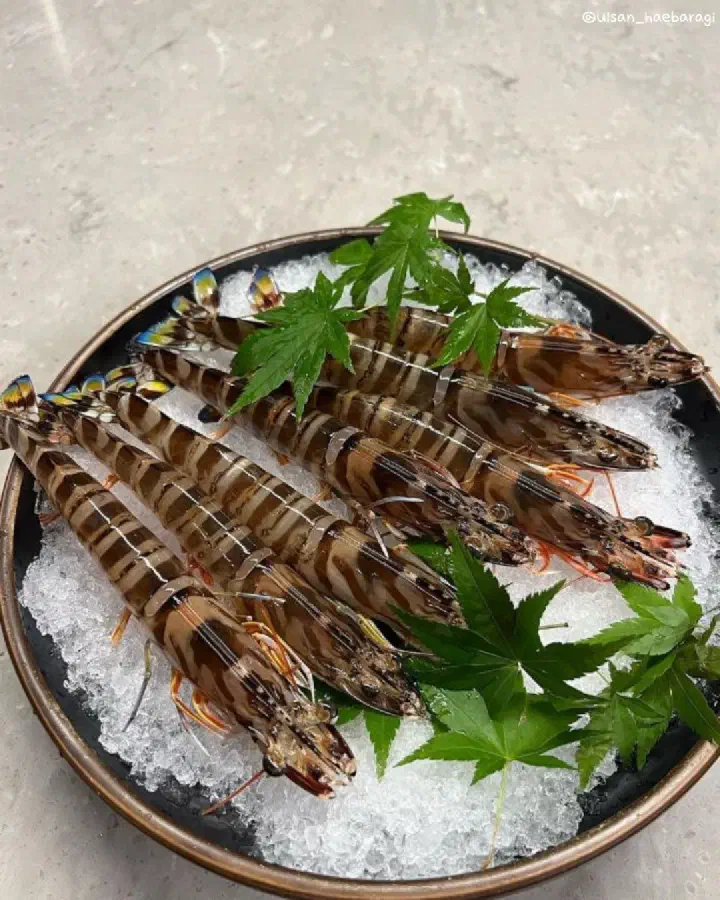
Right after comes a plate of giant king prawn (왕새우/wangsaeu), deep-fried and crowned with seaweed-dusted shredded cabbage.
The prawns are the length of your hand and you really do eat them head to tail.

Fried king prawns with seaweed-dusted cabbage

11. Bonus: fried rockfish in sweet-spicy sauce

Some nights the kitchen sends out an extra dish based on what came in fresh that morning.
Ours was crisp-fried rockfish (열기/yeolgi) glazed in a sweet-spicy red sauce — slightly hot, slightly tangy, the kind of thing that wakes you up after a stretch of raw bites.

Fried rockfish in sweet-spicy red sauce

A small heads-up on spice level: this dish is on the milder side, but Korean “sweet-spicy” can still surprise visitors who are not used to chili paste (gochujang).
If you are unsure, take a small bite first — it is closer to a glaze than a chili dish, but Korean spicy is a different animal from many other cuisines, so it is good to be ready.

12. Futomaki

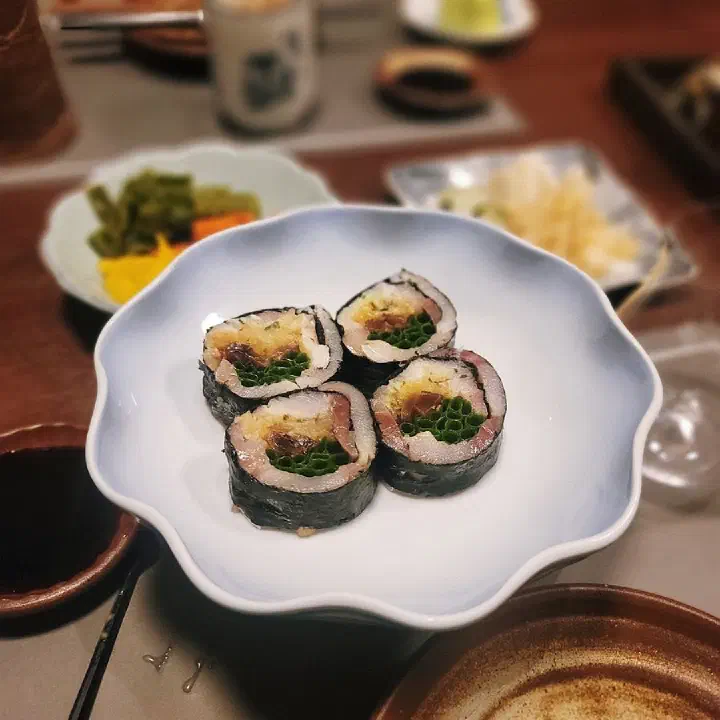
Near the end comes futomaki, the thick Japanese roll packed with egg, tuna, burdock, pickled radish, and tempura shrimp inside.
The trick is to put the whole piece in your mouth at once and chew it down — it sounds aggressive, but cutting it loses half the magic.

Futomaki roll cut into pieces

13. Braised pork jowl, rice pot, and miso soup

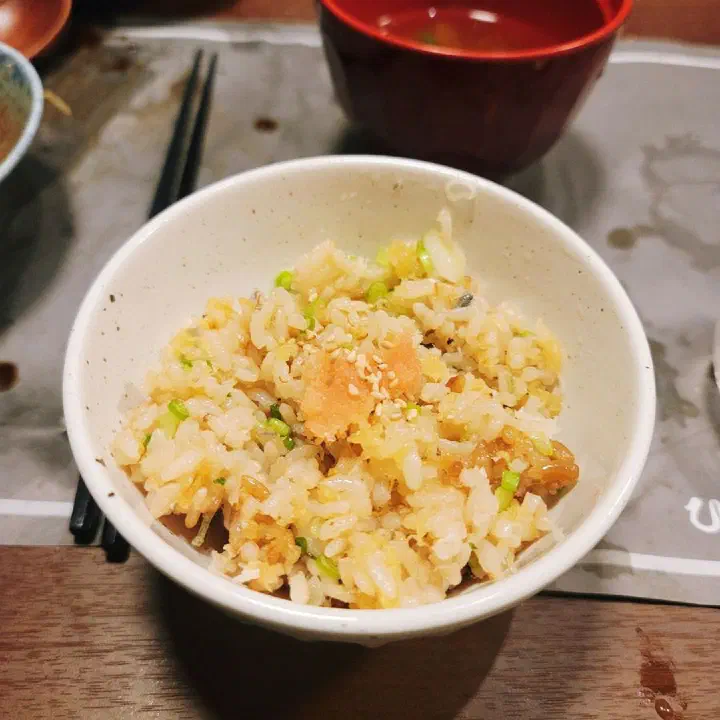
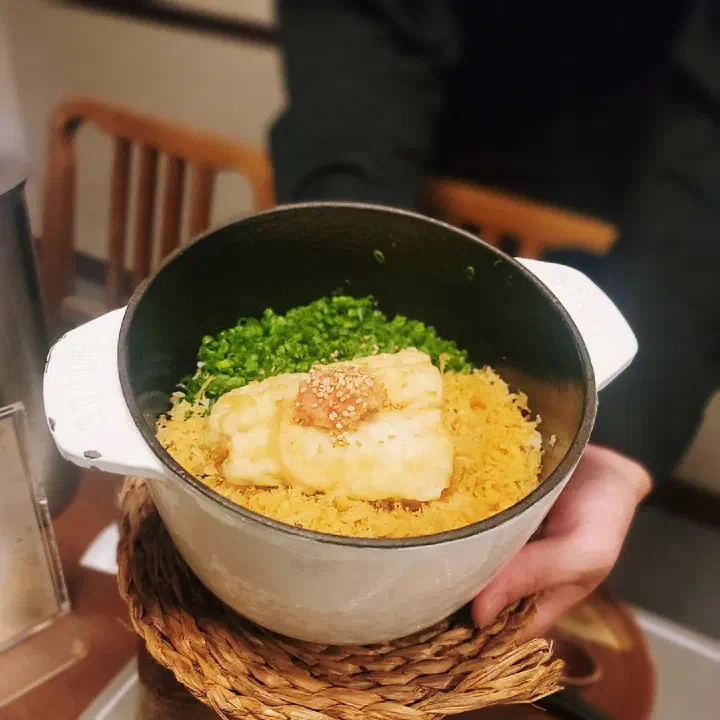
The proper meal arrives toward the end: a tender braised pork jowl (항정살/hangjeong-sal) with daikon in soy glaze, a small bowl of seasoned rice from a hot stone pot, and miso soup.
On my visit the rice pot featured a fried-oyster topping, but the kitchen rotates it by season — sometimes hairtail fish, sometimes salmon, sometimes the more elusive geumtae rockfish.

Braised pork jowl with daikon, rice, and miso soup

Ending a long parade of raw fish with warm rice and miso soup is one of those small Japanese-Korean rituals that makes you feel genuinely full, in a comforting way.

14. Dessert

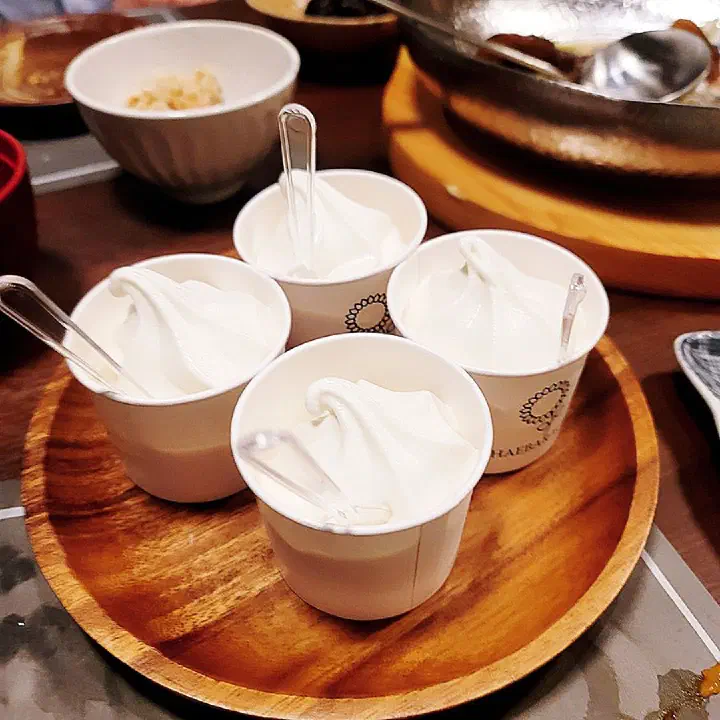
The last plate is a small scoop of vanilla ice cream dusted with injeolmi (인절미), the toasted soy bean powder used in Korean rice cakes.
It is creamy, lightly sweet, and a nice way to close.
Seasons rotate the dessert — sometimes a chestnut-yokan version, sometimes a soft serve — so do not be surprised if yours looks different.

Vanilla ice cream with injeolmi powder

Honest impressions

Haebaragi is the kind of omakase I would happily bring a first-timer to.
For 90,000 KRW per person you get around fourteen courses — generous portions, real variety beyond raw fish, and a few genuinely creative dishes (the octopus and red bean, the smoked truffle ceviche).

The staff explain each dish carefully and pace the meal to how fast you eat.
If anything comes too quickly, a small request to slow down is happily honored.

Plan on roughly 90 minutes to two hours at the table.
We took about an hour and a half, and it felt unhurried without ever dragging.

It works for anniversaries, parents’ birthdays, a quiet date, or a small group of friends.
If you want privacy or have more than two people, book a private room ahead — they fill up first.

Next time I am curious to try the smaller 60,000 KRW course (해바라기 코스) — a shorter version of the same kitchen’s work, and a good lower-priced way to experience the place if a full omakase feels like a lot.

Location & How to Get There

Haebaragi is tucked into the Samsan-dong food alley behind Ulsan’s intercity bus terminal, in Nam-gu.
There are a couple of parking spots out front.

📍 View Haebaragi (해바라기) on Google Maps →