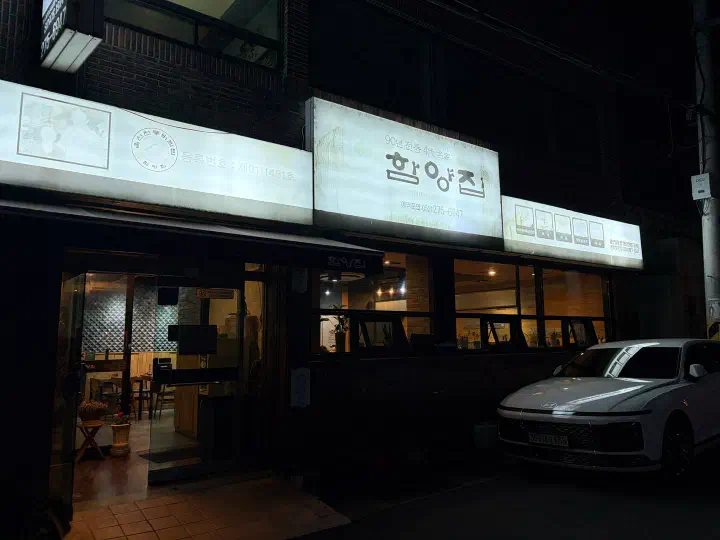
Whenever I find myself in Ulsan, there’s one restaurant I keep going back to: Hamyangjip Main Branch (함양집 본점) in the Sinjeong-dong neighborhood.
It started in 1924 as a small dining hall called Hamyanggwan, and four generations later it’s still serving what many locals consider the best hanwoo mulhoe (한우물회) in town. Mulhoe is usually associated with raw fish, but here it’s made with thinly sliced raw Korean beef (hanwoo) floating in an icy, tangy broth. It sounds unusual if you’ve never tried it, but trust me, it’s one of the most refreshing Korean dishes you can have in summer.
I dropped by recently with a friend and ordered the hanwoo mulhoe, the yukhoe bibimbap, and a cheese bulgogi on the side. Here’s everything I’d want a first-time visitor (especially anyone visiting from overseas) to know before going.

The basics: hours, address, and how to find it
- Address: 12 Jungang-ro 208beon-gil, Nam-gu, Ulsan (울산 남구 중앙로208번길 12)
- Phone: +82-52-275-6947
- Hours: 11:00 – 21:00
- Break time: 16:00 – 17:00 (kitchen closes during this window)
- Closed: Every Sunday
- Parking: Dedicated lot next to the restaurant with an attendant
📍 View Hamyangjip (함양집) on Google Maps →
The restaurant sits in a quiet side street directly opposite Ulsan City Hall. Most major map apps (Naver Map, Kakao Map, Google Maps) will get you there easily if you search “함양집 본점” or copy the Korean address above into the search bar.
A quick heads-up: the restaurant is closed every Sunday and takes a kitchen break in the late afternoon, so plan your visit around lunch or early dinner.

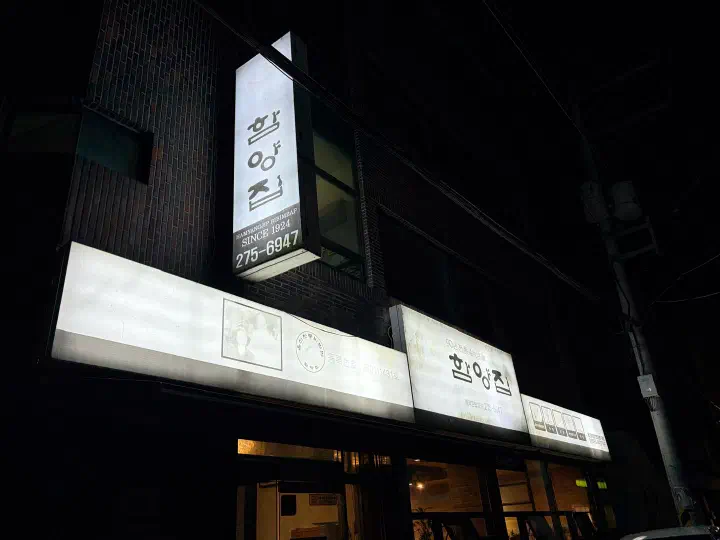
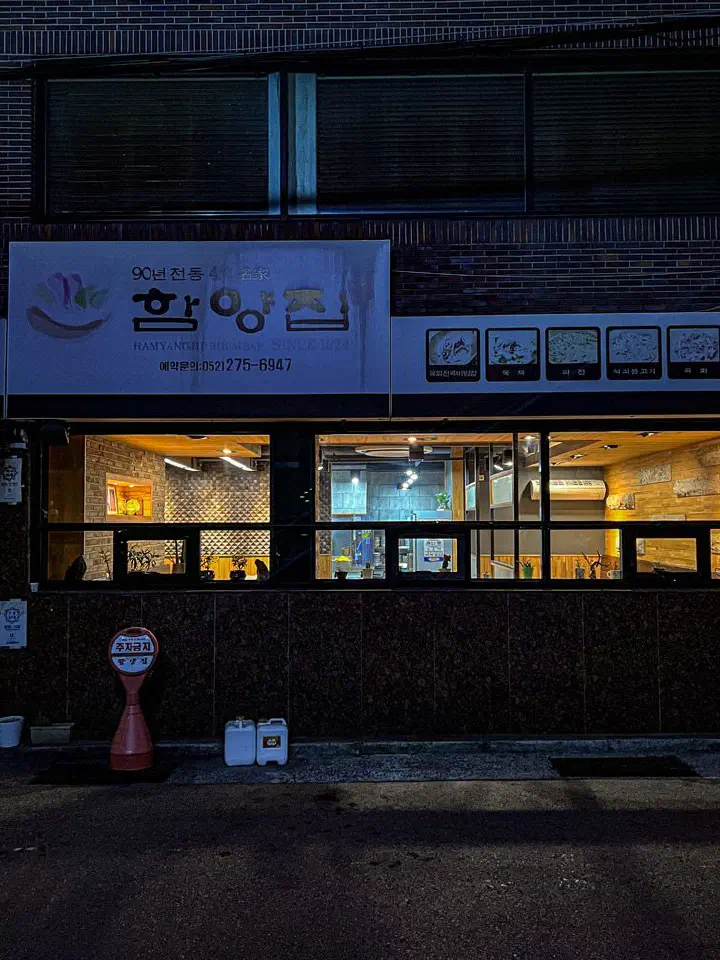
The “SINCE 1924” lettering on the signboard always reminds me how long this place has been part of the neighborhood.
Parking is genuinely easy
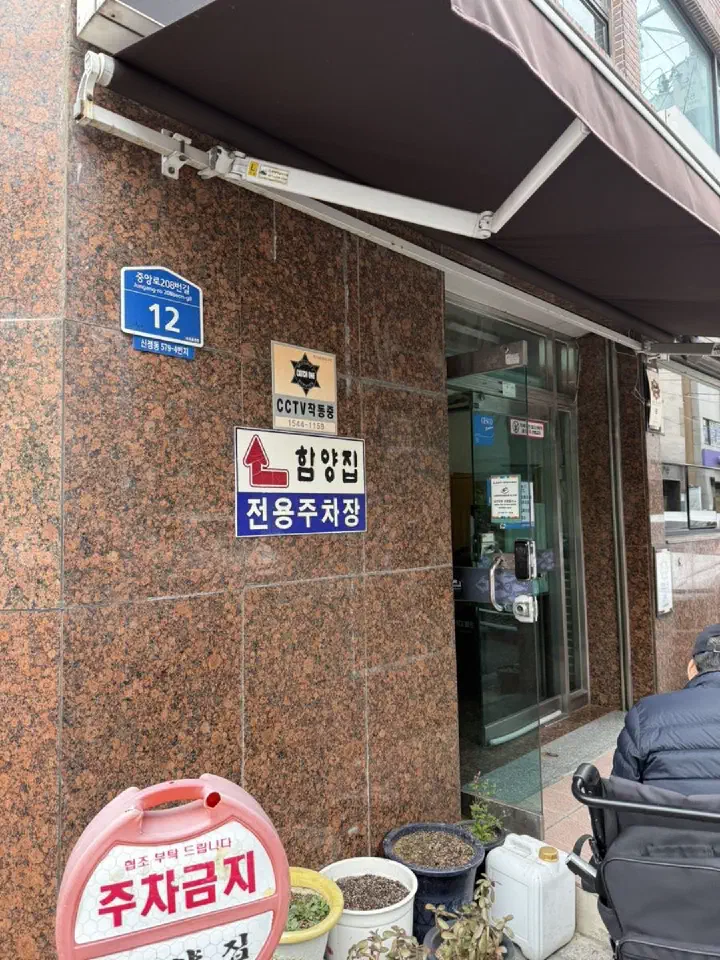
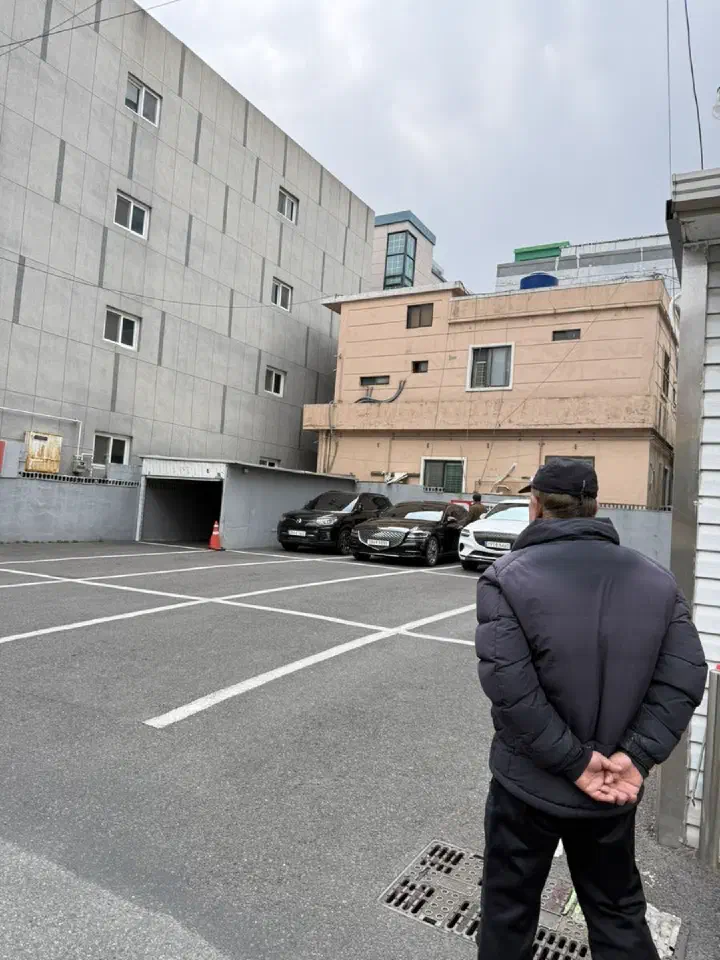
Sinjeong-dong’s alleys are narrow and street parking is a constant headache, so I was relieved to find a dedicated lot right next to the building.

The blue “Hamyangjip Private Parking (함양집 전용주차장)” sign is hard to miss.

There’s always a parking attendant on duty, and during peak lunch hours they’ll double-park your car for you. Just hand over the key and enjoy your meal.
If you’re visiting on a weekend, I’d suggest arriving around 11:30 to beat the lunch rush.

A Blue Ribbon Survey pick

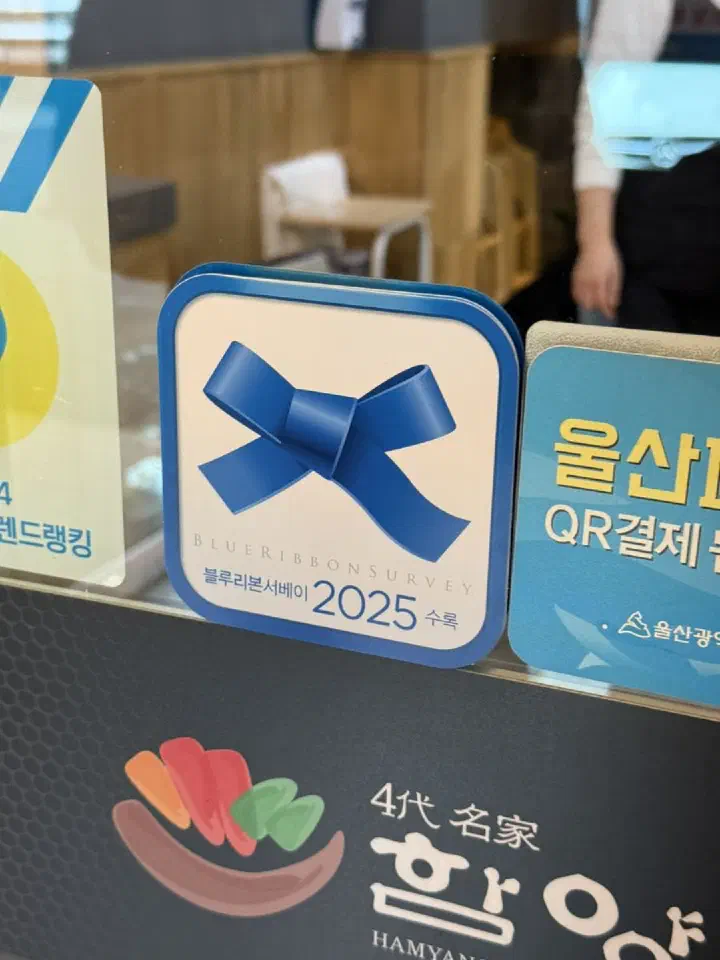
You’ll see a “Blue Ribbon Survey 2025” sticker by the entrance. Blue Ribbon is one of Korea’s most respected restaurant guides, so this is a nice extra signal of quality if you weren’t already convinced by the 100-year history.
Inside the restaurant

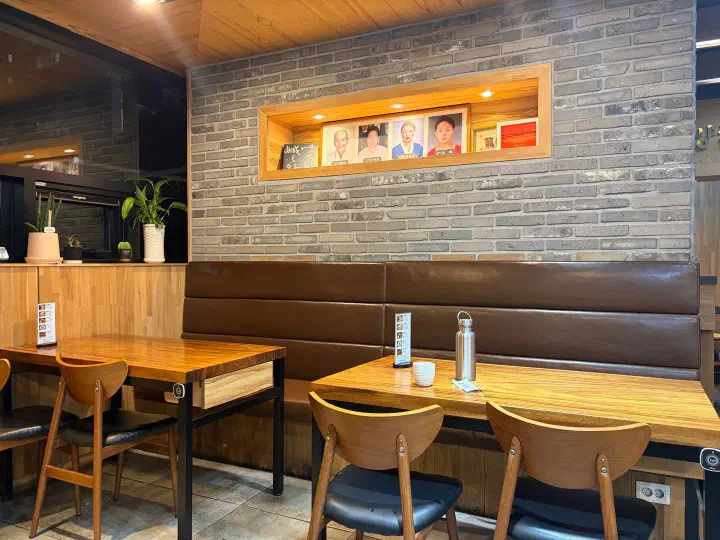
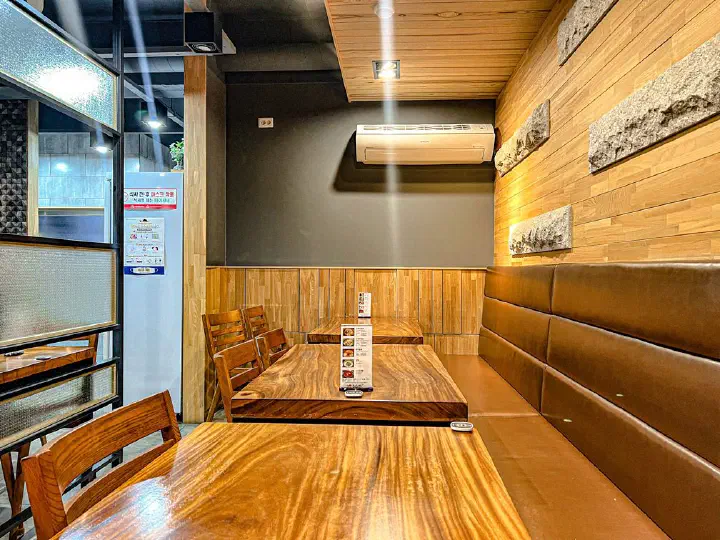
The interior has two floors. The first floor is set up with two- and four-person wooden tables, with comfortable spacing between them. It feels more like a modern Korean bistro than a creaky old institution. Solo diners shouldn’t feel out of place at all.

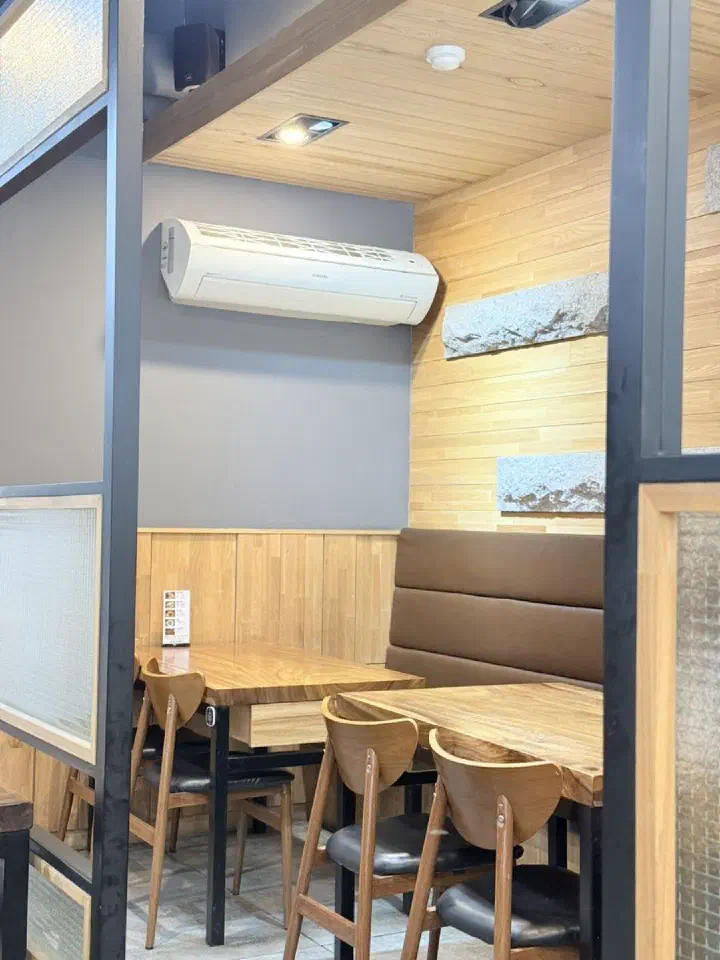
There are a few semi-private booth seats along the wall that are perfect for small groups or families.

The second floor is reserved for larger parties and gatherings.
The menu and prices
The headline dishes are hanwoo mulhoe (한우물회) and yukhoe bibimbap (육회비빔밥), but you’ll also find traditional Korean soups and a small list of side dishes / sharing plates.
- Hanwoo mulhoe — 14,000 KRW (regular) / extra for large
- Yukhoe bibimbap — 12,000 KRW
- Cheese bulgogi (치즈불고기) — 20,000 KRW
- Tteok bulgogi (떡불고기, rice cake bulgogi) — 17,000 KRW
- Mukchae (묵채, shredded acorn jelly) — 6,000–7,000 KRW
- Seokswe bulgogi (석쇠불고기, grilled bulgogi) — 30,000 KRW
- Pajeon (파전, green onion pancake) — 18,000 KRW
For a 100-year-old restaurant serving dishes built around Korean beef, the prices are genuinely reasonable. You can have a satisfying main course for around 12,000–15,000 KRW per person, which is roughly USD 9–12.
A note for first-time visitors: the yukhoe bibimbap comes with raw beef tartare by default, but you can ask the staff to cook the beef before serving. Just say “cooked, please (익혀 주세요, ikhyeo juseyo)” when ordering.
How payment, tipping, and ordering work for visitors
Quick practical notes for travelers, since these are the things friends from abroad always ask me:
- Cards work everywhere. Hamyangjip accepts credit and debit cards with no minimum, just like virtually every Korean restaurant. Internationally issued Visa, Mastercard, JCB, and AMEX all work fine in Korea, so you can leave the wad of cash at the hotel.
- No tipping. Tipping is not part of Korean dining culture. Staff are paid a full wage and adding extra money can actually confuse or embarrass them. The price on the menu is the price you pay.
- Language barrier is real but manageable. The staff don’t speak much English, but the menu has photos and small English labels. The simplest way to order is to point at what you want and hold up fingers for the quantity. You’ll be understood, no problem.
The side dishes (banchan)

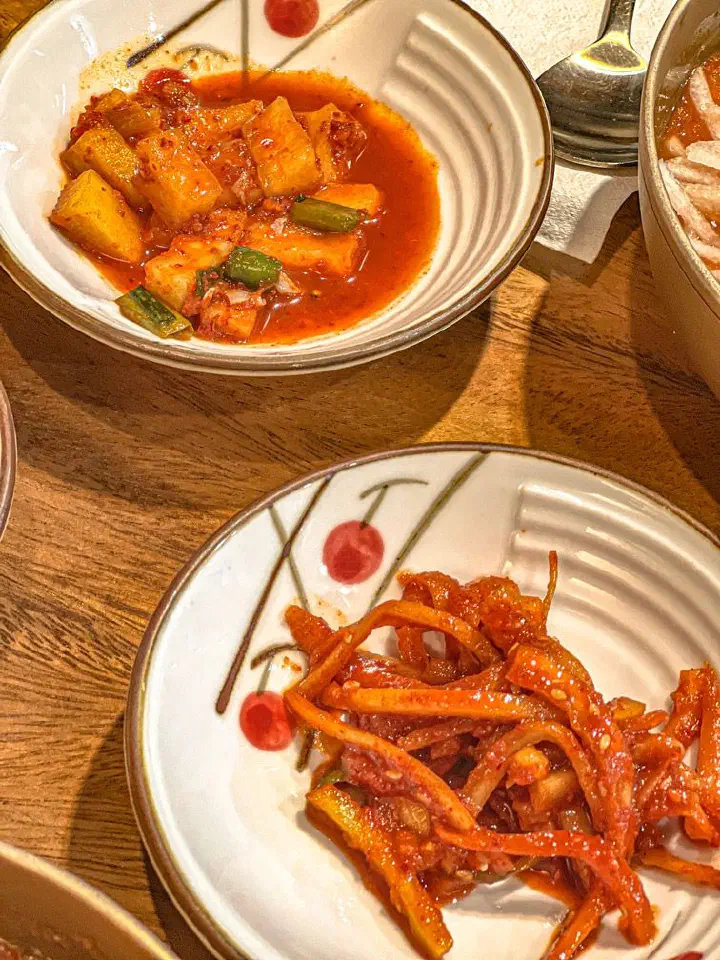
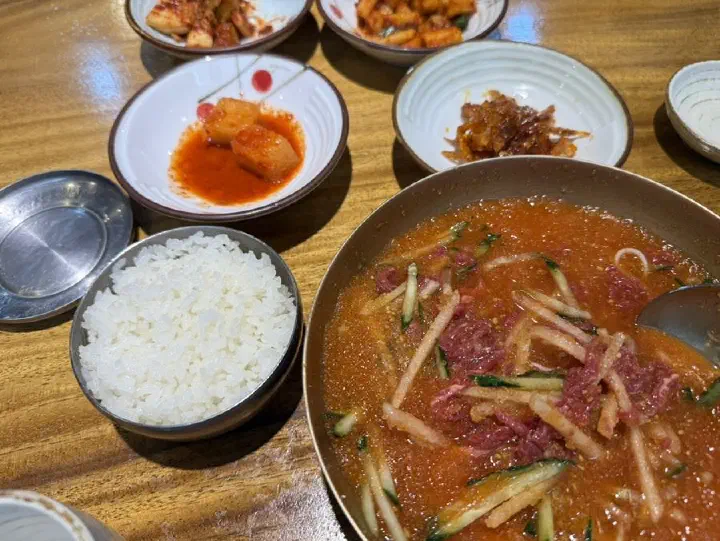
Banchan here is kimchi-focused: regular cabbage kimchi, fresh radish kimchi (kkakdugi, 깍두기), and a fermented version with salted seafood. The variety changes slightly day to day. Everything is made in-house, so the flavors taste clean and homemade rather than commercial.
The mulhoe broth is already quite punchy, so you may not reach for the banchan much, but the cool radish kimchi is a nice palate cleanser between bites.

The star of the show: hanwoo mulhoe

Here comes the main event.

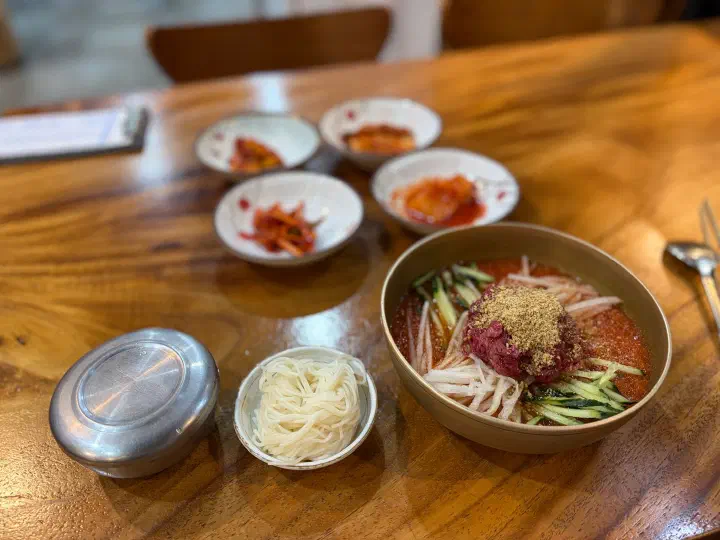
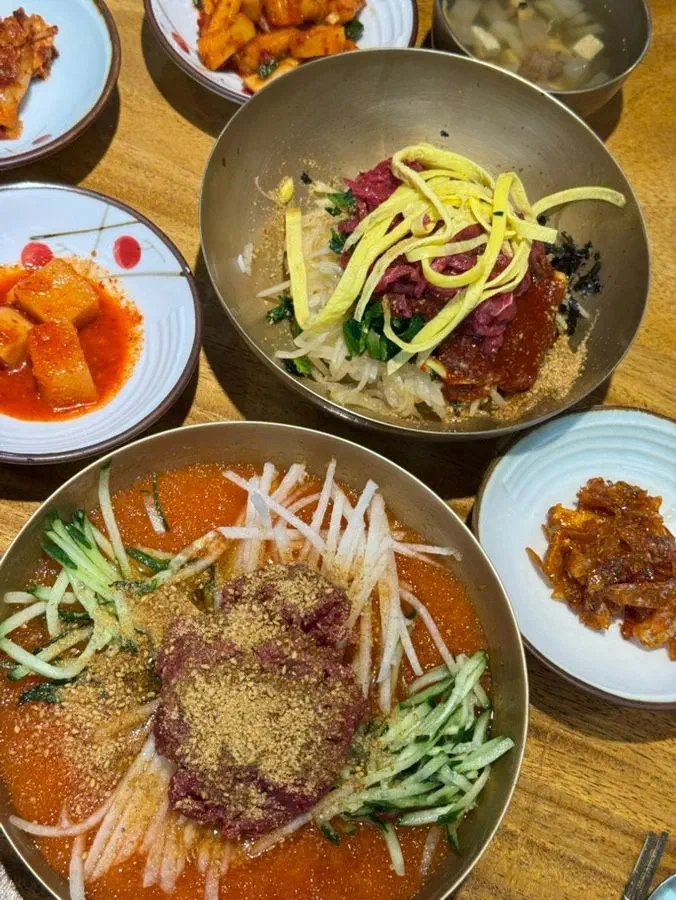
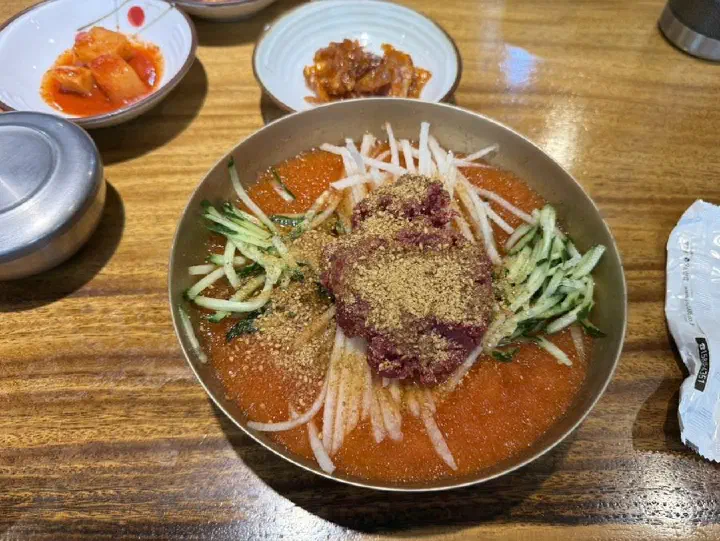
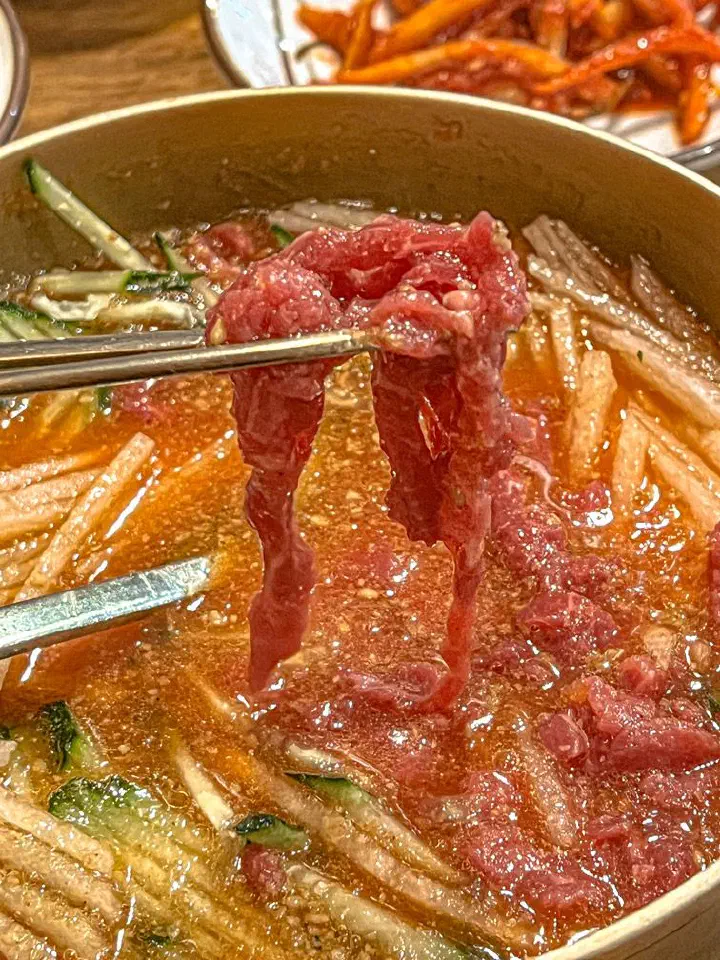
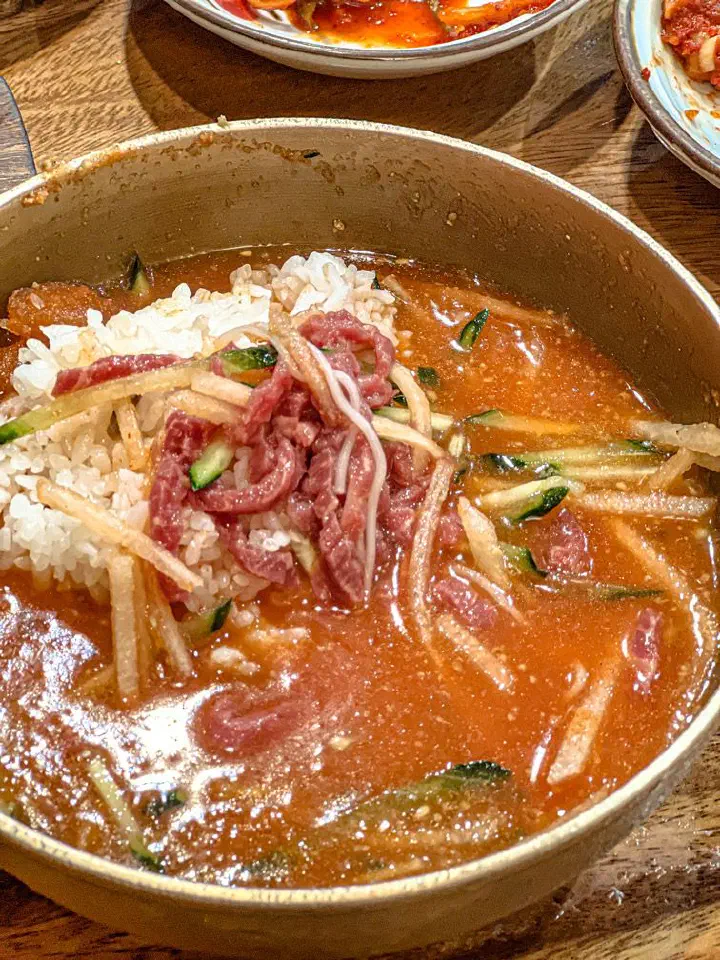
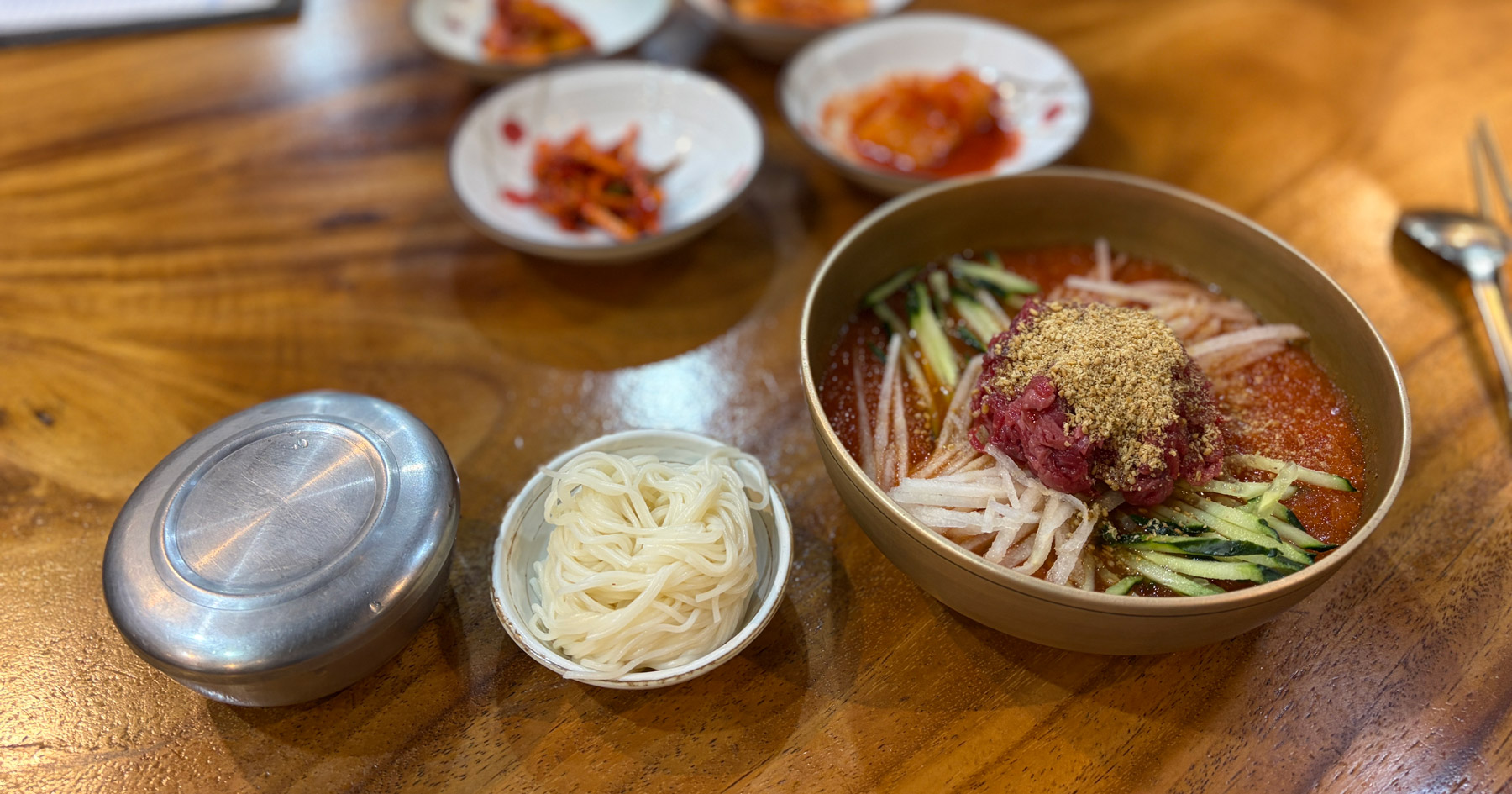
The dish arrives in a heavy brass bowl: a mound of fresh raw hanwoo beef sits on top, surrounded by julienned radish and cucumber, all submerged in a chilled, slightly slushy red broth. The aroma is bright and tangy from the very first whiff.

The beef itself is buttery soft, not chewy, with almost no fat. Mixed with the toasted sesame on top, it has this nutty, melt-in-your-mouth quality that’s hard to describe until you try it.
The broth tastes naturally sweet from fruit (likely apple and pear), with a clean, sour finish — nothing artificial about it.
Heads-up on the spice level: the broth is noticeably spicy. By Korean standards it’s mildly spicy, but if you’re not used to Korean food it can hit you harder than you expect. I’d suggest taking small sips at first to gauge how you feel about it. The good news is the spice grows on you fast and you’ll find yourself going back for more.
Eating it the right way

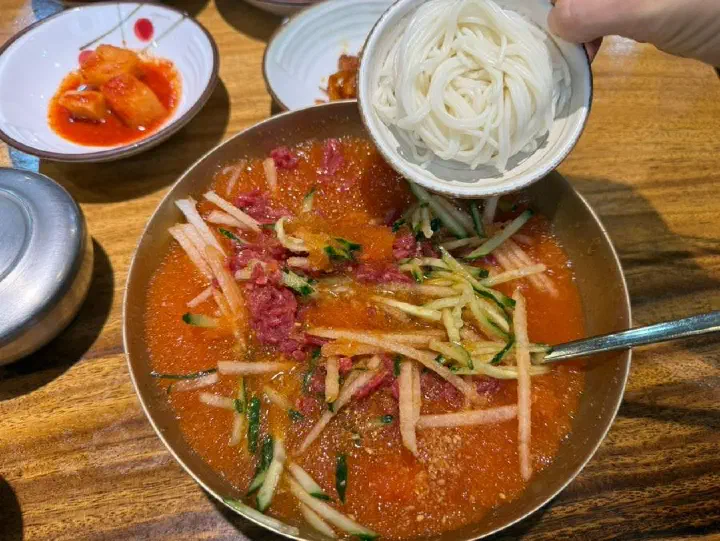
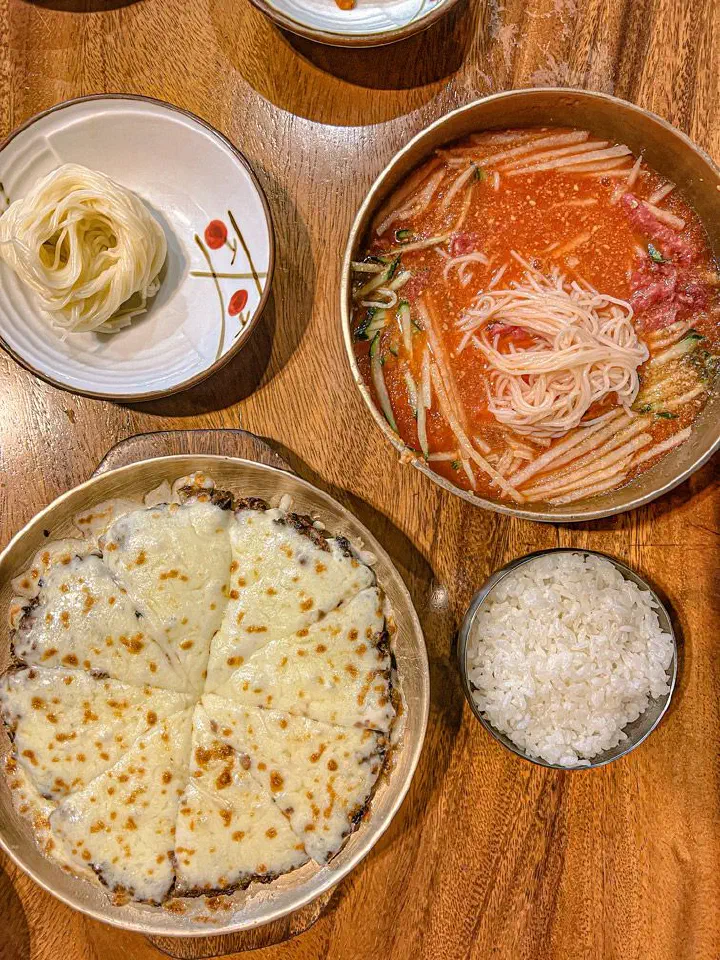
Mulhoe comes with both somyeon (소면, thin wheat noodles) and a small bowl of rice on the side. The order in which you add them matters.
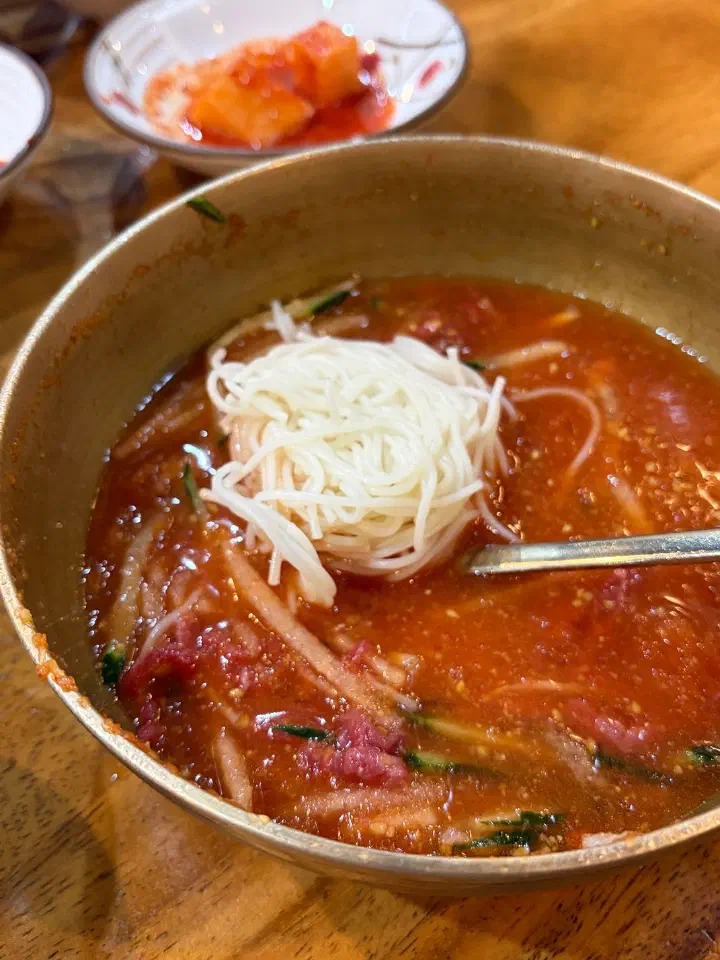
First, taste the broth and beef on their own. Then drop in the somyeon and stir — the noodles soak up that tangy broth beautifully and disappear in a flash.

Once you finish the noodles, the server will usually come by and ask if you’d like another portion. They’re free, so say yes if you have the appetite. That little gesture of hospitality always makes me smile.

Save the rice for last. The bowl is served piping hot, so dumping it straight in will warm up the broth and dull the chill. Let it cool for a minute, then stir it in — the rice grains plump up in the cold broth and become surprisingly bouncy.

Topped with the last bits of beef, it makes the perfect closing bite. I scraped the bowl clean.
The regular portion is on the smaller side, so if you’re a big eater, order the large (곱빼기, gopppaegi) right from the start.
Side order: cheese bulgogi

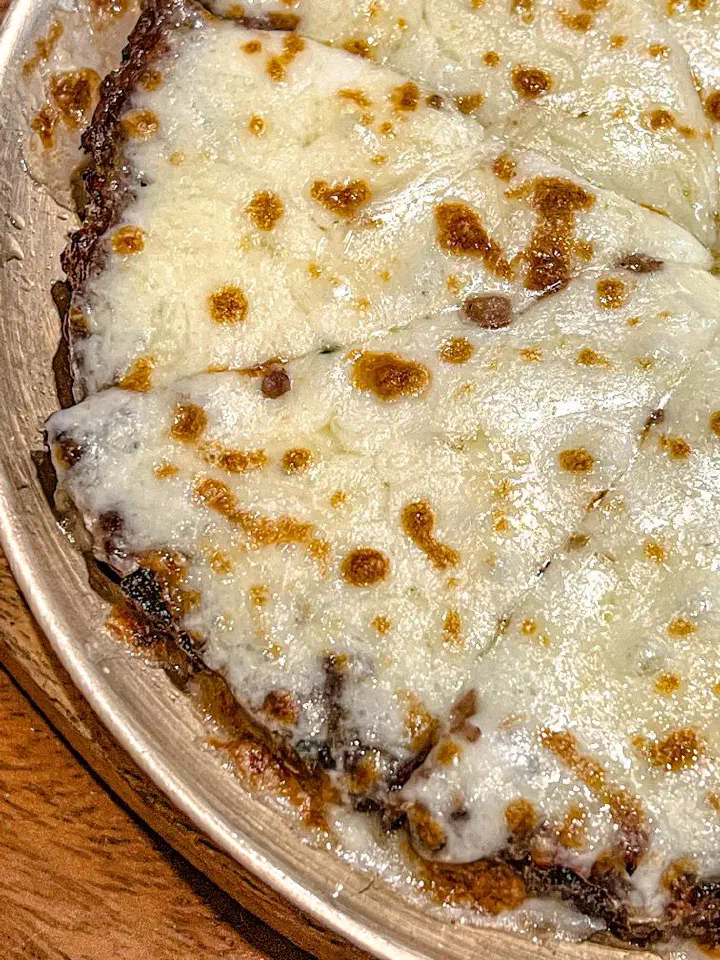
Since we’d come all the way to the main branch, I wanted to try one of the chef’s signature non-mulhoe items. Cheese bulgogi (치즈불고기) is a brick of slow-cooked seasoned beef topped with a thick layer of melted mozzarella and broiled until golden.
The texture is closer to a Korean tteokgalbi (떡갈비, beef patty) than to bulgogi. It’s incredibly tender, almost spreadable, and the gooey cheese cuts through the spice of the mulhoe beautifully.
Fair warning: the portion is on the small side, so two hungry adults will polish it off quickly.

Sweet finish on the way out

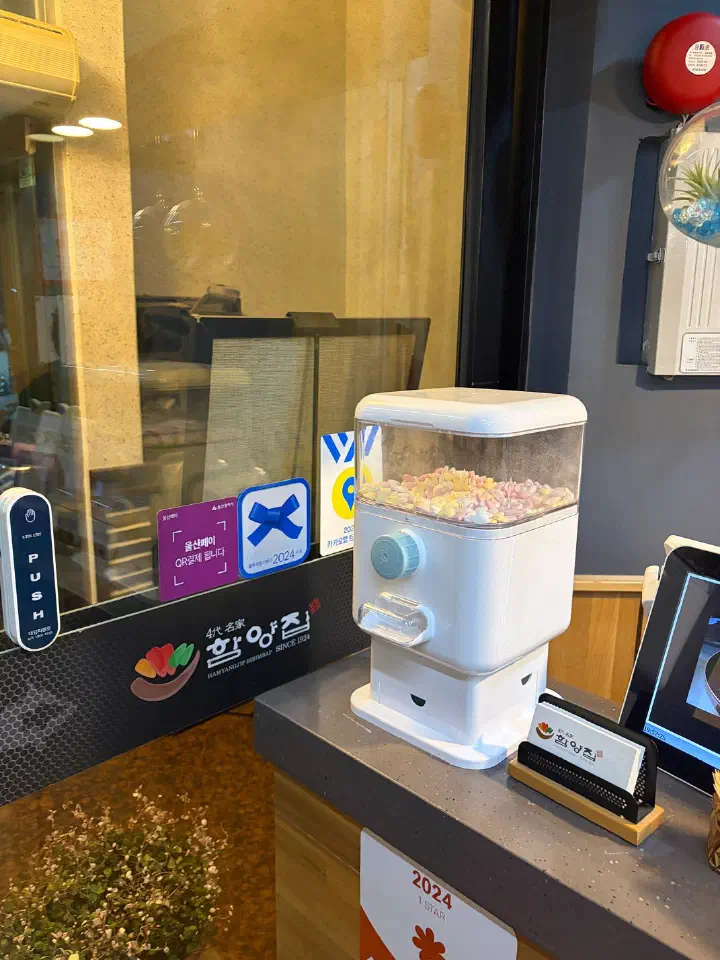
By the exit there’s a little candy dispenser — grab one to soothe the lingering heat from the mulhoe broth on your way out. A small detail, but a thoughtful one.
Final thoughts
Coming back after years and finding the food unchanged is the highest praise I can give a restaurant. The hanwoo mulhoe is refreshing, gently spicy, and naturally sweet from fruit — a dish you’ll crave in any season. The yukhoe bibimbap is balanced and approachable, even for guests who are nervous about raw beef (remember, you can ask to have it cooked).
If you have a lunch slot to fill near Ulsan City Hall, or you’re routing through Ulsan from Busan or Gyeongju, Hamyangjip Main Branch is well worth the detour.
Bonus: the Jongga Main Branch
Hamyangjip actually runs a second flagship location called Jongga Main Branch (종가본점). It’s a separate venue, set up more for family gatherings and large groups.
- Hamyangjip Jongga Main Branch (함양집 종가본점)
- Address: 51 Jongga 8-gil, Jung-gu, Ulsan (울산광역시 중구 종가8길 51)
- Phone: +82-52-274-0100
- Hours: 11:00 – 21:00 (break time 15:00 – 17:00)
- Valet parking available
- Large private rooms on the second floor for birthdays, dol (first birthday) parties, family banquets, and engagement meals
The Jongga branch is inside Woojeong Innovation City’s “Premium Food Street” and offers a few specialty dishes you won’t find at the Sinjeong-dong main branch, such as jeontong bibimbap (전통비빔밥, traditional Korean bibimbap), gorae bibimbap (고래비빔밥, whale bibimbap), and shinseollo suyuk (신선로 수육, royal court hot pot with boiled meat).
Pick the branch that matches your plans — solo or casual lunch at Sinjeong-dong, large family gathering at Jongga.
Location & How to Get There
Hamyangjip’s main branch is on a side street opposite Ulsan City Hall, in Nam-gu.
There’s a dedicated parking lot next door.