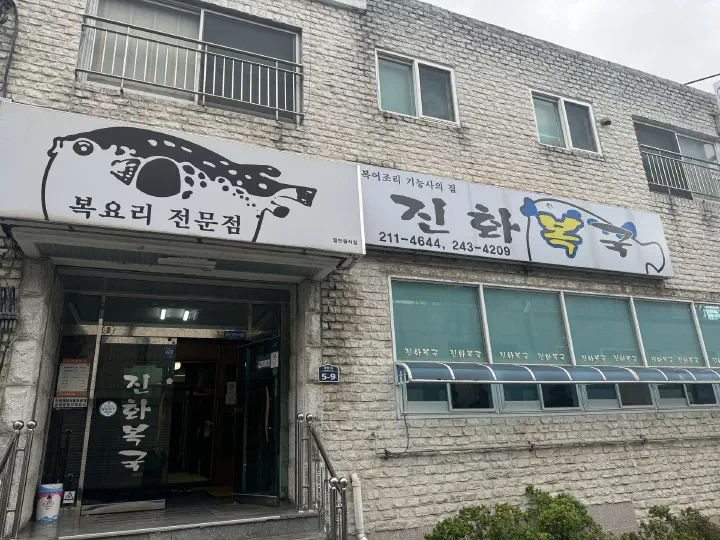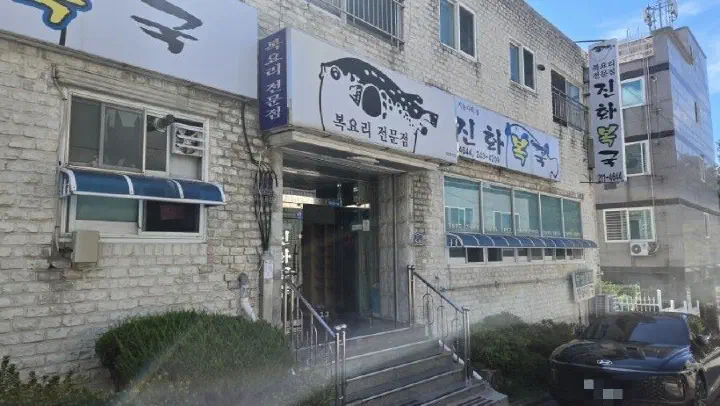
There’s an old pufferfish spot tucked into Seongan-dong in Ulsan’s Jung-gu district, and it’s called Jinhwa Bokguk (진화복국).
It sits in a small alley across from Hamwollu, near the Ulsan Police Agency. The kind of place everyone in the neighborhood already knows. I went on a day when my stomach felt heavy and I was craving a clear, warming bowl of soup, and I figured I’d write down the menu, prices, and parking details while it was all fresh in my mind.

The basics
- Address: 5-9 Hamwol 6-gil, Jung-gu, Ulsan (성안동 826-3)
- Phone: 052-211-4644 / 052-243-4209
- Hours: 10:00–20:00 daily (last order 19:30)
- Closed: open year-round, except major holidays
- Parking: private lot next to the building, plus spaces in front
- Other: indoor restrooms (separate for men and women), group rooms available
📍 View Jinhwa Bokguk (진화복국) on Google Maps →
A quick note for travelers: Korea doesn’t have a tipping culture, so there’s no need to leave one. If you do, the staff will probably just be confused. Almost every restaurant here takes cards, and any internationally recognized card works fine, so you don’t need to stress about payment.
Getting there and parking
Seongan-dong is built into a hillside, so the road up to the restaurant has a bit of a slope. If you punch “진화복국” into your navigation app it’ll guide you straight there. An easy landmark: pass the Ulsan Police Agency, turn left, and it’s the first alley on your right.
One thing worth knowing — Google Maps is pretty unreliable for walking and transit directions in Korea, so I’d use Naver Map or KakaoMap instead. If you don’t have a car, a taxi from Ulsan Station or the city center is easy enough; the Kakao T app works just like a ride-hailing app and saves you from explaining directions in Korean.
There’s a private lot beside the building, and you can also park in front.

That said, the lot fills up fast at lunch and on weekends. When I went in the evening it was much easier to find a spot.

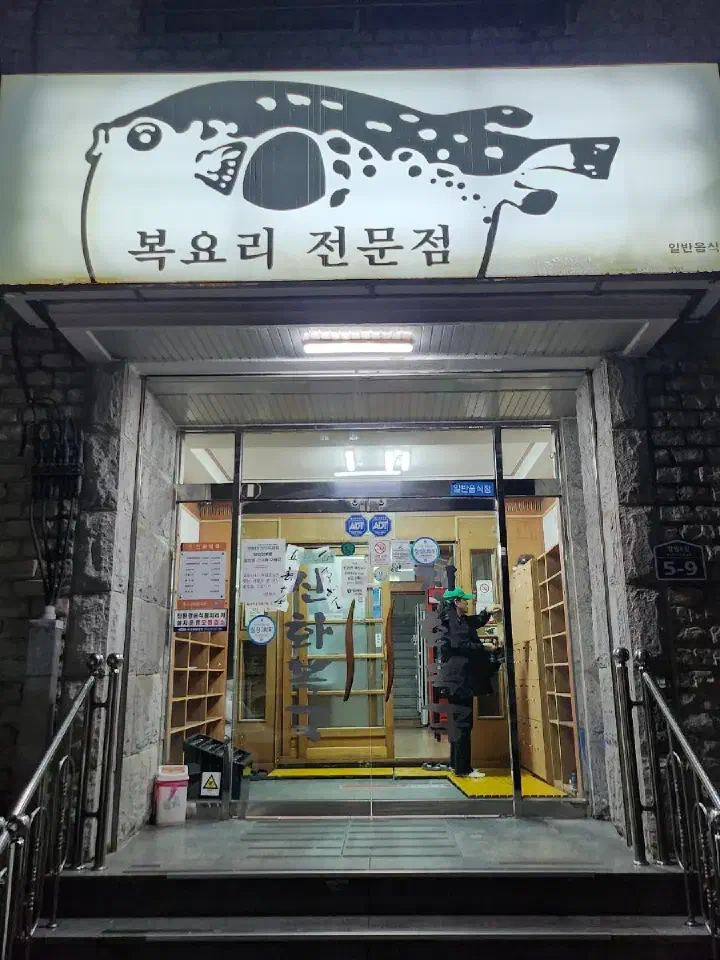
There’s a shoe rack at the entrance. You take your shoes off before going in, so comfy socks are a good idea.

The space
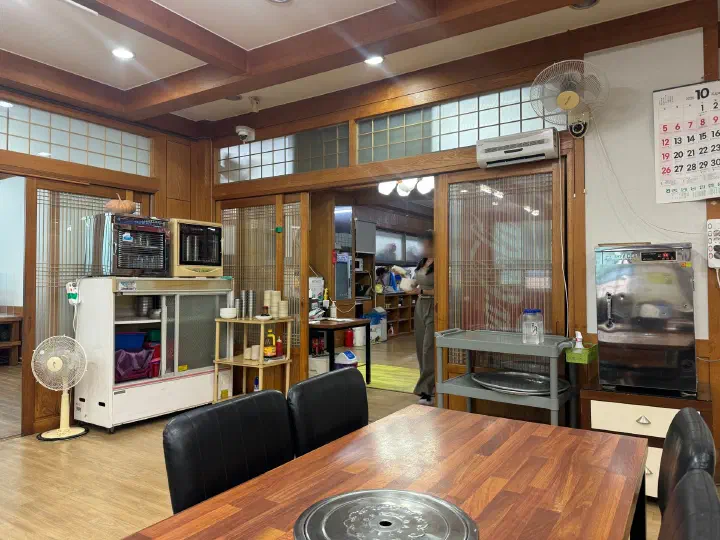
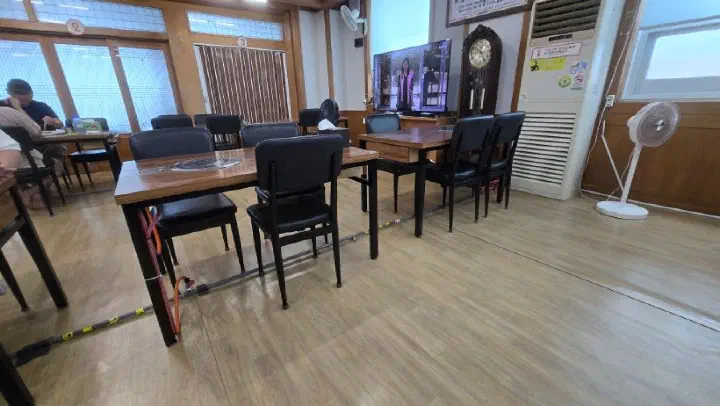
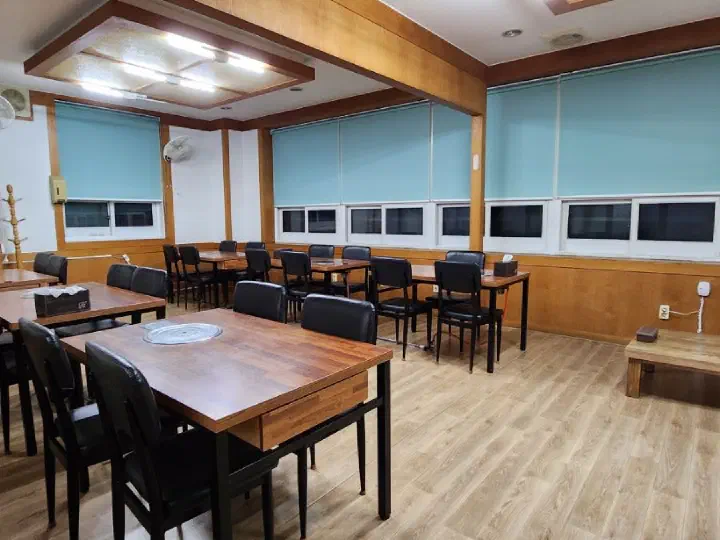
Walking in, I was surprised by how big it is. The main hall is roomy, and there are separate rooms in the back, so it works well for family gatherings or group dinners.

I heard it used to be floor seating, but it’s all switched to regular tables and chairs now, which is a relief if your knees aren’t a fan of sitting on the floor.

You can feel the years in the furniture and the worn-in interior. The crowd skews older — mostly middle-aged regulars who clearly come for a warm, clean bowl of broth. That tells you something about how loyal the customers are.

Menu and prices
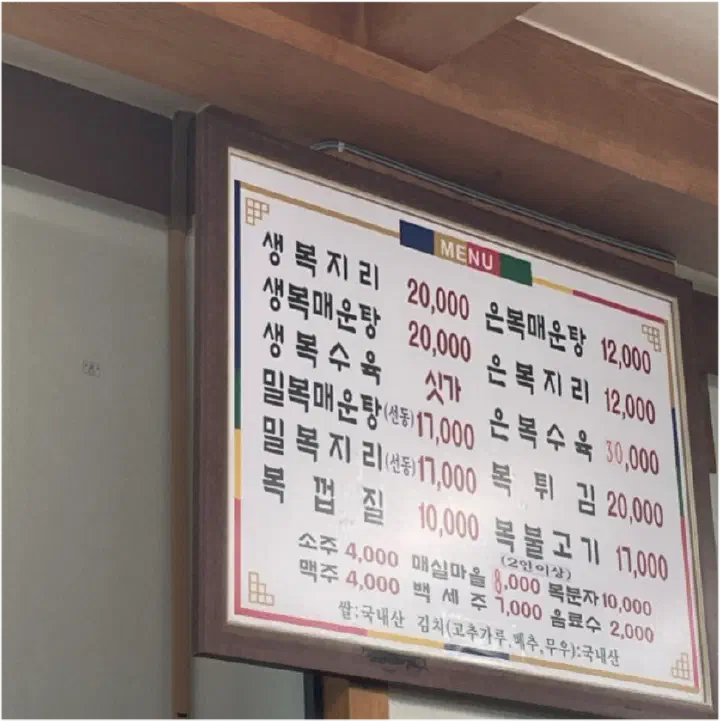
Being a pufferfish specialist, the menu has plenty of options. The fish is sorted by type — saengbok (fresh pufferfish), milbok, and eunbok — and the prices shift accordingly.

- Saengbok jiri / saengbok maeuntang (fresh pufferfish, clear or spicy stew) — 20,000 won
- Saengbok suyuk (poached pufferfish) — market price
- Bok twigim (fried pufferfish) — 20,000 won
- Bok bulgogi (spicy braised pufferfish) — 17,000 won
- Bok kkeopjil (pufferfish skin salad) — 10,000 won
- Milbok jiri / milbok maeuntang — 17,000 won
- Eunbok jiri / eunbok maeuntang — 12,000 won
- Eunbok suyuk — 30,000 won
If it’s your first time, the eunbok jiri is the easy entry point; for something richer, go for the saengbok jiri. I ordered the saengbok jiri, bok bulgogi, and bok twigim this time.
Ordering isn’t a problem even if you don’t speak Korean — you can point at the menu and hold up a few fingers, and you’ll be fine.
Side dishes and the bean sprout salad
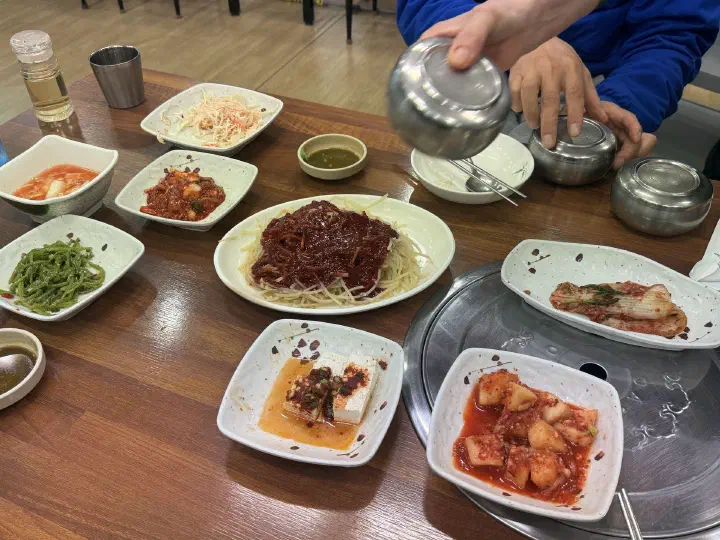
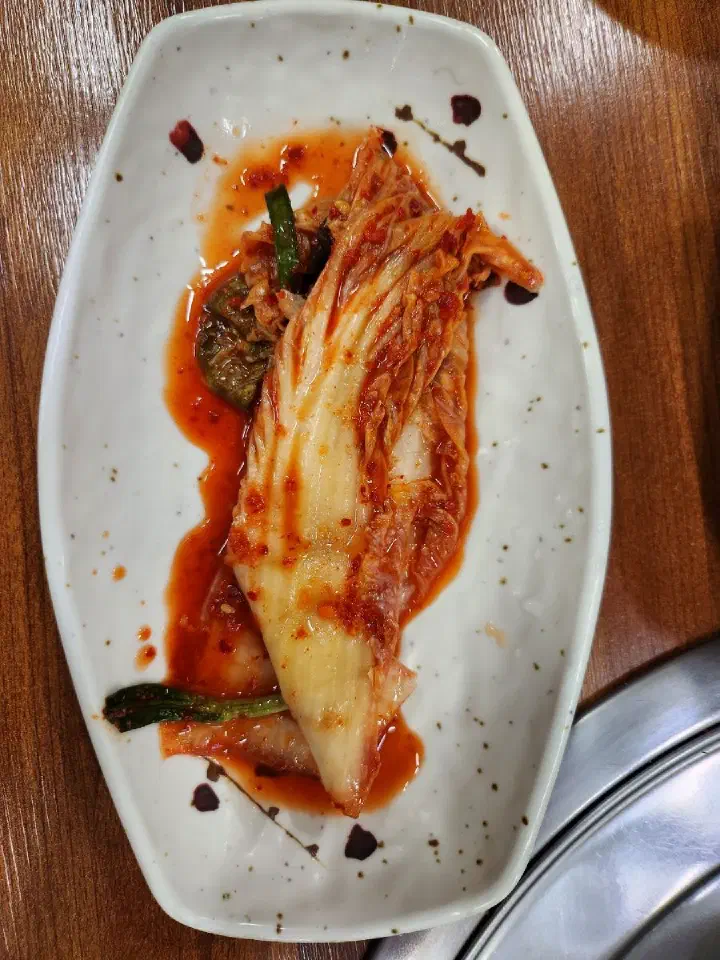
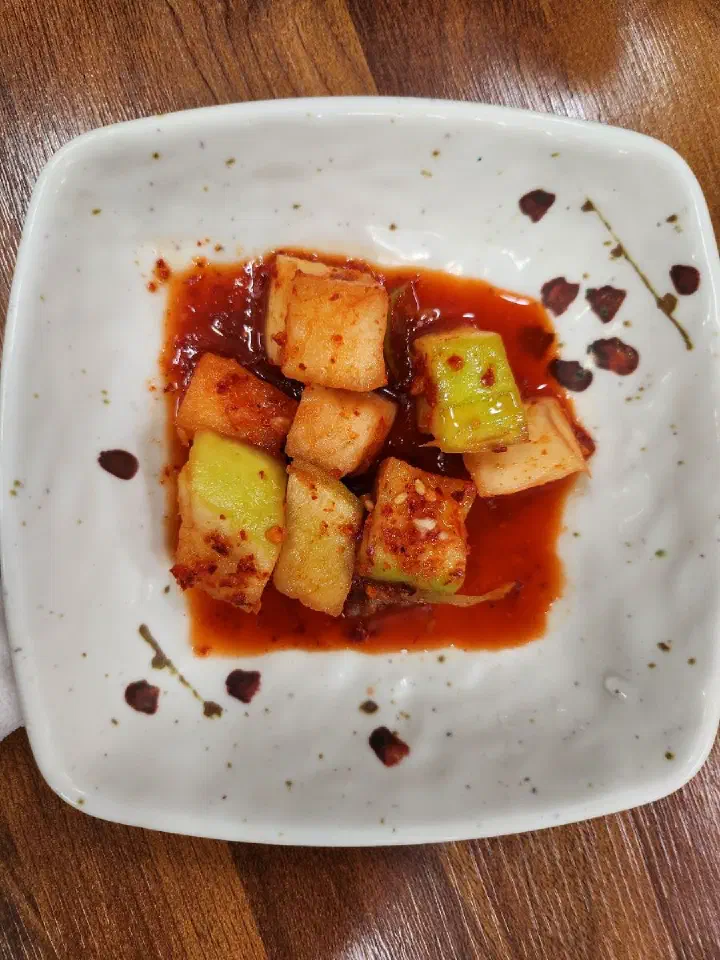
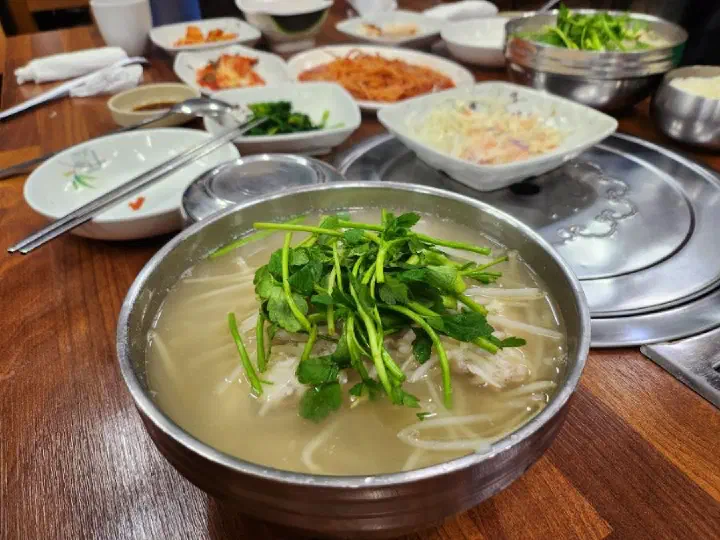
Before the soup arrives, a spread of side dishes (banchan) lands on the table, and you can tell they’re all made and fermented in-house. A lot of places these days use store-bought banchan, so you get a lot of dishes but nothing memorable. Not here.

The gat kimchi (갓김치, mustard-leaf kimchi) is crisp and refreshing, and the tofu topped with seasoned soy sauce is a little treat too.


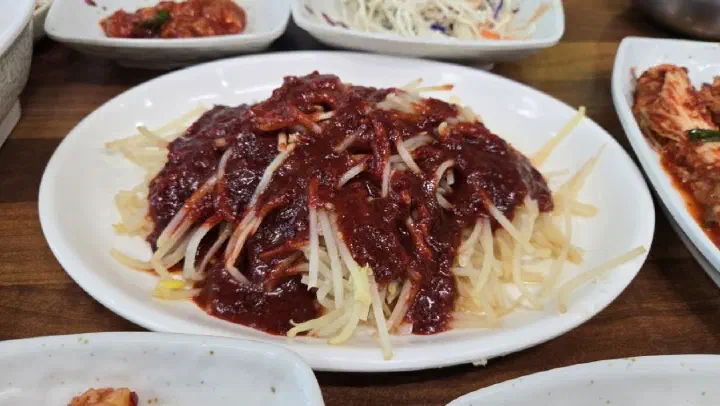
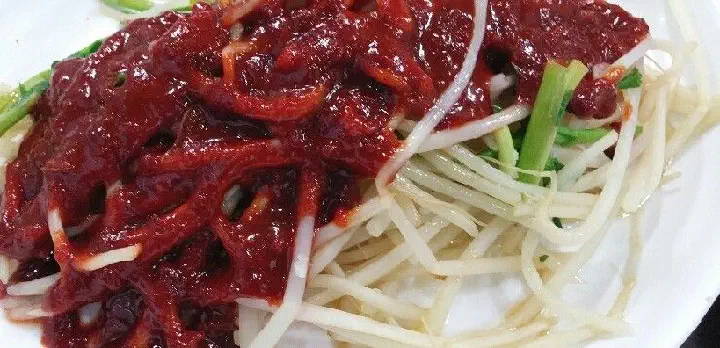
Here’s the thing that sets Jinhwa Bokguk apart: the bean sprout salad (콩나물무침). They blanch the sprouts in a big pot, scoop them out, and dress them with a tangy-spicy chojang (초고추장, vinegared red chili paste). Apparently most pufferfish places don’t serve this.

It’s sour and a little spicy, and it really wakes up your appetite — perfect with a drink while you wait for the soup. Honestly, this little dish might be the restaurant’s signature.
Saengbok jiri — clean, clear broth
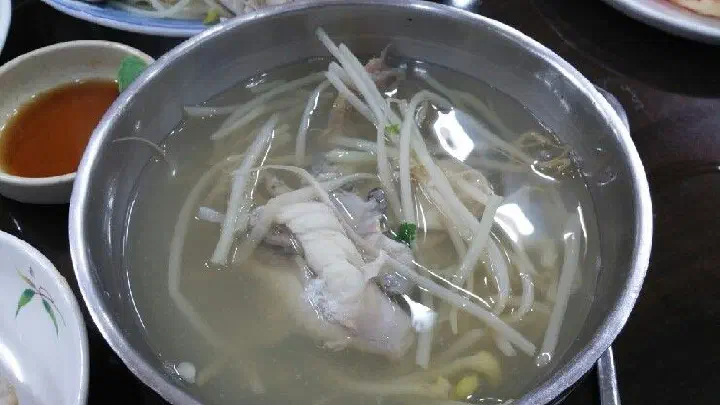
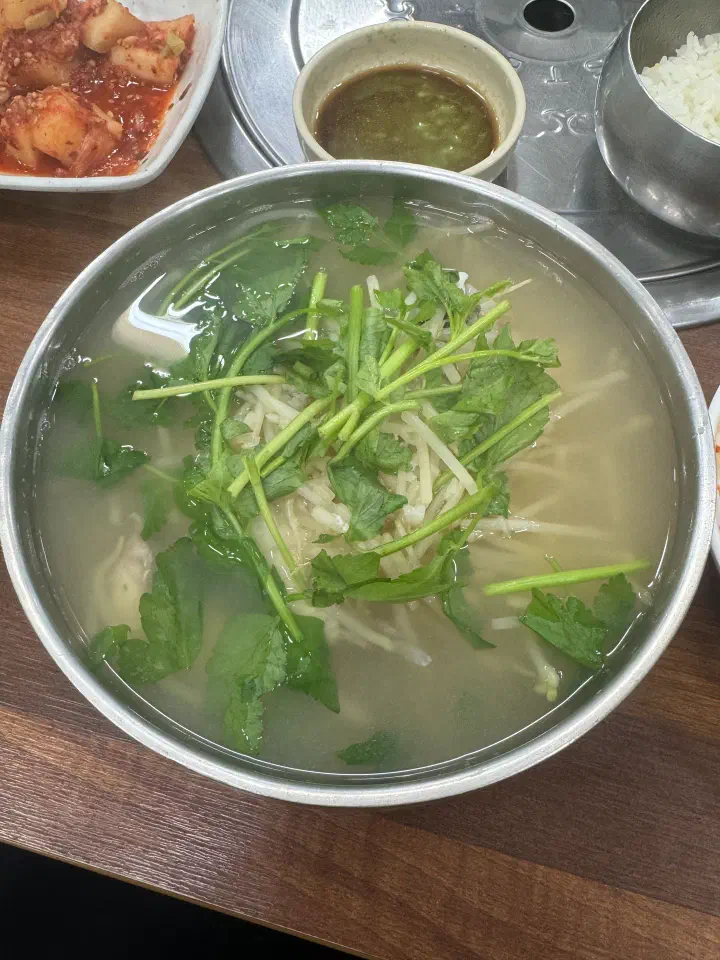
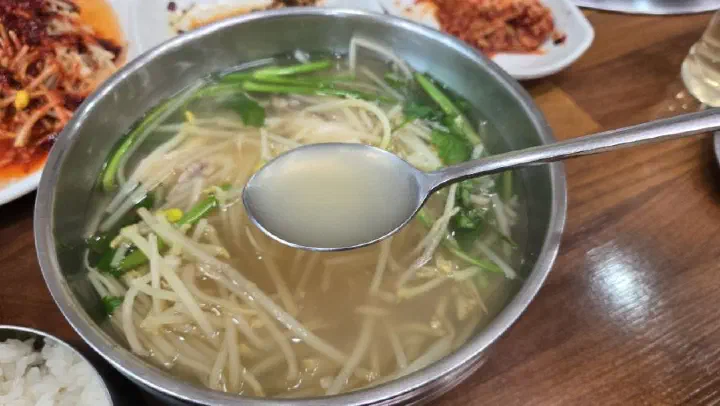
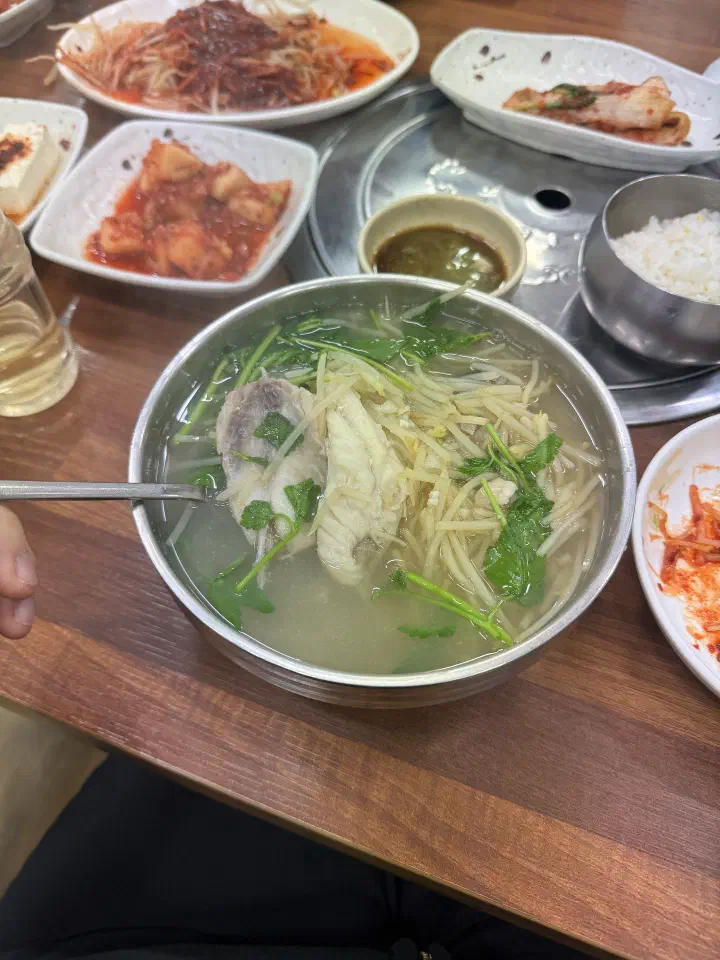
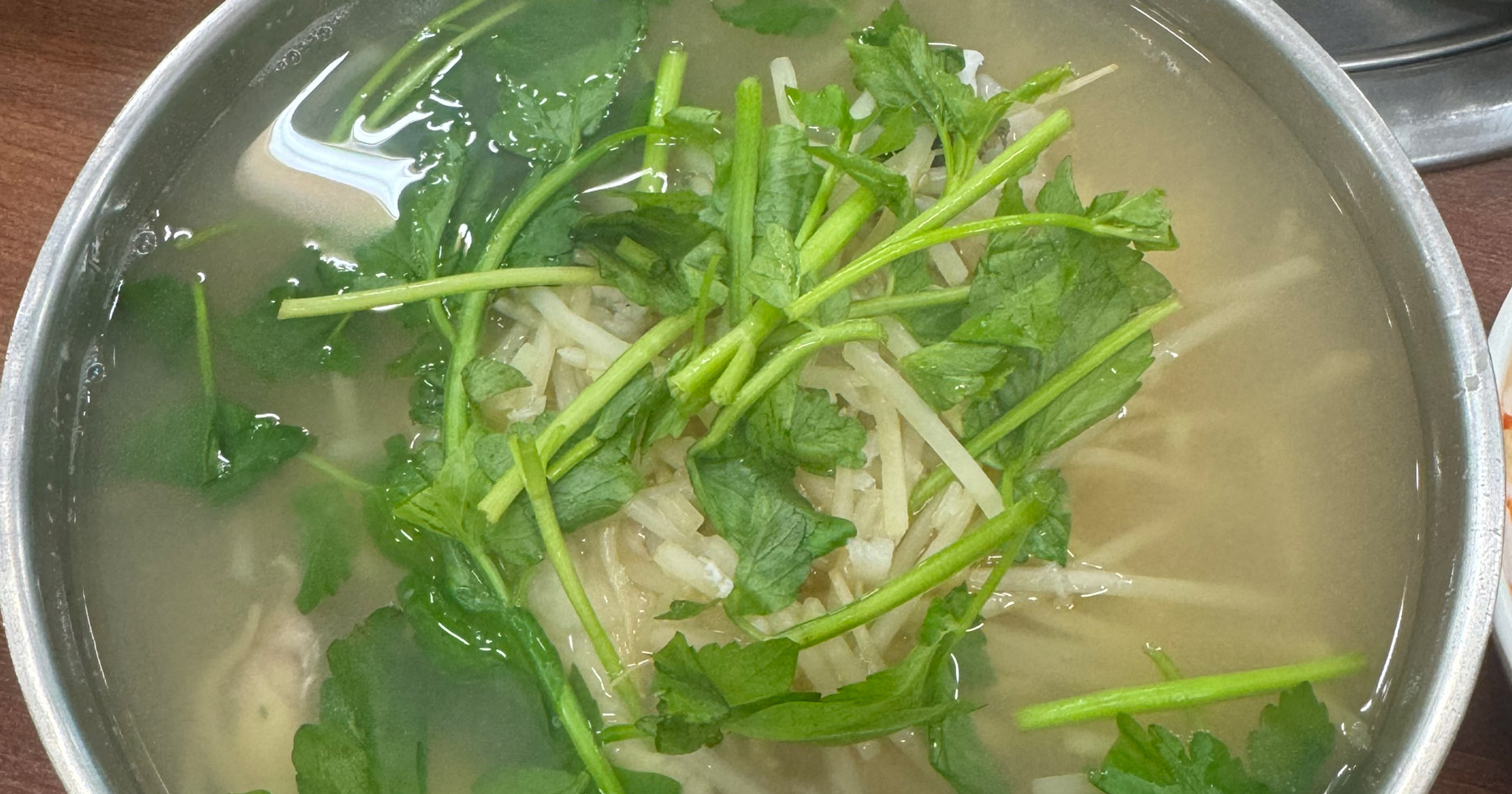
Finally, the main event: saengbok jiri. Most places simmer it in a shallow pot at the table, but here it comes already cooked in individual bowls. It arrives at just the right temperature, so you don’t have to sit there waiting for it to cool.

It’s piled with bean sprouts and minari (미나리, water dropwort). The first spoonful spreads this clean coolness through your mouth — and even though the broth is clear and transparent, there’s a surprising depth to it. Not a trace of fishiness.

The pufferfish itself is springy but mild, with a faint nutty sweetness that builds as you chew. The flesh isn’t tough at all — soft enough that everyone from grandparents to kids can enjoy it. I added a couple of drops of vinegar to sharpen it up.

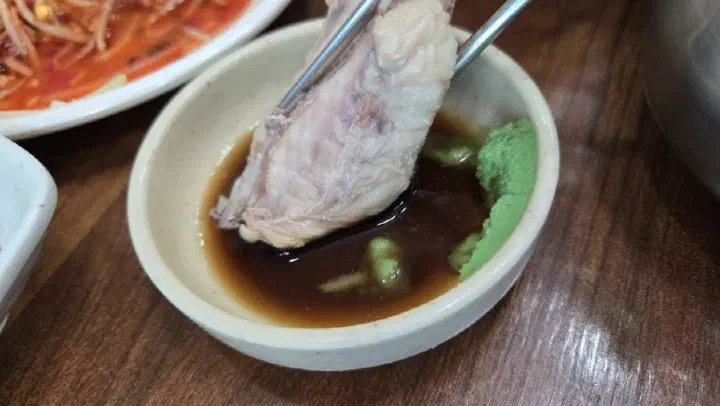
Dip the fish in the wasabi-soy sauce and it’s a whole different flavor.


Bok twigim — crispy outside, soft inside
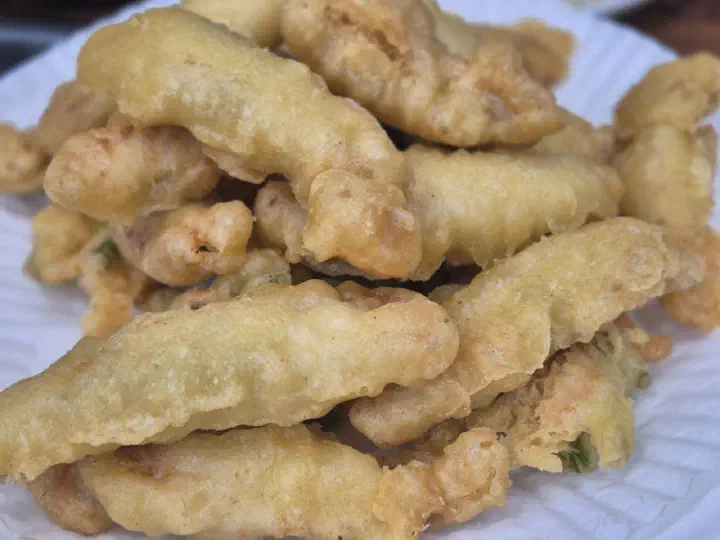
The bok twigim looks like sweet-and-sour pork without the sauce. One bite and the outside is crisp while the inside is packed with pufferfish that practically melts.

It comes with fried vegetables too, so there’s some variety, and there’s no greasy or off smell — once you start, it’s hard to stop. A dip in soy sauce brings out even more of that savory flavor.

Bok bulgogi — spicy and sharp
I assumed bok bulgogi meant pufferfish and beef bulgogi served separately, but it’s actually pufferfish braised in a spicy sauce, with cabbage and onion mixed in.

The sauce isn’t sweet — it’s sharp and fiery, and a bowl of rice disappears fast alongside it. But I have to be honest: this bok bulgogi is pretty spicy even by Korean standards. I found myself hissing through it. If you’re not used to Korean spice, brace yourself — it’ll likely hit harder for you than it does for locals. (The spicy maeuntang stew is on the spicier side too.)

Bok bulgogi usually comes as a minimum two-person order, so go in ready to be full.
Bok kkeopjil — pufferfish skin salad
The pufferfish skin salad is another nice surprise. It’s tossed with minari, cabbage, and a tangy dressing, and the chewy skin plays well against the crunchy vegetables. Eaten between bites of the fried fish or the bulgogi, it resets your palate nicely. It’d also pair beautifully with a drink.

Finish it with rice in the broth
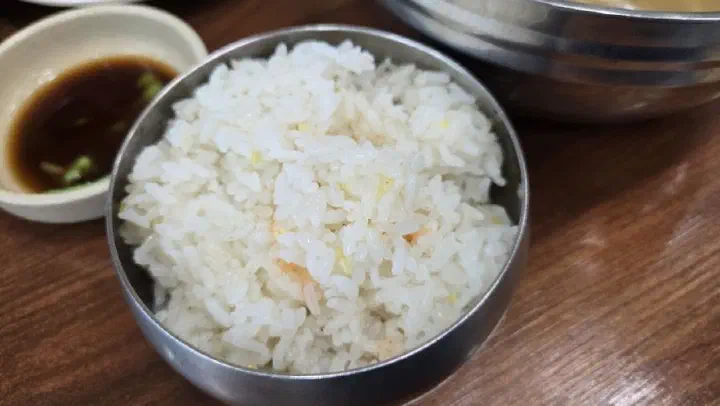
There’s plenty of broth left in the jiri, so spooning rice into it makes for a filling finish. The seasoning is gentle and the broth stays clear, so it never feels heavy, even at the end.

This is the kind of meal you crave when you’re worn out from heavy, spicy food, or the morning after a few too many drinks.

Final thoughts
Jinhwa Bokguk isn’t flashy, but it nails the fundamentals. There’s that bean sprout salad you won’t find elsewhere, and the saengbok jiri broth is clean and deep with no fishy edge. Spicy bulgogi, crispy twigim, tangy skin salad — getting to enjoy one fish so many ways is part of the charm.
Prices land around 12,000–20,000 won per dish, so it’s easy on the wallet and a comfortable spot to bring family or older relatives. If you’re hunting for a clear, warming bowl of pufferfish soup in Jung-gu, Ulsan, this one’s worth a stop.
Location / Getting there
5-9 Hamwol 6-gil, Jung-gu, Ulsan (Seongan-dong 826-3).
It’s near the Ulsan Police Agency, in the alley across from Hamwollu. Searching “진화복국” in your navigation app brings it right up.