If you talk about mulhoe (물회), the cold raw-fish soup, in Ulsan, you end up talking about Jujeon. It’s a stretch of coast lined with seafood places, and the one with a constant crowd is Yukil Hoetjip (육일횟집).

There’s a story behind the name. “Yukil” means six days, and the place is said to close on Sundays and open only six days a week because the owner goes to church. Take it or leave it.

This is the day I drove out to Jujeon and had their yukil mulhoe, the one piled with abalone.

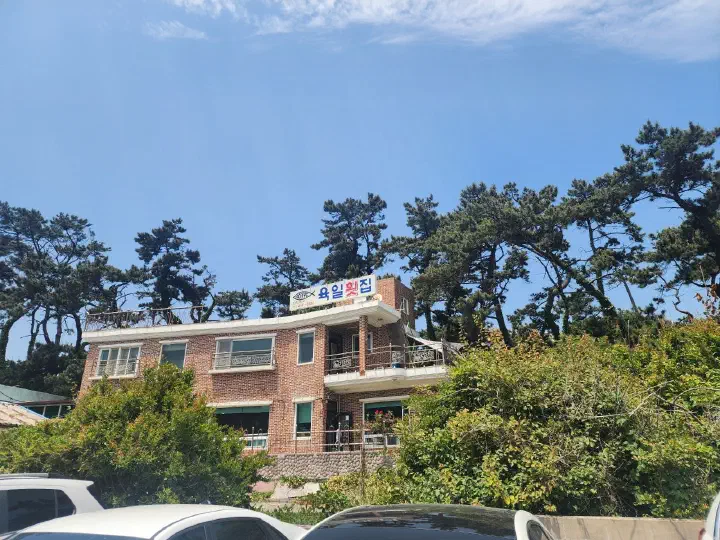
Exterior of Yukil Hoetjip on Jujeon-haean-gil in Ulsan

The basics

  • Name: Yukil Hoetjip (육일횟집)
  • Address: 278 Jujeon-haean-gil, Dong-gu, Ulsan
  • Phone: 052-251-0061
  • Hours: 11:00 – 21:00
  • Closed: Every Sunday
  • Parking: large private lot, plus a free public lot right in front
  • Restroom: inside the restaurant

📍 View Yukil Hoetjip (육일횟집) on Google Maps →

They open daily from 11 a.m. to 9 p.m. and close only on Sundays. If you’re coming a long way, it’s worth a quick phone call first, since they can pause briefly if they sell out of fish.

Getting there and parking

Yukil Hoetjip sits well past Bangeojin, out on Jujeon Beach. From central Ulsan it’s about a forty-minute drive, on a slightly remote piece of coast. There isn’t a subway in Ulsan, and buses out here are limited, so a car is honestly the easy way to come. It makes a nice seaside drive on its own.

One thing worth knowing for travelers: Google Maps walking and transit directions are unreliable in Korea. Use Naver Map or KakaoMap instead. If you don’t have a car, the KakaoT app is the standard way to call a taxi, and a couple of local bus lines stop a few minutes’ walk away.

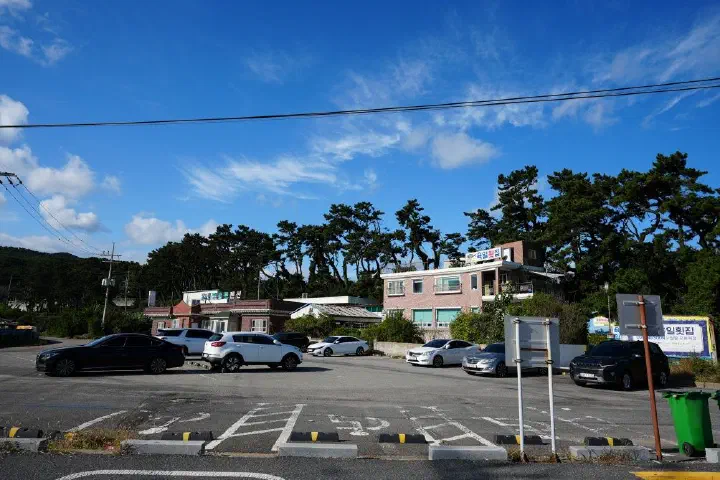
Wide private parking lot at Yukil Hoetjip

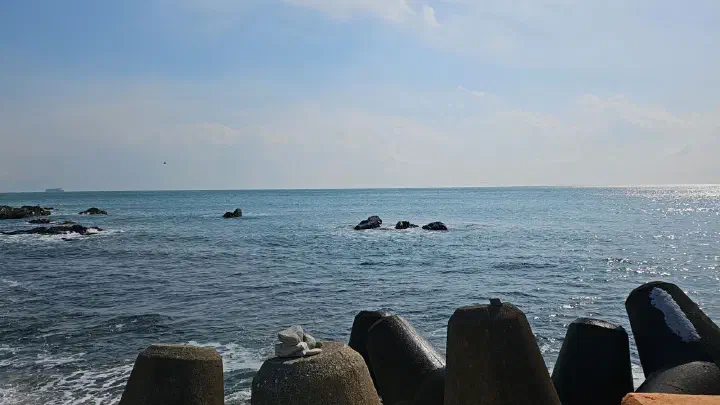
Parking is barely a worry. There’s a big lot right at the restaurant and a free public lot in front of it. Since you’re right on the water, you can park, look at the sea for a minute, and then head in.

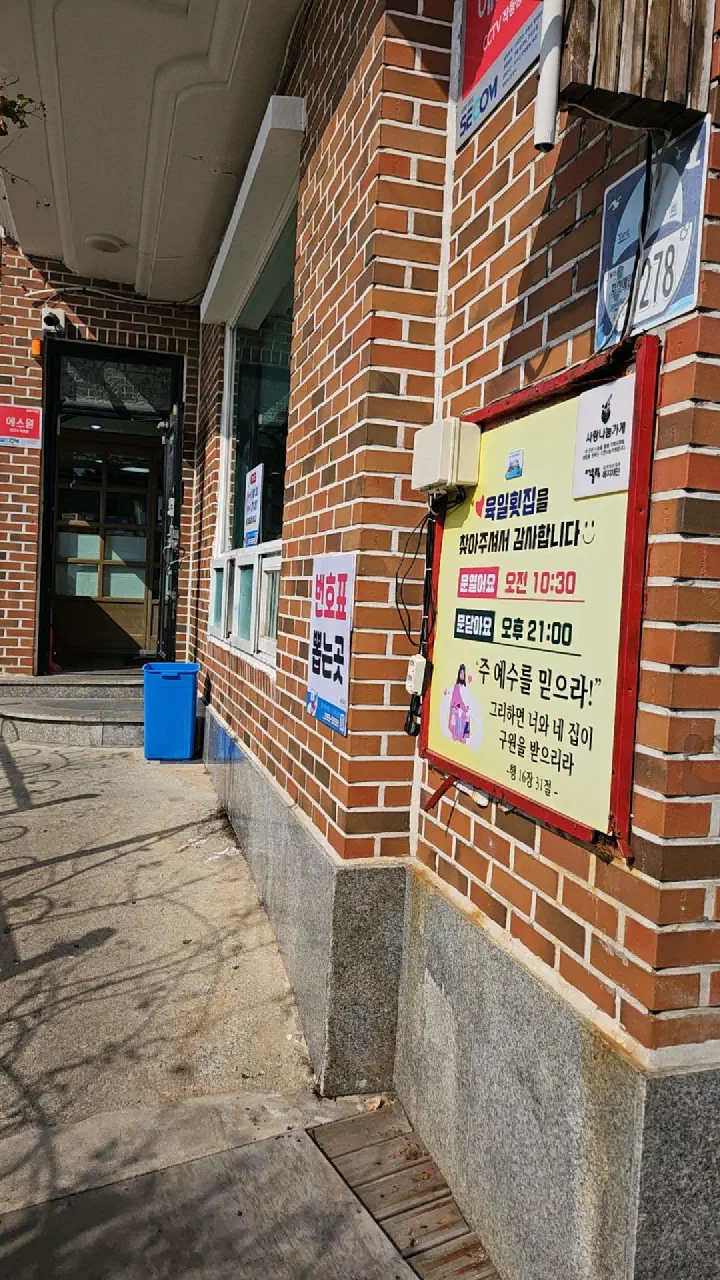
Entrance of Yukil Hoetjip

Inside

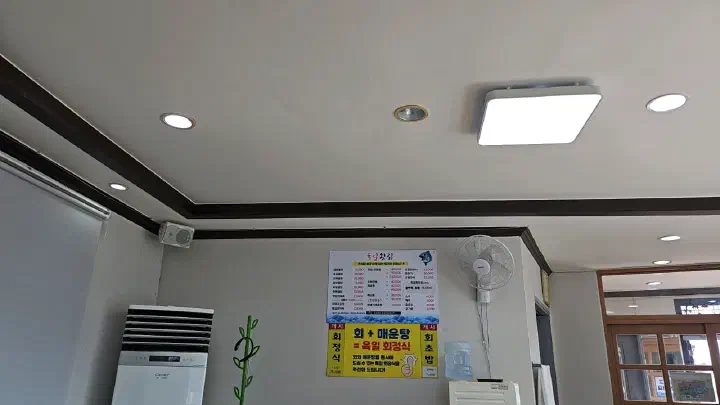
It’s bigger than it looks. There’s a main hall plus an annex next door, so it seats more people than you’d guess. The mood is that of an old, lived-in seafood house, in a good way, and you keep your shoes on at the regular tables.

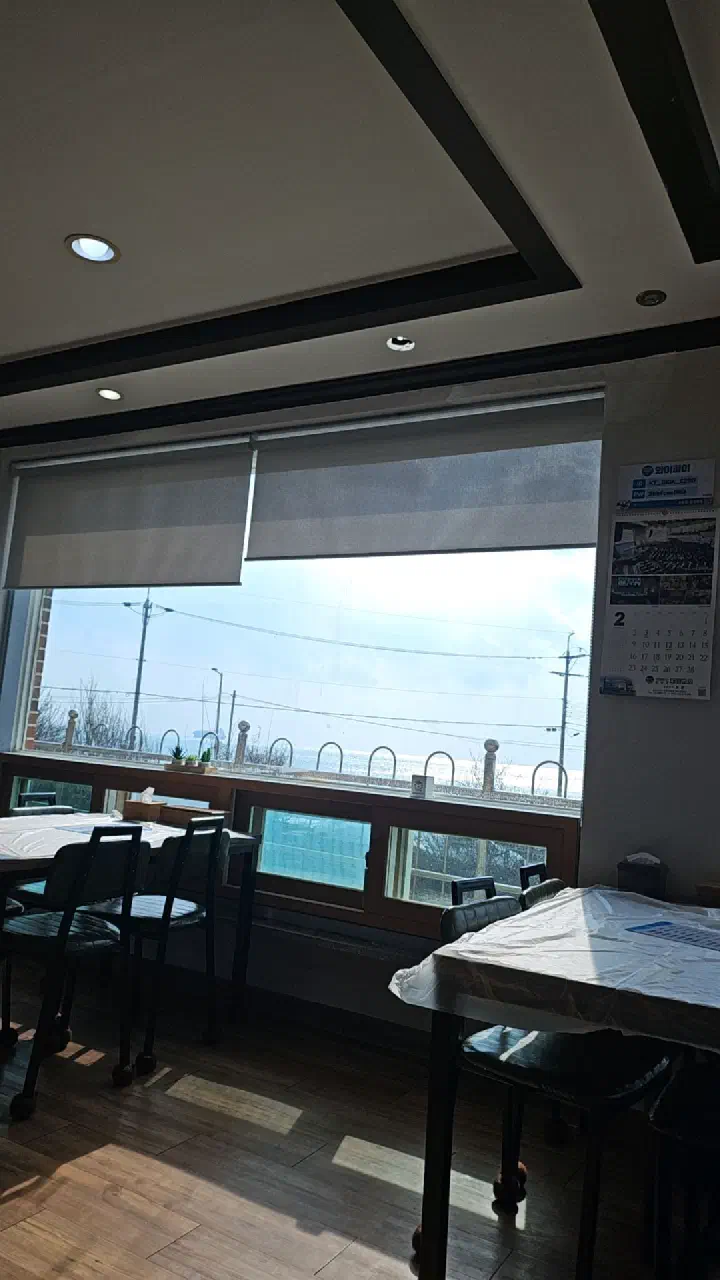
Window seats with a sea view inside Yukil Hoetjip

Grab a window seat and you get a peek of the sea from the table. The room was mostly older locals, families, groups of coworkers on a lunch break. It feels like a place locals actually eat at, not a tourist stop.

Interior seating at Yukil Hoetjip

The staff don’t speak much English, but the menu is straightforward and you can point to what you want and hold up your fingers for how many. That’s all it takes here.

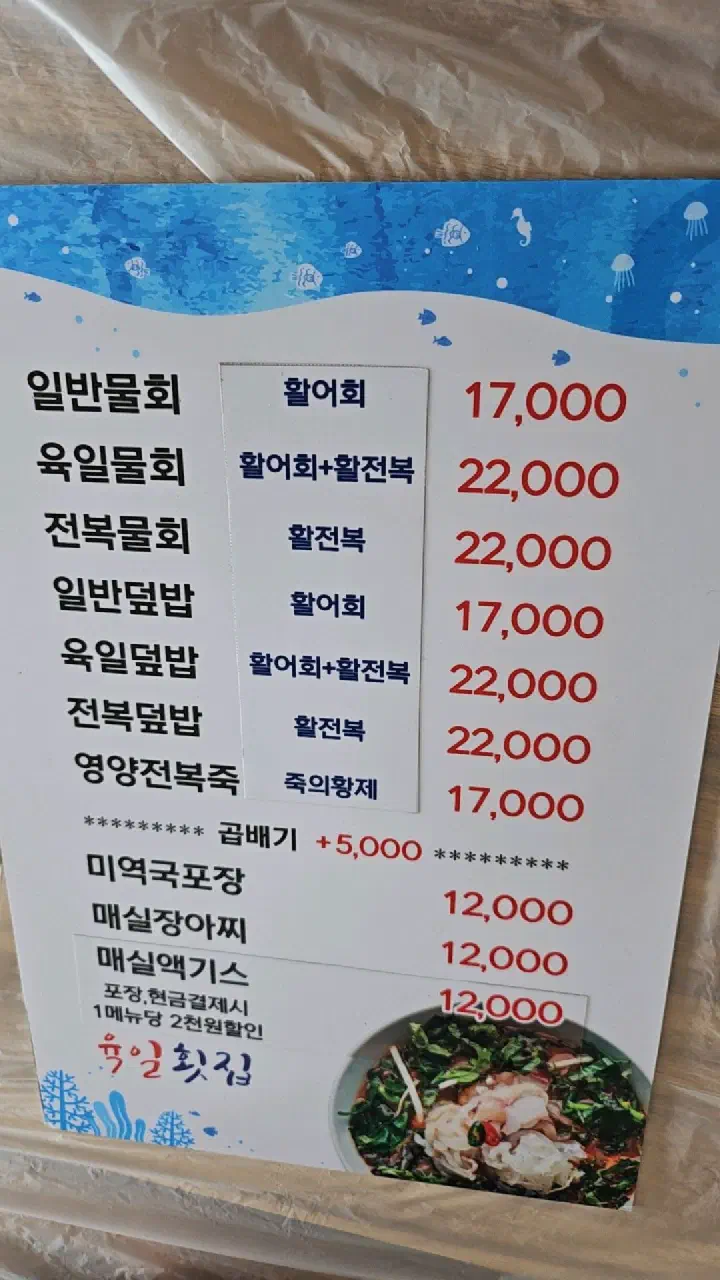
The menu

Mulhoe, rice bowls and abalone porridge are on year-round. There’s also a sashimi set, fish stew and grilled rockfish.

  • Yukil mulhoe (육일물회) — 22,000 won — the signature: raw fish plus abalone
  • Ilban mulhoe (일반물회), regular — 17,000 won — raw fish only
  • Jeonbok mulhoe (전복물회), abalone — 22,000 won — abalone only
  • Yukil deopbap / regular deopbap / abalone deopbap (rice bowls) — 22,000 / 17,000 / 22,000 won
  • Hoe chobap (회초밥), sashimi sushi, 7 pieces — 12,000 won
  • Yeongyang jeonbokjuk (영양전복죽), abalone porridge — 17,000 won
  • Whole grilled rockfish — 30,000 won
  • Yukil hoe jeongsik (육일회정식), sashimi set, 2+ people — 22,000 won per person
  • Yukil jeonbok maeuntang (육일전복매운탕), spicy abalone stew, for 2 — 44,000 won

Menu board at Yukil Hoetjip

The three mulhoe can be confusing. Regular is fish only, yukil is fish plus abalone, and jeonbok is abalone only. If you like abalone, go for the yukil or the jeonbok.

The side dishes come first

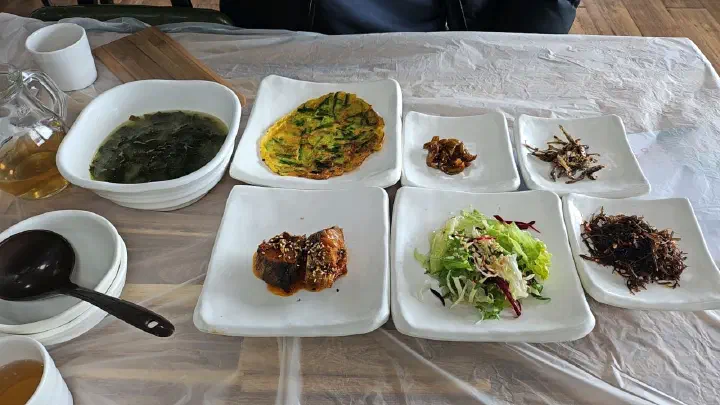
Order and the banchan starts arriving. I expected a couple of small plates and got a whole spread, each one neat and homemade-tasting.

Korean side dishes at Yukil Hoetjip

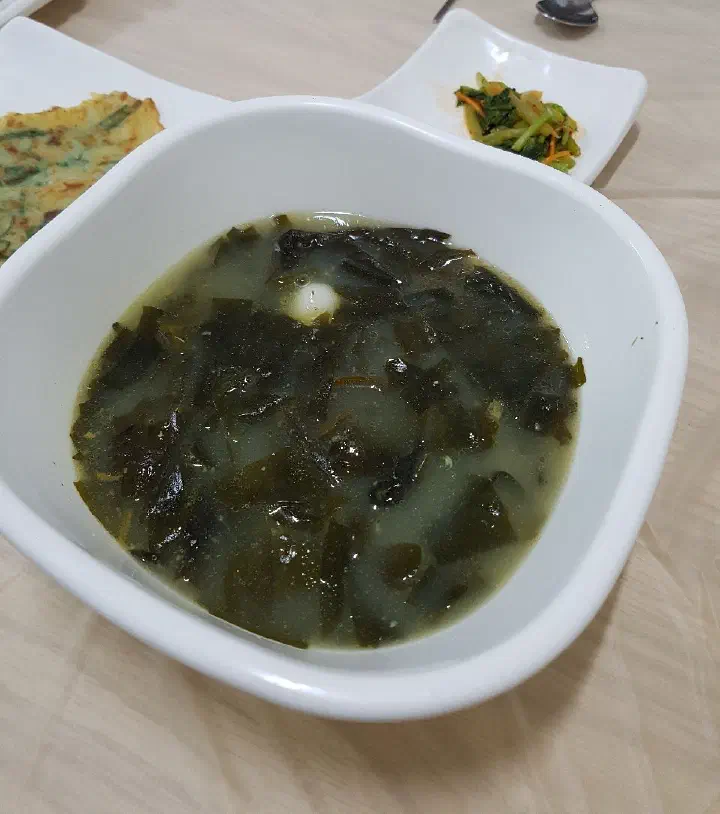
The first thing I reached for was the seaweed soup (미역국). It’s clear and savory with a little seafood in it, and the seaweed has a nice chew. Warming up with a bowl of it before the cold mulhoe arrives is the move.

Seaweed soup at Yukil Hoetjip

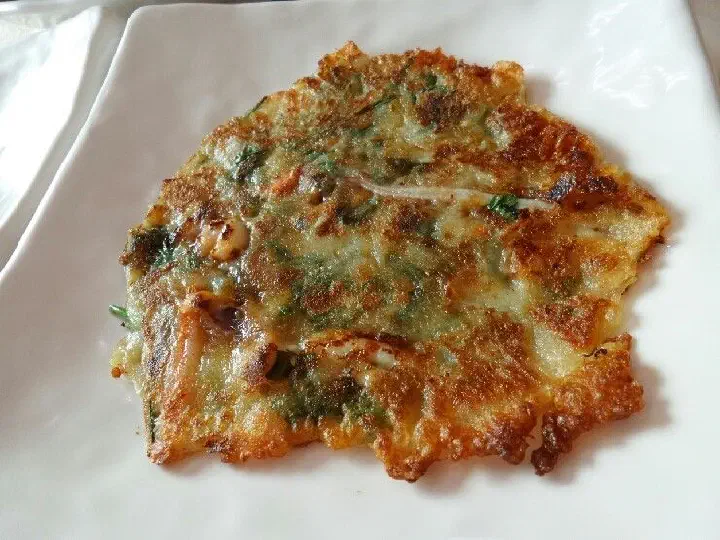
There was a savory pancake too. Around Gyeongsang-do they often make jeon with ripe pumpkin (호박전) rather than zucchini, and it’s quietly one of the better bites.

Pumpkin pancake at Yukil Hoetjip

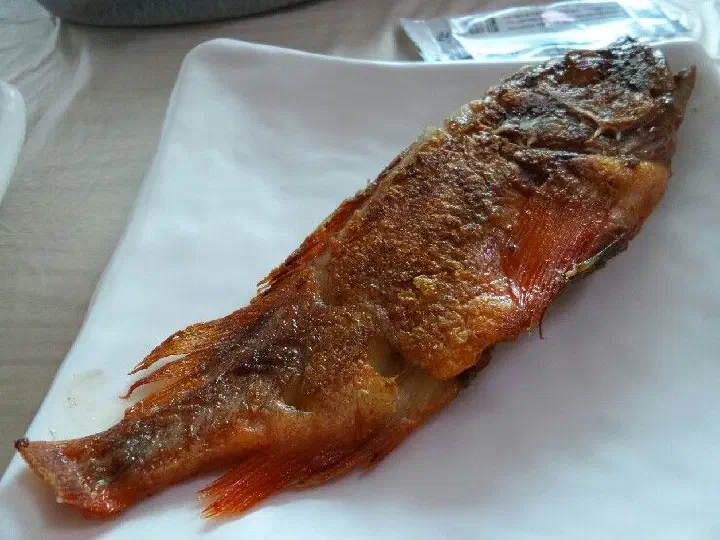
A plate of braised fish came warm, seasoned just right, and went well with rice.

Braised fish side dish at Yukil Hoetjip

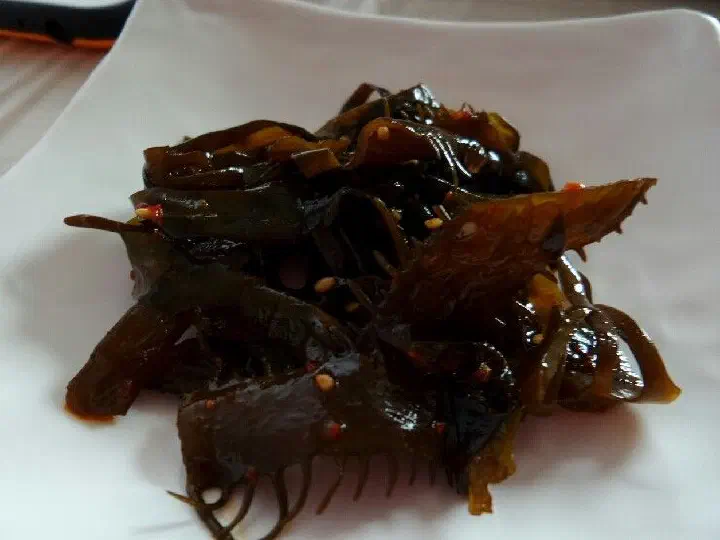
The odd one out was braised abalone innards (전복 내장 조림). I’d never had it before. It’s a bit of a love-it-or-not thing. There’s also seaweed salad, greens and stir-fried anchovies, and the anchovies sneakily disappear with the rice.

Braised abalone innards and seaweed side dishes at Yukil Hoetjip

The signature yukil mulhoe

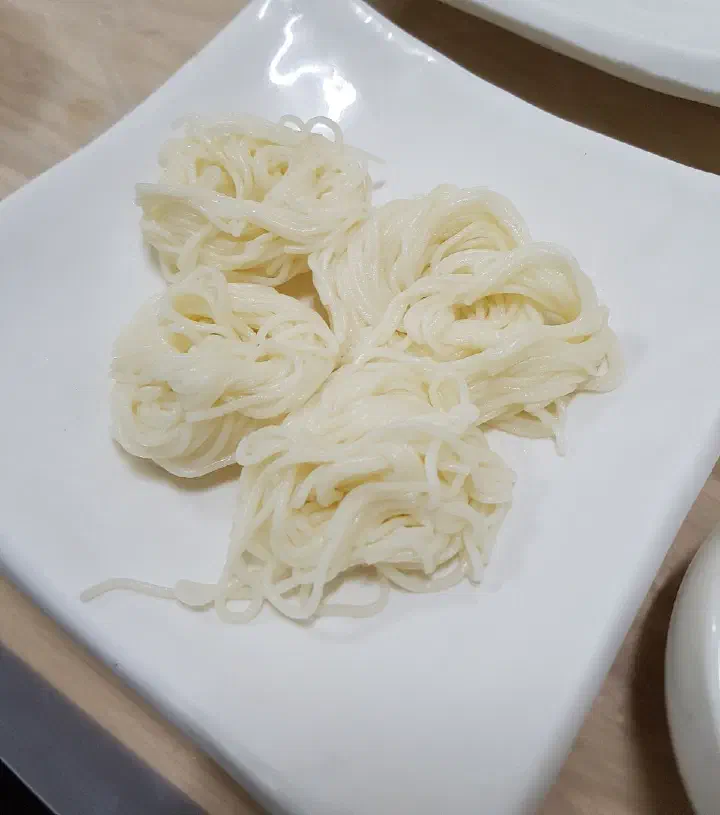
You’re still picking at the banchan when the mulhoe lands. It comes with a small bundle of thin somyeon noodles (소면) on the side. Tiny portion, but you’d miss it if it weren’t there.

Somyeon noodles served with yukil mulhoe

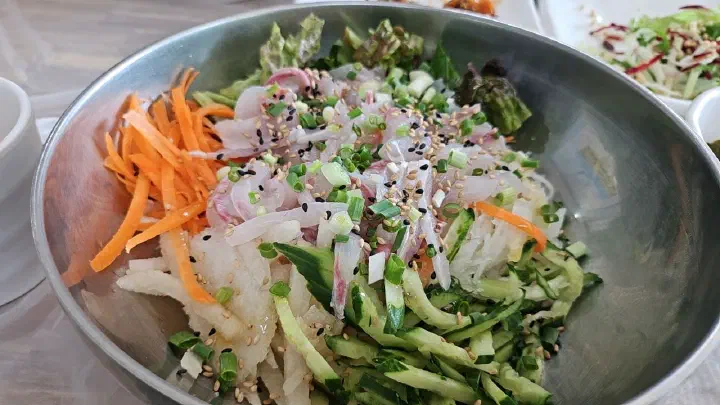
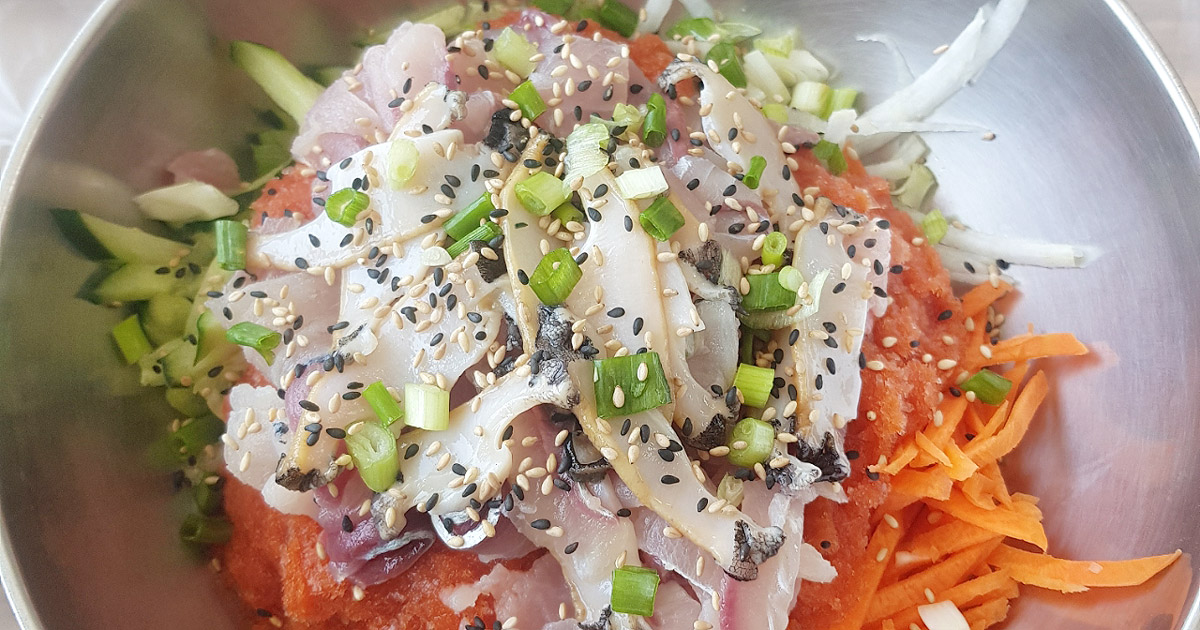
Then the yukil mulhoe. The portion is generous at a glance. Shredded radish, cucumber, carrot and pear underneath, a slushy iced broth over that, and raw fish and abalone piled on top.

Signature yukil mulhoe at Yukil Hoetjip in Jujeon, Ulsan

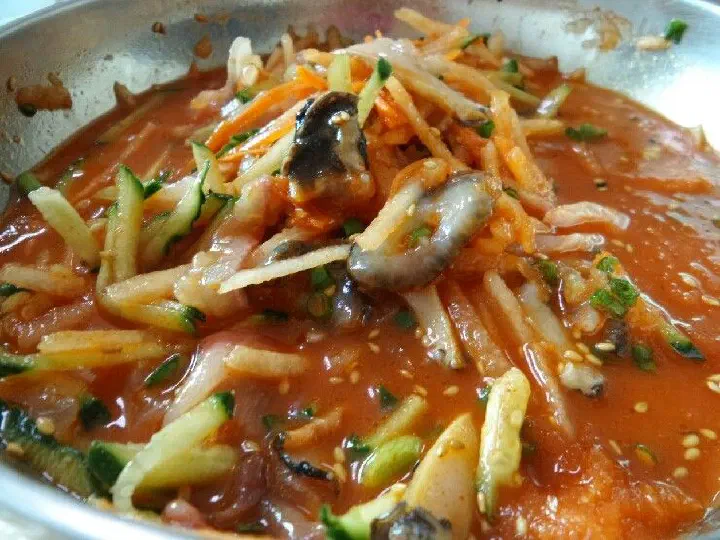
A note on the broth: the gochujang and vinegar come through fairly strong, so it reads tangy with a bit of a kick. Korean spicy isn’t the same as elsewhere, and this leans more sour-sweet than fiery, but if you’re new to it, just know there’s some heat in there. The sweetness is from the vegetables, not sugar, so the finish stays clean.

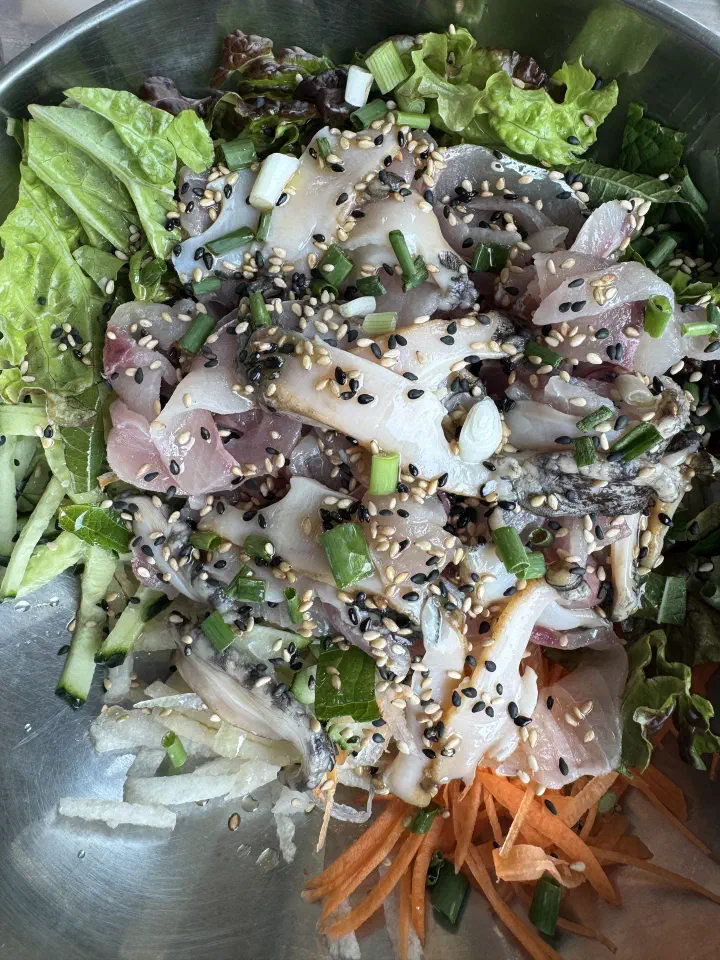
Fresh sliced fish and vegetables in yukil mulhoe

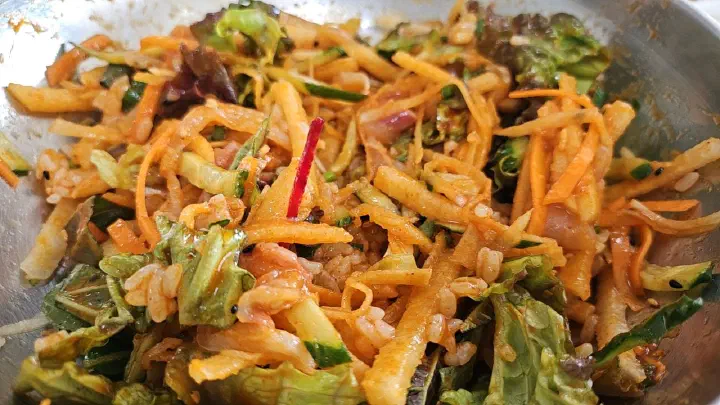
There’s a lot of fish in it. The slices are firm and clean-tasting, so it’s worth fishing out a few pieces and eating them on their own before you mix everything. Enjoy the fish first, then stir in rice partway through and you get both the sashimi and the soup in one bowl.

The abalone is about half a one rather than whole, and it has that crunch and a real burst of the sea when you bite it. That texture is probably why so many people order the yukil over the plain version.

Close-up of abalone in yukil mulhoe

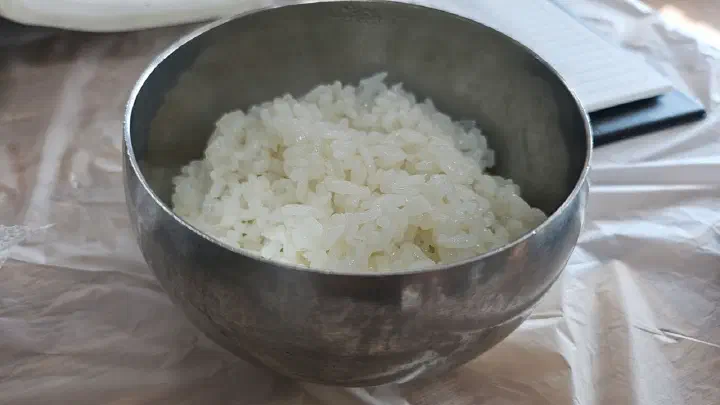
Mulhoe alone won’t fill you up, so you’ll end up adding the noodles or the rice. The rice portion is on the small side, which makes sense with the noodles already there. Cold soup and warm rice sounds like it shouldn’t work, but somehow it does.

Bowl of rice to go with yukil mulhoe

And the abalone porridge

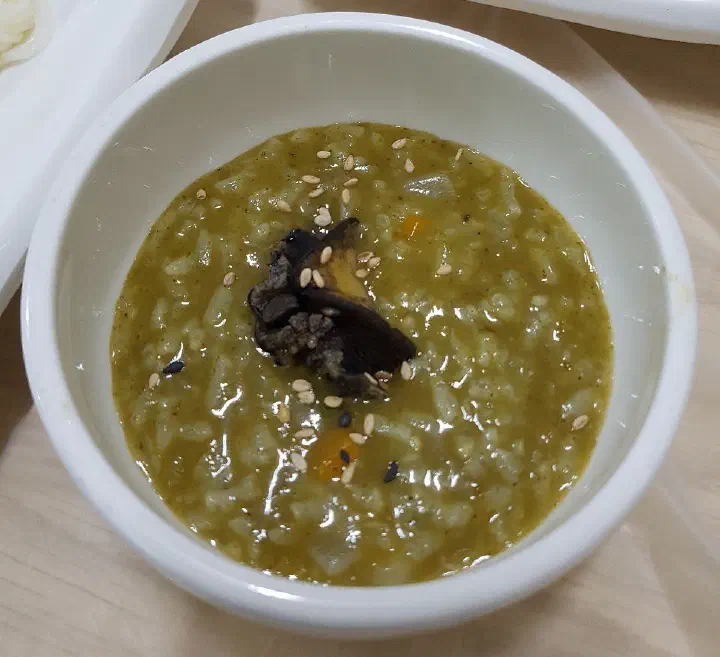
If you don’t want to stop at mulhoe, add the abalone porridge (전복죽). It smells warmly of sesame oil and sits easy on the stomach. It’s a nice counterweight to the punchy mulhoe, so it’s not a bad idea for one person at the table to order it.

Abalone rice porridge at Yukil Hoetjip

The sashimi set and the fish stew

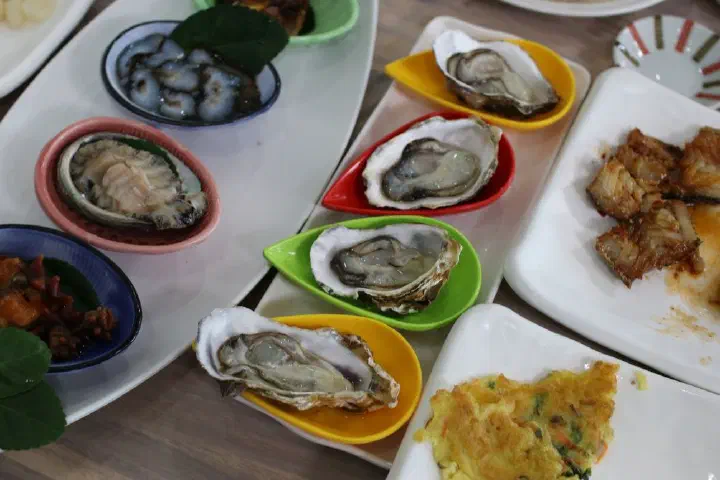
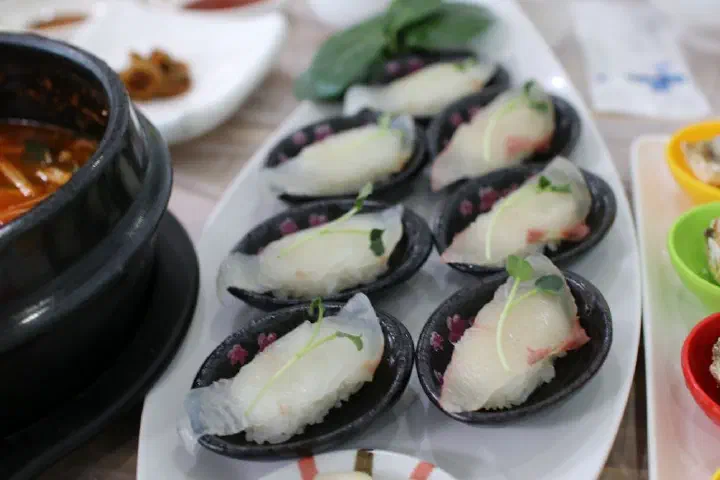
With a group, the sashimi set (회정식) is the way to go. It comes as a full table of sashimi, side dishes and a fish stew on top.

Sashimi set meal spread at Yukil Hoetjip

The fish is fresh and there’s even sashimi sushi, so the spread feels well rounded. No fishy smell, so it’s easy going even if raw fish usually makes you hesitate.

Fresh sliced raw fish at Yukil Hoetjip

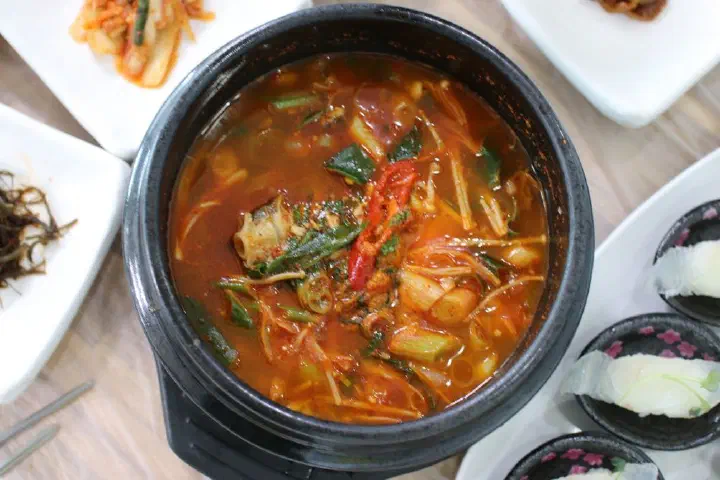
The fish stew (매운탕) is the other highlight. The broth is sharp and spicy in the good way, the kind that makes you want a drink with it. Starting cold with the mulhoe and finishing hot with the stew makes for a properly full meal.

Spicy abalone fish stew at Yukil Hoetjip

Plum tea, and the service

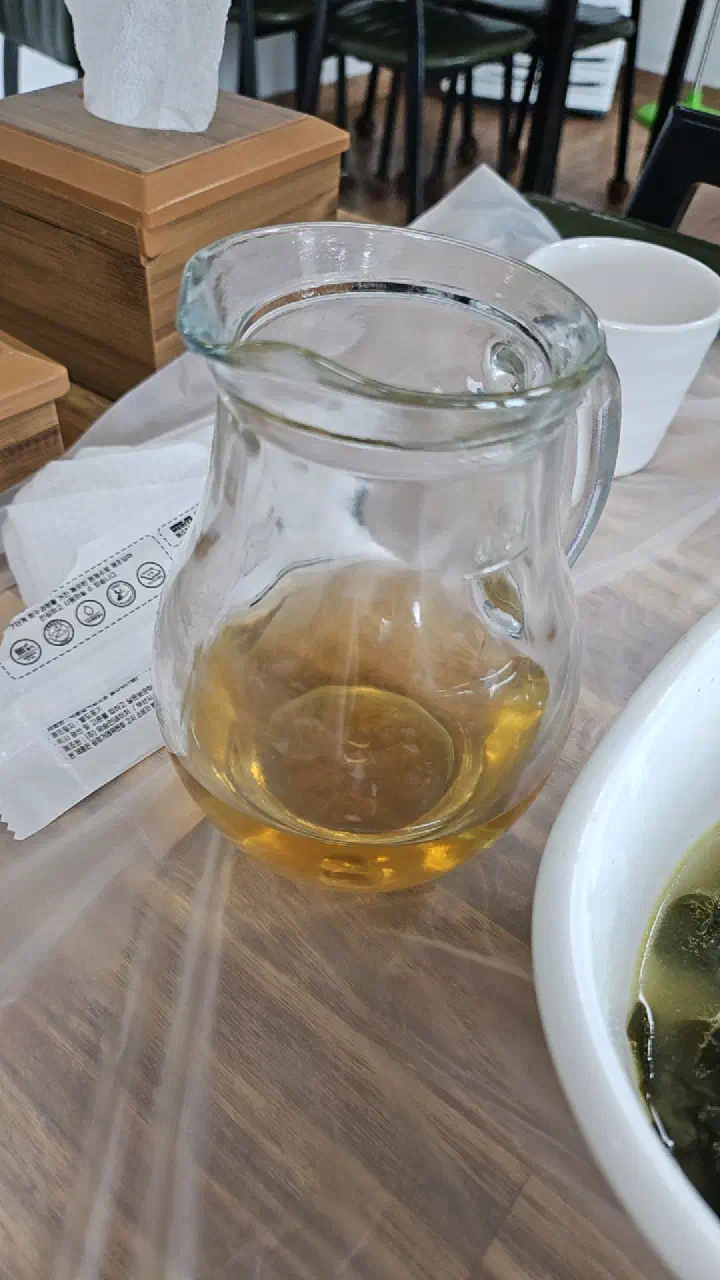
When you finish, they bring out plum tea (매실차) made from their own plum syrup. It’s deep and a little sweet, and it tidies up your palate. On a hot day it helps the meal settle, which is exactly what you want at the end.

Plum tea served after the meal at Yukil Hoetjip

What really sets Yukil apart from the other Jujeon places, for me, is the service. Nobody slams plates down because they’re busy. The staff wear uniforms and stay friendly even when it’s packed, and you can tell they’re looking after you.

A couple of practical notes for visitors: cards are fine here, and any major international card should work without trouble. And there’s no tipping culture in Korea, so you don’t need to leave one. Trying to tip will usually just confuse the staff.

Waiting and tips

This is normally a place with a wait. They use a numbered ticket system based on table size (one ticket per up to four people), so count your group before you pull one. Weekday evenings and late afternoons tend to be calmer, while weekend lunches and the summer peak can mean a long line.

Tables don’t turn over especially fast, so if you’re coming from far away, calling ahead to reserve the mulhoe makes the whole thing smoother.

Final thoughts

The yukil mulhoe isn’t a dressed-up, showy bowl. If you’re picturing the lavish Sokcho style, this is a little different. What it is instead is clean and cold, built around the fish itself, and with that abalone crunch on top it’s the kind of bowl you find yourself thinking about later.

It’s right on the water, so it doubles as a drive destination, and with the easy parking and the kind service it’s a comfortable spot to bring family. If you’re after a bowl of mulhoe in Ulsan, give Yukil Hoetjip in Jujeon a try.

Sea view at Jujeon Beach in Ulsan

Location / getting there

278 Jujeon-haean-gil, Dong-gu, Ulsan. Type “육일횟집” or “주전해안길 278” into Naver Map or KakaoMap and it’ll take you right to the door. You’re directly in front of Jujeon Beach, so it’s hard to miss.

📍 View Yukil Hoetjip (육일횟집) on Google Maps →

Close-up of yukil mulhoe at Yukil Hoetjip in Jujeon, Ulsan