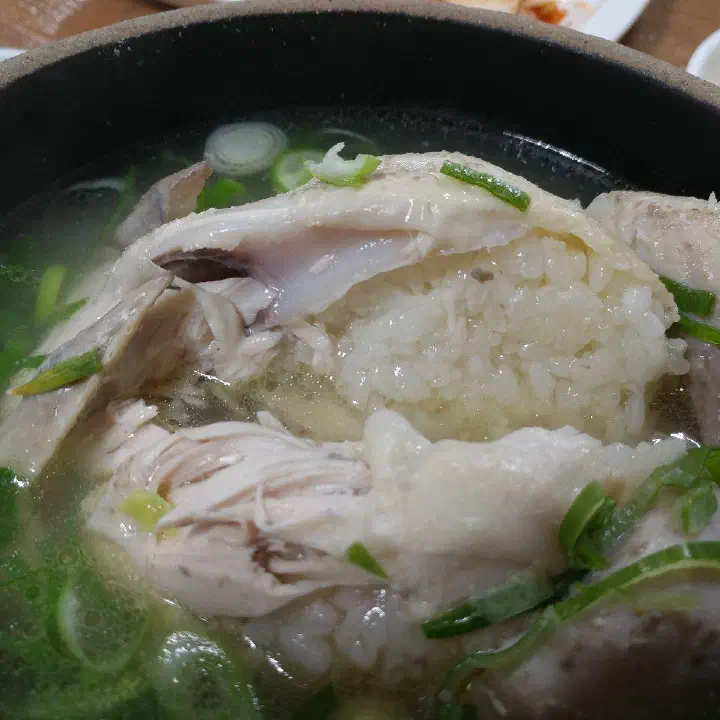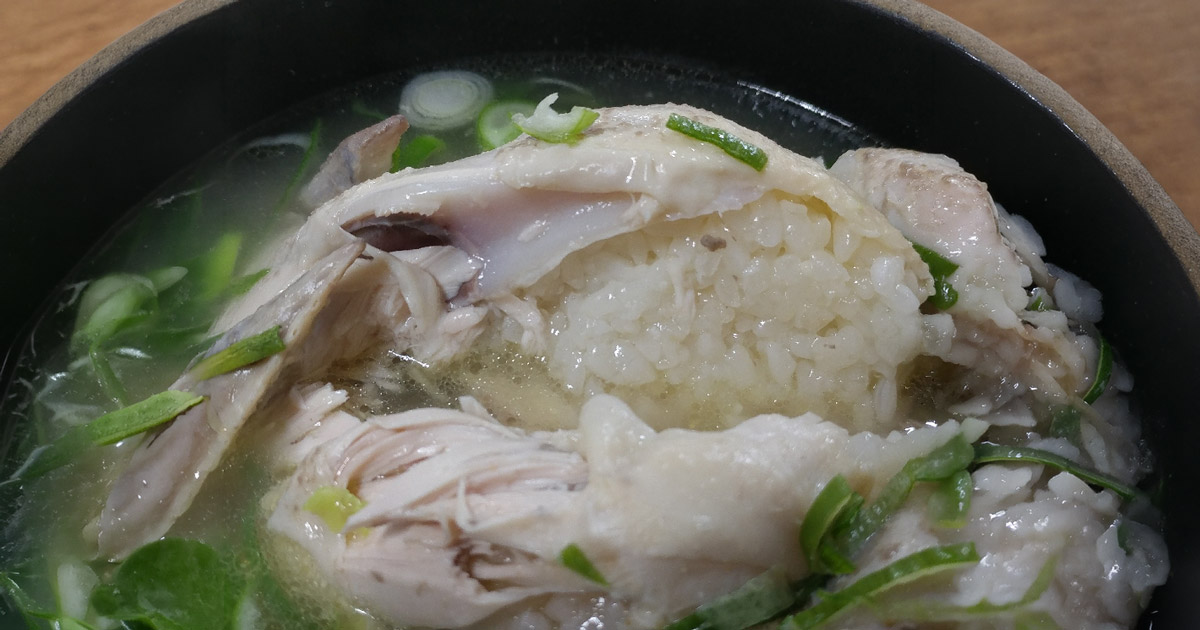
Whenever someone in Ulsan asks me where to get samgyetang, this is the first place that comes to mind.
Gogung Samgyetang (고궁삼계탕), in Dal-dong, Nam-gu, right across from the old KEPCO building.
I’ve been coming here for a long time, honestly.
The first time, I was dragged along by the adults in my family when I was still a student.
Back then a bowl cost less than 10,000 won, and now the same place has been running for 37 years and is recognized as a “Hundred-Year Store.”
What keeps me coming back is that the broth tastes almost the same as it did all those years ago.
The basics
Address: 180 Dotjil-ro, Nam-gu, Ulsan (Dal-dong, across from KEPCO)
Phone: 052-276-8144
Hours: 10:30 – 21:00 (last order 20:30)
Break time: 14:30 – 16:30
Closed: 1st and 3rd Sunday of each month
Parking: private lot behind the building (about 8 cars)
📍 View Gogung Samgyetang (고궁삼계탕) on Google Maps →
It sits near the Culture & Arts Center intersection and the Nam-gu district office.
A quick note: because the KEPCO building across the street is in Sinjeong-dong, a lot of people tag the restaurant as being in Sinjeong-dong, but its actual address is in Dal-dong (180 Dotjil-ro).
If you’re getting around Ulsan without a car, I’d skip Google Maps for directions here — its walking and transit routing in Korea is often off. Naver Map or KakaoMap work far better, and the KakaoT app is the easy way to grab a taxi.
The front desk doesn’t really speak English, but ordering is genuinely simple (more on that below).
Same spot since ‘89, and how the price has crept up
The place opened in 1989 and is now run by the second generation.
In Ulsan, when people talk about old samgyetang houses, this one comes up alongside Gungjung Samgyetang in Seongnam-dong.
The oldest price I can remember is 9,000 won a bowl.
It then sat at 15,000 won for years, and just this year it went up to 17,000 won.
Given ingredient costs that’s fair enough, though as a long-time regular I’ll admit a small pang.
Abalone samgyetang used to be 22,000 and is now 26,000; the lacquer-tree (ot) version is 22,000.
Current menu (per person)
Samgyetang 17,000 won
Ot-samgyetang (lacquer tree) 22,000 won
Hanbang-samgyetang (medicinal herbs) 22,000 won
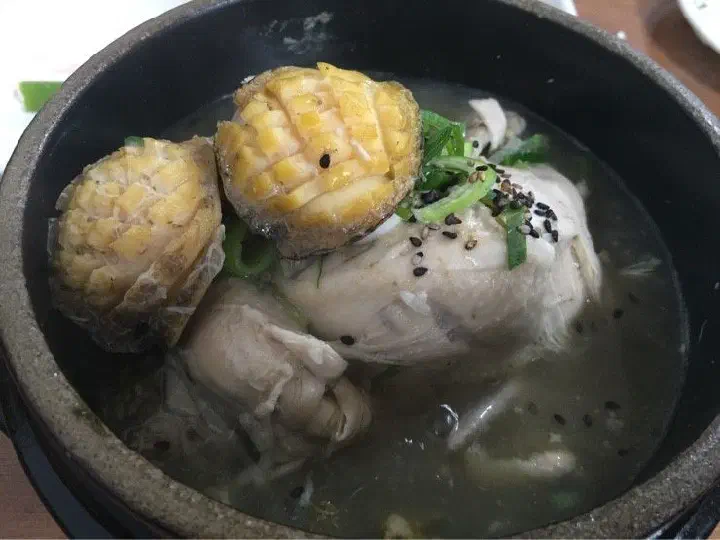
Jeonbok-samgyetang (abalone) 26,000 won
Neungi-samgyetang (oak mushroom) 25,000 won
Jeonbok-juk (abalone porridge) 17,000 won
Deodeok-baeksuk (4 people) 130,000 won
Neungi-baeksuk (4 people) 150,000 won
Most places in Korea, this one included, take internationally issued credit cards without any trouble, so you don’t need to carry much cash. And there’s no tipping culture here — leaving a tip would more likely confuse the staff than please them.
The room got a refresh
The biggest change for me has been the dining room.
It used to have floor seating on the right as you walked in — proper old-school.
A few years back they redid the whole place, and now it’s much brighter and roomier.
The parking lot got the same treatment.
There’s a private lot behind the building, and after the renovation it’s much easier to use.
It holds about 8 cars, but on the hottest summer “boknal” days even that fills up fast.
The back door connects straight to the lot, so I usually come in from the rear.
A clear broth — and that’s where people split

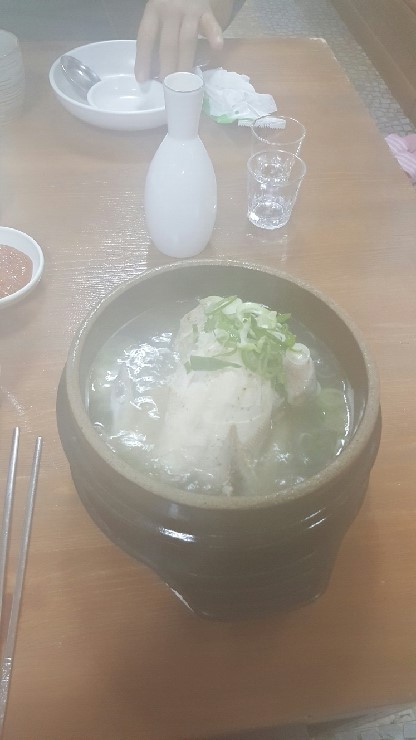
The defining thing here is that the broth is clear.
It’s not the thick, milky, grain-blended style that’s trendy now.
The first sip is clean and mild, and it deepens quietly as you go — the kind of bowl I feel I could eat every day without tiring of it.
But I’ll be straight with you: this divides people.
Some find it bland, even watery.
I’ve seen folks ask for extra jujube or astragalus root, or salt their own bowl to taste.
If you’re expecting a rich, punchy broth, this might read as too plain.
One more thing: the moment you walk in, there’s a faint medicinal-herb aroma.
I like it, but if you’re sensitive to that kind of smell, just know it’s there.

The chicken is a young bird, so it’s not huge.
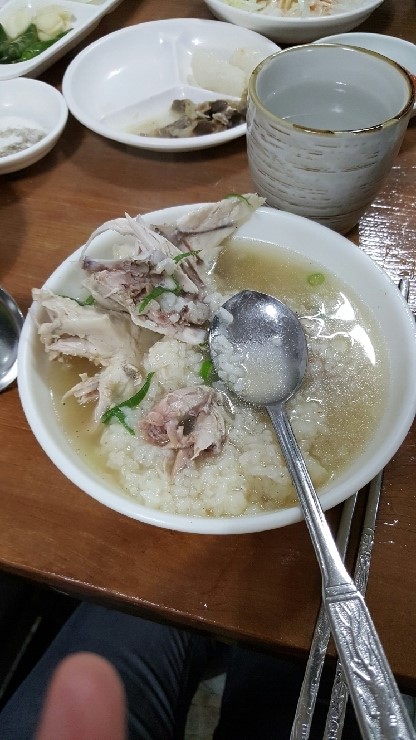
What it is, is tender — the meat falls off with chopsticks, and even the breast isn’t dry.
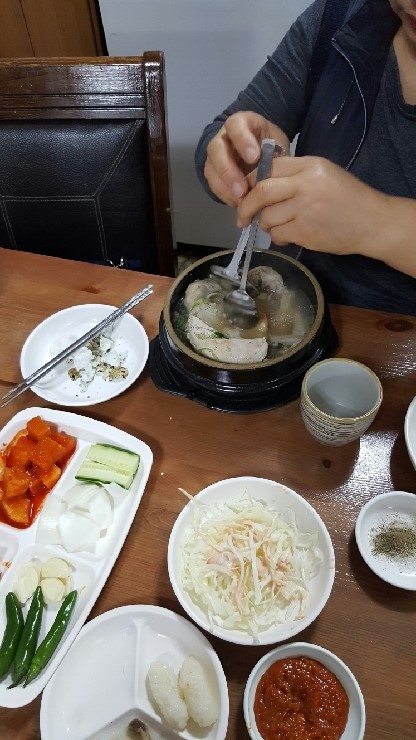
The stone pot comes out boiling right to the last spoonful, so mind your mouth.

Inside the bird is a packed stuffing of glutinous rice, plus jujube, ginseng, chestnut and ginkgo.
That rice is half the reason I order it, honestly.
Side dishes and the ginseng liquor

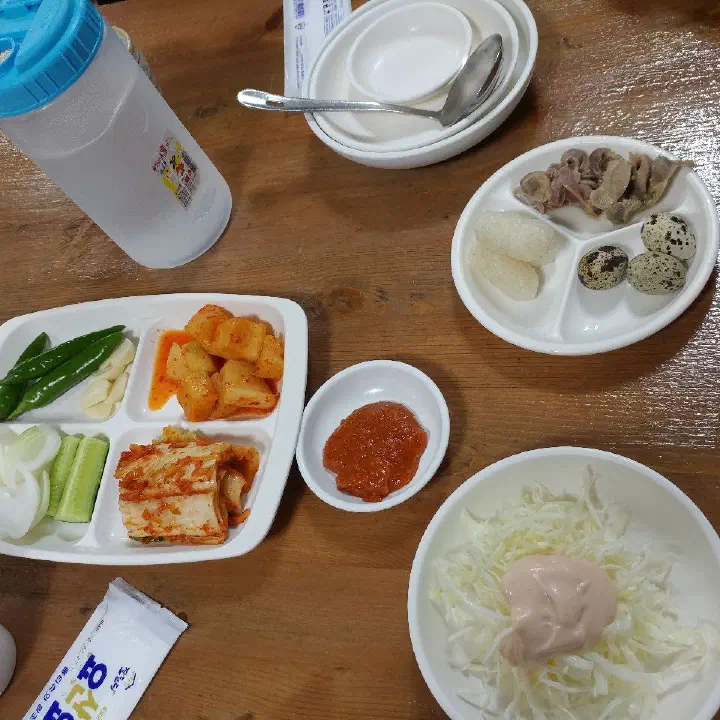
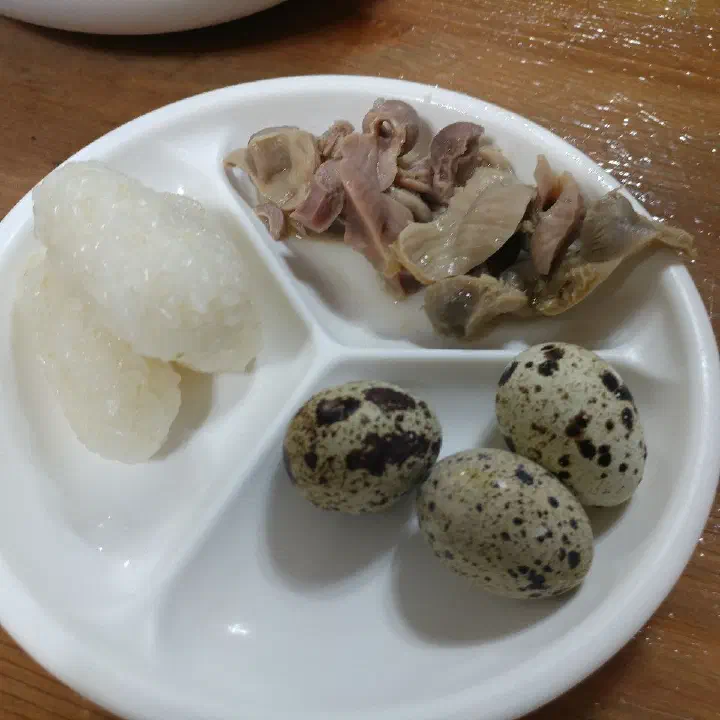
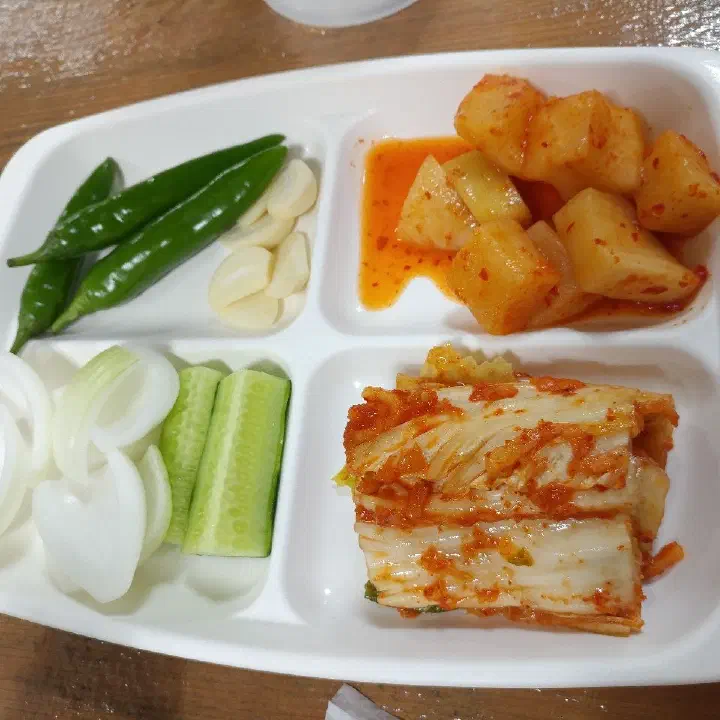
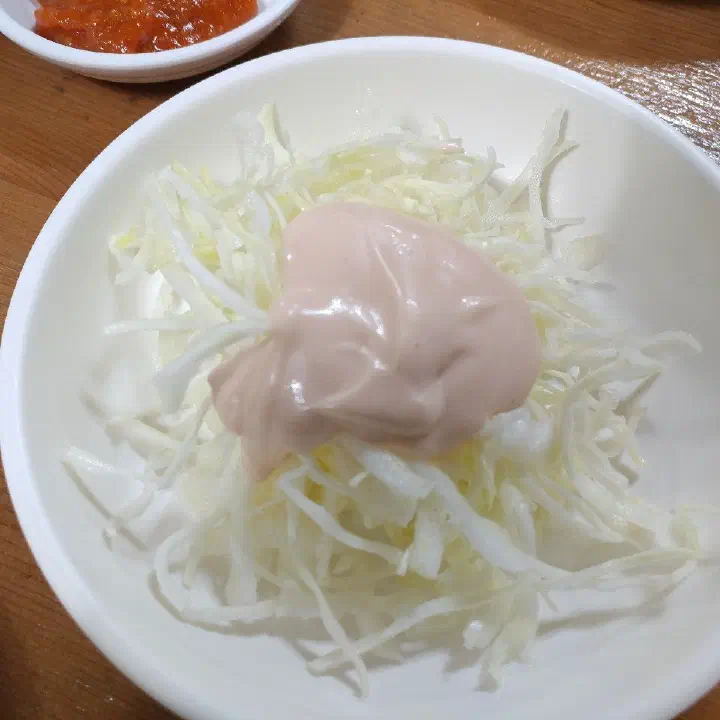
The banchan covers cabbage kimchi, kkakdugi (radish kimchi), cucumber, onion, chili, garlic, a cabbage salad, plus quail eggs and chicken gizzards.
Those gizzards and quail eggs have been on the table since I was a kid, and I’m always weirdly glad to see them.

A small plate of glutinous rice pressed into a sushi-like mound (찰밥, chalbap) comes on the side.
First-timers never know what to do with it — I top it with a piece of gizzard or dip it lightly in the broth.

The kimchi is made in-house with Korean-grown ingredients — not too salty or spicy, and a clean match for the soup.
There’s a self-serve bar to refill it. None of this is spicy, by the way, so it’s an easy table even if you’re not used to Korean heat.

And there’s a little gourd-shaped bottle of ginseng liquor (인삼주, insamju) — a signature touch here.
They’ll bring it even if you’re dining solo.
It’s mild enough for a sip if you don’t really drink; I like one before the meal for the warm-belly feeling.
Refills, though, are 2,000 won a bottle.
After the meal there’s self-serve sujeonggwa (cinnamon punch) and coffee by the counter.
The ot and abalone versions

When I come with a group, I usually order a regular samgyetang and an ot-samgyetang and share.
The ot version is a deep brown from the start and tastes noticeably different — that lacquer-tree note runs all through it.
The abalone one definitely looks the part.
But it’s nearly 10,000 won more than the regular bowl for an added abalone, so on value alone I’ll vote for the plain samgyetang every time.
I save the abalone for special occasions or when I’m hosting someone.

Worth knowing before you go
Mealtimes, lunch especially, fill up with locals and office workers.
On boknal (the three hottest days of summer, when Koreans traditionally eat samgyetang) there’s always a wait.
When that happens, write your name on the whiteboard by the counter and they’ll call you in order.
If you’d rather eat in peace, come a little off the lunch peak.
Ordering isn’t a problem even without much Korean — the menu is short, and you can point and hold up fingers for how many bowls you want.
There are baby chairs and a Bumbo seat too, so it’s fine with little kids, though the aisles feel a touch narrow for a stroller.
Final thoughts
This isn’t a flashy or bold-flavored place. The opposite, really.
Clear, mild broth, tender chicken, house-made kimchi — solid on the fundamentals, no theatrics.
The price climbing bit by bit is a little sad, but for a place that’s held this taste on the same corner for 37 years, I get it.
When I’m worn down, or want a quiet meal with the older folks in my family, I know I’ll keep coming back.
If you love a thick, heavy broth, this may not be your taste.
But if a clean, traditional samgyetang sounds good, it’s worth a stop.
Location / Getting there
180 Dotjil-ro, Nam-gu, across from the KEPCO building.
It’s near the Culture & Arts Center intersection and the Nam-gu office, so it’s easy to find.
If you drive, use the private lot behind the building — the back door opens right onto it.