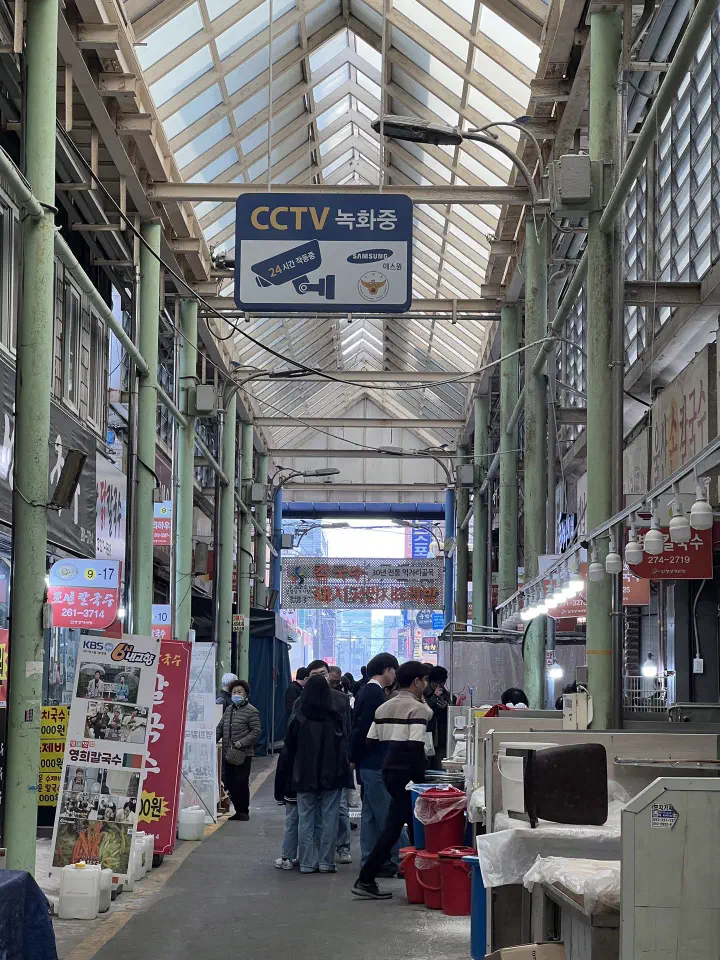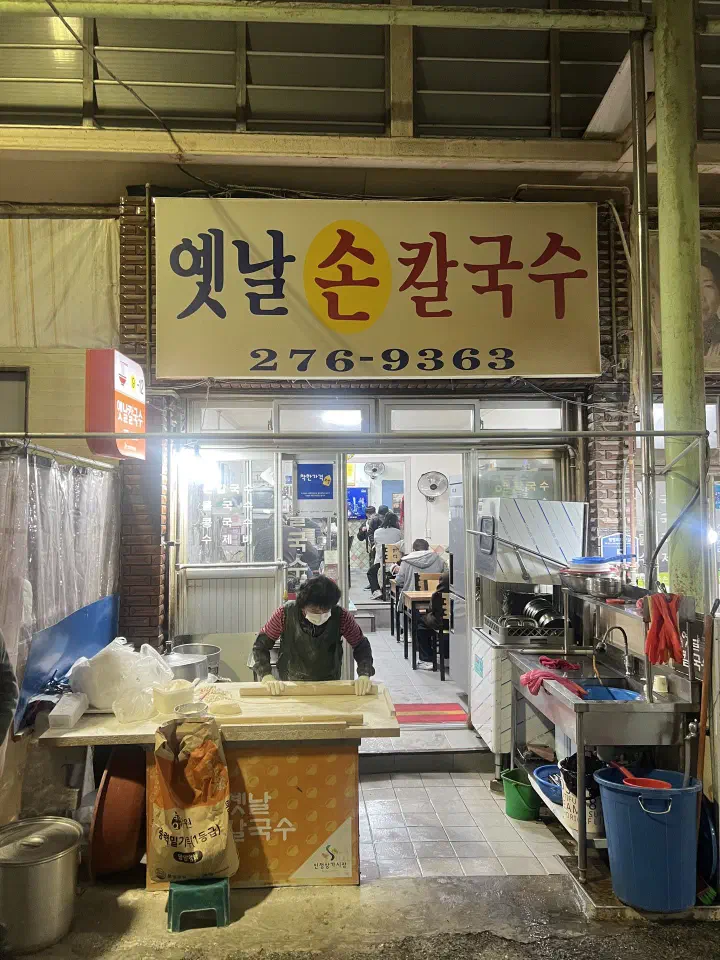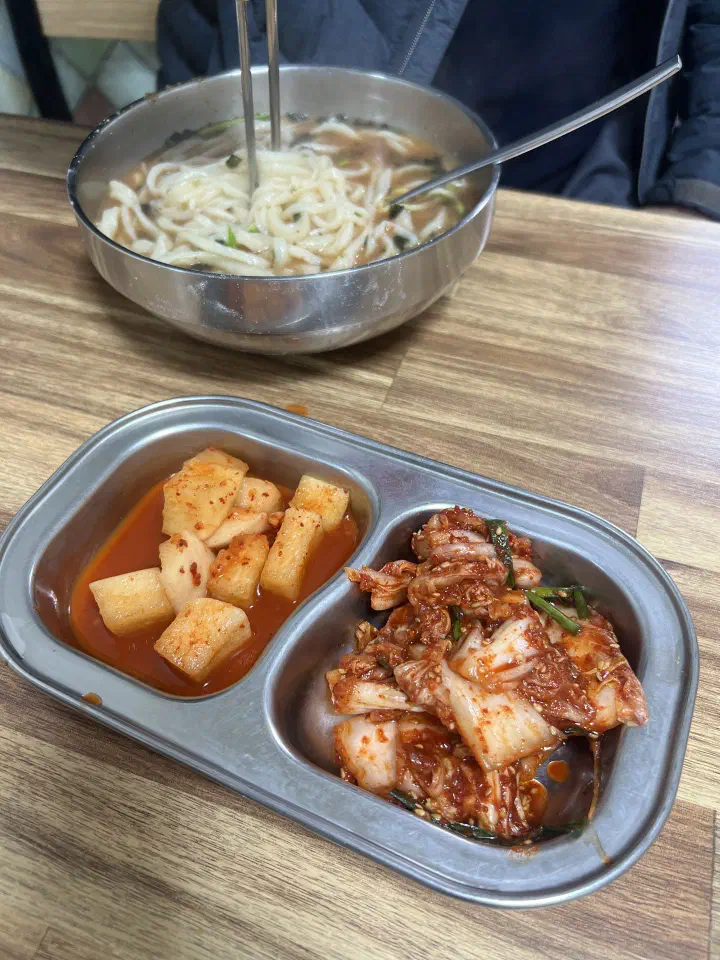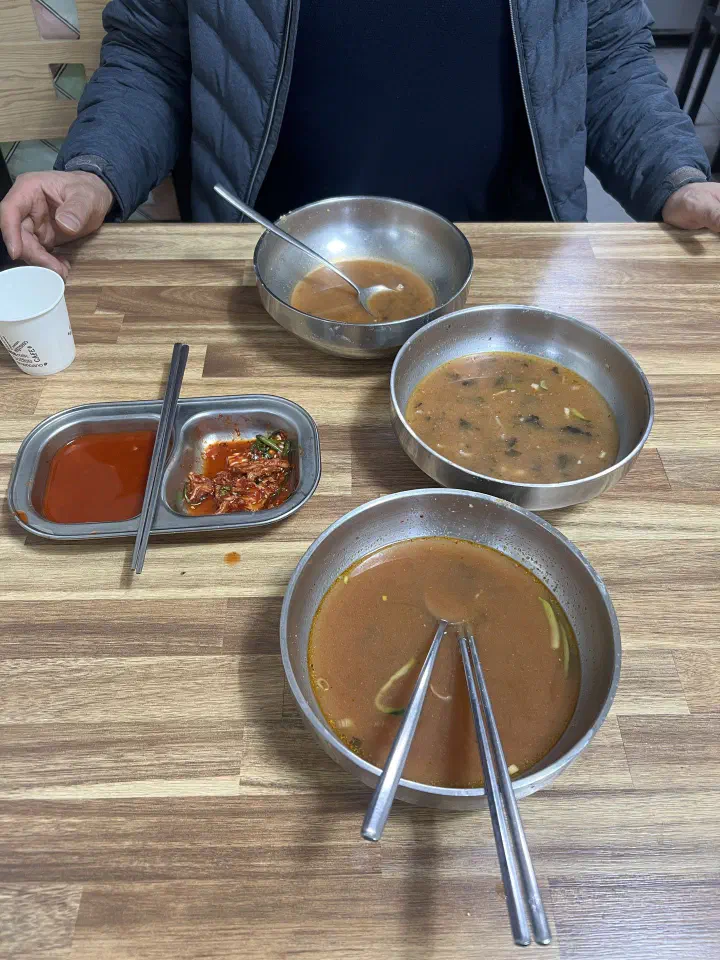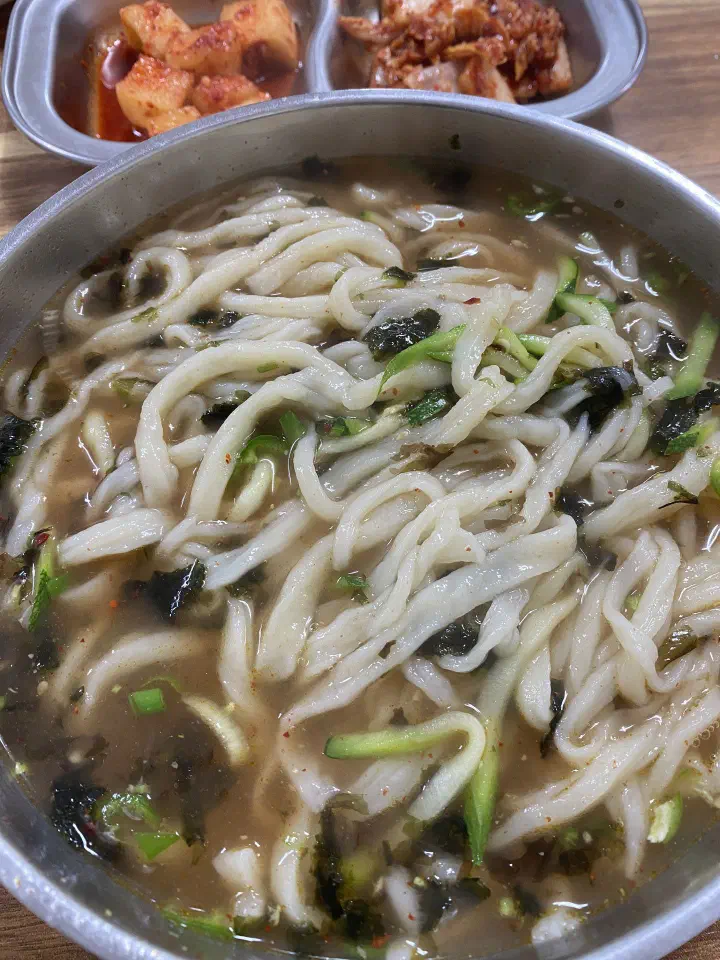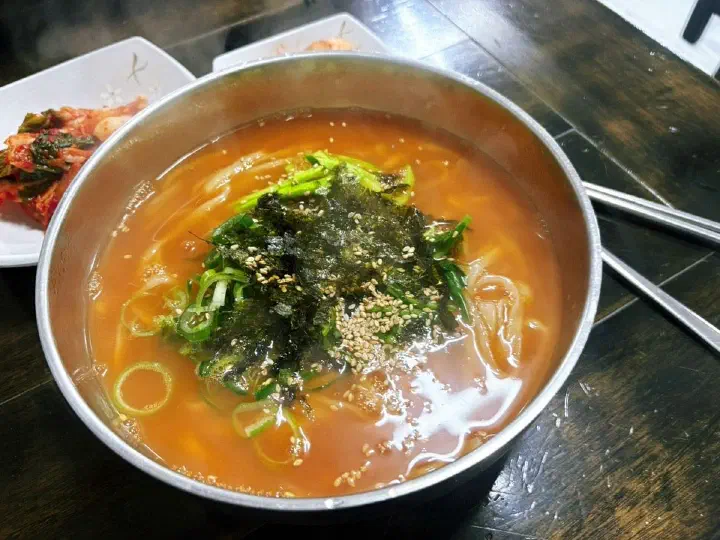
If you grew up in Ulsan, the kalguksu (칼국수, hand-cut noodle soup) alley at Sinjeong Market is a bit of a sacred place. I’ve been eating here since I was a kid trailing behind my mom on market runs, and even now my feet just drift toward this corner whenever I’m in the area.
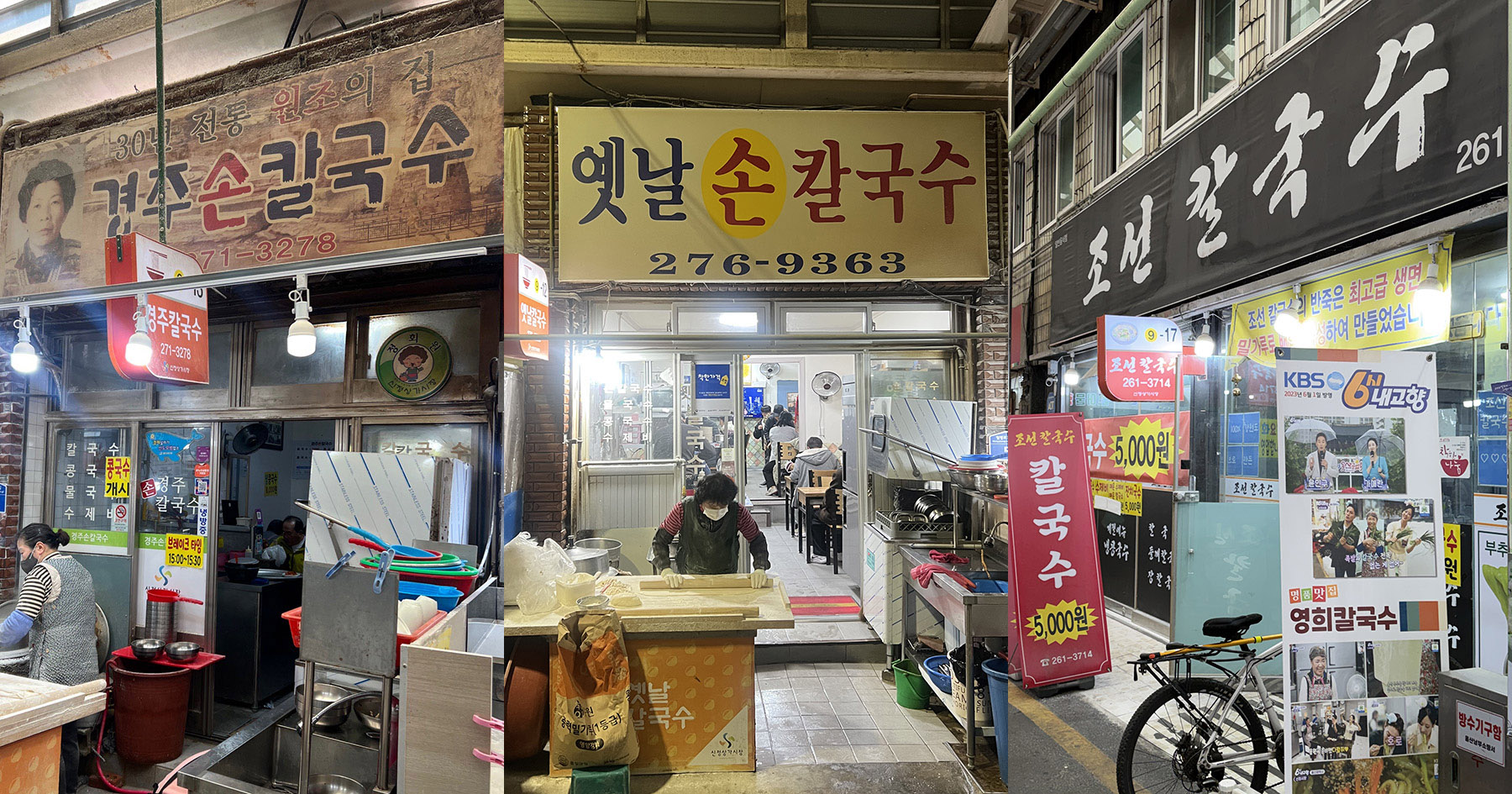
The funny thing about this alley is how the noodle shops are crammed right next to each other. The signs all look alike, the prices are almost identical, and first-timers usually freeze up trying to figure out which door to walk through. I’ve wandered in and out of pretty much all of them over the years, so today I’ll just lay out the three I come back to the most: Gyeongju Sonkalguksu (경주손칼국수), Yetnal Sonkalguksu (옛날손칼국수), and Joseon Kalguksu (조선칼국수). All three sit within a one-minute walk of each other, which honestly means you often end up at whichever one has the shorter line that day.

A quick word on getting there and parking
Sinjeong Market is in central Ulsan, not near the KTX station, so if you don’t have a car the easiest way is a taxi or a city bus into the Sinjeong-dong area. For taxis, the Kakao T app works the way Uber would elsewhere, and a short ride across town is usually quite cheap. One tip that trips up a lot of visitors: Google Maps walking and transit directions are unreliable in Korea, so use Naver Map or KakaoMap instead. They’ll actually get you to the alley.
If you do drive, parking in the alley itself is impossible because it’s so narrow. The answer is the Sinjeong Market public parking lot (Sinjeong 1-dong public lot, 25 Wolpyeong-ro, Nam-gu, Ulsan), about a three-minute walk from the noodle shops. Here’s the local trick: at any of these shops, ask for a parking ticket when you pay and they’ll hand you a one-hour voucher. On Sundays the public lot is free anyway. Joseon Kalguksu even covers an hour of roadside parking right out front if you find a spot. On weekend lunchtimes the lot can fill up, so come a little early if you can. The public lot has restrooms too, since the shops themselves are tiny.
A couple of things that apply to all three: there’s no tipping culture in Korea, so don’t leave a tip (it’ll just confuse them). None of these places have English menus and the owners don’t really speak English, but ordering is genuinely easy. You can point at the menu or just hold up fingers for how many bowls you want, and that’s all it takes. Korea is also very safe, so wandering a crowded market is nothing to worry about.
I should set your expectations, though. These are completely local Korean spots, not places dressed up for tourists. Nothing here is polished or curated for visitors, which is exactly the point: you’re getting old-school Korea the way it actually is. The crowd skews toward parents’ and grandparents’ generation rather than students or younger folks; this is where older locals come for a comfortable, familiar bowl. The owners aren’t used to foreigners, so they might seem a little awkward or even brusque at first, but don’t take it the wrong way. Underneath that, they’re warm, kind-hearted Korean people. Come ready to soak in a real, unvarnished market and an old neighborhood noodle shop, the kind that hasn’t changed in decades.
Gyeongju Sonkalguksu — the one with the line
This is the most famous of the three, and at lunch there’s almost always a queue. What’s wild is that every shop around it also sells kalguksu, yet this is the one where the line forms. I still remember waiting once and asking an older neighbor in front of me, “Is it really that good?” and her just shrugging, “This one’s the best.” The line gets so long that they route it to the opposite side of the alley so it doesn’t block the neighboring shops, and when both sides queue up the whole market passage clogs.

One thing that’s changed over the years: it used to be floor seating, and at some point I walked in to find proper tables and chairs. Much easier now if you’re bringing older family members with bad knees.

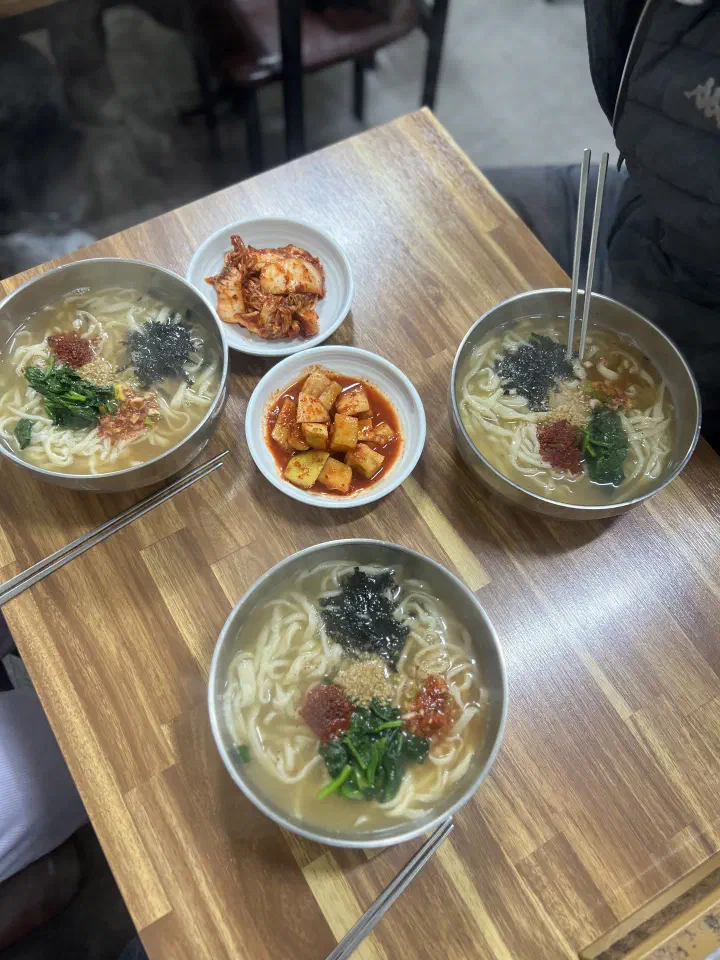
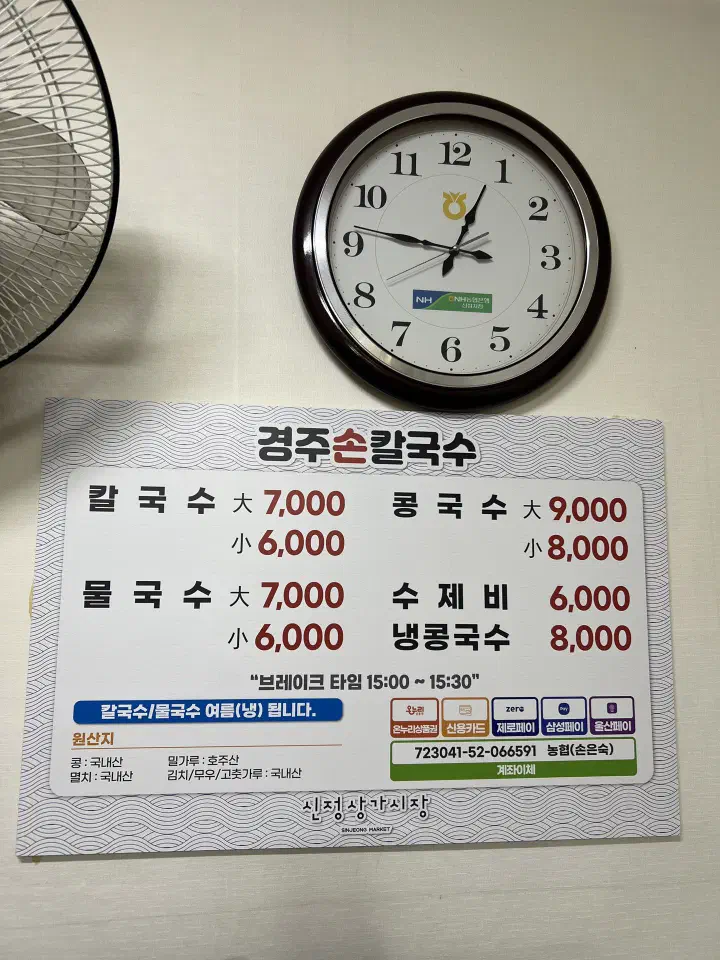
A small bowl of sonkalguksu is 6,000 won, a large (basically a double) is 7,000. Don’t underestimate the portions here. Even the small is bigger than a regular bowl most places, and the large comes out in what I can only describe as a basin. Unless you’re a big eater, the small is plenty.


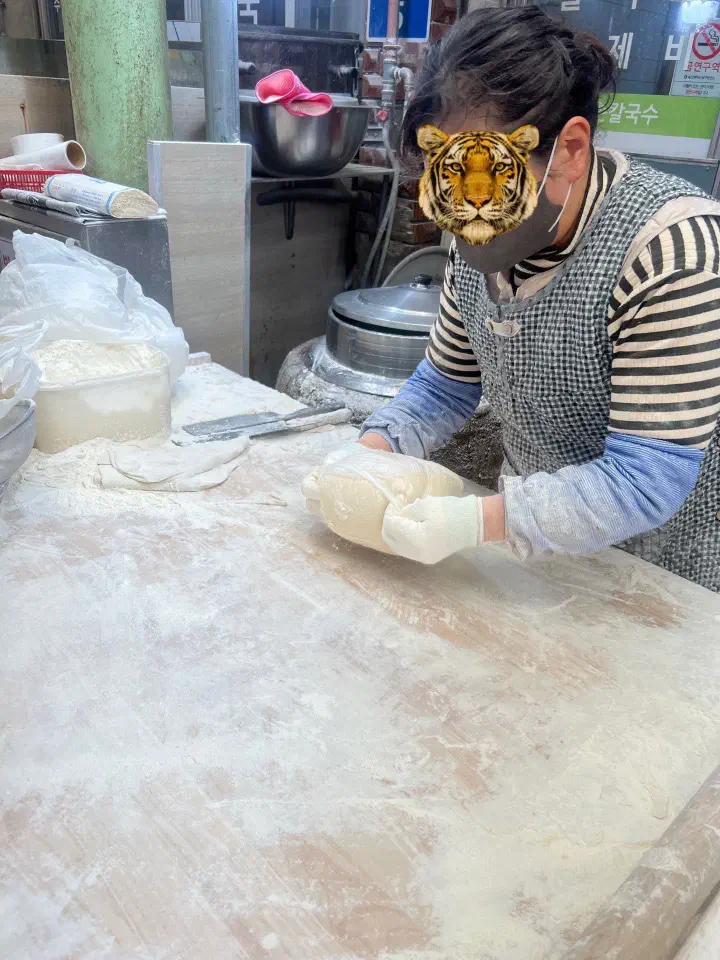
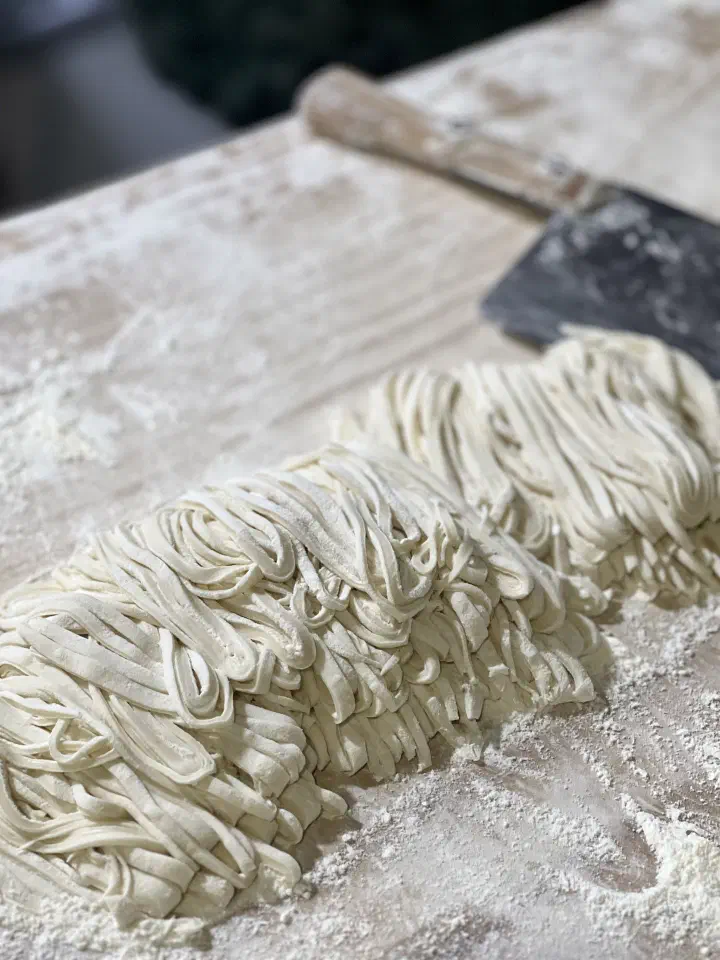
They roll out the dough fresh right by the entrance and cut the noodles by hand. The noodles don’t go into the pot until you order, so you get that chewy, just-made bite that hand-cut noodles are about. Because they’re cut by hand the thickness isn’t uniform, but I actually love that uneven texture. Fair warning though, it’s a love-it-or-not thing; if you prefer perfectly even noodles you might find these a touch rustic.

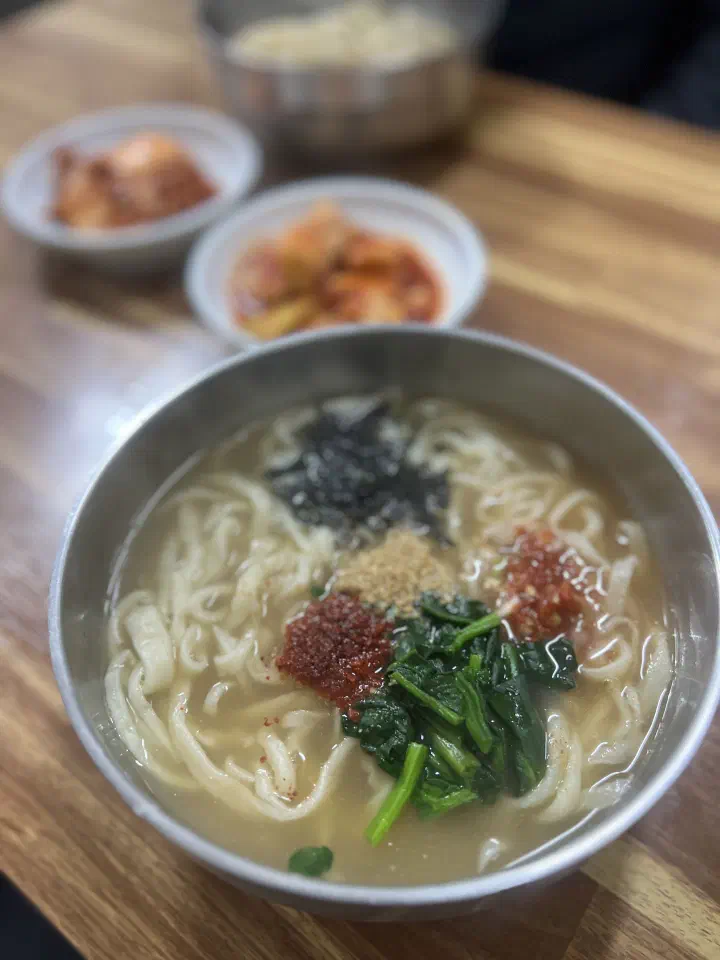
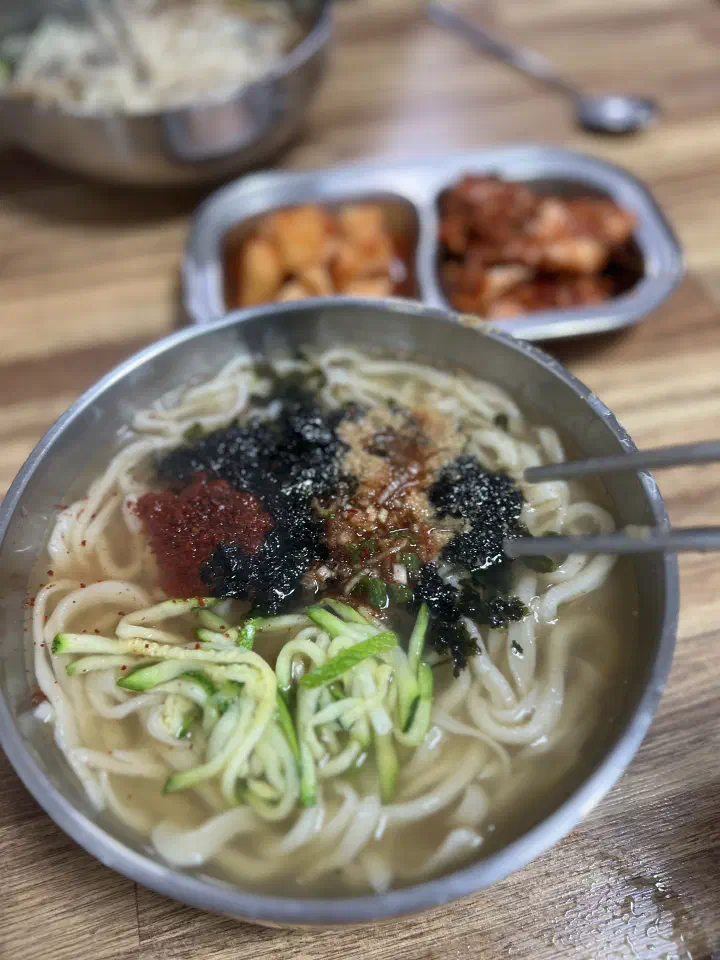
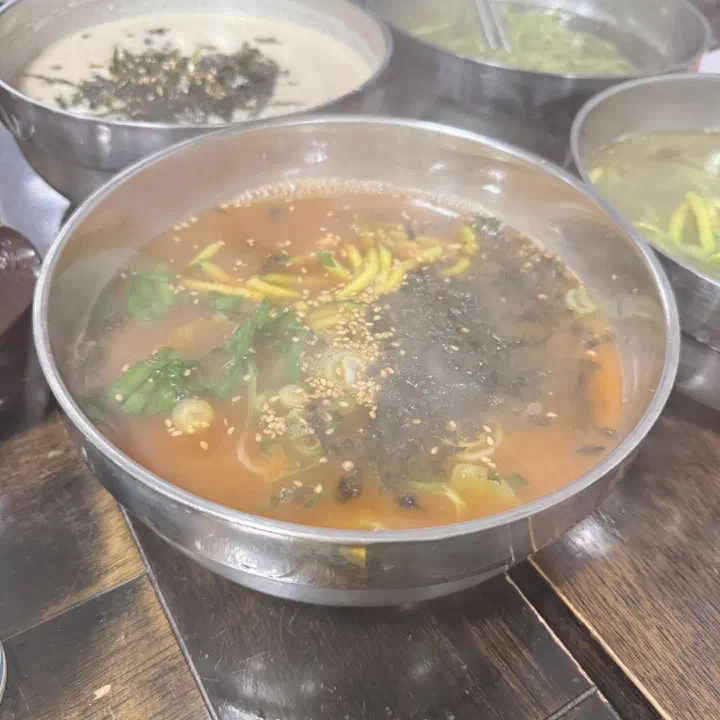
For me this place is really about the broth. The anchovy stock is deep and full of savory umami, nothing like the thin myeolchi broth you get at ordinary noodle shops. One spoonful and you go, “oh, that’s different.” I’ll be honest about one thing: it tastes a bit saltier than it used to. If strong saltiness isn’t your thing, grab a cup of the self-serve warm water and stir a little into the broth. That’s what the regulars do.

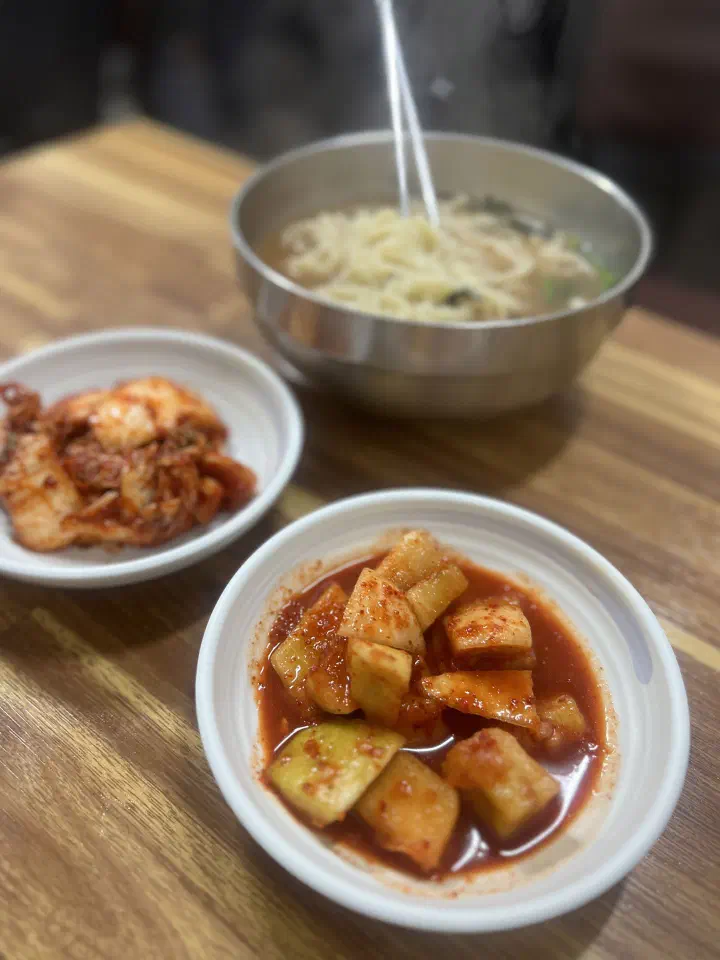
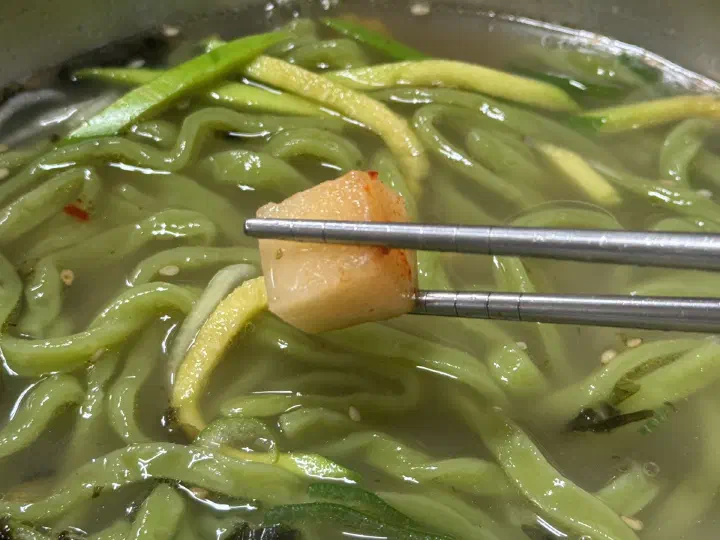
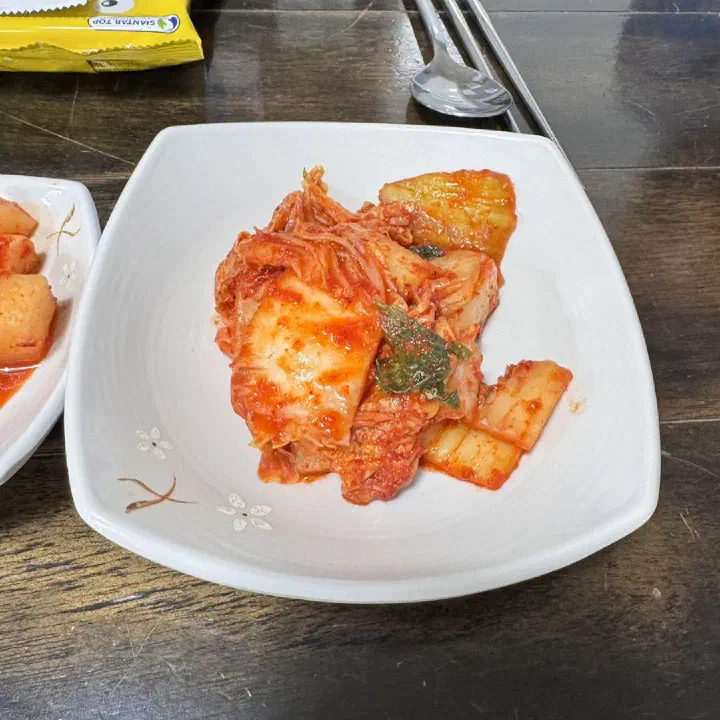
The side dishes are just kkakdugi (깍두기, cubed radish kimchi) and cabbage kimchi, but that kkakdugi is a little star. It’s fermented to a perfect sweet-tangy point and you’ll keep reaching for it. It’s self-serve, so refill without feeling shy. Water’s self-serve too.

The sign says “30 years,” but as far as I know this place is closer to 50. It’s also designated a “good-value shop” by the local government. The closing days are a little confusing: it’s shut on the first and third Sundays and the second and fourth Mondays, so check before you make the trip. It used to be cash-only, but these days cards work, along with Korean local-pay options.
📍 View Gyeongju Sonkalguksu (경주손칼국수) on Google Maps →
Yetnal Sonkalguksu — quiet, homey, and that kkakdugi
This one is right beside Gyeongju Sonkalguksu. Here’s a small confusion: the map listing says “Yetnal Kalguksu,” but the sign over the door reads “Yetnal Sonkalguksu,” so locals just call it the latter. The signs in this alley look so alike that I first ended up here by accident on a day Gyeongju was closed, and I’ve been a regular ever since.

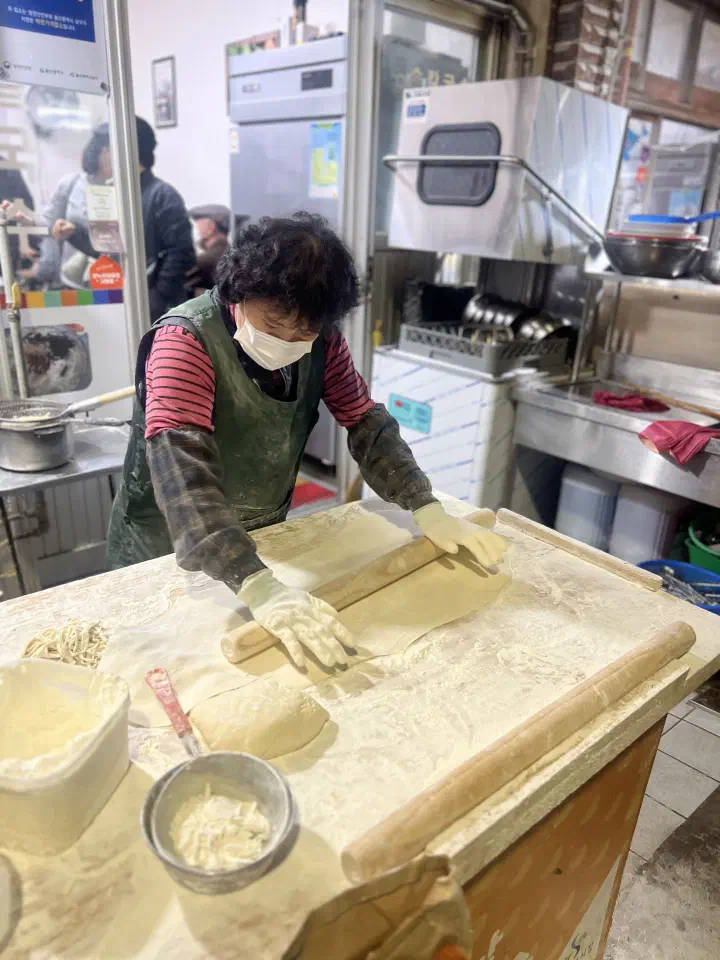
Where Gyeongju is always packed, this place is calmer and cozier. On days I want a quiet bowl by myself, I come here on purpose. The owner sits near the entrance and rolls the dough out with a rolling pin right after you order, and honestly watching that makes the wait fly by.

I can’t skip the price story. When I first started coming, a bowl was 4,000 won. It’s 6,000 now, so it’s gone up, but given how everything else has climbed, that’s still gentle on the wallet.

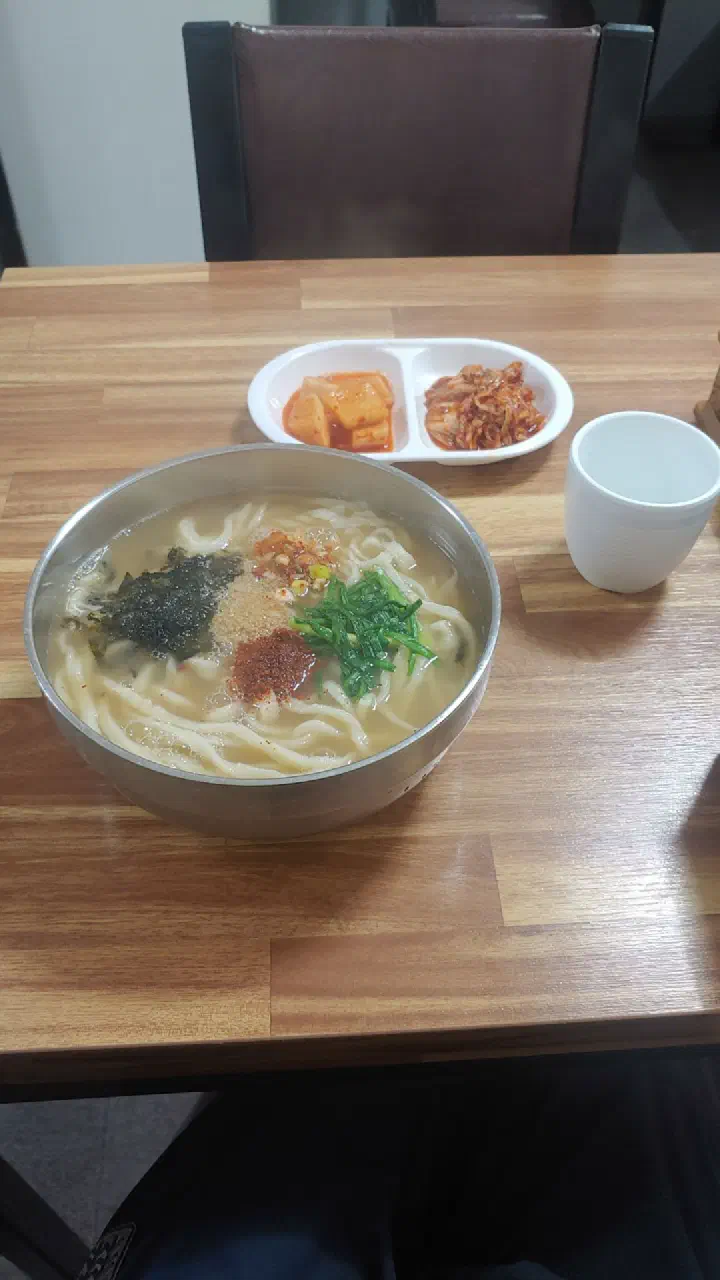
The broth is anchovy-based and a bit milder and cleaner than Gyeongju’s, which suits me when I want something gentle. If you’d like it with a kick, ask for some chopped cheongyang chili (땡초) and they’ll mince it fresh for you.

Portions are generous here too. More than once I’ve ordered a regular and then regretted not getting the large.

But the real headliner is the kkakdugi. It’s so good you’ll want to take a tub home, and everyone I bring here ends up praising it. There’ve been days I ate more radish kimchi than noodles.


One honest downside: this place doesn’t take cards. It’s cash, bank transfer, or the Ulsan-pay QR only, so bring some cash to be safe. On the plus side, they stay open fairly late, and I’ve often found the lights still on here in the evening after the other noodle shops have closed. It was featured once on KBS’s “6 o’clock My Hometown” too. Water and coffee are self-serve.

📍 View Yetnal Sonkalguksu (옛날손칼국수) on Google Maps →
Joseon Kalguksu — green chive noodles and that sancho heat
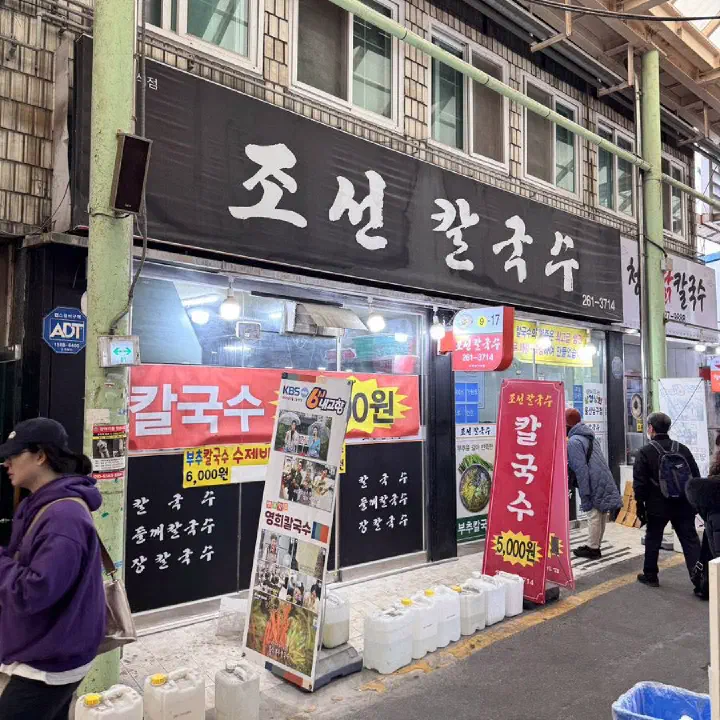
This one sits almost directly across from Gyeongju. It has the strongest personality in the alley and is probably the trendiest right now. There’s a touching backstory: this spot used to be “Yeonghui Kalguksu,” run by the mother, and her son took it over and refreshed it into Joseon Kalguksu. Word is the mother still watches the broth while the son handles the noodles, so it’s a mother-and-son operation.

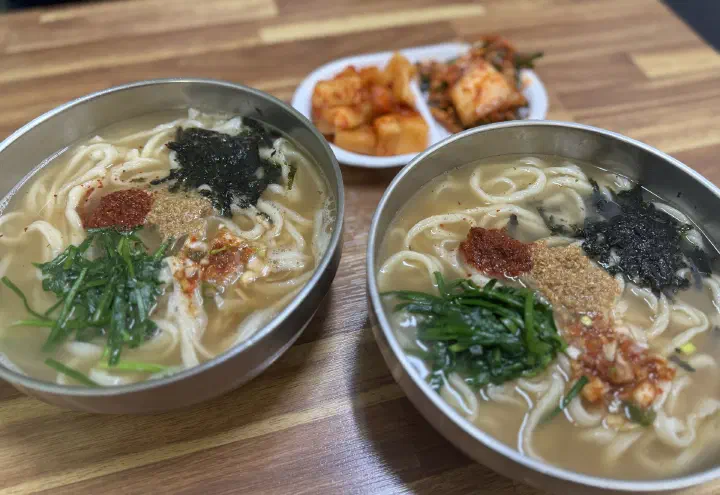
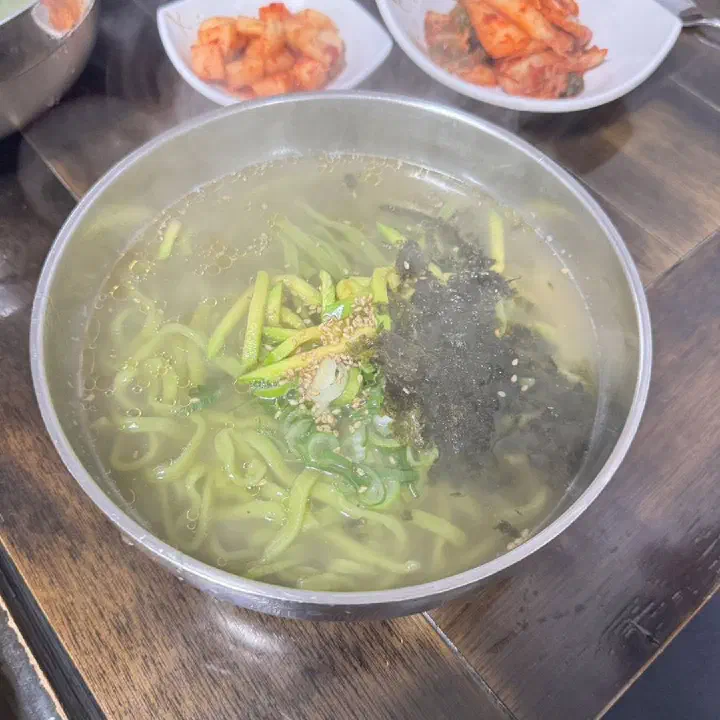
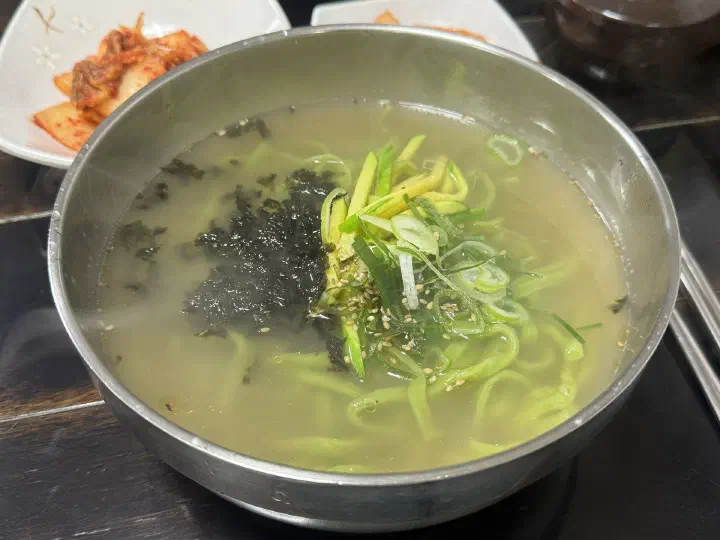
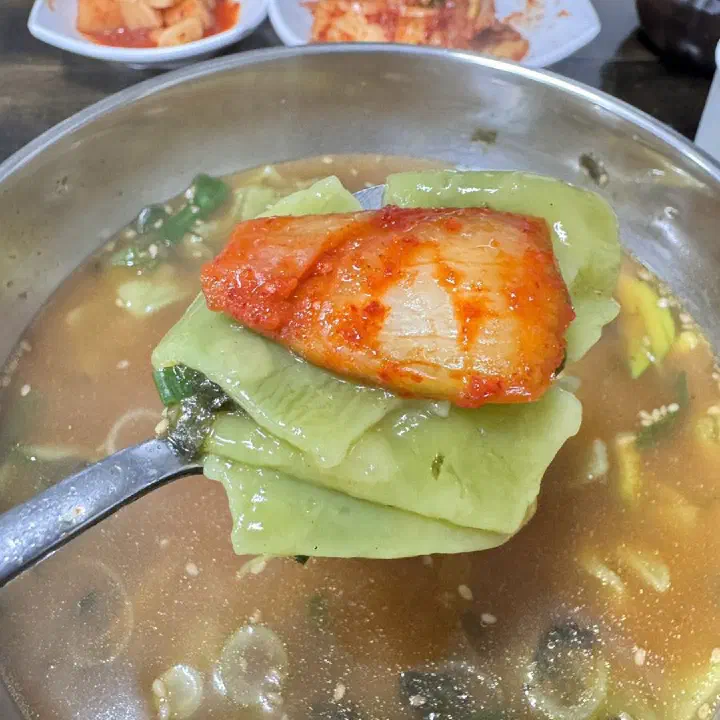
The first surprise here is the color of the noodles. The signature buchu kalguksu (부추칼국수, chive noodle soup) is made with chives blended into the dough, so the noodles come out green. It looks unusual at first, but the chive aroma is subtle and the noodles are springy and chewy. Being fresh noodles, they hold up without going soft, so they stay good right to the last bite.


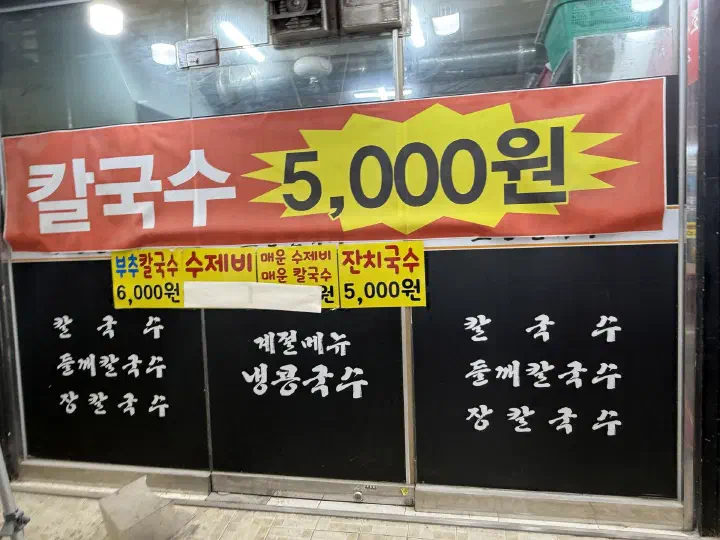
The prices are easy on the wallet too. The plain kalguksu is 5,000 won, the cheapest in the alley, and the buchu kalguksu is 6,000.

Personally I’m a big fan of the maeun sujebi (매운수제비, spicy hand-torn dough soup) and the maeun kalguksu (매운칼국수, spicy noodle soup). They’re not just red from chili powder; there’s sancho (산초, Korean prickly ash) and bangah (방아, Korean mint) in there, giving a tingly, sharp kind of heat. A heads-up for international visitors: this runs a touch spicier than Shin Ramyun, which means it’s genuinely spicy for Korean palates and can feel quite hot if you’re not used to Korean spice. Brace yourself, but on a heavy-stomach day a bowl of this clears you right out.


The deulkkae kalguksu (들깨칼국수, perilla noodle soup) deserves a mention too. The broth is nutty and thick, and it’s my go-to order for anyone in the group who can’t handle spice; everyone ends up happy with it.

The kkakdugi here is crisp and good as well, and the self-serve bar means you’ll keep going back for more.

Let me note the downsides honestly. First, the plain kalguksu uses machine-cut noodles, and quite a few people feel the noodles fall short of the hand-cut shops, so if you’ve come this far, go for a fresh-noodle dish like the buchu kalguksu. Second, the food can be slow to come out, and different dishes arrive at different times. If your group orders different things, one person’s bowl goes cold while another’s hasn’t shown up yet, so ordering the same dish keeps things smoother. The portions can also feel a little smaller than at Gyeongju or Yetnal.
It’s been on KBS’s “6 o’clock My Hometown” and the local Ulsan JCN channel, and recently a TikTok clip about it went around too. When it’s busy you may end up sharing a table, but I liked that they’ll split a table into a two-seater for you. Note that on Tuesdays it only runs from 9:30 a.m. to 2 p.m., so skip Tuesday afternoons.

📍 View Joseon Kalguksu (조선칼국수) on Google Maps →
So which one should you pick?
After all these years, here’s how I’d break it down.
Want a deep, classic anchovy broth with huge portions? Gyeongju Sonkalguksu. Just be ready to queue at lunch, and know the seasoning runs on the saltier side.
Want a quiet, homey bowl with standout kkakdugi? Yetnal Sonkalguksu. Great if you like a milder broth, and don’t forget it’s cash-only.
Craving the novelty of green chive noodles or that sancho heat? Joseon Kalguksu. It’s the cheapest of the three, and if you like spice, the spicy sujebi is a must.
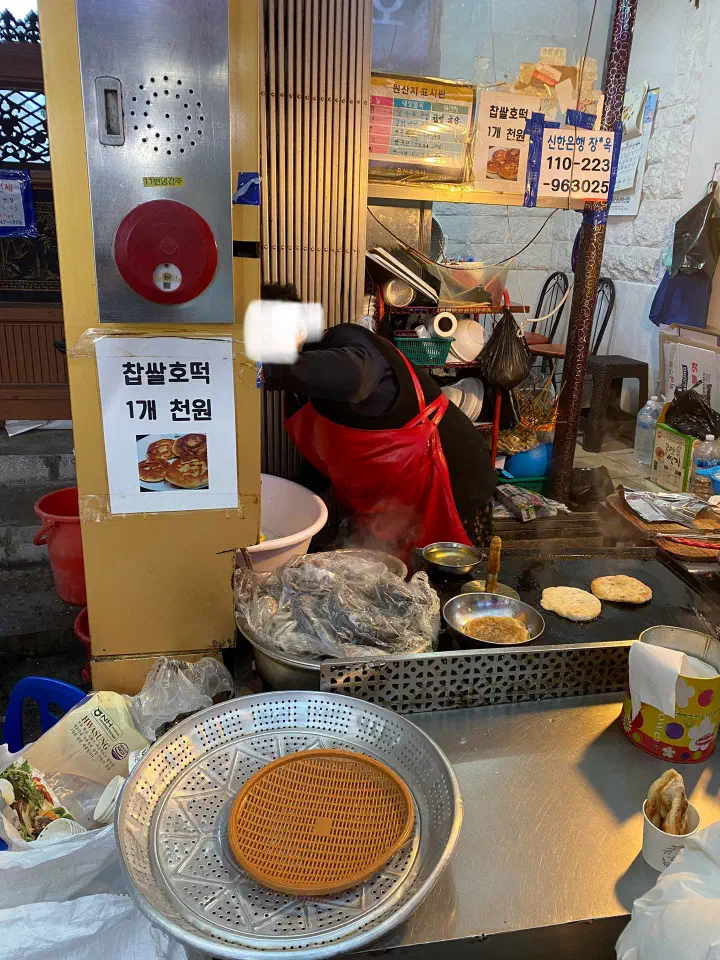
But my honest conclusion is that all three are good. Every noodle shop in this alley clears the bar. Walk into whichever has the shorter line and you won’t regret it, and after a few visits you’ll naturally land on your own favorite. My own habit is to rotate through them depending on my mood that day. Browse the market afterward, grab a hotteok (호떡, sweet griddle pancake) on the way out, and that little routine is honestly the whole charm of an Ulsan market afternoon.