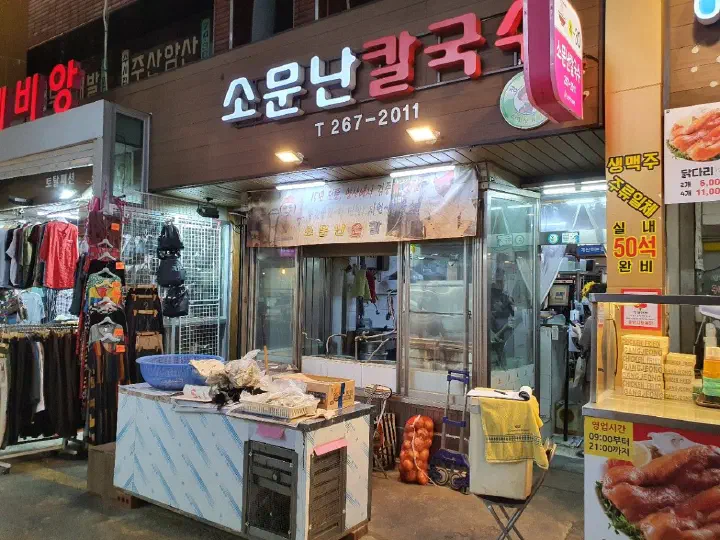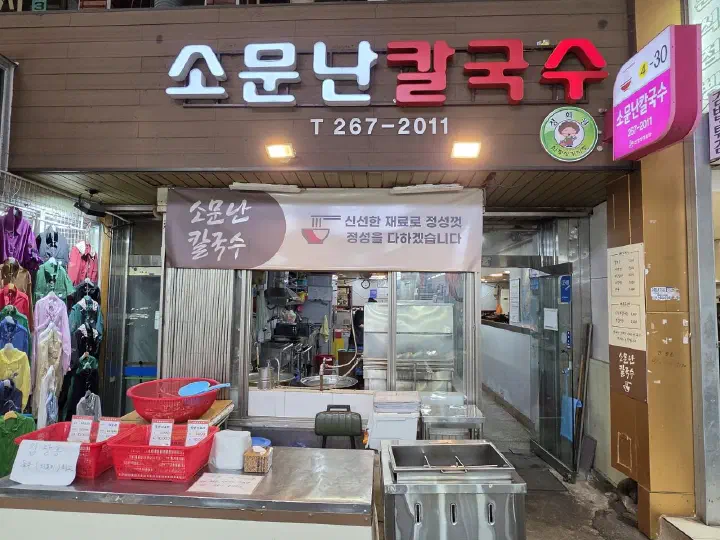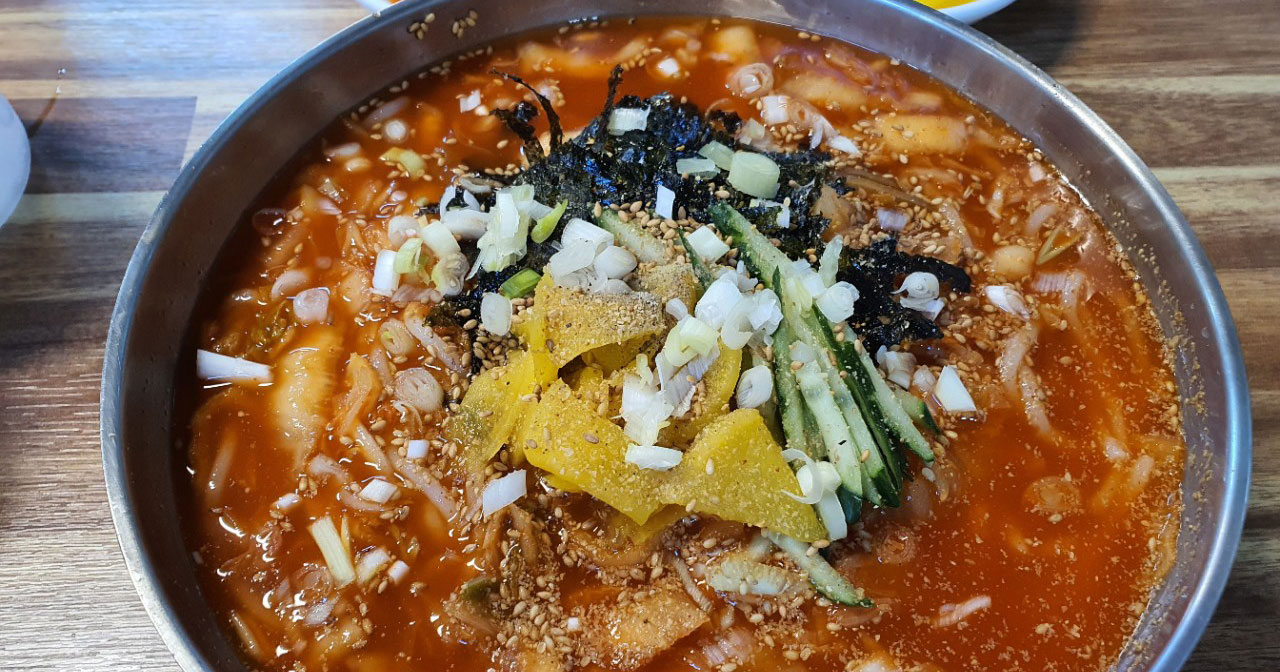
Whenever I get a craving for kalguksu (칼국수, hand-cut noodle soup) in Ulsan, I end up thinking about Sinjeong Market (신정시장). The market is full of noodle shops, but lately I keep going back to one in particular: Somunnan Kalguksu (소문난칼국수). And once the weather warms up, their cold kimchi noodles are the thing I can’t stop thinking about.

The basics
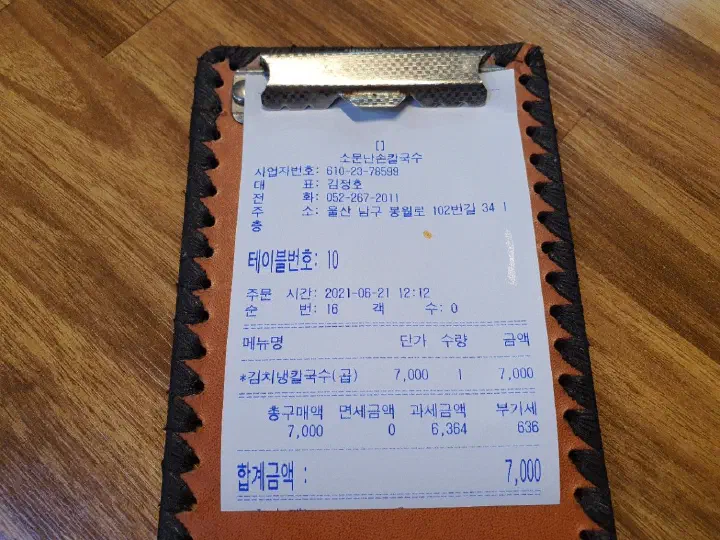
- Name: Somunnan Sonkalguksu (소문난손칼국수)
- Address: 34 Bongwol-ro 102beon-gil, Nam-gu, Ulsan
- Phone: 052-267-2011
- Hours: 10:30 – 20:00
- Closed: Every Tuesday
- Parking: Sinjeong Market public lot (1-hour free parking voucher from the shop)
📍 View Somunnan Kalguksu (소문난칼국수) on Google Maps →
They open at 10:30 in the morning and close at 8 in the evening. They’re shut on Tuesdays, so don’t make the trip on a Tuesday like I almost did once. Lunch around noon gets packed, so if you can, slide in a little before or after the rush.
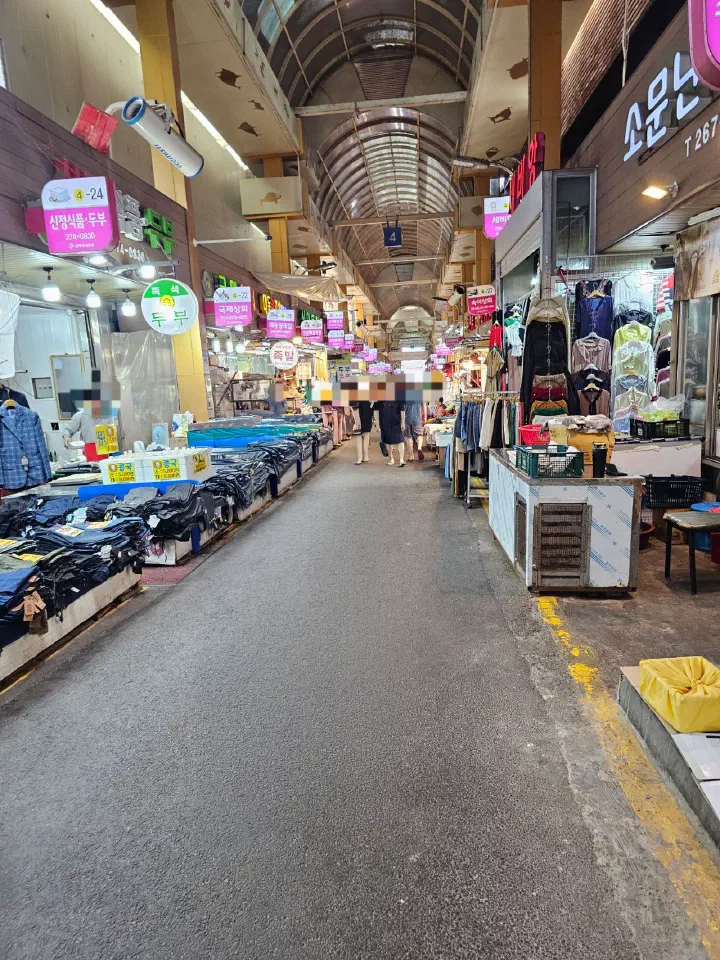
Finding it: not in the noodle alley
Here’s the thing that trips people up. Somunnan Kalguksu is not inside the famous Sinjeong Market noodle alley. It sits off on its own, up a slight slope along the main market street, so if you’re only scanning the noodle alley you’ll walk right past it. That’s exactly what I did my first time.

Just wander down the main lane and look for the red sign. You can actually see them simmering the anchovy-and-dried-fish broth right at the entrance, so honestly you can follow your nose. Watching them pull the noodles and ladle the stock while you wait is half the fun.

Menu and prices
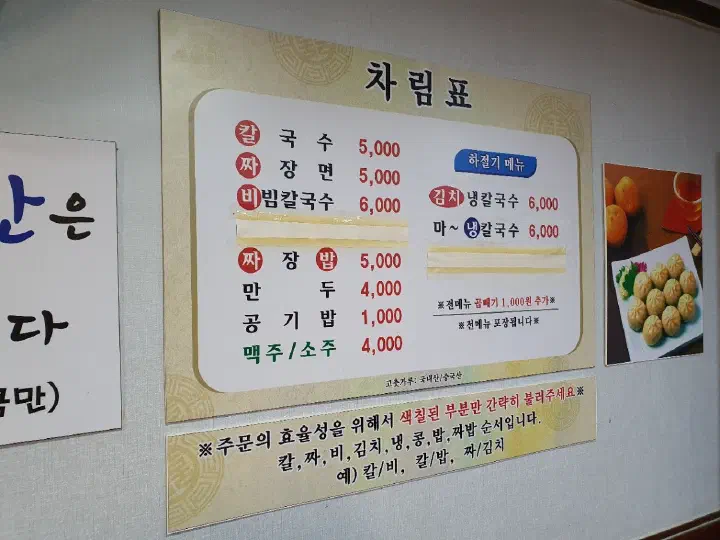
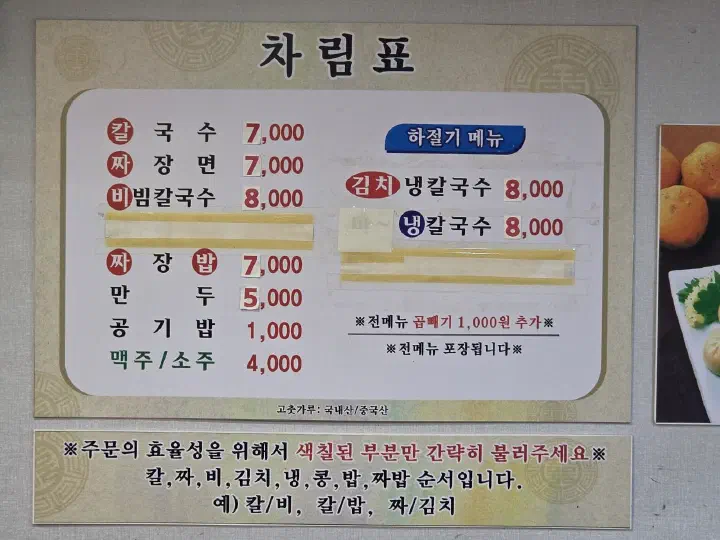
For a noodle shop, the menu is fairly varied.
- Kalguksu (knife-cut noodle soup) – 7,000 won
- Jjajangmyeon (black bean noodles) – 7,000 won
- Jjajangbap (black bean sauce over rice) – 7,000 won
- Bibim kalguksu (spicy mixed noodles) – 8,000 won
- Mandu (dumplings) – 5,000 won
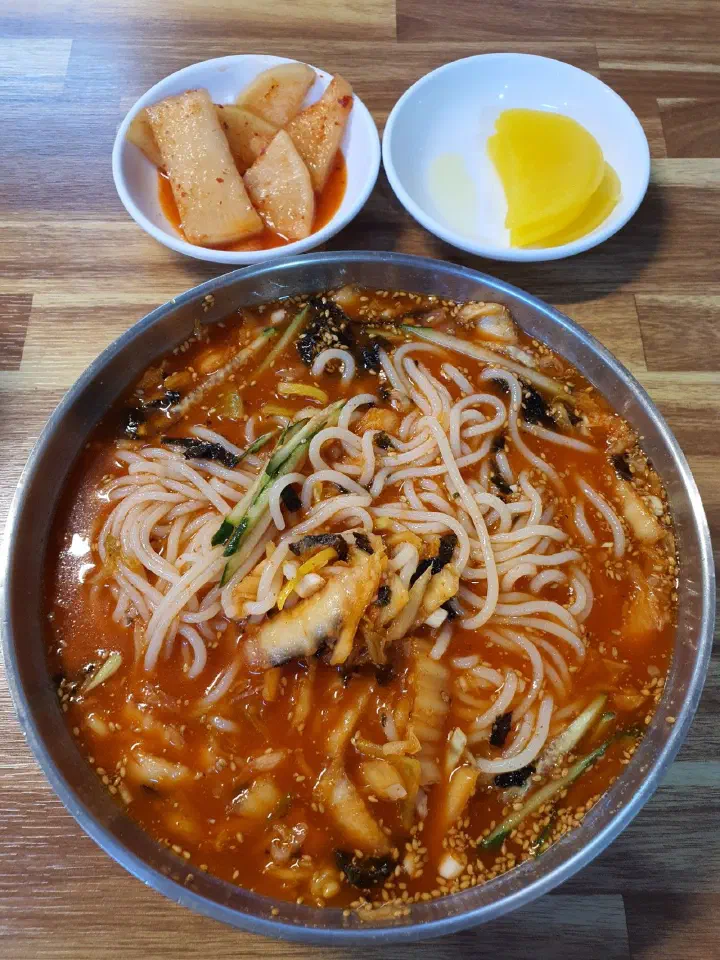
- Kimchi naeng-kalguksu (cold kimchi noodles, summer only) – 8,000 won
- Naeng-kalguksu (cold noodles, summer only) – 8,000 won
A 7,000-won bowl of noodles is a genuine bargain these days. A large (gopbaegi) portion is 1,000 won extra.

One small thing about ordering: you usually place your order before you sit down. The owner often takes your order right at the entrance, so decide what you want before you walk in. If your Korean is shaky, don’t worry — just point at the menu and hold up your fingers for how many. That’s all it takes here, and it works perfectly fine.

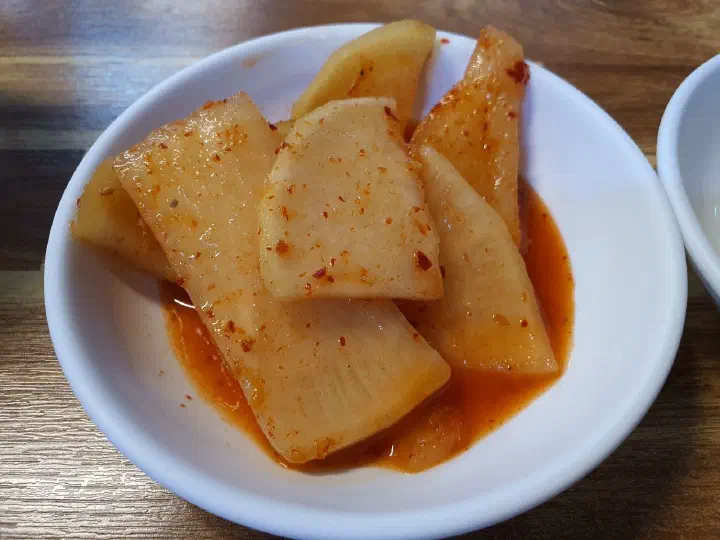
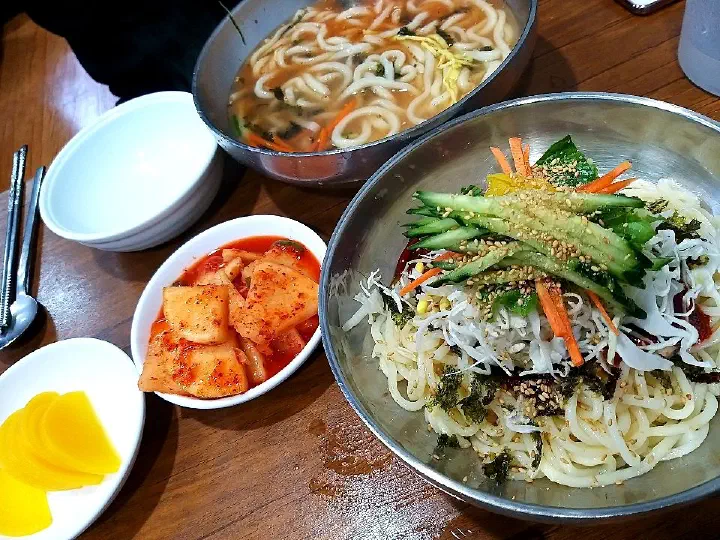
Water and side dishes are self-serve. Grab your water from the fridge, and help yourself to pickled radish (danmuji) and chopped radish kimchi (seokbakji) at the self-serve counter. The banchan is simple, as you’d expect at a noodle shop, but the radish kimchi goes so well with the broth that I kept going back for more.

The hot kalguksu: clean anchovy broth
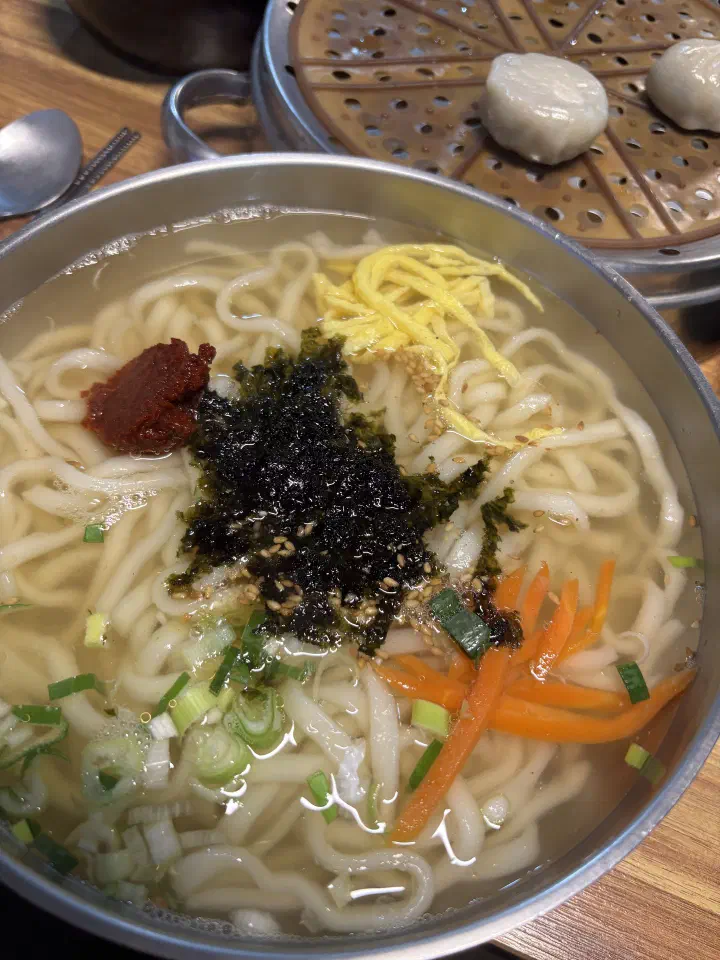
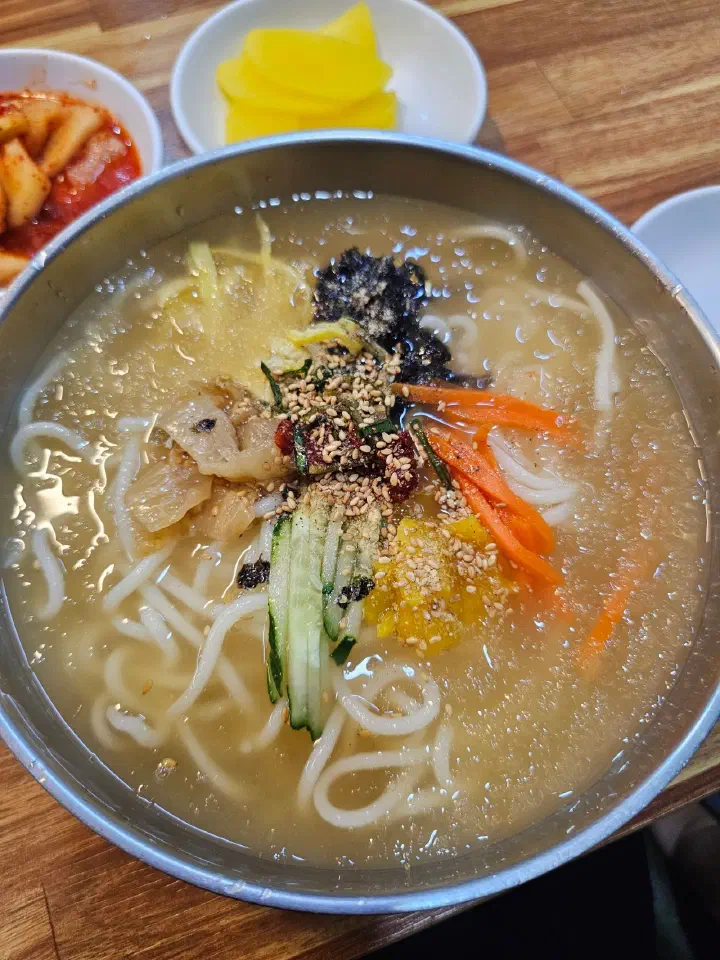
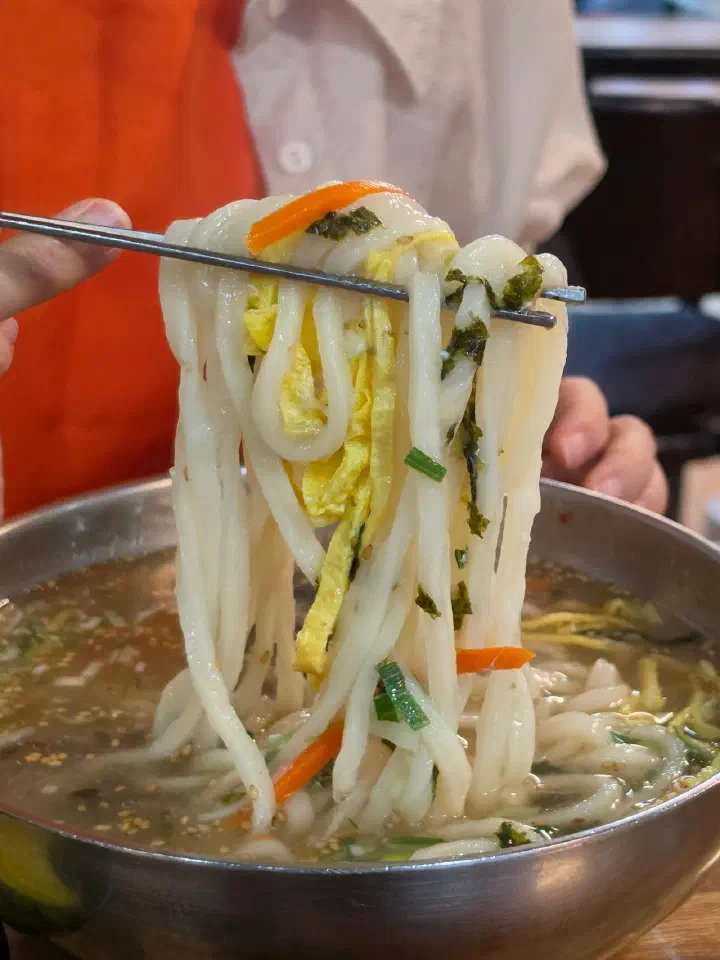
Let’s start with the basic bowl. They cook the noodles to order, straight in the broth, so it’s not fast food — be ready to wait a bit. The trade-off is that the stock soaks deep into the noodles, and they come out soft and chewy at the same time.

The broth leans anchovy rather than rich bone stock, so it’s clean and light. It comes topped with seaweed flakes, sesame, egg ribbon, and slivered carrot. Nothing aggressive, easy on the stomach. If it tastes too salty to you, just ask and they’ll add more broth. If you want some heat, stir in a spoon of the minced spicy peppers on the table — that’s how I like it. A quick note for visitors: even at its spiciest this is mild by local standards, but Korean “mild” can still catch you off guard if you’re not used to it, so go slow with the chili.
Don’t skip the dumplings
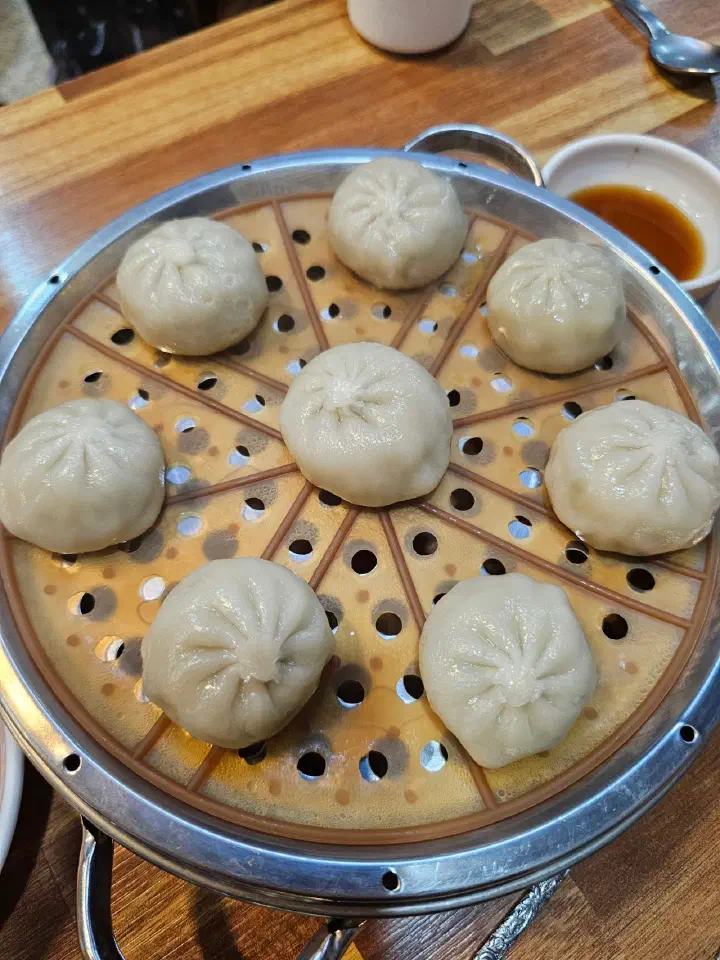
When noodles alone feel like not quite enough, add an order of mandu. Thin skins, packed filling, nicely chewy — they pair really well with the noodles.

My favorite combo is a bowl of kalguksu with dumplings on the side. With a bit of pickled radish, I could just keep eating.
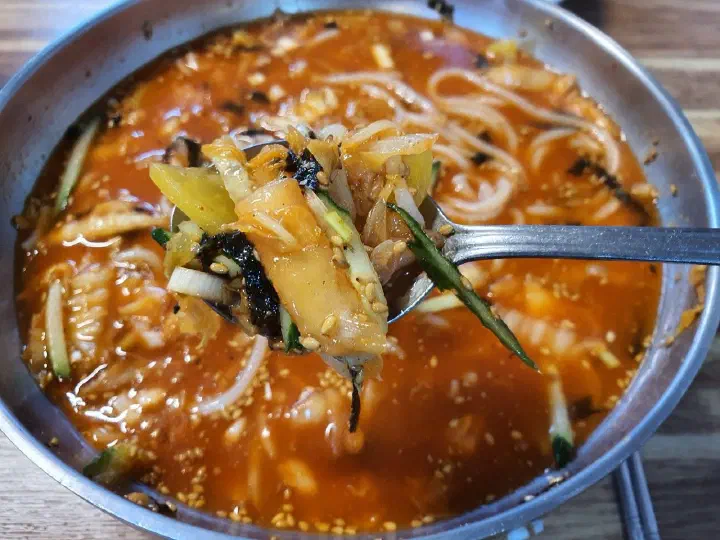
Bibim kalguksu: the one that got on TV
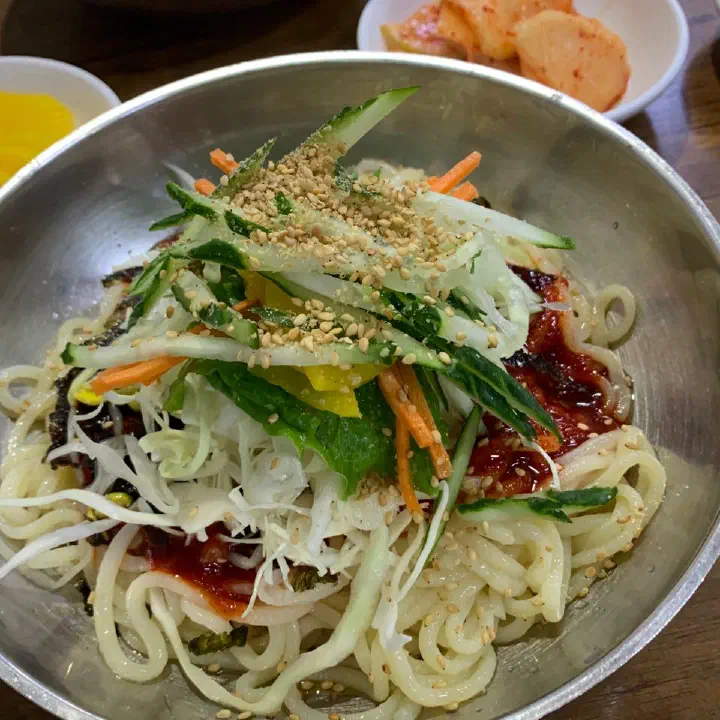
At Somunnan Kalguksu, the bibim kalguksu is almost as famous as the soup. It’s apparently been featured on TV.

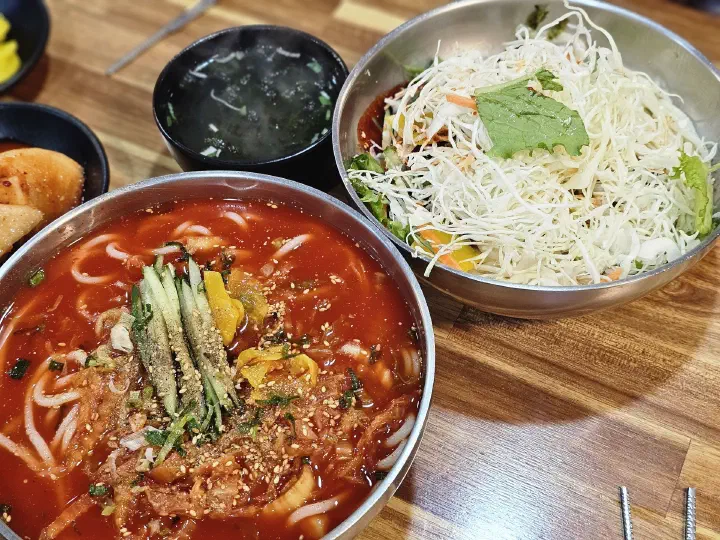
It’s loaded with cabbage and bean sprouts, so the portion is huge. The first time it came out I genuinely thought I’d ordered the large.

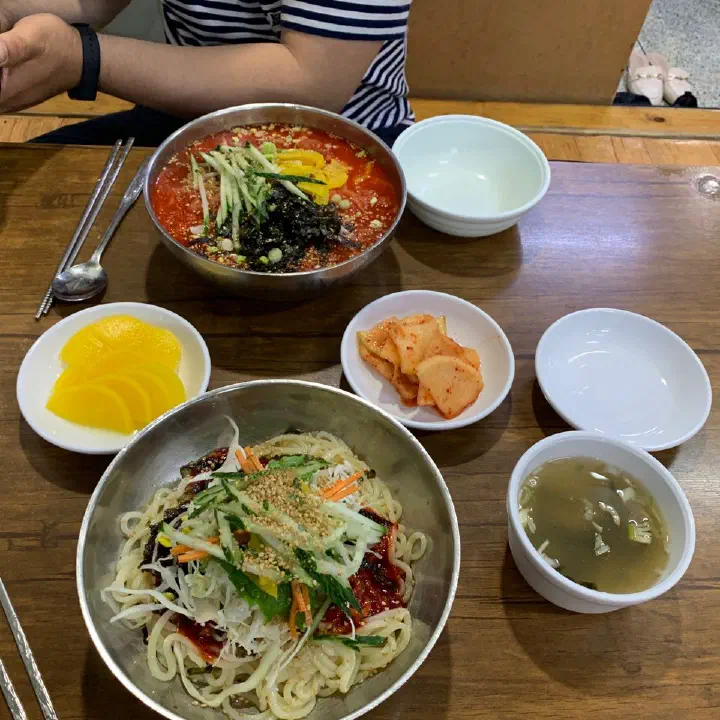
Chewy noodles, crunchy veg, and a sweet-tangy-spicy sauce that really wakes up your appetite. It tastes a bit like the sauce on jjolmyeon, so if you like cold spicy noodles you’ll be into this. It comes with a small bowl of warm broth on the side, which is great for sipping between bites of the spicy noodles. (Same heads-up on the spice — it has a real kick.)

In summer, the cold kimchi kalguksu, always
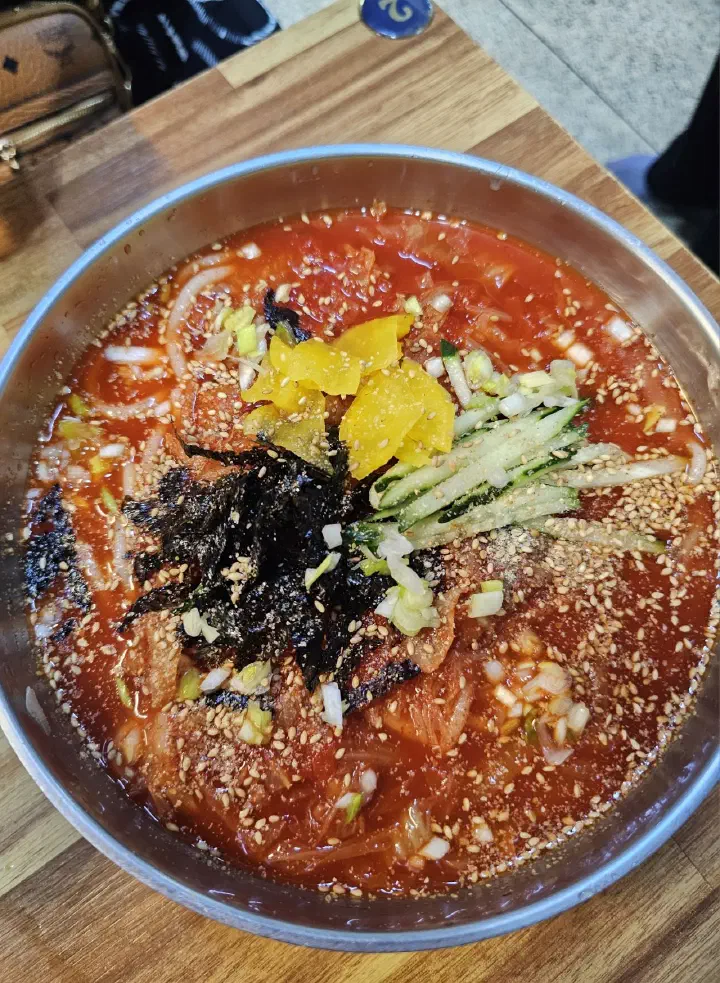
Now for my favorite. The kimchi naeng-kalguksu (김치냉칼국수) is summer-only, so every year I’m basically waiting for the day they start serving it.

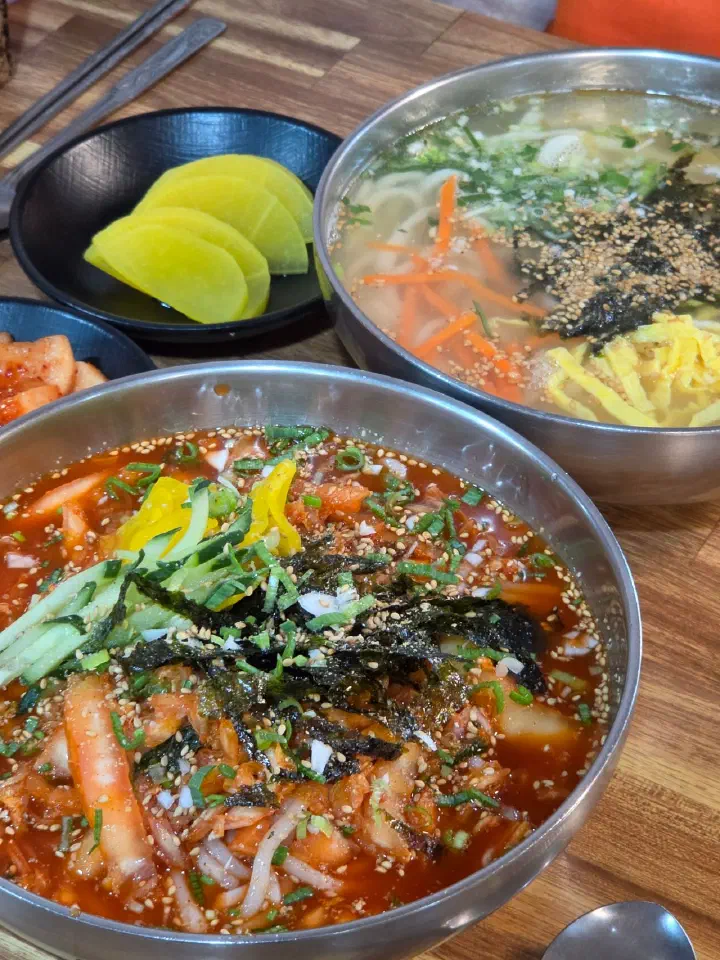
It’s a chilled broth topped with finely chopped kimchi, pickled radish, and cucumber, with a drizzle of sesame oil. Sweet and tangy, with a sharp kick from the kimchi — completely different from a plain anchovy cold noodle. It’s cold and refreshing but deeply savory, and once you’ve had it, you’ll think about it all summer.

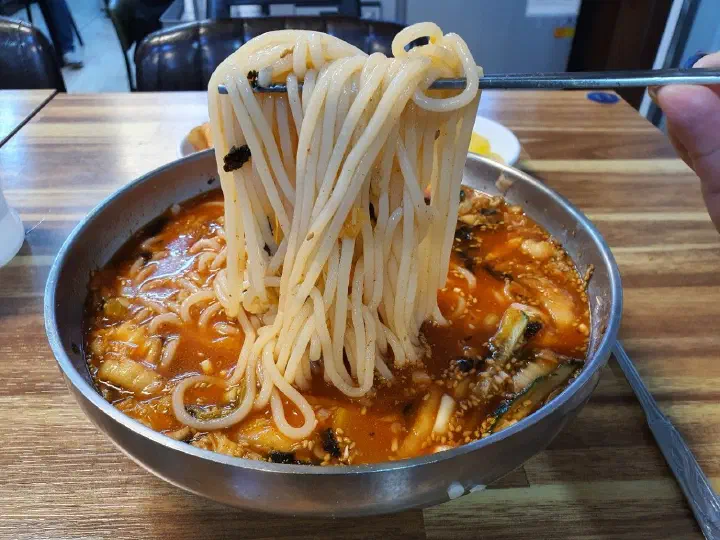
The noodles aren’t quite standard kalguksu noodles — they’re more like a thin, chewy udon, almost jjolmyeon-like. Give everything a good toss so the toppings mix in, then dig in.

Lighter and cleaner: plain cold kalguksu
On a day when the kimchi version feels like too much, go for the plain naeng-kalguksu. It’s an anchovy-broth cold noodle with chewy noodles and pickled radish on top — clean and simple.

If the kimchi one is tangy and sharp, this one is mellow and soothing — the kind of thing nobody complains about. The noodles are so springy they stretch right up when you lift them.

After a loop around the hot market, one cold bowl and the heat just melts away.

For two: get the bibim and the cold one
When I come with family or a friend, we order one bibim kalguksu and one cold kalguksu and share. Going back and forth between the spicy mixed noodles and the cool, light cold noodles keeps it interesting right to the last bite.

If there are two of you in summer, try this pairing.

Parking and paying
If you’re driving, there’s no private lot — use the Sinjeong Market public parking. When you pay, grab the 1-hour free parking voucher at the counter. The public lot often fills up at lunch, but it turns over quickly, so a short wait usually does it.
As for paying: like almost everywhere in Korea, they take cards, so any internationally accepted card is no problem at all. And there’s no tipping culture here — you don’t need to leave a tip, and trying to may just leave the staff a little confused.

Final thoughts
With so many noodle shops in Sinjeong Market, it’s hard to pick one, but the clean anchovy broth and that summer cold kimchi kalguksu keep pulling me back to Somunnan Kalguksu. The prices are kind, and it’s a perfect spot to fill up while you wander the market. If you’re around Nam-gu in Ulsan, or doing your shopping at Sinjeong Market, give it a try.