It was day two of our Busan trip, and after a night of fresh sashimi and cold beer, my stomach was begging for something gentle.
We were staying in Haeundae, so I started searching for places open early in the morning. That’s when I stumbled across Wonjo Jeonbokjuk—an abalone porridge institution that’s been holding down the same corner since 1967.
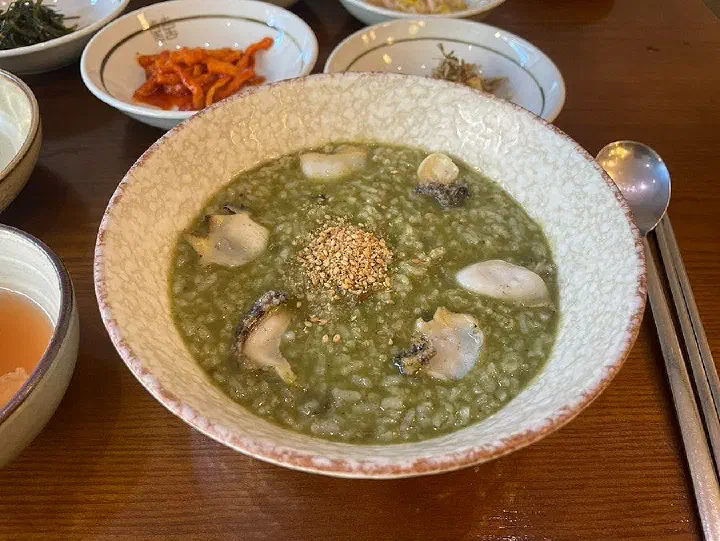
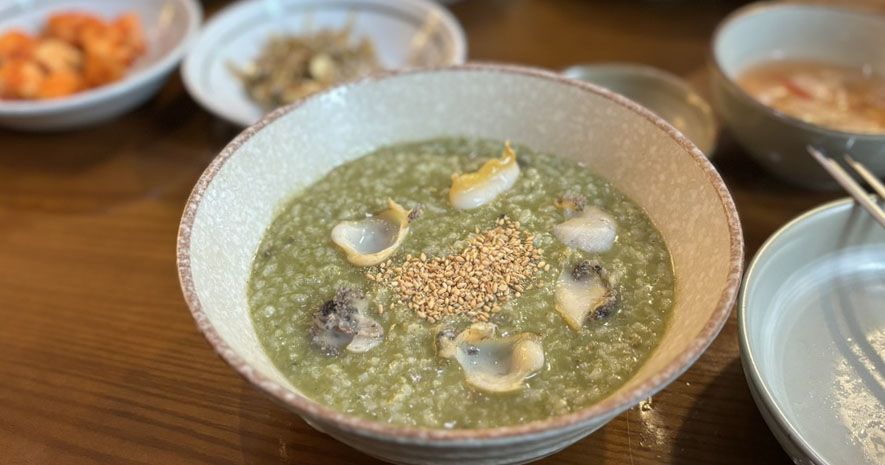
Spoiler: the green-tinted porridge, rich with house-blended abalone innards, was the real deal.
Plenty of photos below, so take your time scrolling.
Quick Info
- Address: 1F, Palais de CZ, 24 Haeundaehaebyeon-ro 298beon-gil, Haeundae-gu, Busan
- Phone: 051-742-4690
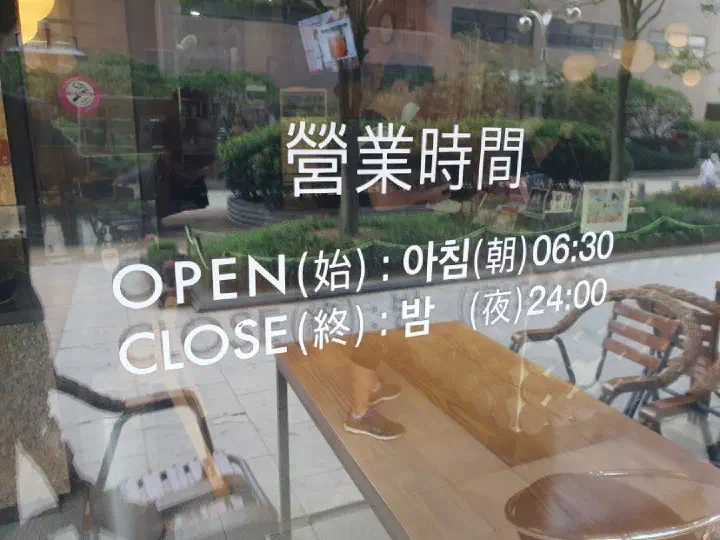
- Hours: 6:30 AM – 11:00 PM daily (open year-round)
- Parking: 2 hours validated at Palais de CZ basement garage
- Seating: 1st and 2nd floor, plus outdoor tables
📍 View Wonjo Jeonbokjuk (원조전복죽) on Google Maps →

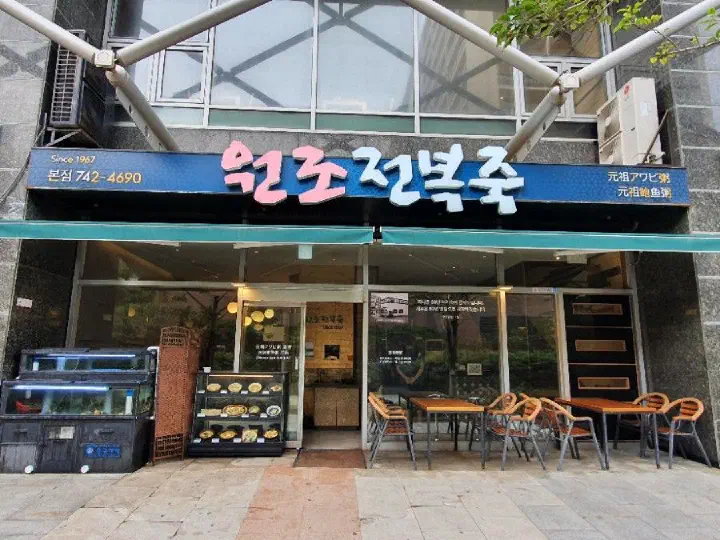
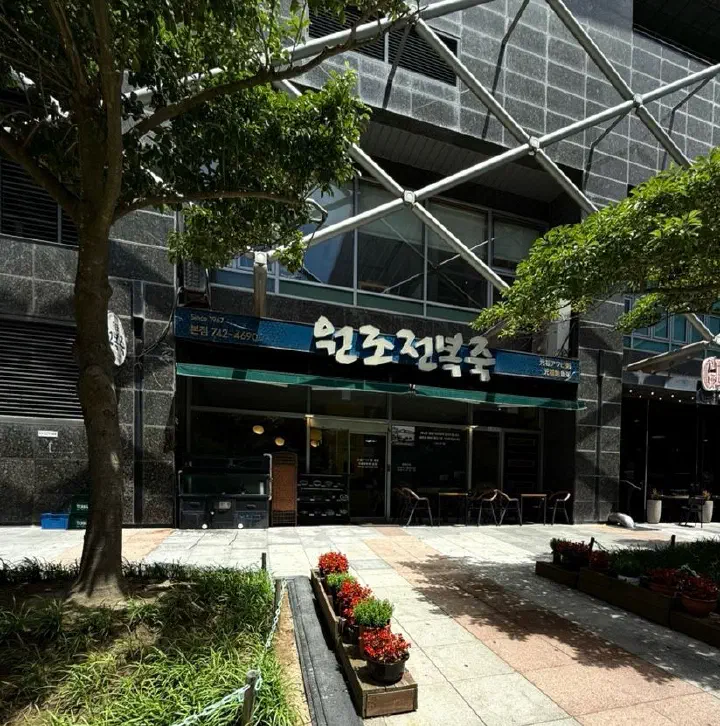
You’ll find it on the ground floor of the Palais de CZ building, right next to Paradise Hotel Busan.
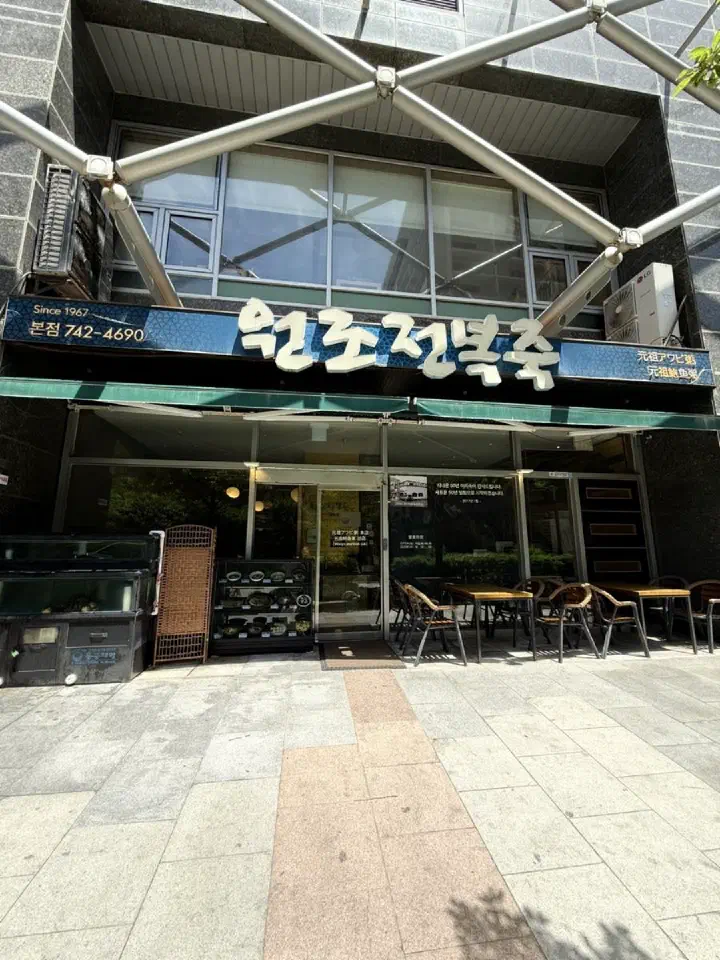
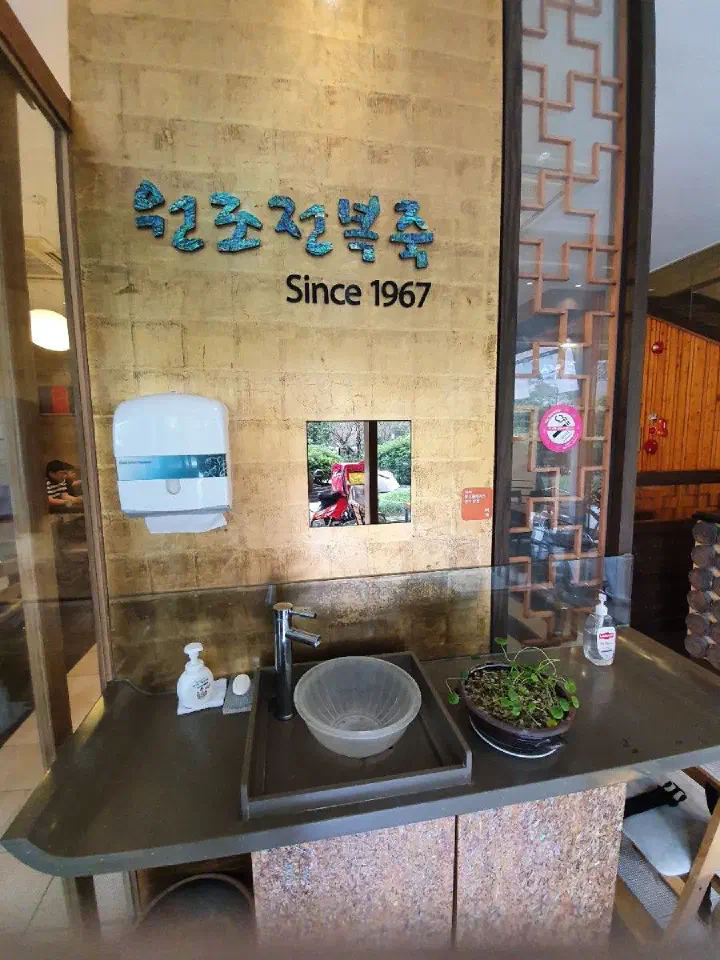
The bright blue sign with “Wonjo Jeonbokjuk Since 1967” makes it impossible to miss.

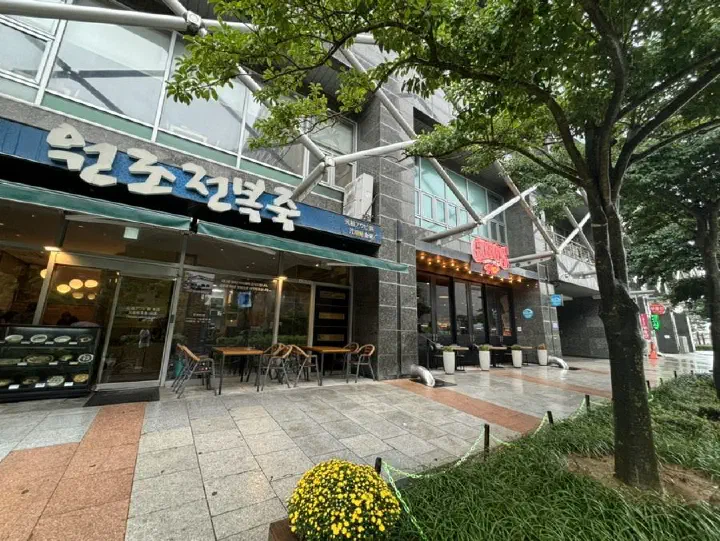
In daylight, the Palais de CZ exterior has a quiet charm, and the restaurant has a few outdoor tables in front.
Plenty of hotel guests stop in for breakfast, so don’t be surprised if it’s busy first thing.

The entrance faces the alley between the hotel and the commercial building, not the beach side.
There are a few other shops in the same building, but the restaurant is right at the front of the ground floor.

The outdoor tables are lovely on a sunny day.
Just keep in mind they’re right by a walking path with the occasional car passing, so I opted for indoors.
Hours and Parking

The biggest selling point is the 6:30 AM opening time.
Most Korean hangover spots don’t open this early, so it’s a lifesaver if you’ve been up for the sunrise or have an early flight.
Parking is in the Palais de CZ basement garage, validated for two hours.
There’s a dedicated elevator from the garage up to the ground floor, so you won’t get lost wandering around.
📍 View Wonjo Jeonbokjuk (원조전복죽) on Google Maps →
Menu Display and Live Tank

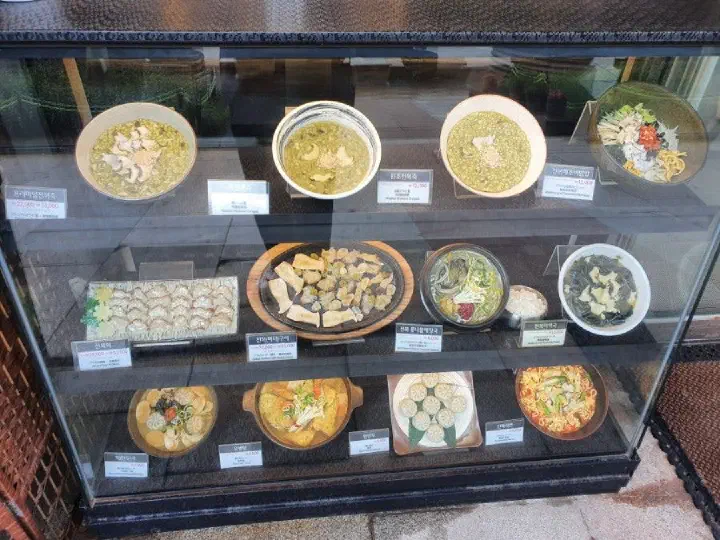
A display case out front shows life-size models of every dish, so you can decide before you sit down.
The lineup goes well beyond porridge—there’s abalone seaweed soup, abalone bean sprout hangover stew, abalone seaweed bibimbap, and even rice cake dumpling soup.

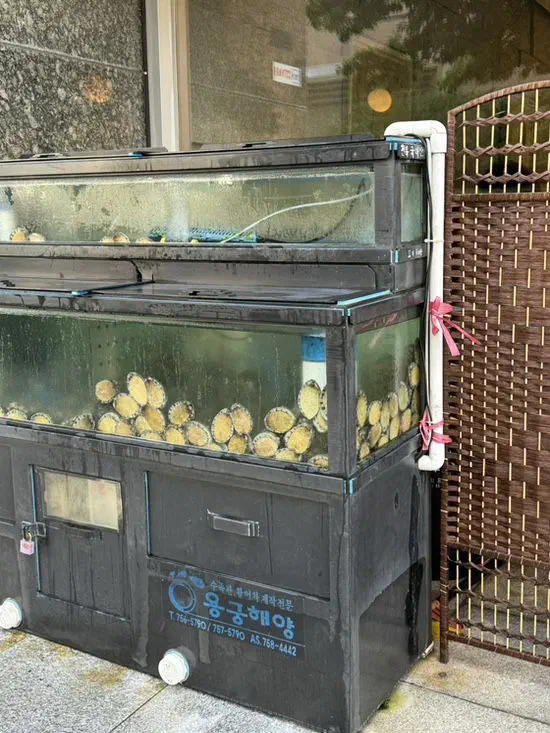
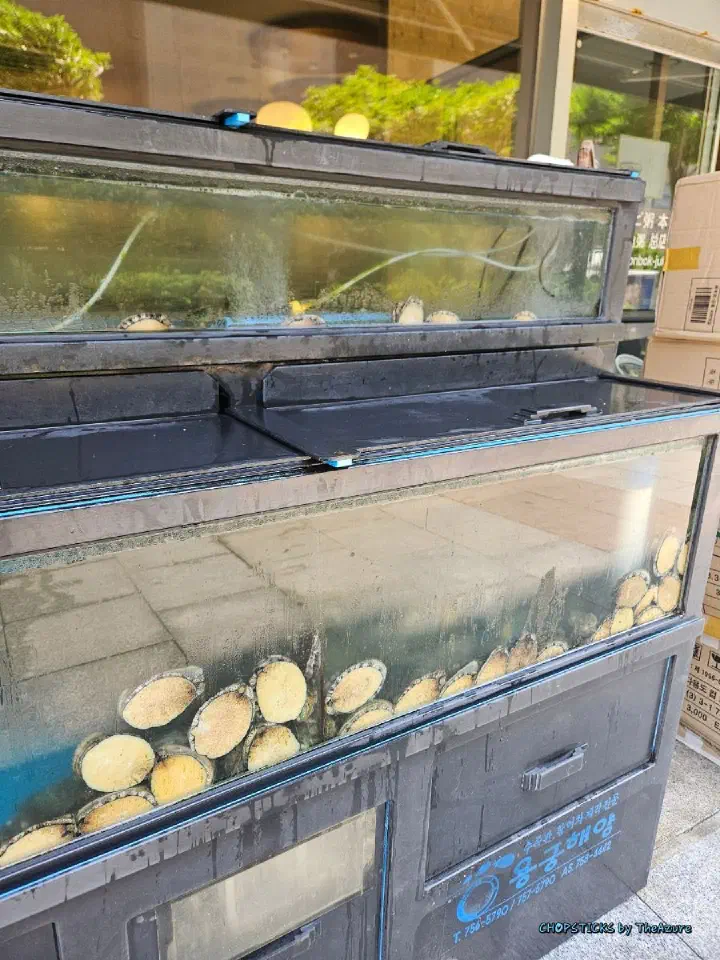
Two large tanks of live abalone sit right by the entrance.
Seeing them clinging to the glass really sells the freshness factor.

Up close, there are dozens of plump abalone packed in.
A lot of places sneak in cheaper ormer (obunjagi), but here you can see the real thing swimming around—peace of mind right there.
Inside the Restaurant

A big hand-wash basin greets you the moment you step in.
With the beach so close, it’s a thoughtful setup for guests who’ve been playing in the sand.

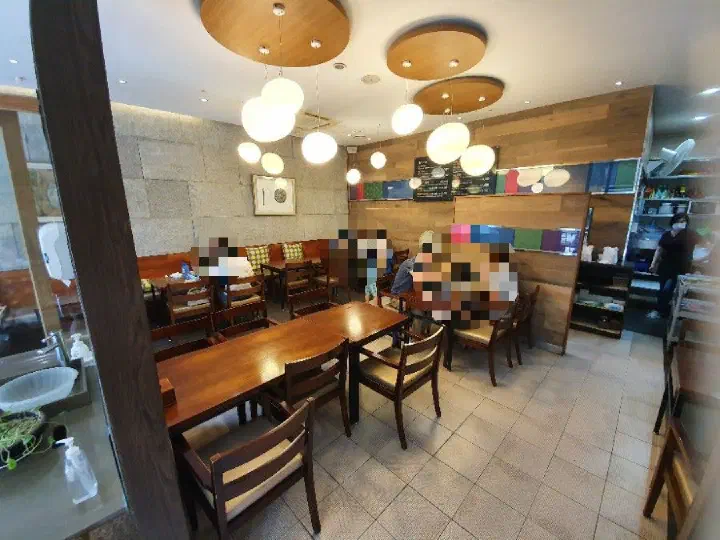
For a 50-year-old restaurant, the inside is surprisingly polished.
Warm wooden tables under soft round pendant lights make it feel more like a refined Korean dining room than an old-school spot.
There’s a second floor if the first one fills up.

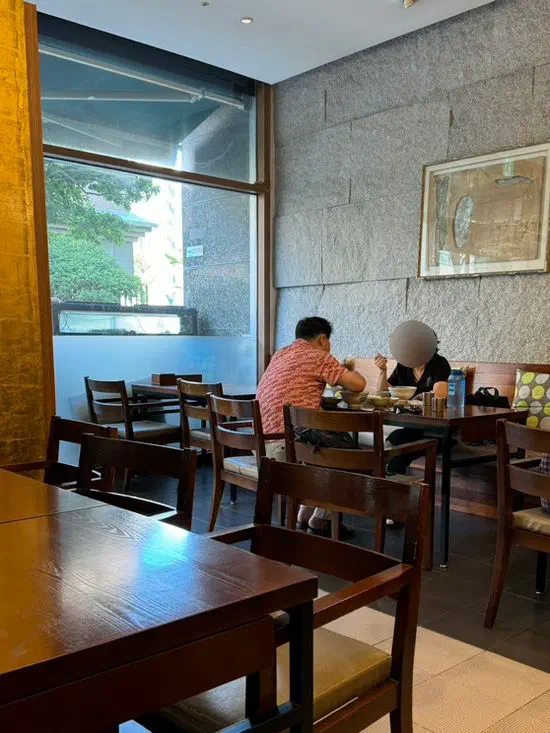
Window seats are available too.
Sitting in the morning light with a hot bowl of porridge in front of me was genuinely restorative.
What to Order

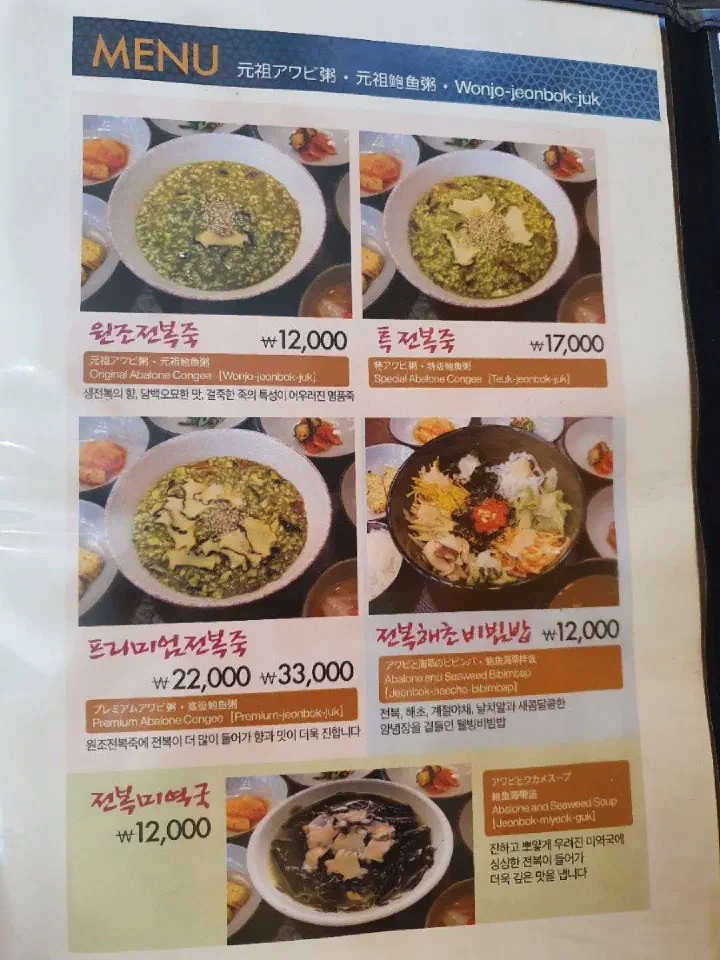
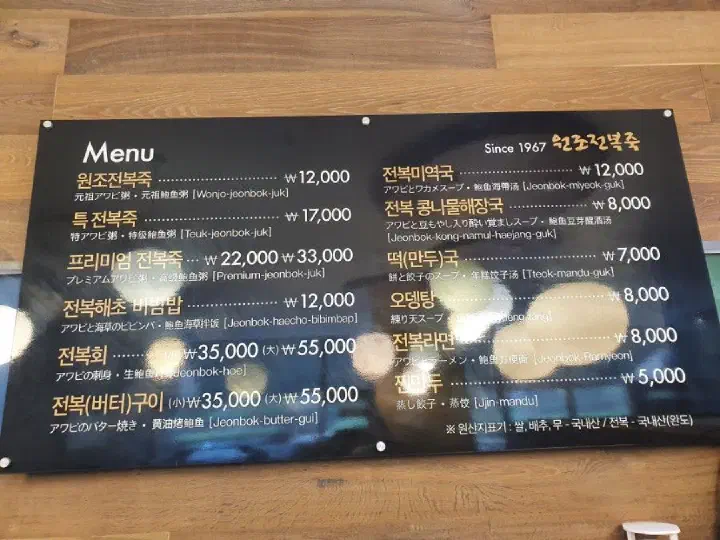
The standard Wonjo Jeonbokjuk is 12,000 won, Special is 17,000 won, and Premium comes in two sizes at 22,000 and 33,000 won.
The difference is how much abalone you get.
The standard was plenty for me, but if you’re a serious abalone fan, go Special or Premium.

Beyond porridge you’ve got abalone seaweed soup (12,000), abalone bean sprout stew (8,000), rice cake dumpling soup (7,000), fish cake soup (8,000), abalone ramyeon (8,000), and steamed dumplings (5,000).
So even if someone in your group can’t do abalone, there’s still plenty to choose from.
Don’t speak Korean? Easy. The display case out front has life-size models of every dish, so you can literally point at what you want—it might be the most foreigner-friendly ordering setup in Haeundae.
Banchan

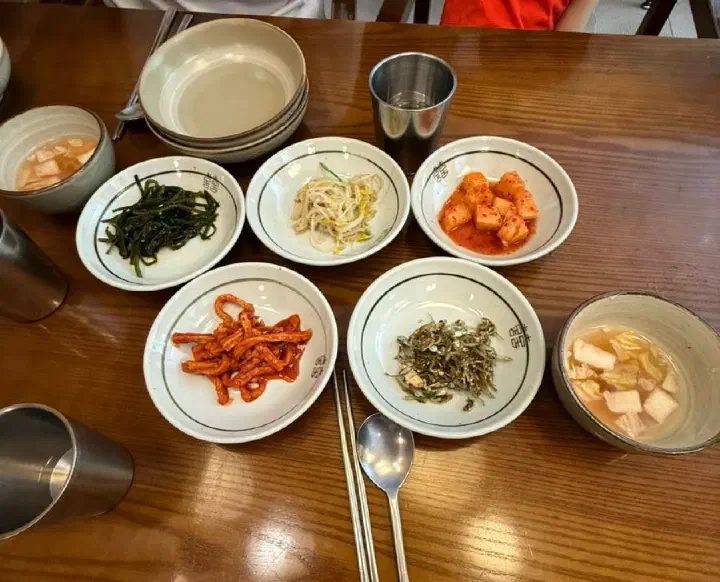
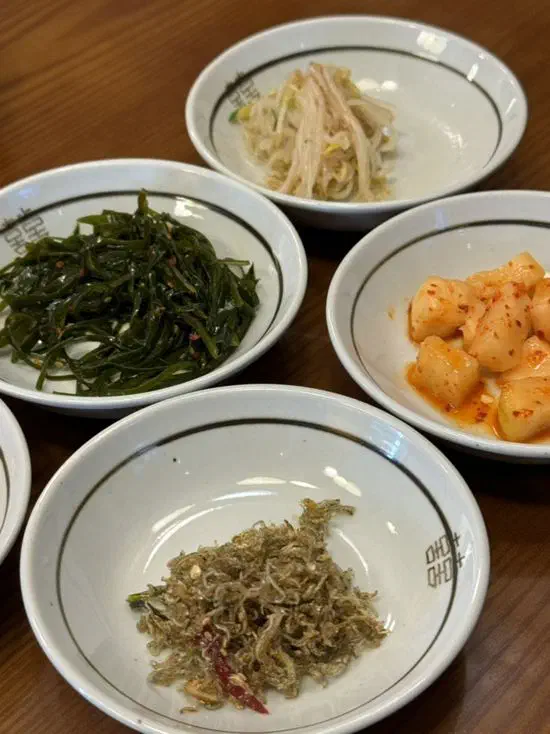
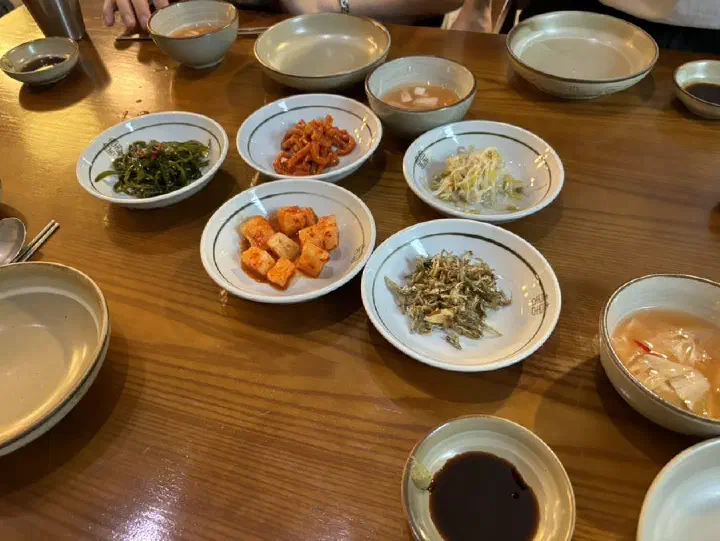
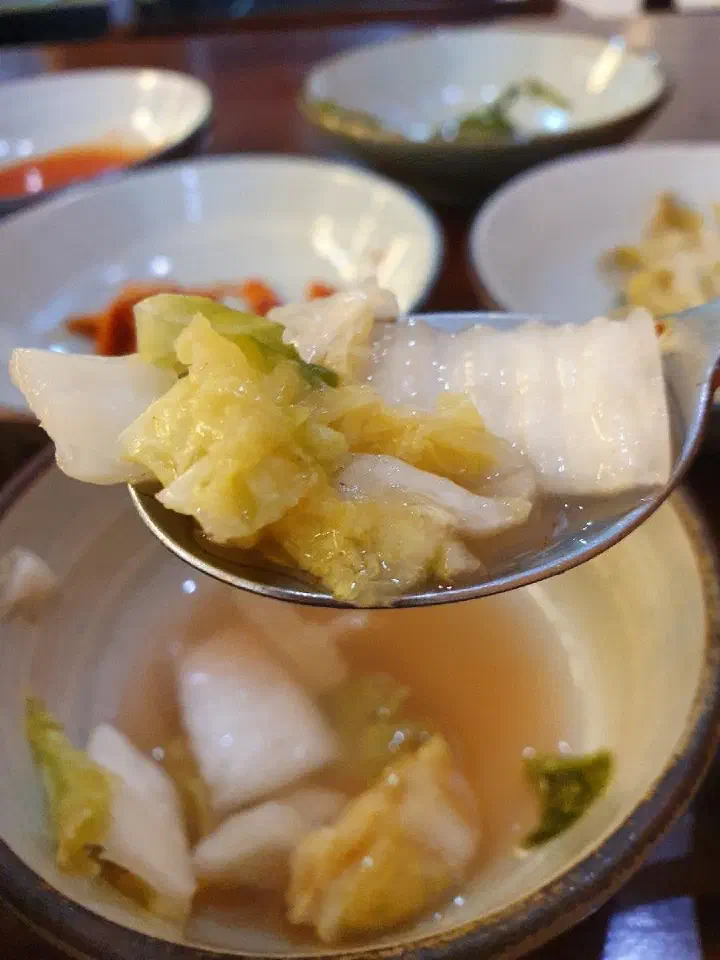
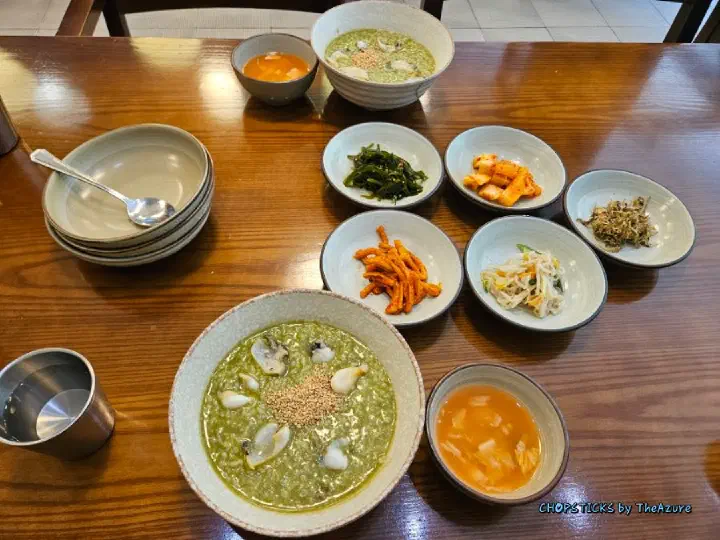
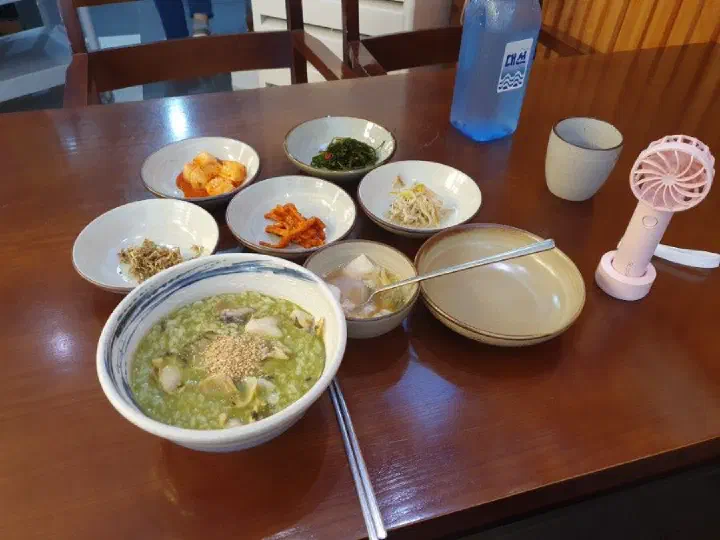
Six side dishes come standard: anchovy stir-fry, dried radish, seaweed salad, bean sprouts, kkakdugi (radish kimchi), and water kimchi.
All clean, well-balanced flavors that pair nicely with porridge.

The seaweed salad and the sweet-salty anchovy stir-fry were my favorites.
I asked for an anchovy refill and the staff happily brought more.

When all the dishes hit the table, it already looks like a feast.
A small dish of soy sauce comes along too—handy if the porridge tastes a touch mild for you.

The water kimchi was hands-down my favorite.
A spoonful between bites of hot porridge cuts right through and resets your palate.
If you’re nursing a hangover, this is the one you want.
The Porridge Arrives

When the full set arrives, it looks deceptively simple but feels indulgent.
One generous bowl of porridge, all the banchan, water kimchi, and barley tea on the side.

The porridge takes center stage in a wide bowl with no lid.
The portion is more substantial than it looks—a single bowl easily fills you up.

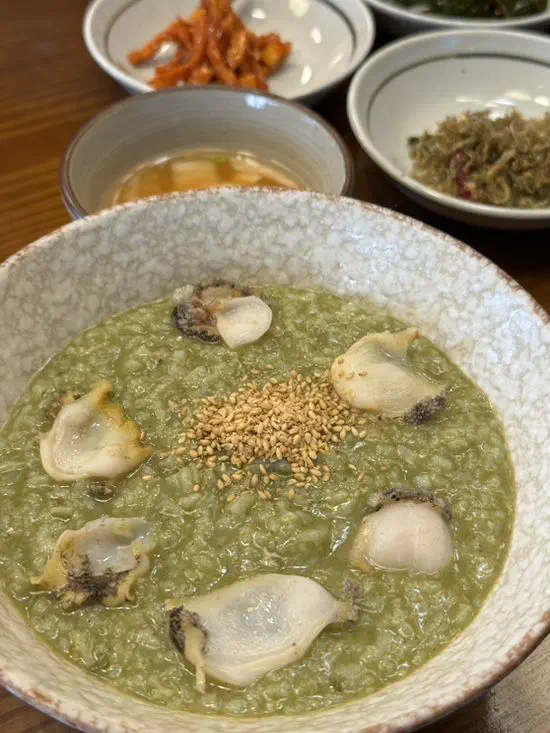
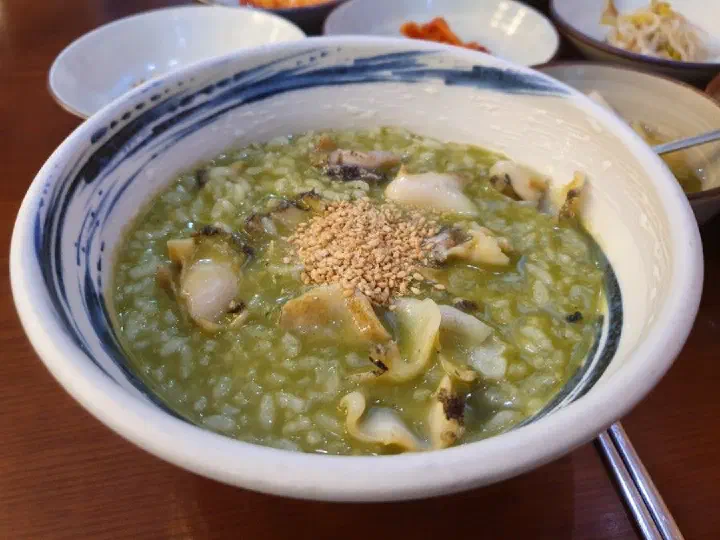
And here it is: the real deal.
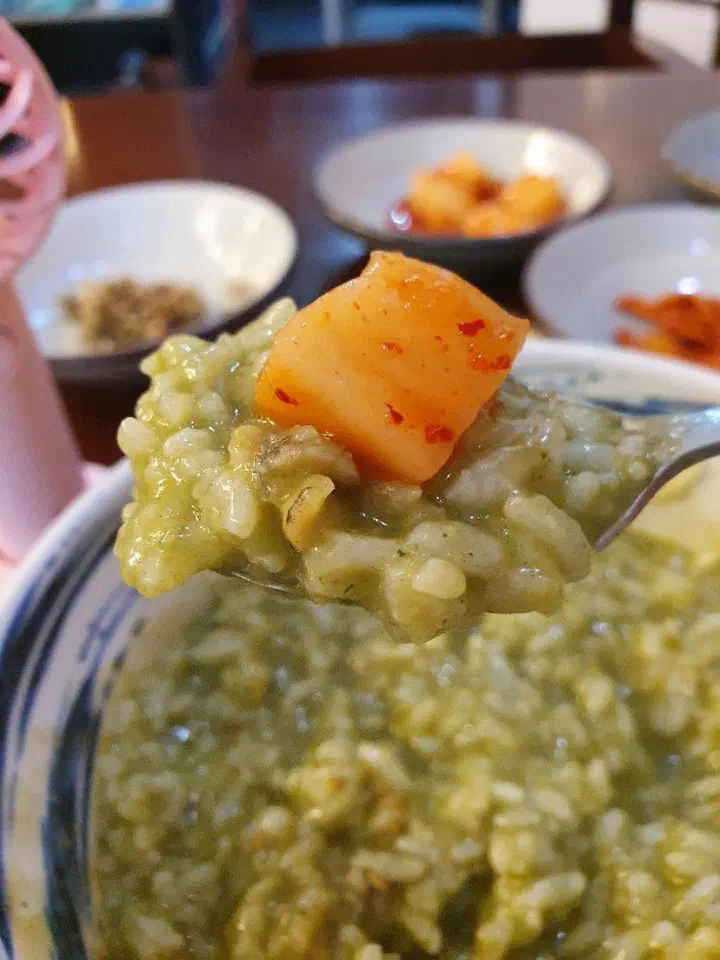
If you’re used to the white abalone porridge from chain places, this green color will surprise you.
That’s because the abalone innards are blended in and cooked down with the rice—where all the deep flavor comes from.

Up close, the color is mesmerizing.
A sprinkle of sesame seeds in the middle and slices of abalone arranged on top.

Even the standard set has a respectable amount of abalone.
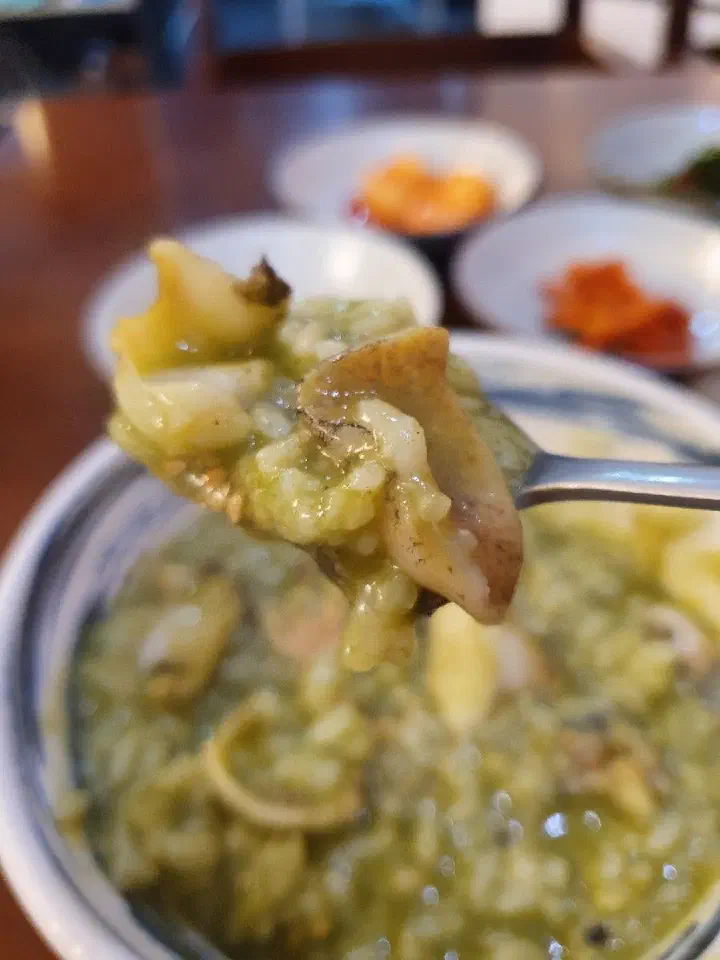
The slices are thin but plentiful, so you get a piece in nearly every spoonful.
First Spoonful

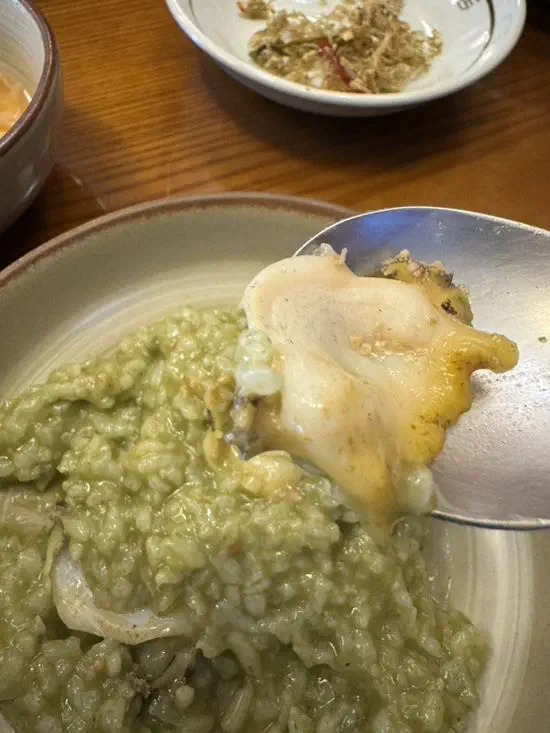
That first spoon delivers porridge and a piece of abalone together.
The innards add this gentle, savory depth—no fishy notes, just the clean essence of the sea.

Every so often, you’ll pull up a generous chunk of whole abalone.
Chewy, briny, satisfying—this dish alone is worth the trip.

Try a bite with a piece of kkakdugi.
The salty crunch of the radish kimchi against the silky porridge is a perfect contrast.
Beyond the Porridge

The abalone seaweed soup is another local favorite.
Big chunks of abalone in a rich, milky-clean broth—if you’re dining with one other person, splitting one porridge and one seaweed soup is the move.
It’s deeply restorative without being heavy.

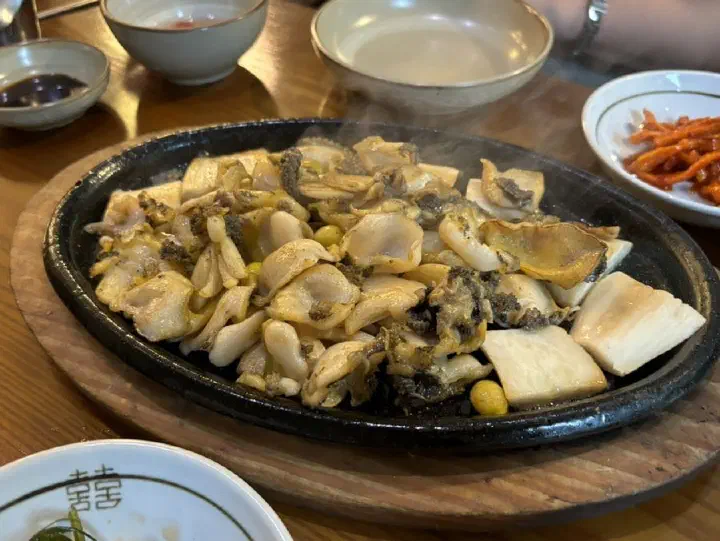
The butter-grilled abalone arrives sizzling on a hot iron plate with sliced abalone, king oyster mushrooms, and ginkgo nuts.
The aroma of melted butter alone will pull you in.
Try a piece on top of your porridge for a buttery upgrade.

Order all three—porridge, soup, and butter-grilled abalone—and you’ve got a proper restorative feast.
With a group of three or four, this is the way to go.

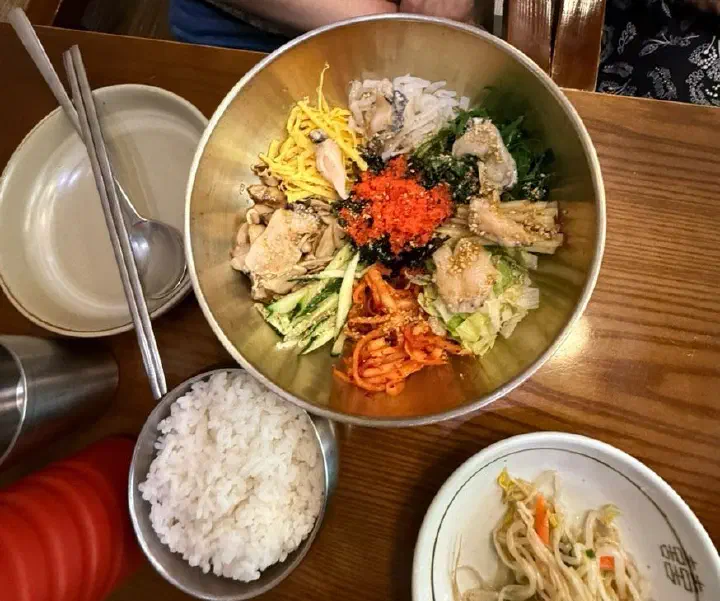
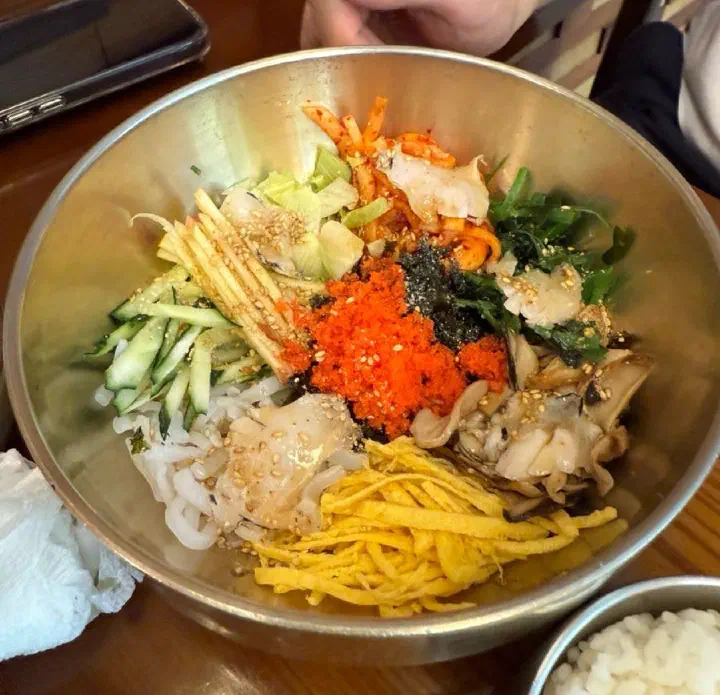
Don’t skip the abalone seaweed bibimbap either.
Cucumber, daikon, egg ribbon, mushrooms, spinach, flying-fish roe, and abalone in one bowl.

Up close the colors are gorgeous.
Mix everything with the sweet-tangy sauce and it’s an instant appetite-waker—plenty of people told me the bibimbap surprised them more than the porridge.
Honest Take
There’s a reason this place has held its corner for over 50 years.
That green, innards-rich porridge isn’t something you’ll find at a chain.
It’s deep and savory without a hint of fishiness, so even if “abalone innards” sounds intimidating, you’ll probably love it.
The 6:30 AM open is a gift for early travelers and sunrise-watchers.
This is a much more nourishing breakfast than any hotel buffet, and easy on the stomach—an absolute must-stop if you’re in Haeundae.
Next time, I’m bringing the family for the Premium Jeonbokjuk and butter-grilled abalone.
🩷 Heads up: keep your parking ticket for the 2-hour validation at the Palais de CZ basement garage.
🩷 Card payments are accepted, including international Visa, Mastercard, and Amex—the same goes for almost every restaurant in Korea, so you don’t need to bring cash.
🩷 Skip the tip. Korea doesn’t have a tipping culture, and staff may feel awkward if you try to leave one.