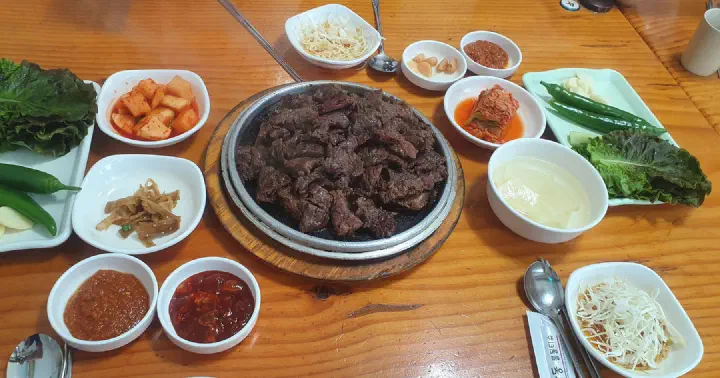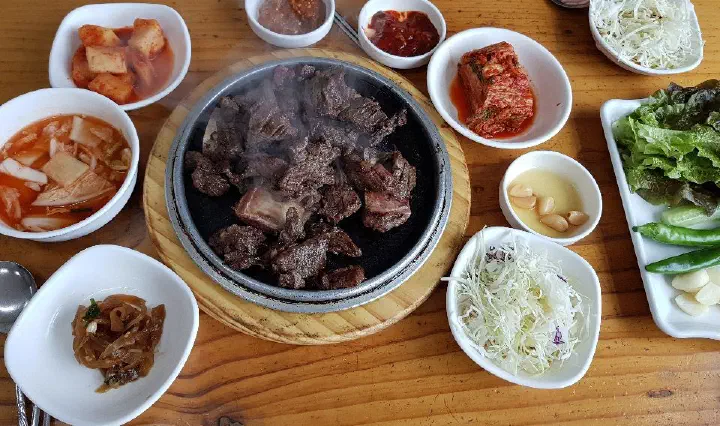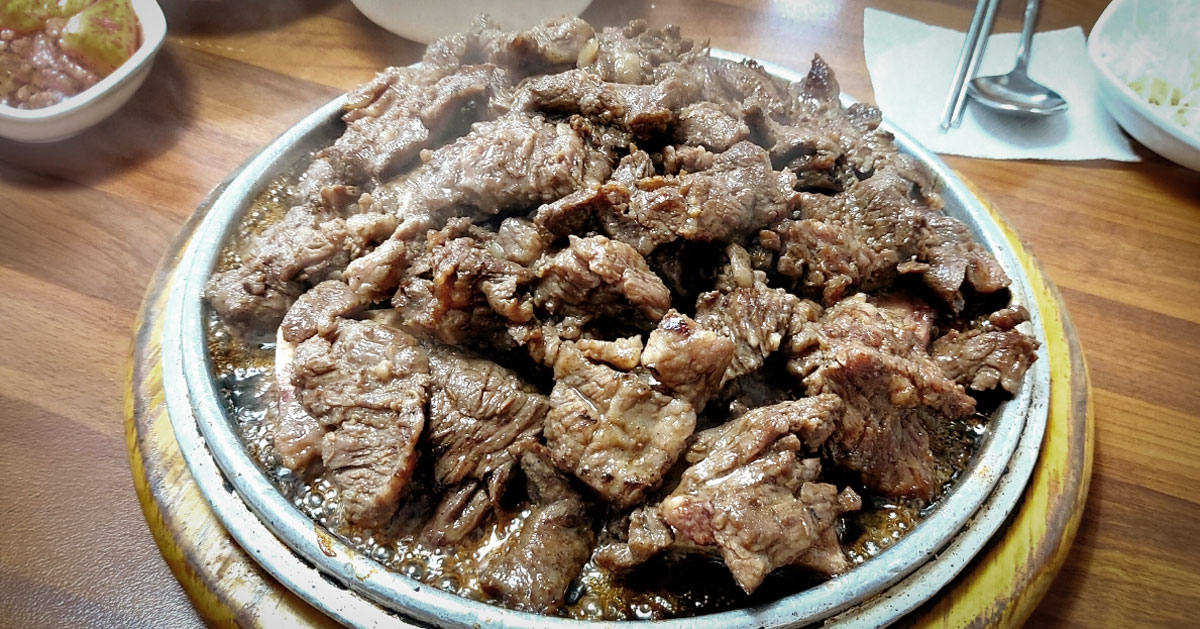
If you ask anyone in Yesan where to eat galbi, this is the first name that comes up.
Sobok Galbi (소복갈비) has been open since 1941 - that’s 85 years now. It earned the nickname “the presidents’ restaurant” because a long line of Korean presidents, starting with Park Chung-hee, used to stop by whenever they were in the area.
It’s less of a trendy hotspot and more of an old institution. That cuts both ways: the strengths are real, but so are a couple of honest drawbacks. Here’s what’s worth knowing before you go.

The basics
Address: 9 Cheonbyeon-ro 195beon-gil, Yesan-eup, Yesan-gun. It’s about a 5-minute walk from Yesan Traditional Market (예산시장).
Open daily 11:00-20:30, with a break from 14:00 to 17:00. Last order is 19:30. If they sell out of ingredients, the break or closing time can shift earlier, so it helps to go with a little flexibility.
Phone: 041-335-2401. The fresh ribs (saeng galbi) are reservation-only, so it’s worth calling ahead if that’s what you’re after.
📍 View Sobok Galbi (소복갈비) on Google Maps →
A quick note for international visitors: like almost every restaurant in Korea, they take credit cards, so an internationally accepted card works fine here. There’s no tipping culture in Korea - you don’t need to leave a tip, and doing so might just confuse the staff. English isn’t widely spoken, but ordering is simple: the dishes are mostly grilled beef, and you can point at the menu and hold up fingers for how many portions you want.
Who it suits
This isn’t really a solo, grab-a-quick-bite kind of place. It fits family meals and gatherings with older relatives much better.
You’ll notice a lot of multi-generation families here, often with elderly parents. The beef is tender enough that people with weaker teeth can enjoy it easily, which is part of why it draws that crowd.
Seating is divided into room-like sections, so it works well for kids and larger groups. It used to be floor seating, but it’s been switched to tables and chairs - easier on the knees.

Expect a wait
On weekends and at lunch peak, plan for a wait. Even right at opening on a Sunday, a line tends to form, and at busy times it can stretch from 50 minutes to an hour and a half.

You register your phone number and party size at a kiosk inside, and you get a KakaoTalk message when it’s your turn. One catch: there’s no “delay my turn” option like the apps some places use, so if you miss your slot, you start over.
To keep the wait short, aim for right at opening or around 17:00 when the afternoon break ends. If you put your name down while someone else parks, you’ll save time.
Even after you’re seated, there’s a second wait for the food - around 20 minutes after ordering. Tables don’t turn over quickly here.
Yangnyeom galbi - the easy choice
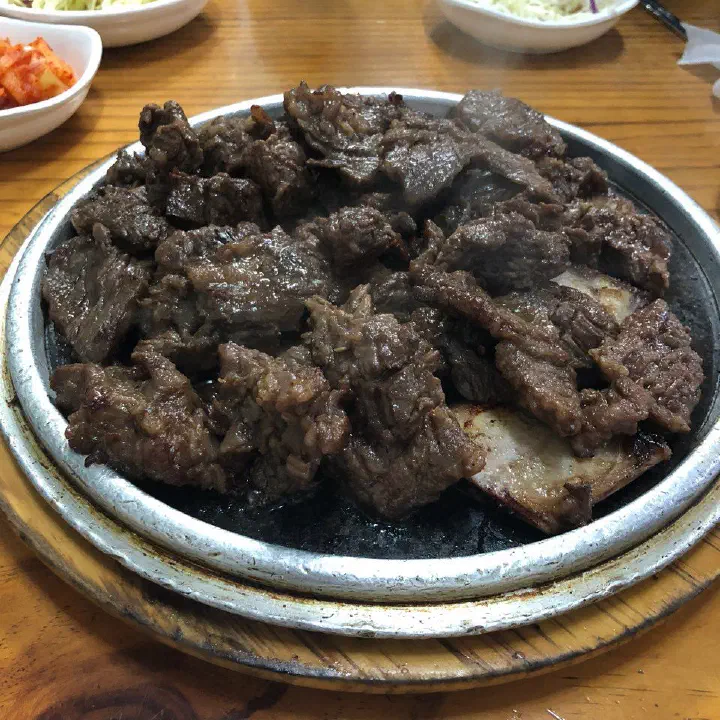
The most approachable option is the marinated ribs, yangnyeom galbi (양념갈비), at 47,000 won per portion. No reservation needed - you can just order on the spot.

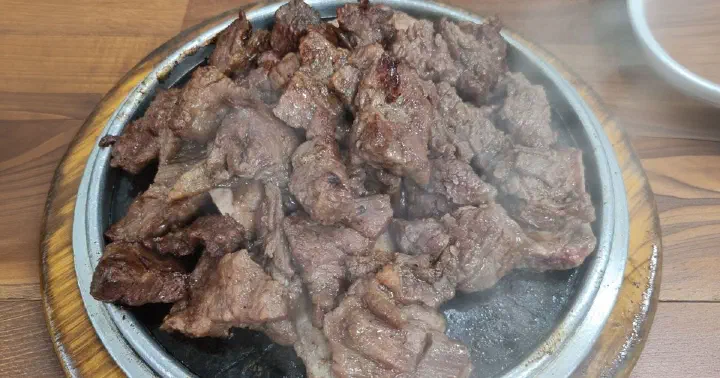
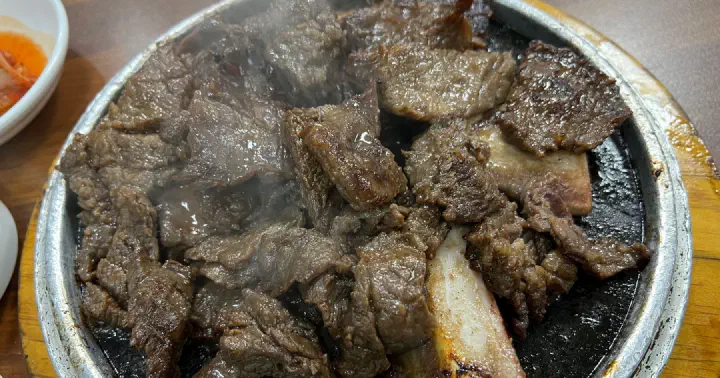
The marinade is soy-based but not heavy on the sweetness or salt. There’s a gentle sweetness soaked into the meat and a faint charcoal aroma, just enough to season without burying the beef itself.
It’s a crowd-pleasing flavor, and kids often go for it more than the adults do. A piece of rib over a spoonful of rice makes for a filling bite, and it pairs nicely with the crunchy seasoned cabbage and lettuce wraps.
One honest caveat: lately some regulars have mentioned the marinade tasting stronger and the meat coming out chewier than before. Plenty of people still call it tender, so it seems to vary - go in curious rather than expecting a life-changing plate of ribs.
Grilled and served on hot stone
The most distinctive thing about this place is how the ribs are cooked.

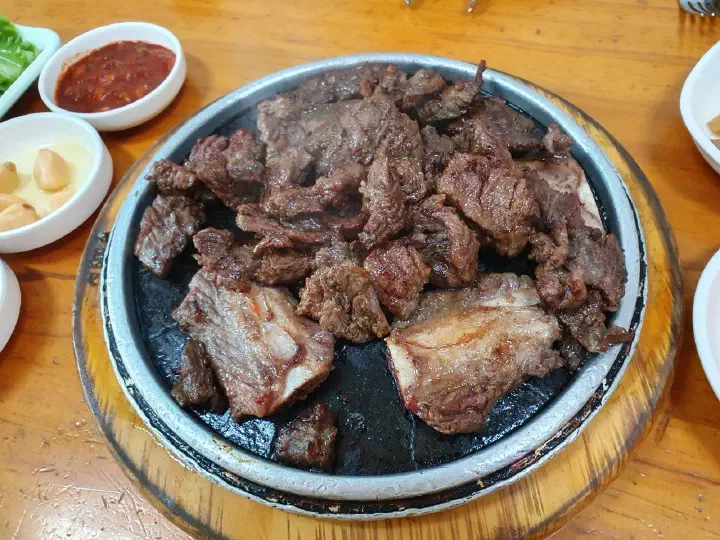
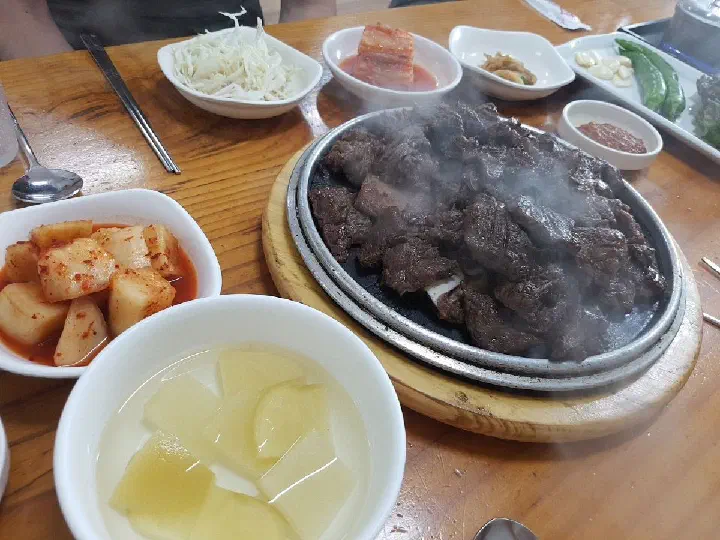
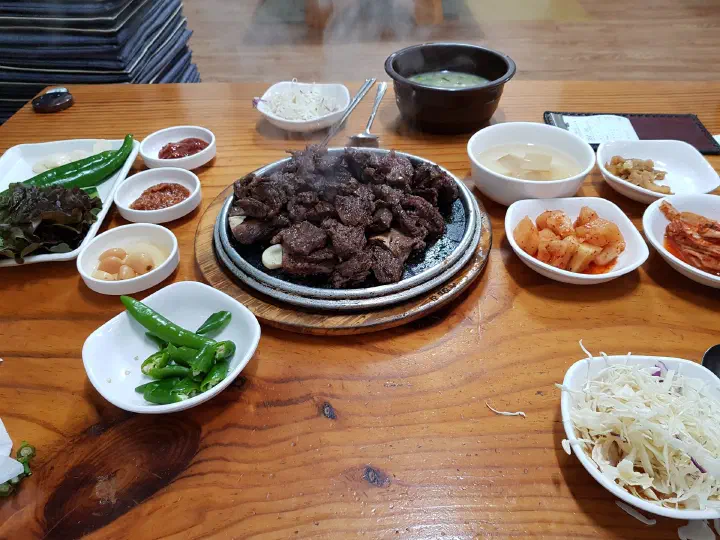
Near the entrance, the ribs are seared over real charcoal, then brought to your table already cooked, resting on a heated stone plate. You don’t grill anything yourself, the meat stays warm until the end, and your clothes pick up far less of that grill smell.
The trade-off: if you leave the meat sitting on the stone too long, the edges firm up. Rather than ordering a big batch at once, order in rounds of two or three portions so each one stays tender.
The ordering flow is a little unusual too - you order the ribs first, and then order rice or soup once the ribs are on their way.
Saeng galbi - reserve if you want it
The signature dish is actually the fresh, unmarinated ribs, saeng galbi (생갈비), at 55,000 won per 250g portion.

They prepare a fixed amount each day, so if you show up without a reservation, there’s a good chance it’s already gone, especially on weekends. If fresh ribs are a must, call a day or two ahead.
For juiciness and texture, many people find the fresh ribs more memorable than the marinated ones. But if you miss the reservation window, the marinated ribs are satisfying on their own - no need to feel like you’ve lost out.
Galbitang and the soup that comes with rice
At lunch, locals lean toward the galbitang (갈비탕), beef rib soup, at 19,000 won.

It arrives in a small brass bowl that looks almost too little for the price at first glance. But it’s packed with rib meat, so you won’t go hungry. The broth is clear yet deep, clean-tasting, with none of that beefy heaviness.
The one downside: brass cools quickly, so the soup loses heat faster than you’d like. If you want something that stays hot longer, the seolleongtang (설렁탕, ox bone soup, 10,000 won) comes in a stone pot and holds its warmth better.
A nice touch: order a bowl of rice and they bring a little seolleongtang broth on the side - enough to make the rice feel like a proper part of the meal.
There are seasonal items too: cold noodles in summer, raw oysters in winter. The noodle dish uses the rib broth and comes with a piece of rib on top, almost like a closing course.
Side dishes and oyster relish
The banchan (side dishes) are modest rather than lavish - lettuce, kkakdugi (radish kimchi), cabbage kimchi, dongchimi (water kimchi), pickled radish and garlic, and a seasoned cabbage sauce.

In winter, they serve eori-guljeot (어리굴젓, lightly fermented spicy oysters). Spooned over rice, the salty, briny savoriness really comes alive - a classic “rice thief.” That said, the oyster aroma is divisive, so it’s not for everyone.
There aren’t many side dishes overall, which some find a little sparse. It helps to think of this as a place that puts its weight on the meat, not the banchan.
Parking
There’s a dedicated lot, shared with the Cafe Sobok (카페소복) next door, and it’s roomy enough that parking is rarely an issue on weekdays.
Weekends are a different story - the lot fills up. When that happens, parking at the street lot near Yesan Market and walking over is a solid backup; it’s about five minutes on foot.
Show your meal receipt at Cafe Sobok next door and you’ll get a discount on drinks.
Worth knowing about the price
Honestly, the prices run high. They make sense for domestic Korean (hanwoo) beef ribs, but this isn’t a casual everyday meal.
Prices have climbed steadily over the years. Marinated ribs were around 36,000 won back in 2017 and are 47,000 won now; galbitang went from 13,000 to 19,000 won. So rather than chasing value for money, most people treat this as a special-occasion meal.
The honest verdict
The strengths and weaknesses are both clear.
Tender hanwoo ribs you don’t have to grill yourself, a galbitang loaded with meat, and the atmosphere of a genuinely old restaurant - those are real draws.
On the other hand, the price stings, the service varies a lot from one staff member to the next, and there’s some recent chatter about inconsistency in the food. The service in particular can feel brusque, so it’s better to come for the meat than for warm hospitality.
Even so, if you’re traveling through Yesan and want a proper galbi meal with older family members, it’s worth a stop. It’s close to the Yedang Lake suspension bridge, Chusa Gotaek (the historic house of calligrapher Kim Jeong-hui), and Yesan Market, so it slots easily into a day trip.

Getting there
It’s a 5-minute walk from Yesan Market and about a 15-minute drive from the Yedang Lake suspension bridge area.
If you’re traveling without a car, Yesan is reachable by train (Yesan Station) and intercity bus, and from the station it’s a short taxi ride. The KakaoT app makes hailing a taxi easy. One practical tip: Google Maps walking and transit directions can be unreliable in Korea, so Naver Map or KakaoMap will serve you much better on the ground.