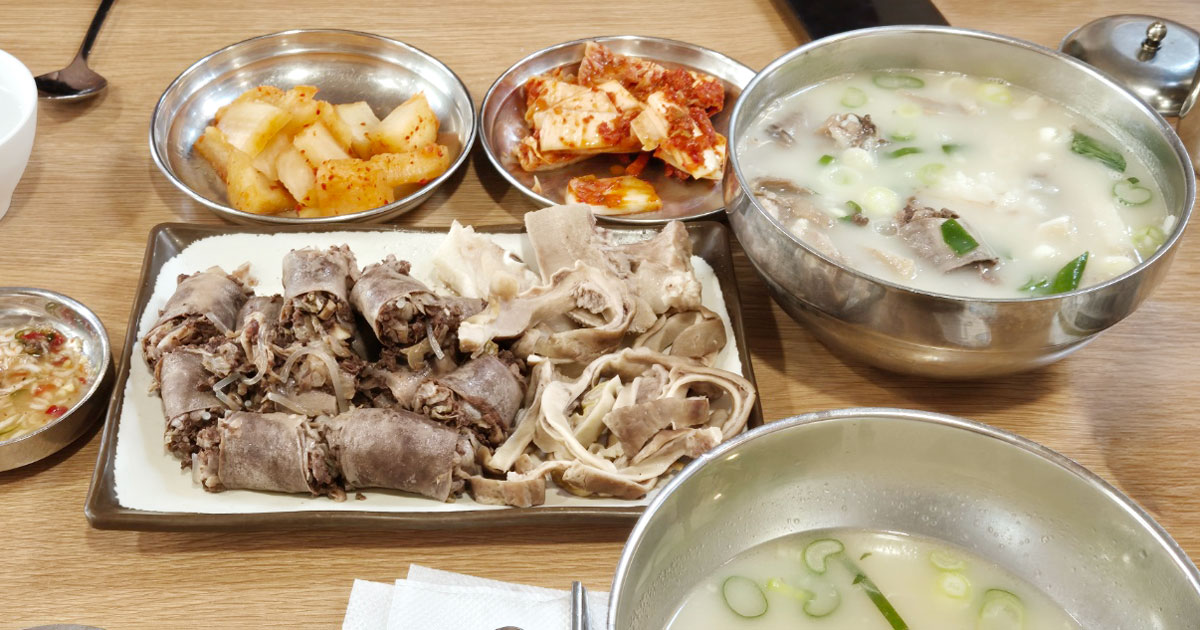
Baegam is a quiet rural township on the eastern edge of Yongin, and it happens to be the home of one of Korea’s most famous styles of sundae (Korean blood sausage).

Jeil Sikdang (제일식당) sits right in the middle of the old market street, and it’s the name that comes up first whenever locals talk about Baegam sundae (백암순대).

What makes the soup here different, what to order, and how to deal with parking and waiting - I’ve put it all in one place.

The basics

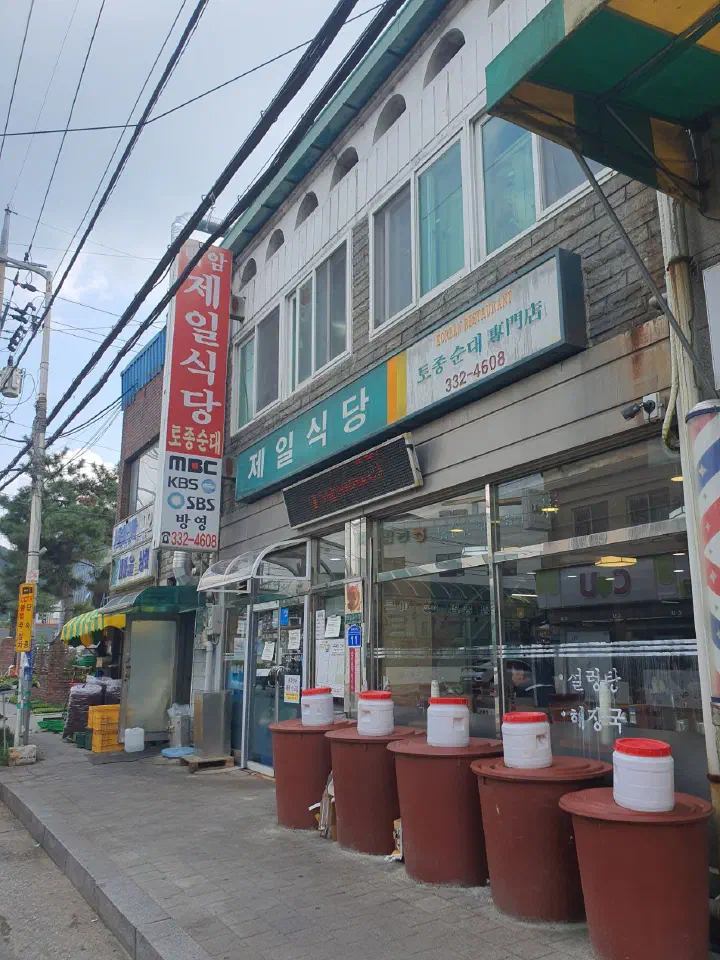
The address is 11 Baegam-ro 201beon-gil, Baegam-myeon, Cheoin-gu, Yongin. It’s next to the Baegam police box, across from the local Nonghyup bank and post office, so anyone in town can point you to it.

It opens early, from 6 a.m. to 9 p.m., with last orders at 8 p.m. Plenty of regulars come in the morning for a hangover-friendly bowl.

It closes every Wednesday. One thing to note: if a public holiday falls on a Wednesday, the restaurant opens that day and closes the following Thursday instead. If you’re driving a long way, a quick phone call (031-332-4608) before you set off is the safe move.

A quick tip for getting here: Google Maps walking and transit directions are often unreliable in Korea, so use Naver Map or KakaoMap instead.

📍 View Jeil Sikdang (제일식당) on Google Maps →

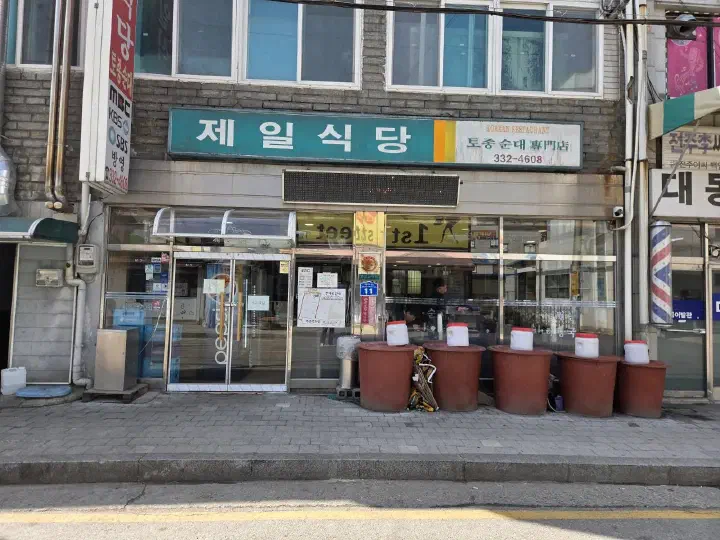
Exterior and signboard of Jeil Sikdang in Baegam, Yongin

What kind of place it is

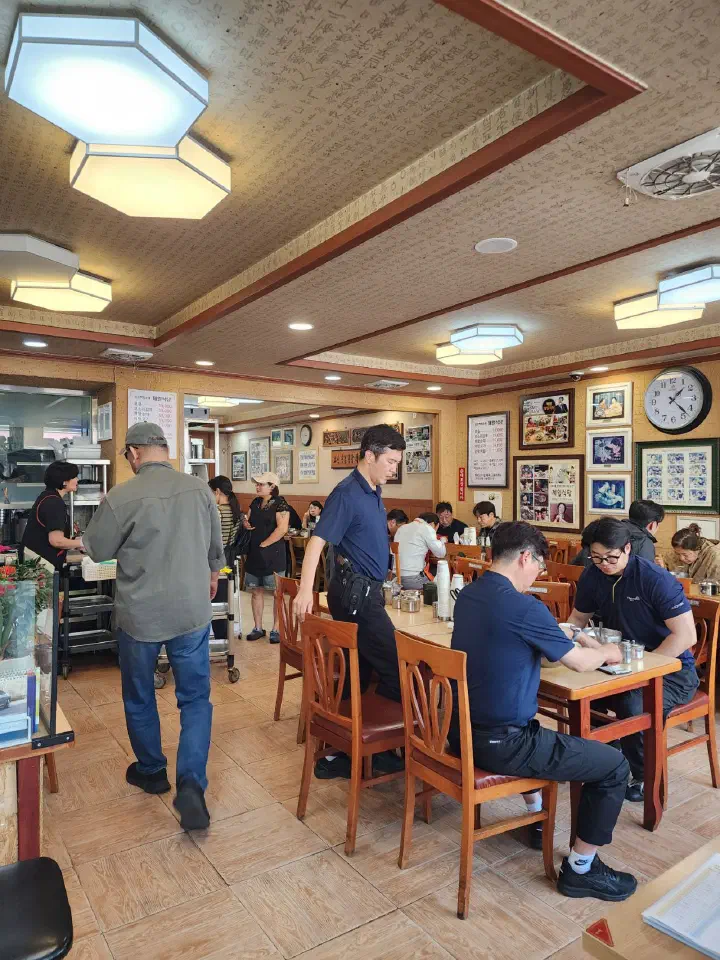
This isn’t a dressed-up restaurant. It’s an old market eatery, plain and worn in, the sort of place you go to fill up on a warm, hearty meal.

A lot of solo diners come here, and the crowd skews older. There’s an old saying that a gukbap house full of older regulars is a good sign, and that fits this place.

It’s also an easy stop on a family day out, on the way back from Everland, the nearby birch forest, or one of the local golf courses.

Inside Jeil Sikdang, with its old-style dining room

A place that’s been on TV a lot

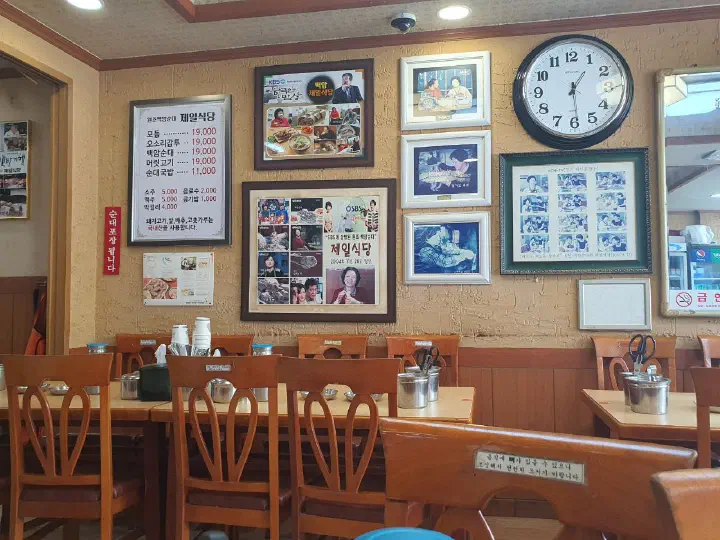
The walls are covered with framed photos from TV appearances.

It started with the food show Wednesday Food Talk in 2016 and kept going through a string of morning and evening lifestyle programs over the years. In 2024 it appeared on a popular food-travel show with the musical actress Ock Joo-hyun, and the scene of her trying osori-gamtu (오소리감투, pork stomach) for the first time stuck with a lot of viewers.

It’s also listed in the Blue Ribbon Survey guide, so a fair number of people show up just because they saw it on screen.

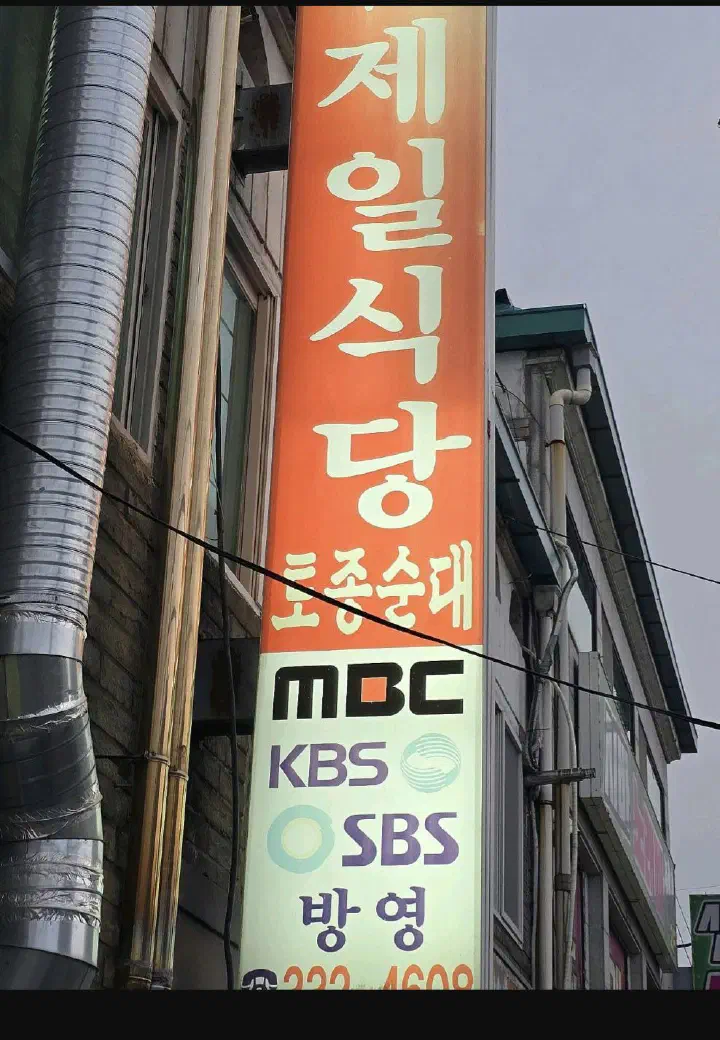
Signboard showing Jeil Sikdang’s TV appearances

Framed broadcast photos on the restaurant wall

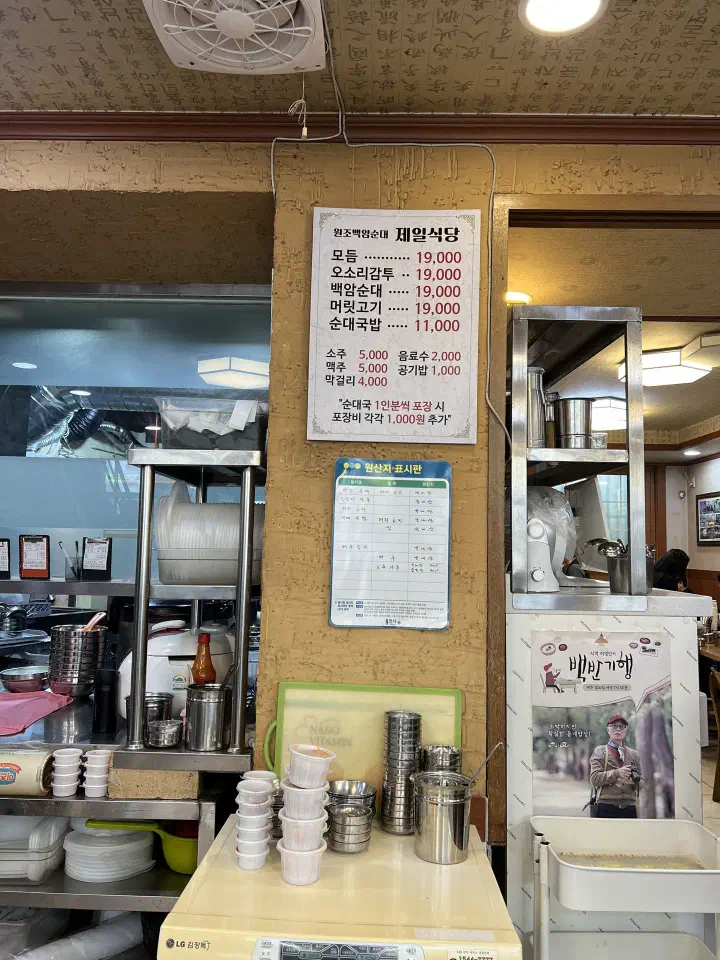
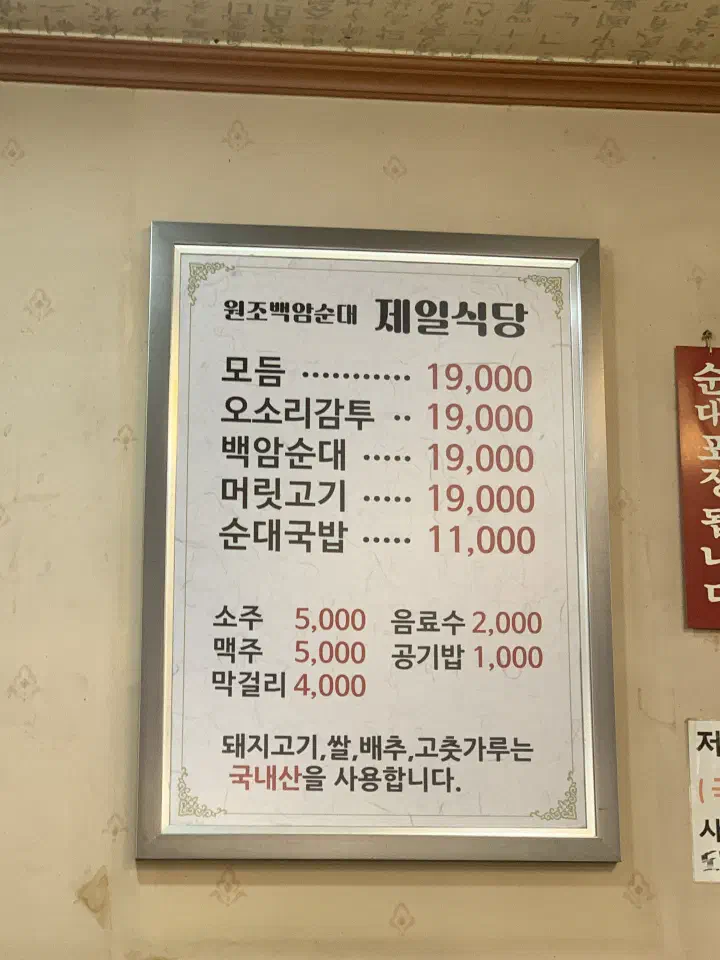
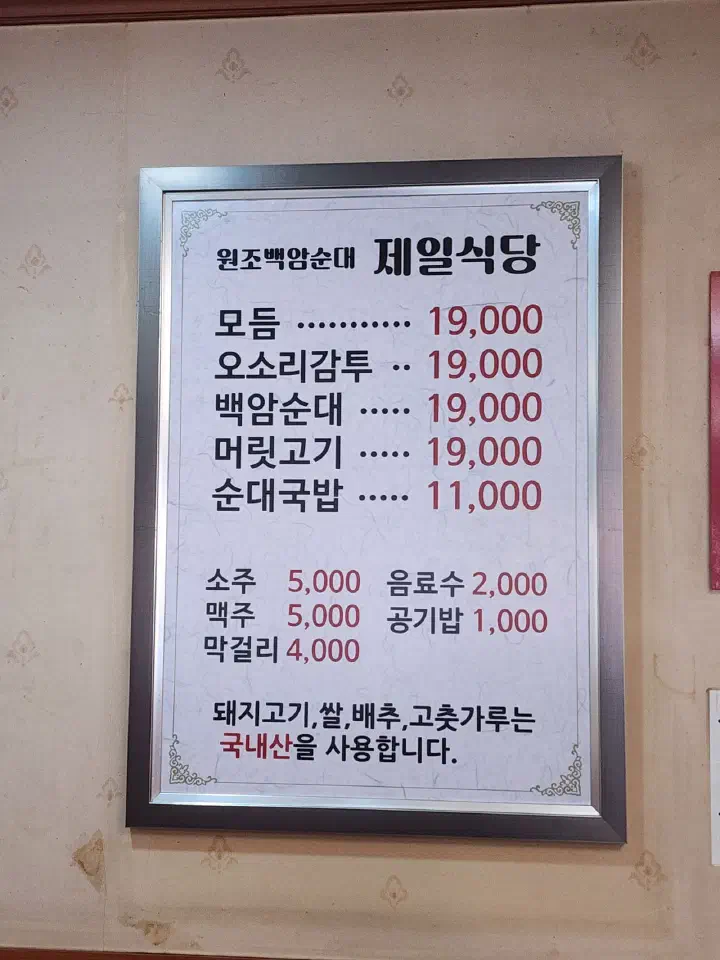
The menu is short.

Sundae-gukbap is 11,000 won. The modeum platter, Baegam sundae, head meat, and osori-gamtu are each 19,000 won. For drinks there’s soju at 5,000 won and makgeolli at 4,000 won.

For a while the soup was 10,000 won and the sundae plates were 18,000, and prices have crept up to where they are now. It isn’t a cheap rural meal anymore, and some regulars feel the value has slipped a bit. Worth knowing before you go.

You can pay by card almost everywhere in Korea, including here, so any internationally accepted card should work fine. And there’s no tipping culture in Korea - you don’t need to leave a tip, and staff may actually be confused if you try.

Menu and prices at Jeil Sikdang

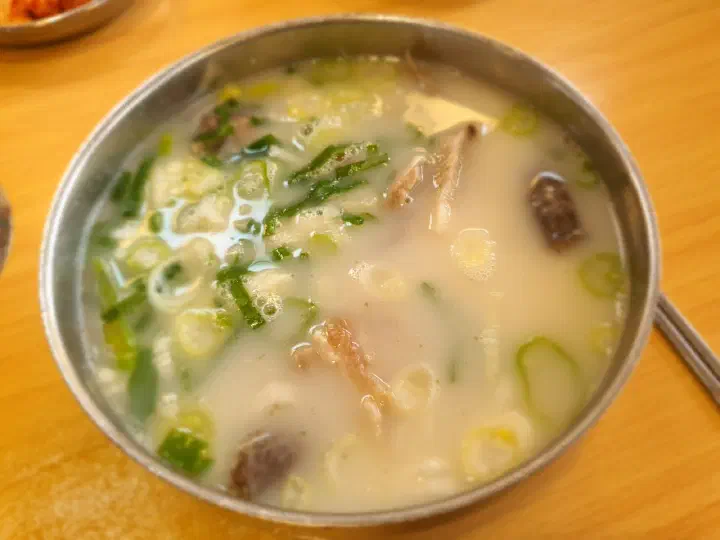
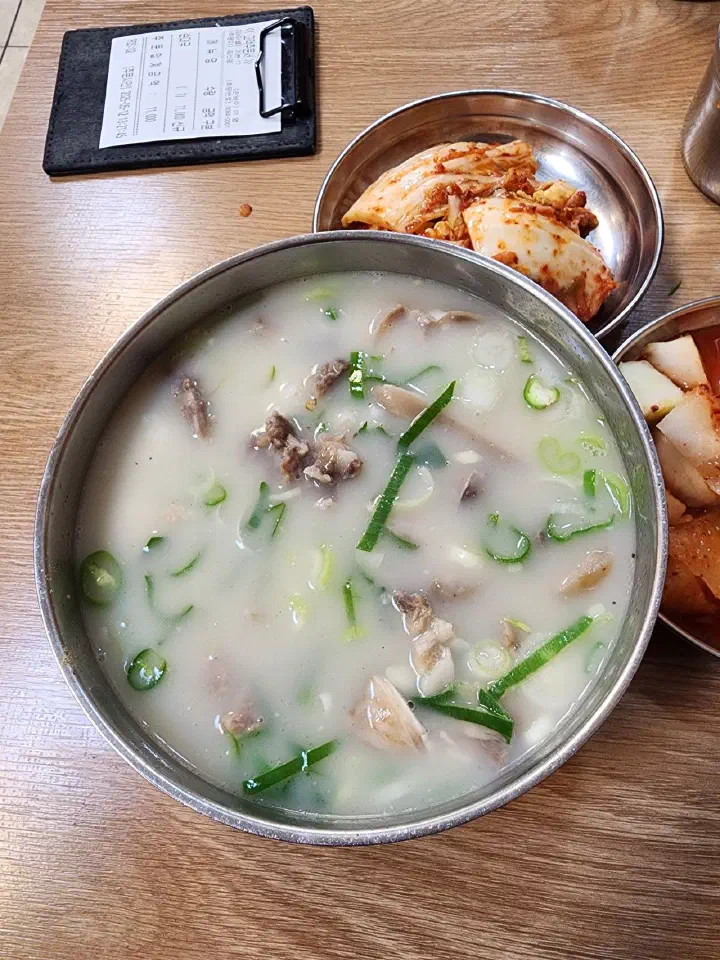
Sundae-gukbap, served toryeom-style

The most distinctive thing about the soup here is the bowl.

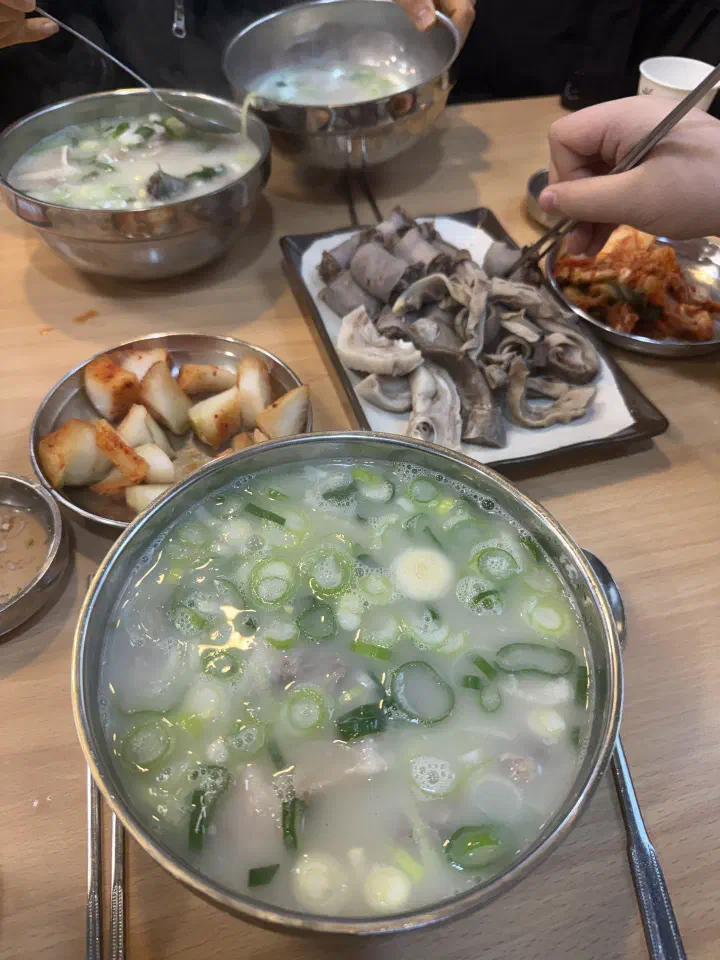
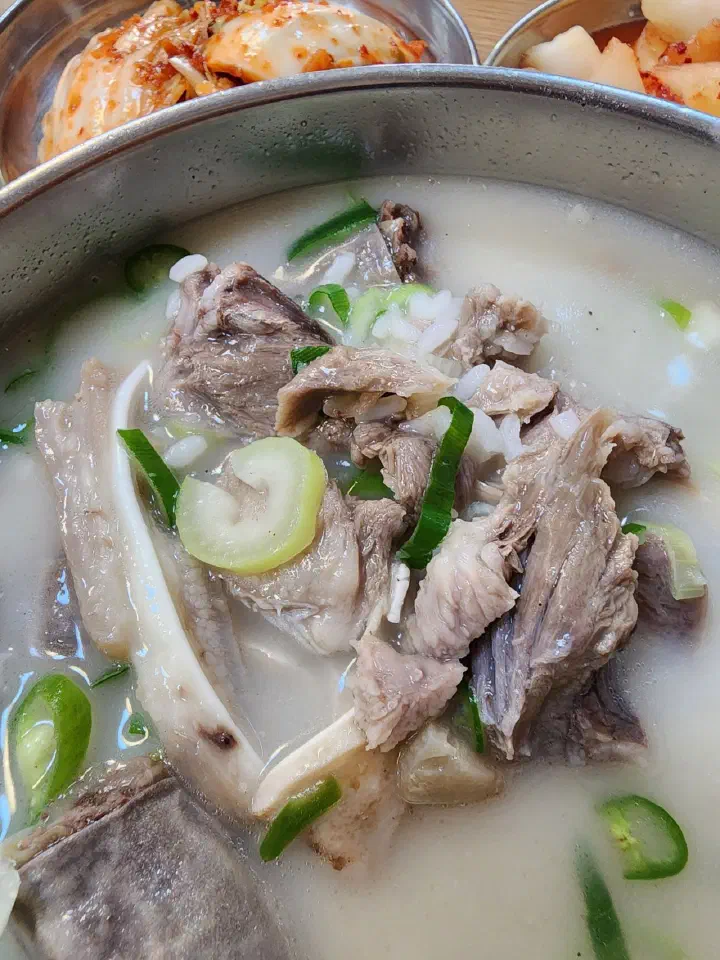
Instead of the bubbling stone pot most gukbap houses use, it comes in a wide cold-noodle bowl with the rice already mixed in and warmed through (a method called toryeom). So you don’t ladle rice in yourself, and it arrives at a temperature you can eat right away.

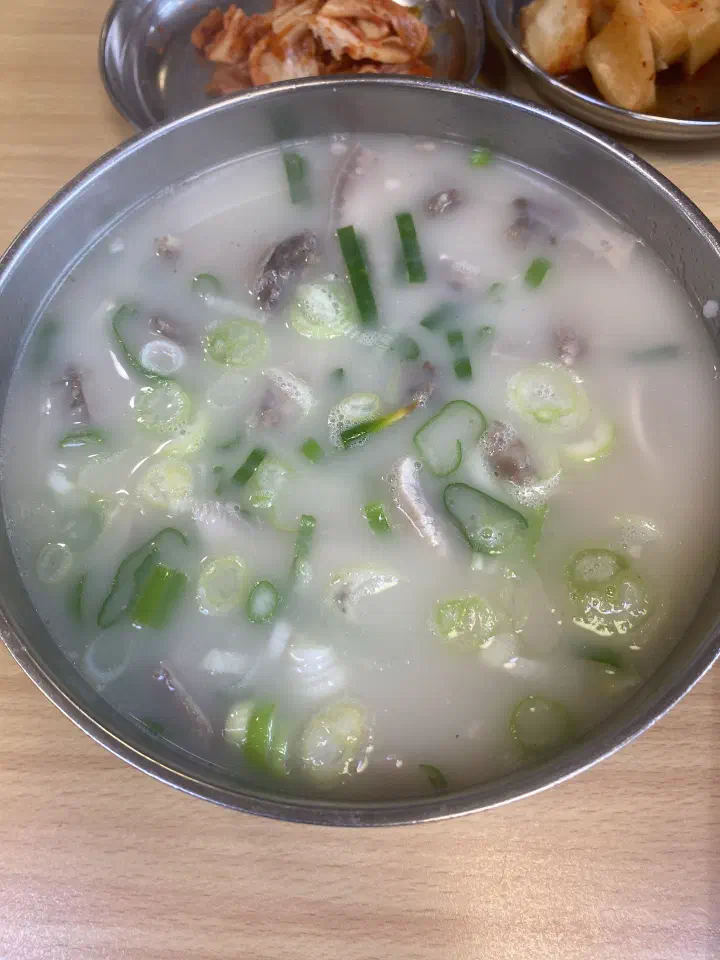
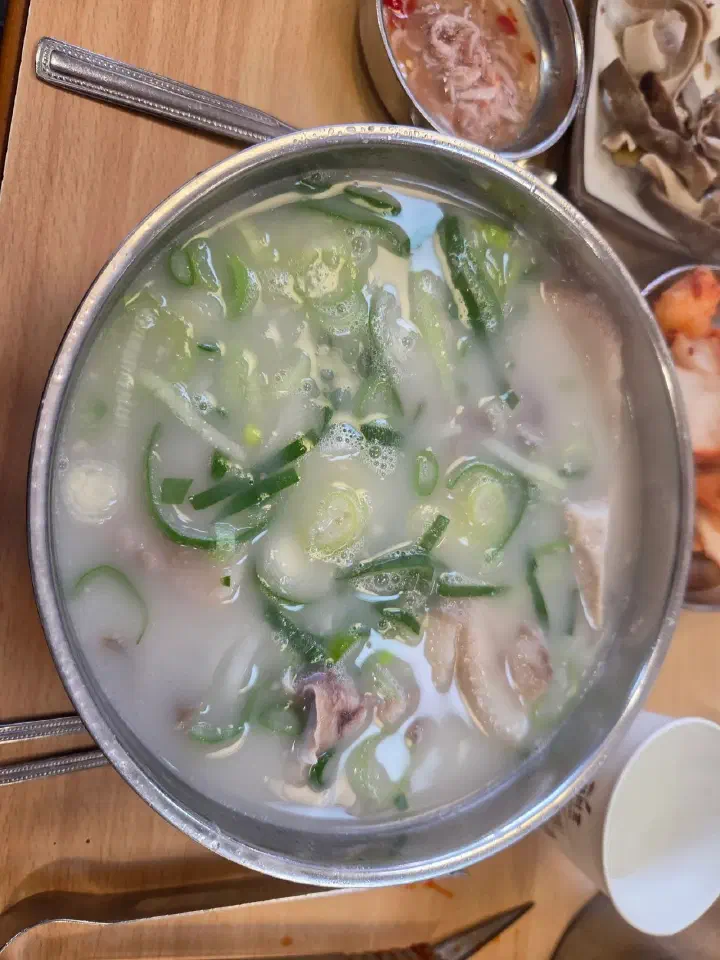
The broth is milky and rich, closer in character to a beef bone soup like seolleongtang than to a sharp, spicy stew. There’s little of the porky funk you sometimes get with this dish, and the finish is clean, so it goes down easily.

Sundae-gukbap served toryeom-style in a wide bowl

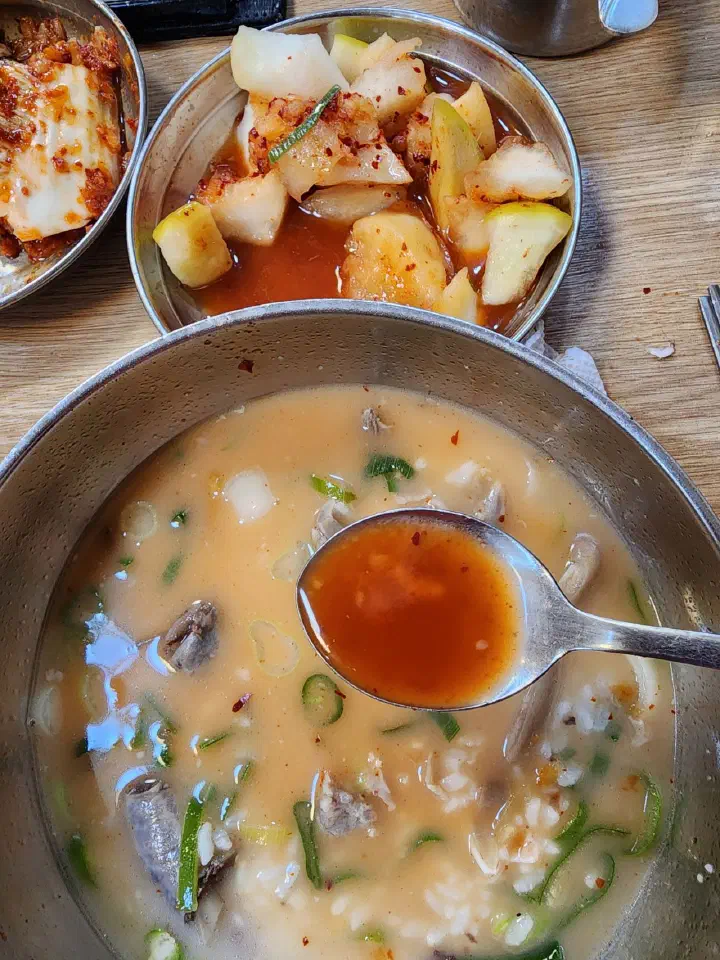
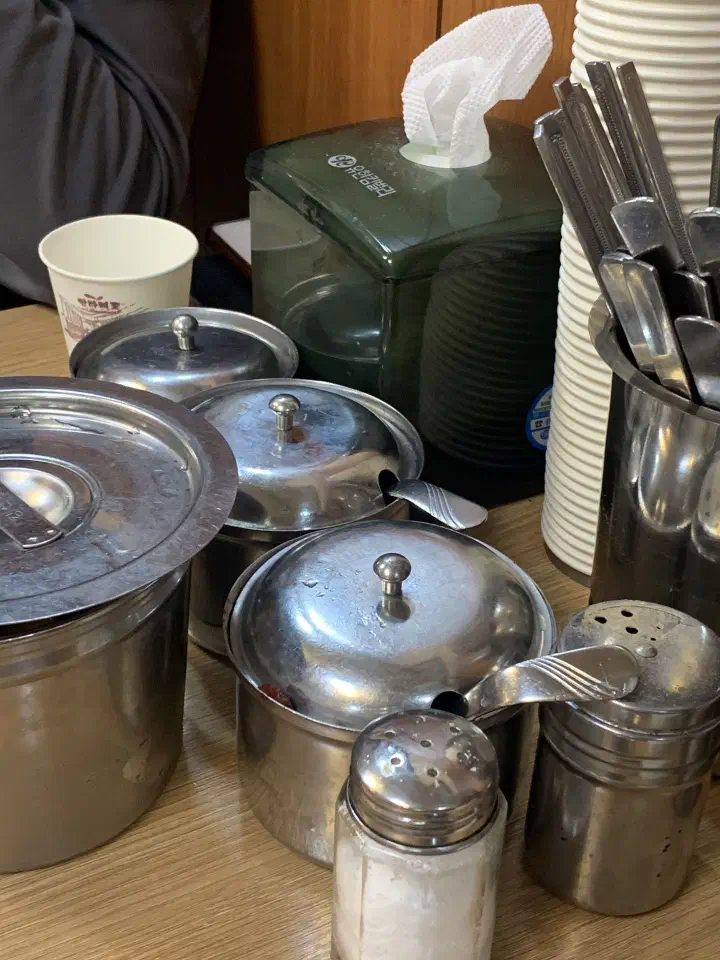
It’s lightly seasoned to begin with. It’s fine as is, but you can stir in the chili paste (dadaegi, 다대기), fresh green chili, and salted shrimp (saeujeot, 새우젓) on the table to adjust it to taste. A word of caution on the saeujeot - it’s salty, so add a little at a time.

Close-up of the rich broth in sundae-gukbap

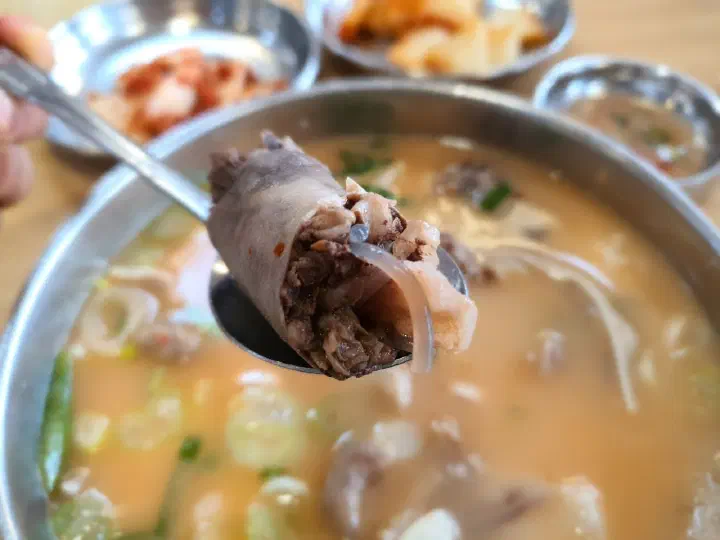
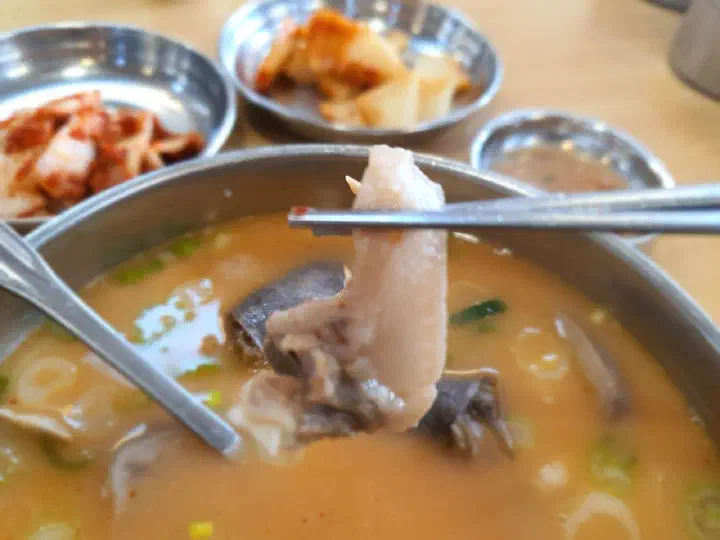
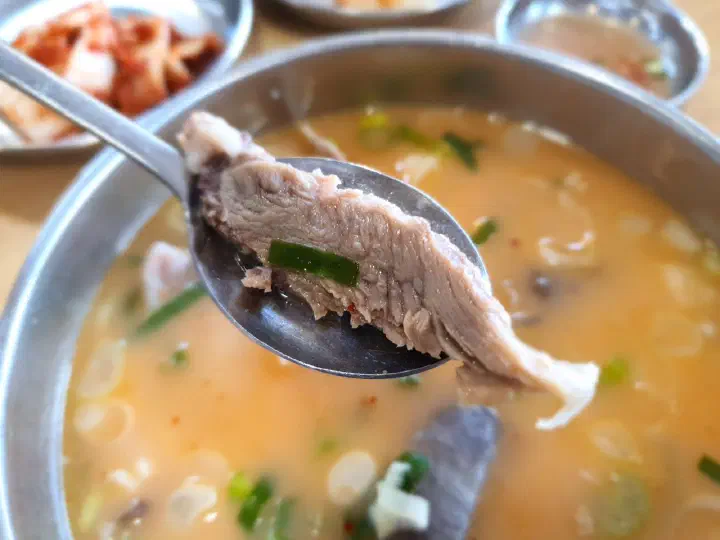
It’s generous with the fillings. Beyond the sundae itself, there’s head meat and assorted pork cuts packed in, so it’s not just about the broth - there’s plenty to chew on. Some people actually can’t finish all the meat.

Sundae-gukbap loaded with pork

A spoonful of sundae from the soup

There’s a big mound of crisp green onion on top, which keeps the broth bright.

Sundae-gukbap topped with plenty of green onion

Stir in the dadaegi for a spicier kick, or leave it clear for something mild - one bowl, two ways. One note on heat: Korean “spicy” can catch foreign visitors off guard, so go slow with the chili paste if you’re not used to it.

Sundae-gukbap with chili paste stirred in

Top view of a bowl of sundae-gukbap

Sundae-gukbap at Jeil Sikdang

A hearty bowl of sundae-gukbap full of fillings

The modeum platter, pork cuts, and Baegam sundae

If you’re with a group, add the modeum platter.

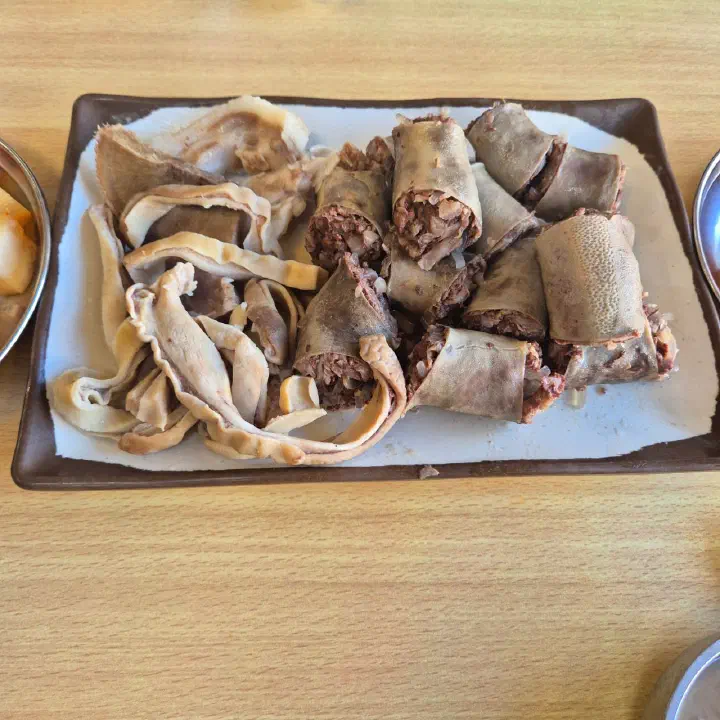
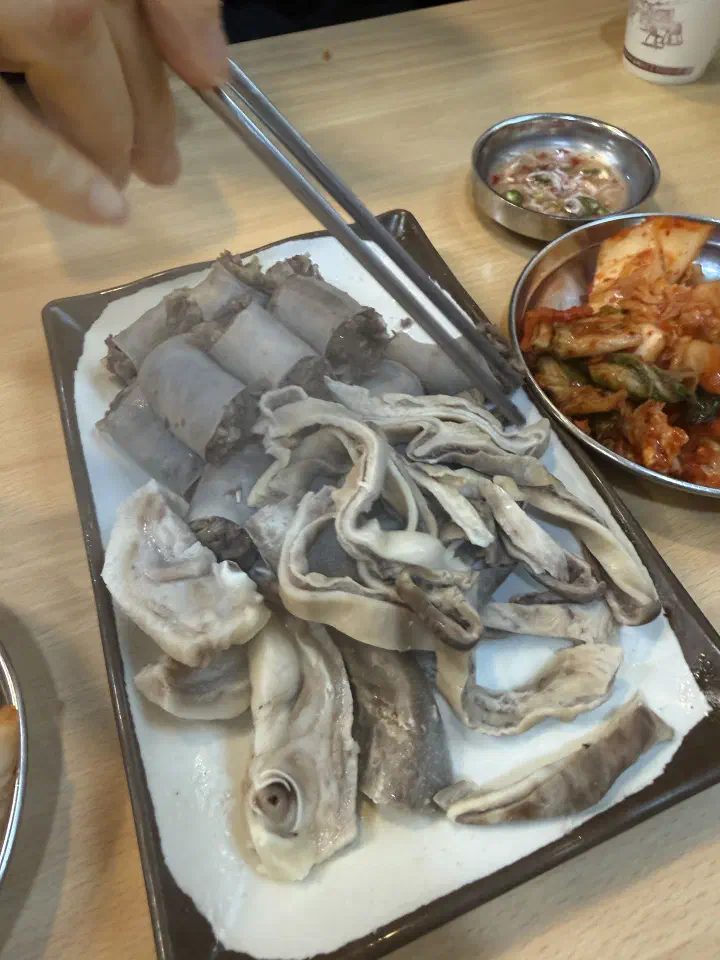
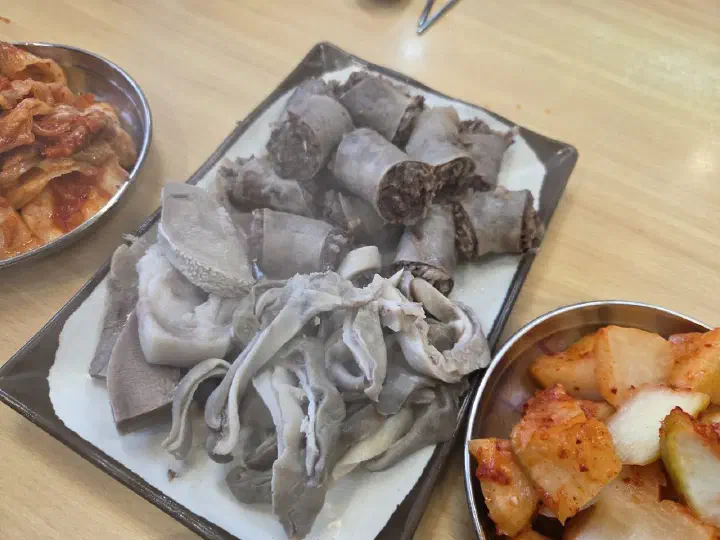
It brings Baegam sundae, osori-gamtu, and head meat on one plate. Sundae makes up the larger share, with a couple of pieces of osori-gamtu. The osori-gamtu has a great chewy bite, and plenty of people say they’d order just that next time.

A platter of assorted Baegam sundae

Modeum platter with sundae and pork cuts

Baegam sundae isn’t the glass-noodle kind. It’s a traditional sausage stuffed into pork casing with head meat, hind leg, blood, vegetables, and glutinous rice. The casing has a slightly coarse, chewy texture, and there’s little funk to it.

Plate of head meat and pork cuts

Sundae-gukbap with pork cuts on top

Portions are big, so two people are fine with one soup and one platter. Leftovers can be packed to go, though the takeout box comes with kkakdugi only, no rice or cabbage kimchi.

Ordering is simple even if there’s a language barrier. Staff may speak little English, but you can point at the menu on the wall and hold up fingers for how many - that’s all it really takes.

Side dishes

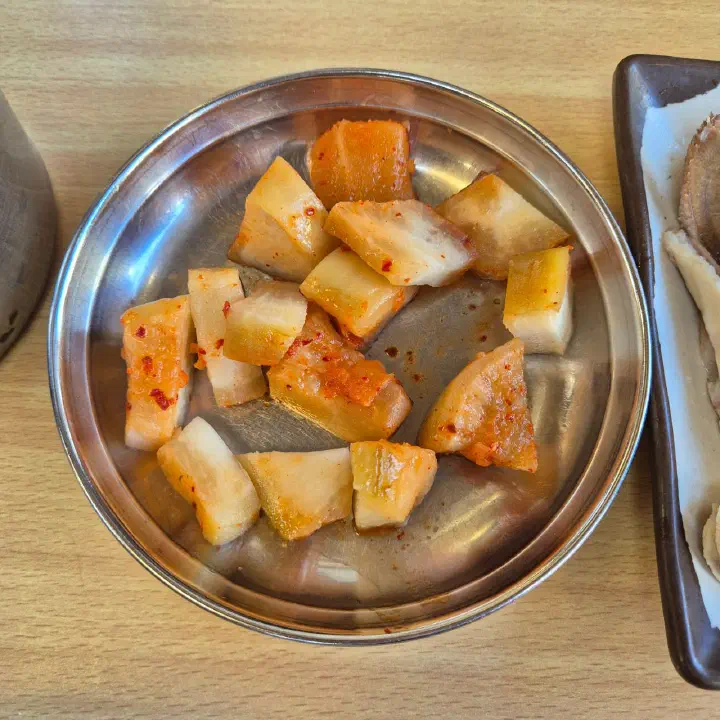
The sides are cabbage kimchi, radish kimchi, and kkakdugi (cubed radish kimchi).

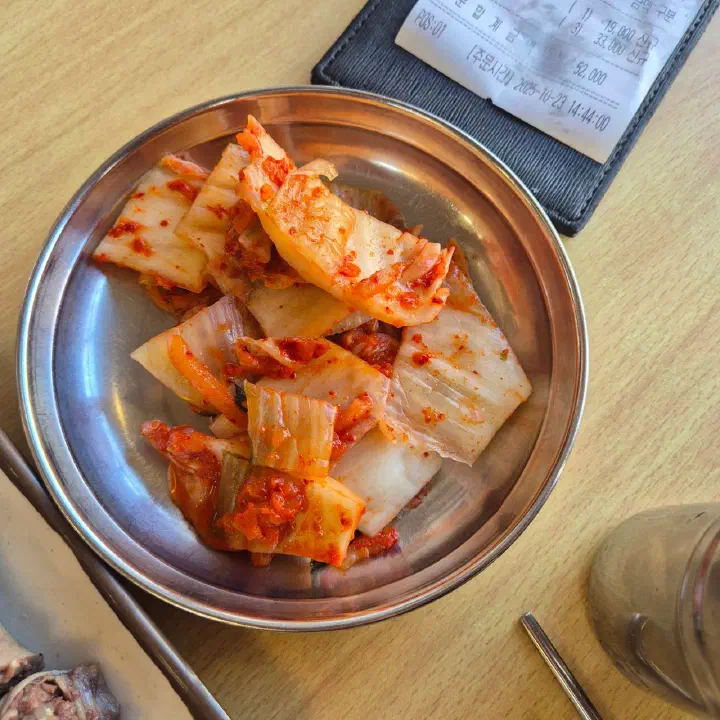
The cabbage kimchi is properly fermented rather than fresh-made, and the radish kimchi comes in big chunks. Both pair well with the soup. If the seokbakji (a radish kimchi) tastes a touch sweet to you, the cabbage kimchi is the better match.

Well-fermented cabbage kimchi and kkakdugi

Kkakdugi side dish

Parking and waiting

Parking is honestly a bit of a hassle.

The front of the shop is a road with parking enforcement on weekdays, and tickets are common, so don’t leave your car on the street. The signage says the strip out front is free from 11:30 a.m. to 2 p.m. on weekdays, and all day on weekends and holidays.

The easiest option is the free public lot behind the restaurant. The catch: on Baegam market days (the 1st, 6th, 11th, 16th, 21st, and 26th of each month) the market lot fills up, so you’ll need the paid Nonghyup Hanaro Mart lot or a spot nearby and a short walk.

Waiting happens at weekday lunch and on weekends, but turnover is quick, so the line usually moves fast. When you wait, write your name and party size on the list at the entrance yourself. There are no buzzers or text alerts - a staff member calls names out loud, so don’t sit there with earphones in. After about 2:30 p.m. it calms down a lot.

The lunchtime waiting line at Jeil Sikdang

Dadaegi, green chili, and salted shrimp on the table

Seating inside Jeil Sikdang

The honest downsides

A few things to keep in mind.

First, because it’s served in a stainless bowl, it cools faster than a stone pot. If you eat slowly, the pork cuts at the end can start to smell a little. Eat it while it’s hot.

Second, the broth isn’t bold or spicy. If you’re after a fiery, punchy sundae soup, this may feel plain. It’s clean and bone-broth-like, which is a love-it-or-not thing.

Third, as mentioned, prices have kept rising, and some feel the value isn’t what it used to be.

Getting there

It’s on the far eastern edge of Yongin, so even within the same city it can be nearly an hour by car. Think of it as being right inside the Baegam market street in the center of Baegam township, and it’s easy to find.

If you like a clean, rich broth with generous pork, this old house is worth the trip. A place doesn’t hold one spot this long without a reason.

📍 View Jeil Sikdang (제일식당) on Google Maps →

Full view of Jeil Sikdang storefront