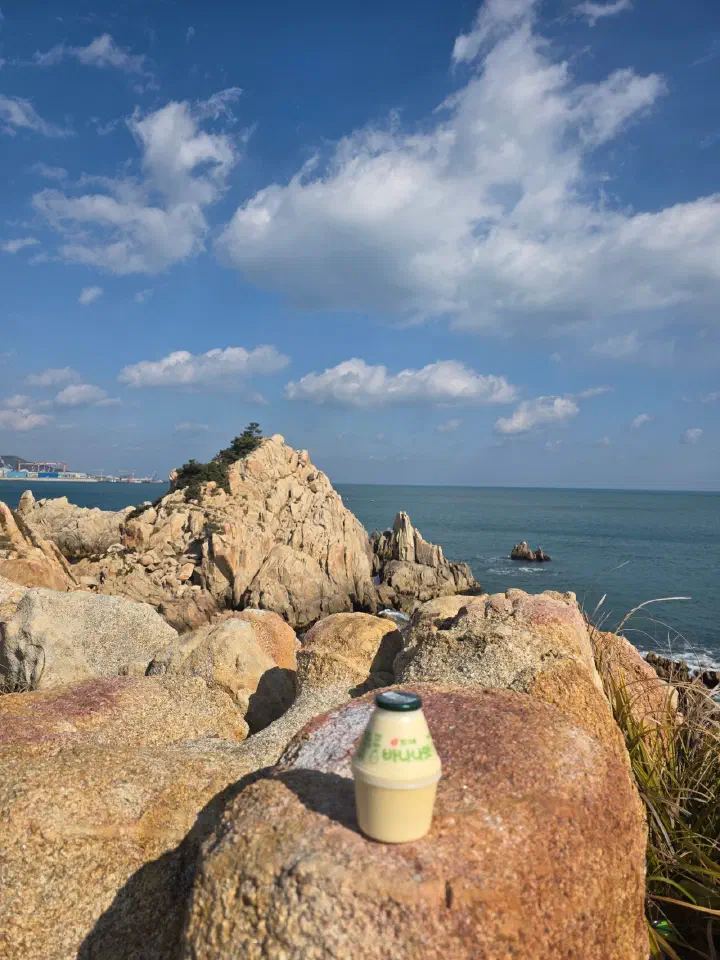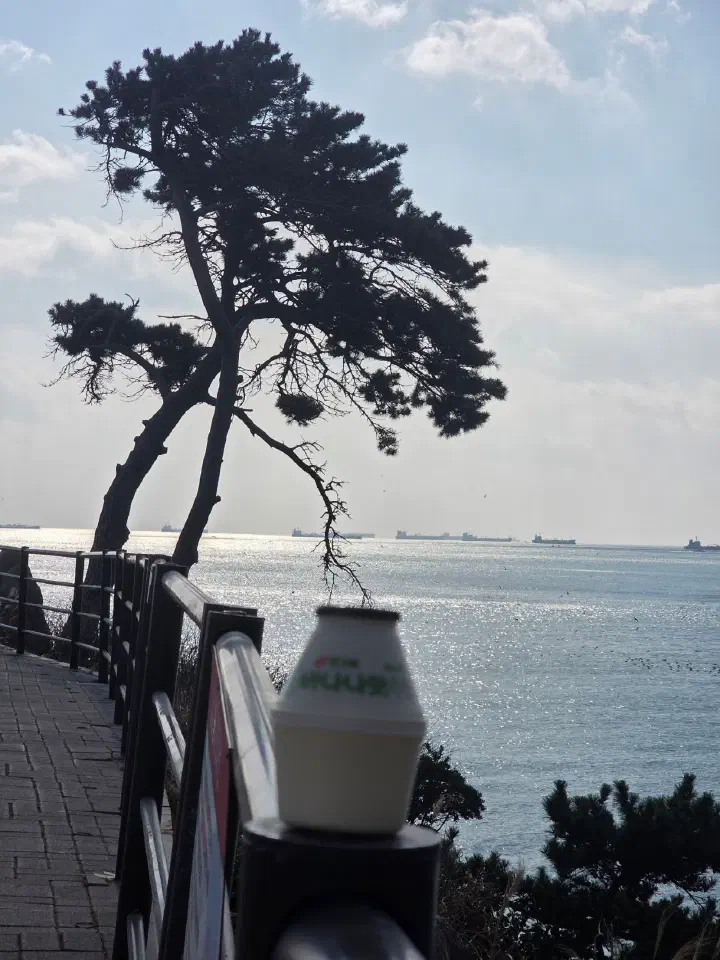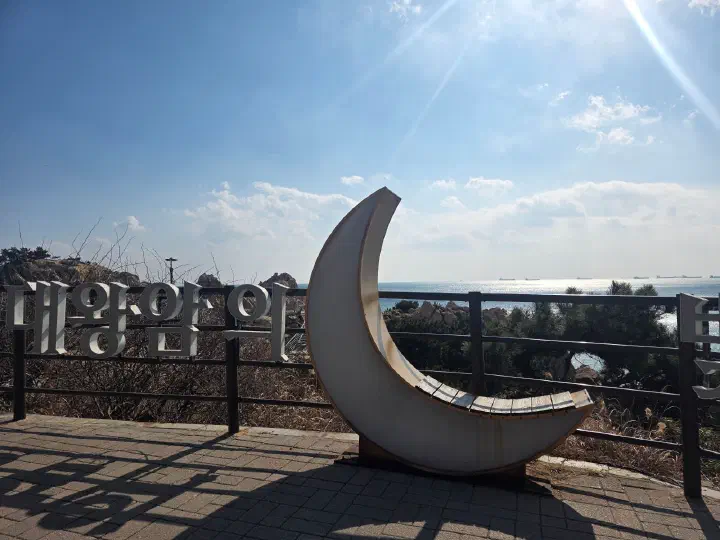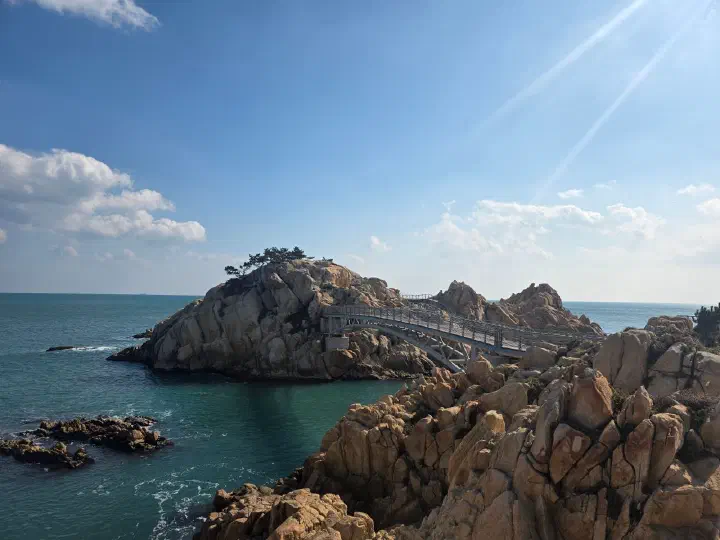
I finally made it out to Daewangam Park (대왕암공원) on the east coast of Ulsan.
People kept telling me it was the place to go for a sea walk on a clear day, so it had been sitting on my list for a while.
Once I actually started walking, I got why — pine forest, a swaying bridge, and a wild rocky coastline, all in one spot. Half a day was gone before I knew it.
Daewangam Park made Korea’s list of “100 Must-Visit Tourist Spots” for 2025 and 2026, and it’s one of Ulsan’s signature places. Ever since the suspension bridge opened, tour buses roll in and I noticed quite a few international visitors too.

The basics before you go
A few things I checked myself before visiting.
The park itself is free and open around the clock, but the suspension bridge and the parking lot keep their own hours, so it’s worth knowing ahead.
- Address: 95 Deungdae-ro, Dong-gu, Ulsan (Daewangam Park parking lot)
- Park admission: free
- Park access: open 24 hours, year-round
- Suspension bridge hours: 9:00 a.m. – 6:00 p.m. (last entry 5:40 p.m.); closed the second Tuesday of each month and on major holidays
- Parking lot hours: 10:00 a.m. – 7:00 p.m. daily
- Parking fee: first 20 minutes free, 500 won for 20–30 minutes, then charged in 10-minute increments; a full day caps at 10,000 won
- Phone: 052-209-3738
📍 View Daewangam Park (대왕암공원) on Google Maps →
The lot right by the entrance is closest, but on weekends and in spring or autumn it fills up fast.
I circled around for a bit before grabbing a spot. If it’s full, there’s a tower parking lot a short walk away.
You pay at an unmanned machine before leaving, which makes getting out much quicker.
A quick note for visitors from abroad: almost every shop, café, and ticket point in Korea takes internationally recognized credit cards, so you don’t need a pile of cash — though a small amount of cash is handy, since the haenyeo stalls down by the water and similar spots sometimes take cash only, and foreign cards do get declined now and then. And there’s no tipping culture here — leaving a tip can actually leave staff a little puzzled, so don’t worry about it.
If you’re not driving, you can still get here easily. The closest hub is Ulsan’s Bangeojin area; from Ulsan Station (KTX) or the Ulsan intercity bus terminal it’s roughly 40–50 minutes by city bus or taxi, and a taxi runs somewhere in the 20,000–30,000 won range depending on where you start. The Kakao T app works for hailing taxis and takes foreign cards. One thing that trips up a lot of visitors: Google Maps doesn’t give reliable walking or transit directions in Korea, so use Naver Map or KakaoMap instead — they’ll route you here properly.
Starting slow on the pine forest path
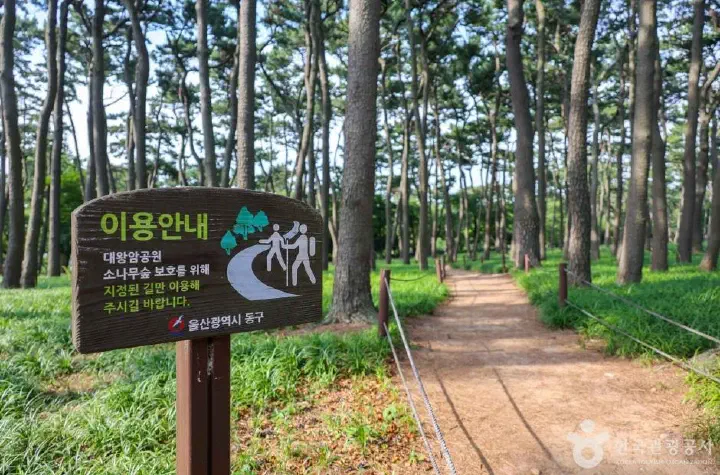
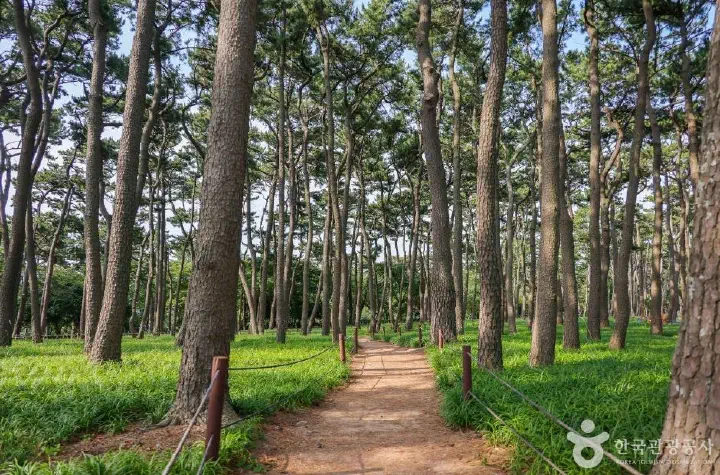
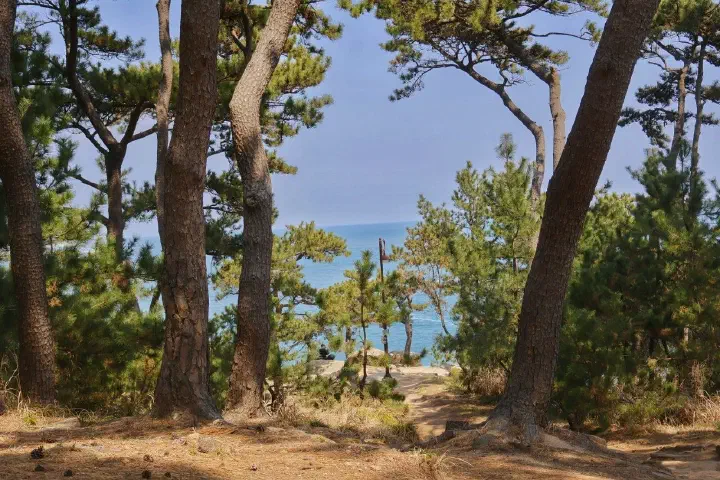
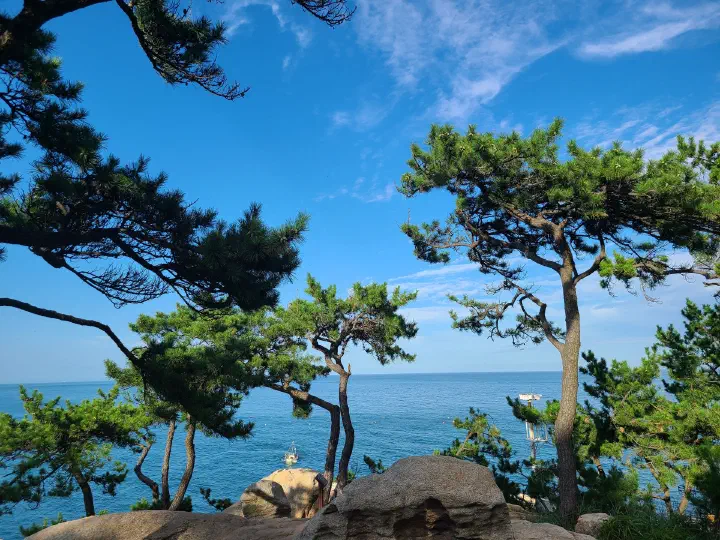
The pine forest begins the moment you walk in from the parking lot.
There are said to be around 15,000 black pines here, many of them over a hundred years old, so the shade runs deep and it stays walkable even in midsummer.
This 600m stretch from the entrance toward Ulgi Lighthouse is your first impression of the park.

The pine scent is strong, and mixed with the sea air it’s honestly so relaxing.
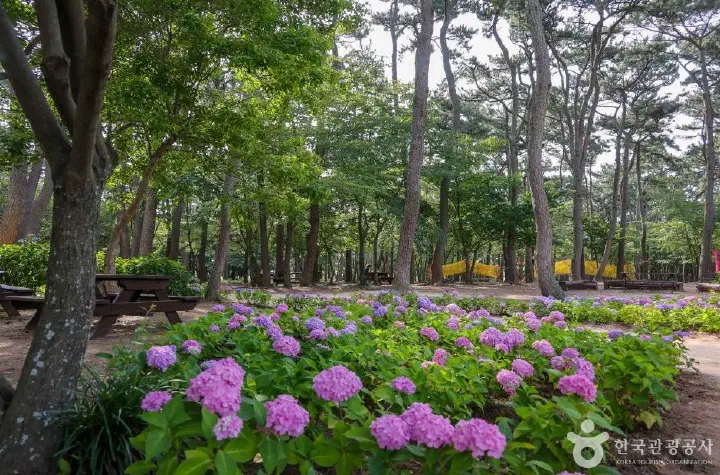
The flowers change with the season — cherry blossoms in spring, hydrangeas in early summer, and in August a carpet of purple liriope (맥문동) under the pines.
When I went the hydrangeas were just opening, little pink heads scattered along the path.

The trail is flat and well kept, and there’s a barrier-free section you can manage with a stroller or wheelchair.
It would be an easy outing to bring older parents along on.
With kids: the Mireu Playground
Near the entrance there’s the Mireu Playground (미르놀이터), built in the shape of a dragon.
The giant dragon is actually a big slide — you climb up by the stairs and the net, then come down through the whiskers on either side.
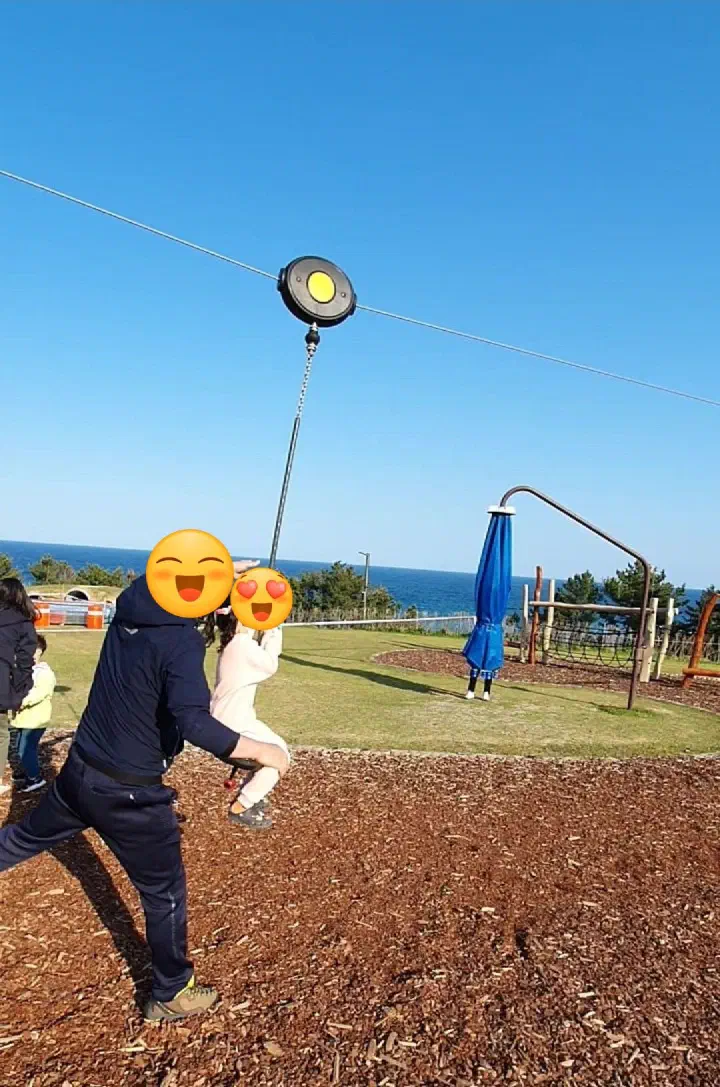
There’s also a zipline running toward the sea, and the kids clearly loved it.

There’s a sandbox with dinosaur-egg models and a rope adventure course strung between the pines, so children stay busy for ages.
If you’re coming as a family, leave plenty of time — you could lose an hour here alone.
The headliner: a 303m suspension bridge
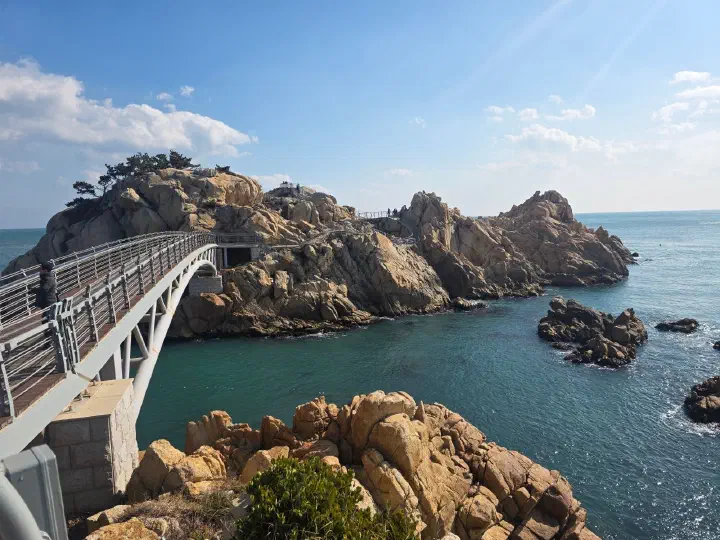
When people say Daewangam Park, they usually mean the suspension bridge.
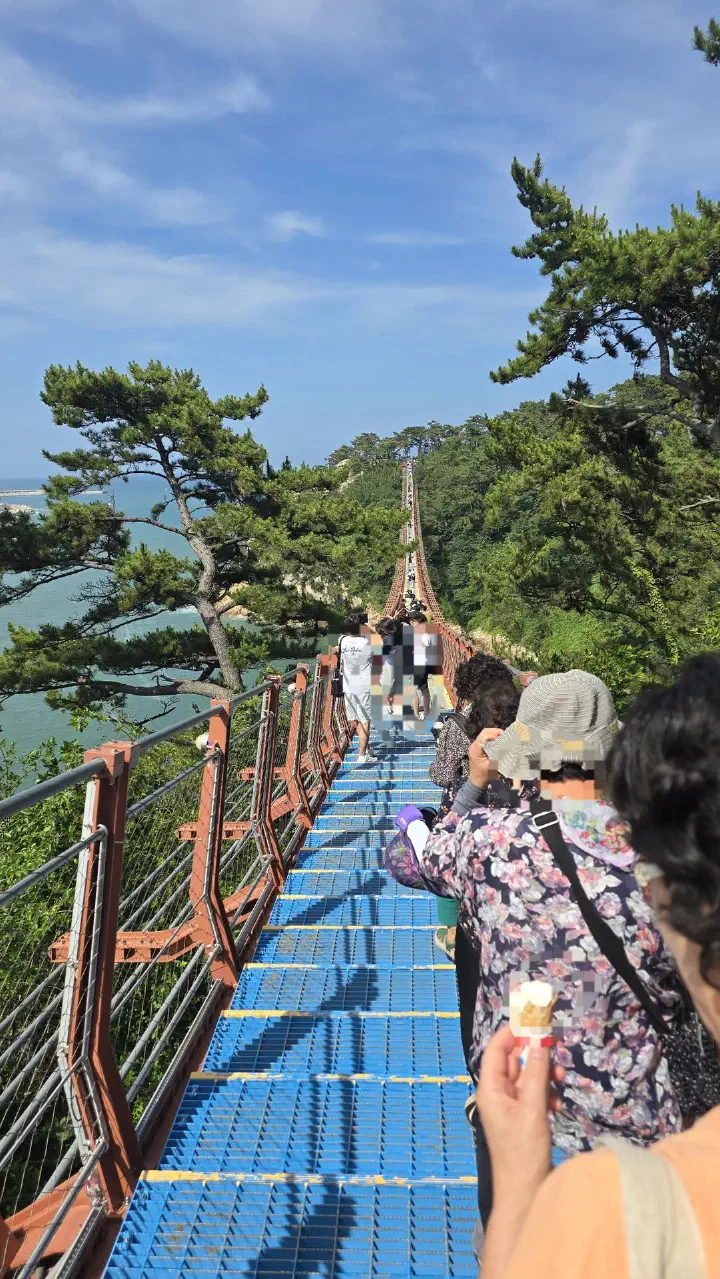
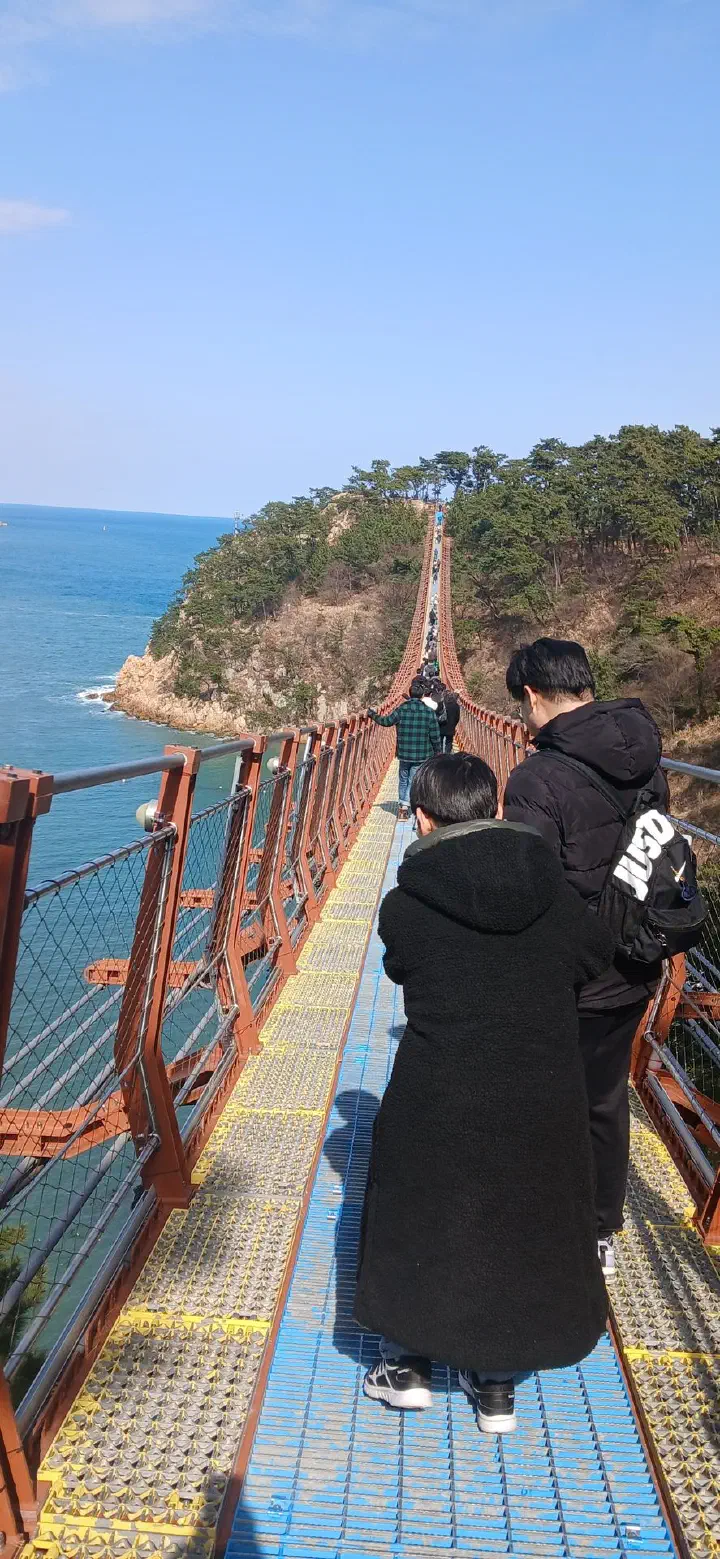
It’s said to be the longest sea-spanning suspension bridge in Korea — 303m long and 42.55m high.
There’s no support tower in the middle, so it genuinely sways with every step.

One thing you really need to know: the bridge is one-way.
You can only cross from the entrance toward Daewangam, and once you’re on, there’s no turning back — even if it gets scary.
So if you’re afraid of heights, steel yourself a little before stepping on.

The floor is an open mesh, so you can see the water straight down beneath your feet.
That makes it feel more dizzying, but if you just look ahead and keep walking, it’s fine.
Turn around partway and Ilsan Beach opens up behind you — that view is the reward.
The wind out there is no joke, so hold onto your hat; a parasol won’t survive it.

Following the legend-rock trail along the coast
Once you’re across, the coastal trail carries on toward Daewangam rock.
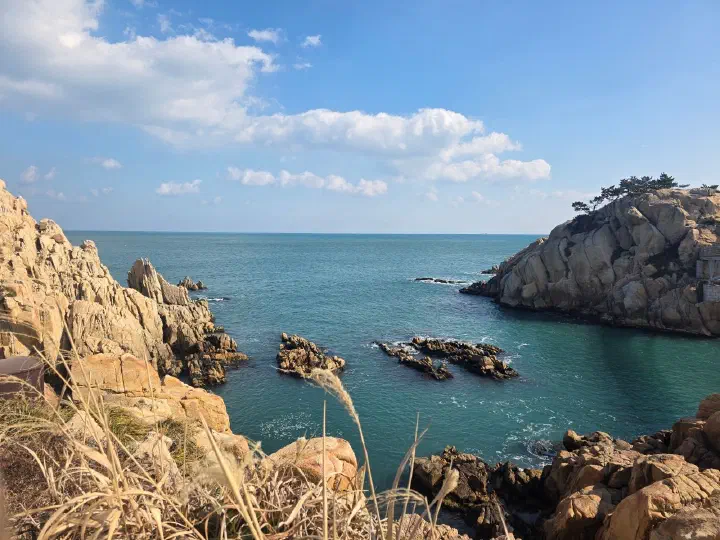
This stretch — the legend-rock trail (전설바위길) — has the most to look at.
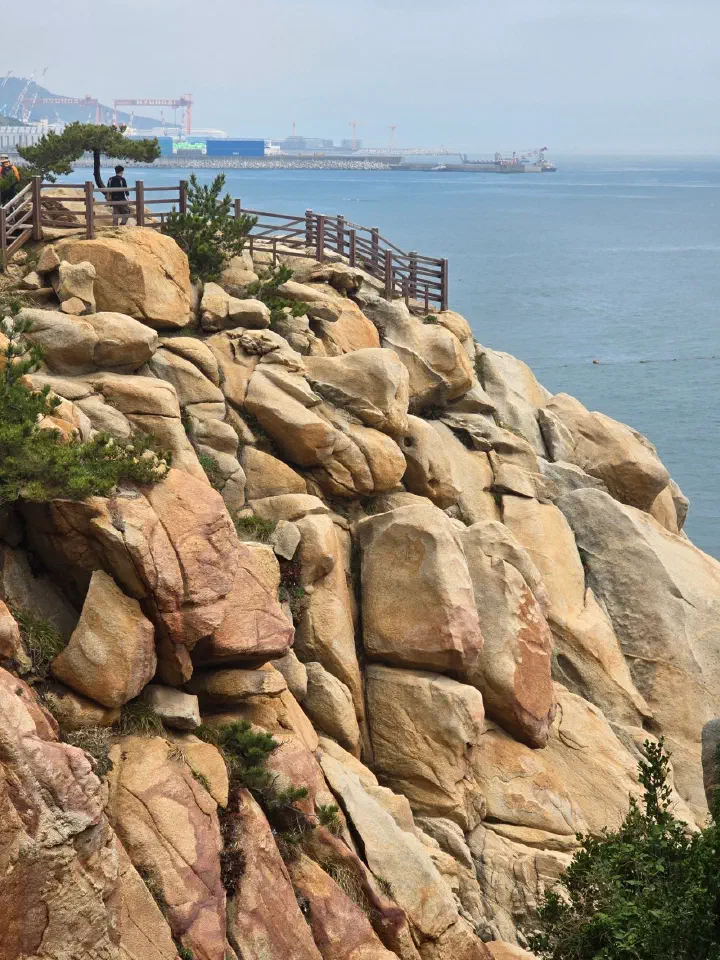
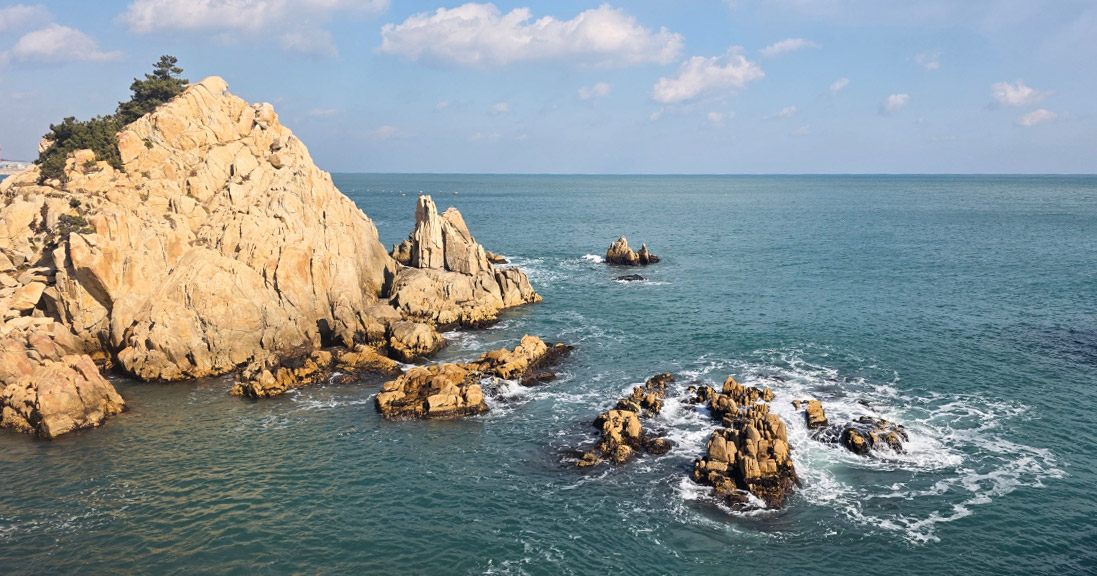
Walking the wooden deck, you pass a series of strangely shaped rocks, each with its own story.

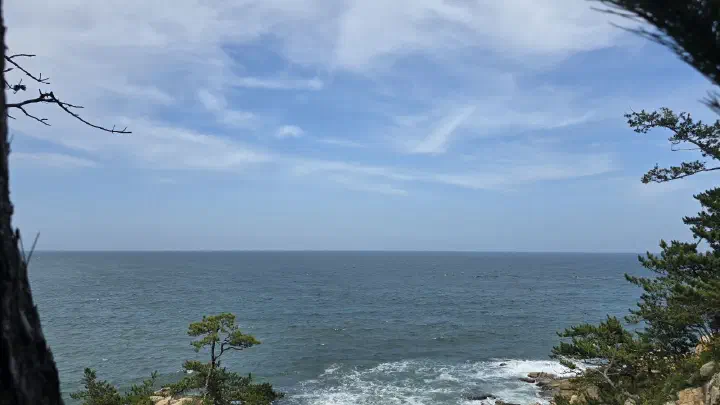
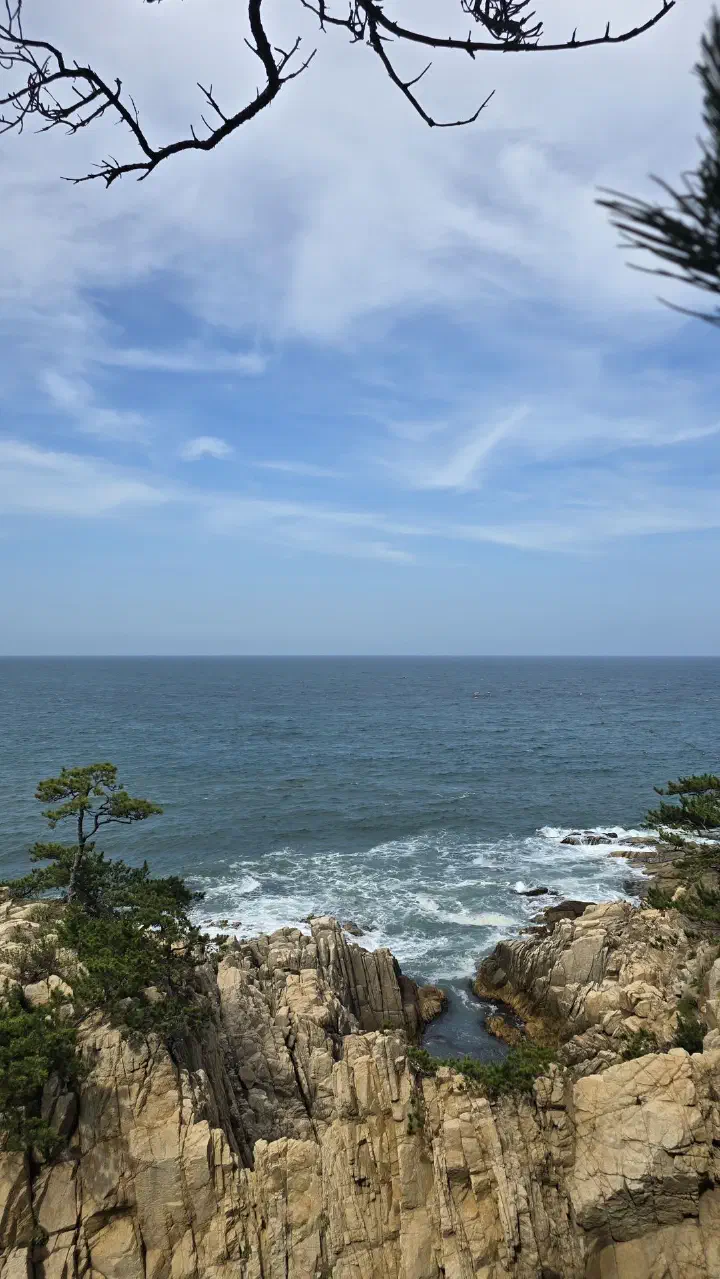
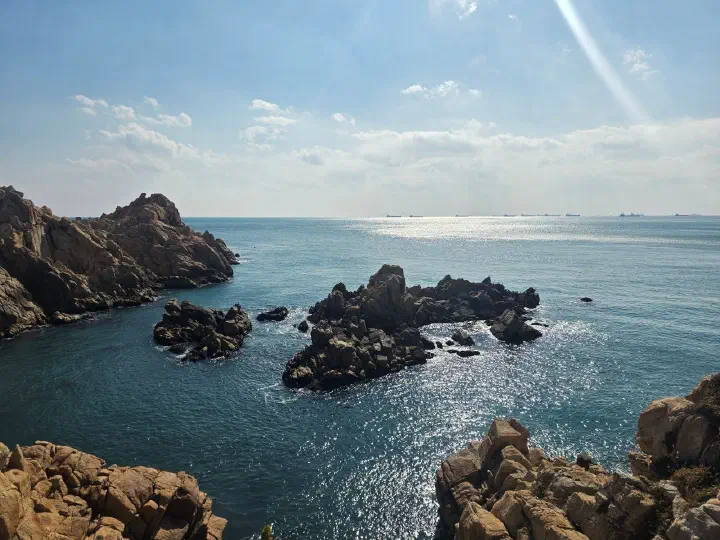
Open sea on your left, thick pine forest on your right — your eyes don’t get a dull moment.
The water between the rocks is so clear that you can spot fish from up on the path.

Yonggul (용굴), the Dragon Cave, comes with a legend: a blue dragon once stirred up the shipping lanes here, so the Dragon King of the East Sea sealed it inside the cave with a great rock.
Halmibawi (할미바위), the Grandmother Rock, is named for the way it looks like an old woman seen from behind, gazing out at the open sea.
And Tanggeonam (탕건암) supposedly resembles a tanggeon, the traditional horsehair cap worn under a Korean hat.

Each rock has a little sign in front of it, so half the fun is matching the name to the shape.
That said, it’s a mix of dirt path and rock, with some ups and downs, so wear proper non-slip sneakers.
Heels or sandals would make this a rough walk.

The rocks here have a reddish tone that plays against the deep blue of the sea, and that contrast really stuck with me.
There are benches set along the way, perfect for just sitting and staring at the water for a while.

In one spot people have stacked up little stone wish-towers.
They’ve held together against all that sea wind, with everyone’s small wishes piled up on top.

Photo spots and Daewangam rock
There are photo spots all along the coastal trail.
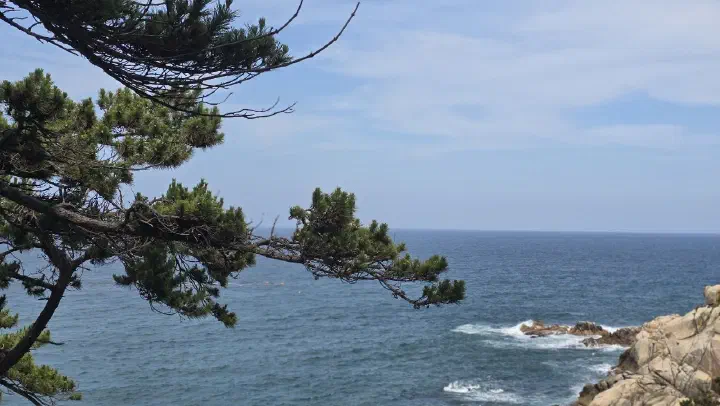
A lone pine bent toward the sea is a popular one.

The moon-shaped sculpture called “The Light of Daewangam” makes a nice frame too.
And there’s a spot near Ulgi Lighthouse where Daewangam sits right in front of you — worth pausing for a shot.

And here’s Daewangam (대왕암) itself.
The legend goes that the queen of King Munmu of Silla, wishing to guard the country even after death, became a dragon and sank beneath this rock.
They say sea grass still won’t grow under the rock where the dragon settled.

Knowing the story, it stops being just a rock and starts to feel almost solemn.
That wide-open sea had a way of clearing my head completely.

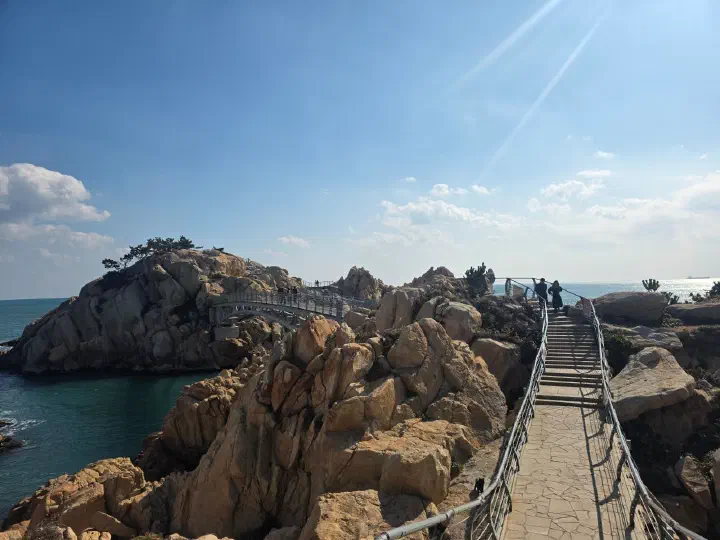
You can actually cross over to the main rock on a bridge (Daewanggyo) and climb up on top.
The panorama of the East Sea from up there is the high point of the whole walk.

North of Daewangam, smaller islets like Minseom and Tanggeonam are linked by a deck path.
There are benches tucked between them, so it’s easy to sit and take a breather.

Ulgi Lighthouse and the way back
To head out, loop back past Ulgi Lighthouse and you’ll rejoin the fork you started from.
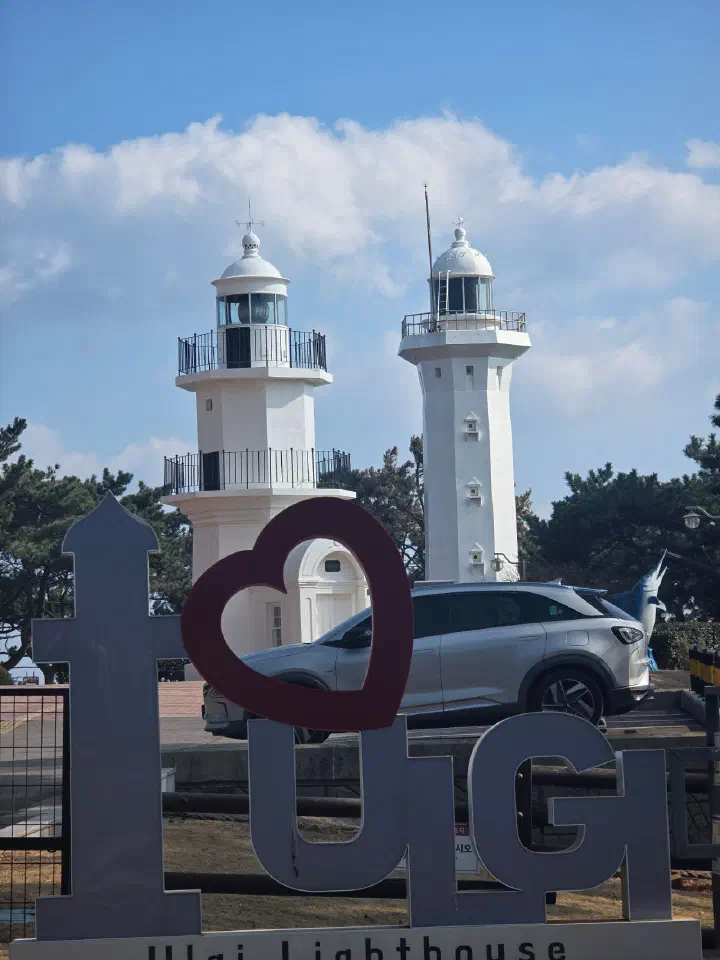
The white lighthouse dates to 1906 and is a favorite photo stop in its own right.

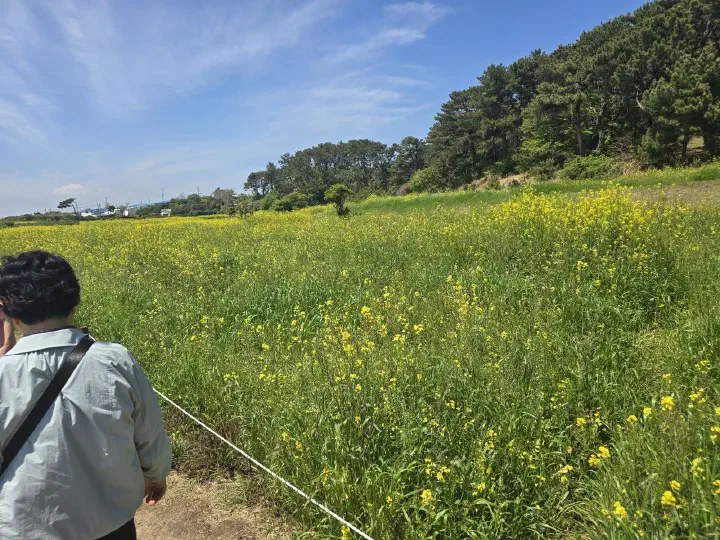
In spring, canola flowers bloom yellow near the lighthouse, great for pictures.
Different flowers in every season — that’s the charm of this place; there’s always something to see.

If you just go straight to Daewangam and back, it’s about 30 minutes.
Cross the bridge and stroll the coastal trail and it’s more like an hour to an hour and a half.
Take in Yonggul and all the legend rocks and two hours slips by easily.
Stop for photos, rest a little, and you really do lose track of time.

Nearby and a few tips
There’s a cluster of restaurants and cafés near the entrance, handy for a meal or coffee after your walk.
Down by the water there’s a haenyeo (free-diver) village where the women sell what they’ve caught themselves — go if you like fresh raw fish or seafood.
They work in the morning, so head down early if you want the freshest pick.
A quick word on language: ordering food rarely happens in English, but the menus are simple enough — point at what you want and hold up a couple of fingers, and it works out fine. At the ticket and information desks, staff often handle a little basic English, so don’t stress.
Seuldo Lighthouse (슬도등대) is only about five minutes away by car and pairs nicely with this.
Ilsan Beach sits right next door too, connected straight from the suspension bridge.
A half-day plan fits this whole area just about perfectly.
📍 View Daewangam Park (대왕암공원) on Google Maps →
The sea wind is genuinely strong, so bring a light jacket, and comfortable sneakers are a must.
A clear spring or autumn day is best for walking, and even in midsummer Donggu catches enough wind to stay cooler than most places.
There’s a convenience store near the entrance if you need water or a snack, and like most of Korea the area feels safe to wander even toward dusk.
If Ulsan is on your itinerary, give Daewangam Park an afternoon.