Ganjeolgot (간절곶) is the first spot on the Korean mainland where the sun comes up each morning.
It got famous as the place to watch the very first sunrise of the new millennium, and these days people come all year round just to walk along the sea.

Here’s the thing, though. Actually getting there trips a lot of people up.
It sits at the southern tip of Ulju-gun, a fair distance from central Ulsan, and if you don’t plan the route it’s surprisingly easy to end up lost.

So this post is mostly about that: how to reach Ganjeolgot, broken down by car, train, regional rail, and city bus, plus what’s worth seeing once you arrive.

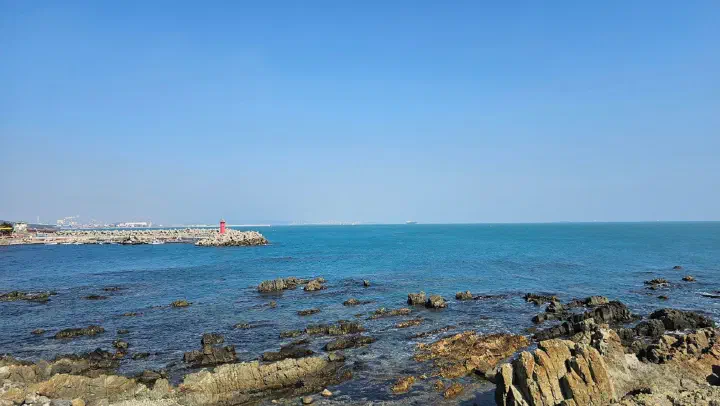
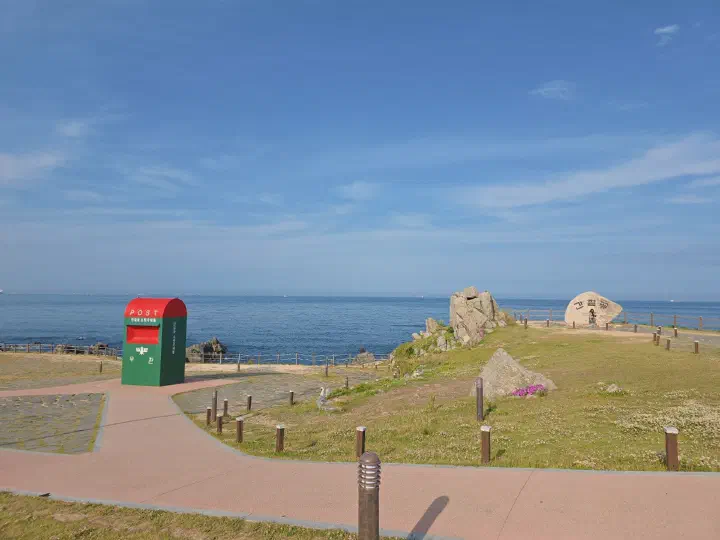
The wide-open East Sea coastline seen from Ganjeolgot, Ulsan

The basics

  • Location: Daesong-ri, Seosaeng-myeon, Ulju-gun, Ulsan
  • Admission: Free
  • Parking: Large free lots at the entrance (lots 1, 2, and 3), plus a public lot near the Saeul Pavilion
  • Hours: It’s an outdoor park, open around the clock (individual spots like the junk-art space and cafés keep their own hours)

📍 View Ganjeolgot (간절곶) on Google Maps →

The cape gets its name from its shape. From far out at sea it looks like a long, thin bamboo pole, and that old image stuck.

Getting there 1: By car

If you have a car, this is the easy option.
From central Ulsan it’s about a 40-minute drive. It’s not exactly close, but the road out is quiet and pretty, so I honestly didn’t mind the distance.

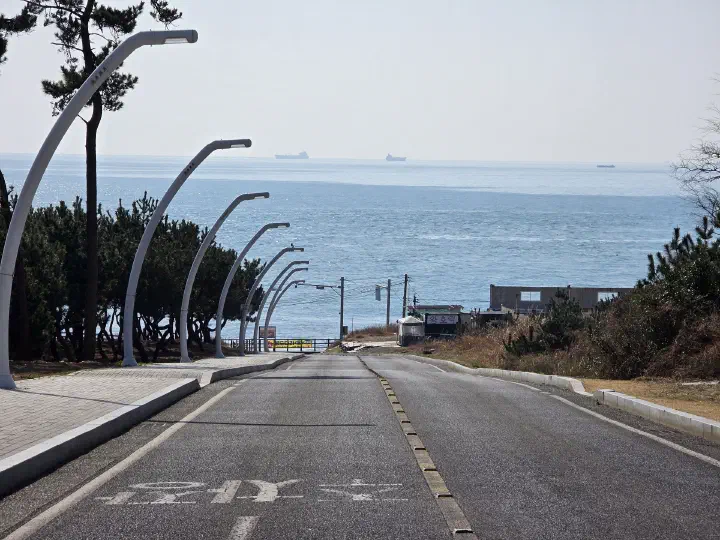
The quiet coastal road leading to Ganjeolgot

At the entrance the parking splits into lots 1, 2, and 3. Just take whichever is closest, and it’s free.
Even on weekends there’s plenty of space, so parking is rarely a headache.

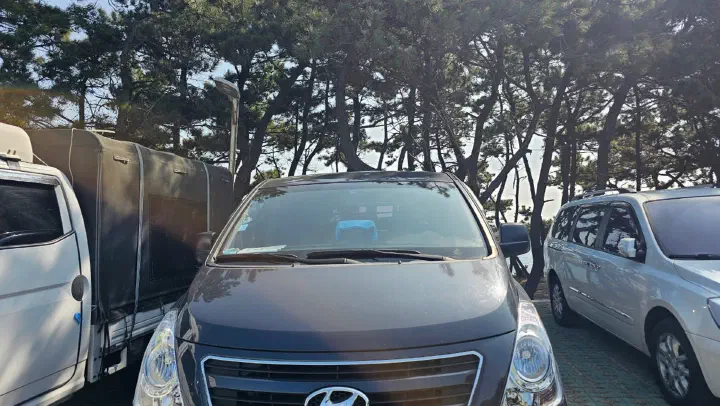
A free parking lot at Ganjeolgot

The approach is lined with cafés, so it’s worth scoping one out on the way in and stopping on the way back.

A quick note for international travelers: Korean roads are easy to drive, and almost every place here takes internationally issued credit cards, so you won’t need much cash. Korea also has no tipping culture, so there’s nothing to add at restaurants or cafés.

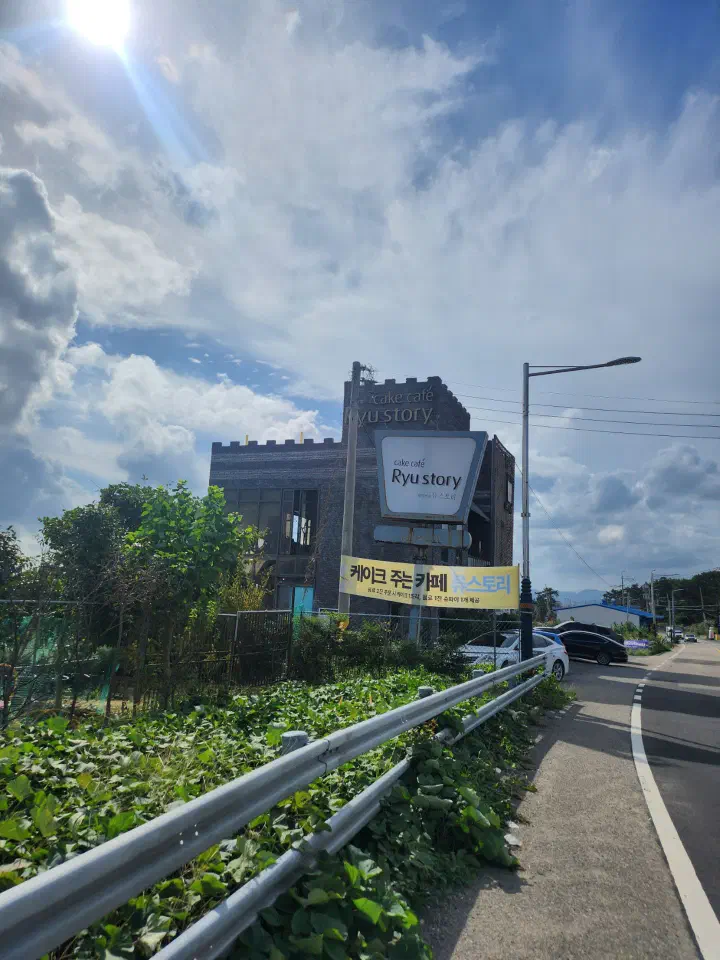
Sea-view cafés lining the road to Ganjeolgot

Getting there 2: Donghae Line train + bus

No car? It’s much easier now thanks to the Donghae Line regional rail.
The line was extended between Busan and Ulsan, and two stations opened near the cape: Namchang and Seosaeng.

From Taehwagang Station to Namchang is about 17 minutes by train.
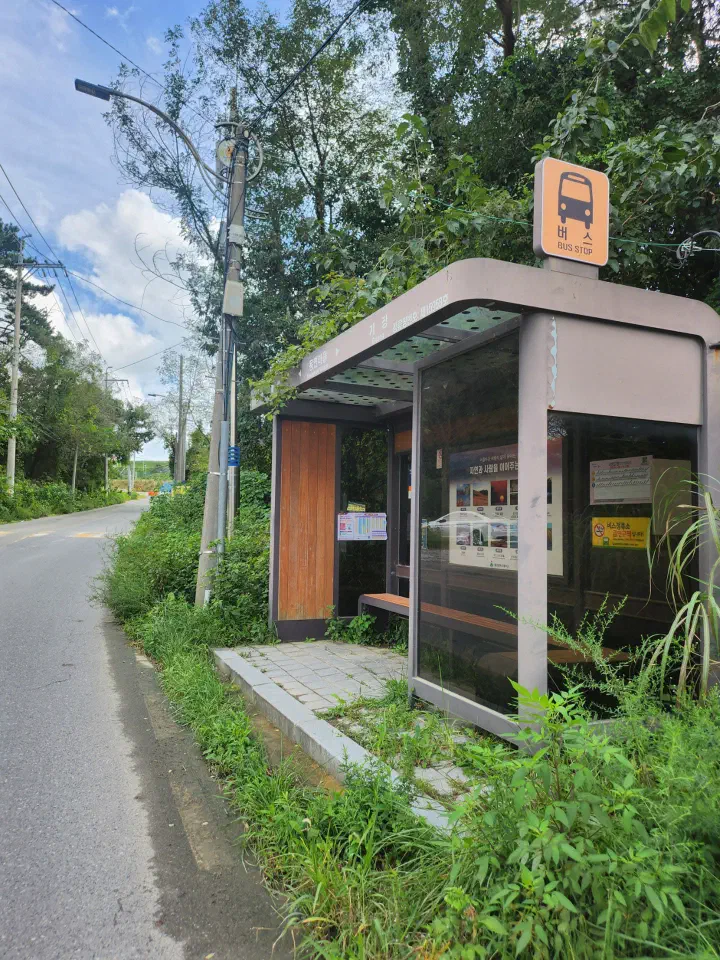
Get off at Namchang or Seosaeng, then take city bus 715 and ride it to the Ganjeolgot stop.

If you’re coming from the Busan side, getting off at Seosaeng and catching the 715 is a touch faster.
One thing to know: the 715 doesn’t run very often, so check the timetable before you set out.

A rural bus stop for the 715 near Ganjeolgot

There are other options too: the 405 from Namchang, or the Ulju 10 from Seosaeng. Just pick whatever lines up with the schedule on the day.

For navigation, skip Google Maps for walking and transit directions here, it’s often unreliable in Korea. Use Naver Map or KakaoMap instead. And the KakaoT app works just like a taxi-hailing app if you’d rather grab a cab from the station.

Getting there 3: From Seoul by train

This is the part that confuses most people coming from Seoul.
Taking the KTX straight to Ulsan Station means another 1 hour 40 minutes by public transit from there, or close to 40,000 won by taxi, which feels like a waste of both time and money.

So here’s the route I’d suggest.
Take the KTX from Seoul to Singyeongju Station, then transfer to a Mugunghwa or Nuriro train heading to Namchang or Taehwagang.
At Singyeongju the KTX and the slower trains use platforms right next to each other, so the transfer takes under five minutes.

From Namchang it’s around 10,000-something won by taxi, or about 30 minutes by bus.
From Taehwagang, a taxi to Ganjeolgot runs roughly 20,000 won.
You can also transfer at Busjeon or Dongdaegu instead of Singyeongju, so just buy whatever fits the timetable.

A little cash is handy too. Cards work almost everywhere, but small stands and markets sometimes only take cash, and foreign cards occasionally get declined.

January 1 is a whole different story

Ganjeolgot draws huge crowds every New Year’s Day for the sunrise.
For 2026 the sun is expected around 7:31 a.m., which is about a minute earlier than Homigot in Pohang on the same day.

But on that one day, give up on driving in.
The area within roughly 150 meters of the park becomes a no-vehicle zone for the event.

You’ll need to park at a temporary lot (places like Onyang Sports Park, Jinha public lot, Sinhan Heavy Industries, the KHNP Saeul headquarters, or the energy industrial complex) and ride a shuttle bus in.
After 4 a.m. the shuttle lines get long, so arriving before midnight or before 4 a.m. is the calmer choice.
Hold on to the wristband they give you when you board, you’ll need it for the ride back too.

Honestly, even locals who know Ulsan inside out struggle to park on January 1. If the New Year sunrise is your goal, plan around the shuttle from the start and don’t even try the car.

What to see once you’re there

The wish mailbox

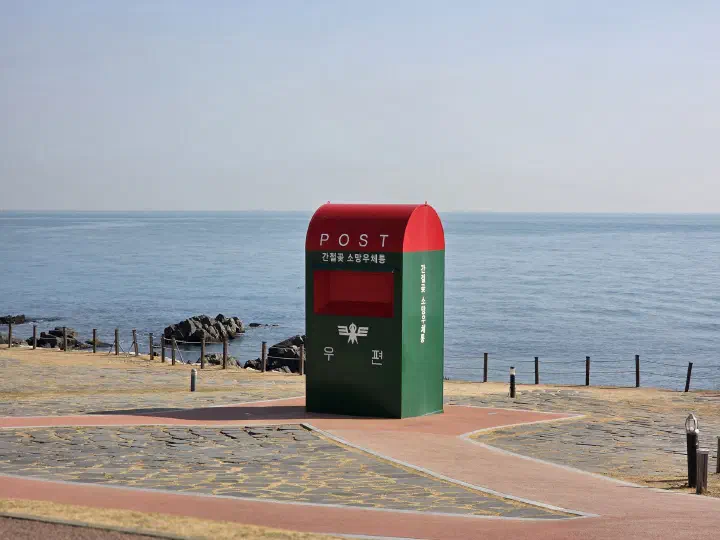
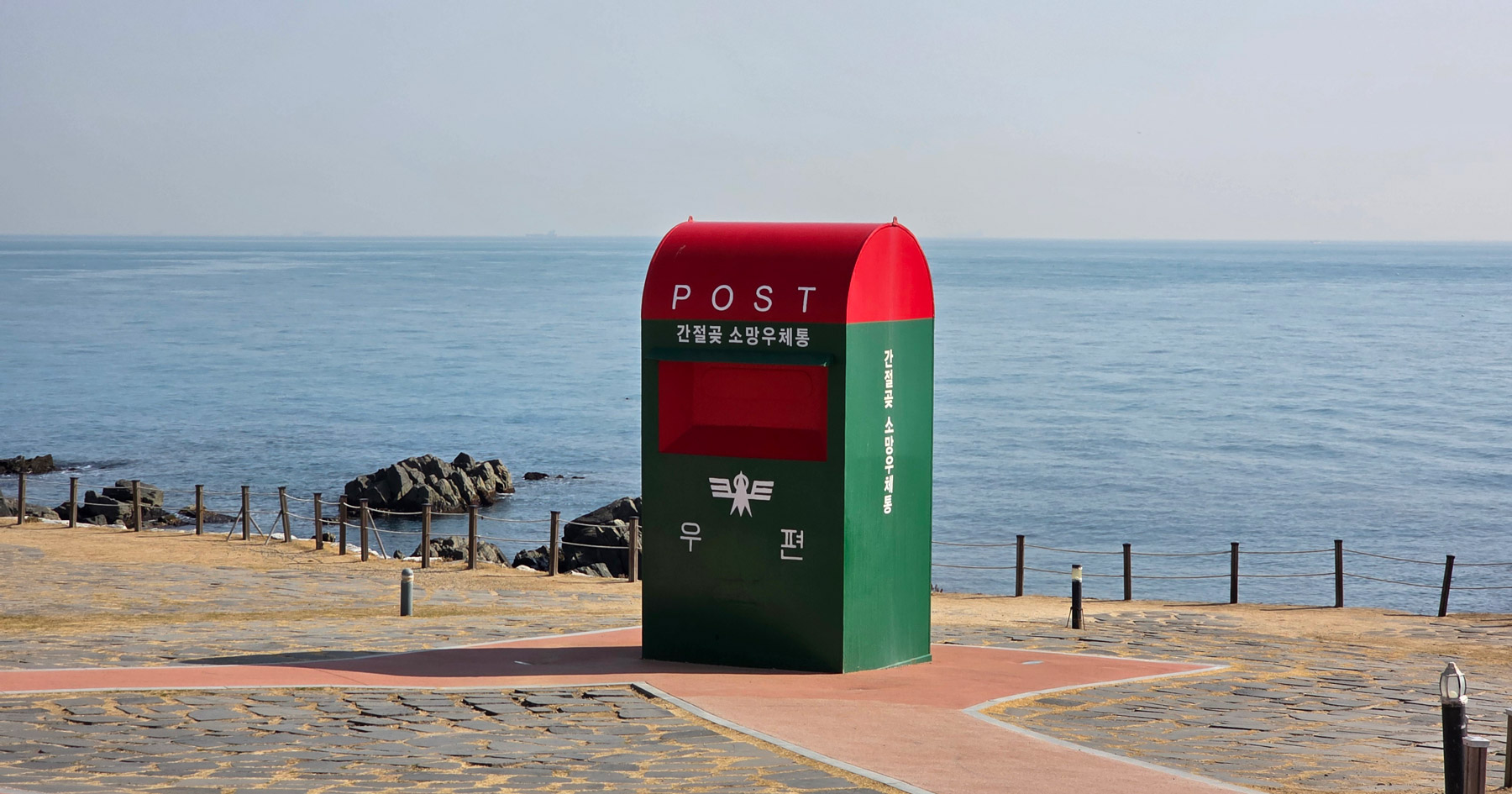
This bright red mailbox is the image everyone pictures when they think of Ganjeolgot.
It stands 5 meters tall and 2.4 meters wide, and it’s not just a sculpture, it’s a working mailbox. Drop a postcard in and it actually gets delivered anywhere in the country.

The Ganjeolgot wish mailbox standing against the East Sea

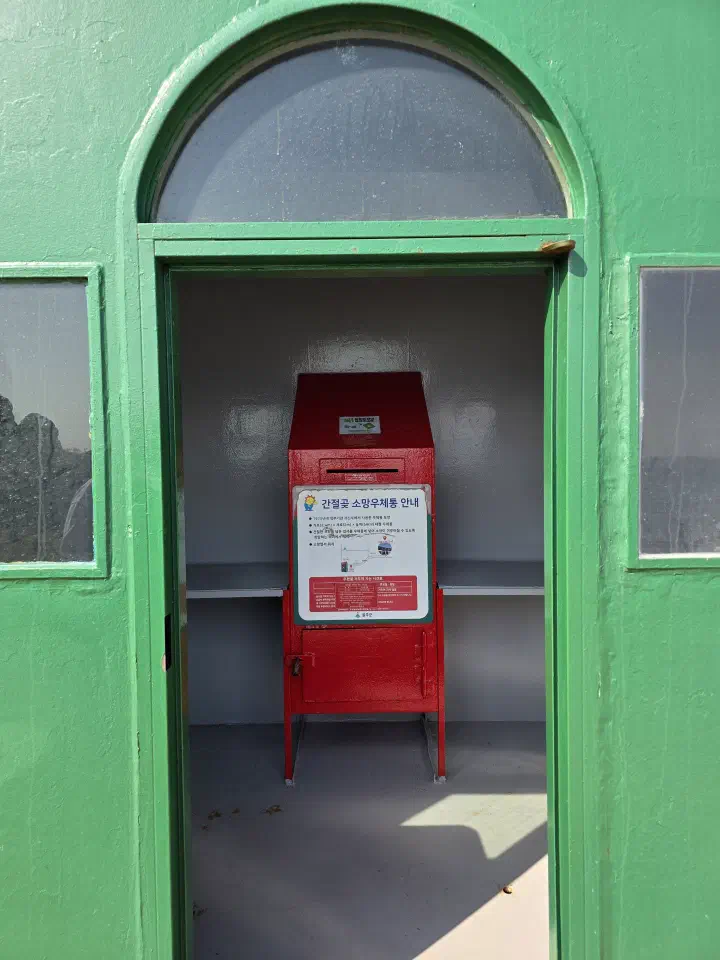
Walk around the back and there’s a spot to write a postcard, plus the real mail slot.
We message each other on our phones for everything now, so writing something out by hand here felt like a small, nice change of pace.

The real mail-sending booth behind the Ganjeolgot mailbox

The lighthouse

The Ganjeolgot lighthouse is a trim, white tower facing the water.
It first lit up in March 1920 and has been running ever since, with a beam said to reach as far as 26 nautical miles, about 48 kilometers.

The Ganjeolgot lighthouse and a white windmill in one view

Right beside it, the old lantern top from the original lighthouse has been set on the ground so you can look at it up close.

The old lantern tower of Ganjeolgot displayed at ground level

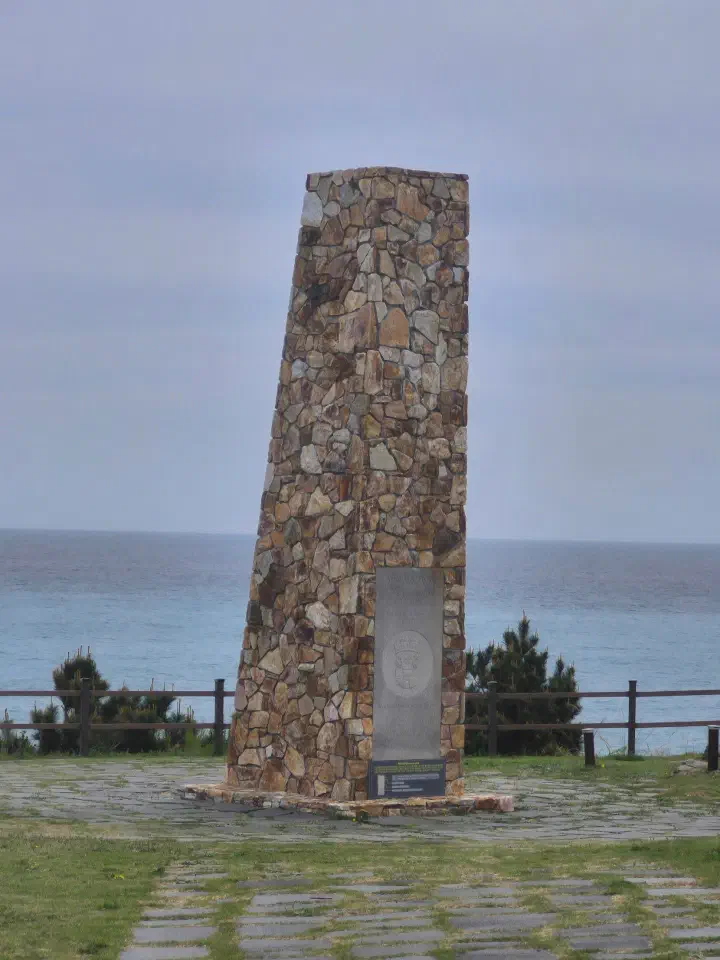
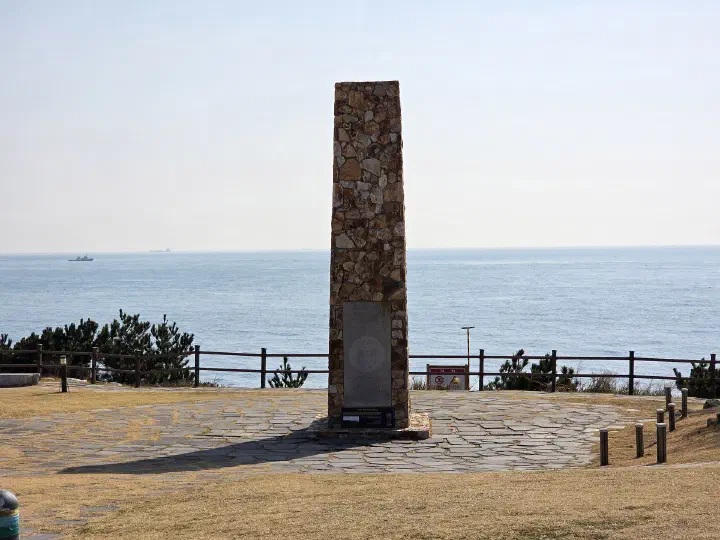
The Cabo da Roca marker

A slightly unexpected one.
It’s a stone marker modeled after the one at Cabo da Roca in Sintra, Portugal, the westernmost point of mainland Europe.
The idea is to mark the eastern edge of Eurasia as a kind of mirror image.

The Cabo da Roca stone marker at Ganjeolgot

The windmill and the Imagination Space

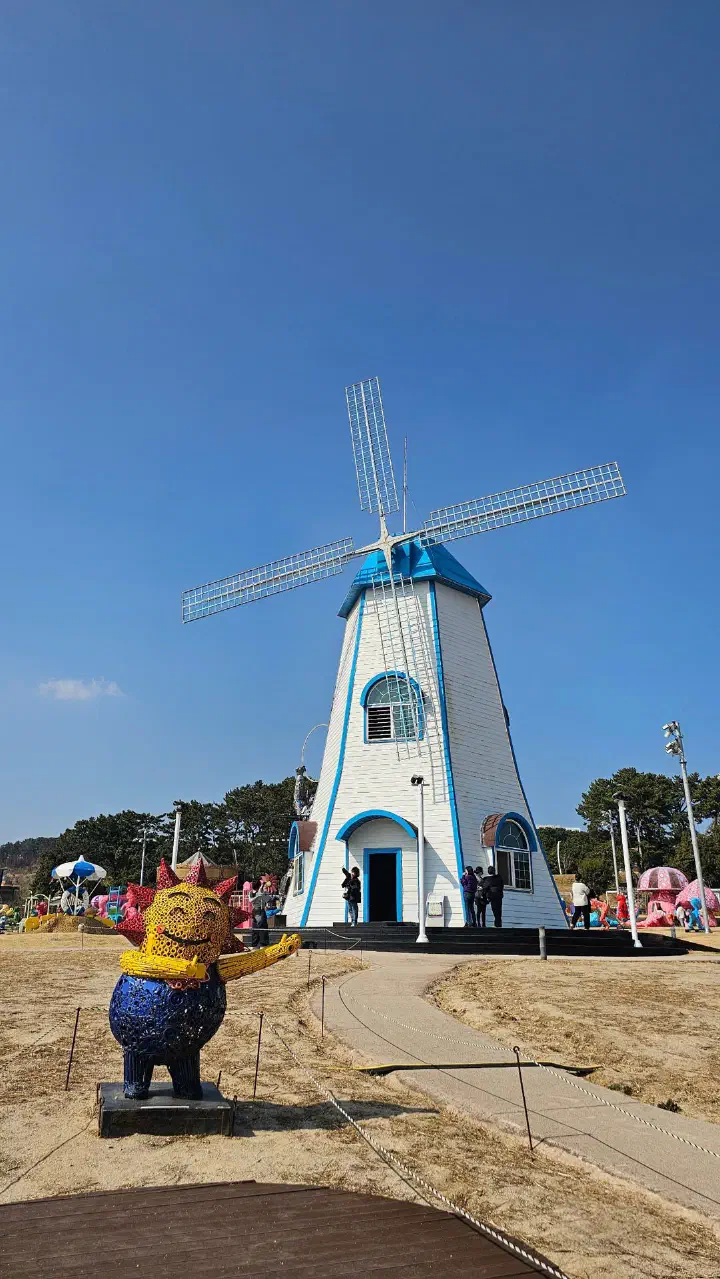
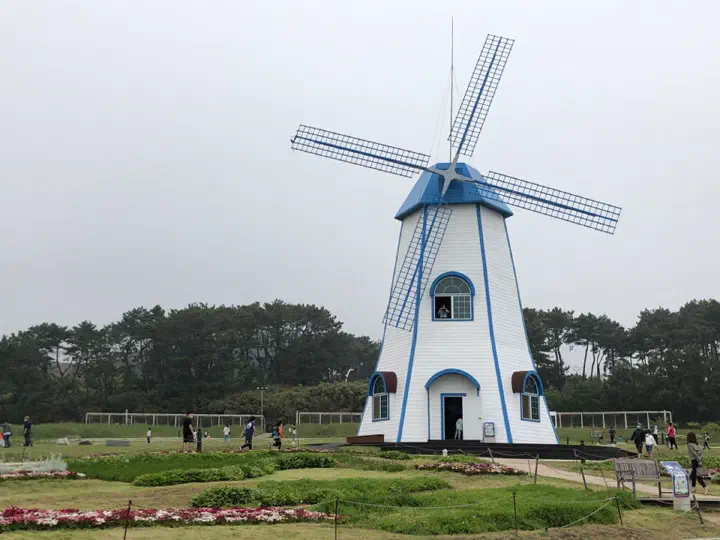
There’s a big white windmill set against the sea, and you can step inside it. The view out the window puts a different frame on the water.

The white windmill by the sea at Ganjeolgot

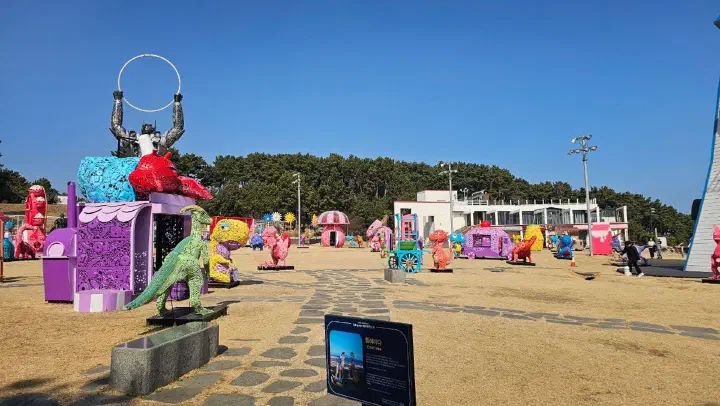
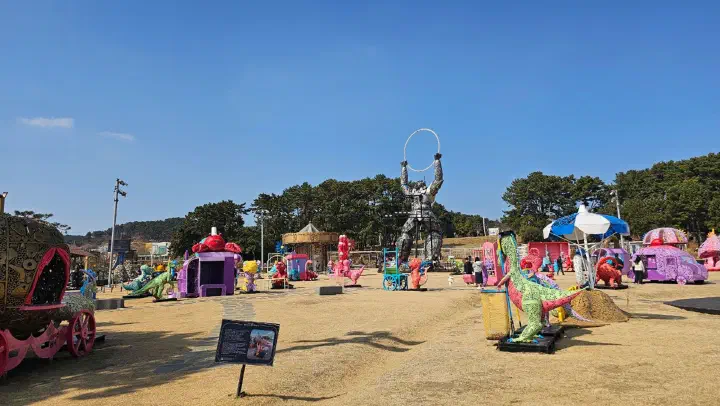
The liveliest part of Ganjeolgot right now is the Imagination Space in the park.
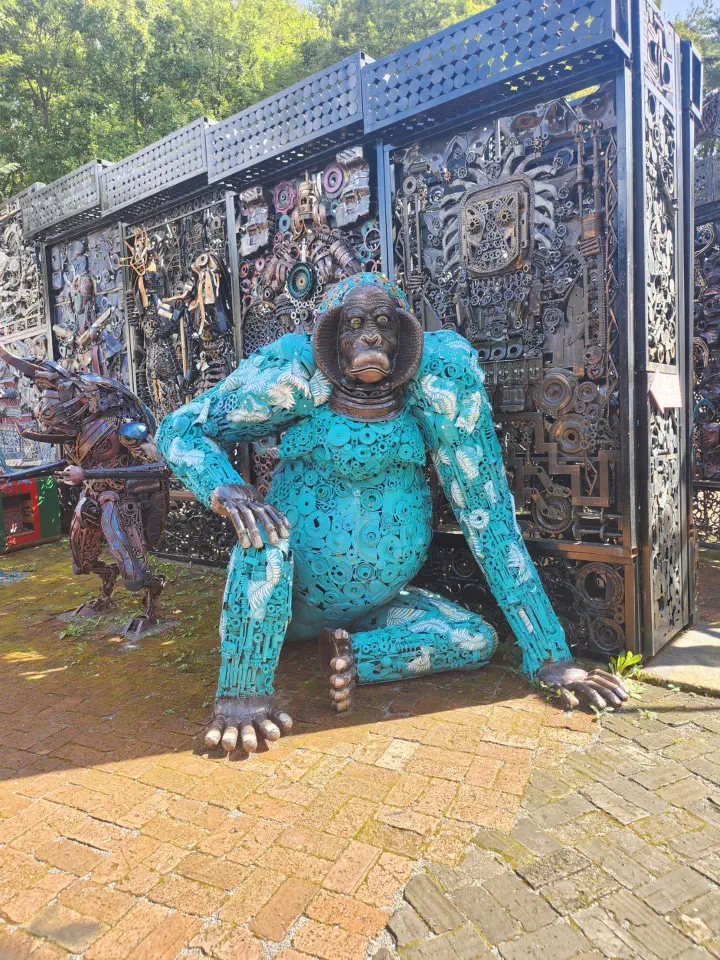
It’s full of junk-art sculptures built from scrap metal, old car parts, and recycled materials, and kids love it.

The colorful junk-art plaza at the Ganjeolgot Imagination Space

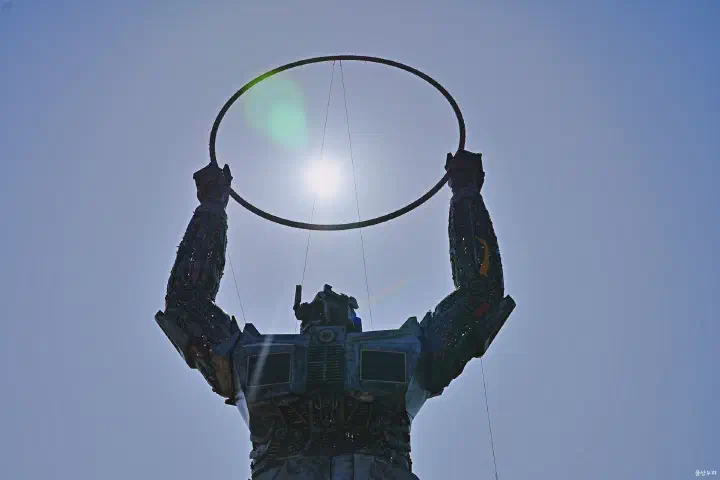
In the middle stands “Solarbot,” an 18-meter robot sculpture.
It catches the light differently through the day, which makes it a favorite photo spot.

The Solarbot robot sculpture at Ganjeolgot, arms raised toward the sun

There are scrap-metal dinosaurs dotted around too, and they pull in every kid who walks past.

A scrap-metal dinosaur sculpture at Ganjeolgot’s junk-art park

Walking routes and photo spots

The paths along the shore are well laid out for walking.
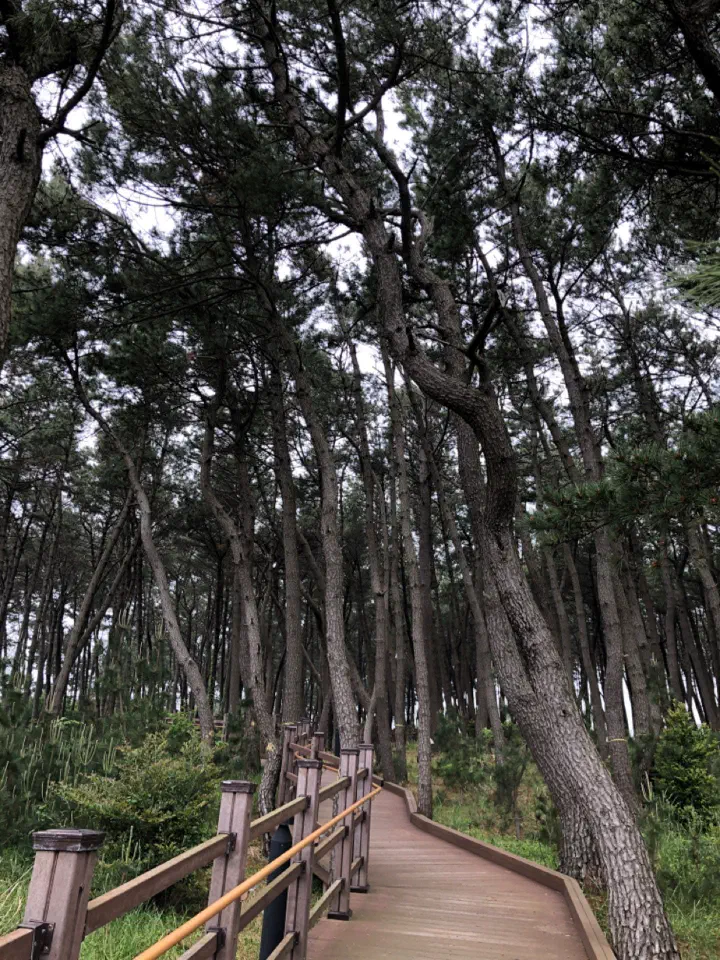
A pine grove near the entrance throws some shade, which makes it a nice place to start.

The shaded pine-forest path at the entrance to Ganjeolgot

This stretch is also part of the Haeparang Trail, the long coastal route running from Busan all the way up to Goseong in Gangwon.
Ganjeolgot falls on sections 4 and 5, so if you have time, walking an hour or two with the sea on your right is a lovely way to spend it.

The Haeparang coastal trail running along the sea at Ganjeolgot

There are stairs down toward the water if you want to get a little closer to the sea.

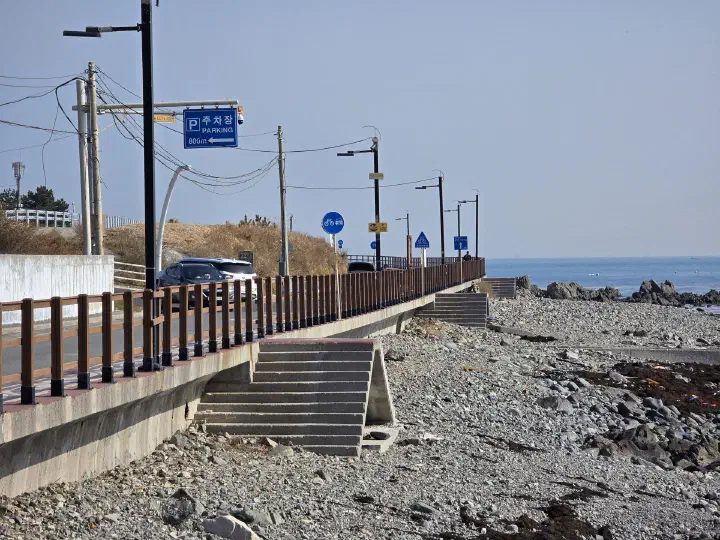
Stairs leading down to the shore at Ganjeolgot

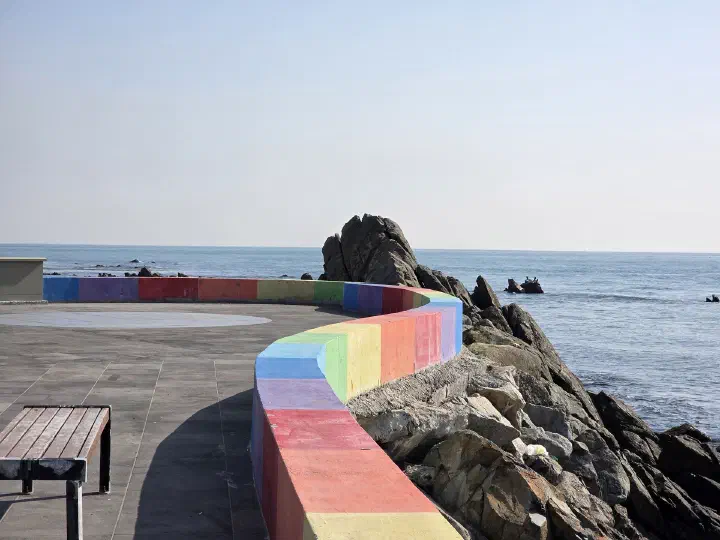
Heading toward Nasa Beach, you’ll pass a short but cheerful rainbow-painted barrier wall.
It photographs well, but mornings can be backlit, so go in the afternoon or shoot from the side.

The rainbow-painted barrier wall photo spot at Ganjeolgot

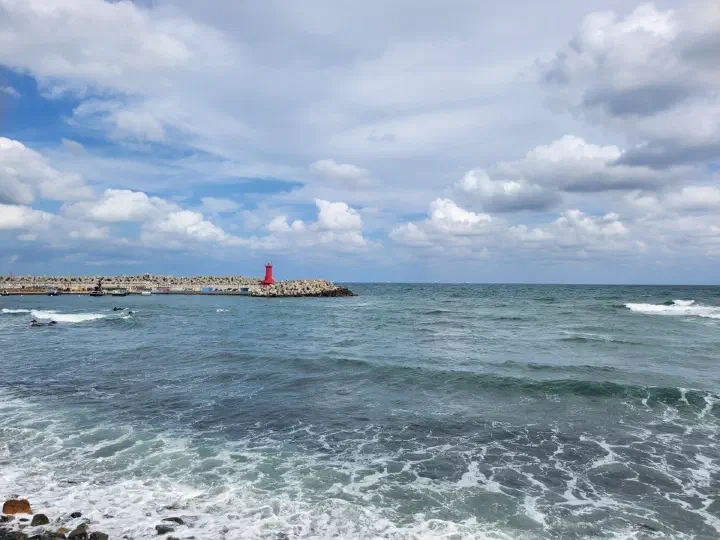
I also got a bit stuck just watching the small fishing boats moored along the shore.

Small fishing boats moored off the coast at Ganjeolgot

Wrapping up at a café

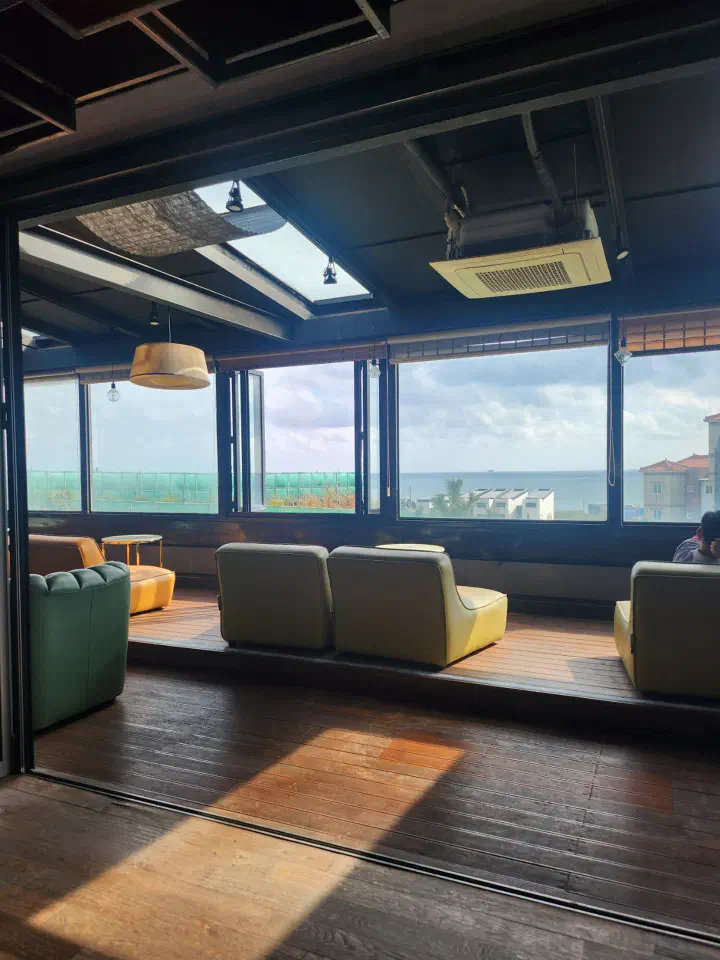
After all that walking, a sea-view café is the right move.
There are loads of them around Ganjeolgot with big windows facing the water.
Since the 715 bus doesn’t come often, sitting with a coffee while you wait for it works out perfectly.

An ocean-view café at Ganjeolgot with the sea through the window

On a clear day plenty of people spread out a mat on the lawn and just stare at the sea.
The breeze is steady, so it’s a good spot for flying a kite too.

The sandy beach and sea view at Ganjeolgot

A few things worth knowing before you go

If you’re relying on public transit, remember the 715 and the other buses don’t run often, so build your route around the timetable.
And again, use Naver Map or KakaoMap rather than Google Maps for directions.

Driving is usually stress-free for parking, except on January 1, when the shuttle is the only realistic way in.
Winter on the coast gets windy and cold, so dress for it.
The ticket desks and front staff at Korean attractions can usually manage simple English, though at Ganjeolgot there’s no admission to worry about anyway.

The first place on the mainland to meet the sun, with open water, walking trails, the mailbox and lighthouse, and a whole junk-art park in one spot. It’s an easy one to slot into an Ulsan trip.

📍 View Ganjeolgot (간절곶) on Google Maps →