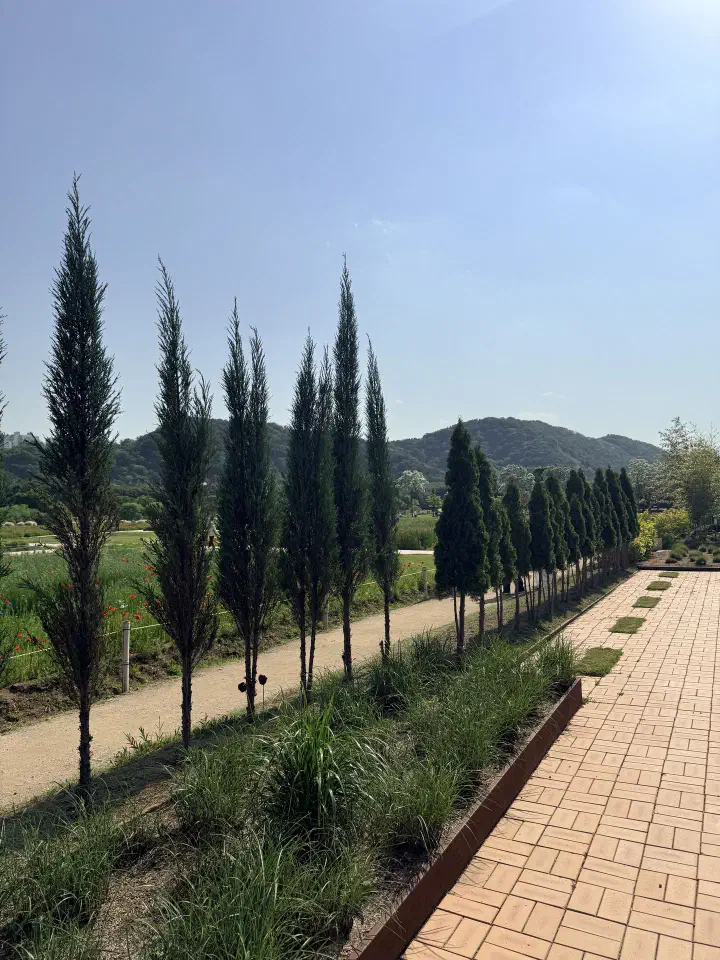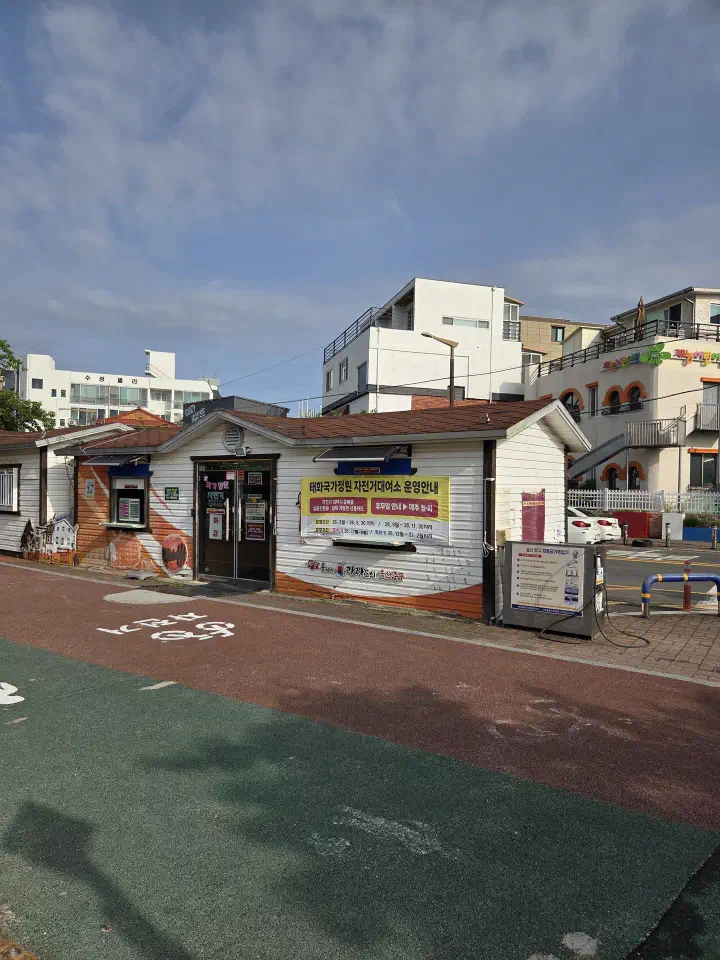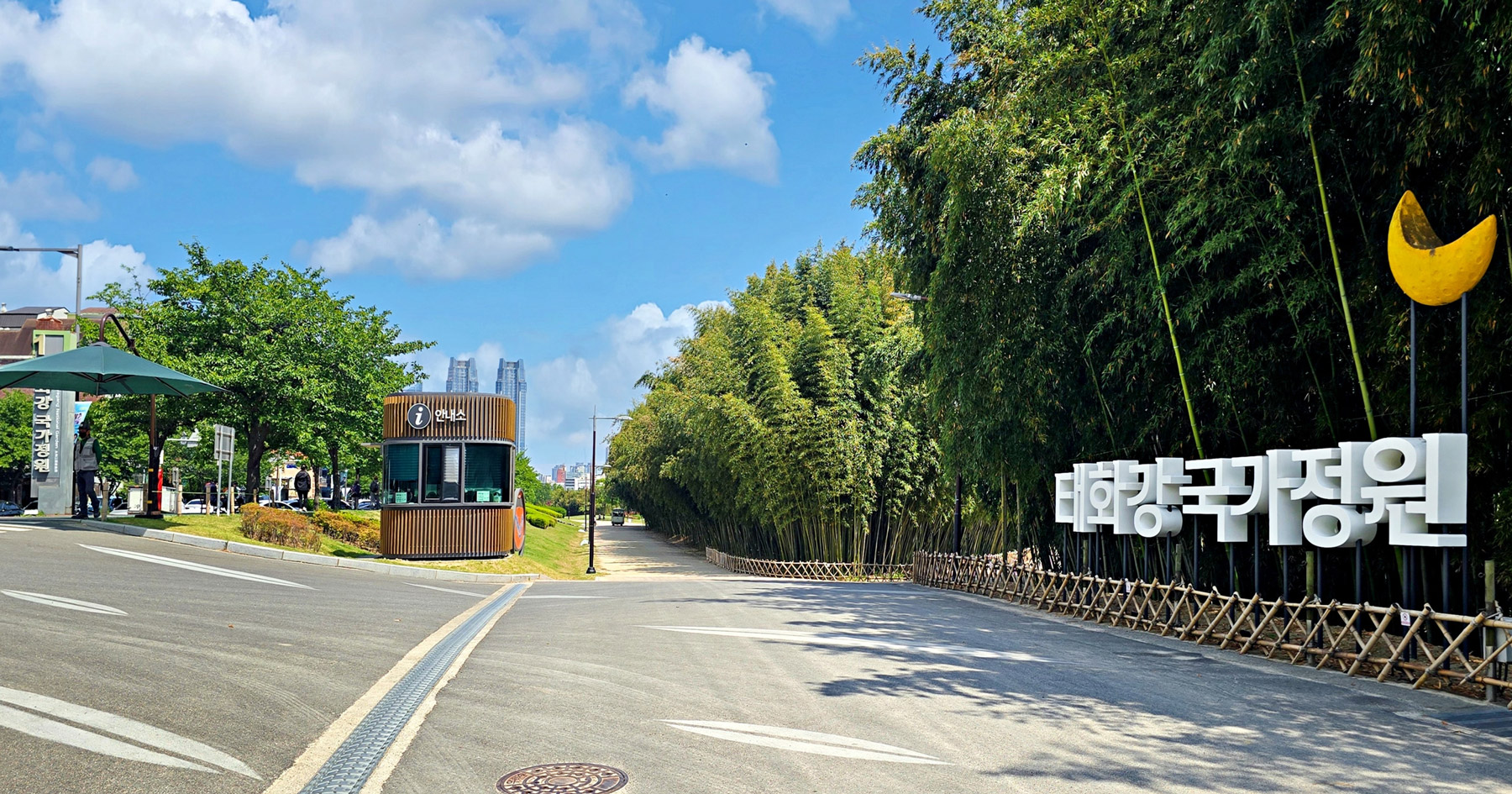
There’s a place I keep putting off precisely because it’s close to home.
For me that’s Taehwagang National Garden (태화강국가정원).
I always tell myself I can go anytime, and then spring is suddenly almost over.
So this May I finally cleared a whole day and went when the flowers were at their peak.
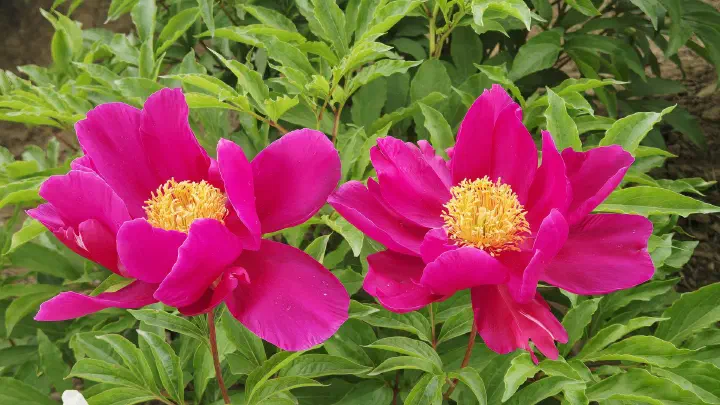
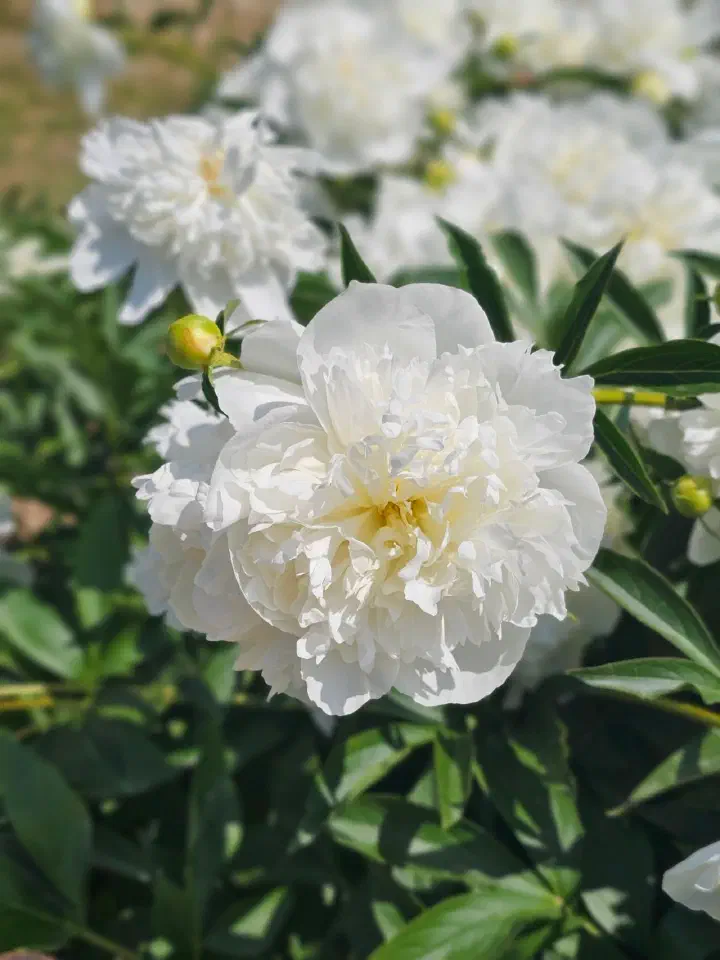
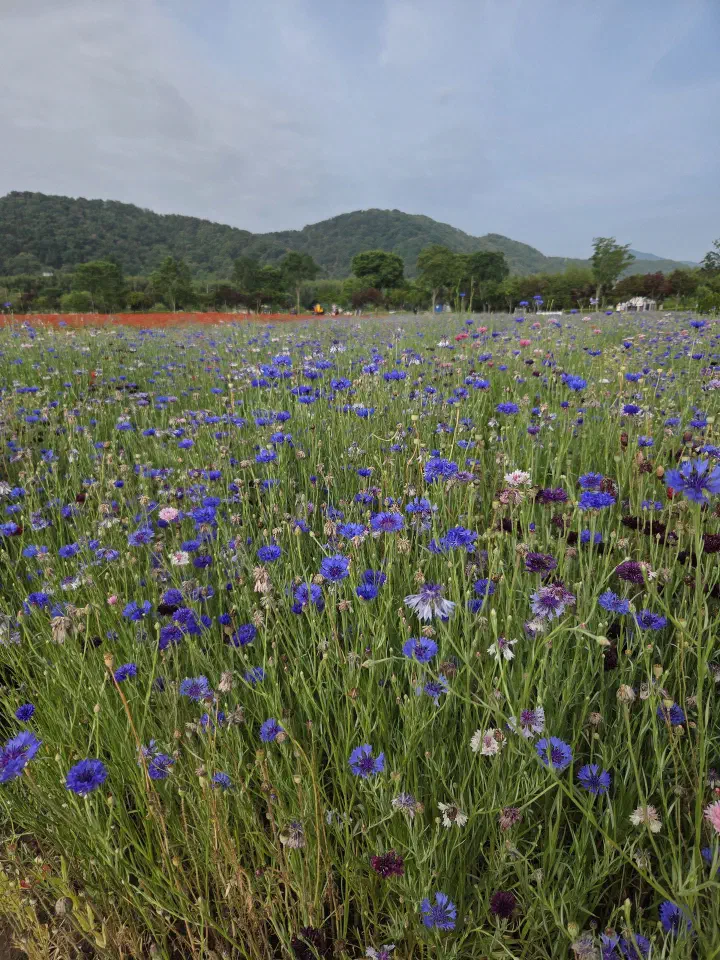
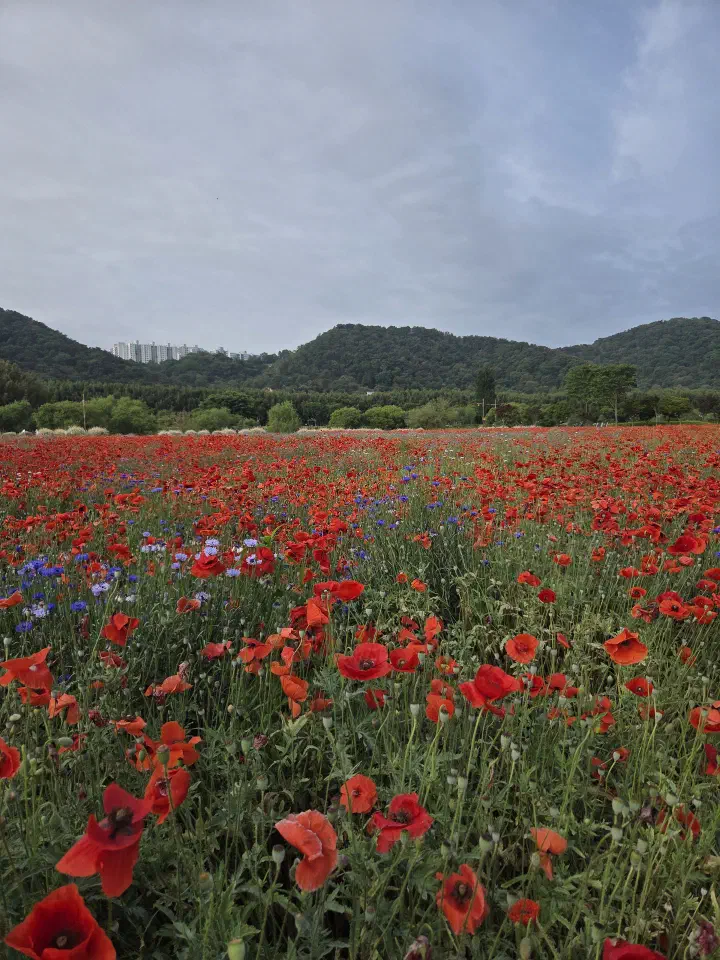
Peonies, field poppies, blue cornflowers, and the bamboo path that glows at night.
Here’s how the day went, with everything I wish I’d known before going.

The basics before you go
A few practical things first.
Address: 154 Taehwagang-gukgajeongwon-gil, Jung-gu, Ulsan
Hours: Open 24 hours (it’s a fully open riverside park with no entry gate)
Admission: Free
Phone: +82-52-229-3147, +82-52-229-3148
Website: https://www.ulsan.go.kr/s/garden
Parking: There’s no dedicated garden lot. Use the public lots scattered along the Taehwagang riverside or the National Garden No. 5 public lot. Parking runs about 500 won per 30 minutes.
📍 View Taehwagang National Garden (태화강국가정원) on Google Maps →
A quick note on getting around: Google Maps is unreliable for walking and transit directions in Korea, so I’d download Naver Map or KakaoMap before your trip. They handle local routes far better.
Taehwagang was designated Korea’s second National Garden in 2019.
What gets me every time is the backstory. Back in the industrial boom of the 1960s and 70s, this river was so polluted that fish couldn’t survive in it. People called it a “dead river.”
Ulsan residents fought to protect the bamboo grove and restore the ecosystem, and over the years salmon returned and migratory birds came back.
Once you know that, walking through the flower fields hits a little differently.
Ulsan is also set to host the International Garden Expo in 2028, so this place will only get more attention.

Getting there and parking
I drove. The garden sits right in the middle of the city, so access is genuinely easy.
That said, weekend parking during flower season is a battle.
The peony field is closest to the No. 3 garden sign, and the lots and roadside spots near it fill up fast.
I arrived around 8:30 on a Sunday morning and spots were already almost gone, so go early if you can.
If you don’t have a car, plenty of city buses stop at the “Taehwagang National Garden – Donggang Hospital” stop, so public transit works fine too.
For taxis, the KakaoT app is the easiest way to call one, and most rides around central Ulsan are inexpensive.
Sipri Bamboo Grove, where I started
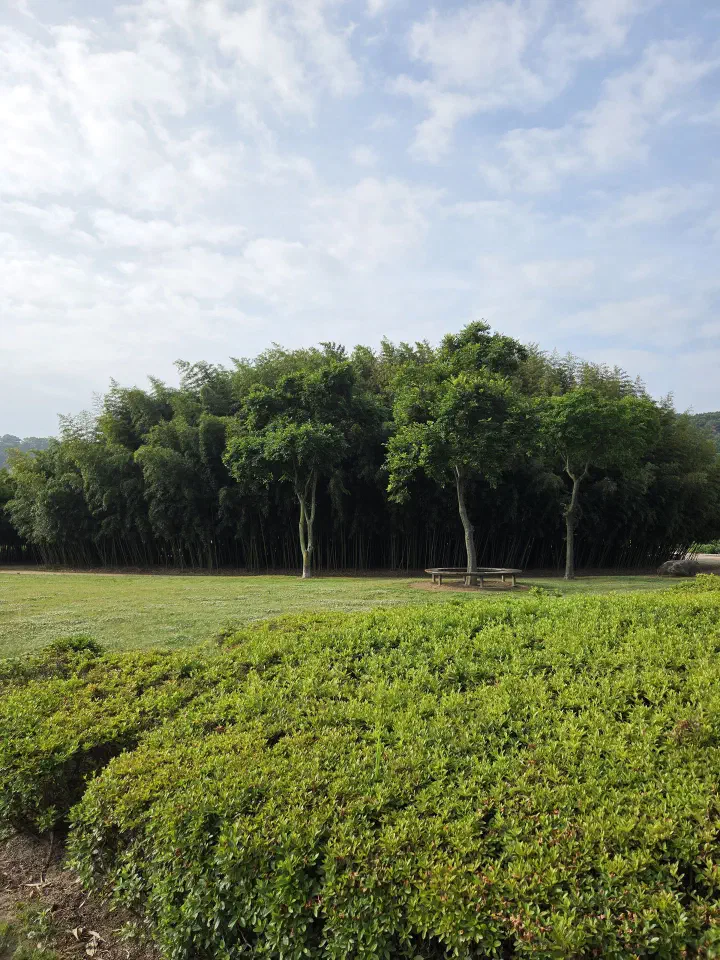
It was a hot day, almost summery, so I headed straight for the shade of the Sipri Bamboo Grove first.
The grove runs about 4km along the river like a long green tunnel.
When the wind moves through the dense stalks, it feels cool even at midday, and there’s this soft rustling sound the whole way.
Apparently the air here carries far more negative ions than a typical city, which might be why it all felt so refreshing.

There’s also a barefoot clay trail beside the grove, and plenty of people were walking it shoeless. There’s a foot-washing station at the end, so give it a try if you’re curious.
But the real magic here happens after dark.
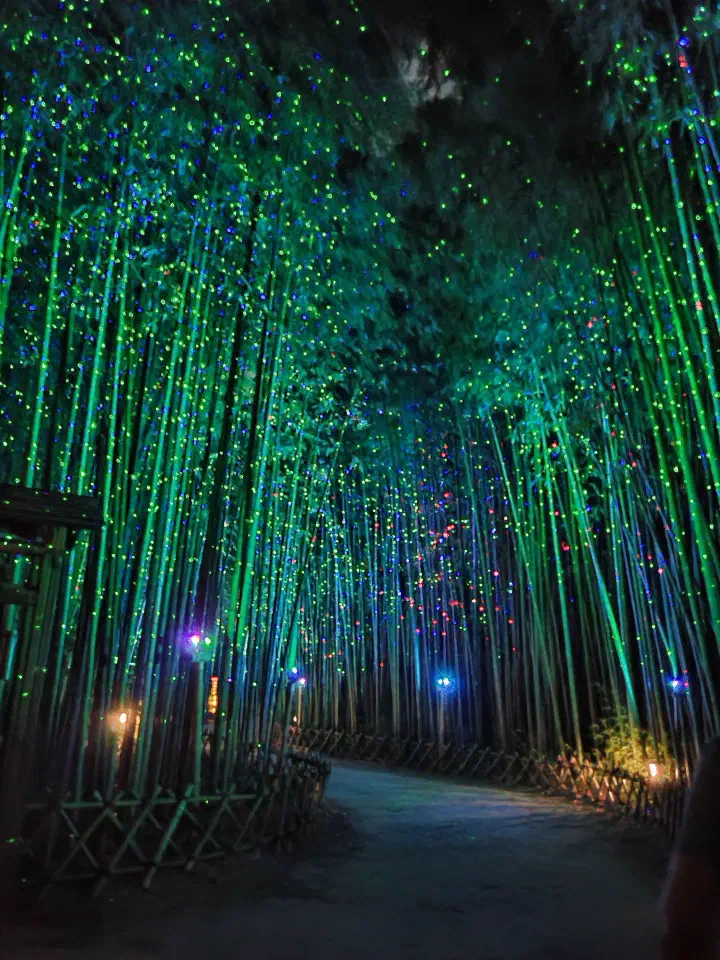
Once the sun sets, LED lights switch on along the bamboo and the path turns into what locals call the “Milky Way path.”
It runs from sunset until 11pm, and the way the light ripples through the stalks really does feel like stepping into a storybook.
My honest recommendation: see the flowers in daylight, grab dinner, then come back for the bamboo path at night. It makes for a full, satisfying day.

The peony garden, this spring’s star
Out of the grove, I made for the peony garden.
Park near the No. 3 sign and it opens up right in front of you.
I’d heard the blooms weren’t fully out yet, so I lowered my expectations. Then I actually saw it and was surprised at how open the flowers already were.
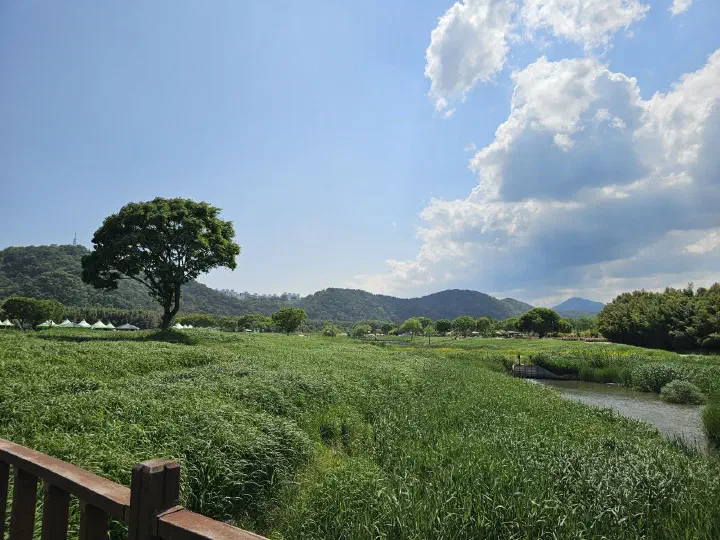
The field is wide and there’s nothing blocking the view around it, so the whole scene feels airy.

There are 13 varieties of peony here, each different in shape, color, and scent.
Korean cultivars sit alongside classic European names like Nippon Beauty and Duchesse de Nemours.
Whether you end up in front of a pink, white, or deep crimson bloom completely changes the mood of your photo.

This year they added a wooden deck and shaded rest spots inside the field.
There are four-seat tables too, so you can sit right in the middle of the flowers with a coffee.
Just sitting there for a few minutes after frantically taking photos felt like its own little reset.
Field poppies and cornflowers
Turn from the peonies toward the bamboo grove and the blue cornflowers come into view.
That shift from red peonies to blue cornflowers is so pretty.

Keep walking and the cornflowers blend into the field poppies.
It looks like someone rolled out an endless red carpet, and in person it’s far more striking than any photo.
Toward the center the red poppies and blue cornflowers mix together, and a path runs through the middle so you can walk right into the field for photos.

Just so you know, these are ornamental field poppies (gae-yanggwibi, 개양귀비), not the kind used to make opium. The real thing is illegal to grow here, so no need to wonder.
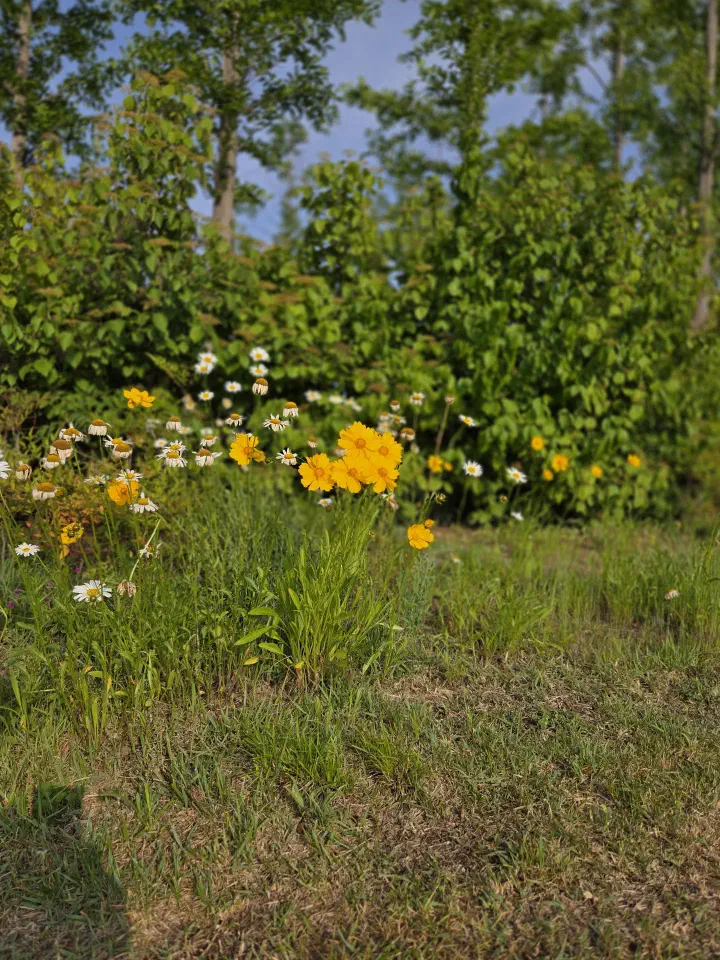
Beside the poppies there’s a patch of yellow California poppies, and delicate white baby’s breath scattered throughout.
The colors keep changing as you walk, so my eyes were happy the whole way.


The red-poppy-and-blue-cornflower combination actually shows up in a Van Gogh still life from 1887. Knowing that those exact colors are blooming here in real life somehow made it feel even lovelier.
The naturalistic garden and Monet’s garden
It’s not all showy flower beds.
Next to the bamboo theme garden is a naturalistic garden designed by Piet Oudolf, the renowned Dutch garden designer. This was his first such garden in Asia.
Wildflowers bloom here through the seasons, and its quiet beauty is a nice contrast to the bright spring fields.

Nearby there’s a little container-style reading space called the “resting bookstore.”
You can read books for free, and the glass walls look straight out onto the garden, so you glance up from a page and there’s green everywhere.
Having a quiet corner like this in the middle of a busy festival was such a nice touch.
Past the cornflowers, alongside the old willow lawn, is the garden they call Monet’s Garden.
It’s not flashy, but it has this easy, natural feel, and it quietly became my favorite stretch in the whole park.
Standing under the shade of one of those old willows, I felt my shoulders drop.

An unexpected guest in the flowers
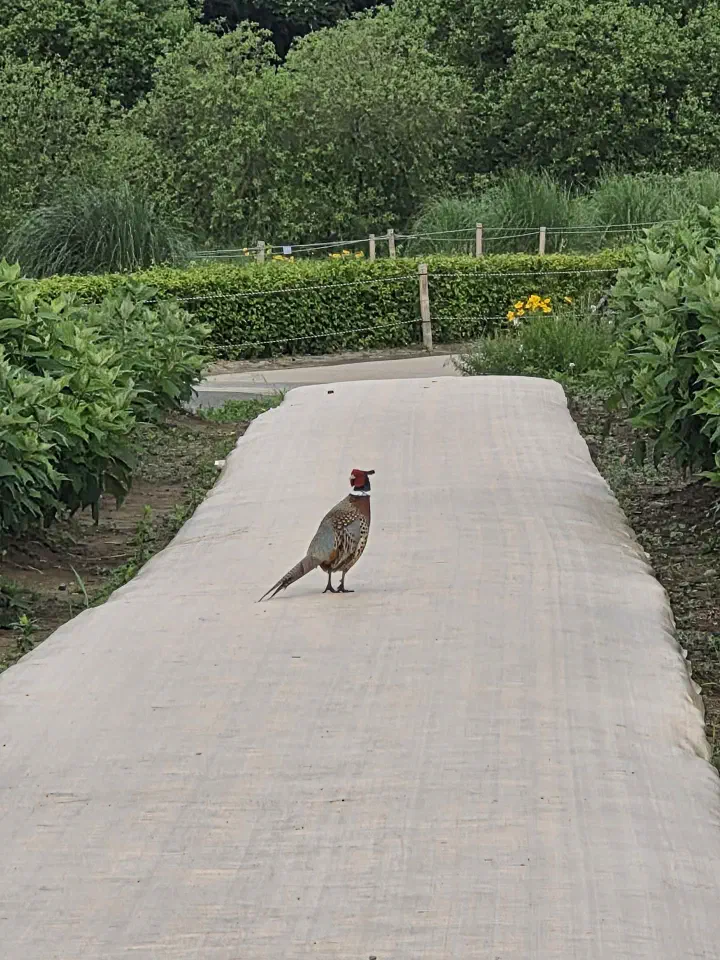
While walking I caught the strangest thing.
A pheasant was strolling right through the middle of the flower field, completely at ease.
I doubted my eyes at first, but it was definitely a pheasant.
People around me stopped and started murmuring, but the bird couldn’t have cared less and just kept wandering through the flowers like it owned the place.
Running into a wild pheasant in a garden in the middle of the city says a lot about how thoroughly this river has recovered.
A bonus bit of nature on top of the flowers.

Ulsan Keunaegi and the stamp tour
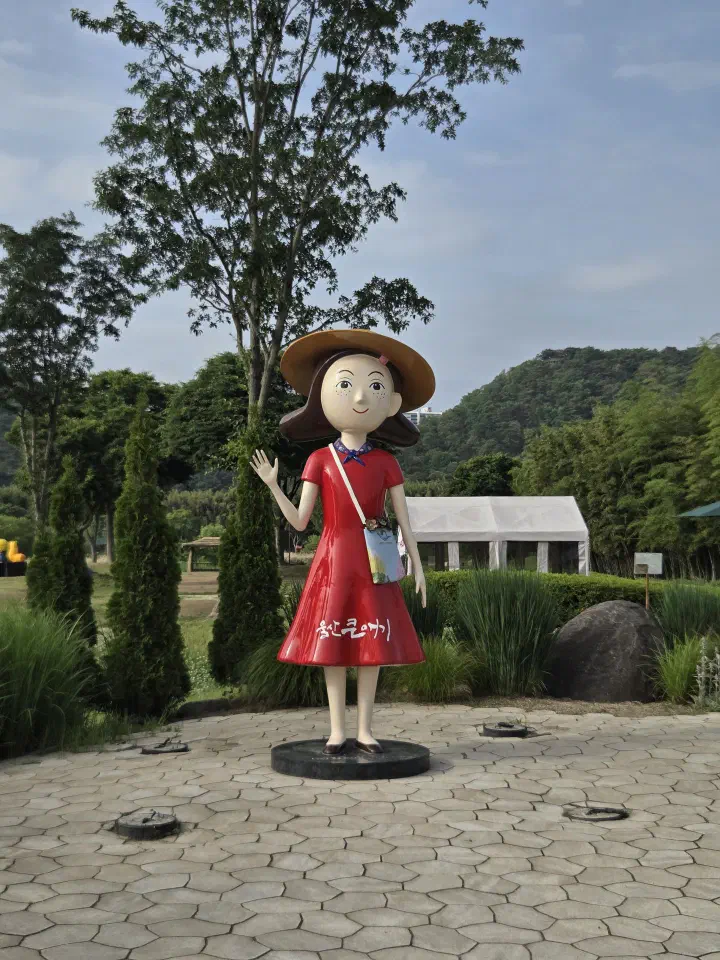
In front of the Meeting Plaza stands a sculpture of “Ulsan Keunaegi (울산큰애기),” the character that represents Ulsan’s Jung-gu district.
True to the name, which means “big girl from Ulsan,” it’s genuinely huge, and standing next to it for a photo is good fun. Kids especially love this spot.

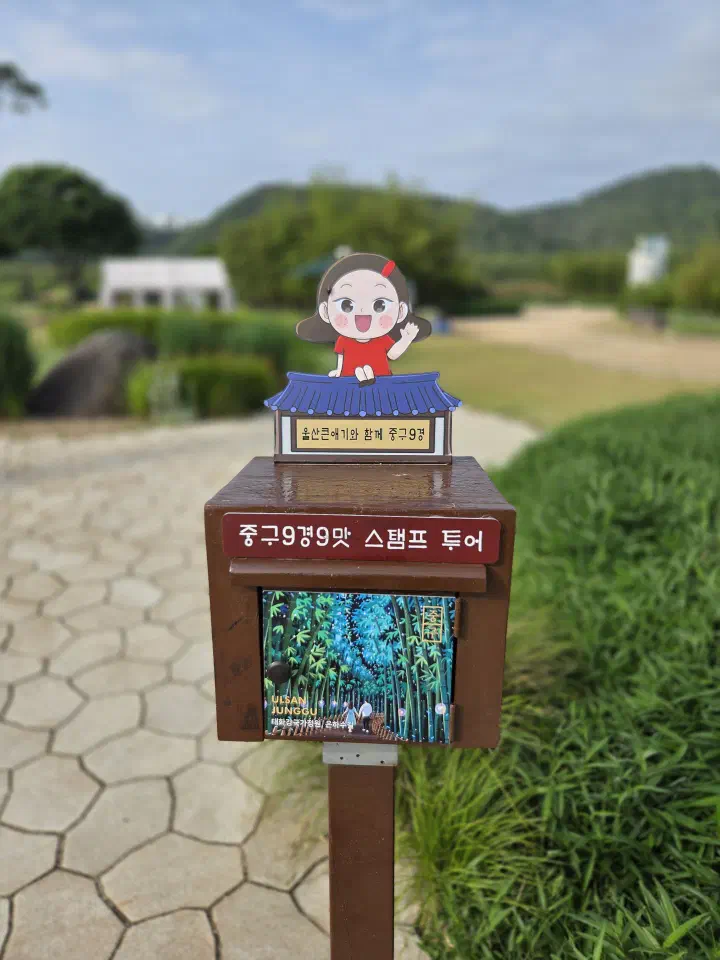
Near the visitor center there’s a stamp tour point for arboretums and gardens.
You pick up a workbook at the on-site information desk and stamp it across from there. It’s part of a tour covering 79 gardens nationwide.
If you’re visiting with kids, it turns into a little treasure-hunt mission.

The trams, for an easy loop
The garden is large, so if walking it all sounds like a lot, there are two rides worth knowing about.
One is the looping tram that leaves from the visitor center.
It circles Osan Plaza, the peony garden, the scent garden, and the bamboo grove entrance. From April to October it runs from 9:20am to 5:30pm at 20-minute intervals.
Tickets are 2,000 won for adults, teens, and children, and 1,000 won for Ulsan residents, seniors, and expectant mothers.
The other is the electric “Ulsan Carriage,” which started running this past March.
It departs from the riverside hill in front of Taehwa Church near garden entrance No. 2, and seeing the garden from about two meters up gives you a different view than walking.
A guide drives and narrates along the way.
It’s popular, so I’d book a time slot in advance through Naver Reservation.

A good place to picnic
Taehwagang is well known as a picnic spot too.
Tents are only allowed in the picnic lawns to the left and right of the Meeting Plaza, and only small shade tents up to 2m by 2m.
You can set up from 9am to 6pm and have to pack down after that, so keep that in mind.
By the bamboo eco-park there’s a zone where tents aren’t allowed but you can spread out a mat.
There are benches all over too, so even just a picnic mat and a few snacks make for a relaxed afternoon.

A few tips before you go
To see it all properly, give yourself at least two hours; for a relaxed pace, plan on half a day.
Midday sun is strong, so a hat and sunscreen are a must, and moving along the tree shade keeps things much more pleasant.
If you want the bamboo path at night, time your visit around sunset. Flowers by day, the lit path after dark is the combination I’d most recommend.
Take your trash with you, keep pets leashed, and enjoy the flowers with your eyes rather than your hands.
A couple of notes for overseas visitors: the visitor center and ticket desks usually have someone who can manage simple English, so the trams and stamp tour are easy to sort out on the spot. Almost everywhere in Korea takes internationally accepted credit cards, so you don’t need much cash. And there’s no tipping culture here. Leaving a tip can actually leave staff a little confused, so no need.
The public restrooms are free and clean, and convenience stores are everywhere if you need water or a snack. Korea also feels very safe to walk around, even after dark on the bamboo path.
Cafes and food nearby
The streets right beside the garden are lined with cozy cafes, bakeries, and restaurants.
After all that walking, it’s the perfect spot to settle in for a coffee or a meal.
I ended my day at a cafe I like, with one coffee and tired-but-happy feet.

I’d put this place off for so long just because it was close, and then one slow day here reminded me exactly why people love it.
Walking through fields of millions of flowers is worth doing at least once before spring slips away.
Even after the festival ends the flowers linger for a while, so if you missed the peak, a visit this month should still catch plenty of beauty.
Location / Getting there
154 Taehwagang-gukgajeongwon-gil, Jung-gu, Ulsan.
It’s right in the center of the city, so city buses get you there easily. Several lines stop at the “Taehwagang National Garden – Donggang Hospital” stop.
📍 View Taehwagang National Garden (태화강국가정원) on Google Maps →